Campaign objective
Create and explain a small, defensible research project that answers a meaningful audience question. Use documented methods and transparent limitations to support editorial outreach. Treat the schedule as a planning framework; do not promise statistical significance, media coverage or commercial results.
Who this plan is for
- Marketing teams with access to data they are permitted to analyze and share.
- Organizations able to document how information was collected and reviewed.
- Small teams with time to answer methodological questions after outreach begins.
Story angles that get coverage
Editors publish stories that help their readers. Pick one angle as the core of your campaign and keep the others as follow-ups.
Answer a narrow question
Investigate one useful question rather than collecting data first and searching for a dramatic headline afterward.
Explain a practical pattern
Describe a pattern supported by the dataset, including exceptions and uncertainty. Do not generalize beyond the population represented.
Offer a useful reference
Publish a clear comparison or checklist derived from your work. Explain definitions and source dates so readers can interpret it correctly.
Choosing the right publishers
A short, relevant list beats a long, generic one. Look for publications that meet these criteria:
- Coverage of the audience problem or industry represented by the research.
- Reporting that uses evidence and is likely to examine methodology.
- An appropriate journalist, section editor or documented submission route.
- A format suited to the finding, such as analysis, a data story or expert commentary.
- A reasonable match between the scope of your evidence and the publication's audience.
Week-by-week timeline
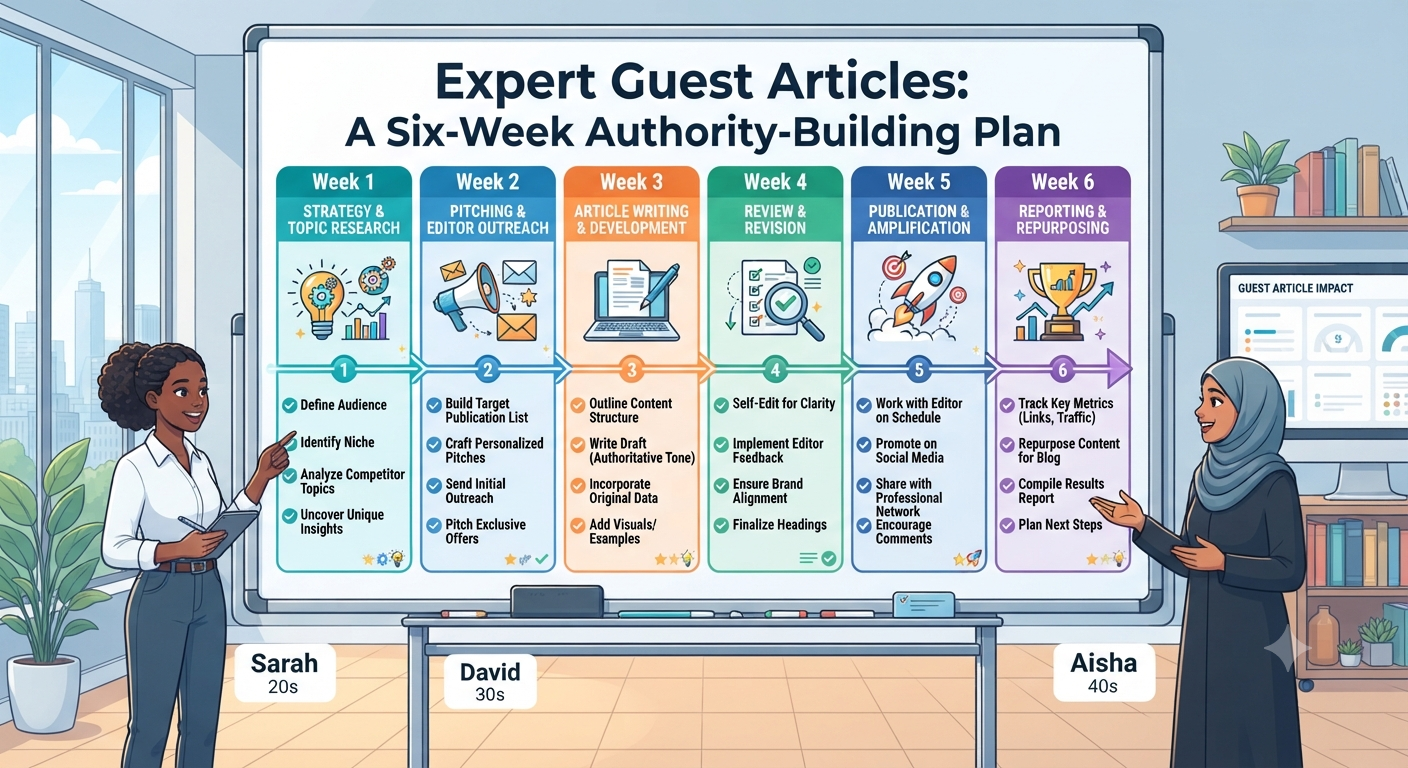
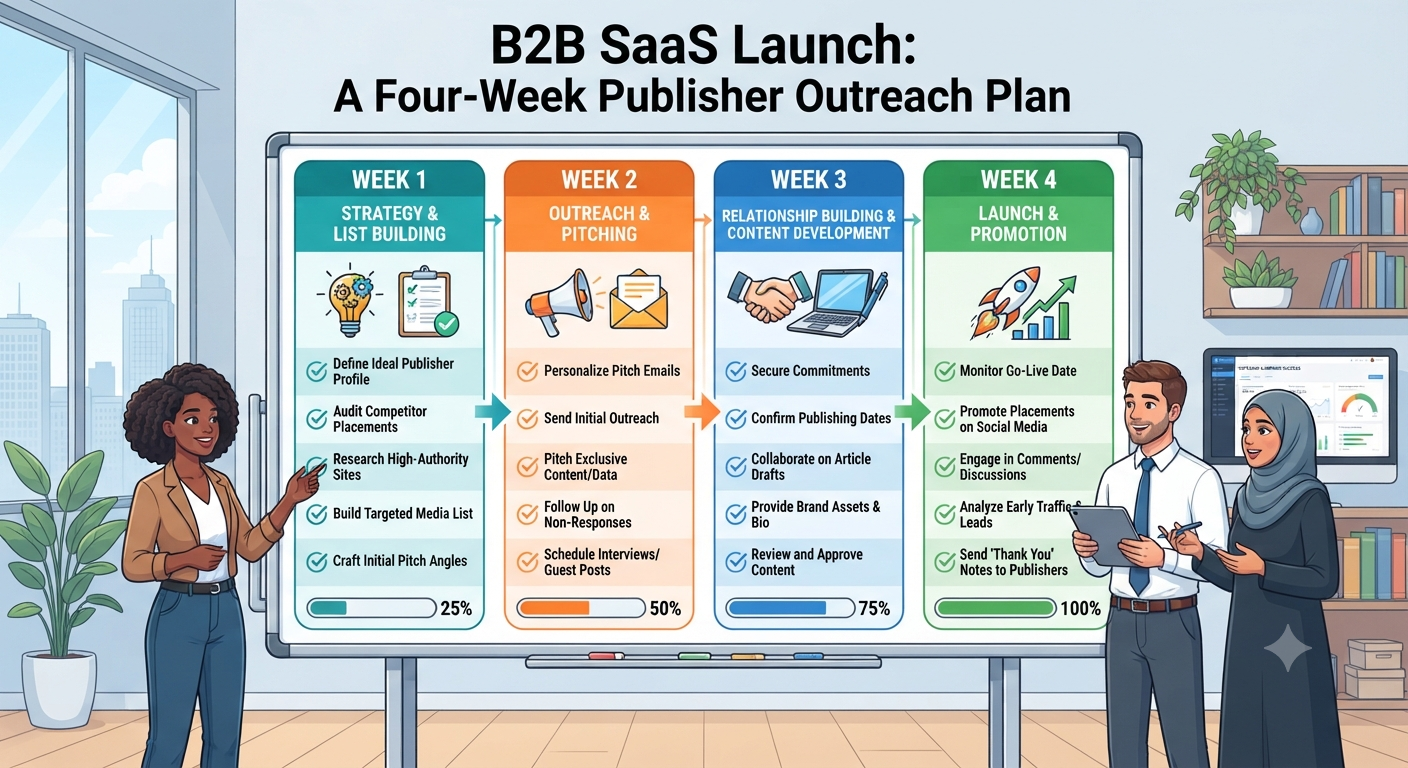
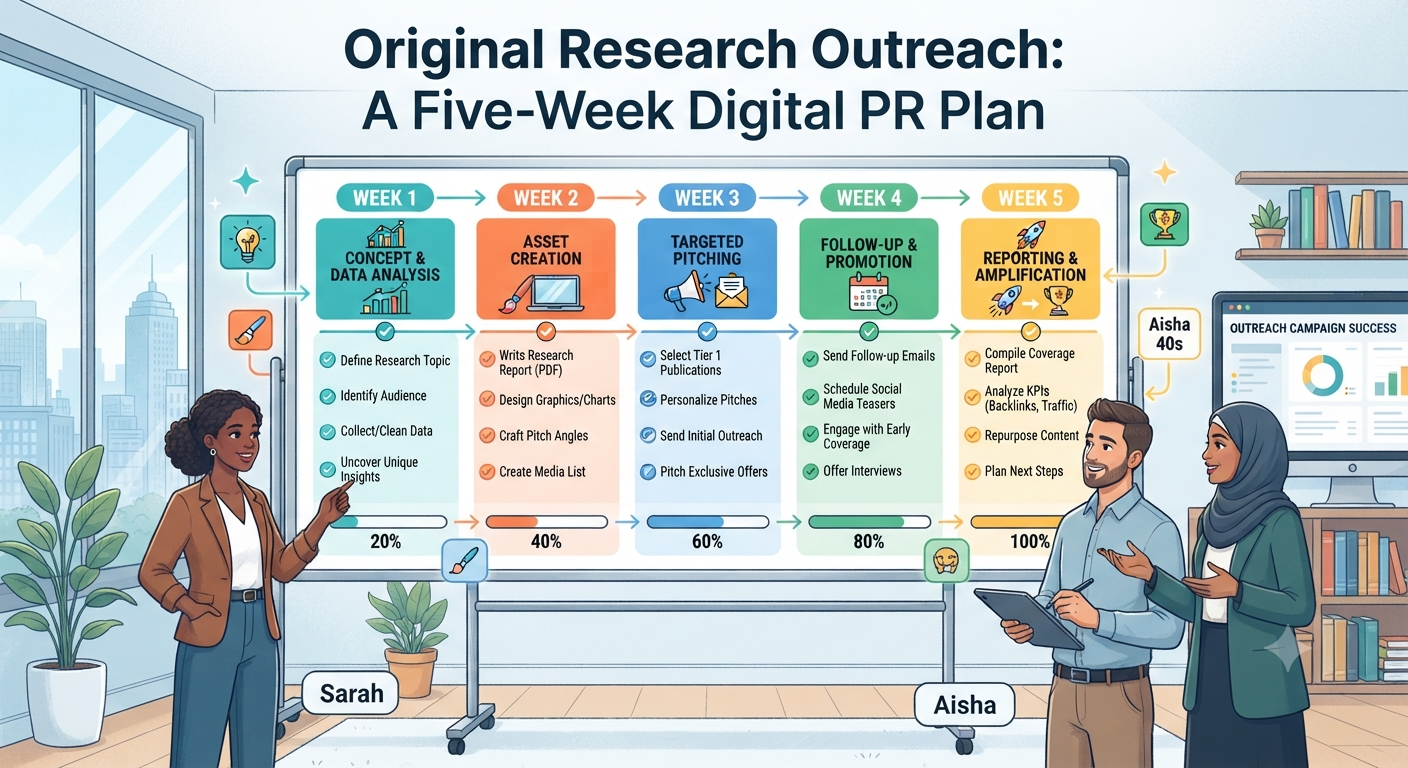
- Week 1Define the question and permissions
Choose a narrow research question, identify lawful and authorized data access, document intended analysis and set a realistic scope. If evidence is unavailable, change the project rather than fabricate it.
- Week 2Collect and check the material
Record data sources, collection dates, definitions and exclusions. Check missing values and obvious errors. Obtain appropriate permission before using identifying or confidential information.
- Week 3Analyze and prepare the story
Review results against the original question. Separate findings from interpretation, document limitations and create accurately labeled charts. Prepare a methodology page and a contact for technical questions.
- Week 4Research publishers and pitch
Find relevant publications in ContentRally, then verify recent coverage and contact routes. Pitch the finding that matters to each readership, linking to evidence and methodology rather than a promotional summary alone.
- Week 5Support reporting and evaluate
Answer questions, correct errors promptly and follow stated editorial timelines. Record resulting coverage, source attribution and relevant audience responses. Preserve the dataset version used for publication.
Pitch email template
Personalise every bracketed field. Mention a recent article by the editor and keep the email under 150 words.
Subject: Research idea: [supported finding] about [audience problem]

Hi [editor name],

Your coverage of [topic] prompted me to share our work on [specific question]. Using [actual source and method] across [accurate scope and dates], we found [supported finding].

The main limitation is [important limitation]. The findings and methodology are available here: [link], with [visual or supporting material] available for review.

[Research lead] can answer questions about the analysis. Would this be relevant to your [section] readers?

Thanks,
[Name]
Measuring results
- Record substantive editorial responses and methodology questions.
- Track coverage accuracy, links to source material and corrections requested.
- Review relevant referral activity using actual analytics, with attribution limits noted.
- Document whether the research answered the original question and what a future study should improve.
Mistakes to avoid
- Inventing responses, sample sizes or research findings.
- Selecting only results that support a predetermined promotional claim.
- Presenting correlation as proof of cause.
- Removing limitations from the pitch to make a finding seem more dramatic.