

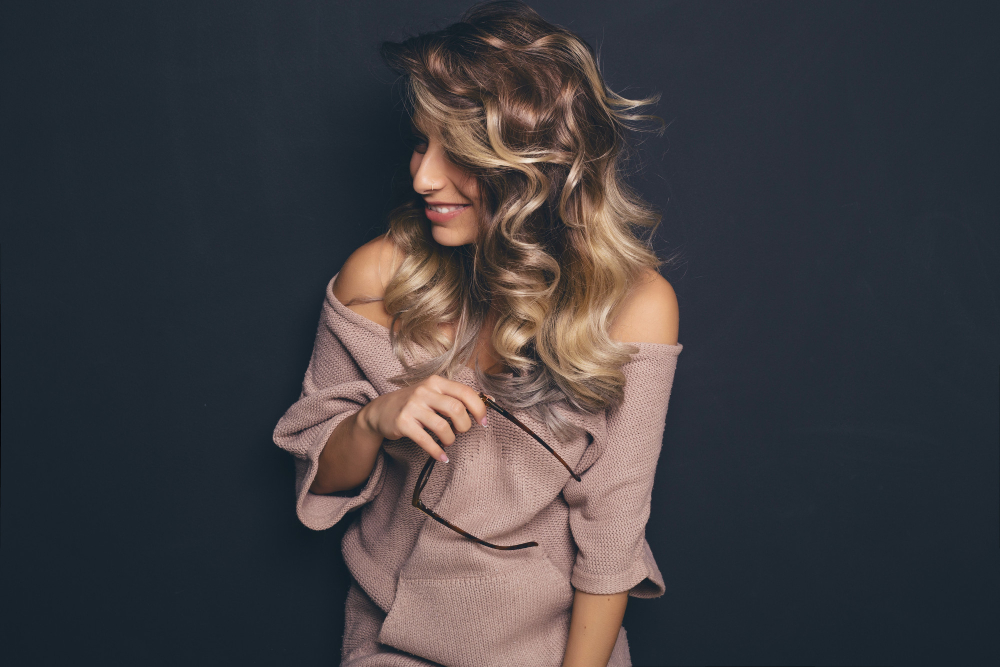
There’s a reason some Balayage Hair colors look better once they’ve had a little time to settle.
Not every style needs to be sharp, freshly painted, and perfectly uniform to feel polished.
In fact, some of the most flattering colorwork has a softer quality to it, as though the hair has naturally caught the light rather than been completely transformed in one salon visit.
That’s part of why people still ask, what is balayage hair?
It’s become one of those terms almost everyone has heard, but not everyone understands properly.
At its simplest, balayage is a coloring technique where lighter tones are painted through the hair in a more natural, blended way.
Therefore, this creates dimension without the hard regrowth line that can come with traditional highlights.
What Are The Different Types Of Balayage Hair?
With its natural finish, low-maintenance upkeep, and ability to grow out without constant touch-ups, Balayage Hair color choice delivers excellent visual longevity.
Exploring different types of balayage allows individuals to create tailored, multi-dimensional enhancements ranging from subtle face-framing brightness to deep contrast.
1. Partial Balayage
Partial balayage hair color focuses specifically on the topmost layer and frontal sections of the crown.
This placement mimics natural, sun-kissed brightness around the face while leaving the lower layers untouched.
It provides an efficient all-over lightening effect that enhances skin tones without requiring full-head bleaching.
- Primary Focus: Crown, parting line, and face-framing strands.
- Visual Result: Subtle, delicate brightness with maximum natural root retention.
- Best Suited For: Fine hair textures or individuals seeking a low-risk color introduction.
2. Foilyage
Foilyage combines freehand sweeping techniques with traditional heat-trapping foils to accelerate and amplify the lifting process.
The stylist paints the lightener onto the hair shafts and immediately seals the sections in foil sheets.
This physical barrier increases the processing temperature, allowing dark hair to achieve much brighter, cleaner blonde tones while maintaining a smooth vertical gradient.
- Primary Focus: Mid-lengths to tips requiring higher levels of lift.
- Visual Result: Intense, high-contrast brightness with seamless root blending.
- Best Suited For: Dark brunette bases or thick hair types aiming for crisp platinum highlights.
3. Reverse Balayage
Reverse balayage flips the traditional lightening framework by introducing darkness and shadow back into washed-out or over-processed hair.
Instead of applying lightener to lift the hair, stylists strategically paint richer lowlights through the mid-lengths and ends.
These deeper tones are blended directly into the natural root color to re-establish depth and dimension.
- Primary Focus: Mid-lengths and tips requiring structural contrast and depth.
- Visual Result: Rich, high-density dimension utilizing deep chocolate, mahogany, or red tones.
- Best Suited For: Over-bleached blondes looking to transition back to a lower-maintenance dimensional look.
The Appeal Is In The Softness
Balayage works because it doesn’t try too hard.
Instead of placing color evenly from root to tip, the technique usually leaves depth near the roots.
Moreover, this builds brightness through the mid-lengths and ends.
That creates a sun-kissed effect that can be:
- Subtle
- Dramatic
- Warm
- Cool
- Beachy
- Polished
Of course, this completely depends on the person’s natural color and the result they’re after.
The best balayage isn’t meant to look like stripes or obvious panels of color.
In fact, it should move with the haircut. Additionally, it should frame the face naturally.
Finally, this should give the hair more texture and shape.
On curled or waved hair, that dimension can really stand out, but it can also look beautiful on straighter styles when the blending is done carefully.
This is why consultation matters. Two people can ask for balayage and want completely different outcomes.
One might want soft caramel ribbons through brunette hair, while another wants a much brighter blonde finish with darker roots.
The technique is flexible, but the color plan has to suit the hair, skin tone, maintenance preferences, and overall style.
Lower Maintenance Doesn’t Mean No Maintenance
Balayage is often described as low-maintenance, and compared with some color services, it can be.
Because the roots are usually left softer or deeper, regrowth tends to look less obvious, which can stretch the time between salon visits.
That’s a big part of its appeal for people who want color that grows out gracefully.
Still, low-maintenance doesn’t mean you can ignore it completely.
Lighter pieces can become dry or brassy over time.
In fact, this becomes more prominent, especially if the hair is exposed to:
- Heat Styling
- Sun
- Chlorine
- Minerals In Water
A good shampoo and conditioner, occasional toning, and heat protection.
Moreover, regular trims can help keep the color looking fresh rather than faded.
The condition of the hair matters too.
If the hair is already fragile, over-processed, or very dark, the color journey may need to happen gradually.
Rushing to a lighter result can compromise the health of the hair, and healthy hair almost always looks better than hair that’s been pushed too far too fast.
A Color That Works With Real Life
Balayage is a versatile hair coloring technique that easily adapts to various lifestyles and preferences.
For individuals who regularly visit the salon, a brighter and higher-contrast balayage is often the choice.
This look is eye-catching and makes a strong statement.
In contrast, those who prefer a more low-maintenance approach might opt for a softer, more subtle effect that closely resembles their natural hair color, allowing for fewer salon visits.
The beauty of balayage lies in its ability to be customized; the placement of color can create a strikingly bold appearance or a very understated, barely-there effect.
Whether someone desires an opulent and expensive look or a more relaxed vibe, balayage can accommodate those preferences.
This adaptability makes it an appealing choice for anyone wanting to refresh their hairstyle without the commitment of frequent touch-ups.
Ultimately, balayage offers something for everyone, allowing for creativity and personal expression with hair color.
Effortless Hair Usually Takes Skill
The charm of effortless-looking hair lies in its thoughtful execution.
A good balayage isn't simply applied; it's meticulously painted, blended, and toned to achieve a natural appearance.
This intentional technique is key to its enduring popularity.
Balayage offers brightness without the harshness of traditional highlights, creating movement without distinct lines.
The result is a modern, flattering finish that seamlessly fits into everyday life.
It's this combination of artistry and ease that makes balayage such a favored choice for many looking for a low-maintenance yet stunning hair color solution.