







Every time a new software update rolls out or I upgrade to a fresh device, I fall into the same digital trap. I trust my smartphone to manage its own cloud storage.
For years, I have blindly trusted my iPhone to manage its own cloud storage, where I figured Apple’s system was smart enough to keep things clean behind the scenes.
Then the dreaded “iCloud Storage Is Full” alert popped up, freezing my phone updates and pausing my photo syncs.
When I went to investigate, expecting to see a massive archive of photos, I found a completely different culprit.
My cloud space was being held hostage by ghost backups, which were leftover data from other devices I had no clue about.
An iPhone I sold three years ago, an old iPad that does not even turn on anymore, and redundant save states from devices I have not touched in years.
Most online guides make clearing this out sound like an advanced computer science project, filled with intimidating technical menus.
To see how to clear this digital clutter safely without accidentally wiping anything important, I sat down and audited my entire account.
Reclaiming your cloud storage is actually incredibly straightforward once you know where to look.
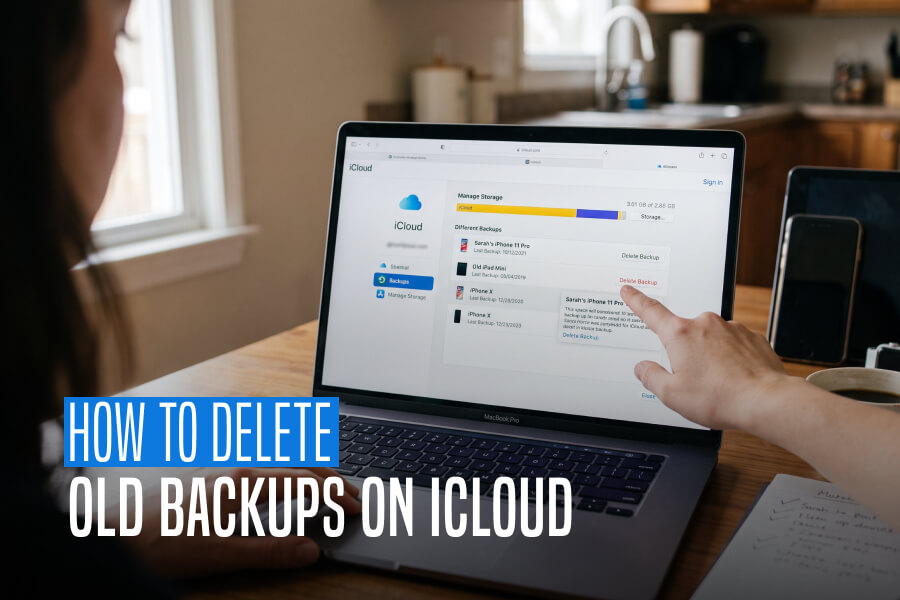
If you want to know how to delete old backups on iCloud without the headache, here is the exact, user-friendly roadmap I used to clean out my account. Besides this, I will guide you through the real reasons why your storage fills up so fast.
Why Do Old Device Backups Just Sit There?
Before we learn how to delete old backups on iCloud, we need to understand why they sit there.
The biggest reason our storage fills up with old files is a very common human emotion, which is fear. When we upgrade to a new phone, we are terrified of losing our precious photos, old text conversations, and settings.
Since we want to ensure that everything transfers safely over to the new device, we back up absolutely everything.
The catch is that Apple’s ecosystem builds a completely separate and isolated storage container for every single device you own. When you switch to a new iPhone, the system copies your data into a brand-new container.
However, it leaves the old one sitting there frozen in time. Moreover, Apple never automatically deletes your old device profiles. That is because it does not want to risk destroying your historical data if you ever need it again.
As a result, that old backup sits in your account for years, quietly eating up gigabytes of your shared space.
Why Delete Old iCloud Backups?
Cleaning out these digital filing cabinets does more than just make your storage menu look neat.
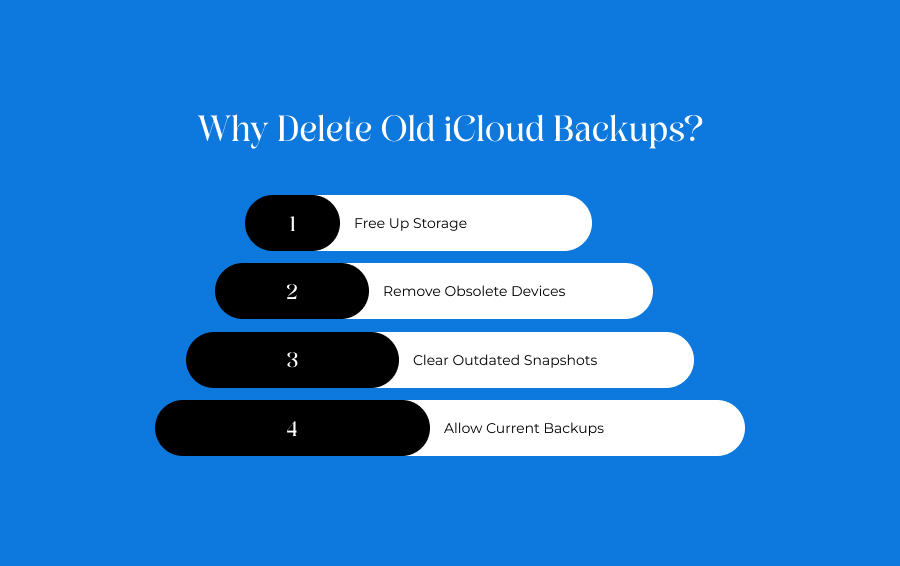
If you are on the fence about purging your history, several immediate operational perks show why it is worth taking two minutes to do so.
Free Up Storage
The most immediate benefit is a massive cash-saving return of your space.
Old backups routinely occupy 5GB to 15GB of data per device. Clearing out even one or two legacy profiles can instantly empty your storage bar.
This gives your cloud freedom back without forcing you to upgrade to a higher monthly payment tier.
Remove Obsolete Devices
Your account dashboard should only show what you actively use. Deleting legacy containers strips out the clutter of tech you no longer own.
Thus, it ensures that your storage metrics are tracking your actual current life instead of your digital past.
Clear Outdated Snapshots
When a phone updates its software, it sometimes creates temporary, massive "snapshots" of your system to protect your data during the install.
Once your new software is running smoothly, these old snapshots serve zero purpose and simply waste shared space until you manually wipe them out.
Allow Current Backups
When your cloud space hits its absolute maximum limit, Apple blocks your active, daily phone from saving your current photos, texts, and security settings.
Deleting the old junk opens up the pipeline. So, your primary phone can safely run its automated nightly safety saves again.
What You Need To Know First
Before you start to click on the delete button, it is completely natural to feel a bit nervous.
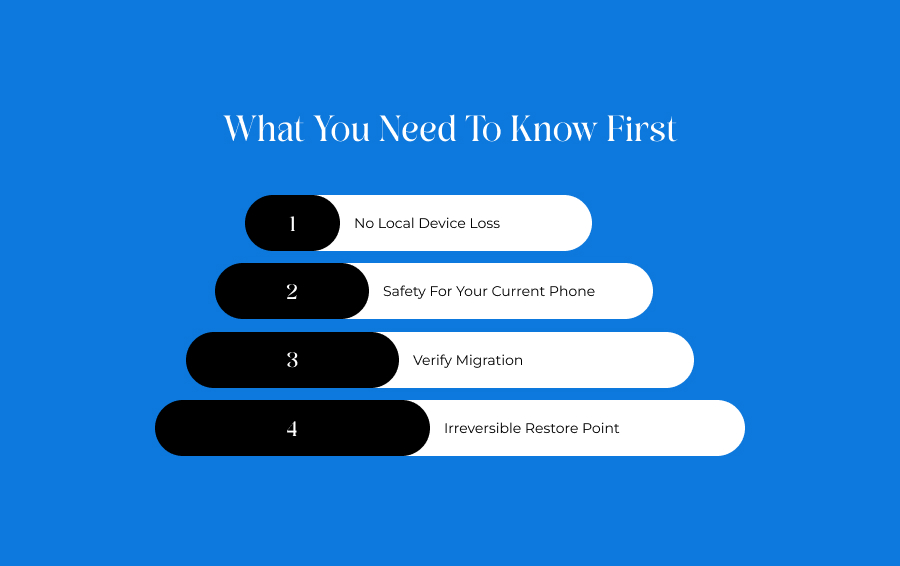
To give you total peace of mind, let us look at the hard safety boundaries of how Apple handles data destruction.
No Local Device Loss
Deleting a backup from the cloud will absolutely never erase everything on the physical phone you are currently holding.
Your local photos, active text messages, downloaded apps, and contacts remain entirely safe and untouched on your physical device.
Safety For Your Current Phone
Every single device profile is completely isolated from the others.
Wiping out the file container for an old, sold iPhone 11 has a zero percent chance of disrupting or deleting the current profile belonging to your active iPhone 15 or 16.
Verify Migration
Before you pull the trigger on an old backup, always double-check your current phone to ensure your data migration was 100% successful.
Open your current photo gallery, check your contacts list, and make sure your important files are physically present on your new device.
Irreversible Restore Point
You must remember that hitting the final delete button is a permanent action.
Once you purge a legacy device profile from Apple's servers, Apple support cannot recover that specific historical restore point.
Clearing The Clutter: How To Delete Old Backups On iCloud
You do not need a computer or a complicated tech setup to fix your storage crisis. You can manage your full account layout across any screen that you have available.
Brief Overview Of iOS
Your profile infrastructure fully centralizes the cleanup process on any mobile Apple device.
By stepping past general app configurations and opening your core profile metrics, you can audit your entire device history within a few taps.
The sequential steps to disable and erase old profiles vary slightly depending on your screen layout.
| Target Platform | Core Navigation Shortcut Path | Target Action Button |
|---|---|---|
| On iPhone | Settings -> Your Name -> iCloud -> Manage Account Storage -> Backups | Tap Old Device -> Turn Off & Delete |
| On iPad | Settings -> Your Name -> iCloud -> Manage Account Storage -> Backups | Tap Old Device -> Turn Off & Delete |
| On Mac | Apple Menu -> System Settings -> Apple ID -> iCloud -> Manage | Select Backups -> Click the Minus / Delete icon |
| iCloud for Windows | Open iCloud App -> Click Storage Bar -> Select Backups Module | Highlight Old Profile -> Click Delete |
On iPhone
First, open the Settings app and tap your name at the very top of the screen.
Tap iCloud, then select Manage Account Storage right underneath the colorful bar.
Scroll down, tap the folder labeled Backups, and select the old device you want to remove.
Finally, scroll to the absolute bottom of the page and tap the red Turn Off & Delete button.
On iPad
The process for the iPad is similar to that of the iPhone.
At first, you have to open your Settings app and tap your profile name at the top of the left-hand sidebar menu. Move to the right side of the screen, tap iCloud, and open Manage Account Storage.
Select the Backups index folder, tap your legacy tablet profile from the list, and select the final Turn Off & Delete command.
On Mac
If you have a Mac, you first have to click the Apple logo in the top-left corner of your desktop monitor and launch System Settings.
Then, click your Apple ID name at the top of the sidebar.
Following this, navigate into the iCloud window and click the Manage button sitting next to your storage metric bar.
After this, click Backups from the left column, highlight your ghost file, and click the minus or delete button.
iCloud For Windows
Launch the official iCloud for Windows desktop application and log in to your primary Apple account.
Click the main color-coded storage indicator bar at the bottom of the window. Then select the Backups menu module from the list.
Finally, you have to click the obsolete device profile you want to delete and confirm the action.
Saving Your Files Without Using iCloud
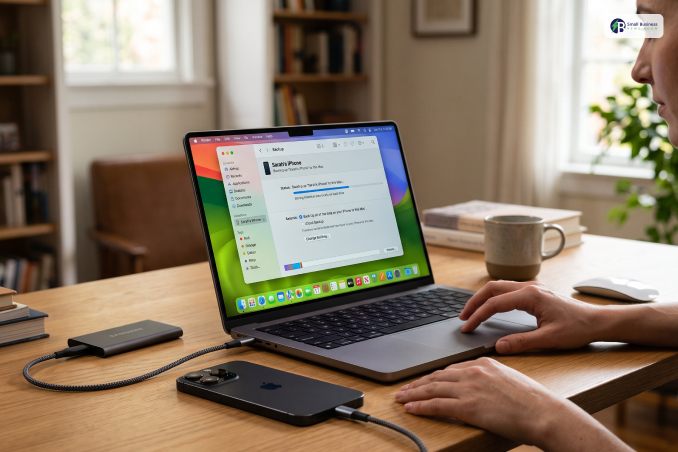
You may want to keep your cloud space completely empty without losing your historical records. For that, you can switch to a local physical backup system instead.
Plug your iPhone directly into a Mac or a Windows PC using a standard charging cable. That way, you can open Finder (on Mac) or iTunes (on Windows).
Furthermore, you can choose to save a full backup of your phone directly to your computer's local hard drive.
This alternative method keeps your historical data completely safe on your own physical computer.
Consequently, you get to turn off iCloud backups entirely.
Thus, you keep your free 5GB cloud space reserved exclusively for your essential daily contacts and calendar updates.
Get Your Space Back
Taking control of your cloud storage doesn't have to be intimidating.
We shouldn't let the fear of losing data trick us into paying for storage tiers we don't actually need.
Once you realize your old, sold devices leave behind massive ghost profiles, spend less than two minutes clicking to clean them out.
Run a quick audit of your account, purge the files for hardware you no longer own, and turn off backup permissions for useless apps.
In this way, you can keep your digital life perfectly organized on your own terms.