













In traditional corporate video production, localization is the ultimate bottleneck.
When a brand launches a product simultaneously in different cities such as New Delhi, Berlin, and Tokyo, the standard production pipeline fractures under immense logistical stress.
Actors are required to be re-hired. Recording studios need to be re-booked. Additionally, translators are embedded in editing suites to manually fix desynchronized mouth movements.
Overall, the entire process takes weeks while costing thousands of dollars per finished minute.
In order to completely bypass these physical constraints, an identity-first synthetic presentation ecosystem has taken over enterprise media strategies.
Scaling organizations are looking to localize corporate training, build programmatic video pipelines, or construct automated social feeds. Consequently, HeyGen AI has emerged as a premier browser-native corporate video engine.
Instead of treating video creation as an expensive artistic project tied to physical cameras, the platform turns digital identity into scalable, code-driven software.
Navigating this advanced generation landscape requires an intimate and no-nonsense look at its technical architecture.
Thus, this comprehensive review puts a prime focus on exactly that. Moreover, it will delve deep into its 2026 feature updates, real production cost structures, and the operational guardrails that are needed to secure digital assets.
Technical Framework: Translating Text To Motion Dynamics
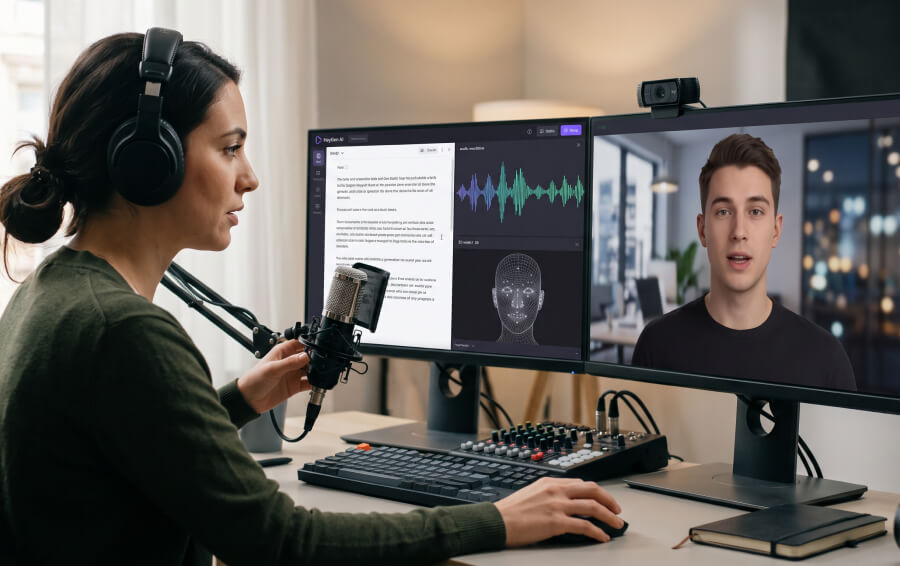
At its fundamental layer, HeyGen AI is not a generic text-to-video prompt engine that guesses pixel shapes from scratch.
The software utilizes a highly specialized streaming inference framework engineered to map audio tracks directly to structural facial geometry.
When a user provides a script or an audio track, the underlying natural language understanding model passes the text through a specialized script router.
The system isolates phonetic markers and maps them to realistic speech cadences. Additionally, they use generative models such as Seedance or Veo to composite corresponding B-roll background footage onto the canvas.
Simultaneously, the avatar rendering pipeline extracts the pre-recorded physical likeness of the user from a verified identity database.
The software then dynamically morphs the mouth, eyes, head tilts, and hand gestures of the chosen digital twin.
This helps to match the underlying audio track, spitting out a continuous video pass up to 30 minutes long in a single generation cycle.
Landmark 2026 Platform Updates
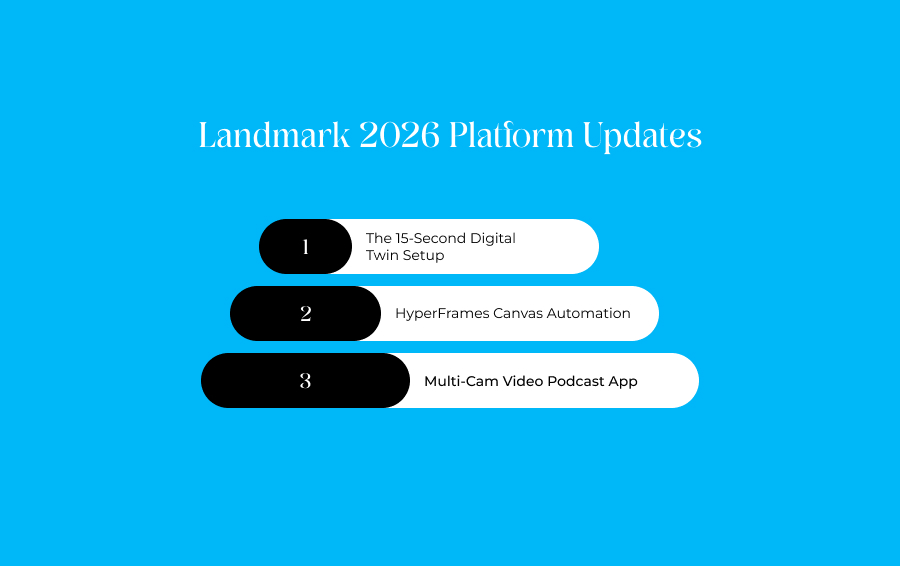
The platform has shifted its primary development strategy away from raw video generation toward complete operational controllability and native system integration.
Key updates have expanded how businesses deploy synthetic presentation layers.
The 15-Second Digital Twin Setup
The classic but tedious onboarding process requires multimedia high-definition studio uploads. However, this has been replaced by a streamlined webcam protocol.
Users activate their laptop camera and complete a 15-second guided reading prompt.
Automatically, the system extracts voice timbre, physical micro-expressions, and explicit identity consent in a single, automated take.
HyperFrames Canvas Automation
Instead of forcing editors to manually layer text boxes inside a video timeline, the tool utilizes an open-source rendering layout called HyperFrames.
This framework reads code bases from design platforms such as Figma or live websites. As a result, this instantly renders matching HTML, CSS, and motion graphics straight onto the video background.
This makes presentation visuals completely native to the cloud code.
Multi-Cam Video Podcast App
In order to simplify long-form content creation, the Video Podcast system converts standard URLs, PDFs, or dry documentation into interactive, two-host video shows.
The engine creates an automated, multi-camera studio environment featuring the following:
- Realistic back-and-forth conversation
- Side-by-side wide-angle cuts
- Automatic close-ups on whichever host is speaking
- Contextual B-roll overlays
Granular Subscription And Credit Mechanics
While the software features an approachable sticker price, its commercial infrastructure relies entirely on a shared credit currency model.
Production budgets must be calculated based on the precise generation quality tier required for the campaign.
| Pricing Tier | Entry Cost (Monthly) | Core Video Output Specs | Included Monthly Credits | Premium Asset Consumption Rates |
|---|---|---|---|---|
| Free Plan | $0 | 720p maximum resolution with visible brand watermarks. | Up to 3 video generations total. | Limited trial access to premium avatars and video agents. |
| Creator Plan | $29 | 1080p full HD export with clean watermark removal. | 600 total premium credits per billing cycle. | Unlimited Avatar III generation; Avatar IV & V cost 20 credits per minute. |
| Pro Plan | $49 | Stunning 4K video quality plus full AI Studio access. | 1,000 to 100,000 customized credits. | Priority fast-pass processing queue with flexible usage parameters. |
| Business Plan | $149 (plus $20/seat) | Advanced 4K rendering and unified brand kit lockers. | Shared credit pool for enterprise scaling. | Programmatic developer access keys and custom team avatar workflows. |
Structural Advantages And Operational Risks
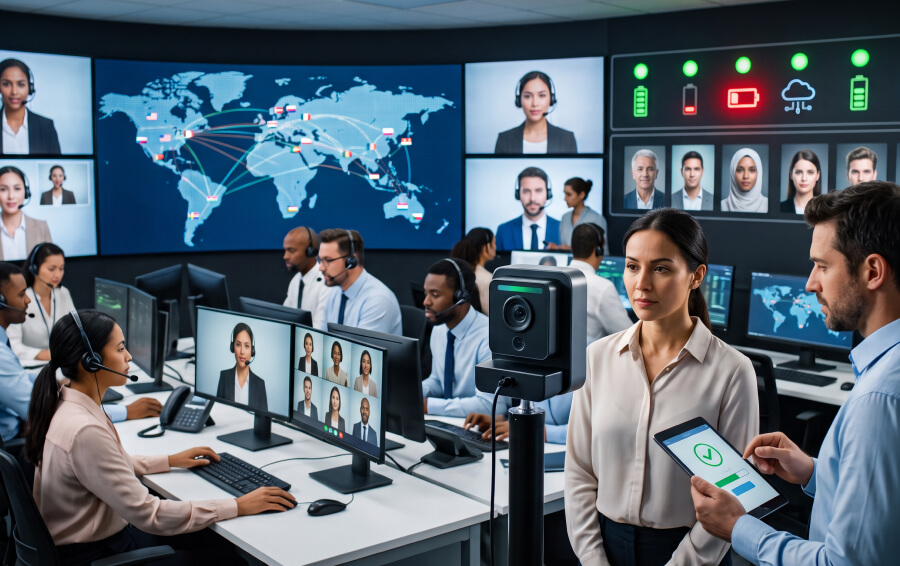
Integrating synthetic presentations into enterprise communications involves balancing exceptional scalability with precise technological boundaries.
HeyGen Performance At A Glance
| Operational Benefit | Real-World Value | Primary Constraint | Systemic Risk |
|---|---|---|---|
| Instant Translation | Syncs voices instantly across 175+ global dialects. | Credit Consumption | High-fidelity models eat through monthly credits fast, risking sudden caps. |
| Frictionless Scale | Updates video scripts via simple text edits without re-shoots. | Visual Dilution | Public avatars can look generic; custom twins require a bigger budget. |
| Enterprise Security | Requires live video consent to lock out deepfake attempts. | Pipeline Dependency | Total reliance on cloud rendering means workflows stop if servers go down. |
Production Velocity And Translation Scale
The primary operational benefit of HeyGen AI is its unmatched translation and lip-sync capability.
The platform supports voice cloning and lip-sync mapping across over 175 distinctive languages and regional dialects.
A single localization coordinator can translate an entire library of customer support guides or internal product demos into accurate localized variations.
Furthermore, all of that is done in just a fraction of a day, without ever booking a single plane flight or studio space.
Identity Security And Credit Scaling Risks
The biggest structural vulnerability stems from corporate budget miscalculations.
Because photorealistic models like Avatar IV consume credits at a rapid pace, organizations running high-volume distribution pipelines can hit hard usage caps unexpectedly. Thus, it requires expensive credit top-ups mid-campaign.
Furthermore, using public avatar libraries introduces the risk of generic visual duplication across the market. Consequently, this forces premium brands to invest heavily in creating secure, proprietary custom avatars.
On the safety front, the system enforces strict security protocols.
Every single custom digital twin requires an on-camera identity verification check from the actual person depicted before a model can be deployed.
As a result, this leads to successfully locking out deepfake exploits.
Market Alternatives For Specialized Use Cases
If the design goals of your organization require complete integration with software interfaces or a non-credit billing structure, other market tools offer distinct strategic configurations.
Synthesia
A direct competitor in the high-volume enterprise sector. Synthesia relies heavily on a fixed-fee structure for core generation features
This makes it highly effective for corporate compliance teams that require a predictable monthly budget for standardized video outputs.
Arcade Creator Studio
A specialized alternative engineered specifically for technical software product teams.
Instead of relying on a human avatar talking over a background script, Arcade generates interactive product video content directly from a company's live UI and digital code base.
Consequently, this makes it ideal for rapid software walkthroughs.
Colossyan
An AI video creator tailored specifically for human resources and workplace learning environments.
It focuses heavily on scenario-based training models. Thus, the video presentation interface allows users to build interactive quizzes and branching dialogue paths straight into it.
Making Synthetic Video Work For You
Ultimately, deploying HeyGen AI is an operational shift from traditional media production to code-driven content assembly.
The platform succeeds because it treats the human presenter as an adaptable, reusable visual layer. Moreover, developers can program, update, and translate this platform globally via simple text blocks.
This process eliminates the traditional overhead of re-shooting footage for simple script corrections. This democratizes high-fidelity multimedia output for solo creators and multinational corporate teams alike.
As long as your operational manager tracks the credit scaling boundaries and locks down identity verification settings, the platform serves as an essential upgrade for modern, globally distributed content operations.










All Comments
Magic Hour AI Review: Pricing, Features & Content Guide
[…] you may buy a separate plan from HeyGen for talking avatars and pay separate fees for independent face-swapping […]