



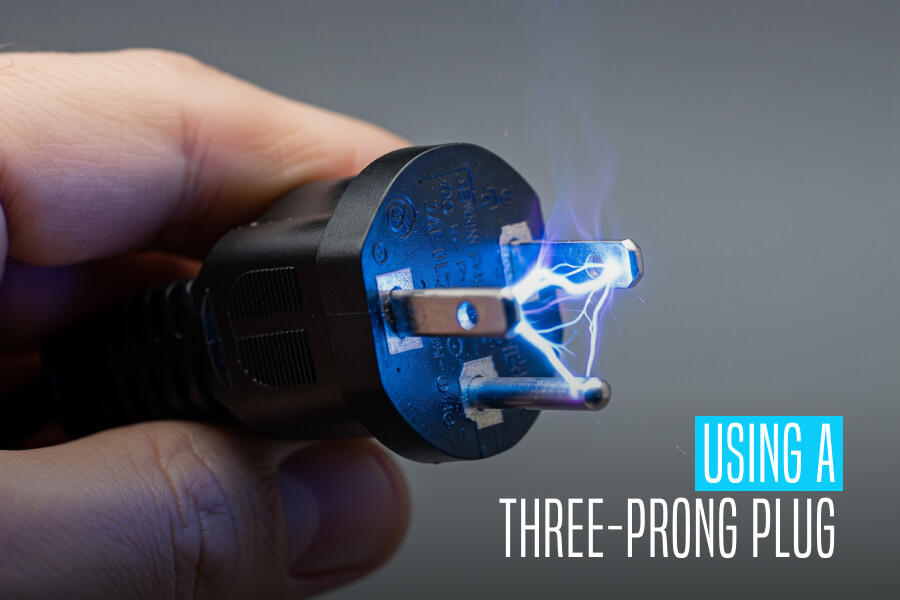
Electrical safety is an essential part of maintaining a secure household or workplace environment. Yet, millions of people daily overlook a seemingly minor hardware defect.
That is a damaged cord.
A common question that arises during home safety inspections or DIY repairs is: Is using a three-prong plug with a missing ground post safe or unsafe?
The definitive answer from licensed electricians and safety organizations is that using a plug with a missing ground post is highly unsafe.
Altering a cord or ignoring a broken pin might allow an appliance to turn on and draw power. However, it compromises the core protection mechanism designed to shield users from severe injury, equipment damage, and electrical fires.
Understanding The Role Of The Ground Post
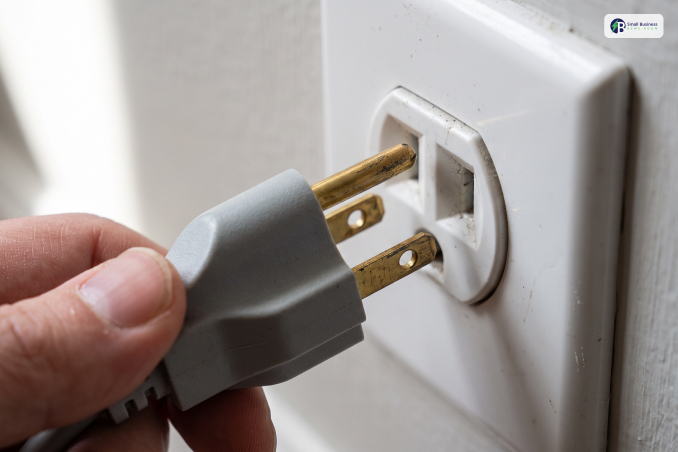
To understand why a missing ground pin is hazardous, it is necessary to examine how standard modern electrical configurations function.
Standard alternating current (AC) power cords in the United States and global regions utilize specific pathways.
This helps to transmit electricity safely from the wall outlet to the device.
The Anatomy Of A Three-Prong Plug
A modern three-prong plug consists of three individual metallic blades or pins. Each of these serves a distinct electrical purpose.
- The Hot Prong: Typically the narrower flat blade, this conducts the current from the power source to the appliance.
- The Neutral Prong: The wider flat blade, which completes the circuit by returning the current back to the electrical panel.
- The Ground Post: The round or U-shaped lower pin, which connects exclusively to the non-current-carrying metal casing or frame of the device.
The Science Of Electrical Grounding
The primary job of the ground post is to act as a dedicated emergency highway for electricity.
Under normal operating conditions, no current flows through the ground pin. However, if an internal wire deteriorates or insulation fails, the live voltage can leak and charge the external chassis of the machine.
When a proper equipment grounding conductor is present, the stray current takes this path of least resistance back to the earth via the service panel.
This sudden surge of current instantly trips the circuit breaker or blows the fuse, cutting off power before harm can occur.
The Hidden Hazards Of Operating Ungrounded Devices
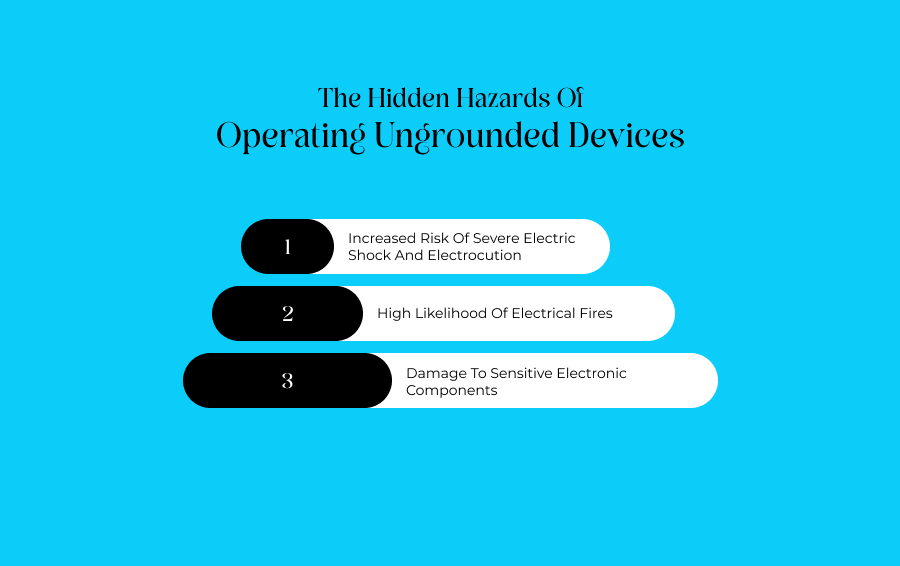
When you ignore a broken ground pin, you basically remove the primary line of defense against faults.
The dangers of utilizing an altered or damaged power cord fall into three primary categories.
Increased Risk Of Severe Electric Shock And Electrocution
Without the grounding post and stray voltage has nowhere to go.
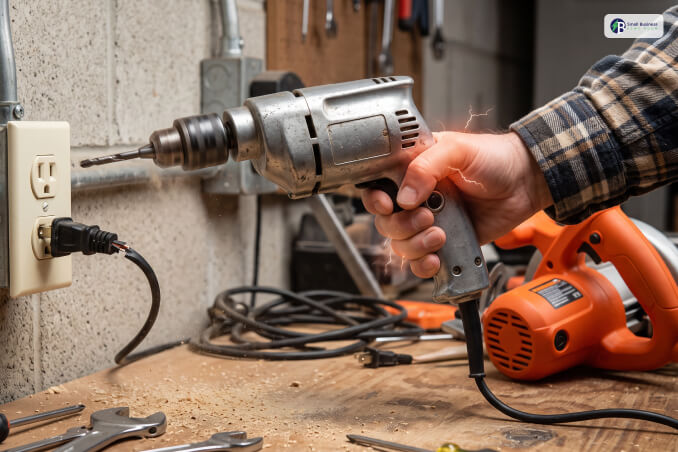
If an internal component fails and contacts the metal exterior of a tool or appliance, the entire frame becomes live.
The moment a human operator touches that energized frame, their body completes the electrical circuit to the earth.
This scenario frequently results in painful electrical shocks, severe internal burns, or fatal electrocution.
According to historical occupational records, numerous workplace fatalities involving power drills and extension cords have been traced directly back to missing ground prongs.
High Likelihood Of Electrical Fires
When stray current cannot safely exit through a dedicated ground path, electricity may jump gaps or travel through alternative, restrictive paths inside the machine.
As a result, this restriction creates severe resistance, leading to rapid heat buildup.
Over time, this thermal stress melts wire insulation and damages internal components.
Moreover, it ignites nearby flammable structural materials, triggering catastrophic house fires.
Damage To Sensitive Electronic Components
The ground post also serves a secondary function as a shield against voltage spikes and electromagnetic interference.
Sensitive modern equipment relies on a stable ground plane to dissipate excess energy from surges.
Running electronics without a ground post exposes delicate microprocessors to systemic degradation and sudden failure.
Technical Comparison: Grounded Vs. Altered Plugs
The operational differences highlight exactly why modifying or ignoring a compromised power cord introduces severe risk to your home.
| Electrical Attribute | Intact Three-Prong Plug | Plug with a Missing Ground Post |
|---|---|---|
| Normal Power Delivery | Fully operational; completes the circuit via hot and neutral lines. | Fully operational; device turns on and functions normally. |
| Fault Current Protection | High; immediately channels stray voltage to the earth, tripping the breaker. | None; stray voltage remains trapped on the exterior frame. |
| Shock Risk During Internal Short | Near zero; breaker cuts power in milliseconds. | Extremely high; the user becomes the path to the ground. |
| Surge and Noise Shielding | Present; protects internal microchips from voltage fluctuations. | Absent; components are vulnerable to power spikes. |
| Building Code Compliance | Fully compliant with National Electrical Code (NEC) standards. | Strict violation of safety codes; can void insurance claims. |
Common Misconceptions About Broken Ground Prongs
Many homeowners continue to use defective plugs due to pervasive myths surrounding residential electricity.
"The Device Still Works, So It Must Be Safe"
This is the most dangerous assumption an appliance user can make.
An electrical device does not need a ground post to draw power or perform its function. Instead, the hot and neutral prongs handle all standard operation.
The ground post is strictly an invisible safety net. A device with a missing pin will run perfectly until the exact millisecond an internal fault occurs.
At this point, the hazard becomes immediate.
"Double-Insulated Tools Don't Need a Ground, So Why Should This?"
It is true that many modern power tools and household devices utilize a standard two-prong plug.
However, these products are explicitly engineered as double-insulated systems. They feature non-conductive plastic housings and secondary internal barriers that physically prevent live current from ever touching the outer surface.
Devices manufactured with a three-prong plug rely on the ground pin. This is because they feature exposed metal parts that can become live during a mechanical failure.
How To Fix A Missing Ground Post Safely
If you discover a broken, clipped, or missing ground post on a power cord or extension cord, do not plug it into the wall.
Temporary bypass methods like ungrounded adapters do not provide a genuine ground connection. Often called cheater plugs, these should be avoided for permanent installations.
Instead, choose one of these code-approved solutions.
Replace The Electrical Plug Entirely
The most cost-effective and straightforward solution is to cut away the damaged plug and wire a heavy-duty and certified replacement plug onto the existing cord.
This requires matching the hot (black or brass), neural (white or silver), and ground (green) wires to their respective terminals on the new plug housing.
Install A Ground Fault Circuit Interrupter (GFCI)
If you are dealing with older residential wiring that only features two-slot outlets, you can have a licensed electrician install a GFCI outlet.
A GFCI does not create a physical ground connection. However, it constantly monitors the balance of current between the hot and neutral lines.
If it detects a leakage, it cuts the circuit within milliseconds. For example, current passing through a human body.
As a result, it provides robust life-safety protection even if a plug is ungrounded.
Do Not Take Your Electrical Safety Lightly
When analyzing whether is using a three-prong plug with a missing ground post safe or unsafe?, the conclusion remains absolute across all professional engineering standards.
It is a severe safety hazard that leaves your home vulnerable to fires, device failures, and lethal shocks.
Inspect your power equipment regularly and never cut off a grounding blade to fit an old outlet.
Instead, you should replace damaged hardware immediately to ensure your electrical infrastructure remains secure.