












Construction Safety Systems: Promoting A Safer Industry

Published on: 18 August 2023 Last Updated on: 12 September 2024
Safety Systems

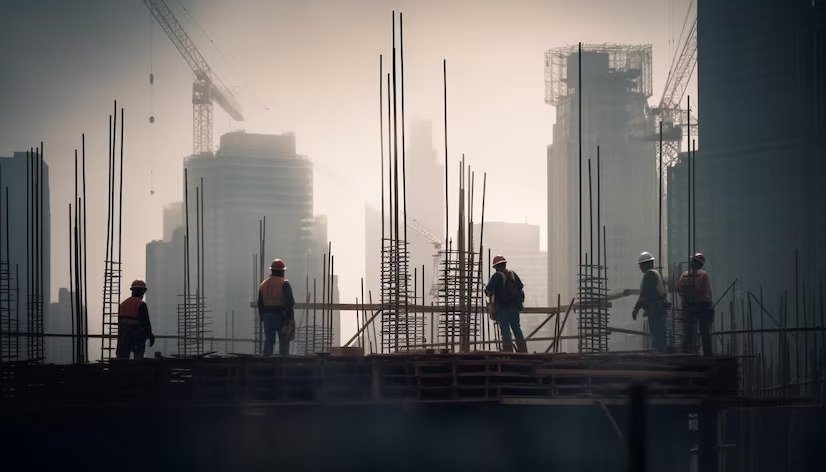
Safety is a critical factor in any construction site.

However, some construction workers and management overlook safety until an accident happens. Working at a construction site is one of the most dangerous professions since many accidents occur, leading to injuries. Therefore, employers and professionals managing construction projects should use safety systems for ethical and financial reasons.

They should also ensure that the workers understand the risks and are cautious when working in hazardous situations. This is because accidents and injuries in construction sites lead to medical bills, project delays, lost work hours, compensation lawsuits, and headaches for human resource departments.

This piece highlights how construction project managers can promote safety and prevent workplace accidents.

What Is Construction Site Protection? 

Construction site protection is nothing but keeping yourself and others from construction-associated activities like injury, disease, and even death. It is often a hazardous endeavor where site employees are exposed to potential risks. For instance, a worker is working at a height or relocating machinery which is extremely heavy. The resulting causes of a construction site fatality include electrocution, falls, and crush injuries.

Common Hazards Taking Place At A Construction Site

Hazards taking place at a construction site have caused deaths and injuries all across the world. When hazard identifications fail, it is either due to a lack of safety systems or improper training. Before we delve into the ways of maintaining construction-place safety, let us first discover what are the common hazards that take place in a site:

Falling From Heights

One of the most common fatal injuries that site workers experience is falling from height. According to HSE, 47% of employee fatalities are caused by falling from heights. Every employee who operates at height requires proper training and the right set of equipment. Although safety harnesses are important at every construction site, some do not wear them and, as a result, fall from height. 

Trips, Falls & Slips

Another very common construction hazard is trips, slips, and falls. Construction sites usually have uneven terrain and unchanged terrain. Hence, trips, falls, and slips are no surprises at all. More than seven thousand construction workers are either injured severely or die due to a major trip or fall. It is the duty of managers and site supervisors to manage the site effectively to ensure the safe movement of workers. 

Tremendous Noise

A lot of workers have complained about prolonged hearing problems and deafness when they work around loud and repetitive noises. They are also a dangerous distraction that distracts a worker from his job and results in accidents. A comprehensive assessment stating noise risk must be highlighted to avoid noise-related construction site hazards. 

Steps To Maintain Safety In A Construction Site

Workplace safety is a significant consideration- irrespective of where you work. But when it comes to construction, particularly, one must always be careful. Even the smallest mistake can result in a life-altering consequence. Thinking about how to do so? Here are a set of steps that might help you:

Create Awareness About Safety Hazards

Ignorant workers are among the most significant dangers because they could make terrible mistakes, putting everyone at risk. Construction site managers should ensure the workers understand the possible hazards before they set foot on a construction site.

Understanding the risks ensures workers stay alert to prevent and respond to accidents. Therefore, employers should use OSHA safety guidelines to equip workers with the necessary knowledge to enhance safety. Only workers or visitors aware of the dangers of a construction site should be allowed access.

Quality Equipment

Workers need quality equipment and a spacious workplace to perform their tasks without causing accidents. Wrong or faulty equipment increases the chances of accidents and injuries. Therefore, construction managers should pay attention to equipment maintenance schedules and provide quality safety systems. They can also seek help from Doka and other companies that provide safety systems and equipment. It is also crucial to prevent exposure-related issues such as dehydration by providing water and using personal protective equipment.

Training Workers

Some construction workers gain skills on the job, but safety training is best offered before accessing the site. The authorities concerned with workplace safety often publish resources to help construction companies train their workers.

For example, they provide worksheets, pamphlets, training videos, and sometimes one-on-one training. Safety training is important not just for new workers but also for experienced workers. Therefore, construction firms should organize training to ensure all the workers gain or refresh their safety knowledge. The safety training can focus on simple things such as using a ladder or fall protection to ensure all the workers are well informed.
Training Workers

Documentation

Proper documentation is crucial for workplace safety. Construction sites must meet certain legal and safety standards before construction work begins. Therefore, construction firms should only commence operations with relevant licenses and documents. Contractors undertaking specific tasks such as blasting must provide relevant certification before accessing the site. Documentation protects the construction firm and helps prevent accidents and public scrutiny.

Effective Communication

Accidents usually happen when the workers are unaware of what to do or expect in a certain situation. However, sharing information about construction goals, objectives, and daily activities can reduce surprises or mistakes that could cause harm. Besides, the construction management should provide communication devices and tools such as headsets, walkie-talkies, and smartphones to ensure effective communication about workplace hazards. Effective communication ensures everyone is informed, enhancing operations and reducing safety risks.

Supervision

Construction employees should always follow the relevant safety guidelines and institute mitigation measures. However, since not all workers will follow the relevant procedures, supervision can help identify loopholes and enforce safety standards. For example, supervisors should keep tabs on all workers and ensure they have relevant safety gear. The workers should report any safety concerns to the supervisor for appropriate mitigation measures.

The Bottom Line… Stay Safe!

Construction companies should build quality structures while minimizing accidents, injuries, deaths, and related lawsuits.

The hope of reducing accidents in construction sites lies in raising awareness, safety training, effective communication, supervision, documentation, and quality equipment.

These simple things can help reduce accidents, enhance safety, and prevent legal issues associated with workplace accidents.

Read Also:

Shahnawaz is a passionate and professional Content writer. He loves to read, write, draw and share his knowledge in different niches like Technology, Cryptocurrency, Travel,Social Media, Social Media Marketing, and Healthcare.

View all posts

Leave a Reply

Your email address will not be published. Required fields are marked *

Related

Body Corporate issues

5 Common Body Corporate Issues Faced by Strata Management

Most body corporates tend to be well managed. However, there are still numerous issues that come with such management. It is actually possible for different issues to arise in two buildings that have been built the same way. Here are the top five problems that are faced by many body corporate managers: 1. Financial Stability: A body corporate is only as stable as its financial foundation. Like many legal entities, a body corporate requires strong financial stability if it is to run smoothly. There are credit contracts to be made, tax returns to be filed and bank accounts to be managed. If the finances of the body corporate are not managed effectively, many problems start cropping up. Bankruptcy actually becomes a possibility when the entity’s finances are poorly managed. Most times, however, members often contribute funds to prevent the entity from sinking into debt. To avoid falling into this pitfall, take a good look at the body corporate’s finances before you invest in it. Look at the cash levels and debt ratios. This should give you a sound estimation of the entity’s financial stability. 2. Compliance with The Law: Another common issue that many body corporate managers face includes compliance with regulatory requirements. Compliance with legislation means much more than simply complying with the BCCM Act.   There are fire safety rules to comply with and pool safety regulations to be adhered to. Sure, complying with the law will increase your management costs, but it’s much cheaper than having to pay fines or to face the consequences that the law is trying to prevent. 3. Management Problems: Poor management can be just as costly as non- compliance with legislation. Usually, the problem with management comes where the committee members are volunteers. This means that they have to squeeze in hours to do the management work in addition to their regular jobs and their family responsibilities. Poor management can be costly to any body corporate manager. Before you decide to venture into this investment, make sure that the properties are properly managed. Look at compliance with the law, fiscal strength and how well the management promotes harmonious living. 4. Dispute Resolution: When people live together, disputes are inevitable. In strata management, disputes can also be very expensive. Whether the cause of the dispute is noise or failure to abide by the set rules, it can be a very stressful time. Sometimes, disputes end up in court or arbitration, and this is both time consuming and costly. In order to avoid unnecessary disputes, it is best to have clear rules that are enforced strongly. 5. Building Condition: The state of the buildings can also be a cause of a headache for property management. New buildings are often riddled with many defects; and old ones require renovation and refurbishment. You might think, but there are insurance companies to take care of the defects, right? However, sometimes the insurance companies just won’t pay, and you are suddenly faced with the problem of having to improve the state of the buildings. This can be rather stressful and costly. Conclusion: Most of the above problems are related. Poor management will certainly lead to poor dispute resolution as well as financial instability. If there is no money available, renovating buildings and fixing problems will be impossible. Although most body corporates are properly managed, a fair share are riddled with issues. And sometimes, those issues can go unresolved for a long time. Read Also: Tips For Finding A Joint Venture Partner Is Property Investment Still A Good Way To Make Money?

READ MOREDetails
Vermont Mortgage Loan

Things to Know Before Applying for a Vermont Mortgage Loan

First-time homeowners may be intimidated by the process of purchasing a home. It's not always straightforward to keep track of the stages, the individuals involved, and the resources required to become a homeowner. It's a good idea to acquaint yourself with the method before plunging in headlong. Preparing for a Lender and Selecting a Vermont Mortgage Loan As soon as you're ready to buy a home, it's critical to have some basic knowledge to make the process go smoothly. Find a mortgage lender first. Mortgage lenders provide loans. As a mortgage shopper, you have many options. You can go local or online. You can also choose the type of loan you get. Finding the right lender can be difficult if you've never bought a home before. Before looking for a mortgage lender, you should know what type of loan you want. First, decide whether you want an adjustable or fixed-rate mortgage. It would help if you also considered the loan's duration. The term of the loan determines the interest rate. Pay off the loan as quickly as you can. If you know how long you want to pay back your loan, you can find a lender who offers it. Once you know what you want, you can start searching. Pick a Mortgage Option There are generally three sorts of loans available: i. Private vs. Government Loans The great majority of mortgages in the United States are originated by savings organizations, banks, and mortgage lenders. If you make a down payment of less than 20% on the property, the lender is likely to require you to buy mortgage insurance (PMI). This insurance may be paid in full at closing or rolled into the loan. VA loans do not require mortgage insurance, but they are only available to qualified veterans. Mortgage insurance protects the lender to some extent when a borrower defaults on a loan. FHA and VA loans are distinct from conventional loans in that the government does not lend the money directly but rather guarantees (or insures) repayment to the lender in the case of default. Because government loans require a lower down payment and usually have a lower interest rate or points, they provide a variety of significant advantages over conventional loans. Unlike private loans, which are not subject to these limitations, government loans take longer to process, have higher closing costs, and have a lower maximum loan amount. Many government loans also require that the property being bought be in reasonable condition, which precludes the purchase of a "fixer-upper." ii. New vs. Assumable Loans Certain types of loans, such as FHA and VA loans, and some adjustable-rate loans, may be eligible for rollover. This means that a new owner may assume an existing debt under the same terms as the previous one. In some instances, obtaining a loan may save both money and time. Typically, the buyer pays an assumption fee at closing to cover the lender's costs for completing the deal. iii. Variable vs. Fixed Rate Loans Fixed-rate loans come with a fixed interest that lasts for the loan duration. In other words, your monthly payment will remain constant unless escrowed taxes and insurance premiums vary. Interest rates and monthly payments on adjustable-rate mortgages (ARMs) can fluctuate over time. These mortgages typically offer lower interest rates, lower monthly payments, and fewer fees and points than fixed-rate mortgages, making them an attractive option for first-time homebuyers, younger couples whose incomes are expected to grow in the future, and individuals who may lack the necessary funds for a down payment and closing costs. Determine the Lender Type Having a basic understanding of the different types of lenders is helpful when comparing financiers. First, there are mortgage lenders employed by banks or other organizations responsible for setting the loan terms and the repayment schedule and costs. "Direct lenders" are also known as "retail lenders." Instead of going through an intermediary, they directly sell their mortgage products to customers. Loans made by correspondent lenders are originated and funded by them, but they are sold to larger lending institutions as soon as they are completed. As an intermediary between lenders and customers, mortgage brokers act on behalf of their clients. Commissions are not owned by either the borrower or the lender. Loan brokers can tailor lenders and loan programs to your specific needs. You might be able to negotiate lower interest rates and terms with several different lenders with their help. Documents Required for a Vermont Mortgage Loan Keeping track of one's finances is advantageous. To expedite and streamline the pre-approval process, ensure that you have all of your financial information organized. If your documentation is well-organized and readily available to lenders, you'll be able to get a loan more quickly. These are some of the most common documents that most financiers will need: W-2 forms for the previous two (2) tax years A copy of the agreement or contract for the purchase and sale is required. (If you already have a deal in place with the vendors, Pay stubs for the last thirty (30) days. If you only have one, that will suffice for the time being. The most recent 401(k), IRA, or mutual fund transaction is summarized. If you cannot locate these, provide the lender with an estimate of your non-liquid assets, and they will work with that. Photo identification Two of the most recent monthly bank statements in their entirety Provide the last two years of corporate returns, including K1s, if you are self-employed through a corporation. For self-employed borrowers, commission-based salespeople, and landlords, most lenders require federal tax returns for the last two years, including all schedules. The only thing standing between you and your first home might be the Vermont mortgage loan process, which can be overwhelming if you’ve never purchased a house before. It would be best to have reliable and trustworthy guidance to help you navigate the housing market. You want a lending institution, like New England Federal Credit Union, that puts a team to work for you. Be sure you have experienced Vermont mortgage loan experts on your side, from application to closing, for peace of mind and assurance that you’re getting the home you love. Read Also: Things to know before buying a new house Everything You Need To Know About A Post Office And Its Services When Is The HAMP Program Beneficial To You? 10 Ways a Low Credit Score Can Negatively Impact Your Life

READ MOREDetails
Bridging Loans

Bridging Loans Explained

Bridging loans have become popular among borrowers for all the right reasons. With everyone talking about bridging loans, including the mainstream media, the chances are that you have already heard of these loans before. This is especially true if you are trying to move houses. However, several people do not know what a bridging loan is and how it works. Taking a bridging loan could be the best thing to do if you have found a dream house you want to acquire before someone else buys it, and you are yet to find a buyer for your existing home, which still has a mortgage. A bridging loan will give you the funds you need to buy the second house as you wait to sell the current one. Even so, there is so much more to bridging loans than you might imagine. In this guide, we will discuss everything about bridging loans from the basics, pros, and cons. keep reading to discover everything you need to know about bridging loans. So what exactly is a Bridging Loan? Simply put, a bridging loan is a short-term loan taken on top of the current home loan. As the name suggests, a bridging loan is usually taken when you need to buy a new house immediately before selling your existing home. When you take this loan, you will be paying interest on two loans. To put things into perspective, bridging loans are a form of interest-only loans. The value of your existing property will determine the value of the loan. It is also vital to note that these loans have limited terms and contain special concerns. Depending on the lender, the amount and terms of the loan will vary. You can view this bridging loan calculator first before you apply for the loan to get a glimpse of your financial responsibilities. The structure of bridging loans differs from one private money lender to another. Some private lending providers will require you to continue serving your loan until you settle in your new property. The private finance providers will the interest of your two loans together during the loan duration. Once you find a buyer for your second property, the mortgage will be discharged. You will then start paying the principal and interest of your current loan. On the other hand, other private lending providers will ask you to service both loans after taking a new one. After the sale of your home, the initial mortgage will be discharged, while the bridging loan might be converted into the home of your choice for your new property. When taking a bridging loan, it would help to think about compounding interest because you will be charged for both loans. Always keep in mind that you will end up paying more than you should if you fail to find a buyer for your house quickly. Bridging loan interests are calculated daily and charged monthly. Another key element you should have in mind is the duration of the bridging loan. These loans usually last around six months to 12 months, depending on the private finance providers and your preferences. Your loan length will be six months if you buy an existing home and 12 months for a new one. What are the Pros and Cons of a Bridging Loan? Now that you are aware of what a bridging loan is and how it functions, it is time to look at the pros and cons. Understanding the benefits of these loans and the challenges you are likely to encounter when you take a bridge loan will help you make the right decisions. Here are the pros and cons of a bridging loan: The Benefits of a Bridging Loan: Bridging loans have so much to offer. It is crucial to understand what you should expect with this type of loan to get the best options. Here are the pros of bridging loans:  More Convenience: Do you want to buy your dream home quickly? A bridging loan will allow you to do just that even if you have not sold your existing house just yet. Flexible Repayments: Depending on your bridging loan structure, you will only have to service your existing home loan finance when you take a bridging loan. Avoid Further Expenses: You will not have to rent when you take a bridging loan. It will allow you to move even if you do not have a buyer for your house. Considerations of a Bridging Loan: Like is the case with any other type of loan, bridging loans also have their fair share of cons. For instance, you will be forced to pay more if you fail to sell your house as soon as possible. Choosing the Best Bridging Loans for Your Needs: Bridging loans are categorized as open bridging loans and closed bridging loans. Closed bridging loans have a pre-determined settlement date while open bridging loans do not have an agreed settlement date. When looking for a bridging loan, it will help to consider the duration, interest rates, and loan structure. It would also help to compare alternative loans before making the final decision. Above all, it is essential to find the right private lending company. Fortunately, you can use an easy-to-use online platform such as ADS.finance to find the best private finance option near you. Read Also: 5 Best Things an Experienced Real Estate Agent can do You Need to Know the Pros and Cons of a New Career in Real Estate 7 Tips To Purchase A Prime Real Estate Property

READ MOREDetails