











Exploring Different Types Of Transfer Pumps And Their Applications

by

19 February 2024

Technology

Types Of Transfer Pumps

Transfer pumps are used to move liquids from one place to another. Various types are suited for different applications, fluids, and industry settings. Understanding the unique features and workings of the major transfer pump types can help you select the right one for your needs. This article explores centrifugal, rotary, reciprocating, metering, and diaphragm pumps, along with their typical uses. Read on for the insight!

Types Of Transfer Pumps

There are a variety of transfer pumps available for different applications at providers like KNF USA. The major types include centrifugal, rotary, reciprocating, metering, and diaphragm designs. Below are elaborate discussions on each of these.

Centrifugal Pumps

Centrifugal Pumps

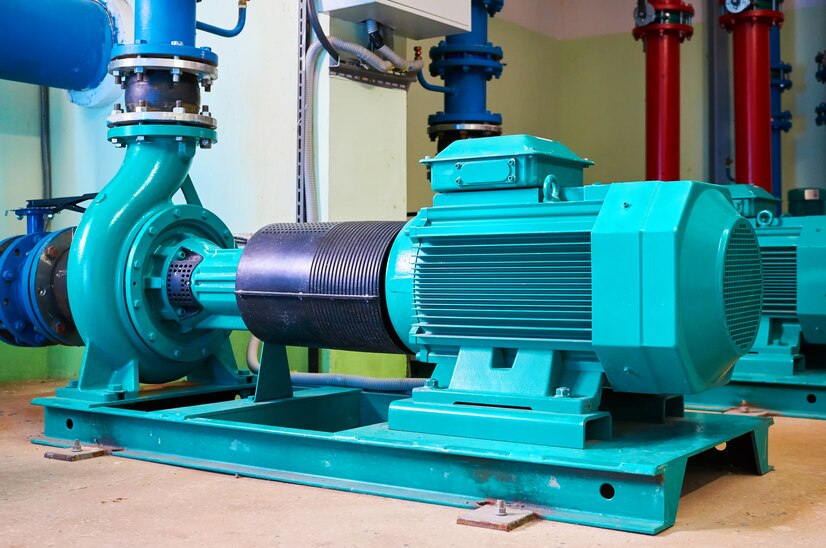
Centrifugal pumps are a versatile choice for transferring large volumes of low- to high-viscosity liquids efficiently. At the heart of these pumps is an impeller inside a casing that spins at high speeds to accelerate fluid outward from the center via centrifugal force. The kinetic energy imparted on the liquid creates flow through the discharge piping.

Unlike positive displacement pumps, centrifugal models provide non-pulsating flows that are perfect for services like boosting pressures across piping systems. The curved vanes of impellers can handle particulates without clogging, too. You get reliable service life even when pumping water containing suspended solids or abrasives.

While centrifugal pumps generate substantial heads or pressure rises by velocity change, adjusting impeller diameters and rotational speeds allows customizing performance for the liquid and throughput demands. These pumps can tackle everything from thin polyethylene glycols to highly viscous oils or process chemicals.

Common applications capitalizing on such adaptable pumping capabilities include:

  • Generating water pressures to replace gravity feed systems
  • Transferring diesel and lubricants in refueling operations
  • Moving liquid food ingredients between storage and processing vessels
  • Circulating hot oil to distribute heat at chemical plants
  • Supplying river water to filtration systems at portable plants

Whether thin or thick, corrosive or benign, centrifugal pumps represent a safe bet for continuously handling large volumes across pipelines with ease.

Rotary Pumps

Rotary pumps handle liquids through unique rotary displacement mechanisms like gears, lobes, vanes, screws, and cavities. This single shaft and bearing design not only minimizes maintenance but enables handling viscous products up to one million cPs. Such high viscosity capabilities prove invaluable when transferring adhesives, coatings, greases, tars, and heavy crude oils across food processing, chemical production, oil drilling, wastewater treatment, and paper manufacturing settings.

While providing pulse-free flow, rotary pumps allow bi-directional operation as well, either pumping or metering flow, depending on how system valves and controls are set up. This flexibility suits applications ranging from precision additive dosing to bulk transfers into tank trucks. By handling everything from solvents to sludge, you get optimal utility from just one rotary pump type.

Reciprocating Pumps

Reciprocating Pumps

Oil patches, mines, boiler rooms, and chemical plants have relied on heavy-duty reciprocating pumps for ages to easily transfer viscous fluids. A motor-driven piston is thrust inside a cylinder to draw in suction liquid via balls check valves before discharging volumes out under high pressure—all in continuous cycles.

This positive displacement working principle is suitable for high-pressure injection duties. Plunger pumps configured for ultra-high pressures facilitate hydraulic fracturing operations across gas and oil wells to improve yields, for example. Boiler feed pumps also ensure precise metering of feedwater to maintain proper drum levels and steam output.

When handling toxic fluids like aircraft deicing agents that require containment, reciprocating pumps prevent leaks and offer explosion-proofing as well. You can count on this versatile pump style for mission-critical transfer and metering challenges.

Metering Pumps

Whether conveying ammonia, alcohol, or even fruit concentrates and medicines, metering pumps ensure accurate flow measurement and dispensing. Diaphragms pulsate or pistons stroke at controlled speeds to handle precise liquid volumes per cycle. Operating much like precision reciprocating pumps, metering units work continuously to inject additives, introduce treatment chemicals, or dose active ingredients at extremely narrow tolerances.

You gain optimized usage of expensive ingredients, prevent overdosing situations, cut loss from giveaways, and ensure product quality consistency thanks to such pinpoint flow control. Water treatment facilities, swimming pool operators, semiconductor fabs, and pharmaceutical producers rely extensively on metering pumps for regulated chemical handling day in and day out.

Read Also: 10 Benefits & Drawbacks Of Purchasing A Heat Pump

Diaphragm Pumps

Diaphragm Pumps

Diaphragm pumps lend unique advantages for abrasive fluid handling by eliminating exposure of rotating shafts and vanes to the pumping liquid. Flexible attached membranes pulsate instead to facilitate flow. This makes diaphragm pumps ideal for slurries across mining, agriculture processing, wastewater treatment, paper mass forming, and food pureeing applications where solids quickly erode steel impellers.

Check valves ensure directional flow as the elastomer membranes alternatively draw suction and achieve discharge. You don’t have to worry about leaks either when transferring aggressive solvents or corrosive chemicals, thanks to the isolation membranes provide between pump internals and casings exposed to liquids. Whether high-purity beverage ingredients or hazardous paint pigments, diaphragm pumps safeguard processed products and personnel.

Choosing The Best Type For Your Needs

With insight into the major transfer pump categories, you can zero in on options fitting your capacity, liquid properties, flow rates, pressure rise, and overall application demands. Centrifugal pumps take the lead for high flow conditions, while metering and diaphragm designs manage strict precision flow control. Evaluate operating environments as well when materials compatibility is critical. Discussing details with suppliers gives you professional guidance to match a pump successfully.

The wide world of transfer pumps holds something suitable for any liquid transfer duty. Do your homework on the fluid properties and application specs. Understanding pump operating principles also guides you to the ideal selection. With these insights, you pick the right pump to fulfill your liquid handling requirements.

Conclusion

The various types of transfer pumps each serve distinct applications depending on factors like liquid characteristics, flow rates, pressures, precision, and duty environments. You now have a helpful overview of the unique features, workings, and typical uses of centrifugal, rotary, reciprocating, metering, and diaphragm pumps. With these fundamentals, you can make informed decisions when selecting a transfer pump for your needs. Discussing specifics with suppliers adds insights to hone in on the best equipment.

Additional:

Barsha Bhattacharya is a senior content writing executive. As a marketing enthusiast and professional for the past 4 years, writing is new to Barsha. And she is loving every bit of it. Her niches are marketing, lifestyle, wellness, travel and entertainment. Apart from writing, Barsha loves to travel, binge-watch, research conspiracy theories, Instagram and overthink.

View all posts

Leave a Reply

Your email address will not be published. Required fields are marked *

All Comments

Good post! We will be linking to this particularly great post on our site. Keep up the great writing

I’m often to blogging and i really appreciate your content. The article has actually peaks my interest. I’m going to bookmark your web site and maintain checking for brand spanking new information.

Related

EMS Scheduling Software

A Look At The Many Benefits Of EMS Scheduling Software

With a high volume of calls and constantly changing schedules, it's easy for the work done by emergency medical services to get chaotic. As such, EMS providers are constantly searching for ways to improve their operations and provide better patient care. One area where technology has proven to be particularly useful is in scheduling and dispatching EMS personnel. EMS scheduling software is specifically designed to help EMS providers manage their schedules more effectively, reducing the chances of missed shifts, double bookings, and other scheduling mistakes. But that's not all, as this software offers a multitude of other benefits that we shall discuss below. That said, let’s take a closer look at EMS scheduling software and explore the many ways Paramediq can help EMS providers streamline their operations, improve response times, and ultimately save lives. Dispatch Calls Efficiently & Quickly In the past, EMS providers relied on phone calls and pagers to receive dispatches. This process was often slow and unreliable, and it could take several minutes to reach a provider. But with EMS scheduling software, dispatchers can send out alerts to EMS providers in seconds, allowing them to respond to emergencies much faster than before. This saves valuable time and can mean the difference between life and death for a patient. Additionally, EMS scheduling software can be integrated with GPS technology, which allows dispatchers to track the location of EMS providers in real time. This helps dispatchers to make more informed decisions about which provider to dispatch based on their proximity to the emergency. Thus, patients can receive care as quickly as possible, without having to wait for a provider who is further away. Get Real-time Updates and Notifications EMS scheduling software also offers real-time updates and notifications about the status of an emergency in real-time. For example, they can receive notifications about the patient's condition, any changes in the situation, and any updates from other team members. This helps to keep everyone on the same page and ensures that EMS providers have the information they need to provide the best possible care. Moreover, real-time notifications can also help EMS providers manage their schedules and stay organized. This can help to prevent double bookings or scheduling conflicts, which can be stressful for EMS providers and impact patient care negatively. Smooth Billing Process EMS agencies must manage a range of billing and invoicing tasks, which can be time-consuming and stressful. Fortunately, EMS scheduling software offers a range of features that can help to simplify the billing process. For example, agencies can use the software to track the time spent on each call, ensuring that they bill accurately for their services. Furthermore, EMS scheduling software can help automate the billing or claims process, which can save time and reduce errors. This can ultimately lead to faster payments and improved cash flow for EMS agencies. Compliance With Labor Laws and Regulations EMS agencies must comply with a range of labor laws and regulations regarding certain facets of patient care such as working hours, how sensitive patient information is handled, and insurance data, which can be challenging without EMS scheduling software. However, EMS agencies can use the software to track employee hours and ensure that they are not working beyond their allotted hours. This can help to prevent burnout and ensure that EMS providers are well-rested and ready to respond to emergencies. Similarly, software with tight security features and protocols can ensure patient information is securely stored and accessed by the right people. Real-time Analytics Finally, EMS scheduling software offers real-time analytics. This means that EMS agencies can track their performance and identify areas for improvement in real-time. For example, they can use the software to track response times and identify any delays in their operations. This can help agencies to make more informed decisions about how to improve their operations and ultimately provide better patient care. Moreover, the software can help EMS agencies to identify trends and patterns in their operations. They can use the software to track the types of emergencies they respond to, which can help to inform training and resource allocation decisions. The Bottom Line As you can see, EMS scheduling software offers a range of benefits for improved efficiency, better accuracy, and enhanced communication between team members. However, to get the most out of these benefits you must be proactive by involving your team in the process to ensure that everyone is on board and that the software meets the needs of your team. You must also provide adequate training as some features can be complex.  By following these tips and leveraging the many benefits of EMS scheduling software, EMS agencies can improve their operations, enhance patient care, and ultimately save the lives of many people. Read Also: Delegating And Prioritizing: Tools For Managing Multiple Scheduling Demands How You Can Manage Your Business with Scheduling Software? Home Maintenance Tips To Keep Your Home In Good Condition

READ MOREDetails
Software Technologies

6 Software Technologies That Will Dominate 2021

Technology has never got better than in the recent past and looking at what we have experienced so far we could expect some very influential developments in the years ahead especially in 2018. This year would be a crucial period for all types of developing software technologies that we would experience in the future. Many of what we have experienced in the past year could be considered as nascent when seen in its present sense but are definitely going to explode into a technological bomb by the end of 2018 and beyond. One very distinct technology that is used today would be the versatile Svitla Systems which are specific and precise in application. We need to be ready to employ these software technologies and get a hang of what they are because the next year and years thereafter would be so advanced and if we do not comprehend fast we could be left behind. The pace of software technologies advancement like the Svitla Systems is unprecedented and it is making living for us humans that much easier and convenient. The overall idea of software technologies development is just that, to make our lives more comfortable by using the various devices which would practically bring life to our fingertips. The digital world is growing by leaps and bounds with software being developed in every sphere making the business a user-friendly offering to its vast clientele. We look at what is in store for us in 2018 and beyond and what consumers would be offered to make their purchasing experience that much enjoyable and convenient. Different Ways The Software Technologies  Have Evolved Over The Years    There are multiple ways software technology have evolved over the years. In this article, you will get the complete details of it. 1. Narrow Artificial Intelligence: Artificial Intelligence has been used by us extensively but now we would be employing it for specific purposes to ensure optimum benefits are derived. Studies have indicated that more than 40% of different entities across the board use AI or Artificial Intelligence in their day to day activities. This is going to increase and the AI itself is set to proliferate in use. Most of the devices that we use are driven by Artificial Intelligence of some kind and it is slowly encompassing our lives and there would be a day when we would be completely dependent and engulfed by it. 2. Digital Twins technology: This would be used extensively to drive business in all spheres by combining digital and physical data that is made available to represent a single purpose within a set parameter. This would be enhanced with what is popularly referred to as the Internet of Things or IoT. An extraordinary user experience is created when event producers enable their prospective customers of engaging themselves and attending such events. Customers could do so by virtually creating their twin of attending these events and be elsewhere whilst in reality, they are at the specified location. 3. Mixed realities: This is a mixture of all Virtual Realities or VR which has been around for some time. The new software would allow customers to see anything they would want by placing them in reality. For example, browsing through a clothing store potential customers could dress mannequins and see how the item would look or even decorate their homes with furniture and see what the effects would be. Virtual reality could revolutionize the way we would look at life as we could see many things that we would not be present in virtual reality and enjoying everything that needs to be seen from the comfort of our homes. 4. Event-driven applications: This software would ensure that prospective customer who would take their requirements by clicking on their screens and showing what they would look for into another level. This information would be decimated and addressed to ensure they get what they want and make it a better user experience for them. Most appliances that we use could collate information and relay to marketers information on our behavioral patterns which would make them improve customer user experience. 5. Digital centralization: Every little thing we need to be done would be centralized onto our digital device with the desktop computer becoming obsolete. From home security to shopping, travel plans and every other thing that you would like to do would be brought to your fingertips. Life would be made very comfortable especially the issues that we find difficult to slot sufficient time in our busy lives to accomplish. 6. Blockchain technology: This is virtual money where in reality there is no exchange of what we know as cash. This would eliminate many issues that are troubling the monetary world. This software technology is peer to peer eliminating large computers servers where many issues could crop up which have been the bane of the financial world. Blockchain revolves around the fast-proliferating cryptocurrencies which are taking over gradually from the paper money that we know of. How the transition would take place and when it would do so is a major point of contention in the financial world. There is tremendous resistance but when its advantages are obvious there is no way it could be stopped and would be a matter of time. Conclusion: Software technologies are developing from all parts of the world with the Svitla Systems being just one of them and is far ahead of its times. Some others which are still to be realized as workable but the time would come when things would come into perspective. The world likes technology and the recent years have seen many developments and there is more to come as the years go by and where it will end, nobody would know. The introduction of new software technology creates a new step for further development and as long as new technology is developed the pace would not slow down or recede. The whole world is encompassed with a passion to create user-friendly software and also hardware to go hand in glove with it and this trend is sure to continue into infinity. There would not be any slowdown that we could see, not in 2018 and definitely not beyond that too. Read Also: Tips To Choose The Best Inventory Management Software Securing Mobile App Development With Blockchain Technology

READ MOREDetails
type c cable

What is Type C Cable, and Is It Worth Buying

Nowadays, type-c cable can be seen in the newest phones, laptops, and tablets. The cable was first published in 2014, but the technology became handy only in 2017-18, and it replaced the older standards of USB very quickly. According to some reports, type c cable also offers new audio standards as a potential replacement for a 3.5 mm audio plug. The type C cable looks almost the same as a micro USB connector from a distance, but it is slightly thicker and more oval in shape. The thicker design brings its best feature which is unflappability. Until now, the standard cable for us was the type of cable. We have even moved from USB 1 to USB 2 then USB 3 devices, but the USB connectors stayed the same. Fortunately, with the help of technology, we get type C cable that is much more powerful and easier to use than the old cables. Difference between type C cable and the old USB cable: The primary difference between the old USB port and the type C cable is the reversible connector feature. Both ends have a connector of the same size so that you can plug it in any way you want. The one end of the Old ones are bigger and rectangular shape connectors that we use two plugs in two game consoles, desktops, and giant-screened laptops, and the other end was used to connect to small devices like phones. These two ends of the same cable are called type A and type B. Advantages of type C cable: It is compatible with USB 3.1 specifications, which makes it much more efficient in data encoding, and hence, it can transfer data at a speed of 10Gbps. Type C cables are commonly used for charging portable devices. And with this type of cable, charging is much faster than the old ways. In many ways, type C is much better than micro USB. For instance, type C can be used for both input and output power, where micro USB can only input power. Generally, type C uses 18 watts to charge phones and a maximum of 100 watts to charge laptops. The type C cable can indeed perform faster than the others, and along with that, it is also the strongest one. This is why, for most people, type C cable is much more reliable. Why should you use a type C cable?  Type C cable sets a new standard for USB connectors. It can carry a significantly high level of power and can be used to charge almost every device, and devices can be charged much faster. Along with that, type C cable also offers you a high transfer speed that can transfer 4K videos. The most amazing part about the type C cable is its size. The cable is almost half in width and one-third in the height of a standard USB cable, making it even more user-friendly. Read Also: Headphones vs Earbuds: How to Choose for the Best Music Experience Google Getting into Phones – And It’s Changing The Mobile Internet Everything You Need To Know About Mobile Solar Generators Reduce Your Exposure to Radiation When Using Your Mobile Phone Practical Guide to Install Cabling in Your New House

READ MOREDetails