












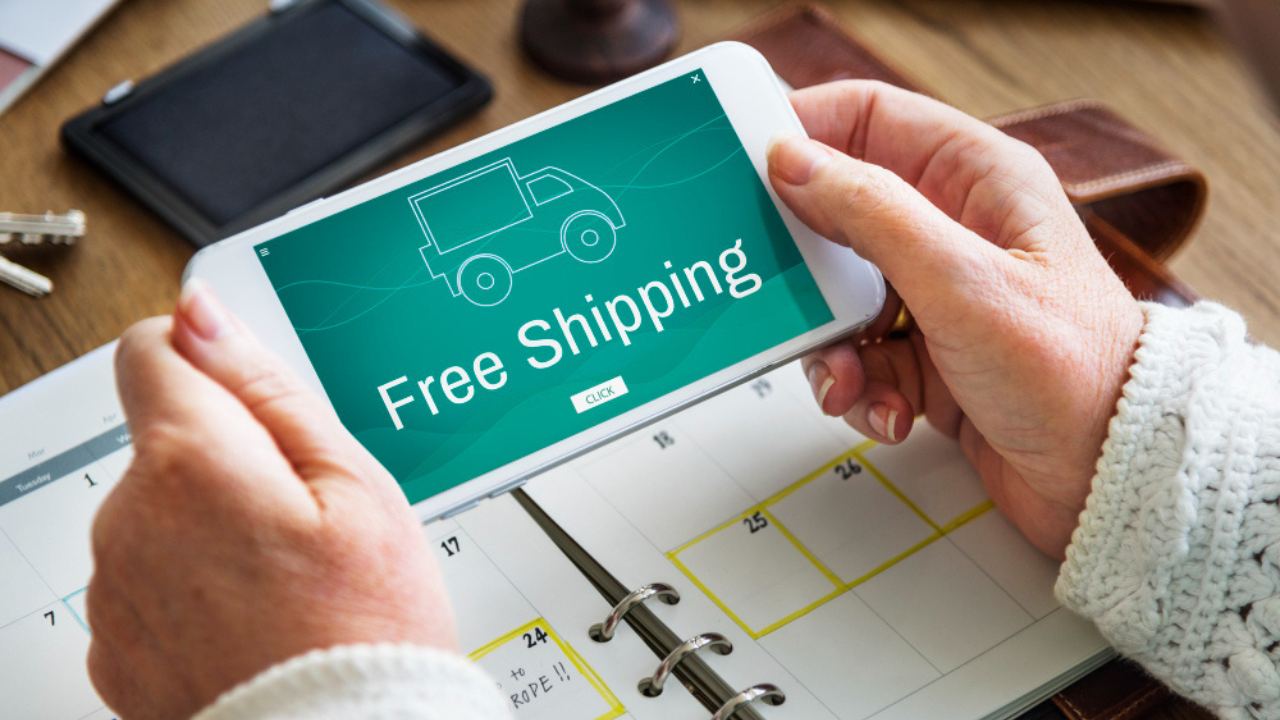
Canadian online shoppers have spoken, and their message is clear: shipping costs are a dealbreaker.
Recent industry data shows that cart abandonment rates spike dramatically when unexpected shipping charges appear at checkout.
For Canadian retailers, the question is no longer whether to offer free shipping, but how to structure it profitably.
Here is how free shipping thresholds are changing the way Canadians shop online and what retailers are doing to keep up.
Moreover, these data-driven free shipping thresholds are encouraging higher order values. As a result, the free shipments are limited to between $75-$100.
Moreover, the end of the U.S. $800 duty-free threshold for the Canadian sellers now forces the Canadian sellers to pay duties and fees for brokerage.
Thus, the sellers can not simply continue with universal free shipping. Hence, now it is important to calculate the breakeven points more minutely to protect the profit margins.
In this article, we will learn about the benefits of implementing a free shipping strategy.
What Is The Importance Of A Free Shipping Strategy?
Here are some of the main reasons that make a smart free shipping strategy crucial.
1. The Psychology Behind Free Shipping
The retailers can not simply offer free shipping on every item. Moreover, offering free delivery over a certain dollar amount can be a great free shipping strategy.
Customers generally try to reach that amount to avoid having their product shipped for free. On the other hand, the customers generally do not intend to buy more without the limit being set.
Hence, the customers tend to reach that threshold. This behavior can be immensely profitable for any seller.
Moreover, there is a rational thinking behind this. The clients see it as a waste of money when they have to pay a $10 delivery charge for a $60 product.
It amounts to more than 16% of the product's total cost. However, adding an additional $15 worth of product can save them the delivery charges.
Hence, this encourages them to add more to the cart. The retailers set up the threshold properly to ensure they can manage the delivery charge.
2. What Canadian Retailers Are Getting Right?
Most of the Canadian e-commerce stores generally set the free shipping threshold above their average order value.
Hence, they set the threshold at $75, even though most customers naturally spend around $60. Thus, this feels like a meaningful increase in the number of orders.
The customers, on the other hand, do not consider this as out of reach, as the amount is very nominal.
Moreover, the purchase of consumables performs better under this free shipping strategy. Moreover, this includes personal care supplies, vaping products, pet supplies, and others.
Consumers feel they will use these products anyway after a certain period. Hence, they do not find any harm in stocking them.
Moreover, a slightly higher order value today simply means a longer gap before the next purchase, thereby reducing the retailer's per-order fulfillment costs over time.
This Canadian online vape retailer, for example, offers free shipping on orders over $75. For a category where customers typically purchase multiple items at once, the threshold encourages bulk buying behaviour that benefits both the customer and the business.
The customer saves on shipping costs, and the retailer processes fewer, larger orders rather than many small ones.
3. What Are The Major The Regional Challenge For Shipping?
The Canadian market presents some of the most unique shipping challenges, adding additional constraints.
Hence, the free shipping polices turn out to be more complicated than those of American retailers.
Thus, the Canadian market primarily demands a unique free shipping strategy. Moreover, the distribution of the population also acts as a unique challenge.
Users have to ship packages to remote locations, such as Ontario to British Columbia. Hence, this often costs a lot more than delivering within the same province.
Retailers handle this in diverse ways. While some absorb the cost difference entirely, treating it as a marketing expense.
Others restrict free shipping to specific carriers or service levels, offering free standard delivery while charging for expedited options.
A few use zone-based pricing, which adjusts the free shipping threshold based on the customer's location, though this approach can feel inconsistent for shoppers.
The most common and generally most effective approach is a flat national threshold. It keeps the messaging simple, which matters more than most retailers realize.
A clear "Free shipping on orders over $75" banner is infinitely more persuasive than a complicated table of regional shipping rates.
4. How Shoppers Can Take Advantage?
If you shop online frequently, understanding free shipping thresholds can save you meaningful money over the course of a year. A few practical strategies make this easy.
First, consolidate your purchases. Rather than placing several small orders throughout the month, batch your buying into fewer, larger orders that clear the free shipping threshold. This is particularly effective for products you use regularly and that do not expire quickly.
Second, compare retailers within your product category on shipping policies before committing to a purchase.
Two stores might offer similar pricing on individual items, but if one has a lower free shipping threshold or includes free shipping on all orders, the total cost of ownership shifts significantly.
Third, sign up for newsletters from your preferred retailers. Many Canadian e-commerce stores offer periodic free shipping promotions with no minimum, especially around holidays and seasonal sales events. These windows are ideal for stocking up.
What Is The Future Of Shipping In Canadian E-Commerce?
Moreover, free shipping strategy has become a sine qua non of profitability. People find themselves at a disadvantage when they do not take advantage of free shipping.
As more Canadian retailers adopt free shipping policies, the ones who hold out will find themselves at an increasing disadvantage.
The next frontier is speed. Once free shipping becomes universal, the competitive battleground shifts to delivery timelines.
Same-day and next-day delivery, already common in major urban centres, will expand to smaller cities as fulfillment networks mature.
For Canadian retailers with physical store locations that can double as fulfillment hubs, this represents a significant structural advantage over pure online competitors.
For now, though, the retailers winning the most loyal customers are the ones making it easy and affordable to buy.
In a market where the closest competitor is always one search away, removing friction from the checkout experience is not just a good strategy. It is survival.
Read Also: