












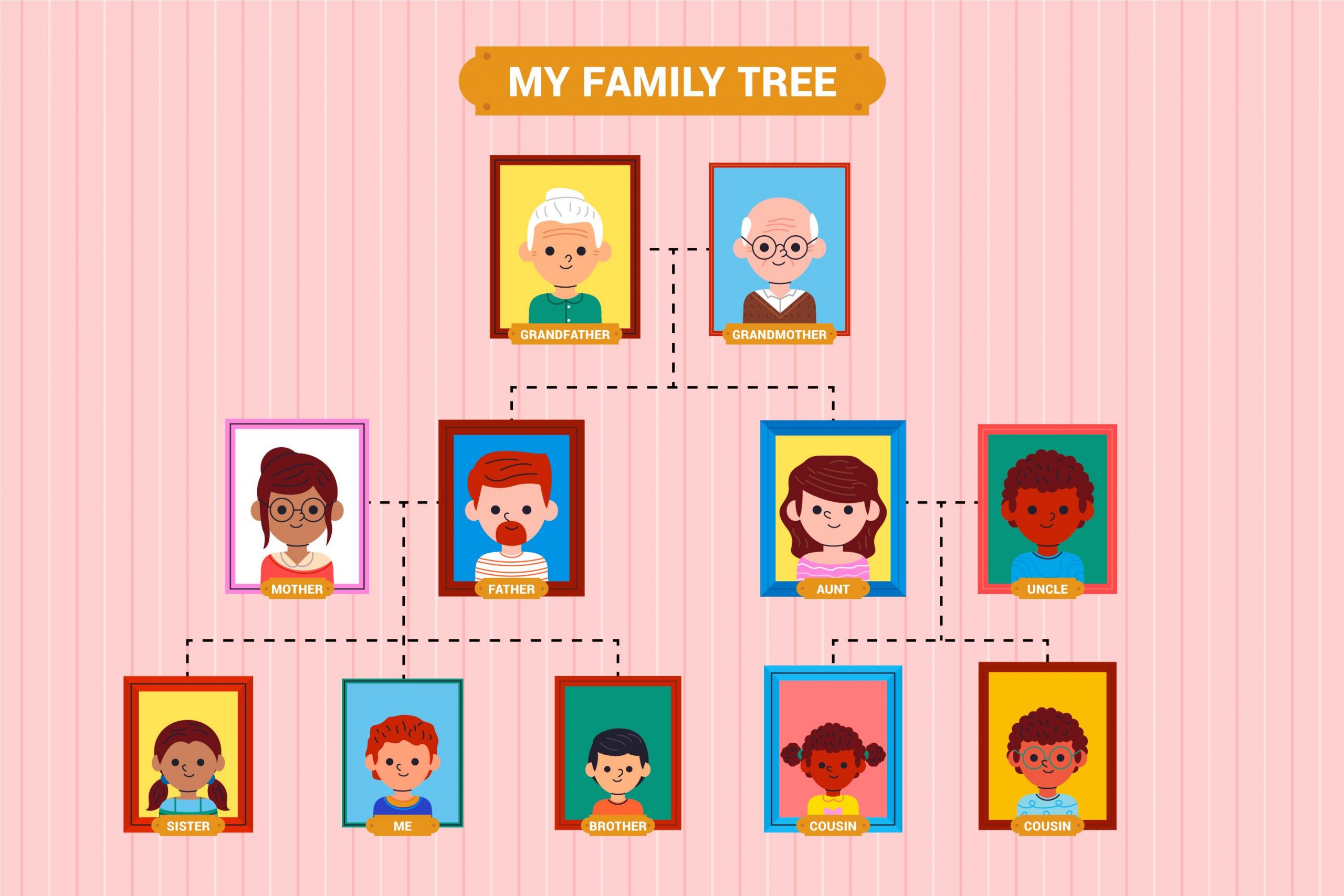
Today’s topic: How to find your family tree?
Pulling everything together in a different way can reveal patterns you were missing.
Cross-referencing sources against events in other family members' lives can lead you to breakthroughs you weren't expecting.
These seven methods treat that wall as a puzzle, not a dead end.
1. Think In Clusters, Not Individuals:
Census records provide a wealth of information for genealogists, ranging from names and ages of family members to where ancestors were born to the value of their property.
However, one of the most genealogically useful (and yet overlooked) aspects of census records is the neighbors. This data can be very important when we can't find anything about our ancestors.
The Jones family living nearby could give us a clue about where they are from. Families often migrated together with relatives or friends from their home communities.
By examining neighborhood clusters across multiple census years, you can track migration patterns and even identify maiden names through neighboring siblings.
2. Follow The Collateral Lines:
In case your direct ancestor didn't leave a paper trail, there's a chance that their siblings did.
A brother or sister of your ancestor who filed a land claim, a cousin listed in a probate document, or a sibling's marriage or birth can help you use newspapers and obituaries to trace ancestors and your family history.
These collateral lines carry the same surnames, the same geographic patterns, and often the same witnesses and neighbors.
When your ancestor leaves no trace, their siblings and cousins often provide the missing pieces through their own records.
By reconstructing entire family groups, you can discover maiden names, migration routes, and family connections that would otherwise remain hidden.
3. Use The Spaces Between The Records:
Unsuccessful searches are not a waste of time; they're part of the research process.
If you don't find a particular ancestor in the tax rolls of a given county from 1845 to 1852, for example, you've learned something. He or she either arrived after 1852 or left before 1845.
Do the same with where you do find him or her, and you can often pin down a migration window to a few years.
Negative evidence is still evidence—it helps you narrow possibilities and focus your search. Every "not found" result eliminates options and clarifies the timeline of your ancestor's movements.
By systematically documenting what records don't contain your ancestor, you create boundaries that define when and where they must have been.
Combined with positive findings from other locations, these gaps often reveal precise migration dates and help you prioritize which records to search next.
4. Look At Religious Archives Beyond Baptismal Records
Churches had more meticulous records than government institutions, and for many genealogists, their research ends with a baptismal certificate.
But different denominations also had "Letters of Transfer" that were paper notes, which congregants departing from one church could bring to another in a new town.
These letters transferred members in a way no government paper could.
A family that doesn't appear in a county's civil record likely appears in a church transfer register, with the date of their arrival and their place of origin varying.
Church membership records, meeting minutes, and discipline records can also reveal family relationships and exact migration dates.
These documents often name entire family groups and specify their origins, providing details that civil records never captured.
Also, this will help you significantly in your journey towards knowing how to find your family tree.
5. Dig Into Local Newspapers:
Nearly 27% of Americans have used an online service to search for their family history, which means most people are researching the same digitized databases. What they're looking for is in the local newspaper archives.
The local newspaper was created by people who knew the community.
Small-town newspapers regularly printed sections called "Local Happenings" in which they featured out-of-town visitors, family reunions, and who spent the vacations.
They have never been indexed. You have to read them.
One of the most effective ways to find ancestors who have not left a death certificate is to look for other family members named in the record.
An obituary of a sibling will often give the names and locations of relatives who survive, offering you two or three new tracks that you did not have before.
6. Check Unclaimed Property Databases:
This is an unexpected one.
Occasionally, when someone relocates abruptly or passes away and doesn't have family in the immediate area, they'll abandon utility deposits, lost-balance bank accounts, or uncollected checks.
Most places have open resources that list this unclaimed property, occasionally including the last known mailing addresses and dates.
It won't be your golden genealogical record, but it can be proof that your ancestor resided in a certain location at a certain time - precisely the type of fact-checking proof you need to collapse a brick wall.
These mundane financial records can pinpoint exact addresses and timeframes that other sources fail to provide.
Unclaimed property databases are often searchable online and may provide the crucial link between locations or fill gaps in your timeline.
7. Match Your DNA Results To The Fan Club:
DNA matching can become frustrating rather quickly.
This is particularly true within populations known for endogamy. Moreover, it is often involved in cousin marriages and the repetition of surnames.
Also, the number of centimorgans alone may not provide you with much information.
This is where the FAN club comes in. By treating an ancestor's friends, associates, and neighbors as a defined group, you will gain a supportive framework for analyzing those DNA cousins.
If your DNA cousin shares the same surname as someone repeatedly associated with your ancestor.
That's no random, low odds coincidence. It is where you want to follow that through land, church, and local records.
How To Find Your Family Tree? The Records Are There If You Know Where To Look
There is a solution to every difficult research problem. Maybe it's an obscure document that identifies the correct individual.
Perhaps it's a church transfer letter or an account left long forgotten in a bank.
What's important is the method and the mindset, not the site. Stop looking for the person, and instead, look for other people and records connected to their world.
The missing relatives usually show up.
Shift your focus from direct searches to the community and network surrounding your ancestor.
By reconstructing their entire social world, you'll often find your ancestor embedded within records you would have otherwise overlooked.