

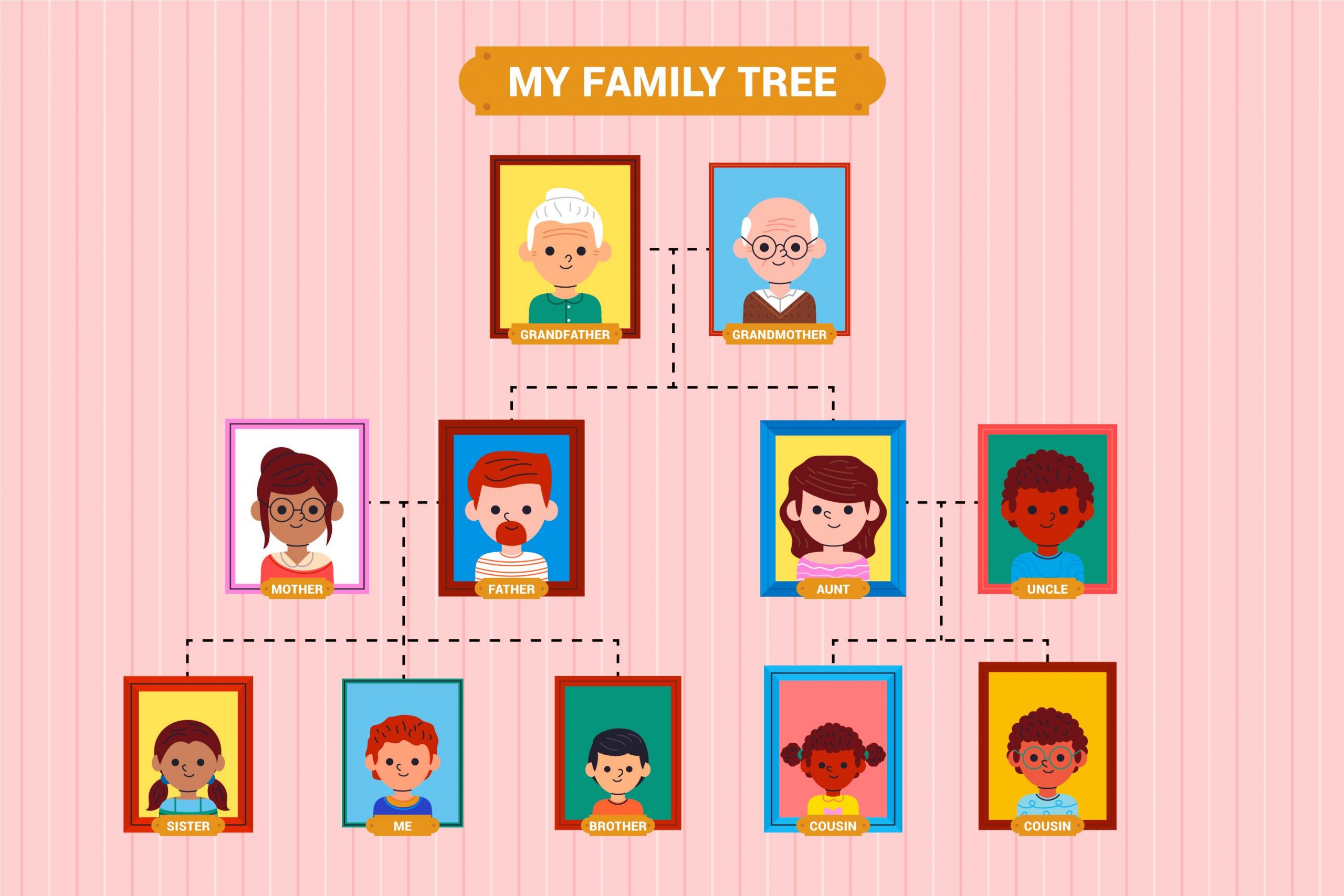
7 Creative Ways To Find Missing Branches On Your Family Tree

by

09 April 2026

Blog

how to find your family tree

Today’s topic: How to find your family tree? 

Pulling everything together in a different way can reveal patterns you were missing. 

Cross-referencing sources against events in other family members' lives can lead you to breakthroughs you weren't expecting. 

These seven methods treat that wall as a puzzle, not a dead end.

1. Think In Clusters, Not Individuals:

Census records provide a wealth of information for genealogists, ranging from names and ages of family members to where ancestors were born to the value of their property. 

However, one of the most genealogically useful (and yet overlooked) aspects of census records is the neighbors. This data can be very important when we can't find anything about our ancestors. 

The Jones family living nearby could give us a clue about where they are from. Families often migrated together with relatives or friends from their home communities. 

By examining neighborhood clusters across multiple census years, you can track migration patterns and even identify maiden names through neighboring siblings.

2. Follow The Collateral Lines:

In case your direct ancestor didn't leave a paper trail, there's a chance that their siblings did. 

A brother or sister of your ancestor who filed a land claim, a cousin listed in a probate document, or a sibling's marriage or birth can help you use newspapers and obituaries to trace ancestors and your family history. 

These collateral lines carry the same surnames, the same geographic patterns, and often the same witnesses and neighbors.

When your ancestor leaves no trace, their siblings and cousins often provide the missing pieces through their own records. 

By reconstructing entire family groups, you can discover maiden names, migration routes, and family connections that would otherwise remain hidden.

3. Use The Spaces Between The Records:

Unsuccessful searches are not a waste of time; they're part of the research process. 

If you don't find a particular ancestor in the tax rolls of a given county from 1845 to 1852, for example, you've learned something. He or she either arrived after 1852 or left before 1845. 

Do the same with where you do find him or her, and you can often pin down a migration window to a few years.

Negative evidence is still evidence—it helps you narrow possibilities and focus your search. Every "not found" result eliminates options and clarifies the timeline of your ancestor's movements. 

By systematically documenting what records don't contain your ancestor, you create boundaries that define when and where they must have been. 

Combined with positive findings from other locations, these gaps often reveal precise migration dates and help you prioritize which records to search next.

4. Look At Religious Archives Beyond Baptismal Records

Churches had more meticulous records than government institutions, and for many genealogists, their research ends with a baptismal certificate. 

But different denominations also had "Letters of Transfer" that were paper notes, which congregants departing from one church could bring to another in a new town.

These letters transferred members in a way no government paper could. 

A family that doesn't appear in a county's civil record likely appears in a church transfer register, with the date of their arrival and their place of origin varying. 

Church membership records, meeting minutes, and discipline records can also reveal family relationships and exact migration dates. 

These documents often name entire family groups and specify their origins, providing details that civil records never captured. 

Also, this will help you significantly in your journey towards knowing how to find your family tree. 

5. Dig Into Local Newspapers:

Nearly 27% of Americans have used an online service to search for their family history, which means most people are researching the same digitized databases. What they're looking for is in the local newspaper archives.

The local newspaper was created by people who knew the community. 

Small-town newspapers regularly printed sections called "Local Happenings" in which they featured out-of-town visitors, family reunions, and who spent the vacations. 

They have never been indexed. You have to read them.

One of the most effective ways to find ancestors who have not left a death certificate is to look for other family members named in the record. 

An obituary of a sibling will often give the names and locations of relatives who survive, offering you two or three new tracks that you did not have before.

6. Check Unclaimed Property Databases:

This is an unexpected one. 

Occasionally, when someone relocates abruptly or passes away and doesn't have family in the immediate area, they'll abandon utility deposits, lost-balance bank accounts, or uncollected checks. 

Most places have open resources that list this unclaimed property, occasionally including the last known mailing addresses and dates.

It won't be your golden genealogical record, but it can be proof that your ancestor resided in a certain location at a certain time - precisely the type of fact-checking proof you need to collapse a brick wall. 

These mundane financial records can pinpoint exact addresses and timeframes that other sources fail to provide. 

Unclaimed property databases are often searchable online and may provide the crucial link between locations or fill gaps in your timeline.

7. Match Your DNA Results To The Fan Club:

DNA matching can become frustrating rather quickly. 

This is particularly true within populations known for endogamy. Moreover, it is often involved in cousin marriages and the repetition of surnames.

Also, the number of centimorgans alone may not provide you with much information.

This is where the FAN club comes in. By treating an ancestor's friends, associates, and neighbors as a defined group, you will gain a supportive framework for analyzing those DNA cousins. 

If your DNA cousin shares the same surname as someone repeatedly associated with your ancestor.

That's no random, low odds coincidence. It is where you want to follow that through land, church, and local records.

How To Find Your Family Tree? The Records Are There If You Know Where To Look

There is a solution to every difficult research problem. Maybe it's an obscure document that identifies the correct individual. 

Perhaps it's a church transfer letter or an account left long forgotten in a bank. 

What's important is the method and the mindset, not the site. Stop looking for the person, and instead, look for other people and records connected to their world. 

The missing relatives usually show up.

Shift your focus from direct searches to the community and network surrounding your ancestor. 

By reconstructing their entire social world, you'll often find your ancestor embedded within records you would have otherwise overlooked.


Barsha Bhattacharya is a senior content writing executive. As a marketing enthusiast and professional for the past 4 years, writing is new to Barsha. And she is loving every bit of it. Her niches are marketing, lifestyle, wellness, travel and entertainment. Apart from writing, Barsha loves to travel, binge-watch, research conspiracy theories, Instagram and overthink.

View all posts

Leave a Reply

Your email address will not be published. Required fields are marked *

Related

Free Shipping Strategy

How Free Shipping Policies Are Reshaping Canadian E-Commerce In 2026?

Canadian online shoppers have spoken, and their message is clear: shipping costs are a dealbreaker. Recent industry data shows that cart abandonment rates spike dramatically when unexpected shipping charges appear at checkout. For Canadian retailers, the question is no longer whether to offer free shipping, but how to structure it profitably. Here is how free shipping thresholds are changing the way Canadians shop online and what retailers are doing to keep up. Moreover, these data-driven free shipping thresholds are encouraging higher order values. As a result, the free shipments are limited to between $75-$100. Moreover, the end of the U.S. $800 duty-free threshold for the Canadian sellers now forces the Canadian sellers to pay duties and fees for brokerage. Thus, the sellers can not simply continue with universal free shipping. Hence, now it is important to calculate the breakeven points more minutely to protect the profit margins. In this article, we will learn about the benefits of implementing a free shipping strategy.  What Is The Importance Of A Free Shipping Strategy? Here are some of the main reasons that make a smart free shipping strategy crucial. 1. The Psychology Behind Free Shipping The retailers can not simply offer free shipping on every item. Moreover, offering free delivery over a certain dollar amount can be a great free shipping strategy. Customers generally try to reach that amount to avoid having their product shipped for free. On the other hand, the customers generally do not intend to buy more without the limit being set. Hence, the customers tend to reach that threshold. This behavior can be immensely profitable for any seller. Moreover, there is a rational thinking behind this. The clients see it as a waste of money when they have to pay a $10 delivery charge for a $60 product. It amounts to more than 16% of the product's total cost. However, adding an additional $15 worth of product can save them the delivery charges. Hence, this encourages them to add more to the cart. The retailers set up the threshold properly to ensure they can manage the delivery charge. 2. What Canadian Retailers Are Getting Right? Most of the Canadian e-commerce stores generally set the free shipping threshold above their average order value. Hence, they set the threshold at $75, even though most customers naturally spend around $60. Thus, this feels like a meaningful increase in the number of orders.   The customers, on the other hand, do not consider this as out of reach, as the amount is very nominal. Moreover, the purchase of consumables performs better under this free shipping strategy. Moreover, this includes personal care supplies, vaping products, pet supplies, and others. Consumers feel they will use these products anyway after a certain period. Hence, they do not find any harm in stocking them. Moreover, a slightly higher order value today simply means a longer gap before the next purchase, thereby reducing the retailer's per-order fulfillment costs over time. This Canadian online vape retailer, for example, offers free shipping on orders over $75. For a category where customers typically purchase multiple items at once, the threshold encourages bulk buying behaviour that benefits both the customer and the business. The customer saves on shipping costs, and the retailer processes fewer, larger orders rather than many small ones. 3. What Are The Major The Regional Challenge For Shipping? The Canadian market presents some of the most unique shipping challenges, adding additional constraints. Hence, the free shipping polices turn out to be more complicated than those of American retailers. Thus, the Canadian market primarily demands a unique free shipping strategy. Moreover, the distribution of the population also acts as a unique challenge. Users have to ship packages to remote locations, such as Ontario to British Columbia. Hence, this often costs a lot more than delivering within the same province. Retailers handle this in diverse ways. While some absorb the cost difference entirely, treating it as a marketing expense. Others restrict free shipping to specific carriers or service levels, offering free standard delivery while charging for expedited options. A few use zone-based pricing, which adjusts the free shipping threshold based on the customer's location, though this approach can feel inconsistent for shoppers. The most common and generally most effective approach is a flat national threshold. It keeps the messaging simple, which matters more than most retailers realize. A clear "Free shipping on orders over $75" banner is infinitely more persuasive than a complicated table of regional shipping rates. 4. How Shoppers Can Take Advantage? If you shop online frequently, understanding free shipping thresholds can save you meaningful money over the course of a year. A few practical strategies make this easy. First, consolidate your purchases. Rather than placing several small orders throughout the month, batch your buying into fewer, larger orders that clear the free shipping threshold. This is particularly effective for products you use regularly and that do not expire quickly. Second, compare retailers within your product category on shipping policies before committing to a purchase. Two stores might offer similar pricing on individual items, but if one has a lower free shipping threshold or includes free shipping on all orders, the total cost of ownership shifts significantly. Third, sign up for newsletters from your preferred retailers. Many Canadian e-commerce stores offer periodic free shipping promotions with no minimum, especially around holidays and seasonal sales events. These windows are ideal for stocking up. What Is The Future Of Shipping In Canadian E-Commerce? Moreover, free shipping strategy has become a sine qua non of profitability. People find themselves at a disadvantage when they do not take advantage of free shipping. As more Canadian retailers adopt free shipping policies, the ones who hold out will find themselves at an increasing disadvantage. The next frontier is speed. Once free shipping becomes universal, the competitive battleground shifts to delivery timelines. Same-day and next-day delivery, already common in major urban centres, will expand to smaller cities as fulfillment networks mature. For Canadian retailers with physical store locations that can double as fulfillment hubs, this represents a significant structural advantage over pure online competitors. For now, though, the retailers winning the most loyal customers are the ones making it easy and affordable to buy. In a market where the closest competitor is always one search away, removing friction from the checkout experience is not just a good strategy. It is survival. Read Also: Snowbird Season: Car Shipping For Sun Seekers Fast Freight Solutions: Why Expedited Shipping Is A Game-Changer Ship From Toronto Your Ultimate Guide To Efficient Shipping Solutions

READ MOREDetails
4K IPTV box

ServerCenter Delivers Next-Generation IPTV Box With Enhanced Streaming Capabilities

I currently came to know about a very specific 4k IPTV Box that one of my friends in Canada told me about. Also, I was quite surprised to hear that a lot of people over there rely on this. Now, of course, when I hear something, I must review it! So, the device that I am talking about provides seamless 4K streaming.  In addition, it also gives a superior user experience for home entertainment enthusiasts. For families and individuals searching for reliable home streaming options, ServerCenter has introduced its newest 4k IPTV box. Also, I must mention that this is perfect for modern-day users. We all expect sharper picture quality. In fact, I am sure all of us also have a demand for faster performance from our entertainment devices.  This Canadian company was founded by Harpreet Randhawa. He built this product specifically for people who want smooth playback. And the best part? You can use it without the technical frustrations that often come with budget hardware. What Are The Features Of A 4K IPTV Box? You see, I am aware of the vast selection of IPTV boxes on the market. So there was no chance I would have written a review of just any other device out there.  As I knew that I had to select one of the best ones, I understood it could be overwhelming.  But here are the key factors I considered: 1. Resolution Support   When I am selecting a 4k IPTV box, I would consider one that supports ultra-high-definition (UHD) streaming capabilities. I am sure that a resolution of 1080p may meet the needs of many users. However, if I am investing in a 4K-capable device that enhances current visual quality and ensures compatibility with future streaming content, guess which one I’ll choose! This is because more shows and movies are produced in higher resolutions.  This addition can significantly elevate your viewing experience. Additionally, it also comes with sharper images and richer colors. 2. Processing Power   The performance of your 4k IPTV box greatly depends on its processing capabilities.  A device equipped with a fast processor, ideally a quad-core or higher, can handle multiple tasks simultaneously, reducing the risk of lag and buffering during streaming.  A powerful processor ensures that app loading times are minimized and that you can smoothly navigate through menus without interruptions.  This is particularly important when watching live events or engaging with high-bandwidth applications. 3. Connectivity Options   A reliable and robust internet connection is essential for optimal IPTV streaming.  Therefore, it's important to choose a device that offers versatile connectivity options such as dual-band Wi-Fi support. In addition, this allows for both 2.4GHz and 5GHz frequency bands for better speed and less interference.  Additionally, an Ethernet port provides the option for a wired connection. I am sure you know that this tends to be more stable and faster than wireless options, particularly for high-definition streams. 4. Storage And Expandability   If you intend to record your favorite shows or install multiple applications, look for a 4k IPTV box with sufficient storage capacity.  A model that boasts at least 16GB of internal memory is important for storing apps and content. Guess what? You can do so without running into space issues.  Furthermore, boxes that offer expandable storage via USB or external drives provide added flexibility. Therefore, it allows you to increase storage as your needs grow.  Also, I feel like this feature is particularly useful for avid watchers.  You know, the ones who want to keep a library of recorded programming. 5. User-Friendly Interface   A well-designed user interface can significantly enhance your overall experience with an IPTV box.  Therefore, I always look for devices that offer an intuitive and easy-to-navigate interface. What can I say? I have a knack for seamless browsing through menus and content libraries.  Also, I really like the customizable layouts. I can use it to personalize my viewing experience. In addition, I also like a fast-loading menu. This makes it easier for me to access my favorite content quickly.  Why Is The ServerCenter 4k IPTV Box The One For You? Okay, so I have been researching this 4k IPTV box since last week. Guess what? I have found some very interesting revelations. So, here are the reasons why this device is the one you are looking for: Firstly, the streaming device supports full 4K resolution. So, it handles demanding video content without noticeable lag. Also, there are no buffering issues.  From kids selecting cartoons to grandparents finding their favorite channels, navigation feels natural from the first use. An updated processor sits inside the device, running quieter and consuming less energy than previous hardware versions.  Built-in storage gives users the option to save content locally when they prefer offline viewing.  Remote management features allow anyone to adjust device settings through a phone or tablet, even from outside the home.  This flexibility makes the device practical for modern households. Streaming quality remains consistent even when several devices share the same network connection at once.  Are The Makers And Users Aligned? "We created this product for regular families," said Harpreet Randhawa, founder of ServerCenter. "Viewers simply want to enjoy their content without dealing with constant freezing or confusing menus. That's exactly what we focused on throughout the entire development process." The Unipro IPTV box took shape with real feedback from users who tested early versions of the product.  Their input influenced key decisions about the compact design and silent operation during use.  It fits neatly beside any television or tucked inside a media cabinet without taking much space. ServerCenter offers direct customer support for anyone needing help with setup or troubleshooting.  The company stands behind the product with a warranty period and releases software updates without extra charges.  Buyers receive ongoing improvements as long as they own the device. Orders ship throughout Canada and the United States. Customers can purchase directly through the ServerCenter website or reach out to the sales team for volume pricing on larger orders. About ServerCenter ServerCenter operates as an OEM and ODM manufacturer based in Canada. The company specializes in streaming hardware and home automation products for consumer and commercial applications. Design and production happen under one roof, allowing the team to take products from early concept through final assembly with complete oversight. Quality checks occur at every manufacturing stage to maintain standards.  Beyond selling directly to consumers, ServerCenter provides private-label services for other brands seeking custom streaming solutions built to their own specifications.

READ MOREDetails
IT support for law firms

Why Law Firm Managed IT Services Are No Longer Optional In Today’s Legal Environment?

Let’s face it, law firms operate in a pretty intense world. When I was in college, I did an internship in one of the most successful law firms in the city. Guess what? It felt like a full-time job. I was bombarded with deadlines that never seem to move. Additionally, I was handling super-sensitive client info, which felt like handing a rare diamond. Also, I had to juggle strict rules about compliance. Plus, this was the time when everything was getting more digital by the day. No surprise, then, that managing IT in a law firm has gone from just "nice to have" to absolutely important for running things smoothly. Also, I can assert that IT support for law firms will ensure that it is working securely and by the book. More and more firms aren’t waiting for tech problems to hit. They’re taking a proactive stance. Additionally, they are also using managed IT services to boost productivity. In fact, this approach is working wonders because it lowers risks and keeps their clients’ trust intact. The Absence Of IT Support For Law Firms Can Lead To Some Unique Technology Challenges Law firms deal with some of the most confidential stuff imaginable. Trust me, the heap of case files is still haunting me! Additionally, you will also have a load of financial statements, court paperwork, and private client chats. Now, the issue arises when you realise all of these need serious protection. One slip-up, a data breach, or a system crash, and things can spiral quickly. On top of that, legal teams now rely heavily on cloud storage, case management tools, secure email, and remote access. If these tools go down even for a bit? Deadlines might get missed, reputations could take a hit, and compliance issues could pop up. That’s exactly why law firm-managed IT exists: it’s tailored to keep this tech ecosystem humming,24/7 monitoring, maintenance, and security with the kind of attention the legal world demands. Why Is IT Support For Law Firms Necessary: Juggling All The Important Points Don’t take my word for it! Before you make up your own opinion, I suggest you look at these points. These will explain all the ways in which IT support for law firms can benefit you. Let’s check these out: 1. Proactive IT Support For Law Firms Instead Of Reactive Fixes Old-school IT support? That’s the “break it first, then fix it” deal. And honestly, that’s just too risky for law firms nowadays. Managed IT services work differently. They keep a close eye on everything all the time, spotting trouble before it causes real headaches. This means lawyers and staff don’t have to drop what they're doing to deal with tech hiccups. Plus, outsourcing IT to pros gives firms access to expertise without shelling out for a full in-house team, which can get complicated and pricey. 2. Strengthening Cybersecurity And Data Protection Cyberattacks aimed at law firms aren’t slowing down; they’re only getting sneakier. Ransomware, phishing scams, and data leaks can result in huge legal and financial headaches. Law firm IT services put security front and center, setting up firewalls, endpoint protection, secure backups, and keeping everything patched and updated regularly. They also train staff to dodge common mistakes, because most breaches start with human slips. Good cybersecurity isn’t just about keeping data safe. It’s about following the law and ethical rules for client confidentiality, too. 3. Supporting Remote And Hybrid Legal Work More and more lawyers aren’t tied to their desks. Whether they’re in court, at home, or meeting a client, they need safe, reliable access to case files and emails. Managed IT makes sure this remote work happens securely, through encrypted connections, cloud-based document storage, and strong login methods, so the team can work flexibly without compromising on security. For law firms, this means no drop-off in productivity while still keeping things buttoned up professionally. 4. Compliance, Backup, And Business Continuity Strict rules around how law firms handle data mean there’s zero room for error with privacy or records. Managed IT providers help by setting up solid data storage, backup, and recovery plans. Regular backups and a rock-solid disaster recovery plan mean that when the unexpected happens, like a cyberattack or hardware failure, the firm can bounce back quickly. That’s vital not only to protect clients but also to keep the firm’s reputation intact. 5. Predictable IT Costs And Scalable Support One big win with managed IT? Predictable monthly costs. No surprise invoices for emergency fixes, just regular expenses that are easier to plan for. As the firm grows or adds new tech, managed services can easily scale up. More users, extra locations, new systems, it all gets handled without causing unnecessary headaches or downtime. 6. Choosing The Right Managed IT Partner Picking an IT provider who really gets the legal world matters. A partner who knows the ins and outs of confidentiality is very important. Additionally, your partner must also respect compliance, and how law firms operate can be customized to fit. Firms looking for dependable, security-first IT support can tap services from pros like Digital Crisis. When you work with a trusted IT partner, it means law firms can shore up their tech foundation. Additionally, they can stay focused on what really counts, helping clients. This is precisely the advantage of having IT support in law firms. The Importance Of IT Support For Law Firms Explained Tech isn’t just a side thing anymore. It’s a key part of legal work. With cyber threats rising and everything going digital, law firm managed IT services bring the know-how, security, and reliability that today’s firms can’t do without. By going proactive with IT, law firms protect client info. Additionally, you will be able to avoid downtime. Trust me, it is more advantageous than it sounds. In addition to this, you will also be able to support flexible work setups. How amazing is that! In fact, you will also be able to run confidently through an ever-more complex tech landscape. Well, I wish I could send this blog to my law firm! But even though it's too late for me, I suppose you can make good of it!

READ MOREDetails