








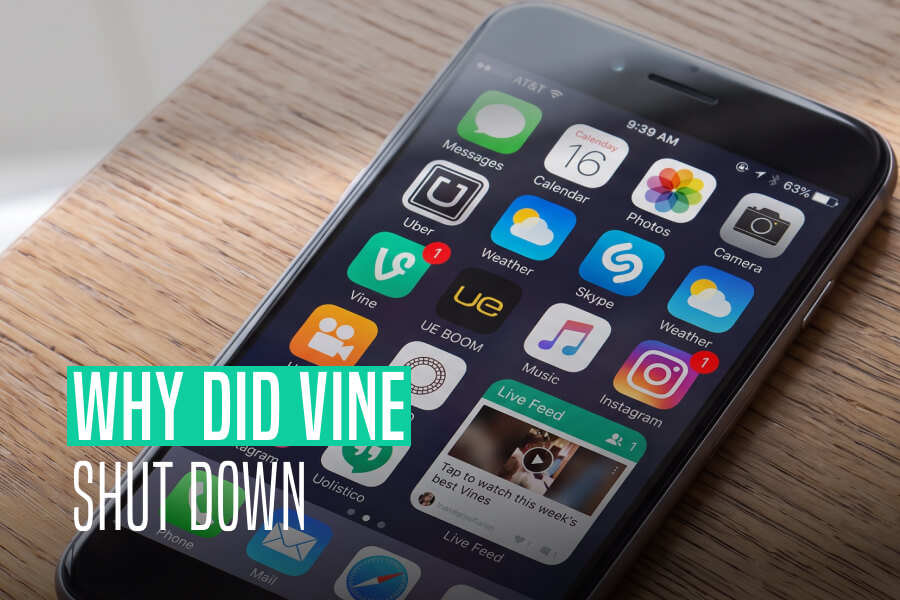
Do you remember Vine? Yes, I am talking about that app where we used to spend hours completely glued to our phones watching six seconds' worth of content.
I still remember the exact hypnotic rhythm of clicking open an app just to watch a six-second loop change my entire day.
If you have grown up online in the mid-2010s as I have, then you know exactly what I am talking about.
We didn’t just watch these videos. Instead, we lived in an era entirely defined by the iconic phrases “Welcome to Chilli’s,” or “Look at all those chickens,”.
For millennials and Gen Z, Vine was not just a video-uploading platform. Instead, it was a collective cultural heartbeat. Moreover, it was a collective cultural heartbeat.
To sum it up more specifically, it was lightning in a digital bottle. It crammed up flawless comedic timing, music trends, and surreal internet humor into a fraction of a second.
However, suddenly the loop stopped for all of us. The app didn’t just slowly fade away. It had completely vanished. Meanwhile, it left behind a graveyard of dead links with a digital culture permanently altered.
Most business analyses look back at our favorite era and offer a superficial and lazy diagnosis: “It was a six-second gimmick and Instagram simply copied it.”
However, that narrative completely misses the mark.
To have a full and true understanding of the collapse behind an ecosystem we loved, you need to look past the surface. Also, you have to ask the ultimate question. Why did Vine shut down when it had over 200 million monthly active users?
The death of the app was not an accident of shifting consumer taste, but a systemic case study in structural corporate failure. Moreover, it is an absolute refusal to protect a digital supply chain.
Let's dive into the failure of the platform to understand the difference between viral user engagement and a sustainable business model.
The Anatomy Of A Collapse: Year-By-Year Timeline
To map out the core factors behind why did Vine shut down, you need to look at how quickly its cultural explosive growth disconnected from its corporate management.
Instead of just a slow fade, it was a series of sharp and institutional missteps that happened over less than five years. ṣ
The Timeline At A Glance
| Year | Key Milestones & Structural Shifts | Core Impact on Ecosystem |
|---|---|---|
| 2012 | Founded by Hofmann, Yusupov, & Kroll; bought by Twitter for $30M pre-launch. | Placed an unreleased project inside a massive public company prematurely. |
| 2013 | Official iOS launch; explodes to 40M users. Instagram fires back with 15s of videos. | Established Vine as market leader but invited massive Big Tech competition. |
| 2014 | Hits 100M+ users, dominating cultural trends. Zero native ad infrastructure built. | Burning millions in hosting costs while generating zero profit. |
| 2015 | Top 1% creators demand $21.6M total to stay. Twitter rejects the ultimatum. | Massive talent exodus; content pipeline dries up almost overnight. |
| 2016 | User engagement drops. Twitter faces Wall Street pressure and cuts Vine. | Official sunset announced as part of a 9% Twitter corporate layoff. |
| 2017 | Application servers taken offline permanently. Musical.ly acquired by ByteDance. | The loop stops, paving the ultimate infrastructure runway for TikTok. |
2012: The Premature Sale
In June 2012, three tech founders, Dom Hoffman, Rus Yusupov and Colin Kroll, had come together to build a simple app. Furthermore, it was designed to stitch short video clips together, and it was named Vine.
Before even being launched to the public, Twitter’s executive team had noticed the prototype. Consequently, terrified of missing the mobile video wave, Twitter bought Vine in October 2012 for a reported $30 million.
This structural move proved to be fatal. Moreover, it placed an unreleased and experimental product inside a massive, publicly traded tech company.
The company was still trying to figure out its own identity, sowing the earliest seeds of why did Vine shut down.
2013: Lightning In A Digital Bottle
Vine officially launched on the iOS App Store in January 2013. Furthermore, the response was also explosive.
Within months, it hit 13 million active users while scaling to an astonishing 40 million by the end of the year. Besides this, it also went on to become the fastest-growing video app in the world.
However, the mainstream tech giants were watching.
In June 2013, Instagram dropped a massive counter-strike. This was a native 15-second video feature.
While Instagram videos didn’t loop yet, that extra length gave users more room to breathe.
This led to a direct and silent battle for the future of mobile video. This accelerated the timeline of why did vine shut down.
2014: The Peak Of The Loop
By 2014, Vine was a cultural powerhouse. Moreover, it was driving global internet trends, launching mainstream music hits while creating a brand-new class of digital celebrities.
The app hit over 100 million active users. Millions of Gen Z and Millennial teens spent hours scrolling through their feeds every day. As a result, this turned 6-second loops into an entirely new comedic language.
However, beneath the surface, a major issue was growing. That is, the app still had no way to run ads.
This meant it had been burning through millions of dollars in hosting costs while making zero profit. Consequently, this illustrated the financial reality of why did vine shut down.
2015: The Secret Los Angeles Ultimatum
This was the definitive breaking point for the platform.
By mid-2015, Vine’s ecosystem was top-heavy. Here, just the top 1% of creators generated over 90% of the platform’s total views.
Recognizing their immense leverage, a group of 18 premier Vine stars staged a coordinated intervention at the Graffiti Cafe in Los Angeles.
2016: The Content Desert And the Axe
By early 2016, the mass migration of talent had left the app empty. With the top stars gone, user engagement plummeted.
Moreover, the main feed had gone stagnant.
At the same time, the parent company, Twitter, had started to face intense pressure from Wall Street due to slowing user growth and dropping stock prices.
Facing a financial crunch, Twitter laid off 9% of its workforce in late 2016. Additionally, costing an estimated $10 million a month to maintain without generating any revenue, Vine turned out to be the first project cut,
On October 27, 2016, Twitter officially announced that it was shutting down the app.
2017: The Servers Go Dark
In January 2017, the mobile application was officially taken offline. In addition, the servers were wiped. The live and looping ecosystem was turned into a static read-only desktop archive.
An entire generation’s digital history was frozen in place. Consequently, less than a year later, ByteDance would buy a lip-syncing app called Musical.ly. Furthermore, they would go on to merge it with their own software and launch TikTok.
They used the exact short-form video blueprint that Vine had built. However, they failed to protect it.
Short-Form Evolution: The Architectural Landscape Compared
To map out exactly why did Vine shut down while later short-form models captured a global footprint, you need to look at the structural, financial and mechanical differences across generations of apps.
This comparison highlights how completely different these tools are under the hood.
| Feature Dimension | The Vine Platform (Historical) | TikTok (Modern Paradigm) | Instagram Reels (Ecosystem Fit) | YouTube Shorts (AdSense Pivot) |
|---|---|---|---|---|
| Max Content Length | 6 Seconds strictly. | 15s to 10+ Minutes (Expanded). | 15s to 90 Seconds. | Up to 60 Seconds. |
| Core Feed Discovery Engine | Friend network and chronological feeds. | Personalized interest-based feed. | Friend network mixed with interest recommendations. | Subscriber pool mixed with dynamic recommendations. |
| Built-In Video Editing Stack | Basic multi-clip stitch camera tool. | Built-in filters, green screens, audio effects. | Audio syncing tracks and layout templates. | Simplified multi-clip camera, audio tracks. |
| Native Payout Architecture | None ($0 native money pool for creators). | Creator Rewards Program, Marketplaces. | Seasonal cash bonuses and branded badges. | Shared Shorts ad revenue partner program. |
| Direct E-Commerce Layer | Non-existent. | In-app shopping tabs and product links. | Integrated shopping tags in video. | Affiliate marketing extensions. |
| Primary In-App Ad Unit | None (Relied entirely on individual feeds). | Full-screen video ads between scrolls. | Sponsored clips inside main feeds. | Video commercials between scrolls. |
The Algorithmic Shift: Friend Networks Vs. Pure Interests
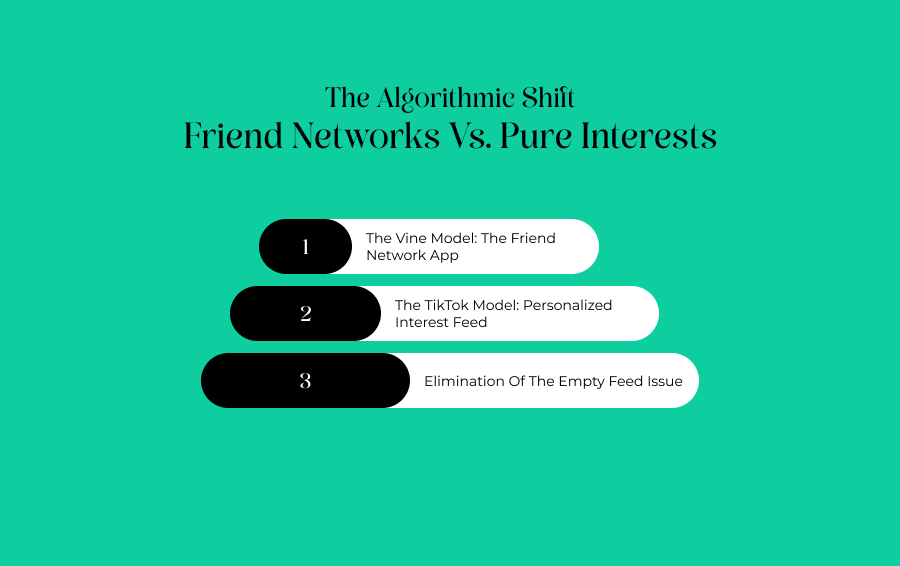
The core structural reason behind why did Vine shut down, whereas TikTok conquered the market, comes down to the way they decide what video to show you next.
Vine relied on a Friend Network framework, whereas TikTok built its success on a personalized interest feed.
The Vine Model: The Friend Network App
The overall feed logic of Vine was built around a traditional follow system.
That is, the content you saw was determined almost entirely by who you actively chose to follow. Moreover, if a user followed twenty people, their feed was restricted strictly to the content created or re-shared by those specific twenty accounts.
However, there were two fatal product issues.
The Empty Feed Problem For New Users
When a new user downloaded Vine, their feed was completely empty.
Additionally, they had to manually hunt down and follow popular accounts before the app became fun to use.
This caused one issue. If the new users did not know who to look for, they left.
The Winner-Takes-It-All Problem For Creators
Since growth was tied to your network, early creators who gained followers quickly became permanently locked at the top of the app.
On the contrary, new and highly talented creators posting incredible six-second videos were completely invisible. That is because they did not have an existing audience to pass their clips along.
The TikTok Model: Personalized Interest Feed
By completely abandoning the friend network model, TikTok was able to do something different.
When you open the app, the primary view is the “For You” feed. Additionally, TikTok does not care who you are aware of or who you follow. Instead, it treats your natural behavior and interests as a vote.
Consequently, it automatically runs every newly uploaded video through a quick test.
- The Small Test Group: The video is pushed out to a small trial of a group of 100 to 500 everyday users.
- The Real-Time Evaluation: The app silently measures how many users watch the video to the very end, how many let it loop multiple times and how many share it.
- The Automatic Push: If the video scores well with the small test group, the app will automatically push it to a larger group of 10,000 users. Eventually, it will be pushed to millions.
Elimination Of The Empty Feed Issue
This completely eliminated the empty feed problem. Additionally, TikTok tracks passive signals every millisecond you spend scrolling.
Also, it measures whether you watched a video all the way to the end. Besides these algorithmic analyses, it further checks whether you hesitated over a clip for a few seconds before scrolling past.
It also examined whether you stayed to watch multiple videos using the exact same background song.
By turning content into a pure meritocracy, any random video could go viral overnight regardless of how many followers the creator had.
Each time a user opens the app, they receive a stream of highly addictive content that is tailored exactly to their immediate mood.
A Structural Breakdown Of The Infrastructure War: Why Did Vine Shut Down
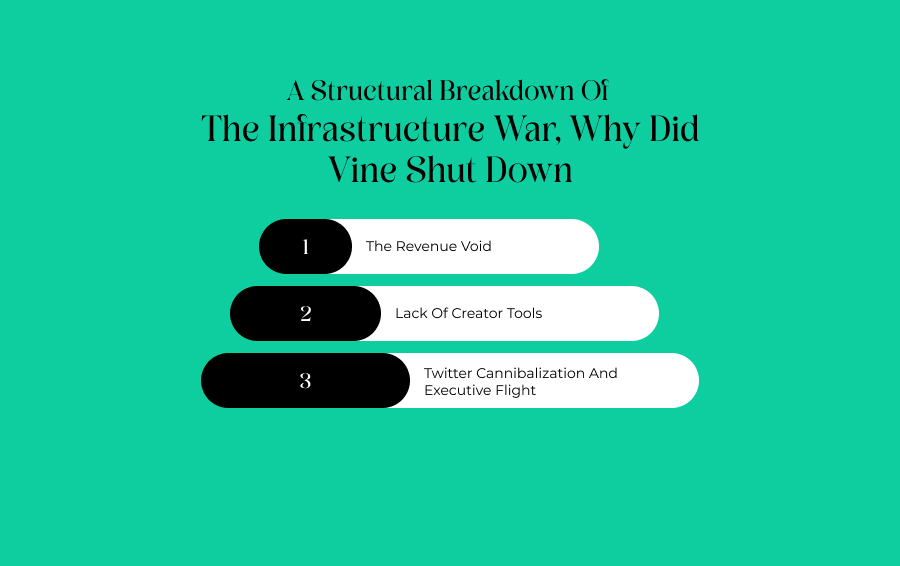
The core product design mistake was treating short-form video as an isolated novelty. Contrarily, there was an opportunity to turn it into a functional business ecosystem around it.
When Instagram entered the landscape, it brought Facebook’s massive corporate infrastructure. Along with it, they also integrated deep engineering talent pools and mature ad-buying networks. This was a pinnacle point behind why did Vine shut down.
The Revenue Void
Vine’s six-second loop format made traditional video commercials impossible without ruining the user experience.
Since leadership resisted overlay ads or sponsored feed placements early on, the platform failed to generate revenue before its operational costs spiked.
Moreover, the absence of native monetization made Vine into a bleeding asset for Twitter.
By late 2015, Twitter was facing severe financial pressure from Wall Street due to flat user growth and dropping stock prices.
Since Vine cost an estimated $10 million per month to run while bringing in zero native revenue, Twitter’s board viewed the app as an unsustainable project. Furthermore, they chose to cut it during company-wide layoffs.
Lack Of Creator Tools
While Vine pioneered the format, it left the creative environment incredibly bare.
Moreover, the application offered basic in-camera capture with almost no editing tools, filters or audio modification systems.
When Instagram launched its video engine, it introduced stabilizers, filters and a more robust discovery grid.
Despite that, Vine stayed rigid while its competitors evolved.
Twitter Cannibalization And Executive Flight
The internal issues at Vine were further aggravated by poor management from its parent company. Additionally, the two engineering teams never successfully integrated.
In January 2015, Twitter launched its own native video player directly inside the main app timeline.
This move led to the creation of internal competition for attention and ad revenue. As a result, Vine was left isolated.
Frustrated by creative disagreements with Twitter’s leadership, all three of the original co-founders had abandoned the company shortly after the acquisition.
The Sudden Rise Of Musical.ly: Shifting The Paradigm
The creator base at Vine started to fall apart slowly. As a result, a major platform shift occurred that fundamentally changed the short-form video landscape.
This was the sudden rise of Musical.ly. Launched in 2014 by Alex Zhu and Luyu Yang, the app did not try to copy the dry skit-based comedy ecosystem of Vine.
Instead, it focused on a highly specific repeatable action. That is, 15-second lip-syncing videos paired with popular commercial music.
With this structural shift, everything changed for certain primary reasons.
Lowering The Barrier To Entry
Vine had a significant issue for many creators. That is, it can be incredibly difficult to create a hilarious and perfectly timed 6-second comedy sketch.
On the other hand, lip-syncing or dancing to a trending pop song requires far less creative effort. This enabled everyday users to become content producers instantly.
The Audio Loop System
Instead of just using sound as an afterthought, Musical.ly treated sound as the core organizing principle of the platform.
Additionally, users can tap the audio track on any video to instantly see everyone else using the exact same sound snippet.
The Path To TikTok
In November 2017, less than a year after Vine officially went dark, a massive shift occurred. The Chinese tech giant, ByteDance, acquired Musical.ly for an approximate amount of $1 billion.
Moreover, they merged its entire user database directly into their own app. As a result, this caused the creation of the global footprint for TikTok.
Monetization Engineering: How TikTok And Reels Sustained
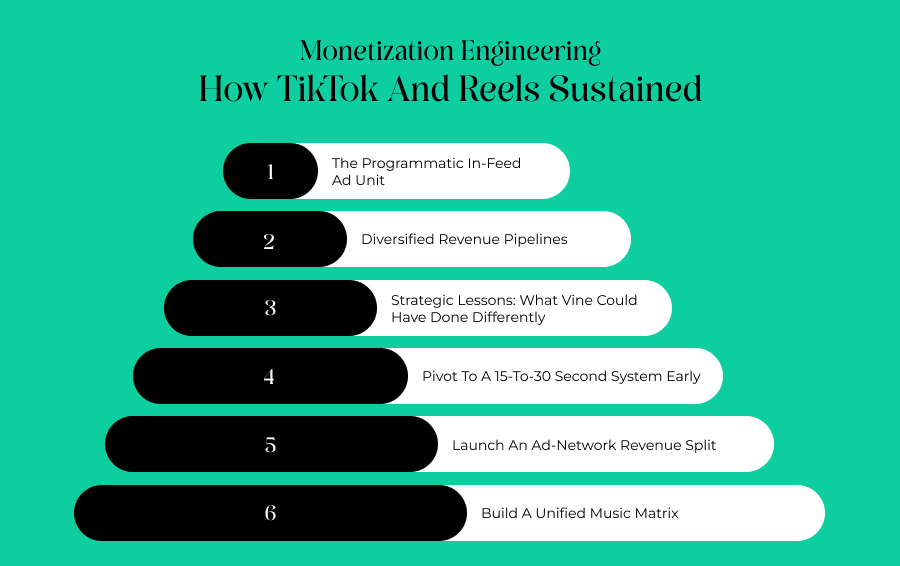
Modern short-form video platforms did not succeed because their content was better. Instead, they survived because they built sustainable financial models.
Furthermore, this model fixed Vine’s core monetization design flaws, showing us by omission why did Vine shut down.
The Programmatic In-Feed Ad Unit
TikTok and Instagram Reels bypassed the commercial issue of Vine entirely. That is by making ads look exactly like native user content.
By placing vertical and skippable video ads directly inside the primary scrolling feed every 4 to 5 videos, these platforms created an ad model that scaled cleanly without hurting user retention.
Diversified Revenue Pipelines
Modern platforms treat creator payout systems as a foundational part of their business model instead of an afterthought.
- The Ad-Revenue Split: Automated systems place ads directly adjacent to a creator’s constant feed. Moreover, it shares a clean slice of this ad money back out to the account holder.
- Live Stream Virtual Gifting: TikTok built a massive tipping system inside their live-streaming feature. Here, users buy digital coins to tip creators in real-time. Thus, the platform is given a clear cut of each transaction.
- Social Commerce Integration: By linking shopping checkouts straight into short video clips, modern apps transformed video from a simple entertainment tool into a high-conversion digital storefront.
Strategic Lessons: What Vine Could Have Done Differently
If the executive leadership of Vine had understood the platform’s underlying business mechanics, they could have avoided the question of why did vine shut down by using some clear strategies.
Pivot To A 15-To-30 Second System Early
The strict 6-second limit was brilliant for establishing the app’s initial identity. However, it became a cage for creators.
As the platform grew, the expansion of the time limit early on would have given creators room for complex storytelling.
Additionally, it would have also been perfect for creating enough visual space to run native advertising options smoothly.
Launch An Ad-Network Revenue Split
Instead of rejecting the 2015 LA creator ultimatum out of hand, Vine should have fast-tracked an ad-revenue system.
For instance, copying YouTube’s playbook would have given the app a clear percentage of ad revenue straight to the talent. Additionally, the top creators would have stayed on the platform permanently.
Build A Unified Music Matrix
Vine should have recognized the massive cultural wave of lip-syncing and dance trends happening on its platform early on.
By signing licensing deals with major record labels to build a native in-app music library, Vine could have blocked Musical.ly from ever taking over that market space.
The Phantom Successors and Ghost Codebases
The void left by Vine sparked multiple attempts to revive its specific magic.
Additionally, the structural evolution of Vine's core team eventually led to the launch of Byte in January 2020, created by Vine co-founder Dom Hofmann.
Byte returned to the classic 6-second looping framework, attempting to capture nostalgic purists. Subsequently, it was acquired by Clash in 2021. Later, it was rebranded to Huddles.
However, these platforms failed to capture mass-market traction because TikTok had already established a dominant monopoly across the social video landscape.
Nostalgia for the platform even reached the highest levels of corporate tech ownership.
Following his 2022 acquisition of Twitter (now X), Elon Musk ran a highly publicized poll about reviving Vine and instructed engineering teams to actively review the platform's historical code base.
Despite the viral interest, a live app relaunch has not occurred.
A modern revival faces an uphill infrastructure battle against deeply entrenched platforms like TikTok, Instagram Reels, and YouTube Shorts, which have spent years perfecting what Vine left unfinished.
The Immutable Laws Of The Attention Economy
Vine’s trajectory proves that audience retention is not a corporate moat. Additionally, having 200 million monthly active users means nothing if your underlying product cannot generate cash.
Monetization is a core infrastructure requirement instead of an expansion feature to be figured out down the line.
In the attention economy, your creators are your primary supply chain.
If you fail to design a reliable, sustainable path for your top talent to make a living, your competitors will happily build a payroll system to steal them away.
Vine pioneered the grammar of modern mobile media, but its collapse stands as a warning to tech builders.
That is, pioneering a format is meaningless if you lack the infrastructure to sustain the people who create it.