












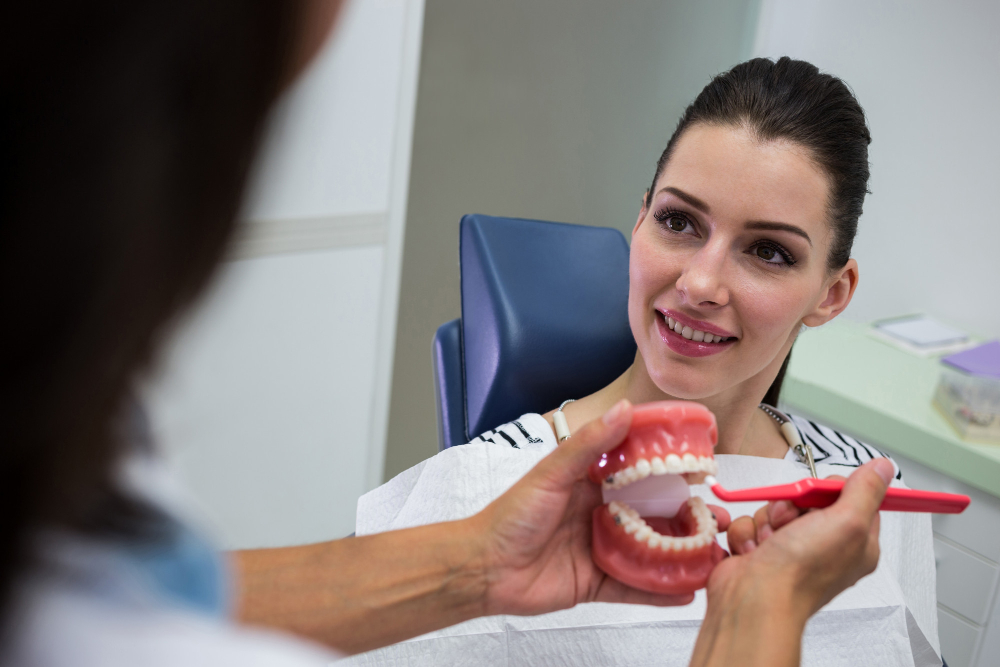
For a typical dental check-up, my main worry was getting rid of cavities and having fresh breath.
That was until I read deeply into the research, only to find the fact that I was totally mistaken about it.
Unfortunately, the link between your dental health and your general health is not some kind of hypothesis. It is a proven scientific fact.
In fact, more and more studies are revealing that your oral health can affect your whole body. No one will deny the power of the evidence for a complete change in the perception of preventive care by specialists in the medical field.
If you are trying to understand the preventive dental care benefits, keep reading!
Preventive Dental Care Benefits: Understanding The Importance
Let’s look at the mechanics of it. Bacterial infections begin in the gum tissue. From there, they can easily enter your bloodstream.
Once they are in the "highway" of your circulatory system, they contribute to a massive range of conditions.
We are talking about everything from cardiovascular disease to severe diabetes complications. It is a domino effect.
The American Dental Association provides some staggering numbers on this. They report that adults who maintain regular dental visits - meaning at least two comprehensive exams a year - experience 60% fewer emergency procedures.
Even more impressively, they see 47% lower lifetime dental costs. To me, these statistics reveal a clear pattern. Preventive behavior in one area of your health creates better outcomes across the board.
The Science Linking Oral Health To Systemic Disease
When we talk about gum disease, we are usually talking about periodontitis. This is an advanced form of infection that affects roughly 47% of American adults over the age of 30.
That is nearly half the population. Because this condition is so common, it has emerged as a major risk factor for serious medical issues.
The mechanism behind this is actually quite straightforward. Chronic gum infection acts as a persistent source of inflammation.
It creates a "leaky" gateway for bacteria to enter your blood. For instance, research in the Journal of the American Heart Association found a terrifying link. People with untreated periodontitis had a 28% higher risk of heart attacks or strokes.
But why does this happen?
Scientists have actually detected Porphyromonas gingivalis - a specific bacteria from gum disease - inside arterial plaque samples.
This suggests a direct physical pathway from a mouth infection to vascular damage. Therefore, if you are worried about your heart, you must start by looking at your gums.
Furthermore, the connection to diabetes is a two-way street. We know that uncontrolled blood sugar makes you more likely to get a gum infection.
Conversely, active gum disease makes it much harder to keep your blood sugar stable. It is a vicious cycle. However, there is good news.
A meta-analysis of 72 different studies showed that treating gum disease in diabetic patients reduced HbA1c levels by an average of 0.4%. That might sound small, but it is a clinically significant improvement achieved without changing a single medication.
Why We Can’t Feel The Problem
Researchers are currently investigating several other links. For example, they have found P. gingivalis in the brain tissue of Alzheimer’s patients.
They also see a link to respiratory infections, as oral bacteria can be sucked into the lungs and cause pneumonia.
We even see correlations with preterm births and rheumatoid arthritis. Consequently, your toothbrush is becoming one of your most important medical tools.
One of the most dangerous parts of dental disease is its "silent" nature. This is very counterintuitive. Most of us think that if nothing hurts, nothing is wrong.
Unfortunately, that is a myth.
A cavity can eat through your enamel and reach the dentin long before you feel a twinge. Similarly, gum disease can destroy your bone structure while your gums look perfectly normal in the mirror.
This silent progression is exactly why I prioritize professional exams. Dental pros use diagnostic tools that catch problems while treatment is still simple and cheap.
For example, digital radiography (X-rays) reveals bone loss and hidden infections that a visual check would miss entirely.
Plus, modern digital X-rays use 80% less radiation than the old film versions. This makes them much safer for routine use.
Another tool they use is periodontal probing. This measures the space between your gums and your teeth. A healthy measurement is between 1 and 3 millimeters.
If your reading is 4 millimeters or higher, it means your "attachment" is breaking down. You need an intervention before you start losing teeth.
Finally, we have to talk about oral cancer. A routine screening can identify tissue changes when the five-year survival rate is still over 80%.
Sadly, most people die from oral cancer because it is caught too late. This is almost entirely preventable through regular check-ups.
The Family Dentist Advantage
I am a big believer in the family dental practice model. And I believe that is one of the best preventive dental care benefits that one often forgets.
When one team looks after an entire household, they see the big picture. They understand your genetic predispositions and your environment.
In places that provide family dental care in Scottsdale, modern family practices have evolved. They aren't just for "check-ups." Under one roof, they are handling:
- Prevention.
- Braces.
- Implants.
- Cosmetic work.
This matters because it reduces "fragmentation." When care is convenient, people don't delay it.
For kids, establishing a "dental home" by age one is vital. It builds trust and kills dental anxiety before it starts.
Research shows that kids with positive early experiences are 70% more likely to keep going to the dentist as adults.
For adults with chronic illnesses, having a dentist who knows your medical history is a game-changer.
They can coordinate with your doctor to make sure your oral health isn't sabotaging your heart or blood sugar.
What A Real Visit Looks Like
Not all dental visits are equal. A true preventive exam should be thorough. First, it must include a deep dive into your medical history.
Many medications cause dry mouth, which can make your teeth rot almost overnight. If your dentist isn't asking about your meds, they are missing half the story.
Second, you need a professional cleaning. Even if you are a "pro" at flossing, you will still get calculus (tartar) deposits.
These are mineralized chunks of bacteria that you cannot brush away. They must be scraped off by a hygienist.
Third, the dentist should check your bite. If your teeth don't line up or if you grind your teeth at night, you will get stress fractures. Most people don't even know they grind until a dentist points out the wear patterns.
The Hard Math Of Prevention
I love the economics of this. The math is simple. A cleaning and exam might cost you $200 to $350 out of pocket. In contrast, a root canal and a crown can easily cost $3,500.
If you have insurance, those preventive visits are usually 100% covered. This means the financial barrier is literally zero.
Yet, the CDC says only 65% of adults go. Why? It usually comes down to anxiety, bad scheduling, or procrastination.
Employers are starting to notice this, too. Did you know that untreated dental issues cause 164 million lost work hours every year?
That is a massive hit to productivity. Smart companies are now encouraging "preventive use" because it keeps people at their desks and out of the emergency room.
Making It Work In Your Busy Life
The most common excuse I hear is a "busy schedule." To solve this, many practices now offer early mornings or weekends.
I also look for offices with "same-day" treatment. If they find a small cavity during my cleaning, I want it fixed right then. I don't want to come back two weeks later.
Digital tools also help. I love online scheduling and text reminders. They take the "administrative friction" out of the process. The easier it is to show up, the more likely I am to go.
In conclusion, prevention is never "dramatic." It doesn't give you that "instant makeover" feel. However, it is the bedrock of your health.
The data is clear: spending an hour in the dental chair twice a year pays massive dividends. It protects your heart, your brain, and your wallet.