










For most families, home is where life feels manageable.
It’s where routines are built, where people feel safe, and where the unpredictability of the outside world fades into the background.
But some families care for someone with complex needs, such as:
- Autism
- Epilepsy
- A Learning Disability
Additionally, it can be a condition involving challenging behaviors. And guess what? Home can sometimes be the hardest environment to get right.
Injuries happen during nighttime seizures. Sleep is disrupted for everyone when a child can’t self-regulate in a standard bed.
A standard bedroom offers nothing to cushion a fall or prevent a person from hurting themselves against hard furniture.
For caregivers already managing an enormous amount, these aren’t minor inconveniences. They’re daily sources of fear and exhaustion.
That’s the problem that purpose-built safe spaces and safety beds are designed to solve.
Companies like Safespaces have spent more than two decades developing specially designed safe spaces specifically for this gap — creating living and sleeping environments that reduce risk without reducing dignity, and that allow people with complex needs to rest, move, and simply exist more safely in their own homes.
What “Safe Space” Actually Means In Specially Designed Safe Spaces?
The term gets used broadly. But in the context of specialist home equipment, it refers to something specific.
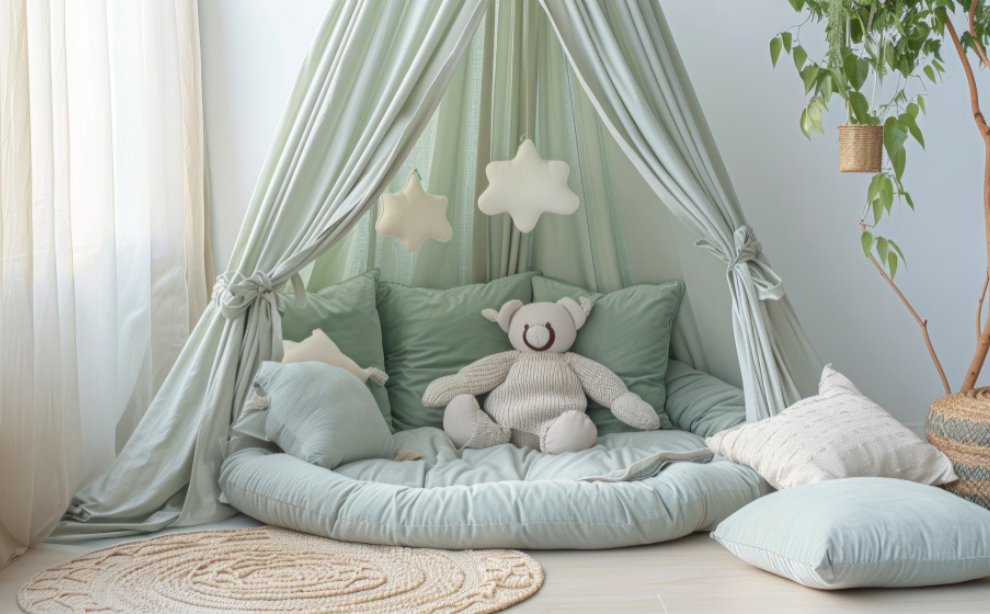
You can imagine a padded, enclosed environment. It can be either a room or a bed unit.
Additionally, you will see that it is designed to remove hard surfaces and sharp corners.
Also, it will remove all the fall hazards from the immediate living or sleeping area of someone who may be prone to:
- Seizures
- Self-Injurious Behavior
- Uncontrolled Movement During The Night
These aren’t makeshift solutions. Modern safe spaces are engineered products with soft, impact-absorbing wall panels and reinforced structures.
You will observe that these can withstand significant force.
Also, you will see that height-adjustable bed systems can be configured to meet the specific needs of each individual.
Some include sensory features — lighting, textures, calming environments — that go beyond basic safety to actively support the wellbeing of the person using them.
The Centers for Disease Control and Prevention estimates that around 1 in 36 children in the United States is diagnosed with autism spectrum disorder — a figure that represents millions of families navigating exactly the kinds of home safety challenges these products are built to address.
Sleep disruption, night-time wandering, and self-injury are among the most commonly reported challenges for caregivers in this population.
Different Aspects Of Specially Designed Safe Spaces That Impact Your Decision?
There are many factors to consider when making an informed decision about the specially designed safe spaces.
Let’s take a look at these:
1. The Sleep Problem No One Talks About Enough
Sleep accounts for much of the most acute risk.
A child or adult who has seizures at night, wakes disoriented, moves unpredictably, or cannot self-soothe and becomes distressed in a standard bed faces a genuine risk of injury every single night.
This risk affects not just them but also the entire household, keeping it on edge.
Safety beds address this risk in ways that standard adaptations cannot.
A bed with tall, padded sides and a fully enclosed design prevents a seizure at night from causing a fall to the floor.
When a person wakes and begins moving around, they stay within a contained, cushioned environment.
Caregivers who have gotten up multiple times a night to check can, for the first time in years, sleep through the night.
The impact on family well-being is hard to overstate. Research published by the Sleep Foundation consistently demonstrates the cascading effects of chronic sleep deprivation on mental health, physical health, and cognitive function.
For caregivers — who are already at elevated risk of burnout — a solution that restores reliable sleep is not a luxury.
It is, in many cases, what makes continued home-based care possible.
2. Who These Products Are Designed For
The range of people who benefit from specialist safe spaces is broader than many people assume.
The most commonly discussed use cases involve children with autism or epilepsy, but the products are used across a much wider spectrum of needs.
Adults with acquired brain injuries, older adults with dementia who are at high fall risk, people with Angelman syndrome, Rett syndrome, and Prader-Willi syndrome.
The products are used in private homes, in school settings, in residential care, and in hospitals, precisely because the need exists across all of these environments.
The National Council on Disability has long advocated for the kind of home-based support infrastructure that allows people with disabilities to remain in community settings rather than institutional ones.
Specialist equipment, such as safe spaces and safety beds, is a direct expression of that principle.
You will realize how much this values the right environment. In fact, it also pays attention to the proper equipment.
This is often all that stands between independent home living and a care placement that nobody wanted.
3. Funding And Access In The United States
Families often find that the cost of specialist equipment is a major barrier.
Safe rooms and safety beds can be expensive, and many families struggle to pay for them without clear funding options.
The good news is that there are various funding sources available in the United States, and navigating these options can be easier than expected.
Medicaid waiver programs, which differ by state, often cover medical equipment and home modifications that help people live independently and ease the burden on caregivers.
Private insurance may also help, but it depends on the specific policy and the evidence provided.
A doctor’s letter stating the medical need is often crucial for getting reimbursement.
Families seeking funding should work closely with their loved one’s medical team to ensure they have clear documentation of the medical need.
Organizations like the Family Caregiver Alliance publish detailed guidance on navigating funding for assistive equipment and home modifications, and many specialist equipment providers have dedicated teams who support families through the funding application process from start to finish.
What Is The Difference Specially Designed Safe Spaces Make?
The families who go through the process of researching, funding, and installing a safe space or safety bed tend to describe the experience in similar terms.
The words that come up most often aren’t technical. They’re emotional.
“Life-changing” appears constantly. So does “finally.” As in: finally sleeping. Finally, not checking every hour. Finally feeling like home is actually safe.
For the person using the equipment, the benefits are equally significant.
A sensory-calm, padded environment is not just safe — it can be genuinely comforting.
People who previously resisted going to bed begin to settle. Routines that were battlegrounds become manageable.
The home, at last, starts to work for everyone in it.
That outcome is what specialist safe space design has always been about.
Well, even though it seamlessly prevents injury, that’s not all it does.
Additionally, it creates the conditions in which a person with complex needs can live with comfort and security.
In fact, it offers as much independence as possible in a home built for them.