











Smart manufacturing has brought a massive change in how factories plan, build, inspect, and deliver products.
Furthermore, thanks to the following features, smart manufacturing can now manage different tasks that involved hours of manual work earlier.
- Artificial Intelligence
- Robotics
- Sensors
- Connected Machines
Also, deep research into workforce trends, smart manufacturing, and shop-floor automation makes one thing clear.
You need the guidance of skilled workers to ensure that whatever technology you use, it is optimized and put to the best practice.
Yes, AI tools can identify the loopholes, predict machine issues, and ensure faster production.
Furthermore, CNC machines can cut complex parts with high accuracy. Robots can weld, move, sort, and package with steady speed.
However, even together or as an integrated system, it cannot replace the judgment of experienced welders, machinists, programmers, inspectors, and production teams.
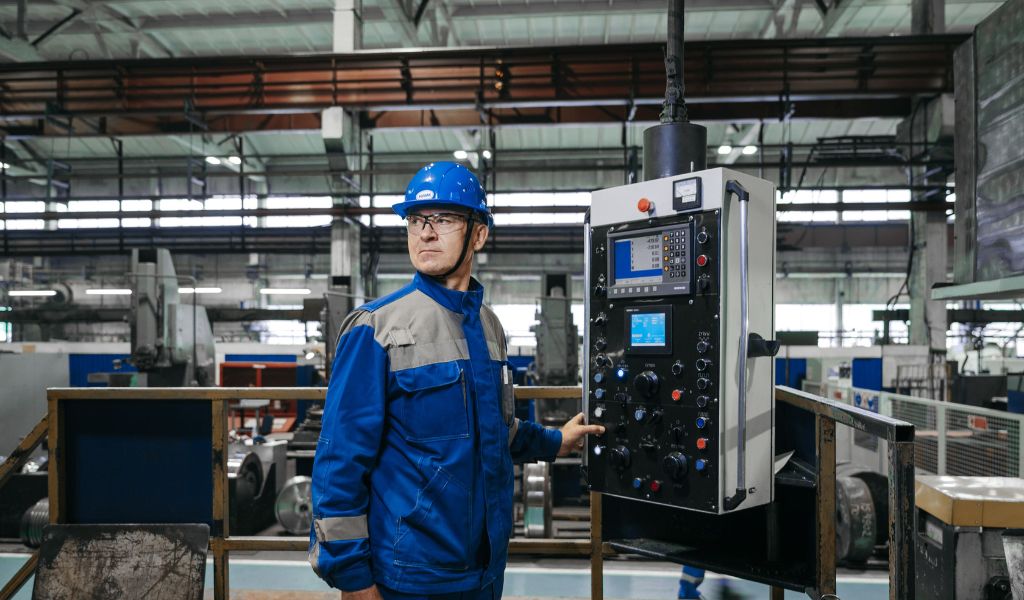
In fact, when a factory becomes more advanced, you will need workers and supervisors who understand the physical production process and the machines equally.
So, in this article, I will talk about why AI in manufacturing depends on skilled human operators.
Why Does AI In Manufacturing Need Human Supervision?
In the “How is AI being used in manufacturing?” report, Matthew Finio and Amanda Downie mention,
“AI is also at the heart of the growing trend of human-robot collaboration.
Traditional industrial robots often require close supervision and controlled environments, but the new generation of AI-powered collaborative robots, or cobots, can work safely alongside humans.
Cobots take on repetitive or strenuous tasks while employees focus on more complex and creative work.”
Furthermore, a Forbes report suggests that the use of AI in smart manufacturing today is an extension of the practice where factories are beyond robotic workplaces.
In fact, factories are places where machines and human beings work together.
So, not only today but also from the time it was conceptualized, the collaboration of technology and human intervention has been at the core of smart and efficient manufacturing in a plant.
1. Smart Manufacturing Still Starts With Human Judgment
AI needs accurate and clean data, a proper setup, and direction to process data quickly and efficiently.
Furthermore, you need human intervention to define the goal of a job so that a smart machine can act accordingly.
Also, operators have to perform the following tasks to ensure that the process is right for real-world conditions.
- Choosing The Material
- Reviewing the Drawing
- Setting Tolerances
- Selecting Tooling
This is clear in metal manufacturing, where part quality depends on more than a digital file. In fact, the things I have mentioned below are more important than digital planning.
- Material Thickness
- Surface Condition
- Heat
- Tool Wear
- Fixture Setup
- Finishing Requirements
All these elements impact the final result. A skilled machinist or fabricator can see issues that software may miss, especially when a part behaves differently than expected during production.
AI is strong at pattern recognition. People are strong at context. Manufacturing needs both.
2. Skilled Operators Make AI More Useful
Feedback from the shop floor is important for AI in manufacturing. Furthermore, sensors may collect the machine data.
At the same time, defects can get flagged by regular inspection. Also, there can be changes suggested by the software.
Still, together, these cannot eliminate the need for human intervention. A human supervisor will interpret the findings of these machines or what those signals mean.
For example, the table below explains some common observations and the root causes behind them.
| Observed Issues | Possible Root Causes |
|---|---|
| Vibration Alert | Tool wear Poor fixturing Material inconsistency Machine maintenance issue |
| Surface Defect | Incorrect speed Incorrect feed rate Poor coolant flow Contamination Cutting tool issue |
AI can point to a likely cause, but trained operators help confirm the problem and choose the next step.
Skilled Human Workers: The People Who Practically Work
Skilled workers are not only machine users. They are problem solvers. They turn machine alerts into action.
Programmers also play a key role. They build the instructions that tell CNC machines, robots, and automated systems what to do.
A good program is not just a list of movements. It reflects knowledge of part geometry, tool limits, machine capability, safety, and production speed.
Production teams add another layer of value.
They coordinate schedules, check inventory, track quality, and keep work moving between departments.
Smart manufacturing systems can support these tasks, but people still make practical decisions when priorities change.
For example, a rush order may require a change in setup.
A supplier delay may force a team to adjust the production plan. A machine may need service before the software predicted it.
Human operators and managers help the plant respond without compromising quality control.
The U.S. National Institute of Standards and Technology describes smart manufacturing as the use of fully integrated, collaborative systems that respond in real time to changing demands and conditions.
That kind of response needs more than automation. It needs trained people who can work with connected systems and act with confidence.
3. The Future Factory Needs Both Technology And Trades
Some people worry that AI will remove manufacturing jobs. A more realistic view is that it will change many of them.
Repetitive tasks may become more automated, but demand will grow for workers who can operate, program, maintain, inspect, and improve advanced equipment.
This shift makes training a major part of smart manufacturing. Workers need hands-on trade skills, but they also need comfort with digital tools.
A machinist may need to understand CAD files, machine controls, and inspection reports. A welder may work with robotic weld cells.
A maintenance technician may use sensor data to plan repairs before a breakdown occurs.
The best manufacturing teams will not treat technology and labor as opposites. They will treat them as partners.
Skilled workers also understand risks practically. They know that a part is not finished just when a machine stops running. It must be measured, inspected, handled, and approved.
There is also a knowledge gap that only experienced workers can fill.
Many lessons in manufacturing come from years of seeing what happens when tools wear out, fixtures shift, welds distort, or machines run under stress.
AI can support this knowledge, but it does not replace the lived experience behind it.
Companies that want smarter factories should invest in both modern equipment and workforce development.
Better Manufacturing Comes From People And Machines Working Together
AI and smart manufacturing are powerful tools, but they depend on skilled human operators to reach their full value.
Machines can calculate, repeat, monitor, and alert. People can judge, adapt, correct, and improve.
It is a human skill with automation. That balance is what turns smart equipment into real industrial progress.