













Every content creator has a backlog problem.
Somewhere in their archive are videos that performed well, covered genuinely useful topics, and attracted real audience engagement.
But they are now underperforming because they look dated, were recorded before the creator developed their production quality, or are simply buried under two years of newer uploads.
The instinct is to remake them from scratch, which rarely happens because it is equally time-consuming as making something new.
Video-to-video AI has introduced a different approach: transforming existing footage rather than replacing it.
Moreover, the ability to restyle, reformat, and repurpose video content using AI has changed the economics of content libraries in a way that's worth understanding.
And this is true for everyone, whether you're managing a YouTube channel, a brand's social media presence, or a portfolio of educational content.
On that note, let’s break down how video to video AI works and, more importantly, highlight how content creators are using this innovation to repurpose their content.
Stay tuned.
How Video To Video AI Works?
The core capability of video-to-video AI is style and format transformation.
The point is to take an existing video and adjust its visual treatment, pacing, aspect ratio, background, or overall aesthetic without requiring a complete reshoot.
This is different from basic editing, which trims and rearranges existing footage. In contrast, video-to-video AI alters the character of the footage itself.
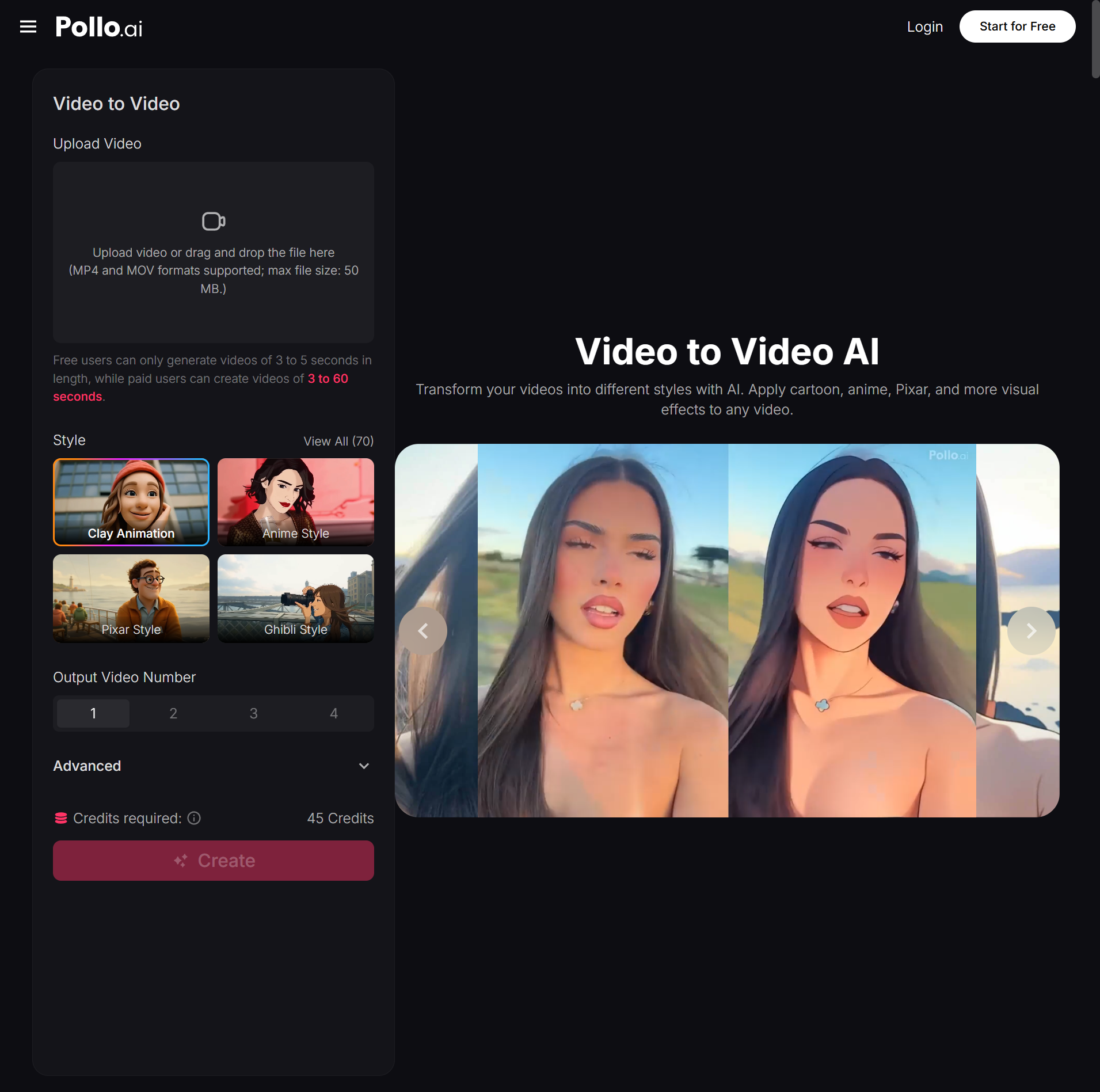
The video to video AI tool on Pollo AI is built around this transformation capability.
An older talking-head video shot against a plain background can be given a more polished visual treatment.
Moreover, you can intelligently reformat horizontal footage for vertical platforms without losing the subject in the crop.
You can restyle a corporate training video, recorded in a different style, to match a brand's new guidelines without a full reshoot.
Pollo AI handles these transformations through AI-powered processing that preserves the content and performance while updating the presentation.
This is exactly the distinction that makes it useful for repurposing rather than just remaking.
For creators with substantial back catalogs, this opens a repurposing strategy that compounds in value.
The research, scripting, and performance work that went into producing strong evergreen content doesn't have to be redone just because the visual treatment needs updating.
Also, Pollo AI's approach makes the content reusable across a longer timeframe and across more platform contexts than the original recording allowed for.
The Platform Fragmentation Problem That AI Helps Solve:
The modern content creator will try to maintain a presence across platforms, each with distinct format requirements.
YouTube favors horizontal video with specific thumbnail conventions. Instagram Reels and TikTok require a vertical format.
LinkedIn performs best with square or slightly vertical video. Twitter/X rewards short, punchy clips.
Moreover, each of these platforms is a distinct audience with distinct viewing behavior. Plus, content that isn't formatted for the platform it's on underperforms regardless of its quality.
Historically, serving all these platforms from a single piece of source footage meant either accepting format compromises or investing in separate edits for each distribution channel.
Neither was satisfying: cropped horizontal footage in a vertical frame loses compositional intent, and producing six separate cuts of every video multiplies production time in a way that most creators can't sustain.
Video-to-video AI changes this by making intelligent format transformation fast enough to include in a regular production workflow.
The same source footage can generate platform-specific versions that are properly composed for each context rather than just mechanically cropped.
Also, for creators managing content across multiple platforms, this is one of the most practical workflow improvements available.
Using AI Avatars To Scale Talking Head Content:
Beyond the transformation of existing footage, there's a growing category of video creation that sidesteps the filming process entirely: AI avatar video.
For certain content types, an AI-generated presenter can deliver the content effectively without requiring the creator to record themselves.
For instance, AI avatars are becoming popular for explainers, announcements, educational breakdowns, and internal communications.
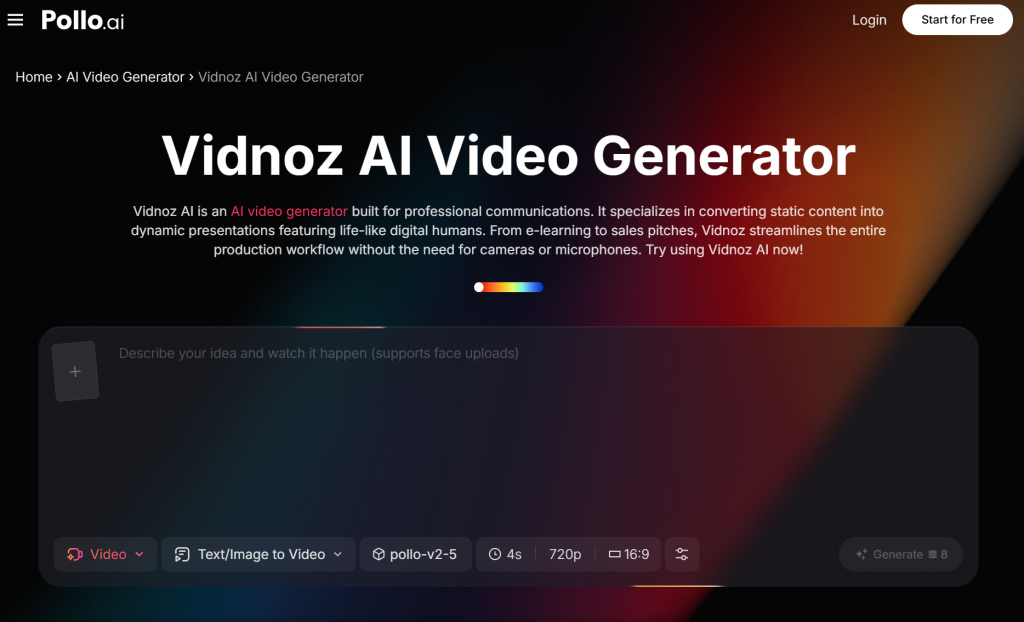
Vidnoz AI, accessible through Pollo AI, specializes in this avatar video category. It creates realistic AI presenters that you can customize to match a brand's visual identity.
Also, it can deliver scripted content in multiple languages and styles.
Moreover, for content creators seeking to maintain a consistent publishing schedule, Vidnoz AI offers a practical production workflow. And this is also true for creators who don't want to appear on camera for every piece of content.
Also, this is applicable for brands that need video content across multiple regional markets without separate recordings for each,
Pollo AI's offering of both video transformation tools and Vidnoz AI's avatar capabilities within the same ecosystem means creators can handle diverse video content needs.
This can refresh existing footage and generate new presenter-led content — within a connected workflow.
The use cases for AI avatar video have expanded considerably as the output quality has improved.
Internal training content, product feature announcements, multilingual market content, and high-volume explainer series are all contexts in which avatar video delivers professional results efficiently.
The ceiling on quality is high enough that avatar-led content is now indistinguishable from filmed content for many practical purposes.
Building A Sustainable Content Repurposing System
The creators who get the most value from video transformation and repurposing tools aren't treating them as one-off solutions for individual problems.
They're building systems: structured workflows that regularly mine their content archive for repurposing opportunities.
Also, they systematically update and redistribute strong-performing content to extend its value.
A basic version of this system looks like this: once per quarter, review top-performing content from the previous six months.
Then, identify which pieces are evergreen and which need factual updates versus just visual refreshes.
Queue the visual refresh candidates for video transformation processing. Update any factual content through re-narration or on-screen text overlays.
Redistribute the updated versions with new titles and thumbnails that reflect current search patterns and platform conventions.
This approach treats a content library as an appreciating asset rather than a depreciating one.
The research and creative thinking embedded in strong content don't expire. But the presentation layer that delivers it to audiences does.
Separating those two layers and maintaining the presentation layer through AI transformation rather than full reproduction is what makes a content library genuinely valuable over a multi-year timeframe.
The Practical Value Of Quality Consistency Across A Library:
One consequence of rapid platform evolution and improving production tools is that a creator's older content often looks noticeably worse than their newer content, even when the older content is substantively stronger.
A viewer who discovers a creator through a recent, well-produced video and then navigates to their back catalog may encounter footage that undermines the impression of quality they just formed.
This quality inconsistency problem affects audience retention and subscriber conversion in ways that are easy to underestimate.
Viewers make decisions about whether to subscribe based on the overall impression of a channel, not just the individual video they're currently watching.
Moreover, a channel that looks uniformly professional throughout its archive converts better than one where quality varies dramatically by year.
Video-to-video AI makes it feasible to bring older content up to a consistent quality standard.
And that too without the full production investment of recreating it.
The result is a channel that presents a coherent identity across its entire history. This is ultimately what the platforms reward and what audiences trust.
The tools for building and maintaining that consistency are accessible. Moreover, the workflow is learnable. Also, the compounding value of a well-maintained content library is significant.
Plus, for creators who have been producing content seriously for more than a year, the repurposing opportunity sitting in their existing archive is almost certainly larger than they've recognized.
Read Also: