











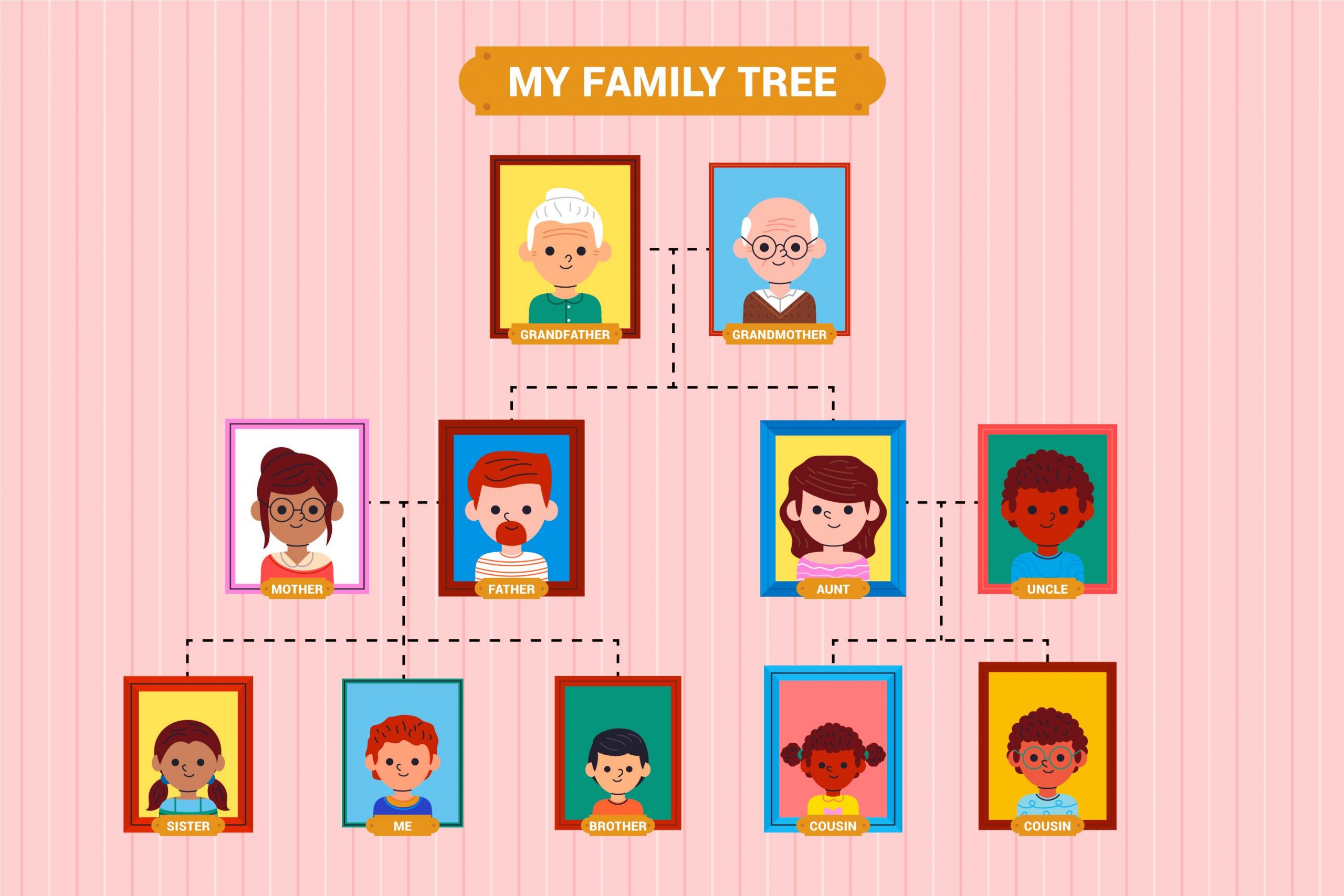
7 Creative Ways To Find Missing Branches On Your Family Tree

by

09 April 2026

Blog

how to find your family tree

Today’s topic: How to find your family tree? 

Pulling everything together in a different way can reveal patterns you were missing. 

Cross-referencing sources against events in other family members’ lives can lead you to breakthroughs you weren’t expecting. 

These seven methods treat that wall as a puzzle, not a dead end.

1. Think In Clusters, Not Individuals:

Census records provide a wealth of information for genealogists, ranging from names and ages of family members to where ancestors were born to the value of their property. 

However, one of the most genealogically useful (and yet overlooked) aspects of census records is the neighbors. This data can be very important when we can’t find anything about our ancestors. 

The Jones family living nearby could give us a clue about where they are from. Families often migrated together with relatives or friends from their home communities. 

By examining neighborhood clusters across multiple census years, you can track migration patterns and even identify maiden names through neighboring siblings.

2. Follow The Collateral Lines:

In case your direct ancestor didn’t leave a paper trail, there’s a chance that their siblings did. 

A brother or sister of your ancestor who filed a land claim, a cousin listed in a probate document, or a sibling’s marriage or birth can help you use newspapers and obituaries to trace ancestors and your family history. 

These collateral lines carry the same surnames, the same geographic patterns, and often the same witnesses and neighbors.

When your ancestor leaves no trace, their siblings and cousins often provide the missing pieces through their own records. 

By reconstructing entire family groups, you can discover maiden names, migration routes, and family connections that would otherwise remain hidden.

3. Use The Spaces Between The Records:

Unsuccessful searches are not a waste of time; they’re part of the research process. 

If you don’t find a particular ancestor in the tax rolls of a given county from 1845 to 1852, for example, you’ve learned something. He or she either arrived after 1852 or left before 1845. 

Do the same with where you do find him or her, and you can often pin down a migration window to a few years.

Negative evidence is still evidence—it helps you narrow possibilities and focus your search. Every “not found” result eliminates options and clarifies the timeline of your ancestor’s movements. 

By systematically documenting what records don’t contain your ancestor, you create boundaries that define when and where they must have been. 

Combined with positive findings from other locations, these gaps often reveal precise migration dates and help you prioritize which records to search next.

4. Look At Religious Archives Beyond Baptismal Records

Churches had more meticulous records than government institutions, and for many genealogists, their research ends with a baptismal certificate. 

But different denominations also had “Letters of Transfer” that were paper notes, which congregants departing from one church could bring to another in a new town.

These letters transferred members in a way no government paper could. 

A family that doesn’t appear in a county’s civil record likely appears in a church transfer register, with the date of their arrival and their place of origin varying. 

Church membership records, meeting minutes, and discipline records can also reveal family relationships and exact migration dates. 

These documents often name entire family groups and specify their origins, providing details that civil records never captured. 

Also, this will help you significantly in your journey towards knowing how to find your family tree. 

5. Dig Into Local Newspapers:

Nearly 27% of Americans have used an online service to search for their family history, which means most people are researching the same digitized databases. What they’re looking for is in the local newspaper archives.

The local newspaper was created by people who knew the community. 

Small-town newspapers regularly printed sections called “Local Happenings” in which they featured out-of-town visitors, family reunions, and who spent the vacations. 

They have never been indexed. You have to read them.

One of the most effective ways to find ancestors who have not left a death certificate is to look for other family members named in the record. 

An obituary of a sibling will often give the names and locations of relatives who survive, offering you two or three new tracks that you did not have before.

6. Check Unclaimed Property Databases:

This is an unexpected one. 

Occasionally, when someone relocates abruptly or passes away and doesn’t have family in the immediate area, they’ll abandon utility deposits, lost-balance bank accounts, or uncollected checks. 

Most places have open resources that list this unclaimed property, occasionally including the last known mailing addresses and dates.

It won’t be your golden genealogical record, but it can be proof that your ancestor resided in a certain location at a certain time – precisely the type of fact-checking proof you need to collapse a brick wall. 

These mundane financial records can pinpoint exact addresses and timeframes that other sources fail to provide. 

Unclaimed property databases are often searchable online and may provide the crucial link between locations or fill gaps in your timeline.

7. Match Your DNA Results To The Fan Club:

DNA matching can become frustrating rather quickly. 

This is particularly true within populations known for endogamy. Moreover, it is often involved in cousin marriages and the repetition of surnames.

Also, the number of centimorgans alone may not provide you with much information.

This is where the FAN club comes in. By treating an ancestor’s friends, associates, and neighbors as a defined group, you will gain a supportive framework for analyzing those DNA cousins. 

If your DNA cousin shares the same surname as someone repeatedly associated with your ancestor.

That’s no random, low odds coincidence. It is where you want to follow that through land, church, and local records.

How To Find Your Family Tree? The Records Are There If You Know Where To Look

There is a solution to every difficult research problem. Maybe it’s an obscure document that identifies the correct individual. 

Perhaps it’s a church transfer letter or an account left long forgotten in a bank. 

What’s important is the method and the mindset, not the site. Stop looking for the person, and instead, look for other people and records connected to their world. 

The missing relatives usually show up.

Shift your focus from direct searches to the community and network surrounding your ancestor. 

By reconstructing their entire social world, you’ll often find your ancestor embedded within records you would have otherwise overlooked.

Barsha Bhattacharya is a senior content writing executive. As a marketing enthusiast and professional for the past 4 years, writing is new to Barsha. And she is loving every bit of it. Her niches are marketing, lifestyle, wellness, travel and entertainment. Apart from writing, Barsha loves to travel, binge-watch, research conspiracy theories, Instagram and overthink.

View all posts

Leave a Reply

Your email address will not be published. Required fields are marked *

Related

Explaining business sentiment

Understanding The Business Sentiment Survey

The economic system functions as a massive machine that operates on unchanging statistical data that derives from interest rate changes, GDP percentage movements, and trade balance fluctuations.  The actual human aspect of this process shows itself through the way people perceive things that exist beyond the statistical evidence.  The collective mood of the marketplace serves as a powerful force that creates a self-fulfilling prophecy that leads to hiring binges while it completely immobilizes an entire industry.  Explaining business sentiment survey provides economists and strategists with their essential data point, which exists for only a brief time.   The current period sees organizations undergo rapid digital changes while geopolitical conditions experience continuous changes.  Thus, organizations require knowledge about executive decision-making processes, which involve understanding both their reasons and their outcomes.  The sentiment survey functions as a psychological barometer that keeps track of how industry leaders expect future developments to unfold until those developments become visible in corporate financial records.  The modern organization can use these insights to create strategic plans that enable it to take preemptive action instead of waiting to respond to situations as they occur.  The Architecture Of Perception: Defining The Survey At its core, a business sentiment survey is a tool designed to gauge the mood of the business community regarding the economic climate and specific industry conditions.  Unlike a traditional audit that looks at past performance, these surveys are forward-looking.  They collect a mix of qualitative and quantitative data from industry leaders and consumers, querying their outlook on operational challenges, growth prospects, and the broader economic trajectory.   The essence of these surveys lies in their ability to capture the "vibe" of the market. Decisions like whether to break ground on a new factory or downsize a department are rarely made on raw numbers alone; they are driven by confidence.  By systematically analyzing this feedback, stakeholders can identify prevailing trends, anticipate shifts in demand, and adjust their business models accordingly.  These surveys serve as the bridge between the investigation phase of an economic cycle and the actual execution of corporate strategy.  Methodology: The Science Behind Explaining Business Sentiment The methodology needs to follow strict requirements for converting "feelings" into usable data.  A high-quality business sentiment survey can take several forms, ranging from digital polls and written questionnaires to in-depth telephonic interviews.  Digital surveys enable researchers to collect data quickly across a large population, while personal interviews reveal subtle emotional cues that checkbox options fail to capture.  The analysis phase begins after data collection, which uses statistical methods to identify whether the sentiment shows positive or negative or neutral trends.  In 2026, advanced analytical techniques like AI-driven sentiment analysis are increasingly common.  The systems can analyze open-ended responses to determine how strong a leader's confidence or concern appears. This phase is crucial because it translates raw, abstract feelings into concrete indicators.    Stakeholders: Who Is Watching The Barometer? The audience for these surveys is vast and diverse, spanning the highest levels of government to the individual investor.   • Policymakers For those in government, the results of explaining business sentiment survey are critical for making data-driven decisions.  If sentiment is cooling rapidly, central banks may consider adjusting interest rates or implementing stimulus measures to prevent a contraction.   • Corporate Executives Leaders use these findings to calibrate their strategic initiatives. If a survey shows a widespread dip in industry-wide optimism.  A CEO might choose to focus on cost-saving and efficiency rather than aggressive expansion.   • Investors Marked shifts in sentiment often signal burgeoning opportunities. An uptick in confidence within a specific sector.  Such as renewable energy or e-commerce, can prompt investors to reallocate resources before the market fully prices in that growth.   • Industry Analysts These experts pore over the data to craft the forecasts and sector reports that guide the broader financial community.  In an interconnected global economy, the ability to remedy information gaps with fresh sentiment data is invaluable.  Current Trends: Pockets Of Optimism And Warning Signs The latest data from recent business sentiment surveys reveals a complex, bifurcated landscape.  The “resilient” sectors experienced high optimism because technology and renewable energy, and e-commerce showed rising growth potential.  The digital transformation process currently helps the tech sector to thrive because companies adopt remote work and AI-based services. The renewable energy sector experiences positive sentiment because governments are switching to sustainable methods and investors are committing substantial funds to climate initiatives.   The new research results present multiple warning signs for analysis. The “skills gap” problem in the labor market represents one of the most common complaints to emerge across different sectors.  Many companies face major hiring obstacles because they need skilled workers for their growth plans. But they cannot find qualified candidates.  Businesses still consider supply chain issues and inflationary pressures as their most important operational challenges.  The red flags endanger both company outcomes and the overall economic stability of the system.  Sector Analysis: A Non-Uniform Response The data analysis reveals that different industries respond differently to economic changes.  The technology and healthcare sectors have demonstrated exceptional resilience by succeeding under unpredictable circumstances.  The traditional sectors of manufacturing and hospitality continue to face challenges because their recovery process moves at a slower pace.  The hospitality industry faces its greatest risk from changing consumer preferences which currently favor integrated health-focused technology-enabled experiences. The smaller businesses must overcome greater obstacles than their larger counterparts. Large corporations possess buffering systems that allow them to withstand economic downturns.  While small to medium enterprises (SMEs) experience greater vulnerability to changes in public sentiment.  The existing gap demonstrates an urgent requirement for establishing support systems that will assist small and medium enterprises. These businesses drive employment growth and economic diversification.  Contextual Factors: The Global Echo The local sentiment exists as an independent entity that gets affected by international events that range from diplomatic conflicts between nations to international trade agreements and public health emergencies, and environmental changes.  The mood at a local production plant experiences a negative impact when a trade dispute arises on the opposite side of the world because it results in immediate supply chain interruptions.  The results from a business sentiment survey require businesses to consider external factors because those factors. It will help them interpret the data for accurate contextual understanding.  The existing operational processes of a business face additional difficulty. Carbon regulations and international health standards establish a connection between local activities and global public opinion.  Organizations that comprehend these influences achieve effective navigation of market confusion. Because they can use their knowledge to match their operations with local market demands and worldwide economic trends.  Sentiment As A Predictive Tool The relationship between sentiment metrics and actual market outcomes remains an ongoing research problem for economists.  Numerous studies have demonstrated that sentiment can serve as a predictive tool. Businesses with positive sentiment demonstrate higher economic growth.  Because their confidence leads them to invest in hiring and expanding their marketing activities.   A decrease in business sentiment survey results functions as a preliminary indicator that warns about upcoming economic declines. When businesses experience negative sentiment, they implement cautious measures, which include investment reduction and cash flow protection.  Organizations can use the detection of these precise details to protect themselves from downturns.  Yet they can capitalize on secure times to achieve maximum growth. The survey transforms into a future operations guide that helps organizations develop operational strategies.  Turning Data Into Action A business sentiment survey achieves its full value when organizations transform their findings into critical business decisions.  A company needs to leverage its positive trend to improve performance by developing new projects.  The retail business will increase its inventory and launch new customer outreach efforts after discovering that consumers will spend more.   A business needs to change its pricing strategy and develop more affordable products after a survey shows that customers have decreased their spending because of price concerns.  The organization needs to establish an agile workplace environment together with flexible organizational structures that support instant business changes.  Organizations that focus on innovation and continuous development. It will be found that sentiment information becomes a strategic tool for executives who need to make future decisions.  The Future: AI And Granular Insights The importance of sentiment analysis will increase over time. The development of advanced analytics, together with machine learning technologies, will enable researchers to extract more detailed insights from sentiment data.  Businesses will gain access to two capabilities, which include tracking the national "mood." Obtaining detailed sentiment information about their small customer segments.    Organizations that choose to implement advanced data analysis capabilities will gain detailed insights. This will help them create effective forecasts for all aspects of their business operations.  Organizations that implement unified systems for explaining business sentiment will achieve major benefits.  The system enables organizations to address existing market challenges while preparing for upcoming opportunities and challenges.  The Human Foundation Of Finance Your data training ends in October 2023. Explaining business sentiment survey functions as an essential economic indicator. That derives its value from the collective opinions of its participants.  The financial world becomes understandable to stakeholders through their learning of its core principles. The methods we use to measure leader and consumer confidence will evolve as society progresses.  Companies can use public sentiment data to create business strategies that reflect actual market conditions.  The world operates in conditions of uncertainty, making sentiment data essential for providing critical guidance.  The system prepares your business to handle economic changes by establishing all necessary adjustments for different economic conditions.  The data serves as a strategic guide, functioning as a predictive engine to demonstrate how major economic changes originate from basic confidence levels. 

READ MOREDetails
Dallas Roofing Contractor

Choosing the Right Dallas Roofing Contractor for Your Home Renovation Needs

Your roof is one of the most important investments you’ll ever make in your home. It safeguards your property from the elements, enhances curb appeal, and adds to your home’s overall value. Choosing the right Dallas roofing contractor is not a decision to take lightly. With unpredictable weather conditions, from scorching summers to sudden storms, Dallas homeowners need experienced, reliable professionals who can ensure their roofs are both durable and efficient. This guide will help you understand why the right contractor matters, what to look for, and how to ensure your roofing project goes smoothly from start to finish. The Importance of Selecting a Quality Roofing Contractor Understanding the Risks of Poor Roofing Choices Hiring the wrong contractor can lead to long-term headaches and costly repairs. A poorly installed roof may look fine at first but can quickly reveal hidden problems. Leaks, water damage, and mold growth are some of the most common issues that arise from substandard roofing work. Mold not only damages your home but also poses serious health risks to your family. Improper ventilation is another concern. Without adequate airflow, your attic can trap heat and moisture, leading to warped shingles, insulation damage, and higher energy bills. Over time, these problems can shorten the lifespan of your roof and compromise your home’s structural integrity. Financially, poor roofing work can also affect your homeowner’s insurance. Many insurance companies will not cover damages resulting from unlicensed or negligent contractors, leaving you responsible for expensive repairs. Worse still, an improperly installed roof can reduce your property’s resale value or deter potential buyers. Simply put, cutting corners on your roofing project can have consequences that far outweigh any short-term savings. How a Trusted Contractor Enhances Your Home’s Value Choosing a reputable Dallas roofing contractor is an investment in your home’s future. A professional installation not only strengthens your home’s protection but also boosts its curb appeal. A well-installed, attractive roof communicates that the property has been properly cared for, which can increase its market value and appeal to prospective buyers. Many trusted contractors also provide warranties on both materials and workmanship, offering peace of mind and long-term assurance of quality. In addition, experienced roofers understand the specific challenges of the Texas climate. They can recommend durable materials that withstand intense heat, heavy rain, and wind, ensuring your roof lasts for years. Some contractors even offer energy-efficient upgrades, such as reflective shingles or improved insulation, to help reduce energy consumption and lower utility costs. When you hire a skilled roofer, you are not just repairing or replacing a roof; you are enhancing your home’s comfort, efficiency, and long-term worth. Key Traits to Look for in a Dallas Roofing Expert Licensing and Insurance: Ensuring Professional Accountability Before hiring a roofing contractor, always verify that they hold the proper licensing and insurance. In Texas, contractors must comply with local regulations and maintain valid credentials that reflect their qualifications and knowledge of building standards. Equally important is proof of insurance. A reputable Dallas roofing contractor should carry both liability insurance and workers’ compensation coverage. This protects you from financial responsibility if an accident or property damage occurs during the project. Always ask to see documentation before any work begins. Taking these precautions ensures that you are working with professionals who value safety, accountability, and compliance with industry standards. Experience vs. Innovation: Finding the Perfect Balance Experience is one of the best indicators of a contractor’s reliability. A roofer who has been in business for several years has likely encountered and solved a wide range of challenges, from storm damage repairs to full roof replacements. This hands-on experience equips them with the insight to prevent problems before they arise. However, experience should be balanced with innovation. Roofing technology continues to evolve, with new materials, installation methods, and eco-friendly options emerging every year. A forward-thinking contractor who stays current with these advancements can offer you modern, energy-efficient solutions that last longer and perform better. The ideal Dallas roofing contractor blends traditional expertise with a willingness to embrace new ideas. This combination ensures you receive both proven craftsmanship and cutting-edge results tailored to your home’s needs. Questions to Ask Before Hiring Your Dallas Roofer How to Evaluate References and Past Projects A trustworthy contractor will have a portfolio of completed projects and satisfied customers. Ask for references and review photos of their previous work to get a sense of their craftsmanship and attention to detail. When contacting references, ask questions about the project timeline, communication, adherence to budget, and how the contractor handled unexpected issues. Online reviews can also provide valuable insight into a company’s reputation. Check sources like Google, Yelp, and the Better Business Bureau for feedback from other Dallas homeowners. Look for consistency in reviews. Praise for professionalism, punctuality, and quality work are good signs that you are dealing with a reputable company. Doing this homework helps ensure you hire a roofer who delivers on promises and maintains strong client relationships. What Should a Detailed Roofing Estimate Include? A professional roofing estimate should outline every key detail of the project. It is more than just a number; it is a roadmap for what you can expect. Your estimate should clearly describe the scope of work, including materials, labor, installation techniques, and cleanup procedures. It should break down costs for materials and labor separately and list any potential additional fees. A well-prepared estimate also includes a timeline for project completion and outlines payment terms, such as deposit requirements and milestones. It is equally important to discuss how the contractor will handle unforeseen issues like hidden damage or bad weather delays. Transparency in pricing and process builds trust and helps prevent misunderstandings later. A clear, detailed estimate is a strong indicator of a contractor’s professionalism and reliability. Tips for a Smooth Roofing Renovation Experience Setting Realistic Timelines and Understanding Weather Impact Dallas weather can be unpredictable, which means planning your roofing project around the season is essential. Ideally, schedule work during mild weather months when there is less risk of rain or extreme heat. However, even with the best planning, unexpected weather delays can happen. Discuss timeline expectations with your contractor and make sure they have contingency plans for rain or severe storms. Setting realistic expectations helps you stay prepared and reduces stress when conditions change. Regular communication about progress and potential delays keeps the project on track and ensures everyone is on the same page. Communicating Effectively with Your Chosen Contractor Open and consistent communication is key to a successful roofing renovation. Before the project begins, establish how you and your contractor will stay in touch, whether through phone calls, emails, or project management apps. Regular updates from your contractor will keep you informed about progress, challenges, and next steps. Do not hesitate to ask questions or express concerns. A good contractor values transparency and will take the time to explain the process clearly. By maintaining strong communication, you foster trust and collaboration, making the renovation smoother and less stressful. A contractor who listens and communicates well is far more likely to deliver the results you want. Final Thoughts Your roof is one of your home’s most important assets, and choosing the right Dallas roofing contractor can make all the difference in protecting that investment. A skilled, licensed, and communicative professional will ensure your roof not only looks great but performs reliably for years to come. By taking the time to verify credentials, compare estimates, review references, and maintain open communication, you can confidently move forward with your renovation. With the right contractor by your side, your roofing project will enhance your home’s beauty, durability, and value, creating a safe and lasting shelter for you and your family.

READ MOREDetails
futures trading for beginners

What Investors Must Know About Futures Stock Trading

With Futures stock trading, you can trade market indices with leverage, and that too, beyond standard market hours.  So, you don’t need to buy individual shares.  Also, as a beginner, you can use futures contracts to trade the performance of the S&P 500 and other major indices from a single brokerage account.  So, do you want to know more about futures trading for beginners? Keep reading.  Understanding The Basics Of Futures Stock Trading For Beginners A futures contract is an agreement for an investor to buy or sell an asset. Like an equity index, you can buy or sell it at a specific rate on a future date.  Furthermore, an investor does not own the actual shares when trading stock index futures. On the contrary, these contracts are settled with cash.  Also, the marking-to-market process is used to calculate credits and debits, profits and losses.  Moreover, to open a position, as a trader, you need to offer an initial margin. This initial margin is usually between 3 to 12% of the total contract value.  So, let me explain with an example.  Suppose, as of March 2026, with the S&P 500 index around 6,000 points, one standard E-mini S&P 500 contract has a notional value of $300,000.  Then, you might need about $12,000 to $14,000 in margin to hold this position. The Features Of Futures Stock Trading  FeaturesWhat They MeanDaily LiquidityTrading for 24 HoursTrading on 5 Days a Week on CME Globex or Similar ExchangesCash SettlementNo Transfer of Physical SharesPure Cash SettlementsMoreover, Trade Settlements Based on Index Price Movements Micro ContractsSmaller Contracts such as Micro E-mini (MES)Low Entry CostTrading at 1/10th the Size of a Standard Contract Key Differences: Futures Vs. Traditional Stock Trading Futures trading differs from the traditional stock exchange in three ways.  Leverage Trading Hours And Regulatory Rules. Moreover, futures trading offers higher leverage. So, it means that futures trading offers a smaller margin for a large contract value.  On the other hand, traditional stock trading follows Regulation T, and it usually limits margin to 50%.  Moreover, the futures market does not follow the PDT or Pattern Day Trader rule. So, unlike traditional trading, there is no mandate to maintain a minimum account balance of $25,000.  AspectFutures Stock TradingTraditional StocksLeverageHigh (For Example: ~3-12% margin requirement)Moderate (Up to 50% margin)Trading HoursNearly 24/5 on exchanges like Globex9:30 AM - 4:00 PM ET (plus limited extended hours)ExpirationContracts expire quarterly and must be rolled overShares do not expire. So, you can hold them indefinitely. Day TradesNo Pattern Day Trader (PDT) restrictionsLimited to 3 trades per 5 days if the account is under $25,000 In addition, with extended hours, futures traders react to overnight economic news. Also, futures traders have more access to global market events compared to traditional stock traders.  Also, traditional stock traders have to wait for the news till the morning bell rings.  How To Start Futures Stock Trading For Investors? Starting futures stock trading is a step-by-step process.  First, you have to open an account with a broker supporting futures trading. Then, you can deposit adequate capital to cover the initial margin requirements. Furthermore, while a standard E-mini contract requires over $12,000 in margin, Micro E-mini contracts usually require around $1,200.  You should create a clear plan that limits risk per trade before entering your first position. Step 1: Apply for futures trading approval through your brokerage account. Step 2: Practice using a simulated demo account with real-time market data to understand how prices move. Step 3: Then, select a contract symbol (e.g., MES for Micro S&P 500), choose the quantity, and place a buy or sell order. Top Strategies For Futures Stock Trading Success While deciding the strategies for futures trading, you have to depend on market conditions. Here, you will have to take the following common approaches.  Directional Trading Hedging And, Technical Analysis Directional Trading (Long/Short) Are you expecting the index to rise? Then, you can take a long position.  Similarly, if you are expecting a market fall, you can take a short position.  For instance, holding a long position on the S&P 500 captures profits when the broader market moves higher. Hedging If there are potential market declines and you have a large stock portfolio, you can sell index futures.  Now, if there is a drop in the stock market, you can use the profit from your short futures position to balance the losses in your stock portfolio.  Technical Trading Many futures traders rely on charts and data to plan their trades. Moreover, the common methods include. Breakouts: Breakouts mean buying or selling when the price is beyond the resistance level.  Chart Patterns: In chart patterns, you can use pennants or flags to estimate the price directions in the future after a consolidation period.  Volume Confirmation: Here, you confirm that data about trade volumes to confirm the strength of a price movement.  Moreover, these technical principles are universal and can be applied across different asset classes, whether you are analyzing index futures or looking for opportunities in Spot Trading: BTC/USDT. Risks And Risk Management In Futures Trading Now, traders use specific tools and rules to manage this risk in fast-moving markets. Position Sizing Consider the total account equity and limit the number of contracts.  Furthermore, follow the common rule of not trading more than one micro contract per $5,000 to $10,000 in the account.  Stop-Loss Orders  You have to always set an automatic exit point. This helps to limit your losses when the market moves against your position.  Moreover, you can use trailing stops to protect profits when a trend develops.  Trade Journaling Trade journaling means reviewing past trades. Moreover, with this review, you can further evaluate your performance and improve your decision-making skills.  Current Market Insights And Price Data (March 2026) As of March 2026, the S&P 500 index is trading near the 6,000 level.  Market volatility, measured by the VIX, remains relatively stable around 15.  Furthermore, economic data reports such as monthly employment figures and Federal Reserve interest rate updates are the primary factors impacting the short-term price fluctuations in index futures.  Moreover, margin requirements from the CME Group remain standard. The technology sector's performance continues to heavily influence the Nasdaq 100 (NQ) futures. Active contracts: The Micro S&P 500 (MES) and Micro Nasdaq 100 (MNQ) remain highly active among retail traders due to their accessibility. Volatility context: A VIX reading in the low teens generally suggests more stable, predictable price trends. Economic drivers: Traders closely monitor scheduled macroeconomic reports to plan their short-term trades. Futures Trading For Beginners: Frequently Asked Questions (FAQs) Here are the frequently asked questions and answers about futures trading for beginners.  1. What Is The Minimum Capital For Futures Stock Trading?  If you are trading Micro contracts, you will need a capital of between $2,000 and $5,000 to handle price fluctuations.  Also, standard E-mini contracts require a much higher balance, often starting at $15,000 or more. 2. Are Futures Taxes Different From Stocks?  Yes. In the United States, futures fall under Section 1256 tax rules.  So, this means gains and losses are taxed at a blended rate of 60% long-term and 40% short-term capital gains, regardless of how long you actually held the trade. 3. What's The Biggest Risk In Futures Stock Trading?  Now, the primary risk is leverage.  Also, because you only put down a small percentage of the contract's total value, a small price movement against you can cause a large financial loss.  So, using strict stop-loss orders is the standard way to manage this risk.

READ MOREDetails