











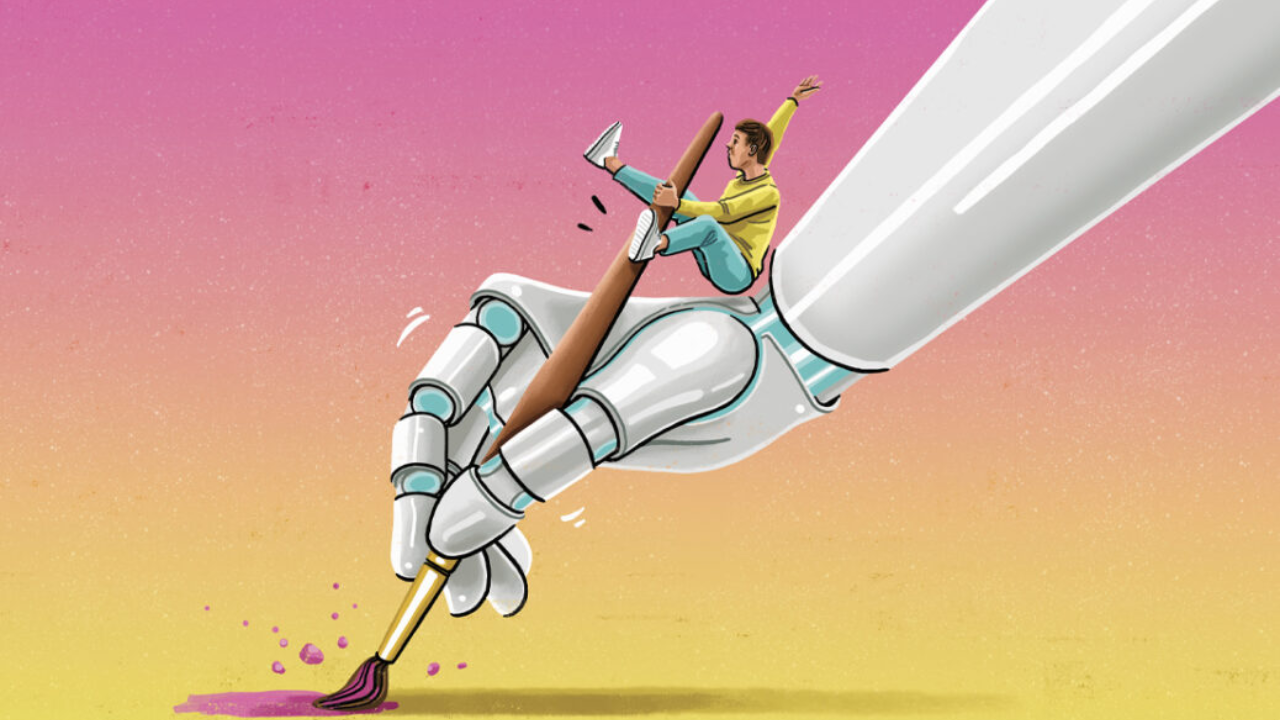
How Technology Encourages Creativity At Home And Work

by

10 January 2026

Blog

How Technology Enhances Creativity

It is quite common to worry about the glowing rectangles in our pockets and on our desks. 

There is often a fear that screens are turning everyone into passive observers, just scrolling endlessly through other people’s lives. 

But if you look a little closer at what is actually happening in living rooms and home offices, a different story emerges. 

Technology, rather than stifling imagination, is often the very thing that unlocks it, providing tools that allow ideas to move from a rough thought to reality in seconds.

So, if you are also curious about how technology enhances creativity at home and the workplace, I have brought the perfect guide for you.

In this article, I will highlight the diverse ways creativity can be enhanced with technology, the impact of generative AI tools on creativity, and more.

So, keep reading to know more!

How Technology Enhances Creativity At Home And Work?

Given that technology impacts the growth of creativity and innovation both at home and at work, here are some of the ways it enhances creative endeavours—

1. Turning Consumers Into Creators

Consider how children interact with tablets and computers these days. It isn’t always about watching cartoons. 

Give a child a simple animation app, and suddenly, they are a film director. They are learning about pacing, storytelling, and visual design without even realising it. 

Since these digital canvases are endless, there is no fear of making a mistake. 

If a drawing goes wrong, they just hit ‘undo’ and try again, which encourages a kind of fearless experimentation that paper and expensive paints might discourage. 

Plus (and this is a significant bonus), digital painting involves zero glitter being spilt on the carpet.

2. Stability And Self-Expression

This ability to experiment safely is crucial for emotional development as well. 

For young people who may have had a difficult start in life, such as those in long term fostering, finding a creative outlet is sometimes easier through a screen than face-to-face. 

It allows them to express themselves on their own terms. When a child is settled in a stable, loving environment, they have the security needed to really explore these talents. 

The stability of knowing they are in a permanent home until adulthood gives them the confidence to invest time in learning to code, editing videos, or making digital art, knowing their computer and their family will still be there tomorrow.

3. The New Home Office Dynamic

And it isn’t just the younger generation benefitting from this shift. The line between “work” and “creative play” for adults has blurred in the best possible way. 

The rigid office cubicle has given way to collaborative online whiteboards where teams can brainstorm in real-time from different corners of the country. 

This flexibility means that a parent can pitch a creative idea to a client in London while sitting at their kitchen table in Manchester, all before the school run.

4. Making Room For The Big Ideas

Technology handles the boring, repetitive tasks like sorting data, scheduling meetings, and checking spelling, which frees up the human brain to do what it does best: dream up new ideas. 

Whether it is a dad using a 3D printer to fix a broken toy or a mum using graphic design software to launch a side business, the barrier to entry for creating something new has never been lower.

5. New Skills And Hobbies

So, while it is sensible to keep an eye on screen time, it is also worth celebrating what those screens allow us to do. 

They are not just windows to look through; they are doors to walk through, leading to new skills, new hobbies, and new ways of seeing the world.

How Generative AI Tools Impact Human Creativity?

Now, with AI tools in the market, creativity is massively impacted by the AI-generated images, texts, and multimedia content. So, here are some of the ways the tools have impacted creativity—

1. Breaking A Creative Block

It is not uncommon for creators, writers, and all kinds of artists to go through a creative block. But having a generative AI tool can help in breaking out of the block.

That is, its diversely generated content can spark the light of imagination. So, creators can get inspired and get back with a creative idea or project.

2. Generating Creative Ideas

Moreover, AI tools can generate content and ideas efficiently. So, creators and creative personas can use them to rapidly find ideas, solutions, and alternative imaginative options.

In addition to this, the creative ideas generated on these tools can help make space and time for the creator to focus on other prioritized projects. So, the workflow becomes efficient and simple for the users.

3. Personalizing Creative Media

Given that AI tools can generate ideas, content, and media based on the prompts, creators can customize them with the right instructions. So, they can get persoanlized creative products from the tools.

Moreover, the creators can use the personalized images, ideas, and content to enhance their creative output. So, they can create similar personalized creative products based on their previous work. 

Benefits Of Using Generative AI Tools For Creativity

Since AI tools offer countless benefits to both professional and non-professional creators, they are being readily adopted. So, some of these benefits of the AI tools’ collaboration include—

  • Speed And Efficiency — Firstly, the collaboration of the tools with human creativity improves the speed and efficiency of creations. So, creators can produce creative ideas in a jiffy.
  • Homogenization — Moreover, the human interaction with the generated creative ideas makes it truly unique and one of a kind. So, it reduces the risk of homogenization of the ideas.
  • Ethical Concerns — Finally, there can be issues with the ownership and ethical aspects of AI-generated creative ideas. But the collaboration with human beings can resolve them efficiently.

So, there can be massive benefits of having technology both at home and in the workplace. This way, family members and workers can engage with the technology to instigate ideas and innovations.

Making it an integral part of their persona. So, what’s the wait for? Take this as a sign to use technology to fuel your creativity and take the world by storm with its uniqueness.


Barsha Bhattacharya is a senior content writing executive. As a marketing enthusiast and professional for the past 4 years, writing is new to Barsha. And she is loving every bit of it. Her niches are marketing, lifestyle, wellness, travel and entertainment. Apart from writing, Barsha loves to travel, binge-watch, research conspiracy theories, Instagram and overthink.

View all posts

Leave a Reply

Your email address will not be published. Required fields are marked *

Related

James Tonic Biography

Discover The Melodic Journey Of James Tonic, A Talented Musician

I have been following James Tonic since his early days. I have seen him grow beautifully on screen. James Tonic’s musical odyssey begins in a small town, where the echoes of creativity rang through his childhood home. So, I naturally grew an interest in his life. I wanted to know how his life unravelled. Also, I wanted to go deep into his early years and how he grew as an artist in them. This article is written to be a sort of James Tonic Biography. I will be addressing how he grew as an artist. Also, I will pen down the milestones in his career. What Role Did Childhood Play In James Tonic Biography? Known early on as James Tonic musician among family and friends, he grew up surrounded by a rich tapestry of musical traditions that shaped his artistic path. He was born into a household filled with everything. Since childhood, he has seen from classical symphonies to vibrant folk tunes. So, I almost feel that James’ childhood exposed him to an eclectic array of sounds from an early age. His parents were both amateur musicians. But they created a very nurturing environment. Of course, it encouraged artistic expression. They introduced him to various musical genres. This instilled in him an appreciation for the rhythmic complexities of jazz. In fact, the emotive storytelling he found in folk music is also inspired by them.   This exposure not only shaped his musical preferences. Additionally, it also laid the groundwork for his own creative endeavors. He was surrounded by a cohesive community that valued the arts. So, James found himself immersed in local concerts and festivals. Also, he often absorbed the performances of established musicians. What Are The Other Important Points In The James Tonic Biography? These are the different points in his life that shaped James as a booming musician. 1. First Notes: Early Musical Discoveries At the age of eight, his parents gifted him a keyboard. Voila! So, James embarked on his formal music education. He dived headfirst into lessons that would later define his career. Okay, I am sure by now, you have guessed that he has a quick grasp of music theory. Additionally, he has an innate ability to play by ear. In fact, these spurred him on to explore a variety of instruments, ultimately settling on the guitar as his primary tool of expression. Mastering guitar at a young age, he delved into song composition. This was a natural progression that felt effortless. Additionally, he began penning his first songs with raw emotional intensity. In fact, his songs reflect the experiences and observations of his youth. James's initial foray into songwriting really kick-started his career. It provided him with a platform to express his innermost thoughts and feelings. These are often characterized by Vivid Imagery Heartfelt Narratives Can you guess when he wrote one of his early songs? He penned it at just eleven! So, this offered insights into his views on friendship and community. Additionally, it showcases a maturity in lyrical content that resonated with those around him. 2. The Drive To Perform: School And Community Engagement James's blooming talent did not go unnoticed. In fact, he soon became a prominent figure at his school. His ability to convey emotion and connect with audiences set him apart. His performances were not merely routines. Rather, they were experiences charged with authenticity. James thrived in communal settings. Here, music was central. He is taking every opportunity to collaborate with peers. In fact, he also engaged with local artists. Community events, open mic nights, and collaborative projects provided fertile ground for creative experimentation.  Behind The Music: James Tonic’s Unique Sound And Style How is Tonic’s music different? Why did it strike me, and millions of others? Here lies the (open) secret! 1. Blending Genres: Tonic’s Second Nature As a musician, James Tonic stands at the intersection of various genres. Guess what? He melds elements from folk, rock, and blues. Then he brings them together into a cohesive and captivating sound that is distinctly his own. You can identify his music by: Intricate guitar riffs Emotive melodies Instrumentation I, as his fan, really credit much of this stylistic development to his early exposure. Also, his participation in multiple musical traditions was a good decision on his part. These truly equipped him with the versatility to experiment. The hallmark of James's approach lies in his ability to juxtapose contrasting musical influences. Additionally, he intertwines whimsical melodies with reflective lyrics. He has often cited artists like Bob Dylan and Fleetwood Mac as pivotal in shaping his sonic landscape. He drew inspiration from their storytelling prowess. In fact, he blends it with contemporary elements, such as Electronic beats Unconventional song structures 2. Lyrical Depth: The Stories Behind The Songs What truly sets James apart is the lyrical depth infused in his songwriting. Every song tells a poignant story, often reflecting personal experiences, societal observations, or philosophical musings. For instance, one of his most celebrated singles, "Echoes of Tomorrow," encapsulates the struggle of yearning for a better future while being anchored in the past. 3. Innovative Collaborations: Teaming Up With Fellow Artists James Tonic’s creativity flourishes through collaboration, a pivotal aspect that has contributed to the evolution of his sound. Noteworthy collaborations include his recent project with emerging indie-pop duo, The Echoes, where their complementary styles yielded a refreshing sound infused with melodic harmony and rhythmic ingenuity. The result, a track titled “Waves of Change,” melds Tonic’s signature storytelling with The Echoes' upbeat energy, creating a powerful anthem for urban youth grappling with change. Charting Success: Milestones In James Tonic Biography I first noticed James Tonic's journey when he was an aspiring musician. Then, I saw him become a well-known figure in the music industry. I think he made a big leap with his album, "Horizons." Released to positive reviews, "Horizons" showcases his growth as a songwriter and performer. It features thoughtful lyrics and lively music that resonated with fans around the world. James carefully crafted each track to reflect his artistic vision. Upon its release, "Horizons" gained widespread attention. So, it marked James's entry into mainstream music. The album topped charts and received many nominations at major music awards, confirming his place in a competitive industry. The singles, including the hit "Chasing Stars," further boosted his popularity, receiving ample airplay on the radio and streaming platforms. His storytelling connected with audiences, turning casual listeners into devoted fans. James Tonic's influence on the music scene goes beyond his popular songs. His authenticity and integrity inspire upcoming artists as they navigate the music industry. James actively engages with young artists through workshops, mentorship, and masterclasses to help them develop their talents. James Tonic’s live performances are a key part of his career. They combine skilled musicianship with compelling storytelling. In fact, this leaves audiences wanting more. One memorable performance was at the Glastonbury Festival. Here, he captivated attendees from all backgrounds. I remember this one incident. It happened during a stunning acoustic version of “Reflections”. James invited fans to share their stories! This transformed his music into a shared journey of connection. The Future Of Music: What’s Next For James Tonic? James is an artist in constant evolution. I really like that James Tonic aims to redefine his boundaries. In fact, he has forthcoming projects that promise to captivate listeners once again. I have huge anticipation surrounding his next album. Additionally, cryptic teasers on social media have also fuelled this. Also, the promise of innovative tracks works as a charm. It reflects his artistic evolution. James's foray into genre-blending remains intact as he aims to experiment with different sonic landscapes. Moreover, it challenged his comfort zone while embracing the fluidity of musical expression.   In addition to his signature folk-rock roots, preliminary insights suggest a deep dive into electronic music. Also, he incorporates synthesized sounds. These push the envelope of contemporary musical narratives. Engaging With Fans: The Role Of Social Media In the digital age, James Tonic recognizes the importance of connection. So, he is harnessing the power of social media to engage with his fan base and share insights into his creative process. Platforms such as Instagram, Twitter, and TikTok serve as vital communication tools. These provide fans with a glimpse into his life as a touring artist. Also, they offer intimate moments of vulnerability shared through stories and posts. James has actively engaged in Q&A sessions and live-streamed performances. So, this allows fans to connect with him on a personal level, solidifying the sense of community surrounding his music. James Tonic Biography Is Shaping Future Generations James Tonic is on an incredible journey as an artist. Additionally, he’s building a legacy that’s sure to leave a lasting impact on the music world. He has a wonderful commitment to staying true to himself. Additionally, the fact that he is collaborating with others has really helped him. Additionally, as he advocates for mental health, it has struck a chord with both fans. In fact, his fellow musicians also acknowledge him. This makes him a symbol of hope and inspiration. Through his music and various initiatives, James is opening doors for the next generation of artists. He is encouraging them to share their unique stories in a rich and diverse musical landscape. Looking to the future, James is eager to make an even bigger difference through philanthropy. He plans to create programs that support aspiring musicians from underserved communities. Also, he wants to provide them with the required: Resources Mentorship Opportunities By doing this, James isn’t just making music. He's becoming a transformative figure. In addition, he is dedicated to shaping the future of the industry. Read Also: 8 Problems Only Music Lovers Will Know Find the Required Music Lyrics at Allmusicals.com Receiptify: A New Way To Learn About Your Favorite Songs!

READ MOREDetails
Trading Indicators

Top 5 Indicators Every Trader Should Know

Trading without indicators is a bit like driving down a dark road with no headlights. Sure, you might make it to your destination, but it’s going to feel unnecessarily risky—and honestly, stressful. That’s where technical indicators step in. Think of them as your GPS in the financial markets, helping you make sense of price moves and pointing out opportunities you might have missed otherwise. Successful traders usually aren’t winging it on gut feelings. They lean on tools that have proven their worth time and time again. Now, indicators won’t magically guarantee profits (if only it were that simple), but they do give you a clearer view of what’s really going on in the charts. Moving Averages Moving averages help smooth out the chaos in price action so you can actually see the bigger trend. Instead of staring at a chart that looks like it’s having a bad day, you get a clean line that shows where things are generally headed. The two most common types? Simple moving averages (SMA) and exponential moving averages (EMA). The SMA treats every price in the period equally, while the EMA gives more weight to recent prices—so it reacts quicker to current market shifts. Traders often watch both, depending on how much detail they want. RSI indicator RSI (Relative Strength Index) is a momentum tool that basically tells you how fast and how strong price movements are. It runs between 0 and 100, and the classic rule of thumb says anything over 70 could mean “overbought,” while below 30 might mean “oversold.” But here’s the catch: those numbers aren’t magic. In a strong trend, RSI can hang out above 70 or under 30 way longer than you’d expect. Another cool part of the RSI indicator is spotting divergences. If price makes a new high but RSI doesn’t follow, that can be a warning sign that momentum is fading—and sometimes that’s the nudge before a trend flips. Volume Volume is simply how many shares or contracts were traded in a given time. But don’t let the simplicity fool you—it’s one of the best ways to gauge how much conviction is behind a move. Big push upward on high volume? Buyers are serious. Sharp drop on heavy volume? Sellers mean business. On the flip side, when prices move on low volume, it often feels flimsy. Those moves can reverse quickly. That’s why seasoned traders like to see volume confirming what price is already showing. Without that confirmation, the move might not be as strong as it looks. Fibonacci Retracement Fibonacci retracement levels might sound complicated at first, but they’re basically lines drawn on a chart to show possible support or resistance spots during pullbacks. They’re based on ratios from the Fibonacci sequence (math nerds love this part), but traders mostly care about how price reacts around those levels. The popular ones are 23.6%, 38.2%, 50%, 61.8%, and 78.6%. Out of these, the 38.2% and 61.8% lines tend to attract the most attention. Why do they work? Honestly, it’s partly because so many traders are watching them. When a huge number of people expect price to bounce or stall at the same place, it often does. MACD The MACD (Moving Average Convergence Divergence) is a bit more complex, but it’s a favorite among traders. It’s made up of two lines and a histogram. The MACD line comes from subtracting a longer-term EMA from a shorter one. Then you’ve got the signal line, which is just an EMA of the MACD line itself. When the MACD line crosses above the signal line, it’s usually seen as bullish. Crosses below hint at bearish conditions. The histogram (those little bars) shows the difference between the two lines, which helps traders spot when a crossover might be on the horizon.

READ MOREDetails
how to install metal roofing

How To Install Metal Roofing Over Shingles The Right Way?

Today’s topic: How to install metal roofing? If you’ve been thinking about upgrading your roof without tearing everything off first, you’re not alone. One of the most common questions I hear as a roofer is: “Can you put a metal roof over shingles?” The answer is yes—you can, and when it’s done right, it can save you time, money, and a whole lot of mess. I’ve spent years working on both residential and commercial roofing projects, and I can tell you there’s a right way and a wrong way to tackle this job. Let me guide you through the process step by step, with a few pro tips and common mistakes to avoid along the way. Why Should You Consider Installing Metal Roofing Over Shingles? Metal roofs have gained significant popularity over the past decade, and for good reason. They’re durable, energy-efficient, and they look sharp on just about any home or building. By installing metal roofing over shingles, you: Save on tear-off costs (no dumpster rentals or labor for removing shingles). Add an extra layer of insulation, which can help with energy efficiency. Reduce installation time, since you’re working over an existing roof deck. That said, this method isn’t right for every roof. Before you start, it’s essential to ensure that your roof structure can handle the added weight and that your local building codes permit this type of installation. Additionally, you may want to consider checking out Cleveland roofing companies, thanks to their reputation and expertise, especially if you are located in the United States.  How To Install Metal Roofing Over Shingles? So, without wasting time, let’s find out how you can install metal roofing over shingles.  Step 1: Inspect Your Roof Before Doing Anything Here’s the truth: the success of your metal roofing project depends on the prep work. Before laying down panels, conduct a thorough inspection. Inspect the decking for signs of rot or soft spots. If your roof sheathing is compromised, it needs to be replaced. Look for more than two layers of shingles. Most codes don’t allow more than two layers total. Check flashing, chimneys, and vents for proper installation. Any existing leaks must be repaired before the new roof is installed. Pro Tip: Walk the roof carefully. If you feel any spongy areas underfoot, you have decking issues that must be addressed first. Step 2: Lay Down A Moisture Barrier Although shingles already provide some protection, you’ll want to add a layer of underlayment before installing metal panels. This extra layer protects against condensation that can form under the metal. I usually recommend using a high-quality synthetic underlayment. It’s lightweight, tear-resistant, and holds up better in the long run compared to traditional felt paper. Step 3: As An Optional Step, Add Furring Strips This is one of those “pro versus DIY” differences. Many homeowners skip this step, but furring strips (also called purlins) create a flat, even surface for the metal panels to sit on. They also improve ventilation, which helps reduce moisture buildup under the roof. Install the strips vertically, spacing them every 2 feet or so. Make sure they’re fastened securely into the rafters, not just the shingles. Pro Tip: Furring strips are especially important if your shingles are uneven or curling. Without them, your new metal roof could end up looking wavy. Step 4: Choose The Right Metal Panels Not all metal roofing is created equal. The most common options are: Corrugated panels: Budget-friendly and great for sheds or garages. Standing seam panels: Sleek look, hidden fasteners, and very durable—perfect for homes and commercial buildings. Metal shingles or tiles: Designed to mimic traditional roofing but with the strength of metal. Your choice ultimately depends on your budget, style preferences, and the desired lifespan of the roof. Personally, I recommend standing seam if you’re planning to stay in your home for the long haul. Step 5: Install The Metal Roofing Panels Now comes the main event. Installing metal roofing over shingles isn’t overly complicated, but it does take precision. Start at the bottom edge (eaves) and work upward. Lay the first panel square with the edge of the roof. If your first panel is crooked, the entire roof will appear uneven. Overlap panels properly—follow the manufacturer’s guidelines for overlap distance. Fasten with the right screws. Use screws with rubber washers to seal holes, ensuring they penetrate solid decking or furring strips. Continue up the roof, checking alignment every few rows. Pro Tip: Don’t overtighten screws. If the rubber washer is squished too flat, it won’t seal properly and may crack over time. Step 6: Flashing And Trim Work This is where many DIY jobs go awry. Flashing around chimneys, skylights, and valleys is critical for keeping water out. Trim pieces at the ridges and edges give the roof a finished, professional look. If you’re unsure about flashing details, this is the step where you may want to consider hiring a professional. A metal roof is only as good as its weakest point, and improper flashing is the most common cause of leaks. What Are The Common Mistakes To Avoid? I’ve seen many metal roofs fail due to simple errors. Here are the top mistakes to watch out for: Skipping the underlayment. This leaves your roof vulnerable to condensation. Using the wrong fasteners. Nails or cheap screws won’t hold up—always use roofing screws with rubber washers. Poor alignment. Once panels are on, it’s tough to fix crooked lines. Take your time. Ignoring ventilation. Without proper airflow, you risk moisture damage and reduced lifespan of your roof. How To Maintain Metal Roofs? Tips Now that you know how to install metal roofing, the next issue is: how to maintain it? One of the perks of a metal roof is its low maintenance, but that doesn’t mean zero maintenance is required. Inspect screws and fasteners yearly. Tighten or replace any that have loosened. Keep gutters clean. This prevents water from backing up and damaging flashing. Trim overhanging branches. Metal roofs are tough, but falling limbs can still cause dents or scratches. Wash occasionally. A simple rinse with a hose keeps the roof looking sharp and removes debris. Know How To Install Metal Roofing In 2025! If you’re handy and comfortable working on a roof, installing metal over shingles is a doable task. But here’s my honest advice: it’s not for everyone. Working on a roof is inherently dangerous, and even a minor mistake can result in significant financial consequences down the road. As a roofer, I’ve fixed plenty of DIY jobs that started with good intentions but ended up leaking or looking crooked. If you’re unsure about any part of the process—especially flashing and sealing—don’t be afraid to call in an expert. Installing metal roofing over shingles can be a smart move if it’s done right. You’ll save money, boost curb appeal, and enjoy a roof that could last 40–50 years. If you’re ready to take the next step, don’t hesitate to reach out to a professional roofer. Whether you just need advice, an inspection, or a full installation, we’re here to help. After all, a roof isn’t something you want to gamble on—it’s what keeps your family, your business, and everything inside safe and dry. Read More: How Often Do You Need A Roof Inspection? Elevate Your Roof’s Health With Aerial Roof Inspections What Is The Average Life Span Of A Tile Roof in Albuquerque?

READ MOREDetails