










Ok Win Game Review: Is This Color Prediction App A Real Earner Or A Financial Trap?

by

13 March 2026

Blog

Ok Win

I am yet to comprehend the current landscape of side-hustle culture. It's really too much to keep up with! 

But I have also noticed something that really impresses me! The allure of making quick cash via a smartphone has never been stronger.  

Among the loudest names in this space is Ok Win. I am sure you might have heard of it somewhere. People often search for it as Ok Win Game.  

Promising instant wealth through color prediction and small-scale betting, the platform has flooded social media feeds and Telegram channels across India. 

But as the platform's reach grows, so do the questions regarding its legitimacy.  

Is Ok Win a revolutionary gaming platform, or is it another entry in the long list of unregulated betting apps?  

This investigative guide dives deep into the mechanics, risks, and reality of the Ok Win ecosystem. 

What Is The Ok Win Game?

At its core, Ok Win is an online prediction platform.  

Also, I would like to clarify that this game is nothing like the skill-based games such as Chess. 

In fact, it is also very different than some forms of Rummy. Rather, i would say that Ok Win primarily revolves around probabilistic outcomes.  

So here, you will be asked to trade or bet on the outcome of short-cycle events. 

These are most commonly the color of a digital result, such as: 

  • Red 
  • Green 
  • Violet 

What Are the Primary Features Of The Ok Win App?

The platform is built on three main pillars. Additionally, the makers have to keep users engaged and constantly depositing funds: 

1. Color Trading:  

A 1-minute or 3-minute cycle where you predict which color will appear next. 

2. Wingo And Lottery:  

Variations of number-based guessing games that function similarly to a digital roulette. 

3. Referral Bonuses:  

A multi-level marketing (MLM) structure where you earn a commission for every person you invite who deposits money, often used by influencers to promote the site. 

According to an analysis by Aseem Juneja’s cybersecurity review, the platform thrives on a viral loop. 

Here, the platform encourages you to share its winning screenshots. This aims to lure in new participants. 

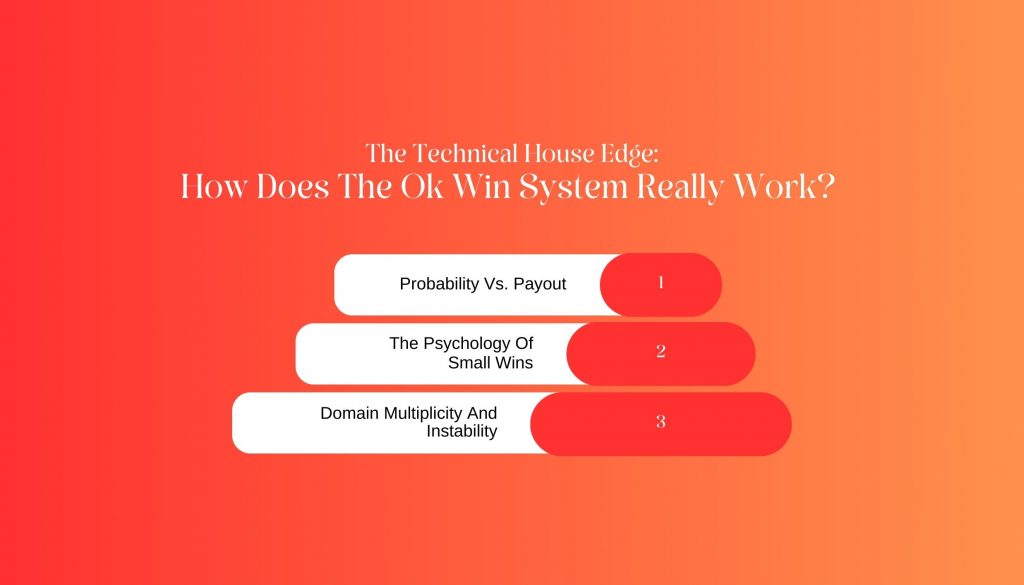
The Technical House Edge: How Does The Ok Win System Really Work?
To understand Ok Win, you must look at the mathematical reality behind the curtain.  

So, in the world of gambling, this is known as the House Edge. 

1. Probability Vs. Payout 

If you bet on a color, you have a roughly 50% chance of winning. Of course, this is minus the Violet tie-breaker.  

However, the platform's payout ratio is rarely 2.0x.  

Additionally, it is usually lower.  

So, this means that over 100 rounds, the house is mathematically guaranteed to keep a percentage of all money wagered. 

2. The Psychology Of Small Wins 

Ok Win uses a psychological tactic called variable ratio reinforcement. Additionally, the platform allows users to win small amounts early on. 

I would say it's 100 INR or 500 INR. Therefore, through this, the platform builds a false sense of skill.  

Also, this encourages users to deposit larger sums, such as 5,000 INR or 10,000 INR. 

Now this is exactly where the withdrawal problems typically begin. 

3. Domain Multiplicity And Instability 

One major red flag is that Ok Win exists across dozens of shifting domains (e.g., okwin. asia, okwingame.me, okwin.in.net).  

As noted in investor warnings from regulatory bodies, this is a common tactic used by unregulated sites to stay one step ahead of internet service provider (ISP) blocks and legal scrutiny. 

The legal status of Ok Win is a significant gray area that leans toward the dark side.  

In India, the Public Gambling Act of 1867 distinguishes between Games of Skill and Games of Chance. 

Firstly, these are legal in most states. Additionally, these include platforms where the player's strategy or knowledge determines the outcome. 

Also, these are classified as gambling. Therefore, they are heavily restricted. In fact, they are also illegal in many Indian states. 

As I mentioned, the outcome of a color prediction in Ok Win is determined by a Random Number Generator (RNG). 

Also, it involves no significant player skill. Therefore, it is widely categorized as a game of chance.  

Furthermore, Ok Win is not registered with the Reserve Bank of India (RBI) or the Securities and Exchange Board of India (SEBI). 

So, this means you will have zero legal protection if the site suddenly disappears with their deposits. 

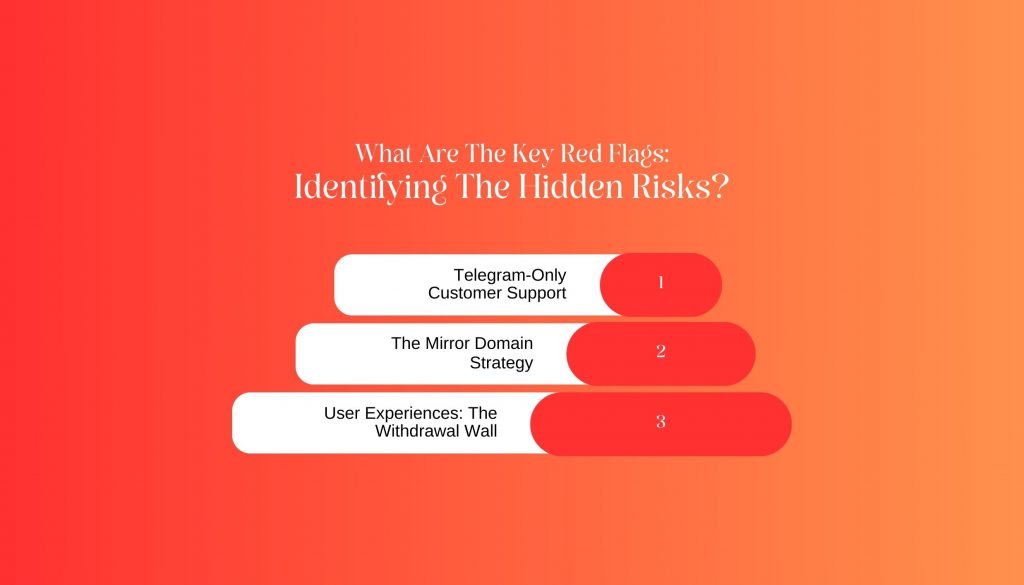
What Are The Key Red Flags: Identifying The Hidden Risks
If you are considering using Ok Win or a similar app, it is vital to recognize the structural warnings that often point toward a scam. 

1. Telegram-Only Customer Support 

A major warning sign is the lack of official corporate transparency.  

Legitimate fintech apps provide verified email addresses and physical office locations.  

Ok Win, however, operates almost entirely through mentors on Telegram.  

This makes it impossible to hold the company accountable if your funds are frozen. 

2. The Mirror Domain Strategy 

As mentioned previously, the website URL changes frequently (e.g., .me, .asia, .xyz).  

This is a hallmark of fly-by-night operations. Also, it anticipates that the search engines or government regulators will likely flag it.  

If the site you are using changes its address every few weeks, your data and money are at extreme risk. 

3. User Experiences: The Withdrawal Wall 

A recurring theme in user reviews on platforms like Trustpilot and Reddit is the Withdrawal Wall.  

Users often report that while depositing money is instantaneous via UPI, withdrawing it is a nightmare. 

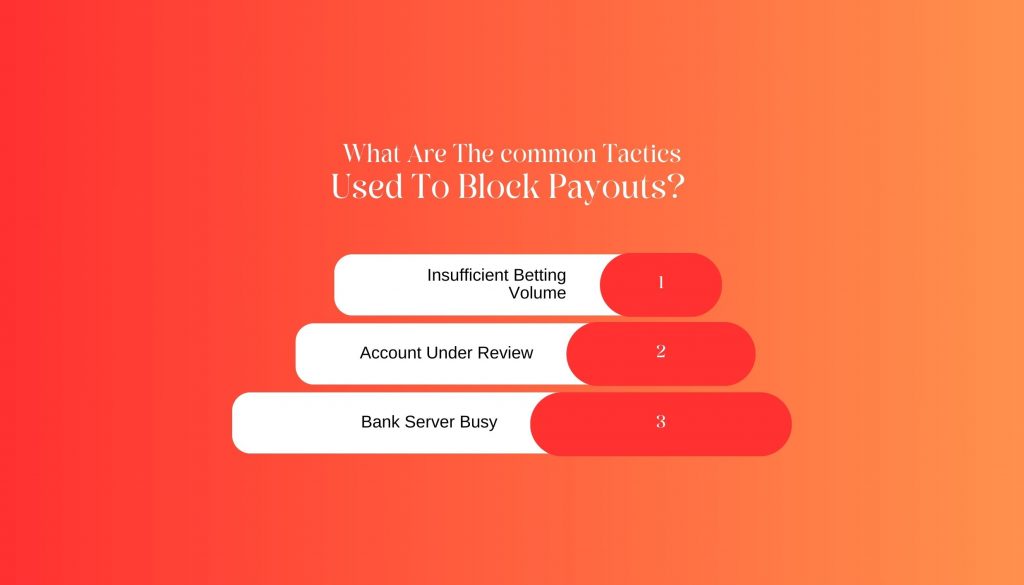
What Are The common Tactics Used To Block Payouts?
I was reading Eknath Shinde's digital safety report for research. It highlights that the platform has designed tactics to frustrate the user. 

In fact, these will keep at it until they simply give up or gamble away the remaining balance. 

1. Insufficient Betting Volume:  

Firstly, it will tell you that you must bet 10x your deposit before you can withdraw. 

So, it is directly forcing you to risk your winnings until they are likely lost. 

2. Account Under Review 

Secondly, it locks your account for suspicious activity. All good, but this happens the moment you try to withdraw a large sum. 

3. Bank Server Busy 

A perpetual error that never resolves. Also, it keeps your money trapped in the digital wallet. 

On the other hand, the platform continues to earn interest on your funds. 

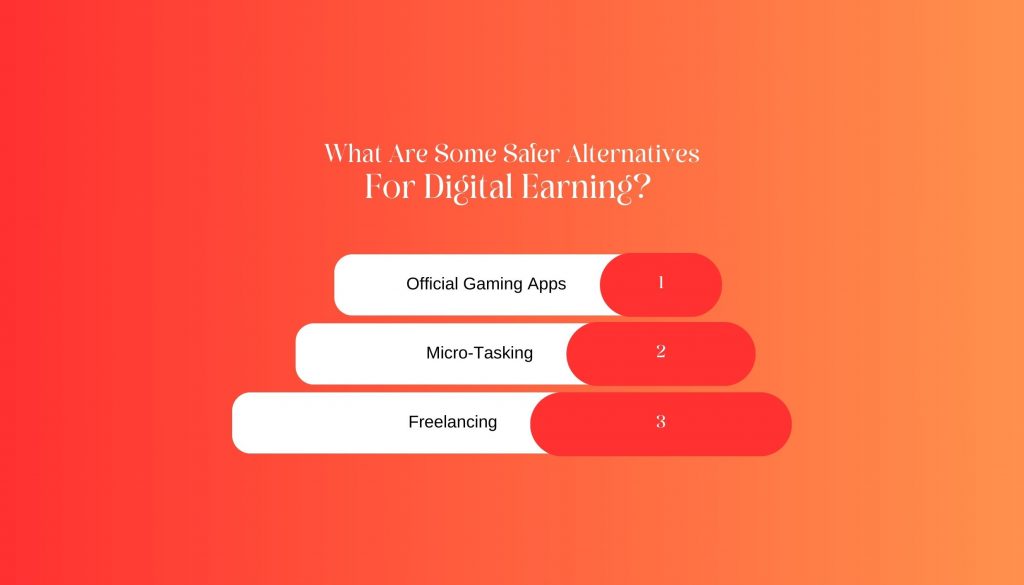
What Are Some Safer Alternatives For Digital Earning?
You don't have to gamble to make money online. If you have time to spare, consider these verified, skill-based paths. 

I can assure you that these offer genuine payouts: 

1. Official Gaming Apps 

Firstly, you can check out platforms like Zupee or Dream11. These operate within the legal frameworks of Games of Skill in India. 

Additionally, they also have transparent withdrawal systems. 

2. Micro-Tasking 

Secondly, you can go for websites like Amazon Mechanical Turk or Clickworker. 

These will pay you for small data-entry tasks. Also, I would like to add that these tasks require human intelligence

3. Freelancing

Finally, if you have a skill in writing, design, or coding, platforms like Upwork or Fiverr are for you. 

It allows you to build a long-term income stream. And the best part? You can get work without depositing a single rupee. 

final Verdict: Should You Play Ok Win? 

The short answer is: No. 

Yes, I agree that the flashy interface and the thrill of a 1-minute win are tempting. 

But we also have to understand that Ok Win lacks the transparency and regulatory backing. 

Also, it doesn’t have the technical security that it requires for people to trust this financial platform.  

It operates more like a high-stakes digital lottery than a game. 

Treat Ok Win as high-risk entertainment only.  

Never invest money that you cannot afford to lose, and never provide the platform with access to your primary bank account or sensitive personal data.  

In the world of online earning, if it feels too fast and too easy, it’s probably a trap. 

Barsha is a seasoned digital marketing writer with a focus on SEO, content marketing, and conversion-driven copy. With 8+ years of experience in crafting high-performing content for startups, agencies, and established brands, Barsha brings strategic insight and storytelling together to drive online growth. When not writing, Barsha spends time obsessing over conspiracy theories, the latest Google algorithm changes, and content trends.

View all posts

Leave a Reply

Your email address will not be published. Required fields are marked *

Related

Importance of brand consistency

The Role Of Repetition In Building A Memorable Brand

If you are in a branding business, I feel equally excited and sorry for you. Well, the feelings stem from the same reason! Today, we are dealing with a marketplace that is overflowing with choices. Which excites and terrifies me at the same time. See, everyone wants to be extraordinary. But, in this market, standing out is no small task.  Now, brands are not competing only for attention. But it is also aiming for long‑term recognition and trust.  Here comes the importance of brand consistency. One of the most effective yet often overlooked tools in achieving this is repetition.  Additionally, you need to use it strategically. Repetition reinforces a brand’s identity. In addition, it also strengthens customer recall. In fact, it also builds familiarity that leads to loyalty.  If you are consistent as a brand, you will be able to win over visual elements. Additionally, you will also nail the messaging and customer experience.  Also, I must add that consistent repetition helps shape how audiences perceive and remember a brand. What Does The Importance Of Brand Consistency Signify About The Current Market? As I already mentioned, repetition in branding works big time. This is because it aligns with how the human brain processes information.  But what does this say about the current market? Now, the customers are more focused on aligning their views with the services they choose. Additionally, it is a given point that people are far more likely to remember something they encounter multiple times. This is more important, especially when it appears consistently across different contexts.  I want you to stretch your knowledge on this psychological principle. It is known as the “mere exposure effect.” Additionally, it suggests that familiarity breeds preference.  As customers, we begin to associate those elements with reliability and trustworthiness when we:  Repeatedly see the same logo Hear the same tone of voice Experience the same level of service For brands, this means that repetition isn’t just a marketing tactic. It’s a foundational strategy for shaping perception.  Every repeated interaction reinforces the brand’s identity. Additionally, it also strengthens its position in the customer’s mind. How Does The Importance Of Brand Consistency Reflect In The Business Growth? Yes, I have explained the importance of brand consistency quite well by now. But how does this materialize in your business? Let’s see! 1. Creating Consistency Across Visual Elements Visual consistency is one of the most powerful forms of repetition. Logos and color palettes have become such an important part these days. In fact, the typography is also placed on a pedestal, and for good reasons. Also, you must pay extra attention to the imagery. All of these contribute to a brand’s visual identity.  Additionally, you must also ensure that these elements are used consistently across  Websites Packaging  Signage  Promotional Materials  When you use them effectively, they will create a cohesive and recognizable presence. In addition, this consistency helps customers quickly identify the brand. Your brand must speak for itself even in crowded environments.  I want you to take a moment and think of iconic brands whose colors or symbols are instantly recognizable. This level of recognition is built through years of repeated visual exposure.  But don't worry! Even smaller businesses can achieve a similar impact. You just have to maintain strict visual guidelines. Also, you must ensure that every touchpoint reflects the same identity. 2. Reinforcing Messaging Through Repeated Themes Brand messaging is another area where repetition plays a very, very important role.  A clear, consistent message helps customers understand what a brand stands for. Additionally, they also understand clearly what makes it unique.  I, for example, really like a good tagline. It instantly elevates a brand’s image for me. Additionally, one of my friends is absolutely crazy about a good mission statement and core values.  She works in branding, so yeah, we hear what the experts say! In addition, I also think another good strategy is repeating key messages across marketing channels. So, all of these together reinforce the brand’s purpose and personality. This doesn’t mean using the same words every time. Instead, it involves communicating the same themes and ideas in a variety of ways.  You must ensure that the customers repeatedly encounter messaging that aligns with their expectations and experiences. Then, it will strengthen their connection to the brand. Also, it will build trust over time. 3. Enhancing Customer Experience Through Predictability Repetition isn’t limited to visuals and messaging. It also applies to the customer experience.  See, I am putting across a very simple point here. Your customers must know what to expect from a brand. Then, they feel more comfortable and confident engaging with it.  This predictability can come from consistent service quality. In addition, reliable product performance is also another important factor you must cater to. In fact, customers also react very well to familiar processes. For example, brands often use quality branded merchandise as part of their customer engagement strategy. This is to reinforce their identity through repeated exposure to useful, well‑designed items.  Each interaction with these items subtly strengthens brand recall and reinforces positive associations.  Similarly, consistent customer service practices help create a dependable experience that customers come to trust. 4. Building Long‑Term Loyalty Through Familiarity Ultimately, repetition helps transform recognition into loyalty. When customers repeatedly encounter a brand that delivers consistent value, they begin to form emotional connections.  These connections are the foundation of long‑term loyalty, influencing purchasing decisions and encouraging advocacy. Familiarity also reduces the cognitive effort required to make choices.  When faced with multiple options, customers often choose the brand they recognize and trust, even if they haven’t consciously evaluated every alternative.  This automatic preference is a direct result of repeated positive interactions. The Importance Of Brand Management Deserves More Attention Repetition is a powerful force in building a memorable and trustworthy brand.  By consistently reinforcing visual identity, messaging, and customer experience, businesses create familiarity that leads to recognition, trust, and loyalty.  In a competitive landscape, the brands that succeed are those that show up the same way, time after time, delivering a cohesive and reliable experience.  Through thoughtful repetition, companies can strengthen their presence, deepen customer relationships, and build a brand that truly stands the test of time.

READ MOREDetails
How Video To Video AI Works

How Content Creators Are Using Video To Video AI to Repurpose Best Content? 

Every content creator has a backlog problem.  Somewhere in their archive are videos that performed well, covered genuinely useful topics, and attracted real audience engagement.  But they are now underperforming because they look dated, were recorded before the creator developed their production quality, or are simply buried under two years of newer uploads.  The instinct is to remake them from scratch, which rarely happens because it is equally time-consuming as making something new. Video-to-video AI has introduced a different approach: transforming existing footage rather than replacing it.  Moreover, the ability to restyle, reformat, and repurpose video content using AI has changed the economics of content libraries in a way that's worth understanding. And this is true for everyone, whether you're managing a YouTube channel, a brand's social media presence, or a portfolio of educational content. On that note, let’s break down how video to video AI works and, more importantly, highlight how content creators are using this innovation to repurpose their content. Stay tuned.  How Video To Video AI Works? The core capability of video-to-video AI is style and format transformation. The point is to take an existing video and adjust its visual treatment, pacing, aspect ratio, background, or overall aesthetic without requiring a complete reshoot.  This is different from basic editing, which trims and rearranges existing footage. In contrast, video-to-video AI alters the character of the footage itself. The video to video AI tool on Pollo AI is built around this transformation capability. An older talking-head video shot against a plain background can be given a more polished visual treatment.  Moreover, you can intelligently reformat horizontal footage for vertical platforms without losing the subject in the crop.  You can restyle a corporate training video, recorded in a different style, to match a brand's new guidelines without a full reshoot.  Pollo AI handles these transformations through AI-powered processing that preserves the content and performance while updating the presentation. This is exactly the distinction that makes it useful for repurposing rather than just remaking. For creators with substantial back catalogs, this opens a repurposing strategy that compounds in value. The research, scripting, and performance work that went into producing strong evergreen content doesn't have to be redone just because the visual treatment needs updating.  Also, Pollo AI's approach makes the content reusable across a longer timeframe and across more platform contexts than the original recording allowed for. The Platform Fragmentation Problem That AI Helps Solve: The modern content creator will try to maintain a presence across platforms, each with distinct format requirements.   YouTube favors horizontal video with specific thumbnail conventions. Instagram Reels and TikTok require a vertical format.  LinkedIn performs best with square or slightly vertical video. Twitter/X rewards short, punchy clips.  Moreover, each of these platforms is a distinct audience with distinct viewing behavior. Plus, content that isn't formatted for the platform it's on underperforms regardless of its quality. Historically, serving all these platforms from a single piece of source footage meant either accepting format compromises or investing in separate edits for each distribution channel.  Neither was satisfying: cropped horizontal footage in a vertical frame loses compositional intent, and producing six separate cuts of every video multiplies production time in a way that most creators can't sustain. Video-to-video AI changes this by making intelligent format transformation fast enough to include in a regular production workflow.  The same source footage can generate platform-specific versions that are properly composed for each context rather than just mechanically cropped.  Also, for creators managing content across multiple platforms, this is one of the most practical workflow improvements available. Using AI Avatars To Scale Talking Head Content: Beyond the transformation of existing footage, there's a growing category of video creation that sidesteps the filming process entirely: AI avatar video.  For certain content types, an AI-generated presenter can deliver the content effectively without requiring the creator to record themselves. For instance, AI avatars are becoming popular for explainers, announcements, educational breakdowns, and internal communications. Vidnoz AI, accessible through Pollo AI, specializes in this avatar video category. It creates realistic AI presenters that you can customize to match a brand's visual identity.  Also, it can deliver scripted content in multiple languages and styles.  Moreover, for content creators seeking to maintain a consistent publishing schedule, Vidnoz AI offers a practical production workflow. And this is also true for creators who don't want to appear on camera for every piece of content. Also, this is applicable for brands that need video content across multiple regional markets without separate recordings for each,  Pollo AI's offering of both video transformation tools and Vidnoz AI's avatar capabilities within the same ecosystem means creators can handle diverse video content needs.  This can refresh existing footage and generate new presenter-led content — within a connected workflow. The use cases for AI avatar video have expanded considerably as the output quality has improved.  Internal training content, product feature announcements, multilingual market content, and high-volume explainer series are all contexts in which avatar video delivers professional results efficiently.  The ceiling on quality is high enough that avatar-led content is now indistinguishable from filmed content for many practical purposes. Building A Sustainable Content Repurposing System The creators who get the most value from video transformation and repurposing tools aren't treating them as one-off solutions for individual problems.  They're building systems: structured workflows that regularly mine their content archive for repurposing opportunities. Also, they systematically update and redistribute strong-performing content to extend its value. A basic version of this system looks like this: once per quarter, review top-performing content from the previous six months.  Then, identify which pieces are evergreen and which need factual updates versus just visual refreshes.  Queue the visual refresh candidates for video transformation processing. Update any factual content through re-narration or on-screen text overlays.  Redistribute the updated versions with new titles and thumbnails that reflect current search patterns and platform conventions. This approach treats a content library as an appreciating asset rather than a depreciating one.  The research and creative thinking embedded in strong content don't expire. But the presentation layer that delivers it to audiences does.  Separating those two layers and maintaining the presentation layer through AI transformation rather than full reproduction is what makes a content library genuinely valuable over a multi-year timeframe. The Practical Value Of Quality Consistency Across A Library: One consequence of rapid platform evolution and improving production tools is that a creator's older content often looks noticeably worse than their newer content, even when the older content is substantively stronger.  A viewer who discovers a creator through a recent, well-produced video and then navigates to their back catalog may encounter footage that undermines the impression of quality they just formed. This quality inconsistency problem affects audience retention and subscriber conversion in ways that are easy to underestimate.  Viewers make decisions about whether to subscribe based on the overall impression of a channel, not just the individual video they're currently watching. Moreover, a channel that looks uniformly professional throughout its archive converts better than one where quality varies dramatically by year. Video-to-video AI makes it feasible to bring older content up to a consistent quality standard. And that too without the full production investment of recreating it.  The result is a channel that presents a coherent identity across its entire history. This is ultimately what the platforms reward and what audiences trust. The tools for building and maintaining that consistency are accessible. Moreover, the workflow is learnable. Also, the compounding value of a well-maintained content library is significant.  Plus, for creators who have been producing content seriously for more than a year, the repurposing opportunity sitting in their existing archive is almost certainly larger than they've recognized. Read Also: The Formula For Success In iGaming: Content Providers, User Experience, And Player Retention Marketing How Can Tonztech Com Make Your Digital Content Experience Better In 2026? The Art Of Creating Viral Content On TikTok For Marketing Apps

READ MOREDetails
Forecast Accuracy

Improving Forecast Accuracy Across The Supply Chain

Have you heard about forecast accuracy? It is one of the most critical factors that influences operational success.  This happens when your predictions align closely with actual demand. Then, the organizations can minimize costs quite effectively. In addition, it also helps you to optimize inventory. In fact, it allows you to enhance customer satisfaction.  But why should you achieve this balance? And more importantly, how? Well, focusing on the latter, I would say you will require a structured approach. This approach must combine data, collaboration, and technology. What Is Forecast Accuracy? Forecast accuracy measures how close predicted demand is to actual sales or usage.  Additionally, it is typically expressed as a percentage. So, it reflects how effectively an organization anticipates future needs.  But why should you focus on accurate forecasting? This is because it does a lot for us. It: Reduces waste Prevents stockouts  Supports efficient production scheduling Now, I want to especially warn you regarding inaccurate forecasts. It can lead to  Overproduction Excess Inventory  Missed Opportunities So, I suggest that you recognize the sources of error very diligently. By this, I mean sources such as poor data quality or misaligned assumptions. I can assure you that it helps supply chain teams refine their processes. What Are The Key Factors That Influence Forecast Accuracy Performance? Several variables affect how precisely demand can be predicted. Understanding these influences allows planners to make informed improvements. 1. Data Quality   Firstly, you must ensure high standards of data quality. It is way more important than you think it is. You see, clean and consistent data form the foundation for reliable statistical analysis and modeling.  In addition, it involves regular data validation. Also, you have to go through a cleansing process. This will help you to remove inaccuracies and discrepancies.  So ultimately, it will lead to more trustworthy insights that can drive informed decision-making. 2. Market Variability   The landscape of consumer behavior is increasingly dynamic. Additionally, there are rapid shifts. These are influenced by:  Trends Economic Factors Seasonality These ongoing changes can pose significant challenges to traditional forecasting methods that rely on historical data patterns.  So, how to navigate this uncertainty effectively? Firstly, businesses must adopt more agile forecasting techniques. In addition, they also need to ensure that these account for varying consumer preferences and market conditions. 3. Collaboration   Also, you ned to foster strong cross-functional communication among:  Sales Operations Procurement Teams  I can assure you that this is essential for achieving alignment within the organization.  So, you need to actively share insights and data. Then, these departments can better understand each other's objectives and challenges. Therefore, it can lead to improved decision-making. Also, it will lead to streamlined processes. Additionally, you will see a unified approach to addressing customer needs. 4. Technology Integration   The incorporation of advanced technological tools plays a pivotal role in optimizing the efficiency of: Data collection  Analysis  Scenario modeling  In addition, you also have to ensure that you are working with the right software and platforms. When this happens, organizations can automate data processes and gain real-time insights. Also, it helps you to conduct sophisticated analyses that help predict outcomes.  This integration not only enhances analytics capabilities. But it also allows teams to explore various scenarios. In fact, you will come across strategies with greater confidence. Leveraging Forecast Accuracy Technology For Better Predictions Let us first understand exactly how modern forecasting works. I would start explaining this by stating its source of reliance first. It relies on specialized systems. And guess what? These systems that I am talking about analyze patterns across multiple data sources.  So, I suggest that you always choose well-designed demand planning software. Trust me, it can consolidate historical data and market trends seamlessly.  In addition, it will also help you to put external factors into a single, actionable view.  This integration supports more accurate and timely decision-making. Moreover, these tools can adjust to new information quickly. Therefore, it allows planners to recalibrate models as conditions change.  Also, I think this agility is particularly valuable when I am responding to supply disruptions. It also works when I am working with evolving consumer preferences. Collaborative Planning And Continuous Improvement Improving forecast accuracy is not solely a technical challenge. But it is also a cultural one.  I always ensure that my teams are sharing information transparently and aligning on key metrics.  In addition, I also conduct regular review meetings and performance tracking. This way, I foster accountability and learning. Continuous improvement requires examining forecast errors. Additionally, you also need to keep identifying patterns. In fact, you also have to adjust models accordingly.  Establishing a feedback loop between departments strengthens trust and ensures that decisions are based on the most current insights. Aligning Forecast Accuracy With Broader Supply Chain Goals Now, I have some personal tactics that you can follow to align forecasting with a broader set of goals. A Forecast Accuracy should support strategic objectives such as:  Sustainability  Service level optimization  Financial efficiency In addition, I also feel that accurate forecasts help balance supply and demand. Therefore, it has definitely helped me reduce excess inventory and minimize transportation inefficiencies. So, I suggest that you, too, start aligning planning objectives with business goals. Only this way can organizations ensure that forecasting contributes directly to growth and resilience.  Also, when you do this effectively, this alignment transforms forecasting from a reactive task into a proactive strategy driver. Building Resilience Through Forecast Accuracy Resilient supply chains depend on reliable forecasts to manage uncertainty.  This is why I always suggest that companies use precise data and collaborative methods. Only then can they anticipate challenges and adapt quickly.  In addition, I think it also adds better visibility across the entire planning horizon. So, it further enhances confidence and stability. Ultimately, improving forecast accuracy is a continuous journey.  So, you must move forward with disciplined processes. In fact, I also promote integrated technology a lot. And for that finishing touch? I incorporate cross-functional collaboration. Boom! This way, organizations can create forecasting systems that support both short-term performance and long-term success.

READ MOREDetails