









Utilizing Search Engine Optimization (SEO) for Boosting Web Traffic

Published on: 20 May 2023 Last Updated on: 05 June 2023
Search Engine Optimization

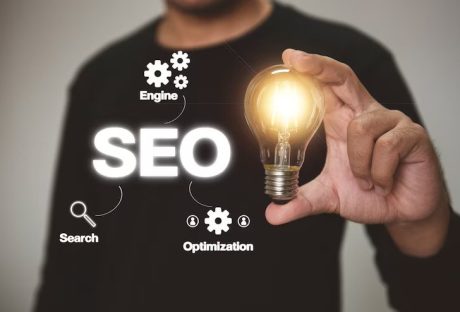
In the vast, intricate web of digital connectivity, a robust tool stands tall, lighting the path to your online business like a towering lighthouse: Search Engine Optimization (SEO).

SEO is a potent arsenal of strategies, meticulously designed to heighten your website’s visibility on the crowded stage of search engine results. The link between SEO and an uptick in web traffic is not only evident but also compelling, making SEO an indispensable player in your digital marketing strategy.

This article’s mission is to navigate you through the intricacies of leveraging SEO for a tangible increase in web traffic.

Grasping the Fundamentals of SEO

SEO is all about ornamenting your website with certain features that make it more ‘attractive’ and ‘approachable’ to the eyes of search engines. Giants like Google deploy complex algorithms to scan, index, and assign ranks to web pages.

Factors such as keywords, meta tags, and backlinks significantly sway these rankings. SEO is often viewed through the lens of two categories – on-page and off-page SEO, each with its unique set of tactics and benefits.

The Critical Role of Keyword Research

Forging a triumphant SEO strategy is deeply rooted in the bedrock of effective keyword research. Keywords serve as the compass guiding users through the vast ocean of information when they input these phrases into search engines. By intricately weaving these keywords into your content tapestry, your site becomes more relevant and stands a greater chance of clinching a higher position in search results.

Tools like the Google Keyword Planner and a reliable traffic checker tool are your loyal allies in this quest, providing invaluable assistance in the identification of keywords that resonate with your specific business domain. Moreover, long-tail keywords, which are lengthier and more targeted phrases, can be your secret weapon in attracting a more precisely targeted audience, a strategy further complemented by insights from the traffic checker tool like pr-cy.io checker.

The Reign of High-Quality Content

In the kingdom of SEO, content is, without a doubt, the reigning monarch. Exceptional, unique, and valuable content serves as a magnet for your audience and is favored by search engines. A well-crafted piece of content, smartly festooned with keywords, headings, and images, can skyrocket your SEO efforts. Regularly refreshing your content and dishing out new blog posts can secure audience engagement, fostering a sense of loyalty and leading to increased repeat visits.

Mastery of On-Page SEO Techniques

On-page SEO involves a series of tweaks and adjustments on your website to enhance its appeal to search engine algorithms. Elements such as meta tags, URL structure, and internal linking have starring roles. In this fast-paced mobile age, ensuring your website is mobile-friendly and speedy to load is non-negotiable. Moreover, optimizing multimedia elements like images is crucial to prevent them from becoming speed bumps that slow down your site and hamper the user experience.

Implementing Off-Page SEO Techniques

Off-page SEO takes the game beyond the confines of your website, incorporating actions that can influence your site’s ranking. Backlinks, or external links from other websites to yours, are a significant driver of your site’s perceived authority and ranking.

Social media might not directly influence your SEO, but it can propel your website’s exposure, potentially leading to a surge in traffic and backlinks. Other off-page SEO strategies, like guest blogging and influencer marketing, can enhance your website’s visibility, bolstering your reputation and SEO efforts.

The Intersection of User Experience (UX) and SEO

UX has now earned a spot in Google’s ranking algorithm. Aspects such as seamless navigation, swift load speed, and mobile optimization can significantly level up UX. By delivering a first-class UX, you can elevate your SEO standing and enhance the chances of users spending more time exploring our site, thereby boosting traffic.

Harnessing the Power of Analytics in SEO

SEO isn’t a one-and-done deal; it’s akin to a living organism that needs constant monitoring and fine-tuning. Leveraging analytical tools like Google Analytics and Google Search Console is crucial to glean insights into your site’s performance and gauge the effectiveness of your SEO tactics. These tools provide data-driven insights that can steer you toward optimizing your SEO strategies for peak performance.

The SEO landscape is as dynamic as the digital world it inhabits. Staying in step with the latest SEO trends, such as the rising tide of voice search and the shift towards mobile-first indexing, is essential to safeguard your website’s visibility and ranking. Regularly tuning into reputable SEO blogs, participating in webinars, and attending workshops can help you stay ahead of the curve.

The Grand Finale

As the curtain falls, it’s clear that SEO is a formidable weapon in the arsenal of any digital marketer seeking to drive growth in website traffic.

From in-depth keyword research to crafting high-quality, optimized content, from the astute application of on-page and off-page SEO techniques to enhancing user experience, every step in this guide contributes to the overarching goal of bolstering your website’s visibility. Monitoring your site’s performance via analytics tools and staying updated with the latest SEO trends is equally vital.

Remember, SEO isn’t a magic wand that delivers instant results. It’s more of a marathon than a sprint, demanding consistent efforts and patience.

By diligently implementing these strategies, you’ll not only elevate your website’s visibility in search engine rankings but also witness a surge in web traffic, leading to an amplified online presence and business growth.

Additional:

Abdul Aziz Mondol is a professional blogger who is having a colossal interest in writing blogs and other jones of calligraphies. In terms of his professional commitments, he loves to share content related to business, finance, technology, and the gaming niche.

View all posts

Leave a Reply

Your email address will not be published. Required fields are marked *

Related

Local SEO In Australia

Local SEO In Australia: How Much Does It Cost?

While we would love to give you a price list for local SEO services, it would be an impossible task, mainly due to the many variables that digital marketing involves, yet we can give you information about what local SEO consists of. Tailored Solution: SEO services are tailored to suit the client’s business and much like quoting for a kitchen renovation, the price depends on the scope of the project, which would be unique. The cost of an SEO campaign would depend on two things - the amount of work involved and the desired outcomes. While any reputable SEO agency would not be able to tell the customer the exact cost of their services in advance, they would be able to give you a ball-park figure. When a business owner is looking for local SEO services in Australia or in their country, it is important to use an SEO agency that is proven in the field and has extensive experience working with localized businesses. Factors That Determine The Cost Of Local SEO There are a lot of variables with digital marketing, which include the following: The number of products or services offered. The number of retail outlets involved. The level of competition within the industry. The current state of the company’s online profile. When a potential client makes contact with an SEO agency, the provider will carry out a professional digital audit to determine all of the above and some more. Cost Estimates: We totally understand that anyone reading this will want to have some numbers to consider, so we can broadly say that a local SEO campaign could range from $750-$5,000 per month, depending on the intensity of the campaign. That’s the great thing about SEO, the client can decide on a budget and the agency will work to that, which is how most customers first get onboard. Once you see the outcome, you will wish to continue with the investment, that’s how SEO works; it is a performance-based industry. Localization: If, for example, a plumbing business covers a 50-mile radius, this would cost less than a company that offers its services across the state, as the SEO team would have to work on multiple zones to achieve the desired outcome. At the upper end of the price scale would be a national company with a few hundred depots scattered across Australia, which would have many different websites that need to be optimized. Local Keywords: If your business is located in a Sydney suburb, for example, the suburb name and company location would figure highly when potential customers search for a service using Google, and the SEO team focuses on attracting local consumers. A lot of keyword research is necessary for good search engine optimization, after all, you need to know the terms being used by the consumer if you want to boost your rankings. For a beginner’s guide to SEO, the internet has a wealth of resources you will find useful. Return On Investment: When talking about digital marketing, it is all about ROI - the return you get from the cost of the campaign - and when you deal with the best SEO agency, you can be sure of a healthy return. All it takes to hook up with a leading Sydney SEO agency is a Google search and let the professionals turn your business around. Read Also: What You Need to Know When Outsourcing SEO 8 Reasons Your SEO Campaigns Aren’t Showing the Desired Results Best Monthly SEO package for 2020

READ MOREDetails
About SEO And Link Building For Insurance Companies

SEO and Link Building for Insurance Companies Explained

Improving your website ranking in the insurance sector is challenging. As there is intense competition and high keyword difficulty. Thus, SEO and link-building play a vital role in overall digital marketing strategy. Let’s explore how SEO and link building help you rank higher on search engines and discover all you need to know for better business decisions.  Understanding SEO for Insurance Companies Search engine optimization for insurance companies requires improving their visibility in search engine results. Ranking for the keywords in the insurance sector is difficult. Initially, it starts with keyword research to identify phrases. In this, we have to look for the keywords or phrases that potential customers use when searching for insurance services.  In on-page optimization, we have to optimize website content, meta tags, and URLs. Lastly, in off-page optimization, we have to focus on building backlinks from reputable websites. This approach helps us to increase domain authority and improve website rankings.  All you need to know about SEO and link-building 1. Link Building for Insurance Companies Link building is the process where you acquire links from other websites. It helps to redirect traffic to your website and eventually, it increases your readership. We help you in building effective links for your guest posting.  These guest posts are industry-related blogs and we submit them to relevant directories. Further, we help you create shareable content to attract backlinks naturally.  We make sure that you get quality backlinks from reputable websites. Our best digital marketing consultant helps you drive organic traffic to your insurance company website. 2. Challenges in SEO and Link Building  We understand that SEO and link building are important for your website to show up higher in search engine results like Google. Here are some of the challenges shared by our best digital marketing consultant:  There is intense competition as many websites are trying to acquire top spots in the ranking.  The algorithms on search engines like Google keep changing frequently. Hence, it means what works today might not work tomorrow.  Only websites with quality content rank higher on Google. Besides, creating high-quality content requires a lot of research, time, and energy.  Getting backlinks from other websites becomes challenging. As it is tough to convince websites that are already established.  Our experts at Profit by PPC understand the challenges. We perform competitive research, provide quality content, build quality links, and help you get more traffic on your insurance website.  3. Effective Content Strategies:  Content marketing is the backbone of SEO strategy. It is important to remember that you have to have high and valuable content on your website. As it is essential for successful SEO and link-building efforts.  We believe as a business owner you should produce informative articles, blog posts, and guides that help your target audience. Further, you can also share some templates and ebooks. Make sure that your content caters to your insurance audience.  We know how to create engaging and valuable content, which helps your website attract more readers. In addition, we incorporate keywords naturally within the content. It improves visibility without compromising quality.  4. Local SEO for Insurance Agencies:  Let’s say you have a good online presence, and your prospective client wants to meet you personally. You have only mentioned your business on your website but not on local directories. We suggest updating your information, on local directories and adding reviews and testimonials.   With the help of this, you will be able to attract prospective clients who are in your nearby locations.  5. Measuring SEO Success:  Just optimizing your insurance website, updating content, and building quality links is not enough. At Profit by PPC, we understand the importance of measuring SEO success. It is crucial for refining strategies and achieving long-term goals. The main key performance indicators (KPIs) such as: Organic traffic Keyword rankings Conversion rates These KPIs offer valuable insights into the effectiveness of SEO campaigns. Many insurance business owners don’t know how to leverage analytical tools such as Google Analytics. Thus, our experts help you to measure and analyze your insurance website performance accurately.  6. Common SEO Mistakes Insurance Companies Make:  Every new business owner in the insurance sector makes SEO mistakes knowingly and unknowingly. It is important to make sure that you avoid making such mistakes as it may hamper your website rankings.  Let’s look into the common SEO mistakes one must avoid:  1. Avoid adding keywords more than required. If your article only requires you to repeat the main keyword three times, then do that much. As overstuffing can create consequences. Your website may fall into the trap of stuffing keywords unnaturally.  2. Avoid creating thin content. It means don’t create generic content that does not have any depth or details. Always try to add more detailed information with examples and numbers. Make sure your content has depth, value, and relevance to users.  3. Do not neglect mobile optimization. A measure of the audience will be operating from mobile and reading your content. Let’s say your website is not mobile-friendly. It will not give a good reading experience. Thus, make sure your website has a good user experience; especially for mobile users.  4. Not adding enough images and infographics. Your content will look dull if it only has text and long paragraphs. Make sure to add relevant images and infographics. Also, optimize those images with SEO keywords. For example, if an image is about “types of insurance policies” then optimize your image with the same keyword.  How can we help your insurance website overcome these challenges? Our experts at Profit by PPC understand the importance of SEO and link building. We help you to optimize your insurance business on local SEO, technical SEO, and on-page and off-page SEO. In addition, help you to create high-quality content, and along with that, we help you build quality links through guest post services.  Eventually, your insurance business stands out from the crowd and gets more website traffic.   Word of wisdom:  SEO and link building are indispensable for insurance companies looking to thrive in the digital marketplace. At Profit by PPC implement effective strategies, and create quality content. In addition to this, we help you to adapt to changing trends, insurance companies can enhance their online visibility, attract more customers, and ultimately grow their business.  Narendra Kumar is the Founder and CEO of Profit By PPC. In addition, he runs a successful digital marketing agency. We have a team of experts who will help you stand out from the crowd and build your brand in the insurance sector.  Read Also: The Key To Success Turns Out To Get The Top SEO Services Understanding The Role Of SEO In B2B Digital Marketing: Optimising Your Website For Success Partner For Success: 7 Tips For Choosing The Best Digital Marketing Agency For Your Ecommerce SEO

READ MOREDetails
slider-img

Map Your Content Strategy: Finding Hidden Topic Opportunities

If you think of your content strategy as a map, where are you right now? On a good writing day, you might be on a well-maintained, scenic highway. You are cruising with ease and taking in the view. If you find yourself in the midst of writer’s block, you probably feel like you’re in a massive traffic jam. It takes every bit of energy to move one inch forward.  Every content creator and marketer has found themselves in both positions. You’ll have no problem thinking and brainstorming new ideas when writing comes easy. But when you feel stuck and uninspired, it can take everything just to get a single piece published.  While there is no quick fix for writer’s block, there are ways to find inspiration and avoid the traffic jam. Here are three tips for finding hidden topic opportunities for your brand.  1. Identify Competitor Content Gaps While you don’t want to chase down your top competitors’ every move, you should keep track of what they’re publishing. Knowing what your competition is doing can strengthen your keyword strategy, allowing you to rank higher on relevant topic areas. It may also improve your overall content quality. Seeing what others are writing about might spark creativity for how you could add to the conversation.  Competitor analysis can identify areas that nobody is currently writing about. As long as the topics are relevant to your brand, these untapped areas are up for grabs. Applying this analysis will improve your content creation, allowing you to address questions others have missed. Your audience might already be seeking this information. And providing it helps position you as an authority in the space.  However, performing this type of analysis on your own is extremely time-consuming. Consider leveraging software that will conduct a competitive content analysis. This allows you to quickly identify topics others are writing about and where you can fill in the missing pieces. Moreover, these tools exploit weaknesses and share how to structure your content to ensure it ranks high in SERP.  2. Ask Your Audience To best serve your audience, it is important to ask them what types of information they want to read. Predicting and guessing the content your core demographic may be most interested in only goes so far. Asking your target audience directly will help you gather fresh insights and perspectives. To do so, consider launching a survey on your website or including it in your email newsletters. Keep it short and simple. Ask a handful of questions tailored directly to your content. Doing this will give you insight into how to plan your content strategy.  Another way to ask your audience is via social media. Gauge your audience’s interest with an Instagram Stories poll, teasing a few topics to identify which gets the most votes. You could also drop in an open-ended question sticker on Instagram Stories. Pose the question, “What types of content do you want to see from us?” and note how people respond. It may lead to a new content pillar or angle you and your team have not yet considered.  3. Read Reviews Customer reviews are an essential component of any business. They help establish trust between the brand and the consumer. Reviews also influence buying decisions: 93% of individuals read online reviews before purchasing. You may already use reviews to improve customer experience and ideate future products; however, reviews can help with content creation.  While browsing through reviews, you may notice a similar question regularly appears. There is a good chance your website does not properly address this question. If this is the case, create a blog post answering this query directly. You might also post a Q&A blog to answer frequently asked questions about certain products or services you offer. If a reviewer mentions how your product shines compared to a competitor’s, spotlight this feedback for others to read. An article comparing your product to another product can help buyers in the decision-making process. Create an infographic illustrating how your brand’s offering compares to others, and share it on social media.  Reviews can be a goldmine for gaining testimonials, so take the time to read and respond on every platform. Integrating testimonials into your content may help boost potential customers' trust in your brand. Post a quote card with a review from a satisfied customer on your social media pages. Or, create a blog post titled “Here’s What Our Consumers Have To Say About Us.” You should plan to update this post routinely, adding more reviews as they come in.  Tips to Improve Content Strategy in 2025 No content strategy or content marketing plan is set in stone. It evolves with the changing market conditions, changes in algorithms, technology, and business plans. Here are some tips businesses can use to improve their content strategy in 2025. Leverage AI Tools The most wise thing to do this year is to rely on AI tools for content strategy, marketing, personalized messaging, content creation, and content optimization. It helps reduce lots of time taken throughout the day for content creation.  Focus on Interactive Content Content doesn’t only have to be written documents, blog posts, brochures, and emails. Quizzes, polls, calculators, and AR/VR experiences are also part of the content, and it’s time to put those into content strategy. Short Form Video The best way to drive quick results is through short videos like YouTube shorts, reels, and TikTok videos. Cut long videos into small snippets and share them across channels.  Focus on Sustainability Messaging There's a growing focus on environmental and social sustainability. It’s time you made those as a part of your content creation journey. Talk about what helps communities and people build brand trust among audiences.  Build Communities The best way to gain impressions and readers is through communities. It’s important to build a community of like-minded people who’d love to engage with your content. Go over to Facebook, Quora, and Discord to build a community of audiences who’d love to read your content and engage with them. Apart from the above-mentioned tips, continue to repurpose your content, publish it across channels, and collaborate with micro and macro influencers to get better results. In the end, it always boils down to analyzing your content strategy and finding newer ways of renovating it.  Content Tips and Takeaways Knowing what to write about can be challenging at times. Some days you may have a flurry of ideas, creating and publishing content non-stop. On other days, you might bang your head against your keyboard trying to churn out a single piece of usable content.  Finding relevant topic areas often means looking for unanswered questions and solving problems for your target audience. After all, your audience is the inspiration for creating this content in the first place. Addressing their needs will help to pave a path of informative, engaging, and educational content they can’t wait to consume. Read Also: How to Unlock HP Laptop if you Forgot Login password Is ASUS ROG FX503 The Best Gaming Laptop? Know It Here!

READ MOREDetails