












Exploring the Three Types of Facelifts and What Areas They Can Help

Published on: 15 December 2021 Last Updated on: 17 December 2021
facelifts

Fine lines and wrinkles in the face are the most common visible signs of the aging process. Some wear them with a badge of honor, but for others, their presence on the face is an unwanted reminder of how times have changed. Now different types of facelifts services are available to minimize all signs of aging processes.

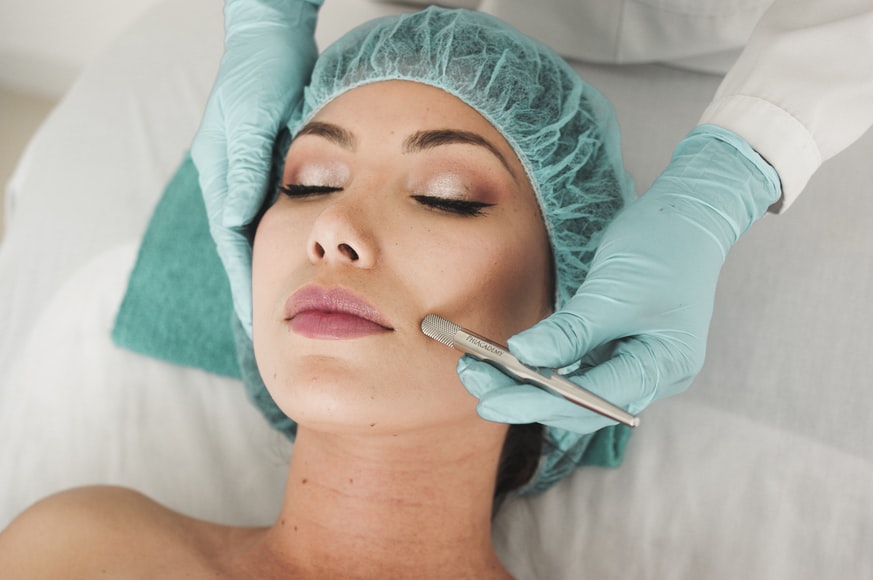
Facelifts are one of the most popular types of plastic surgery because they help to undo some of the signs of time. But there’s not just one type of facelift out there; in fact, there are three! These procedures: Mini facelifts, Mid-facelift, also known as cheek lift surgery, and a full facelift, all work to take years off of the face in different areas. 

3 Types Of Facelifts
3 Types Of Facelifts

The different facelifts services are available. But according to the face mapping, every individual facelift has a different area specified.

Here’s how these procedures work and what problem areas they work to target!

1. Mini Facelift / Lower Facelift

The facelifts are a different area targeted. Not each type of facelift treats the whole face. The Mini and small area targeted facelifts are more least invasive in the facelift procedures, which target minor concerns like fine lines and wrinkles and to sag and drooping of skin in the lower portion of your face, namely treating issues such as jowl formation or jagging jawline. 

This type of facelift is excellent for those with minor concerns about sagging skin and lines around the mouth, chin, and lower cheek areas but do not yet require treatment on any areas to the upper or higher middle part of the face. Thus, this procedure is popular among those in their 30’s and 40’s to get a light refresh on their face.

2. Mid-Facelift  And Cheek Lift

A mid-area-facelift, also popular with the name of cheek filler lift, targets the middle portion of the face, namely around the nose, cheeks, and eye regions. This is a great way to smooth outlines around the eyes and allow you to appear more refreshed and redistribute fat in the cheeks to allow for a more youthful and full appearance. 

Having the cheeks placed higher and renewed in volume can help delay their drooping down to create sagging jowls, which would then require the mini facelifts to solve.

3. Full Facelift

As the name implies, the full facelifts are working to revitalize the entire face.  Smoothing out wrinkles, redistributing fat, and tightening the skin is possible through a full Facelift.  

Because of its range, a complete facelift is a more extensive version of facelift procedures. It is usually reserved for those with more noticeable signs of aging in multiple areas of the face. However, when it comes to the process itself, two main surgery methods can be performed.

  • SMAS Facelift:

SMAS is an acronym that stands for Superficial Musculo-Aponeurotic System, which is the connective tissue layer in your face. This layer works to structurally support the shape of your face, keeping things tight and where they need to be. 

The SMAS facelifts are targeting this later, distributing the tissues to help reverse and correct signs of aging like deep smile lines and jowls.

  • Deep Plane:

Deep plane facelifts are one of the most extensive facelift surgeries. This is because the incisions made in the procedure go further into the skin, reaching more profound layers of muscles and nerves so that the tissues may be more accurately and thoroughly manipulated and redistributed, resulting in excellent results. 

It is essential to have a qualified, experienced surgeon you trust to perform this type of procedure, as the nerves and muscles are exposed during the process and can run the risk of damage.

Conclusion:

Now facelifts are not a very costly procedure. Even along with the facelifts, many temporary fillers are also available to treat the fine lines and all the signs of aging. If you do not want to undergo any plastic surgery treatments or painful processes. The facelifts treatments are the most suitable process for you. After the surgery, you do not require a very long time to recover.  

FAQ( Frequently Asked Questions)

Read Also:
Content Rally wrapped around an online publication where you can publish your own intellectuals. It is a publishing platform designed to make great stories by content creators. This is your era, your place to be online. So come forward share your views, thoughts and ideas via Content Rally.

View all posts

Leave a Reply

Your email address will not be published. Required fields are marked *

Related

Beauty Marks on Face Meaning

Beauty Marks On Face Meaning And Implications: A Complete Guide

Beauty marks on your face mean you’re unlucky or something? There are hordes of such rumors around. However, that is not true. There are many celebs born with various beauty marks or moles. Experts say that beauty marks can predict your future. What is the exact function of beauty marks? They offer you spiritual guidance. You should mold your lifestyle uniquely for specific beauty marks on particular body parts. But do you know how to interpret the real meaning of beauty marks? Here, we will strive to help readers understand the real thing about beauty marks. The beauty marks on the face meaning ill or good omen, is a saying that has existed for a long time. It’s time we evaluated it in detail. Is there an attractive beauty mark on your face? You must be intrigued to know what it means and how it affects your future. Key Takeaways 1. There are various spiritual connotations of your beauty marks. However, it depends on the mark's location on your body and its unique shape. However, beauty marks are often tokens of your reincarnations, too. Some cultures also link beauty marks with destiny. 2. In Christianity, beauty marks are signs of God’s divine protection. It is not a token of retribution. It instead indicated luck and future prosperity. 3. If you have it on your forehead, it could mean wisdom. However, a mark on your cheeks is a gesture of bravery and intellectual personality.   What is a beauty mark? Beauty marks on the face mean bad or good luck? Are you sure about it? To know in-depth, you must know what a beauty mark or mole is. Scientists are skeptical about the spiritual connotations of moles or beauty marks. Instead, they say that moles are essential skin growth only. Often, our pigment-generating cells grow out in clusters. That’s what a beauty mark is. Over time, they become darker and only have shades of black dead cells. When the cells die, the pigment dries away. Then, the cluster remains as a black mass or tuft on the outer portion of the body. Most importantly, the beauty marks can assume any shape. Their sizes also vary. But strong spiritual connotations have existed for ages, and we can’t just ignore them. Beauty marks on the face mean spiritually something? There are serious and specific connotations of beauty marks on each part of your face. But what is the grammar behind the spiritual emblem that the beauty marks carry? Well, they indicate reincarnation, destiny, or purpose in life. Throughout cultures, generations, and time zones, people associated beauty marks with the universe and its ominous signs. Most importantly, some believe these marks are nothing but tokens of wounds from our past lives. However, other cultures associate the marks with the devil and sometimes retribution. So, one thing is clear. Depending on where the mole is placed, it can have profound positive or negative connotations towards your life. Here are some unique meanings that I scrapped through research work: 1. Some cultures believe firmly in ominous reincarnation. Hence, they also believe the moles could battle scars from the other lives. It is also a sign that our current lives are connected with our past lives in one way or another. 2. However, Christianity says something completely different. Here, we believe that the beauty marks show that God loves us unconditionally. It is, therefore, thought to be a gift from the divine. But there are different cults of Christianity leading to a split of faith. So, some people believe that beauty marks can overshadow luck and stunt your prosperity. 3. Most cultures think that unique shapes have special connotations so far as beauty marks are concerned. Hence, a star sign or a crescent moon has special meanings. These signs are considered to be very lucky. You’re in sheer luck if you have any of these moles on your face. It also shows that your connection with the cosmos is rigid. Some others also say that the mole on your face indicates your sun sign. 4. Lastly, the most special moles are the heart-shaped ones. It also means you're destined to be together with someone special in this life. However, fortune readers say that you and your partner will have the same mole in an ideal condition. That goes on to say that you two are two halves of the same soul, or you had a gallant love life in your past. Related Resources: Amazing Beauty Tips For Women Of All Ages Beauty marks on Face Meaning These! We already know that beauty marks have different connotations in different parts of your face. Let’s focus on some of the most popular sayings: A mole atop your head A forehead mole could mean your good luck is incoming. It also shows that your whole life is going to be quite auspicious. However, you won’t be able to get a glimpse of the mole naturally. If you grow bald, the molle may reveal itself. Even if you see it, it’s there. Whenever you face odds in life, its divine connection will be there to save you. Your Forehead Mole It may not sound like something good and cheesy, frankly. Firstly, a forehead mole says your connection with your loved ones will be loose. Moreover, there are chances that you will spend most of your life away from your family. However, these are only claims. Let us know if you find some fundamental resemblances with these claims. Wait! There is a catch. For males, these signs may be ominous. However, it is different if a female has it. For them, it is a sign of fair wealth and good luck. However, it is also a sheer indication that there would be breaks of stopgaps in your relationship. You may have to face a breakup, too. A cheek mole A mole on your cheek stands for all the good things in life. Firstly, it says you will be a magnet to everything positive. Secondly, you will be ambitious and set big goals for yourself. But it’s not all good. It also says you will have a tough time getting along with others. A cheek model makes you a self-centered person. So, you won't be able to gel with people usually. But one thing is for sure. You will be highly focused on everything you have and everything that concentrates on you. So, you will have a great love life. You will prioritize your partner, and your love will reciprocate. So, all those will cheek moles; just wait for the right person to meet with you! Moles on eyebrows It is also a sign of enormous luck and endless prosperity. However, you are a responsible fellow with sensible wealth management abilities So, you might be rich. However, you are not a big-time spender. From my research, you will be a natural leader with a mole on your forehead. All of your talents and skills would lead to sheer fame. However, I said that location does matter. Now it’s time to check if the mole is under your right or left eyebrow. One on the right side implies foreshadowed marriage and family life. On the other hand, a left-side beauty mark means that you are not a brave guy. On that note, you will also face issues in your professional life. Most importantly, you will tend to depend on others heavily. If beauty marks are in the middle, it represents your cleverness. On the eyelid A mark on or under the left eyelid means you are arrogant and pessimistic. Similarly, a mark on the right eye suggests you are positive and hardworking. So other people would love and respect you! However, beware of the eyelids that are underneath your eye. It shows that difficulties are coming your way in life. As it is a sign of bad luck, people often try to scrape it off. Hence, we call it the tear mole. Cheek This is a sheer good sign. It is an indicator of bravery and high intellect, too. You are also hardworking and studious. You can also achieve all of your goals independently. Nose mole You are pretty passionate. You also crave sex. But that is for those who have models on the right side. For the mole on the left, you are meant to be a person with a short temper. However, you might suffer in decision-making. A below-the-nose mark can be unique and mean strange things, though. For instance, sensuality and allure. You can easily attract the other sex towards you. The Lip Lip moles have major significance. You are expected to live a long and fruitful life. Your life will be filled with adventure, too. It also says explicitly you enjoy things like food, acting, etc. However, people with moles on their upper lips mean you are warm and empathetic. The bottom line A mole on every part of the face says something. Believers feel some matches and hence give air to such beliefs. However, the scientific community feels these are not the right stuff to stress upon. Choose your modality and be a believer if you wish. Additional Readings: When You’re Buying Furs, Get The Best 7 Tips for People with Hypersensitive Skin How Skin Clinics Deliver Beautiful Dermal Results

READ MOREDetails
Achieving Radiant Skin In Rainy Vancouver: The Role Of Medi Spas

Achieving Radiant Skin In Rainy Vancouver: The Role Of Medi Spas  

When it comes to beauty and skincare, Vancouver residents know the challenges of maintaining radiant skin in the city's rainy climate. With its frequent drizzles and overcast skies, Vancouver's weather affects your skin. However, thanks to the growing popularity of medi spas in Vancouver, achieving and maintaining radiant skin has become more accessible than ever. This article discusses how a Vancouver medi spa plays a crucial role in meeting the unique skin care needs of Vancouverites. Understanding Vancouver's Unique Climate The city of Vancouver is known for its mild, wet winters and cool, temperate summers. While this climate is comfortable for its residents, it also means dealing with higher humidity levels and increased moisture in the air. This combination can lead to a range of skincare challenges, including: Increased Moisture Levels: Vancouver's high humidity can make your skin feel oily and prone to breakouts. Dry Spells: Paradoxically, despite the moisture in the air, some individuals may experience dry and dehydrated skin due to temperature fluctuations. Sun Exposure: Vancouver's overcast skies can be deceptive, leading many to underestimate the sun's harmful effects on their skin. How Medi Spas Address Unique Skin Care Challenges Tailored Skincare Solutions Medi spas in Vancouver specialize in providing customized skincare solutions that take into account the city's distinct climate and the individual needs of their clients. Here's how they do it: Personalized Assessments: When you visit a medical spa in Vancouver, skin care professionals will conduct a thorough assessment of your skin type, taking into consideration your lifestyle and the city's climate. This assessment ensures that the treatments you receive are tailored to your specific needs. Hydration Treatments: To combat the increased moisture levels in Vancouver, medi spas offer a range of hydration treatments, including moisturizing facials and advanced skincare products. These treatments help balance your skin's moisture levels, keeping it healthy and clear. Anti-Aging Solutions: Vancouver's overcast skies can be deceiving when it comes to sun exposure. Medi spas offer anti-aging treatments such as chemical peels and laser therapies to address sun damage and maintain youthful skin. Acne Management: For those struggling with oily or acne-prone skin due to the humidity, medi spas provide effective acne management solutions, including facials and medical-grade skincare products. Innovative Technologies One of the reasons media spas are so effective is their use of cutting-edge technologies. These technologies are designed to address specific skincare concerns and adapt to Vancouver's climate conditions. Some notable treatments include: Laser Therapies: Laser treatments are used for a variety of purposes, from skin resurfacing to hair removal. They can effectively treat sun damage, wrinkles, and other skin imperfections caused by Vancouver's unique climate. Cryotherapy: Cryotherapy treatments can help reduce inflammation and redness, making them ideal for individuals dealing with skin sensitivities exacerbated by the weather. Microdermabrasion: This non-invasive procedure exfoliates the skin, leaving it smoother and more radiant. It's a popular choice for those seeking to rejuvenate their skin in Vancouver. In Conclusion A Vancouver Medspa is a valuable resource for residents seeking to achieve and maintain radiant skin in the city's unique climate. With personalized skincare solutions and innovative technologies, these establishments play a vital role in helping individuals look and feel their best year-round. Read Also: What You Need to Know About Caring for Your Skin as You Get Older: Your Guide 7 Anti-Aging Tricks and Tips to Get Youthful Skin Like A Teen 11 Foods You Must Incorporate Into Your Diet for Great Skin

READ MOREDetails
Spot Hair Loss Early

How To Spot Hair Loss Early

It may seem inevitable. At some point when we get “old”, men’s hairlines will recede and may start balding on the crown, and women's hair will start thinning, usually starting at the crown or natural parting. But for many, this transition away from a full head of healthy-looking hair occurs earlier than expected, often to men as young as in their early twenties. In the society that we live in, hair loss holds such an important place, with hairstyles denoting your trendiness, and healthy, voluminous hair being applauded. In light of this, early hair loss (or any hair loss for that matter) can create feelings of worry, sadness, anxiety, and self-consciousness, as it’s perceived as a negative bodily change that is out of our control. However, as we’ll explore in this article, this is not true: halting hair loss and getting a fuller head of hair is actually within our control, even if we have a genetic predisposition to balding. Male baldness that occurs gradually and is caused by genetics or the male sex hormones is known as “pattern” baldness or alopecia androgenetica. It is more likely to affect you the older you are and occurs in approximately 67% of men over their lifetime. Usually, the marked changes occur gradually, although changes can occur rapidly depending on genes and other bodily or environmental factors. Male pattern baldness tends to occur because of the interaction with DHT and the hair follicles in the scalp. Some testosterone is converted to DHT (dihydrotestosterone) in the body, but this can cause the hair follicles in the head to shrink in diameter, meaning the hair strands are thinner and more brittle. Additionally, DHT has the effect of speeding up the hair growth cycle, meaning that hair sheds quicker. A common assumption is therefore that high levels of testosterone equate to high DHT, and this causes more hair loss, but instead, hair loss is determined by the sensitivity of the scalp to DHT. This can be down to individual differences, but it is more likely that it is passed down genetically. With hair loss, it’s important to acknowledge the early signs as soon as you can, as acting early will give you the best chance of preventing hair loss and regrowing hair to your liking. Appropriate treatment can help to block DHT or stimulate the hair follicles for regrowth. Likely causes of your hair loss: There are several possible factors that affect hair loss, some more than others. Here is the full list, below: Genes - Male baldness is also sometimes called hereditary baldness as genetics play a large role in determining the likelihood of your future hair loss. Pay close attention to the patterns in your family in terms of hair loss, as this will give you a good indication of whether you’ll likely experience symptoms. Age - The release of hormones changes throughout the course of your life, and hormones associated with aging slow hair production and may result in balding. Smoking - Smoking cigarettes may cause the blood to circulate less in the hair follicles, getting in the way of natural hair growth and causing damage to the scalp. Early research points to this as true, although more research is needed for this factor to be conclusively outlined as a key contributor. Stress - When you face stress, your body releases cortisol as a response. This is fine in moderation, but extended periods of stress, or periods of extremely intense stress, can cause cortisol levels to interfere with non-essential bodily functions, such as head hair growth. Therefore, stress can be a contributing factor to hair loss. In the event of a significantly stressful period, the body might experience a condition called telogen effluvium. This is characterized by sudden hair loss 3 to 6 months after the stressful event, caused by the body halting production of hair and transitioning all hair into the resting phase, meaning the strands will then fall out almost simultaneously. Depression - The association with depression and hair loss is twofold. Not only might the prolonged bouts of stress result in hair loss, but medication for depression may also cause hair loss as a side effect. Identifying Hair Loss Early: Common signs linked to hair loss: Receding hairline - An early indication of male pattern baldness is when the front of your hairline recedes. Typically, the center front of your hair will stay, with curved portions on either side receding back, forming a W sort of shape. Usually, men experience a receding hairline after they’re 25 years old, with it going back until eventually bald or mostly bald, but can also occur in younger men. It doesn’t tend to affect women. Thinning hair - A slightly more initially subtle form of hair loss, men might experience hair all over their head thinning, each strand reducing in diameter and perhaps revealing the scalp more visibly. Whilst receding hair tends to begin from the front of the head, thinning hair typically starts at the crown, before working its way outwards circularly. Because this eventuality is not in as noticeable a location to the individual sufferer, this type of hair loss might go untreated for longer than it should, reducing the chance of medication fully restoring the hair. Checking in the mirror periodically will help keep an eye on the hair health of your crown. There are a number of unrelated signs that are often mistaken as being indicative of early hair loss. These factors have no correlation with hair loss, and include the following: Hairs on the pillow - Healthy adults shed roughly 50 to 100 hairs per day, so seeing the odd hair on your pillow is to be expected. A white blob on the hair strand - This white dot can sometimes be seen on the root end of a fallen-out hair and means nothing other than the hair fell out during the resting phase. Widow’s peak hairline - This is a particular appearance of the hairline where it forms a point at the front of the head. It may be interpreted as an early sign of receding since the sections on either side of the hairline will be further back, but this is not the case. The widow’s peak hairline is not in any way a precursor to hair loss, but keep a close eye on whether the hairline remains in the same location or appears to be moving back, in which case this may be receding. Read Also: What To Know About Laser Hair Removal Utica NY Top 5 foods for healthier and thicker hair Best Hair Loss Treatment: 5 Questions to Ask Yourself Before Getting One

READ MOREDetails