










Ok Win Game Review: Is This Color Prediction App A Real Earner Or A Financial Trap?

by

13 March 2026

Blog

Ok Win

I am yet to comprehend the current landscape of side-hustle culture. It's really too much to keep up with! 

But I have also noticed something that really impresses me! The allure of making quick cash via a smartphone has never been stronger.  

Among the loudest names in this space is Ok Win. I am sure you might have heard of it somewhere. People often search for it as Ok Win Game.  

Promising instant wealth through color prediction and small-scale betting, the platform has flooded social media feeds and Telegram channels across India. 

But as the platform's reach grows, so do the questions regarding its legitimacy.  

Is Ok Win a revolutionary gaming platform, or is it another entry in the long list of unregulated betting apps?  

This investigative guide dives deep into the mechanics, risks, and reality of the Ok Win ecosystem. 

What Is The Ok Win Game?

At its core, Ok Win is an online prediction platform.  

Also, I would like to clarify that this game is nothing like the skill-based games such as Chess. 

In fact, it is also very different than some forms of Rummy. Rather, i would say that Ok Win primarily revolves around probabilistic outcomes.  

So here, you will be asked to trade or bet on the outcome of short-cycle events. 

These are most commonly the color of a digital result, such as: 

  • Red 
  • Green 
  • Violet 

What Are the Primary Features Of The Ok Win App?

The platform is built on three main pillars. Additionally, the makers have to keep users engaged and constantly depositing funds: 

1. Color Trading:  

A 1-minute or 3-minute cycle where you predict which color will appear next. 

2. Wingo And Lottery:  

Variations of number-based guessing games that function similarly to a digital roulette. 

3. Referral Bonuses:  

A multi-level marketing (MLM) structure where you earn a commission for every person you invite who deposits money, often used by influencers to promote the site. 

According to an analysis by Aseem Juneja’s cybersecurity review, the platform thrives on a viral loop. 

Here, the platform encourages you to share its winning screenshots. This aims to lure in new participants. 

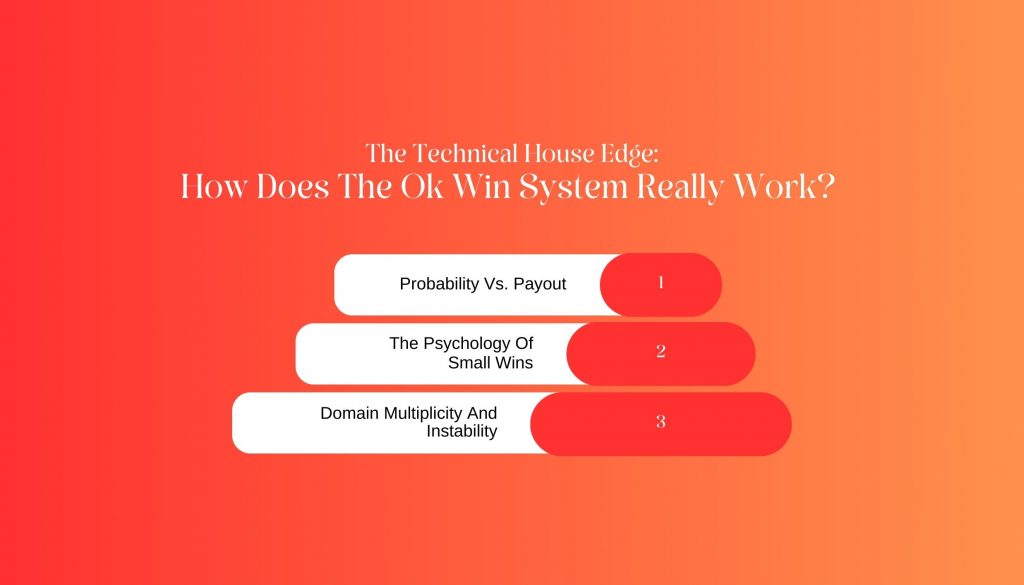
The Technical House Edge: How Does The Ok Win System Really Work?
To understand Ok Win, you must look at the mathematical reality behind the curtain.  

So, in the world of gambling, this is known as the House Edge. 

1. Probability Vs. Payout 

If you bet on a color, you have a roughly 50% chance of winning. Of course, this is minus the Violet tie-breaker.  

However, the platform's payout ratio is rarely 2.0x.  

Additionally, it is usually lower.  

So, this means that over 100 rounds, the house is mathematically guaranteed to keep a percentage of all money wagered. 

2. The Psychology Of Small Wins 

Ok Win uses a psychological tactic called variable ratio reinforcement. Additionally, the platform allows users to win small amounts early on. 

I would say it's 100 INR or 500 INR. Therefore, through this, the platform builds a false sense of skill.  

Also, this encourages users to deposit larger sums, such as 5,000 INR or 10,000 INR. 

Now this is exactly where the withdrawal problems typically begin. 

3. Domain Multiplicity And Instability 

One major red flag is that Ok Win exists across dozens of shifting domains (e.g., okwin. asia, okwingame.me, okwin.in.net).  

As noted in investor warnings from regulatory bodies, this is a common tactic used by unregulated sites to stay one step ahead of internet service provider (ISP) blocks and legal scrutiny. 

The legal status of Ok Win is a significant gray area that leans toward the dark side.  

In India, the Public Gambling Act of 1867 distinguishes between Games of Skill and Games of Chance. 

Firstly, these are legal in most states. Additionally, these include platforms where the player's strategy or knowledge determines the outcome. 

Also, these are classified as gambling. Therefore, they are heavily restricted. In fact, they are also illegal in many Indian states. 

As I mentioned, the outcome of a color prediction in Ok Win is determined by a Random Number Generator (RNG). 

Also, it involves no significant player skill. Therefore, it is widely categorized as a game of chance.  

Furthermore, Ok Win is not registered with the Reserve Bank of India (RBI) or the Securities and Exchange Board of India (SEBI). 

So, this means you will have zero legal protection if the site suddenly disappears with their deposits. 

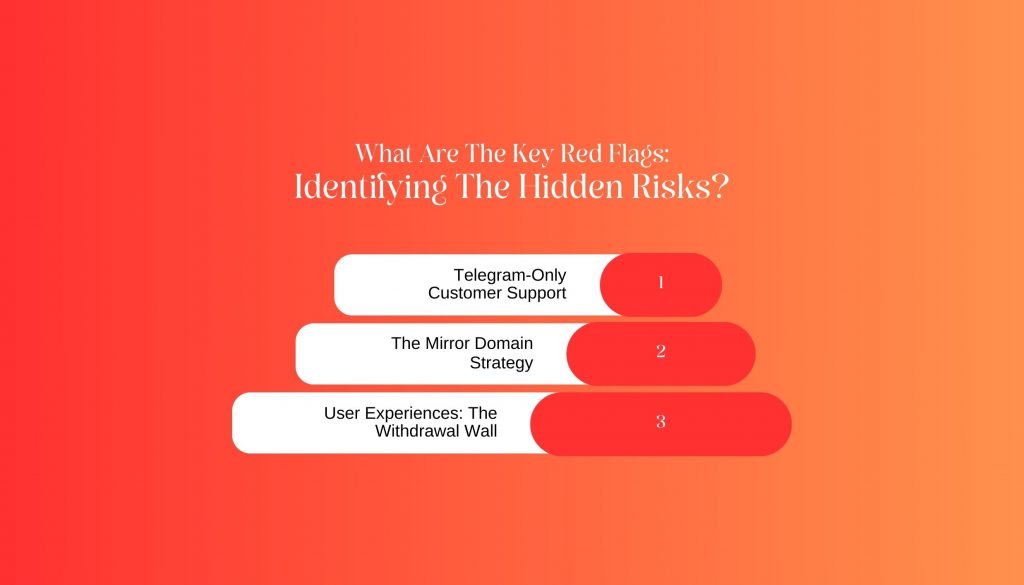
What Are The Key Red Flags: Identifying The Hidden Risks
If you are considering using Ok Win or a similar app, it is vital to recognize the structural warnings that often point toward a scam. 

1. Telegram-Only Customer Support 

A major warning sign is the lack of official corporate transparency.  

Legitimate fintech apps provide verified email addresses and physical office locations.  

Ok Win, however, operates almost entirely through mentors on Telegram.  

This makes it impossible to hold the company accountable if your funds are frozen. 

2. The Mirror Domain Strategy 

As mentioned previously, the website URL changes frequently (e.g., .me, .asia, .xyz).  

This is a hallmark of fly-by-night operations. Also, it anticipates that the search engines or government regulators will likely flag it.  

If the site you are using changes its address every few weeks, your data and money are at extreme risk. 

3. User Experiences: The Withdrawal Wall 

A recurring theme in user reviews on platforms like Trustpilot and Reddit is the Withdrawal Wall.  

Users often report that while depositing money is instantaneous via UPI, withdrawing it is a nightmare. 

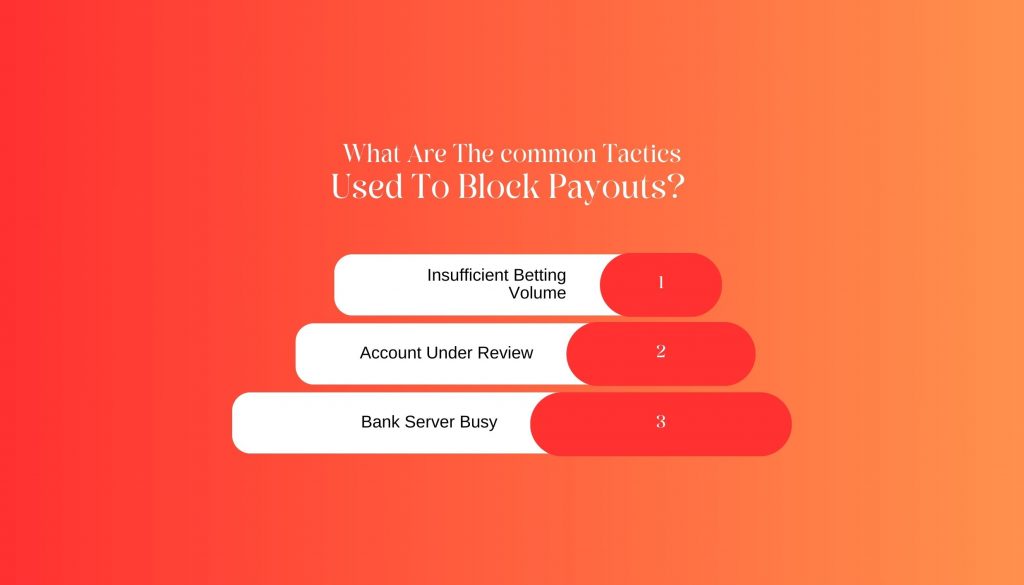
What Are The common Tactics Used To Block Payouts?
I was reading Eknath Shinde's digital safety report for research. It highlights that the platform has designed tactics to frustrate the user. 

In fact, these will keep at it until they simply give up or gamble away the remaining balance. 

1. Insufficient Betting Volume:  

Firstly, it will tell you that you must bet 10x your deposit before you can withdraw. 

So, it is directly forcing you to risk your winnings until they are likely lost. 

2. Account Under Review 

Secondly, it locks your account for suspicious activity. All good, but this happens the moment you try to withdraw a large sum. 

3. Bank Server Busy 

A perpetual error that never resolves. Also, it keeps your money trapped in the digital wallet. 

On the other hand, the platform continues to earn interest on your funds. 

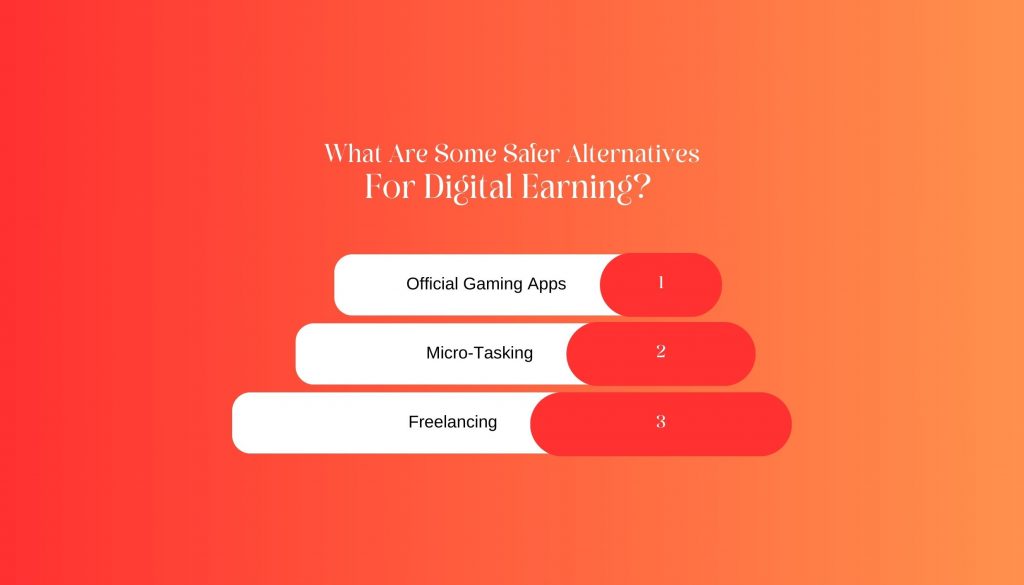
What Are Some Safer Alternatives For Digital Earning?
You don't have to gamble to make money online. If you have time to spare, consider these verified, skill-based paths. 

I can assure you that these offer genuine payouts: 

1. Official Gaming Apps 

Firstly, you can check out platforms like Zupee or Dream11. These operate within the legal frameworks of Games of Skill in India. 

Additionally, they also have transparent withdrawal systems. 

2. Micro-Tasking 

Secondly, you can go for websites like Amazon Mechanical Turk or Clickworker. 

These will pay you for small data-entry tasks. Also, I would like to add that these tasks require human intelligence

3. Freelancing

Finally, if you have a skill in writing, design, or coding, platforms like Upwork or Fiverr are for you. 

It allows you to build a long-term income stream. And the best part? You can get work without depositing a single rupee. 

final Verdict: Should You Play Ok Win? 

The short answer is: No. 

Yes, I agree that the flashy interface and the thrill of a 1-minute win are tempting. 

But we also have to understand that Ok Win lacks the transparency and regulatory backing. 

Also, it doesn’t have the technical security that it requires for people to trust this financial platform.  

It operates more like a high-stakes digital lottery than a game. 

Treat Ok Win as high-risk entertainment only.  

Never invest money that you cannot afford to lose, and never provide the platform with access to your primary bank account or sensitive personal data.  

In the world of online earning, if it feels too fast and too easy, it’s probably a trap. 

Barsha Bhattacharya is a senior content writing executive. As a marketing enthusiast and professional for the past 4 years, writing is new to Barsha. And she is loving every bit of it. Her niches are marketing, lifestyle, wellness, travel and entertainment. Apart from writing, Barsha loves to travel, binge-watch, research conspiracy theories, Instagram and overthink.

View all posts

Leave a Reply

Your email address will not be published. Required fields are marked *

Related

generative AI in decision making

AI For Managers: Understanding The Impact Of Generative AI On Business Decision-Making

The business environment has become much faster and more dynamic, which means that contemporary managers are required to make smarter, more accurate, and more prompt decisions than ever before.  However, the advent of Generative AI has fundamentally changed the way business problems are solved, as it allows one not just to analyze existing information but to develop new insights and models based on this information.  Consequently, it is essential for managers to learn and understand Generative AI in order to take advantage of it. Generative AI And Its Role In Business Operations: Generative AI stands for the use of advanced algorithms able to generate text, pictures, computer code, and even hypothetical situations based on some data sets.  Contemporary analytics, AI-powered chat assistance, and other similar software can already help business managers gain insight in real time. This means that with the use of Generative AI, managers can spend less time on data collection and interpretation and focus on developing new strategies. For example, instead of asking, "What has happened in previous quarters," managers will be able to ask, "What will happen if we change our pricing policy?"  Thus, Generative AI is going to change decision-making. Generative AI And Data-Driven Decisions: With the amount of data businesses have at their disposal increasing dramatically, managers often find it hard to cope with data-related challenges.  Fortunately, Generative AI can help in addressing this challenge as its algorithms allow doing the following things. First of all, it can sum up data and generate important insights based on this summation.  Second, Generative AI algorithms are able to detect hidden connections between different pieces of data.  Finally, they can build models predicting possible outcomes. Consequently, this technology helps managers make informed decisions faster than before. Strategic Decision Making Enabled By AI: Using Generative AI can help managers develop strategies and plans in real time because they can rely on the latest information and constantly changing data.  In other words, the main benefit of this technology is the ability to simulate business scenarios and try out various strategies without actually implementing any of them. For example, a retail manager can use AI to predict fluctuations in consumer demand over the festive season, while finance managers can make better-informed decisions regarding their investments. Operational Efficiency Increased By AI: Another significant impact of Generative AI is on operational efficiency.  By automating routine tasks such as report generation, email drafting, and data analysis, managers can focus on higher-value activities. AI-driven systems can also: Optimize supply chains Enhance resource allocation Reduce operational costs For example, AI can automatically generate weekly performance reports, highlight key issues, and even suggest solutions.  This not only saves time but also ensures consistency and accuracy in decision-making processes. Personalized Decision Support: Generative AI acts as a personalized assistant for managers. It can provide tailored recommendations based on specific business contexts, goals, and constraints. Imagine having an AI system that understands your company’s objectives and suggests strategies aligned with them.  Whether it’s marketing campaigns, hiring decisions, or product development, AI can offer data-backed recommendations that improve outcomes. This level of personalization enhances decision quality and reduces reliance on intuition alone. Risk Management And Predictive Insights: Risk management is a critical aspect of business leadership. Generative AI helps managers identify potential risks before they become major issues. By analyzing historical and real-time data, AI can: Predict market downturns Detect anomalies in operations Identify potential compliance risks For example, in finance, AI can flag unusual transaction patterns that may indicate fraud. In manufacturing, it can predict equipment failures and recommend preventive maintenance. These predictive capabilities enable managers to take preventive actions rather than reactive measures. Challenges And Considerations: While Generative AI offers numerous benefits, it also comes with challenges that managers must address: 1. Data Quality:AI systems are only as good as the data they are trained on. Poor data quality can lead to inaccurate insights. 2. Ethical Concerns:Bias in AI models can result in unfair or misleading recommendations. Managers must ensure ethical AI practices. 3. Over-Reliance on AI:While AI is powerful, human judgment remains essential. Managers should use AI as a support tool, not a replacement. 4. Skill Gaps:Many organizations lack the necessary skills to effectively implement and use AI technologies. Upskilling For The AI-Driven Future: To fully leverage Generative AI, managers need to develop a strong understanding of AI concepts, tools, and applications. This is where structured learning programs become essential. Programs like the certificate programme in AI & Generative AI provide managers with practical knowledge on how to integrate AI into business processes.  These programs focus on real-world applications, enabling professionals to apply AI insights directly to their roles. Similarly, a certificate in applied artificial intelligence & deep learning helps managers understand the technical foundations of AI, including machine learning models and neural networks.  This deeper understanding allows them to make more informed decisions when working with AI teams and technologies. Investing in such learning opportunities ensures that managers are not just passive users of AI but active drivers of innovation. The Future Of Decision Making: Generative AI is not just a trend—it’s a fundamental shift in how businesses operate. As AI technologies continue to evolve, their role in decision-making will only become more prominent. Future developments may include: Fully autonomous decision systems Advanced predictive analytics with near-perfect accuracy Seamless integration of AI across all business functions Managers who embrace these changes will be better positioned to lead their organizations in an increasingly competitive landscape. Conclusion: Generative AI is redefining business decision-making by making it faster, smarter, and more strategic.  From real-time insights to predictive analytics, it empowers managers to move beyond traditional approaches and embrace a data-driven future. However, the true potential of AI can only be realized when managers are equipped with the right knowledge and skills.  By investing in learning programs such as the certificate program in AI & Generative AI and the certificate in applied artificial intelligence & deep learning, professionals can stay ahead of the curve and lead with confidence in the AI era. In the end, Generative AI is not about replacing managers; it’s about enhancing their ability to make better decisions, drive innovation, and create lasting business value.

READ MOREDetails
User Experience Testing

How End-To-End Testing Improves User Experience Across Platforms?

Whenever I am using any apps or websites, I expect my user experience to be top-notch. For me, and I am sure fr all of you, these need to work well on. Phones Tablets Computers However, problems often hide in the way different parts of software connect. Also, they work together across platforms. So, I always suggest that you follow through with an end-to-end user experience testing. Firstly, it checks the complete user journey from start to finish across all platforms. Additionally, it catches issues before real users find them. This type of user experience testing mimics how actual people use an application. Additionally, it validates every step of important tasks like: Making a purchase Signing up for an account Submitting a form Software teams that skip thorough testing risk losing users and damaging their reputation. I can assure you that if these problems reach real users, it can hurt trust and cost money. But guess what? Now you have the blessing of an end-to-end user experience testing! And I can assert that it helps teams find and fix these issues early. Also, this leads to better experiences for everyone who uses their product. How End-To-End User Experience Testing Transforms The Whole Game? End-to-end testing verifies that applications work properly across different devices and platforms. So, this directly impacts how users interact with software. This testing approach identifies problems before users encounter them and creates smooth experiences no matter where or how people access an application. 1. Consistent Functionality Across Devices Users expect applications to work the same way whether they access them on a phone, tablet, or desktop computer. End-to-end testing validates that buttons, forms, navigation menus, and other features perform identically across all devices. Understanding the ins and outs of end-to-end testing ensures that all these variables are accounted for, providing a consistent experience for every user. This thorough approach guarantees that users have a seamless experience, regardless of the device they are using. 2. Detecting And Resolving Cross-Platform Issues Different browsers interpret code in unique ways. Of course, it's confusing, right? So, it creates inconsistencies in how applications display and function. Here, end-to-end tests simulate real user actions like Swiping Tapping Pinching The goal is to verify these interactions work properly on both platforms. Additionally, the third-party integrations add another layer of complexity to cross-platform testing. So, these tests verify that these connections remain stable. Additionally, it also ensures that it stays secure. This is regardless of users accessing the application through a mobile app or a web browser. 3. Guaranteeing Seamless User Journeys User journeys include multiple steps that should connect smoothly. A typical journey begins with creating an account. Then, it moves on to selecting a product. Finally, it ends with confirming the order. More complex user journeys may have different paths. This is based on what users choose. Also, it depends on how the system responds. In addition, testing checks these paths to ensure that users can complete their tasks no matter which route they take. This method helps avoid: Dead Ends Error Messages Confusion Basically, it avoids everything that can drive users away from applications. 4. Reducing User Frustration and Support Requests Applications that fail during use create immediate frustration and prompt support requests. The cost of fixing bugs increases dramatically after release. Support requests, emergency patches, and negative reviews all drain resources that teams could invest in new features. Thorough testing protects both the user experience and the development team's efficiency by stopping problems at their source. Implementing End-To-End Testing For Multi-Platform Success So, I want to ask you something. Do you want to taste success with multi-platform testing? If you do, listen up! Firstly, it requires well-designed test scenarios. Additionally, you must have a balanced mix of automation and manual testing. Also, you need to go through a careful analysis of results to improve the user experience. These three elements work together to catch problems before users encounter them. 1. Designing Comprehensive Test Scenarios Test scenarios must reflect real user behavior across different platforms. Additionally, teams should map out complete user journeys. Also, these should start from entry points and end at final actions. I will give you a good example. Let’s talk about a shopping app test. It might begin with account creation. Then, it will move through product search. Finally, it will finish with checkout. So, as I have written, each scenario needs to account for platform differences. A mobile user might tap and swipe while a desktop user clicks and scrolls.  Test cases should cover both universal features that work the same everywhere and platform-specific functions. Key elements to include in test scenarios: Login and authentication flows Data entry and form submission Navigation between screens Payment and transaction processes Error handling and recovery Network connectivity changes Different device sizes and orientations Teams benefit from a data-driven approach that separates test logic from test data. This method allows testers to run the same scenario multiple times with different inputs. Instead of hard-coded values, test scripts pull information from external sources to validate various use cases. 2. Combining Automated And Manual Testing Methods Automated tests can quickly handle repetitive tasks that need to be run often. They help catch problems that occur after changes in the code. Automation works best for features that are stable and user paths that do not change much. Manual testing is important for areas where automation falls short. Testers look for edge cases, check visual design, and evaluate the overall feel of an application. However, human oversight is still necessary to confirm results and modify testing strategies based on user feedback and business needs. 3. Using Test Results To Improve User Experience Test results show patterns that indicate user experience problems. When tests fail, it means there are broken features. Analyzing results should lead to action. Developers should fix problems based on test data that shows what affects the most users or causes serious issues. Collaboration between testers, developers, and designers can turn test findings into real improvements. Regular reviews help teams notice trends over time. A feature that works on one platform but fails on another may need specific adjustments. Test data can guide these decisions and help avoid changes based on guesses instead of evidence. The Importance Of User Experience Testing Explained End-to-end testing serves as a powerful method to verify that applications work correctly across different platforms and devices. It helps development teams find and fix problems before users experience them, which protects product quality and maintains user trust. So, I suggest that everyone must follow the user experience testing. It completes workflows in real-world conditions. Additionally, I have also seen that teams can deliver software that performs as expected. This is regardless of how or where people access it. Also, this approach reduces the risk of failures that frustrate users. It prevents any harm to business outcomes. Read Also: How You Can Manage Your Business with Scheduling Software? Human Services Case Management Software For Reducing Service Gaps Is Structurespy com Safe? What Are The Exact Features That Makes This Platform So Lucrative Yet So Confusing?

READ MOREDetails
Self-Driving Cars

Self-Driving Cars And Pedestrian Safety: Who’s Responsible When Tech Fails?

As the technology surrounding autonomous vehicles improves, it has become more common for self-driving Cars to make their way onto roads in cities across the country. We first saw them in movies, then on our social media feeds, and now they pull up to us at stop lights. At the same time, as instances of autonomous vehicle crashes increase in number, it is reasonable to question who is ultimately responsible for these accidents. Being injured in an autonomous vehicle accident, either as a passenger of the vehicle or as a driver/passenger in another vehicle, can be disconcerting. It can feel like you are left out in no-man’s land when you are trying to pursue a claim or lawsuit for injuries suffered due to an autonomous vehicle being driven negligently. Do the traditional notions of fault apply when there is no “other” driver? Imagine the confusion when you step out and find there is no other human standing on the side of the road with you. How Prevalent Are Autonomous Vehicles On The Roads? It seems like only yesterday that autonomous vehicles were only in an experimental phase. Autonomous vehicle manufacturers would introduce a vehicle or two to a mainly urban setting to determine what issues needed to be worked on.  At first, the autonomous vehicles were somewhat less autonomous than one would assume. The reality is that these vehicles would have a human in the backseat of the autonomous vehicle, literally acting as a backseat driver. The person would ensure that the vehicle was functioning properly and could control the vehicle’s functions when it became necessary.  As the technology improved in these vehicles, it became apparent that it was only a matter of time until truly driverless vehicles became more common. We are now at the point in the development of these vehicles that you would not be surprised when driving around to see a vehicle next to you moving in traffic without a person in the driver’s seat or controlling the vehicle at all. The use of ghost drivers is particularly popular in food delivery rides in larger cities. Understanding Autonomous Vehicle Liability When an autonomous vehicle hits another vehicle or a pedestrian, it is still not a clear-cut issue as far as fault is concerned. Liability can fall onto different parties. The owner of the vehicle, any human who is operating the functions of the vehicle, or a party who provided parts or other services for the vehicle. All of these parties (and potentially more) could be responsible for injuries suffered due to the operation of an autonomous vehicle.  In a traditional motor vehicle accident, a party attempting to prove liability must show that the other driver failed to exercise reasonable care. In other words, the other driver drove negligently.  When we consider autonomous vehicles and the subject of liability, there is far less legal precedent for courts to consider. Most traffic laws are not designed with autonomous vehicles in mind. However, it may be some years before there are clear-cut precedents and expectations for establishing fault in car accidents involving driverless vehicles.  What Analysis Is Performed In Determining Fault In A Case Involving An Autonomous Vehicle? Self-driving vehicle crashes require a thorough analysis of many factors. How well the self-driving vehicle’s system is working is part of that analysis. Whether there were any defects in the software for the vehicle must be examined closely. These two factors are unique to self-driving vehicle accidents in many ways.  Once the unique issues relevant to self-driving vehicles are examined, the attention of an injured party must turn to more common issues, such as the actions of all parties involved, the conditions of the road, and the weather on the day of the accident. For example, snow, rain, dangerous curves in the road, and highway construction can be contributing factors to an accident with a self-driving vehicle. Ultimately, what this means is that self-driving vehicle accidents may involve fault being placed onto multiple parties. This is as opposed to traditional motor vehicle crashes, where typically there is only one party who is considered to be “at fault” for having caused the accident.  What Can Be Done When An Emergency Arises Regarding A Self-Driving Vehicle? Self-driving vehicles are designed to operate in “normal” traffic and other circumstances. A question that we need to ask ourselves is how equipped a self-driving vehicle is to manage traffic and other considerations after an accident has taken place. Does the vehicle know that an accident has occurred? Where we are today is that most vehicles that are self-driving would likely struggle in the event of an accident. The autonomous systems in question are not necessarily designed to operate in adverse circumstances, either during or after an accident has taken place. Determining whether a self-driving vehicle acted reasonably is a difficult subject.  There is also a consideration of how involved a human may be in operating some part of the vehicle. As we just discussed, some self-driving vehicles are just that- self-driving. There is no human in the vehicle at any point while it is in motion. On the other hand, there are autonomous vehicles that are not 100% self-driving.  The degree to which the autonomous vehicle is truly self-driving may determine, in large part, how an insurance company or court considers the issue of liability.  Sharing The Road With Self-Driving Vehicles Self-driving vehicles share the road with traditional, human-driven vehicles and pedestrians. As anyone who drives even the slightest bit can attest, road conditions are ever-changing. A driver must be able to anticipate and then adapt their driving to the circumstances.  As car accidents involving self-driving vehicles and pedestrians increase in frequency, it is critical to have an advocate on your side who understands these issues surrounding self-driving vehicles and liability. You have rights as a motorist, and it’s important to remember that and advocate for yourself, even in (especially in) a vehicle crash with an artificial intelligence vehicle. Read Also: Spring’s Favourite Car: The Ford Mustang The Most Common Causes of Truck Accidents Evolution of Braking Systems in Vehicles: Prevent Rear-End Collisions

READ MOREDetails