












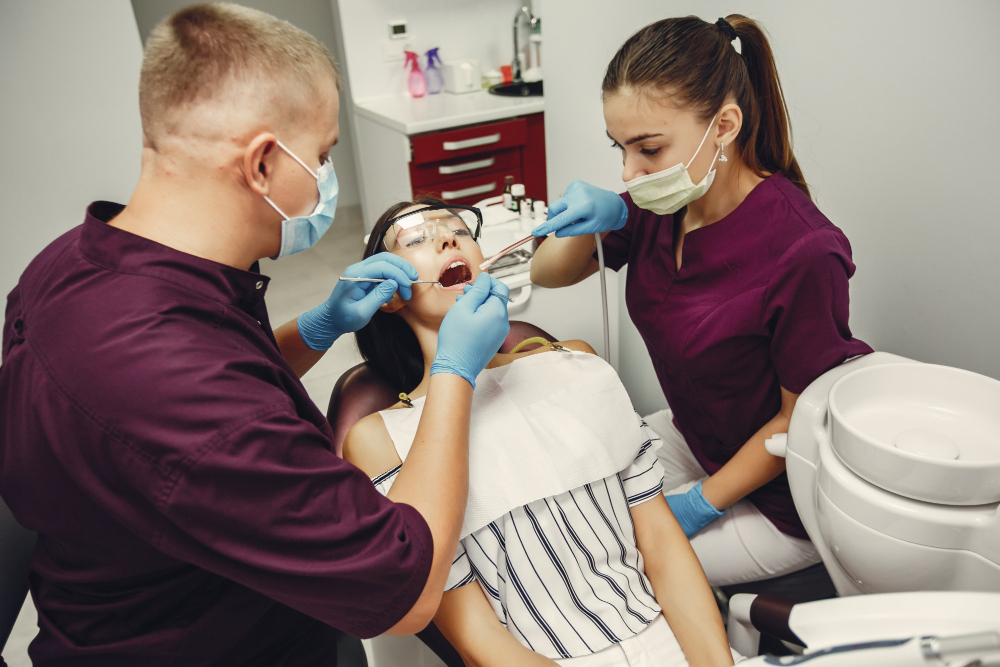
The importance of dental checkups has been a subject of growing research interest.
Guess what? The findings are compelling enough to change how medical professionals think about preventive care.
What happens in your mouth does not stay in your mouth.
Bacterial infections that begin in the gum tissue can enter the bloodstream.
Then, they contribute to severe conditions. This ranges from cardiovascular disease to diabetes complications.
The American Dental Association reports on adults who maintain regular dental visits.
I am talking about at least two comprehensive examinations per year. They experience 60% fewer emergency dental procedures.
Additionally, they also go through 47% lower lifetime dental expenditures compared to those who visit only when problems arise.
These statistics reveal a pattern that extends far beyond teeth.
Preventive behavior in one area of health tends to correlate with better outcomes across all areas.
The Science Linking Oral Health To Systemic Disease
Periodontitis is the advanced form of gum disease affecting approximately 47% of American adults over 30.
Guess what? It has emerged as a significant risk factor for several serious medical conditions.
Here, chronic gum infection creates a persistent source of inflammation. Also, it channels bacterial entry into the circulatory system.
The bacteria associated with gum disease are known as Porphyromonas gingivalis.
It has been detected in arterial plaque samples. Additionally, it suggests a direct pathway from oral infection to vascular damage.
The diabetes connection runs in both directions.
Uncontrolled blood sugar increases susceptibility to gum infections. On the other hand, active gum disease makes blood sugar more difficult to control.
A meta-analysis of 72 studies found that treating periodontitis in diabetic patients reduced HbA1c levels by an average of 0.4%.
It is a clinically meaningful improvement achieved without medication changes.
Additional systemic associations under active investigation include:
- Alzheimer's disease, where P. gingivalis has been identified in brain tissue samples
- Respiratory infections, where oral bacteria are aspirated into the lungs, contribute to pneumonia risk
- Adverse pregnancy outcomes, where periodontal disease correlates with preterm birth and low birth weight
- Rheumatoid arthritis, where shared inflammatory pathways suggest a bidirectional relationship
Preventive Visits Are The First Step To Understanding The Importance Of Dental Checkups
One of the most counterintuitive aspects of dental disease is how far it can progress before producing noticeable symptoms.
A cavity can penetrate through the enamel and into dentin before causing any pain.
Gum disease can destroy supporting bone structure while the gums appear visually normal to an untrained observer.
This silent progression makes regular professional examination essential.
What Are The Prominent Diagnostic Tools That Professionals Use?
Now that we have a fair idea about the importance of dental checkups, this is another section we must know about.
Dental professionals use diagnostic tools that detect problems at stages where treatment is simple, conservative, and relatively inexpensive.
1. Dental Radiography
Digital radiography reveals bone loss. Additionally, it also reveals hidden cavities between teeth.
Also, it shows developing infections below the gumline. Guess what? Visual examination alone would miss all of these.
Modern digital X-rays use up to 80% less radiation than traditional film. Therefore, this makes routine imaging both safer and more informative.
2. Periodontal Probing
Periodontal probing measures the depth of the space between gums and teeth.
Therefore, this quantifies the extent of attachment loss that indicates active disease.
Additionally, a healthy sulcus measures 1 to 3 millimeters.
So, the readings of 4 millimeters or more signal the beginning of periodontal breakdown that requires intervention.
3. Oral Cancer Screening
The professionals often incorporate oral cancer screening into routine examinations. It identifies suspicious tissue changes at early stages.
Also, this happens when five-year survival rates exceed 80%.
Additionally, late-stage diagnosis accounts for the majority of oral cancer deaths.
But the best part? It is largely preventable through regular professional evaluation.
What Is The Role Of The Family Dentist In Comprehensive Care?
The family dental practice model offers advantages that specialized or clinic-based care often cannot match.
Let’s say a single dental team manages care for parents and children within the same household.
Then, they will develop a longitudinal understanding of family health patterns and their genetic predispositions.
Also, they focus on the environmental factors that influence oral health.
Additionally, the providers offering comprehensive family dental care in Scottsdale and similar communities are.
In addition, they illustrate how the family practice model has evolved beyond basic check-ups.
Consequently, all the modern family dental offices provide:
- Preventive Care
- Restorative Treatments
- Orthodontic Evaluation
Additionally, they also provide cosmetic services under one roof.
Therefore, they are reducing the fragmentation that causes patients to delay care they cannot conveniently access.
1. Importance Of Dental Checkups For Children
For children, establishing a dental home by age one, as recommended by the American Academy of Pediatric Dentistry, creates familiarity and trust that reduces dental anxiety throughout life.
Children who have positive early dental experiences are 70% more likely to maintain regular dental visits as adults.
2. Importance Of Dental Checkups For Adults
For adults managing chronic conditions like diabetes or cardiovascular disease, a family dentist who understands their complete medical history can coordinate care in ways that improve outcomes for both oral and systemic health.
This integration becomes increasingly important as the medical community recognizes the mouth as a window into overall health status.
What A Comprehensive Preventive Visit Should Include
Not all dental visits are created equal.
A thorough preventive examination goes beyond the familiar cleaning and quick look that many patients associate with routine care.
1. A Detailed Medical History Review
A comprehensive visit should include a detailed medical history review that accounts for:
- Medications
- Systemic Conditions
- Lifestyle Factors
Many medications cause dry mouth, which dramatically accelerates decay risk.
Without updating medical history regularly, dental providers may miss critical risk factors.
2. Professional Cleaning
Professional cleaning by a hygienist removes calculus deposits that home care cannot address.
Even patients with excellent brushing and flossing habits develop mineralized deposits in areas where bristles and floss cannot reach effectively.
These deposits harbor the bacteria that drive both decay and periodontal disease.
3. Bite Analysis
Bite analysis evaluates how teeth come together during function.
Misalignment, clenching, and grinding create stress fractures in enamel that become entry points for decay.
Many patients are unaware of nighttime grinding habits until a dental professional identifies the characteristic wear patterns.
4. Treatment Based On Risk Assessment
Treatment planning based on risk assessment allows patients and their dental team to prioritize interventions based on individual vulnerability.
A patient with deep grooves in their molars benefits from sealants.
A patient with a history of periodontal issues benefits from more frequent cleanings.
Personalized care plans outperform one-size-fits-all approaches.
Understanding The Importance Of Dental Checkups Is Cost Effective
Preventive dental care is clearly cost-effective. A complete dental check-up and cleaning costs between $200 and $350 without insurance.
In contrast, a root canal and crown, which are necessary when tooth decay reaches the nerve, can cost between $2,000 and $3,500.
For those with dental insurance, preventive visits are usually fully covered, meaning there is no financial barrier to getting routine care.
However, the CDC reports that only 65% of American adults visited a dentist in the past year.
This suggests that people face other obstacles, such as:
- Anxiety
- Trouble Scheduling Appointments
- Procrastination
These stop them from getting care that could save money and prevent pain.