













How Agriculture Tyres Improve Farm Productivity

Agriculture Tyres

Picture this: a harvest season in Punjab and the rains arrive early. Someone's tractor sinks axle‑deep into a waterlogged paddy field.

That person’s neighbor finished cutting yesterday. 

However, that person stands there with their boots soaking. Additionally, he is watching a week’s worth of effort hang in the balance. 

Therefore, if you’ve spent time around Indian farming, you’ve likely seen, or lived, this moment.

When conditions change, productivity isn’t determined by horsepower alone; agricultural tires matter.

What Is The Role Of Agricultural Tyres In Farm Productivity?

Most conversations about farm efficiency focus on engines, implements, seeds, or irrigation. 

Rarely do they stop at the tyres.

Yet tyres are the only connection between the tractor and the soil, making them fundamental to how effectively power is translated into work.

Birla agriculture tyres are engineered as working components of the farming system.

Additionally, one of the smartest features of this is that it is designed to support traction efficiently. 

In addition, it takes care of load management. Moreover, it can effectively handle soil interaction across typical Indian farm conditions. 

They may not attract the same attention as new machinery, but their impact on day‑to‑day productivity is significant.

Let’s break down where that impact comes from.

1. Traction When It Matters Most

Agricultural operations don’t stop for ideal terrain. You will get to face issues such as wet paddy fields.

In addition, you will have to deal with loose sandy soil and uneven plots. 

Even though these are far from pleasant, they are all part of the reality.

But you get something close to a solution when you select the Birla agriculture tyre patterns.

Firstly, these feature deep, well‑defined lugs designed. Additionally, they enhance traction under soft or loose ground conditions. 

A better grip helps limit excessive wheel slippage, allowing more of the engine’s effort to be converted into forward movement rather than wasted spin.

Reduced slippage means:

  • More controlled pulls during ploughing and hauling
  • Less fuel wasted fighting for traction
  • Farmers seeking consistent performance across multiple seasons
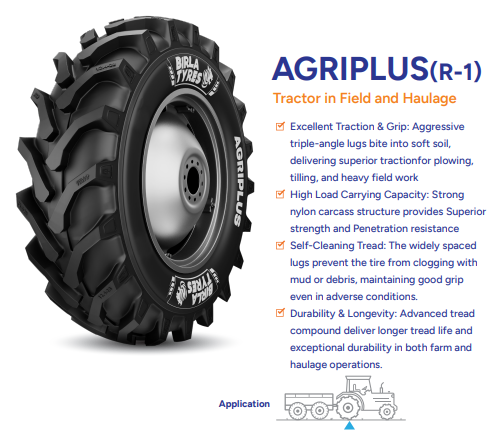
AGRIPLUS

Certain Birla tyre constructions with robust construction and optimised tread design, help deliver dependable grip while supporting efficient power transfer and controlled wear.

2. Your Soil Is An Investment, Protect It

Agricultural operations don’t always occur on ideal terrain. 

Farmers often face challenges like wet paddy fields, loose sandy soil, and uneven plots. 

In these conditions, the right role of agricultural tyres can make a significant difference. 

Birla agriculture tyres feature deep, well-defined lugs that enhance traction on soft or loose ground, resulting in better grip. 

This reduces wheel slippage, ensuring that more engine power is effectively translated into movement, rather than wasted. 

Less slippage leads to controlled pulls during ploughing and hauling, which saves fuel. 

Consequently, farmers benefit from consistent performance throughout multiple seasons. 

Birla tyre constructions are built for robustness and efficiency, improving power transfer while limiting wear. 

Ultimately, opting for the best tyres is not just about the machinery but also about enhancing day-to-day productivity on the farm.
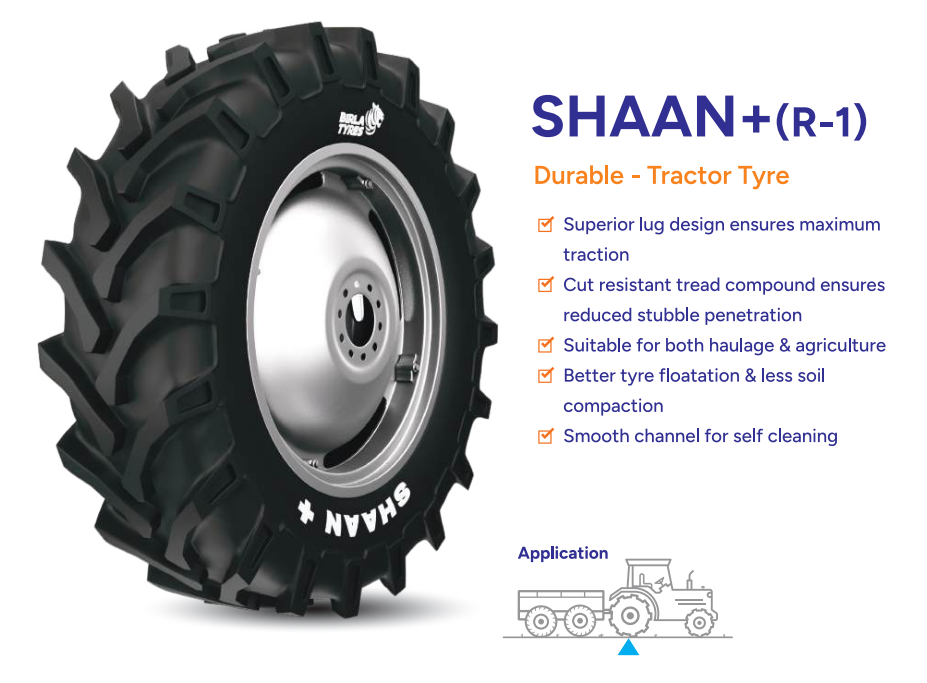
SHAAN+

Over time, consistent soil protection contributes to:

  • Healthier root systems
  • Better moisture retention
  • More uniform crop growth

Sustainable productivity doesn’t always require complex changes; sometimes it starts with what rolls over your field every day.

3. Managing Fuel Costs Through Tyre Discipline

Fuel remains one of the most persistent cost pressures for Indian farmers. 

Tyres that are mismatched to the application, incorrectly inflated, or overloaded increase rolling resistance, forcing engines to work harder than necessary.

Birla tractor tyre tread designs and constructions are carefully optimized. 

They are built to perform efficiently in specific operating conditions. This ensures better traction and stability. 

Each design caters to unique needs, enhancing overall performance.

When combined with:

  • Correct tyre sizing
  • Recommended inflation pressure
  • Proper load management

Farmers can reduce unnecessary resistance during field operations and transport runs, which ultimately ensures higher mileage and longer hours in the field. 
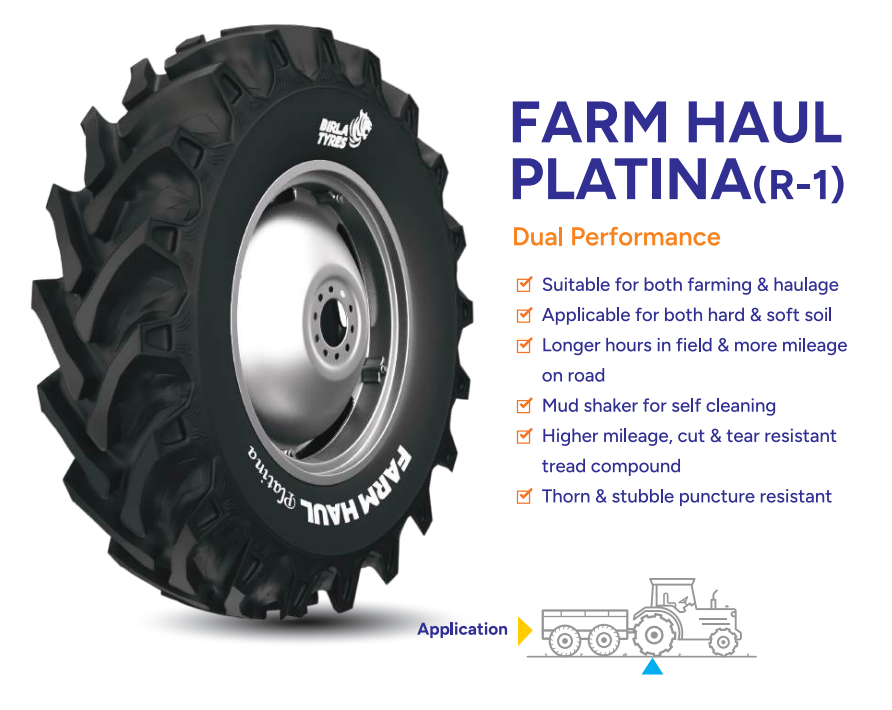
Farm Haul Platina

Durability also plays an essential role in tyre discipline management. 

Birla durable tyres are engineered for extended service life in demanding field conditions, subject to load, speed, terrain, and maintenance discipline. 

Consistent operation within recommended limits helps preserve casing integrity, tread life, and overall tyre performance across seasons.

Choosing The Right Birla Tyre For Your Farm

Different farmlands demand different solutions. 

With multiple demands, Birla Tyres have successfully developed an agricultural tyre product range.

Therefore, you will get a plethora of options to choose from. 

Additionally, you can conduct thorough research and make an informed decision by choosing a suitable option that meets your specific requirements.

Check out their agriculture tyres product range to see how their bias‑ply agriculture tyres are suited for: 

  • Rough, uneven terrain
  • Mixed on‑field and on‑road usage
  • Applications requiring robust sidewall strength

Birla offers both constructions, with selection guided by soil type and crop pattern.

Additionally, it also puts a solid focus on load requirements. 

In fact, there is a certain attention that goes towards the operating cycles, not just by terrain alone.

Two Practices That Make a Real Difference

Check tyre pressure regularly: Daily or routine PSI checks ensure tyres operate within specified limits, preserving both traction and casing life.

Inspect and rotate tyres periodically: Monitoring wear patterns and rotating when required helps maintain even tread wear and consistent field performance.

The Role Of Agricultural Tyres Is Creating The Road To Productivity

Harpreet eventually got unstuck. The following season, he reassessed his tyre choice and operating practices. 

Additionally, now he is working with tyres that are better matched to soil conditions and disciplined pressure management.

Therefore, it is safe to say that his field operations became more predictable.

In fact, this happened especially when weather windows were tight.

So, we learn that your tractor’s productivity is only as strong as what connects it to the ground.

Visit BirlaTyres.com to evaluate tractor tyre options based on your soil type, crop cycle, and operating needs. 

When tyres, load discipline, and maintenance work together, productivity follows, season after season.

Key Idea: Overloading, shortcuts and improper tyre choices cost more in the long run. Farm smart. Maintain consistently. 

Choose tyres built for the realities of Indian agriculture.

Barsha is a seasoned digital marketing writer with a focus on SEO, content marketing, and conversion-driven copy. With 8+ years of experience in crafting high-performing content for startups, agencies, and established brands, Barsha brings strategic insight and storytelling together to drive online growth. When not writing, Barsha spends time obsessing over conspiracy theories, the latest Google algorithm changes, and content trends.

View all posts

Leave a Reply

Your email address will not be published. Required fields are marked *

Related

California environmental compliance for businesses

Attorney Matthew McMillan on Why California Businesses Must Get Ahead Of Water-Law And Environmental Compliance Now

A lot of business owners across California feel the same quiet worry these days. They know water rules keep changing. They know environmental compliance is getting tighter. And they know one small mistake can turn into a long problem with a state agency. But many still push the thought aside because they’re busy running their companies and keeping daily operations moving. This is exactly the moment Attorney Matthew D. McMillan believes businesses must step up. His work at Tropea McMillan has shown him how fast things can spiral once a violation notice arrives. And he often sees that the issue was something the business could have fixed easily if someone had guided them earlier. His message is simple: getting ahead of California’s water law and environmental requirements is not about paperwork. It’s about protecting the future of the company. California’s Water Rules Are Moving Faster Than People Expect California’s relationship with water is complicated. Dry years, rising demand, and strict environmental protections have pushed the state to update rules again and again.And these aren’t just rules for farms or large industrial sites. They affect developers, manufacturers, hospitality businesses, cannabis operators, and even smaller companies that use or discharge water. New limits under the Sustainable Groundwater Management Act, more active State Water Resources Control Board enforcement, and increasing local reporting obligations all point in one direction. Agencies want businesses to be ahead of the curve. They expect them to understand their responsibilities before issues appear. Waiting to “deal with it later” is no longer realistic. Why Attorney Matthew McMillan Pushes for a Prevention-First Mindset McMillan’s approach stands out because it focuses on protecting clients early. He has seen too many situations where a company thought it was fully compliant, only to find out their reporting was incomplete or a small discharge point wasn’t permitted correctly. By the time the issue surfaced, the costs were bigger, the stress higher, and the path forward more complicated. His goal is not to lecture or overwhelm. His goal is to make the process clear and to give clients control over things they once found confusing. He reviews water-use reporting, land-use permits, discharge practices, and environmental paperwork with long-term stability in mind. He helps clients build systems that are easy to maintain so they never feel like they’re running after the rules. And because of his administrative and environmental law experience, he understands exactly how agencies think and what they expect. This approach saves money. It saves time. It protects reputations.Most importantly, it allows clients to grow without constant worry. Common Compliance Gaps Businesses Don’t Notice Until It’s Too Late Even responsible companies make mistakes without realizing it. The patterns McMillan sees most often include: Reporting issues Many businesses underreport water use or misreport by accident. Agencies now rely on satellite images, historical data, and meter comparisons, so inaccuracies show up quickly. Discharge and stormwater confusion A minor runoff issue or an overlooked industrial stormwater permit can bring unexpected enforcement. Permit misunderstandings Projects get delayed because a single condition on a land-use or environmental permit wasn’t followed exactly. Miscommunication between agencies State Water Board, regional boards, county agencies, and the Department of Fish and Wildlife may all be involved. If one requires something new, businesses often don’t know how it affects the others. McMillan’s role is not only to uncover these problems but to solve them before they turn into something larger. Practical Ways Attorney McMillan Helps Clients Stay Ahead Clients working with McMillan often say they feel more prepared and less overwhelmed because he breaks complex rules into simple steps. Some of the ways he supports businesses include: Comprehensive compliance checks He reviews existing practices, identifies gaps, and gives clear guidance on what needs updating. No surprises. No judgment. Just a plan that works. Direct contact with agencies Many business owners feel uncomfortable speaking with regulators. McMillan handles communication, clarifies expectations, and protects the business from misunderstandings. Inspection and document support If an agency asks for files or announces an inspection, McMillan helps clients respond correctly and calmly. Long-term systems Instead of quick fixes, he sets up processes that help companies follow the rules every year. This gives owners peace of mind as they grow. In every part of the process, his focus stays on the client’s stability and future, not on short-term patches. What Happens When Businesses Don’t Prepare No fear tactics here—just real situations McMillan sees often. Problems usually start small. A missing document. A misread permit. A discharge test was done incorrectly. But once an agency steps in, the timeline is no longer your own. Companies may face: Penalties that add up Requests for old reports that they didn’t know they needed Operations are delayed until corrections are made Unexpected legal challenges related to water rights or land use Most leaders say the same thing afterward: “I wish we had handled this earlier.”This is what McMillan wants his clients to avoid. Simple Steps Businesses Can Take Today One of the reasons clients like working with McMillan is that he gives practical guidance, not complicated lectures. Here are the steps any business can start with right away: Review water-use reporting Check permit conditions Make sure discharge methods meet current rules Look at how the new state guidance applies to your operations Document internal systems clearly Seek legal review before contacting agencies Plan for expansions Build yearly compliance routines These small actions prevent major obstacles later. Why Attorney Matthew McMillan Is a Strong Partner for California Businesses McMillan brings a mix of environmental law, land-use knowledge, agency-interaction experience, and a client-friendly communication style. He doesn’t overwhelm his clients with legal language. He brings clarity. He brings stability. He brings a long-term view that supports growth. His work at Tropea McMillan is built around client betterment. He believes legal guidance should make people feel empowered, not afraid. And for California businesses navigating water and environmental law compliance, having someone who understands both the rules and the pressure of real operations can make all the difference. Closing Thoughts California’s regulatory landscape isn’t slowing down. But businesses don’t need to feel behind or confused. With the right support, compliance becomes something manageable, not stressful.Attorney McMillan’s prevention-first approach—shaped by years of handling environmental matters, water-use issues, and agency disputes—helps clients stay ready for anything and protects the future they’re working toward. Read Also: Why Is AnalyzingMarket Com Becoming The Next Big Business Weapon In 2026 And Beyond? The Importance of Packaging Design in Small Business Success

READ MOREDetails
Soil testing for pool installation

5 Benefits To Having The Right Soil Tests Done Before Installing A Pool

Summer in Australia means long days outside, soaking up the sun. And honestly, there’s nothing quite like having your own backyard pool. If you’ve got a big patch of empty yard and no clue what to do with it, a pool just makes sense. But before you start dreaming about pool parties, you need to pick the right spot for it. The ground under your pool has to be solid and safe, or you’ll run into headaches down the track. That’s where soil testing for pool installation comes in. It’s not just a box to tick. Rather, it’s a must-do if you want your pool to last. If you’re ready to dive in, your first move is to get a geotechnical engineering team out to test your soil in accordance with the soil testing Melbourne councils' requirements. In Australia, you can’t skip this step. Here, soil tests are mandatory for installing a pool. Let’s take a closer look at why thorough soil testing matters so much. What Is Soil Testing For Pool Installation? If building your pool is the first major build you’re involved in, then it’s essential to know that all building permits are dependent on performing the necessary soil tests and assessments. Furthermore, since this is mandatory, there’s really no way to get around it. Soil testing, or Site Classification Report (as some people like to call it), refers to a series of comprehensive tests that help to analyse the ground where the pool is going to be built. The main reason for this is to determine how well the soil will hold the weight of the pool. Furthermore, during the soil testing for pool installation, the following aspects are tested to assess soil properties: Soil density. Bearing capacity. Moisture content. Soil composition. Some samples are tested on site while others have to be taken to a laboratory for specialised testing. Once the results are out, your engineering team will use the information. This will determine which materials are right for creating the perfect, most stable foundation. In some instances, the team may need to adjust building techniques and implement remedial measures to strengthen soil properties. The end goal is to ensure that the soil and foundation can bear the weight of the pool and also that it will hold up during floods and heavy rain. Getting Your Pool Off To A Good Start Designing and planning your dream pool doesn’t have to be stressful. Enlisting a geotechnical engineering company is always a good place to start. Not only will they guide you during the testing process, but they will do all the hard work. We’ve compiled a list of the top benefits of opting for quality soil testing for pool installation. It’s The Law As we’ve already mentioned, soil testing for pool installation is regulated and mandatory in many parts of Australia. The main reason for this is that the soil in Australia is very diverse, and a one-size-fits-all building approach won’t work for all areas. Your geotechnical engineering team will provide you with a list of mandatory tests in your area. Keep in mind that some areas or specialised types of builds may require additional testing to ensure soil stability and integrity. Establish Soil Integrity Installing a pool is about a lot more than digging a hole in the ground and filling it with water. Your building team will need to assess the characteristics of the soil. The goal is to identify unstable soil and expansive clays. This is essential as unstable soil can lead to the pool foundation cracking, shifting, and sinking. If the area has poor soil, the building team will introduce the necessary building materials and techniques to ensure long-term stability. Ensures Safe Excavation No matter how big or small your intended pool is going to be, there's more than likely going to be extensive digging and excavation. The last thing your team needs is to encounter hidden obstacles such as high water tables or excessive rocks. Knowing what’s under the ground will enable your team to choose the right excavation techniques. Eliminates Potential Building Risks Just because you’re only building a pool outside doesn’t mean that you shouldn’t prepare for potential building risks. The types of issues that can occur when building the foundation include the following: Settling. Water damage. Increased soil erosion. Poor drainage (can lead to flooding). Enables Informed Design Options You may already have the perfect pool design in mind, but the characteristics and potential snags in the soil may not make this possible. As with the excavation process, engineers use the data from the soil test to choose the best pool shell, reinforcement, and foundation type. Investing in the right techniques will prevent wasting money and time on the wrong processes, which need to be redone. What Is The Process Of Soil Testing For Pool Installation? As we have already mentioned, soil testing is a key geotechnical procedure for pool installation. This essentially determines if the ground has enough bearing capacity to hold the huge weight of a swimming pool and its water. If you do not carry out these tests, there is a risk of structural failure. These include cracking or 'popping'. This might put you $5, 000 to $20, 000+ out of pocket in emergency repair costs. Below is the detailed layout of the process: Hiring a Professional: Generally, a geotechnical engineer or a specialized company is hired to carry out the study. Site Sampling: By means of drilling rigs or hand augers, technicians collect soil samples at different depths (in some cases, as deep as 20 feet). Lab Analysis: The samples are analyzed for texture, pH, moisture content, and density. Reporting: The detailed Geotechnical Report contains tailored construction guidelines, such as the application of reinforced concrete in case of clay or laying a gravel base for drainage. Test Your Soil Before Pool Installation! In conclusion, a comprehensive soil testing for pool installation is essential. It helps your engineering team to receive the necessary building permits. Additionally, the results of the on-site and laboratory assessments will provide the engineering team with the necessary data. This will, in turn, create a stable and strong foundation for your swimming pool. Fortunately, outsourcing the testing process to a credible geotechnical engineering team will mean that you don’t have to hassle with the testing process. Building your dream swimming pool has never been easier!

READ MOREDetails
Neon Signs For Trade Show Booth

How Custom Neon Signs Make Your Trade Show Booth Stand Out

Today’s topic: How neon signs work for trade show booth works. You have a few seconds to grab someones attention at a trade show. Most exhibitors have three to seven seconds to catch an attendee’s eye before they move on. That's not a time to explain your product or pricing. It's just enough for someone to see your booth and decide if it's worth stopping at.  Many booths don't make the cut. They look like all the others with pull-up banners and table runners. The ones that stand out have one thing in common: they can be seen from afar. Lately, small brands are using custom neon signs to get noticed. These signs are mounted high so they can be read over the crowd. I have seen this work at events. A neon sign is not a solution for a weak pitch or an empty booth. It can help you get more attention. It's a way for small exhibitors to get noticed. Here's why it works and how to use it. Neon Signs For Trade Show Booth: Why Your Booth Loses The Attention Game Before You Say A Word Trade show floors are really loud and visually busy. Imagine a hundred booths all trying to grab the attention of the same people. Most of them are lit by the bright overhead lights. When everything is lit the same, nothing really stands out. Your brain stops noticing booths and just sees a lot of stuff. Expostars, a company that helps staff booths, says that people at trade shows tend to follow patterns. They move towards the path and look at whatever catches their eye first. Booths at intersections of aisles can get as much attention as the usual spots. The point is, it's not about where you are. Sometimes you can't choose that anyway. It's just that our eyes are drawn to things that stand out. A glowing sign stands out in a way a printed banner can't because it gives off its light instead of just reflecting the light in the room. That's what most exhibitors get wrong. A printed sign - no matter how sharp - is competing with all the printed signs under the same lights. A lit sign changes that. You can easily read it from 30, 50, or 100 feet away. That's how far away people are when they decide whether to come to your booth or keep walking. A glowing sign really grabs attention. Trade shows are all about getting noticed. Your booth needs to stand out. What Neon Actually Does For A Booth (Beyond Looking Cool) Let us forget about how things look for a moment. A custom neon sign does a useful thing at the same time, and these things are worth thinking about separately. One of the clear things it does is act like a guide. If you put your company logo or name in letters above people’s head you have already solved the problem of getting noticed before anyone even reads what you have to say. Something that is not as clear is that it can also be used as a background for photos. People like to take pictures of things that glow. And when someone takes a selfie in front of your sign and posts it online with the events hashtag, that's free advertising, and it is not something you can easily get with a regular banner. There is also something that a custom neon sign does. It shows that your company is real and established. A clean and well-lit setup makes people think that your company is professional,l and that is not something you can get with a table. There is something to consider on the other side. A sign is not going to make people want to come to your booth if they do not want to. If the people working at your booth are not paying attention or if you are not clear about what you're offering, then even the best neon sign is not going to fix that. The people who do research on events, for Premier Staff, say that the important thing that gets people to come to a booth is the people who are working there, not how the booth looks. The Practical Side: Weight, Power, And The Stuff Nobody Mentions Here is where the modern version is better than the one. The old glass neon signs were very heavy. They would break easily. Additionally, they also got very hot. This is something that made them dangerous to transport to a convention center and hang above people’s heads. The signs that most companies use now are made from LED neon flex, which is a tube of lights covered in silicon mounted on clear acrylic. This LED neon flex looks like the glass neon signs. But guess what? It does not work like them at all. This change is important when you have to travel with the signs. The LED neon flex is light, and it will not break easily, and it does not get hot. So you can carry it in a bag instead of a big wooden box. It also uses power, which is good because you do not want to use too much electricity at an event. The old glass neon signs needed a lot of power, up to 18,000 volts. The LED neon flex only needs 24 or 120 volts. LED neon flex signs are also better because they use less energy. This means you can turn them on for a long time without spending a lot of money on electricity. Custom Neon says that LED neon flex signs use up to ten times the energy as the old glass signs. This means you can use the sign for many years and many events instead of just one time. Design Choices That Separate Classy From Carnival Neon lights can look really cheap. The difference between a high-end booth accent and a cheesy one is a simple choice. To get it right, keep your message short. Your booth sign isn't the place for a slogan. Stick to your logo, brand name, or a short catchphrase. Anything long will be hard to read from far away, which defeats the purpose. Choose your colors carefully. White and soft pink look great in photos and seem upscale. A single bold brand color, like teal or amber, can also look fantastic. The mistake is using many colors. Signs with colors are distracting and look like novelties. Pick one or two colors that match your brand and stop there. Think about where you put your sign. A sign at the table level gets blocked by people standing in front of it. If you hang it high on a back wall or banner stand, it stays visible when the booth is busy. In a setup, this works well. Even a freestanding sign on a raised shelf is better than one on the floor, where it gets hidden by people’s shoulders. Is It Worth the Money for a Small Exhibitor? Let’s talk about the returns because that’s the question.  Booth space, travel, and staffing already cost a small business thousands of dollars per show. On the other hand, a custom sign is a small one-time expense that you can reuse at every event after that. The cost of the sign gets lower each time you use it. The alternative makes sense on its own. A printed backwall needs to be reprinted when your branding changes or it gets damaged during transport. A neon brand sign, if not damaged, keeps working. When you use it over a year at trade shows, pop-up events, and in-store displays, the cost per use becomes really low. Because the same sign can be used in your booth, shop window, or product launch event, it's not really a trade show expense. It's a branding asset that you first use at a trade show. Is a custom sign necessary? No. Many brands deal with just a table and a handshake. If you're already spending money to be at the event, spending a bit more to get noticed is a good choice in your event budget. A custom sign helps you get noticed. You can use it for a time. The cost of the sign is low when you use it at times. It is an investment. An investment for your business. Make Those Seven Seconds Count The booths that people remember after a show are not usually the ones or the most expensive ones. They are the booths that people notice away - the ones that catch your eye before you even think about it. A good sign is one of the things that can help you stand out without spending a lot of money. If you want to try this, start with your company logo. Make sure the colors are consistent and hang the sign up high. Then let your team take care of the rest. If you do it right, a custom neon sign can turn a corner of the hall into the place everyone wants to go to and the place they take pictures of as they walk by. On a floor where getting people’s attention is an important thing, it is worth doing.

READ MOREDetails