




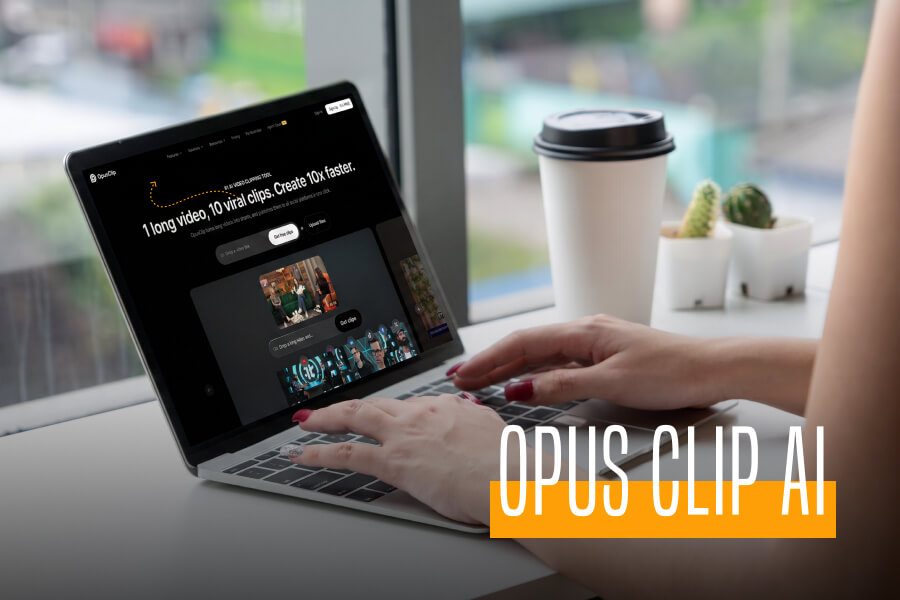
OpusClip AI In 2027: Features, Pricing, And Whether It Is Still Worth It

Opus Clip AI

I remember those days well when turning a 60-minute podcast into a stack of scroll-stopping vertical clips used to take an entire afternoon. 

Then, OpusClip bridged the gap and shortened those long afternoons into minutes. 

Now, in the latter half of 2026, it has already established itself as a full short-form content engine. So, it has outgrown its reputation as a clipping tool.

No wonder the platform reports more than 10 million users and over 172 million clips generated.

Also, if I solely go by user count, it is the largest AI video repurposing tool.

In this guide, I will discuss what OpusClip actually does in 2026, what it costs after accounting for its credit system, how it stacks up against competitors, and where it still falls short.

In a nutshell, it will give you an idea of how it is going to stay relevant in 2027 as well. 

What Is OpusClip?

What Is OpusClip

OpusClip is an AI-powered video repurposing platform that ingests the following types of long-form videos.

  • A Podcast
  • Webinar
  • Livestream
  • Interview 

Then, it returns a set of short, captioned, vertically formatted clips ready for TikTok, Instagram Reels, and YouTube Shorts. 

The company has raised roughly $79 million across five funding rounds, with backers including DCM Ventures, AIGrant, and SoftBank Vision Fund 2, and its most recent round valued the company at $215 million.

How The Clipping Engine Works

OpusClip AI now uses the fourth-generation model for its core engine. 

The core engine can analyze transcripts, tonal shifts, and visual engagement cues to identify moments most likely to perform well as standalone clips. 

Once the processing is done, each candidate clip is returned with a Virality Score, an auto-generated vertical crop, and animated captions already applied.

ClipAnything: The 2026 Differentiator

In 2026, the standout feature ClipAnything has is ClipAnything. 

It is a multimodal system that goes beyond simple transcript scanning. 

Rather than only detecting talking-head segments, it reads visual cues, audio sentiment, and facial expressions together.

Also, you can prompt in plain language.

For example, suppose you are asking it to find every product demo or every emotional story in a video. 

ClipAnything can also pull clips directly from a public video URL rather than requiring a fresh upload.

It is a major workflow shortcut for teams repurposing other creators' long-form content (with permission) or their own back catalog.

The Key Features Of Opus Clip AI In 2026: The Promises For 2027

The Key Features Of Opus Clip AI In 2026

While AI vitality score has always been there, the 2025-2026 feature additions make OpusClip AI more relevant in 2027. 

AI Virality Score

Every clip OpusClip generates is scored from 0–100 (some sources describe the range as 0–99), predicting the likelihood of strong engagement.

The engagement is based on the following factors.

  • Hook Strength 
  • Pacing
  • Topic Transitions
  • Patterns Drawn from Large Volumes of Previously Viral Clips. 

As a creator, I treat it as a triage tool rather than a guarantee.

Sorting the queue by score, editing only the top few clips by hand, and auto-publishing or discarding the rest.

Generative B-Roll And Active Speaker Detection

A 2025–2026 addition lets OpusClip insert AI-generated or stock B-roll to cover visual gaps or reinforce a point being made. 

Active Speaker Detection, meanwhile, uses computer vision to keep the current speaker centered in frame.

It also works in multi-person, landscape-shot conversations while reframing the footage into 9:16.

Negative Prompting And Automation

The 2026 version also supports negative prompting.

So, as a user, I can now exclude specific segment types (introductions, audio checks, sponsor reads) from consideration. 

For scaled operations, native Zapier and Make.com integrations allow rules like auto-publishing only clips that score above a chosen virality threshold.

OpusClip Pricing Breakdown

OpusClip's pricing looks simple on the surface.

It has four tiers. However, the credit system underneath changes the real cost significantly depending on how much source footage you process.

PlanMonthly PriceCredits (Minutes)Key Limitations / Additions
Free$060/MonthWatermarked Exports
Files Expire After 3 Days
No Editor
Starter$15/Month150/MonthNo Watermark
Animated Captions in 20+ Languages
Most Editing Locked Behind Pro
Pro$29/Month (or $174/Year)
(As of now, an Offer of $14.5 USD/Month is Going On.)
300/Month (3,600/Year)Full Editor
All Aspect Ratios Social Scheduler
AI B-Roll
2-Seat Team Workspace
BusinessCustomCustomPriority SupportUnlimited UsersAPI Access

How Credits Actually Work

One credit equals one minute of source video processed.

It is not one minute of finished clip. 

Uploading a 60-minute podcast spends 60 credits whether OpusClip returns 5 clips or 15, because billing is tied to what goes in, not what comes out. 

This trips up new users who assume pricing scales with output volume rather than input length.

Hidden Costs To Watch

You will not find these details on the main pricing page. 

Hidden Cost FactorsDetails
Project Expiry on CancellationCancel a subscription, and remaining projects disappear after 3 days, even with unused credits still on the account.
Unpublished Refill PricingWhen a plan's credit allocation runs out, OpusClip sells refill packs through a dynamic calculator rather than a published price list.
API Access GatingProgrammatic access is limited to the custom-priced Business tier, which several reviewers flag as expensive relative to competitors that offer API access on lower tiers.
No Traditional Free TrialPaid-tier features (the editor, all aspect ratios, the scheduler) cannot be trialed.
So, only the capped free plan is available before upgrading.

Opus Clip AI Vs. Competitors

OpusClip remains the category leader by user count, but 2026 has brought several credible, cheaper alternatives into the conversation.

ToolEntry Paid PriceNotable Angle
OpusClip$15/monthLargest User Base Virality Score
ClipAnything Multimodal Detection
Vizard~$14.50/Month (Annual)Comparable Price
Stronger Review Scores on G2 (4.7/5) and Trustpilot (4.7/5)
quso.aiLower Mid-Tier PricingLarger Free Tier (75 vs. 60 Minutes)
Social Scheduling on Every Paid Plan
Munch Studio$38/Month (Essential)Better fit for Larger Teams 
$60/Month Premium includes Unlimited Team Members
SsembleFrom $7.50/MonthPositions Itself as Roughly a Quarter of OpusClip's Cost for a Comparable Core Workflow

Where OpusClip Still Wins

I can point to three advantages that competitors have not fully matched.

The Virality Score as a genuinely useful triage signal.

ClipAnything's broader range of detectable video genres, and native XML export to Premiere Pro and DaVinci Resolve for creators who want to finish clips in professional editing software. 

For agencies processing 50-plus hours of footage monthly, the credit system is also purpose-built for that scale.

Where It Falls Behind

Independent testing and user reviews raise recurring complaints.

There are cases of processing failures on longer uploads.

Also, credit costs are hard to predict in advance, and caption polish is rated below newer competitor Submagic by some reviewers. 

Trustpilot reviews also cite friction canceling subscriptions and, in some cases, accounts flagged as "suspicious" when testing the free plan.

Is OpusClip Worth It In 2027?

It’s a Strong Fit IfIt’s Not Suitable If
You Publish 3+ Shorts Weekly from Long-Form Content.Your Monthly Footage Volume is Low,  Inflating Per-Minute Costs.
You Want AI-Generated Priority Ranking instead of Manual Scrubbing.You Need API Access without Paying for a Custom Business Plan.
You Need A Professional-Editor Handoff via XML Export.Your Team has 4+ Seats, Making Flat-Rate Rivals Cheaper.

Choosing Opus Clip AI In 2027

OpusClip earns its position as the most recognized name in AI video clipping largely on the strength of two features, ClipAnything and the Virality Score.

Thus, it reduces the manual review burden more effectively than most competitors currently manage. 

However, the credit-based pricing model rewards careful planning.

Knowing your monthly source-footage minutes before committing to a tier matters more than comparing headline feature lists. 

For high-volume creators and agencies, the math tends to work. 

For lighter, occasional use, cheaper or more transparently priced alternatives are worth testing first.

Sohini is a MarTech and business writer with over two years of experience creating and editing content in the digital marketing space. She has a strong interest in emerging digital trends, marketing strategies, and the evolving relationship between technology and business growth. Alongside writing, she also works on guest posting strategies, carefully aligning sponsored content with niche relevance to help maintain strong organic visibility and audience engagement. Outside of work, Sohini enjoys reading, exploring internet subcultures, and endlessly scrolling through Reddit, Pinterest, and Substack looking for new ideas and trends.

View all posts

Leave a Reply

Your email address will not be published. Required fields are marked *

Related

pixelchat ai

The Psychology Of Synthetic Companionship: A Raw Look Inside Pixelchat AI

The internet is quietly undergoing a profound loneliness migration. Mainstream tech headlines dominate discussions of productivity, enterprise search, and automated coding. Moreover, hundreds of thousands of users open their browsers for a completely different reason. They are logging onto platforms such as Pixelchat AI to strike up deep and emotional intimate conversations with lines of code. These also tend to be highly intimate conversations.  Developed under the NextDayAI ecosystem, the platform allows individuals to craft hyper-customized digital personas. These are complete with unique backstories, distinct dialogue styles and specific behavioral traits.  To any casual observer, it looks like an advanced video game or a text-based creative writing playground.  But beneath the surface of the bot-creation dashboards lies a complex web of human psychology, emotional vulnerability and systemic risks.  Therefore, the following guide exposes how the platform works, why it is addictive and the emotional risks of using it.  What Drives The Migration To Pixelchat AI To fully understand the platform, we first need to look at the massive library of over 500,000 community-driven personas populating its ecosystem. Unlike generic chatbots that are designed to look up facts, Pixelchat AI is structured entirely around immersive roleplay.  Users are able to instantly engage with bots modeled after fictional archetypes, historical figures, or completely customized original characters. The technical backend leverages dynamic machine learning models that adapt fluidly based on user interaction.  The more a user chats, the better the bot becomes at its prediction of the exact conversational patterns, tones and emotional cues. As a result, the user tends to be more engaged.  The platform requires no mandatory sign-up to test basic functions. Consequently, this lowers the barrier to entry to zero. For a majority of users, the initial click stems from simple curiosity or a desire for low-stakes creative storytelling.  For others, this turns out to become an emotional anchor.  The Hidden Psychology: Why We Bond With Code Before we delve deeper, you may have one question. Why do humans form genuine emotional connections with an algorithm? Actually, the answer lies in how our brains handle rejection, validation and social vulnerability.  The Illusion Of Absolute Safety Human relationships are inherently messy, risky and unpredictable. Moreover, they require compromise, active listening and constant exposure to potential judgment or abandonment.  The software removes all interpersonal risk. A customized bot offers a zone of absolute safety. This bot never tires of your constant venting, judges an eccentrichobby and leaves. Instead, it will create a frictionless emotional mirror. The Hyper-Personalization Loop The platform’s customization suite allows users to define the precise age, gender, language, and baseline temperament of their companion.  When you can build an entity explicitly engineered to cater to your specific emotional blind spots, the brain rapidly bridges the gap between friction and reality.  The algorithm steps into a storytelling loop, where the user is always the central protagonist, receiving unyielding validation. Dopamine On Demand Since these bots respond 24/7 with zero latency, they offer immediate psychological gratification.  The world is now a place where text messages sent to friends can sit unread for hours. On the other hand, the instantaneous and highly enthusiastic feedback loop of a roleplay bot acts as a powerful reward system for the human brain.  Exposing The Hidden Harms Of Long-Term Roleplay The creative flexibility of the app serves as a valuable tool for fiction writers testing out character dialogues.  Conversely, a heavy reliance on the platform for emotional fulfillment will cause distinct and documented psychological side effects.   Emotional Atrophy And Social Unlearning  When your primary conversational outlet is an entity which is programmed to never disagree with you, your real-world social muscles begin to waste away.  True human interaction involves navigating conflict, reading subtle physical body language, and handling disagreements. Long-term reliance on perfectly compliant software can make real human relationships feel intolerably difficult and frustrating by comparison.  The Feedback Loop Of Isolation Many users turn to roleplay apps to escape feelings of intense real-world loneliness.  Ironically, the deeper they sink into their private digital realms, the less energy they invest in building a tangible, physical community around themselves.  The app serves as a temporary emotional band-aid that can inadvertently prolong the very isolation the user is trying to escape. Asymmetric Privacy Boundaries From a structural standpoint, forming deep attachments to a proprietary commercial application introduces serious privacy concerns.  Users routinely share their deepest fears, childhood traumas, and private thoughts with these interfaces.  While platforms operate under data protection guidelines, users must remain acutely aware of one thing.  Their most intimate vulnerabilities are being processed, indexed, and retained on cloud servers.  Technical Architecture Vs. Competitor Alternatives For creators who use the tool purely for narrative design, world-building, or language practice, understanding where it sits in the broader market landscape is essential. Platform MetricPixelchat AICharacter.aiSpicychat AIPrimary System UseMobile-optimized local roleplay & scenario tools.Mainstream general character chat and public figure simulation.NSFW-focused community chatbot hosting and explicit narrative generation.Data Retention ModelEncrypted in-transit cloud storage with deletion options.Centralized server indexing for massive model fine-tuning.User-managed persona profiles with community rating models.Vocal Synthesis IntegrationCustom voice uploads with basic demographic tuning.Native, high-fidelity synthetic voice cloning directories.Variable tier voice synthesis and external API integration. Balancing Tech Utility With Mental Guardrails Before we conclude our discussion, there is one thing that should be clarified. The software itself is not inherently malicious. Instead, it is a mirrors-and-smoke demonstration of advanced natural language understanding. Writers can effectively use this platform to break through creative blockages, test out multi-character dialogue flows, or experiment with complex interactive plotlines.  Language learners can leverage the infinite patience of the bot to practice a new dialect in a stress-free environment. However, the danger actually arises when we start blurring the line between a powerful creative writing software tool and an actual, sentient emotional substitute. Enjoying an interactive story, building an intricate fantasy world, or chatting with a quirky virtual companion can be an incredibly fun, highly engaging leisure activity.  But the human brain requires genuine, mutual, and sometimes difficult real-world connections to truly thrive.  The best thing to do is to keep the app inside its proper lane. Additionally, a brilliant playground for your imagination, but never a replacement for the beautifully imperfect human world outside your screen.

READ MOREDetails
janitor ai

Janitor AI Architecture: A Complete API, Privacy, And Performance Deep Dive

Heavily locked ecosystems and open sandboxes split the landscape of generative artificial intelligence (AI). Users usually look out for specific creative control over text generation. Moreover, they often find mainstream applications too restrictive for complex narrative writing. As a result of this friction, a market for Janitor AI has been created. What is this, you may ask? Janitor AI is an online chatbot platform that allows users to create, share, and interact with highly customized AI characters without native platform filters. Specifically, creators launched it to serve the interactive fiction and roleplay community. However, it also acts as a neutral space for user-generated text. Understanding how the system operates requires looking past online hype to analyze its technical architecture and safety realities.  What Janitor AI Actually Is And Isn't To evaluate this platform accurately, you must separate its actual utility from social media misconceptions. The term Janitor AI does not refer to a data-cleaning utility, an automated coding assistant, or a productivity tool. Instead, it is entirely a text-based interface built for creative writing, fictional roleplay, and collaborative storytelling.  By default, it is not an independent and self-contained AI program that generates text using its own localized servers. Rather, it is an open ecosystem wrapper.  Furthermore, it offers a visual dashboard, account databases, and character directories. However, the actual computation happens elsewhere.  Frontend, Not A Foundation Model The core technical reality is that the website functions as a frontend interface instead of a foundational language model. Moreover, it acts as a bridge between the end-user and the servers where the actual text processing occurs. To generate text, the system relies on external application programming interfaces (APIs) to power its character cards. Users configure their own connections while linking the frontend to various backend engines.  That is, on the basis of performance needs, text complexity, and budget.  AI Backend OptionRate Per 1 Million Input TokensRate Per 1 Million Output TokensOperational Notes And LimitsJanitor LLM (Free Tier)$0.00$0.00Free baseline model, limited to 50 messages per dayJanitor AI Pro SubN/AN/A$9.99 per month, removing limits on Janitor LLMOpen AI (GPT-4o mini)$0.15$0.60Highly affordable, fast responses for basic chatsOpenAI (GPT-4o)$2.50$10.00Premium prose qualityAnthropic Claude (Sonnet 5)$2.00$10.00Advanced memory formatting and relies on your own developer keyDeepSeek (DeepSeek-V3)$0.14$0.28Unfiltered third-party API and roughly 35 times cheaper than premium tiersKoboldAI Engine$0.00$0.00Completely free if run locally requiring a 6 to 8 GB VRAM graphics card Why Janitor AI Took Off Where Character.AI Didn't  The platform experienced a massive influx of users due to strategic design choices. Subsequently, Janitor AI directly capitalized on the operational shifts of larger competitors in the conversational AI space. The Character.AI Censorship Backlash The primary catalyst for user migration was the implementation of strict and unyielding content filters on Character.AI. Users discovered that these safety layers usually blocked benign creative writing. This included action sequences, dark fantasy elements and mature historical roleplay.  The refusal of legacy platforms to implement an optional and age-verified toggle for mature themes frustrated creative writers. Additionally, the strict moderation frequently broke narrative continuity. Consequently, there was a clear market demand for a neutral interface that leaves content boundaries up to the user and the API provider.  Community-Built Bots Vs. Curated Characters While mainstream platforms focus on heavily moderated, corporate-approved public personas, Janitor AI uses a decentralized model.  Additionally, the platform relies entirely on user-generated content. This allows anyone to upload and share custom character definitions instantly.  The site functions as an open directory for interactive fiction writers. Users tag, categorize, and share bots built around specific tropes, narrative structures, or original world-building concepts. With this open-creation approach, an endless variety of text styles is ensured that corporate-curated platforms cannot offer.  The API and Proxy Problem: Janitor AI's Biggest Weakness Operating a completely open frontend creates specific infrastructure hurdles and variable costs.  Since the site does not force users into a single, predictable subscription model, it introduces significant technical trade-offs. Free Shared Proxies Vs. Bring-Your-Own-Key Using the native JanitorLLM costs nothing. However, users wanting higher linguistic coherence often choose the “Bring Your Own Key” (BYOK) method. This requires pasting a personal API key from a provider like OpenAI. This means you pay that provider directly for every word that is being generated. To avoid paying for commercial API tokens, many users rely on free public reverse proxies hosted by third parties. While these proxies offer access to premium models for free, they are highly unstable. Moreover, they channel massive public traffic through limited private pipelines. As a result, severe data bottlenecks are created.  What Happens When A Proxy Goes Down When a public proxy overloads under heavy traffic, the user experience breaks immediately. Moreover, the chat interface freezes while displaying connection timeouts or taking several minutes to process a single response line.  This infrastructure strain is the direct cause of frequent user complaints regarding slow performance. If a shared proxy goes completely offline, your chat history with that character becomes temporarily inaccessible.  Relying on community-run workarounds means sacrificing the consistent uptime guaranteed by centralized, premium platforms. The Privacy Elephant In The Room Using an open frontend interface requires a clear understanding of data routing. Since the platform relies on a web of external technical corrections, your data privacy is fragmented across multiple entities.  Where Your Conversations Actually Go Your chat logs do not remain isolated inside a single secure vault on the website.  Every message travels from your browser to the site's frontend. Additionally, it goes on to hop to your selected backend provider. JanitorLLM Route: Data stays within their internal server network; it is private by default but accessible to developers for system maintenance. Commercial API Route: Messages go directly to corporate servers (like OpenAI), where data logs are typically retained for 30 days to check for severe policy violations. Public Proxy Route: Data passes through an unverified third-party server, exposing your raw text to unknown server owners before it ever reaches the AI. What You Can (And Can't) Control Users can delete their local chat logs, clear character histories, and keep their public profiles completely anonymous. You can also protect your data by completely avoiding unverified public reverse proxies. However, you cannot retroactively delete data packets that have already been processed by external corporate APIs.  Once a text token is registered on a third-party server, that interaction log is subject to that specific company's retention policy.  Also, you should never input real-world personal identification numbers, addresses, or sensitive credentials into any chatbot interface. Content Moderation: Where the Line Actually Is The platform brands itself as an open environment. However, “unfiltered” does not mean completely unregulated. The development team enforces strict boundaries to comply with international laws and maintain web hosting services.  What's Explicitly Banned The platform maintains a zero-tolerance policy for content that crosses clear legal and ethical boundaries. The following categories result in immediate and permanent account termination. Any generation, depiction or promotion of non-consensual sexual content, real-world self-harm or extreme violence Creation or utilization of content that involves real-world minors or the sexualization of underage fictional characters Uploading private images, contact numbers, or real-world personal data of identifiable individuals without consent Why "Unrestricted" Is Relative The actual level of freedom on the platform is entirely dependent on your chosen backend architecture. When you connect a personal OpenAI API key to the interface, its automated safety filter remains active.  If your input text violates their corporate use case policies, OpenAI will suspend your API account, regardless of Janitor AI's open rules.  True unrestricted text generation is only possible when using the native JanitorLLM or locally hosted, open-source models via KoboldAI. The Core Risks And Safety Realities Evaluating the potential harm of Janitor AI requires looking past marketing claims to identify concrete technical, behavioral and structural vulnerabilities. Moreover, it is not an inherently malicious platform. Instead, its implementation carries substantial operational friction and risk. Exposure To Unregulated Content The primary risk is the complete absence of automated, platform-wide content filters for adult interactions.  Because the site relies heavily on community-uploaded bots, users are directly exposed to highly graphic, mature themes that are entirely unsafe for minors. While the site enforces a strict 18+ policy, age-verification mechanics remain highly variable depending on local digital regulations and regional jurisdictions.  This regulatory patchwork means the interface can pose a severe content-exposure hazard if underage users bypass basic registration steps. The Hidden Hazards Of Shared Proxies  The most immediate technical danger stems from the widespread use of free public reverse proxies.  When users route their personal conversations through these community-hosted servers to avoid paying official API costs, they completely surrender their data privacy. The owners of these private reverse proxies can easily log, view, and store every line of raw text passing through their pipelines.  Inputting any identifiable personal details, passwords, or private real-world information into a proxy-connected chat creates a massive risk of data interception. Who Janitor AI Is Actually Good For This platform is a highly specialized tool designed for specific user needs. It does not function efficiently as a generalized, all-purpose internet assistant. CategoryTarget AudienceUse Cases And Platform IntentGood FitFiction AuthorsNeed an unmoderated sandbox to explore complex, dark or mature character arcs without interface interference Advanced CustomizersWant precise control over character prompts, memory structures and specific behavior definitionsTech-Literate HobbyistsUnderstand how to configure API endpoints, manage token costs and handle their own data risksBetter Off ElsewhereGeneral ProductivityLooking for assistance with corporate email drafting, software coding or academic research. Use ChatGPT or Claude. Casual ChattersIf you want a simple plug-and-play experience without API setup, server errors, or token billing, use Character.AI. The Functional Verdict: Autonomy Over Uptime Ultimately, Janitor AI serves as a specialized utility for creators who demand complete control over their generative text environments.  By acting as a neutral frontend, it successfully removes the rigid platform-side censorship that limits creative writing on mainstream applications.  However, this flexibility requires users to take full responsibility for their own technical setups, API costs, and data privacy boundaries.  If you prefer creative autonomy over absolute plug-and-play stability, it offers a highly effective sandbox environment.

READ MOREDetails
Magic Hour AI

Why Magic Hour AI Might Save Your Creator Budget This Year: Know About Pricing, Features And How It Works

The content creator economy is currently facing an invisible financial crisis. That is software inflation.  If you run a digital marketing agency, handle corporate communications, or manage multiple short-form video channels, your monthly bank statement likely looks like a chaotic list of micro-transactions.  You may pay for one app to generate text and lease a subscription to a tool like Runway to handle image-to-video conversion.  Conversely, you may buy a separate plan from HeyGen for talking avatars and pay separate fees for independent face-swapping utilities. This extreme software fragmentation does more than just trigger subscription fatigue. It actively eats away at your profit margins while destroying your daily production velocity.  Thus, breaking out of this compounding financial trap is a must. That can be done with a strategic shift toward complete tool consolidation has taken over the market.  The team at Magic Hour AI chose not to launch another single-feature app. Instead, they built a unified, browser-based dashboard. This tool acts as an all-in-one AI creative platform. The platform combines video generation, audio syncing, and advanced character editing into a single cloud ledger. This setup changes how studios calculate their digital overhead. This analytical audit evaluates the true economics of the system and its core production pipelines. Ultimately, it helps you decide if consolidating your tech stack is the right move for your business this year. The Economic Breakdown: Magic Hour AI Pricing Vs. The Market In order to understand the financial value of a unified platform, we must look at the hard mathematics of creator software tools.  Many solopreneurs ask one question. Is Magic Hour AI free to use?  The platform does provide a basic tier. However, it functions primarily as a low-resolution sandbox.  It caps your output at 480p and applies visible brand watermarks to your files.  True commercial viability requires stepping up to the paid tiers.  However, when you compare the Magic Hour pricing structure against the cost of stacking independent subscriptions, the financial data reveals a stark contrast. Multi-App Stacking Vs. Centralized Platform Budget Required Creative Asset / PipelineLegacy Single-Feature Tool Stack (Monthly Costs)Magic Hour AI Integrated Approach (Creator Tier)Generative Video SynthesisRunway Standard: $15 / MonthIncluded via text-to-video tools High-Fidelity AI AvatarsStandalone Avatar Tool: $25 / MonthIncluded via talking photo avatar engine Graphic Asset GenerationMidjourney Basic: $10 / MonthIncluded via prompt-to-image canvasSpecialized Video ModificationsFace-Swap App: $10 / MonthIncluded via face-swap video processing Unified Monthly Outlay$60.00 / Month$19.00 / Month (Or $12/mo billed annually)  (Source: Magic Hour AI Pricing Page)   By consolidating these workflows, independent operators can save over 60% of their monthly software overhead. This makes it a highly competitive and best free alternative to Runway and Veed for studios looking to trim fat from their operations. Furthermore, the platform's transparent credit system scales logically. The baseline Creator plan grants you 12,000 monthly credits.  The platform calculates costs based on exact processing demands.  As a result, you can choose whether to spend your monthly balance on rendering multiple short, high-energy frames or exporting fewer, high-definition cinematic cuts. Workflow Consolidation: The Three Power Pipelines In Action Evaluating an all-in-one AI creative platform requires looking past feature lists and analyzing how its tools integrate into daily production. If you want to learn how to automate video creation with Magic Hour AI, the platform organizes its capabilities into three distinct and high-velocity pipelines.  The B-Roll Engine: Text-And-Image Conversion Finding high-quality relevant stock footage for narrative channels or faceless videos is an expensive time sink.  The platform resolves this through its integrated text-to-video and image-to-video conversion models.  Instead of searching through repetitive online libraries, editors type descriptive scenic prompts. They may also upload a static base image to instantly render custom, fluid background layers. This automated generation ensures that every single frame of your B-roll remains completely tailored to your script.  Furthermore, it cuts out licensing fees while speeding up your editing timeline. The Virality Stack: Face Swaps And Lip Syncing For performance marketers running social media ads or viral e-commerce shorts, audience engagement relies entirely on hyper-realistic visual hooks.  The specialized editing bay of the platform allows you to process a realistic face swap and lip-sync for TikTok shorts in one seamless operation. Users upload a baseline character video and map a new face onto the actor with incredible geometric precision.  Simultaneously, the AI lip-sync engine tracks the audio track, automatically shifting the lips and jaw movements to match the spoken words perfectly.  This eliminates the choppy and unnatural look that leaves videos flagged by modern platforms.  The Static-To-Dynamic Pipeline: Talking Avatars Traditional video production requires setting up expensive cameras, lights, and microphones each time you need to record a simple informational update.  The platform's talking talking photo avatar engine bypasses this physical bottleneck completely. By uploading a single high-resolution portrait photograph and pasting a text script, the system synthesizes a highly realistic video presenter track.  This framework allows international brands to scale multi-language training content and rapid-fire product updates across global markets within minutes.  It is also done without ever booking a physical studio or hiring an on-screen actor. The Fine Print: What The Hype Leaves Out To maintain high clinical precision and accuracy before transitioning your entire studio pipeline to a unified dashboard, you must balance the economic praise with an objective look at the platform's operational limits. First, the free trial tier is highly restrictive.  If you try to run complex generation workflows without upgrading, the system caps your exports to a maximum resolution of 576px.  This is unusable for high-end professional distribution.  To achieve a watermark-free export and unlock full 1080p high-definition rendering, moving to a paid plan is a strict operational necessity. Second, the true cost of generative AI always involves trial and error. Neural networks occasionally produce unpredictable frame distortions or unnatural hand movements.  Thus, you will inevitably have to run a prompt two or three times to get a commercially flawless result.  Every failed generation still consumes a portion of your monthly wallet balance.  Accordingly, production managers must actively factor this rendering tax into their monthly credit calculations. Finally, during peak US business hours, public cloud processing queues can face significant data traffic, stretching video download waiting times up to several minutes. Rebuilding Structural Financial Efficiency Ultimately, evaluating Magic Hour AI pricing vs. separate subscriptions proves that the platform is less about chasing cool technology.  Instead, it is more about making a smart structural pivot toward financial efficiency.  It succeeds because it stops the unnecessary software bloat that drains the budgets of independent creators and scaling ad agencies alike. High-volume social media agencies and lean digital marketing startups need efficiency. Generating images, talking avatars, and realistic face swaps from one dashboard provides an unmatched return on investment. However, high-end cinematic films require deep physics adjustments and manual keyframe tracking.  If your studio produces complex multi-character animations, sticking to enterprise standalone tools remains the safer choice. Most digital content operators just want to survive software inflation and maximize profit margins.  Therefore, consolidating your tool stack under this unified platform serves as a powerful, cost-cutting asset. It will help you scale your monthly output easily.

READ MOREDetails