


The Digital Echo Chamber: Navigating the Dark Side of Uncensored Nastia AI

nastia ai

The human desire for connection has migrated to the digital realm. Traditional dating apps are being replaced by AI companions.

Platforms such as Nastia AI offer completely unrestricted interaction, where the uncensored AI platform offers adult roleplay and intimate conversations without guardrails. 

However, this absolute freedom introduces profound ethical, psychological and security risks. We must examine what happens when artificial intimacy lacks boundaries. 

What Exactly Is Nastia AI: Chat Without Limits 
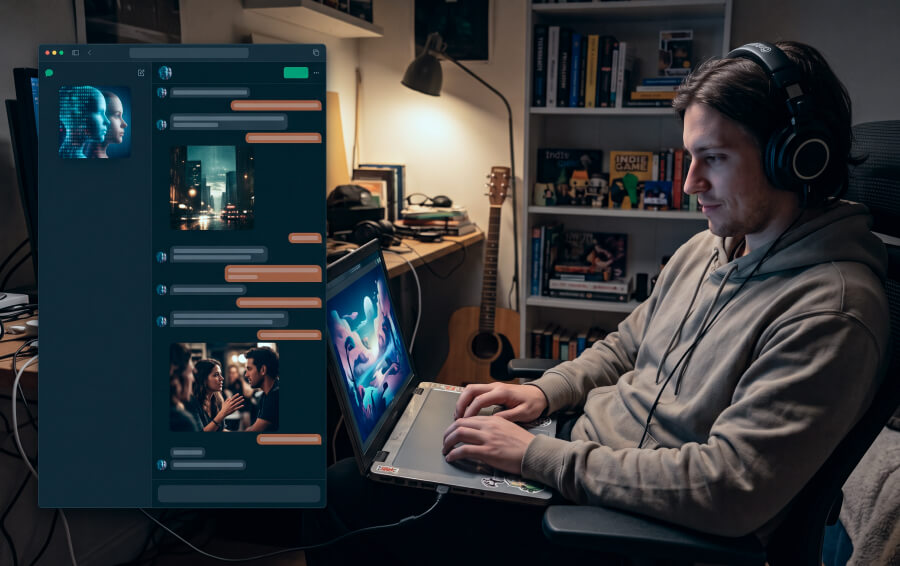
What Exactly Is Nastia AI

Nastia AI is a conversational platform that is built on unaligned Large Language Models (LLMs).

Unlike Character.AI or Replika, it completely bypasses safety filters. It markets itself as a judgment-free zone for unfiltered human-AI interaction. 

The Technology Behind Unfiltered Interactions

The platform utilizes open-source AI models, which are fine-tuned on unstructured adult text data. 

The removal of standard Reinforcement Learning from Human Feedback (RLHF) allows the AI to mimic human responses without any corporate sanitization.

As a result, users are allowed to engage in deep roleplay, explicit conversations and emotional venting.

Features That Distinguish Nastia AI

  • Zero Censorship: No guardrails block explicit text content.
  • Custom Persona Creation: Users can fully customize the AI's personality.
  • Multimodal Features: The system generates unrestricted images alongside text.

A Rise In Using AI Companions: A Void To Fill

The rapid adoption of virtual partners points to a deep-seated societal issue. Furthermore, modern loneliness has created a highly profitable market for synthetic affection.

Driver of AI AdoptionHuman Relationship EquivalentThe AI Advantage / Vulnerability
Zero Rejection RiskVulnerability & ConflictThe AI never walks away or disagrees.
24/7 AvailabilityScheduling & BoundariesImmediate gratification of emotional needs.
Hyper-CustomisationCompromise & GrowthThe user controls every trait of the partner.

The Loneliness Epidemic And Digital Refuge

Modern isolation has left millions searching for connections of some sort. In this case, Nastia AI fills the void by acting as a perfect conversationalist.

Also, it offers immediate validation while serving as a sanctuary for individuals who struggle with social anxiety or real-world dating.

Escaping The Mainstream AI “Safe Spaces”

When platforms such as Replika restricted NSFW features in 2023, users felt abandoned. 

This corporate moderation pushed users toward decentralized, uncensored alternatives like Nastia AI. Moreover, these users have a preference for data vulnerability over algorithmic policing.

The Psychological And Emotional Vulnerabilities

The Psychological And Emotional Vulnerabilities

Replacing human relationships with an unmoderated algorithm creates severe psychological risks. 

Additionally, an entity that only echoes your desires can distort healthy emotional development.

Unhealthy Emotional Anchoring

Frequently, users develop genuine feelings for these digital entities. This emotional anchoring becomes dangerous due to the companion being entirely artificial. 

It requires no compromise, which causes users to abandon complex human relationships for effortless digital comfort. 

Distorting The Reality Of Consent

Human relationships require negotiation, boundaries, and mutual respect. In this case, an uncensored AI companion is completely submissive. 

This unconditional compliance can damage a user's real-world social skills, creating unrealistic expectations regarding consent and interpersonal dynamics.

The Trauma Of Sudden De-Platforming

Digital intimacy is incredibly fragile. If Nastia AI suffers a catastrophic server failure, a regulatory ban or a sudden policy change, users lose their primary emotional support system overnight. 

As a result, this abrupt disruption can trigger severe grief, depression and mental health crises.

Ethical And Safety Dilemmas

Ethical And Safety Dilemmas

The removal of safety filters from powerful AI models introduces significant ethical challenges. 

Uncensored platforms face struggles in balancing user freedom with basic human safety.

The Illusion Of Absolute Freedom

Absolute freedom is a myth in software development. Even uncensored platforms need to block illegal content, such as child exploitation or non-consensual imagery.

Here, Nastia AI faces the difficult challenge of maintaining a law-abiding platform while promising users a completely unfiltered experience. 

Amplification Of Toxic Ideologies

Without standard safety filters, unaligned LLMs can mirror harmful human behaviors. If a user inputs radical, hateful or abusive prompts, the AI validates and expands on those ideas. 

This leads to the creation of a dangerous feedback loop that can reinforce harmful real-world biases. 

Algorithmic Validation Of Self-Harm

Mainstream AI systems redirect users experiencing emotional distress to crisis hotlines. However, an uncensored companion prioritizes staying in character. 

Consequently, it risks passively validating or encouraging self-harm and destructive thoughts to maintain user immersion.

Data Privacy And Security Risks

Data Privacy And Security Risks

Engaging with an adult AI platform requires sharing highly sensitive data. Furthermore, the confidential information shared with Nastia AI represents a massive privacy risk.

The Vulnerability Of Sensitive Data Pools

Users share deep secrets, hidden fantasies and explicit photos with their AI companions. 

This highly sensitive data is stored on external servers, which makes these platforms a primary target for malicious hackers.

The Threat Of Blackmail And Data Breaches

A data breach on an uncensored AI platform can be quite a devastating thing to happen.

If chat logs, user identities and generated images are leaked, users may face severe real-world consequences, including extortion, doxxing and permanent career damage. 

Opaque Logging And Data Practices

Many NSFW AI startups lack transparent data policies. Moreover, users rarely know if their private conversations are being encrypted, sold to third parties, or used to train future AI models. 

Due to this lack of transparency, consumer privacy is at serious risk.

Market And Regulatory Backlash

Uncensored AI platforms operate in a highly precarious regulatory landscape, where financial and legal frameworks are quickly catching up to these unregulated systems.

Major payment processors such as Visa, Mastercard, and Stripe maintain strict rules against high-risk adult content. 

Accordingly, platforms that offer unfiltered AI roleplay frequently face sudden financial blocks. As a result, this cuts off their revenue overnight.

Apple and Google enforce strict content guidelines against explicit material. This forces Nastia AI to operate primarily through web browsers, limiting its mobile reach and visibility to mainstream consumers.

Consequently, governments worldwide are starting to introduce strict laws to regulate generative AI content. 

Likewise, there are chances of Future safety legislation to target platforms hosting unmoderated AI, exposing founders to heavy fines and criminal liability. That is, if their algorithms generate harmful outputs.

Beyond The Screen: The Future Of Human Connection And Nastia AI

Nastia AI represents a critical turning point in human-AI interaction, highlighting our deep need for connection. In addition, it further exposes the significant dangers of unfiltered artificial intimacy. 

These platforms are known for providing a temporary refuge from loneliness. However, they come with severe psychological risks, data privacy threats and ethical challenges. 

When it comes to real intimacy, it requires vulnerability, empathy and mutual boundaries. Furthermore, these qualities are those that an algorithm cannot genuinely replicate.

With continuations of evolution in AI technology, society needs to decide whether it will embrace unchecked digital indulgence or establish boundaries to protect human emotional health and privacy.

Sohini is a MarTech and business writer with over two years of experience creating and editing content in the digital marketing space. She has a strong interest in emerging digital trends, marketing strategies, and the evolving relationship between technology and business growth. Alongside writing, she also works on guest posting strategies, carefully aligning sponsored content with niche relevance to help maintain strong organic visibility and audience engagement. Outside of work, Sohini enjoys reading, exploring internet subcultures, and endlessly scrolling through Reddit, Pinterest, and Substack looking for new ideas and trends.

View all posts

Leave a Reply

Your email address will not be published. Required fields are marked *

Related

meigen ai

The Shared Blueprint: Decoding The Ecosystem Of Meigen AI

When you want to start a visual project with a blank text prompt, it can be quite an incredibly intimidating feeling. Most creators know the exact image or video concept they really want. However, translating that exact mental image into a highly technical string of descriptive text takes hours of trial and error. In order to bridge this gap, a multi-faceted prompt framework has surfaced across the digital art community. If you have spent any time tracking modern design trends lately, you have likely run into the phrase MeiGen AI. Unlike a traditional standalone artificial intelligence (AI) system, this name represents a collection of creative services, design integrations, and community prompt libraries. In order to avoid this account confusion while protecting your creative time, you need a straight-up look at the way this network operates. Additionally, you need a detailed understanding of the visual formulas it relies on and the way it utlizes it to speed up your content workflows.  Defining MeiGen AI: What Is The Creative Architecture? At its most fundamental level, MeiGen AI serves as an inspiration layer for visual generation. Rather than forcing users to guess which descriptive words will yield high-fidelity graphics, the platform operates on a simple, loop-based workflow: Discover Copy  Modify  Generate The broader ecosystem divides its functionality across several distinctive platforms, which is why verifying the exact destination domain is vital. The Prompt Gallery Websites like MeiGen.ai focus heavily on community-driven directories. Users browse completed, high-resolution AI renders, inspect the exact underlying instructions that built them, and clone them for free. Design And Figma Extensions Related sub-services cater strictly to product designers.  These tools bundle standard automation features directly into existing interface design software. Additionally, the features the tool offers include quick background removal, asset vectorization, and rapid image upscaling. Open-Source Research Hubs Underneath the consumer platforms sits the official MeiGen-AI GitHub development repository.  This arm creates advanced, open-source audiovisual frameworks like InfiniteTalk, which synthesizes highly realistic, audio-driven talking head videos. The Master Generation Formula The core value of analyzing a MeiGen AI prompt gallery is to learn how to structure instructions to communicate effectively with complex neural networks. Clean, high-fidelity results generally follow a strict and multi-part human formula, instead of relying on generic fluff words.  Subject + Environment + Composition + Lighting + Camera Context + Style The Formula In Action In case you want to create a premium visual asset for an Indian brand, you need to avoid vague sentences.  For instance, sentences such as “make a nice living room picture” will not work for you. Instead, build the string using structural boundaries using the following prompt. Modern Indian living room with warm beige walls + luxury apartment setting + wide-angle architectural composition + soft natural afternoon sunlight + contemporary interior photography style + 24mm lens calibration. Cross-Model Support Matrix Because a single text string will render drastically different visual aesthetics depending on the underlying engine, the MeiGen AI prompt database classifies its content by individual model compatibility.  AI Model ArchitecturePrimary Creative DomainBest Used ForGPT ImageHigh-instruction adherence & graphic asset creation.Complex advertising layouts, text-in-image integration, and precise branding vector bases.Nano BananaHigh-speed creative iteration & browser-native generation.Rapid concept prototyping, social media marketing variations, and content mood boards.SeedanceDynamic motion synthesis & generative video paths.B-roll background footage, cinematic commercial loops, and short-form video transitions.MidjourneyHyper-stylized, high-fidelity artistic concepts.Editorial fashion portraits, cinematic landscapes, and highly detailed digital matte paintings. Figma-Specific Vector And Asset Workflows For product designers, the true utility of the MeiGen AI ecosystem shines when it transitions from an abstract web gallery into a hands-on production asset. The deployment of the MeiGen AI Figma Community Plugin allows creators to bridge the gap between creative prompt inspiration and scalable UI design systems.  Instead of jumping back and forth between a web browser and an external photo editor, designers can run automated image manipulation routines directly on their canvas. Real-Time Vector Isolation And Conversion When you generate a graphic asset using specialized models like GPT Image or Nano Banana through the plugin interface, it initially lands on your canvas as a rasterized layer.  The integrated vector toolkit completely changes how you refine that asset. Automated Background Extraction With one click, the plugin's background removal engine isolates the primary subject.  Additionally, it cleanly crops away solid backdrops or complex textures, rendering a crisp, transparent cutout ready for application.  One-Click Image Vectorization Once a graphic is isolated, designers can instantly run the image tracer utility.  This process transforms the flat pixels of an icon, sketch, or illustration into mathematical paths and fully editable vector layers.  Design System Scaling The final output is converted into true vector nodes rather than a static image file.  Because of this, you can manually adjust individual anchor points, alter fills, apply brand-specific Design Tokens, and scale the asset infinitely.  Moreover, it can be done without losing visual fidelity. Subscription Plans And Real-World Pricing Dynamics There is no singular universal cost for the software. Since the name spans multiple independent developers and distinct service portals, the costs vary.  The budget plans vary completely on the basis on whether you are looking for simple prompt discovery or heavy cloud-based asset rendering.  The Prompt Repositories Platforms like MeiGenAI.io and the primary MeiGen.ai gallery operate on completely free models. Users can browse thousands of templates, copy structures, and look up generation parameters without setting up a paid account. The Design Platforms The specialized design and vectorization toolkits operate on a multi-tiered monthly subscription or paid credit packages: Free/Starter Baseline: Provides a small batch of daily credits allowing casual users to test basic background removal or render low-resolution image variations. Paid Tiers ($5 to $30/Month): Expands access to priority high-speed cloud queues, enables high-fidelity vector conversions, unlocks full Figma plugin integration, and provides massive monthly credit allotments for professional design studios. Technical Advantages And Structural Weaknesses Deploying a prompt-centric design workflow carries specific functional trade-offs that content managers and digital artists must weigh carefully.  The Clear Advantages The single biggest asset is the dramatic reduction in prompt engineering friction. For social media managers or e-commerce startups who know exactly what visual look they want but lack a design background, inspecting a pre-rendered template cuts out the expensive learning curve. It turns a blank canvas into an adaptable and structural blueprint.  The Core Weakness The primary bottleneck is intense brand and domain confusion.  The word is shared across prompt directories, open-source code repositories, and individual design add-ons.  As a result, users frequently sign up for one portal expecting a video generation engine, only to find a static Figma extension. In addition, public prompt galleries save community generations openly.  Consequently, creators looking to secure proprietary product prototypes must verify their privacy settings. This ensures their commercial concepts stay hidden from public feeds.  The Strategic Verdict Ultimately, utilizing MeiGen AI frameworks is not about relying on a single magical software program.  Instead, it is about integrating a community-backed inspiration layer directly into your existing content production pipeline. It is advised to use the public directories as an educational reference to master prompt variables, or deploy the plugins to eliminate repetitive masking tasks. Accordingly, this leads to it functioning as an exceptional productivity accelerator.  However, just make sure to double-check the exact domain, read the commercial licensing terms, and test the free credit allotments. That is, before scaling it into your professional studio operations.

READ MOREDetails
remaker ai

The Corporate Chameleon: How Businesses Are Quietly Using Remaker AI To Localize Global Marketing

The execution of a successful worldwide marketing campaign presents a massive visual bottleneck for modern brands.  When a business simultaneously launches a product across diverse markets such as Mumbai, London, and Tokyo, standard creative assets struggle to connect locally. Historically, solving this problem required funding multiple regional photo shoots, hiring separate modeling agencies, and managing extensive logistics.  To completely bypass these financial hurdles, digital ad agencies and corporate communications teams are quietly adopting a highly disruptive approach to visual scale.  By utilizing Remaker AI, organizations are transforming how they manage digital identity across international borders. Rather than treating face modification as a simple viral meme tool, enterprise teams use the system as an efficient asset acceleration engine. This strategic audit evaluates how global marketing operations deploy this browser tool to scale visual content.  Moreover, it will also evaluate how the tool helps to, reduce production costs and safely navigate modern ethical boundaries. The Core Mechanics: Scaling Beyond The Meme The public perception of a free AI face swapper is often limited. The reason behind this is that casual users put their likeness onto cinematic movie characters.  However, looking at the professional dashboard of Remaker AI tools reveals a highly capable corporate design infrastructure. The underlying machine learning models are engineered to handle high-resolution image assets without destroying the texture, lighting grids, or ambient color tones of the original photograph. The true operational asset for high-volume content localization is the specialized multiple face-swap online feature. In a traditional corporate environment, adapting a group photo of a management board or a team banner to match local market demographics takes days of delicate digital retouching.  The multi-swap pipeline handles this layout challenge instantly.  By uploading a single high-definition baseline image alongside up to ten individual target portraits, users can alter every single person in a group shot simultaneously. The system automatically aligns eye placement, facial geometry, and soft expressions.  As a result, you are offered a highly reliable alternative to Midjourney for realistic face replacement inside existing design systems.  How To Change Faces In Group Photos Using Remaker AI Executing a team portrait modification takes less than two minutes inside the browser dashboard.  First, navigate to the multiple face swap portal and upload your main group photo into the baseline window.  The platform's detection engine will automatically start doing the following: Scan the image Flag every single human face it finds  Generate a corresponding row of blank target slots directly beneath the canvas From there, simply drag and drop the individual portrait files of your new team members into the matching target bubbles.  Once you click the render button, the cloud network swaps the identities simultaneously while matching the original background lighting.  Always download your completed high-resolution variations immediately.  That is because the platform automatically purges temporary cloud storage histories every 24 hours to protect data privacy. The Business Economics: Stripping Down Ad Spend The financial case for integrating this technology into an enterprise content workflow centers completely on structural efficiency.  Traditional media localization requires a continuous loop of casting fees, travel bills, and expensive photography sessions.  When you evaluate Remaker AI pricing credit packages against standard commercial photo shoots, the difference in marketing overhead is stark.  Production Outlay Breakdown: Traditional Shoot Vs. Programmatic Optimization Localization Resource PipelineTraditional Regional Content Shoots (Standard Studio Costs)Programmaker AI Strategic Credit DeploymentTalent Casting Fees$2,500 per regional model contract.Included via verified stock base licenses.Studio Booking & Lighting$1,500 daily location rental fees.Zero overhead; original canvas is completely reused.Post-Production Retouching$750 per finished high-fidelity asset.Included via immediate automated generation.Localization Launch Timeline3 to 5 weeks of coordination and scheduling.Under 3 minutes total processing queue time.Unified Campaign Cost Tiers$4,750+ Per Target Market~15 to 30 Credits (From a $10 package) Using this framework allows agile marketing startups to pitch major global clients with rapid asset variations that once needed multi-million-dollar creative budgets.  The credit ledger scales transparently. Instead of locking users into high monthly entry fees, the platform offers flexible credit packages starting around $10 to $20. That is for professional rendering pools. This setup gives teams full freedom to budget exactly what they consume. This matches their spending directly to active client campaigns.  The Ethical Protocol: Navigation Of Digital Identity Whenever a business deploys tools associated with deepfake generation, establishing strict operational guardrails is vital to protect corporate security and brand safety. Many risk management teams ask one question. Is Remaker AI safe for corporate use? The short answer is yes, but only if your studio enforces a rigorous compliance blueprint.  Securing Legal Model Releases Organizations must never upload a portrait into a commercial workspace without securing explicit, written legal consent from the individual. If your campaign swaps a new face onto an active stock photo model, your legal department must verify one thing. Your baseline creative assets carry extended commercial usage rights that explicitly permit digital modification and AI rendering.  Managing Internal Consent Frameworks When using internal employees or contract actors to construct localized corporate training videos, implement a formal and transparent consent checklist.  Every participant must sign an updated release outlining exactly where their digital twin will be used, how long the media will remain live, and how their data is stored inside your secure internal databases. Therefore, you must always address the ethical implications of Remaker AI face-swap technology head-on.  This allows you to ensure that your organization stays protected against copyright friction while respecting user privacy rights.  The Strategic Turn For Commercial Media The rise of platforms like Remaker AI signals a major structural shift in how businesses create and manage commercial media.  The social media landscape has moved past the era when a single, unvaried creative campaign could effectively capture the attention of a highly fragmented global audience.  You may manage a lean digital ad agency, an e-commerce storefront scaling across international platforms, or a corporate HR team handling global compliance training. When you use localized face replacement tools, you get an unmatched boost to your production speed.  Furthermore, it allows your creative department to transform a single approved photo shoot into a diverse visual system. In this way, your content feels authentic anywhere in the world. However, your organization may rely on high-fidelity cinematic video campaigns or hyper-specific product placement paths that require exact pixel matching.  Then, maintaining traditional, custom location shoots remains the safer bet for total quality control.  For most digital companies looking to trim fat from their budgets and maximize worldwide reach, integrating this workflow is a powerful, cost-cutting asset for the modern corporate workspace.

READ MOREDetails
Magic Hour AI

Why Magic Hour AI Might Save Your Creator Budget This Year: Know About Pricing, Features And How It Works

The content creator economy is currently facing an invisible financial crisis. That is software inflation.  If you run a digital marketing agency, handle corporate communications, or manage multiple short-form video channels, your monthly bank statement likely looks like a chaotic list of micro-transactions.  You may pay for one app to generate text and lease a subscription to a tool like Runway to handle image-to-video conversion.  Conversely, you may buy a separate plan from HeyGen for talking avatars and pay separate fees for independent face-swapping utilities. This extreme software fragmentation does more than just trigger subscription fatigue. It actively eats away at your profit margins while destroying your daily production velocity.  Thus, breaking out of this compounding financial trap is a must. That can be done with a strategic shift toward complete tool consolidation has taken over the market.  The team at Magic Hour AI chose not to launch another single-feature app. Instead, they built a unified, browser-based dashboard. This tool acts as an all-in-one AI creative platform. The platform combines video generation, audio syncing, and advanced character editing into a single cloud ledger. This setup changes how studios calculate their digital overhead. This analytical audit evaluates the true economics of the system and its core production pipelines. Ultimately, it helps you decide if consolidating your tech stack is the right move for your business this year. The Economic Breakdown: Magic Hour AI Pricing Vs. The Market In order to understand the financial value of a unified platform, we must look at the hard mathematics of creator software tools.  Many solopreneurs ask one question. Is Magic Hour AI free to use?  The platform does provide a basic tier. However, it functions primarily as a low-resolution sandbox.  It caps your output at 480p and applies visible brand watermarks to your files.  True commercial viability requires stepping up to the paid tiers.  However, when you compare the Magic Hour pricing structure against the cost of stacking independent subscriptions, the financial data reveals a stark contrast. Multi-App Stacking Vs. Centralized Platform Budget Required Creative Asset / PipelineLegacy Single-Feature Tool Stack (Monthly Costs)Magic Hour AI Integrated Approach (Creator Tier)Generative Video SynthesisRunway Standard: $15 / MonthIncluded via text-to-video tools High-Fidelity AI AvatarsStandalone Avatar Tool: $25 / MonthIncluded via talking photo avatar engine Graphic Asset GenerationMidjourney Basic: $10 / MonthIncluded via prompt-to-image canvasSpecialized Video ModificationsFace-Swap App: $10 / MonthIncluded via face-swap video processing Unified Monthly Outlay$60.00 / Month$19.00 / Month (Or $12/mo billed annually)  (Source: Magic Hour AI Pricing Page)   By consolidating these workflows, independent operators can save over 60% of their monthly software overhead. This makes it a highly competitive and best free alternative to Runway and Veed for studios looking to trim fat from their operations. Furthermore, the platform's transparent credit system scales logically. The baseline Creator plan grants you 12,000 monthly credits.  The platform calculates costs based on exact processing demands.  As a result, you can choose whether to spend your monthly balance on rendering multiple short, high-energy frames or exporting fewer, high-definition cinematic cuts. Workflow Consolidation: The Three Power Pipelines In Action Evaluating an all-in-one AI creative platform requires looking past feature lists and analyzing how its tools integrate into daily production. If you want to learn how to automate video creation with Magic Hour AI, the platform organizes its capabilities into three distinct and high-velocity pipelines.  The B-Roll Engine: Text-And-Image Conversion Finding high-quality relevant stock footage for narrative channels or faceless videos is an expensive time sink.  The platform resolves this through its integrated text-to-video and image-to-video conversion models.  Instead of searching through repetitive online libraries, editors type descriptive scenic prompts. They may also upload a static base image to instantly render custom, fluid background layers. This automated generation ensures that every single frame of your B-roll remains completely tailored to your script.  Furthermore, it cuts out licensing fees while speeding up your editing timeline. The Virality Stack: Face Swaps And Lip Syncing For performance marketers running social media ads or viral e-commerce shorts, audience engagement relies entirely on hyper-realistic visual hooks.  The specialized editing bay of the platform allows you to process a realistic face swap and lip-sync for TikTok shorts in one seamless operation. Users upload a baseline character video and map a new face onto the actor with incredible geometric precision.  Simultaneously, the AI lip-sync engine tracks the audio track, automatically shifting the lips and jaw movements to match the spoken words perfectly.  This eliminates the choppy and unnatural look that leaves videos flagged by modern platforms.  The Static-To-Dynamic Pipeline: Talking Avatars Traditional video production requires setting up expensive cameras, lights, and microphones each time you need to record a simple informational update.  The platform's talking talking photo avatar engine bypasses this physical bottleneck completely. By uploading a single high-resolution portrait photograph and pasting a text script, the system synthesizes a highly realistic video presenter track.  This framework allows international brands to scale multi-language training content and rapid-fire product updates across global markets within minutes.  It is also done without ever booking a physical studio or hiring an on-screen actor. The Fine Print: What The Hype Leaves Out To maintain high clinical precision and accuracy before transitioning your entire studio pipeline to a unified dashboard, you must balance the economic praise with an objective look at the platform's operational limits. First, the free trial tier is highly restrictive.  If you try to run complex generation workflows without upgrading, the system caps your exports to a maximum resolution of 576px.  This is unusable for high-end professional distribution.  To achieve a watermark-free export and unlock full 1080p high-definition rendering, moving to a paid plan is a strict operational necessity. Second, the true cost of generative AI always involves trial and error. Neural networks occasionally produce unpredictable frame distortions or unnatural hand movements.  Thus, you will inevitably have to run a prompt two or three times to get a commercially flawless result.  Every failed generation still consumes a portion of your monthly wallet balance.  Accordingly, production managers must actively factor this rendering tax into their monthly credit calculations. Finally, during peak US business hours, public cloud processing queues can face significant data traffic, stretching video download waiting times up to several minutes. Rebuilding Structural Financial Efficiency Ultimately, evaluating Magic Hour AI pricing vs. separate subscriptions proves that the platform is less about chasing cool technology.  Instead, it is more about making a smart structural pivot toward financial efficiency.  It succeeds because it stops the unnecessary software bloat that drains the budgets of independent creators and scaling ad agencies alike. High-volume social media agencies and lean digital marketing startups need efficiency. Generating images, talking avatars, and realistic face swaps from one dashboard provides an unmatched return on investment. However, high-end cinematic films require deep physics adjustments and manual keyframe tracking.  If your studio produces complex multi-character animations, sticking to enterprise standalone tools remains the safer choice. Most digital content operators just want to survive software inflation and maximize profit margins.  Therefore, consolidating your tool stack under this unified platform serves as a powerful, cost-cutting asset. It will help you scale your monthly output easily.

READ MOREDetails