Published on: 02 February 2023
Last Updated on: 26 July 2024
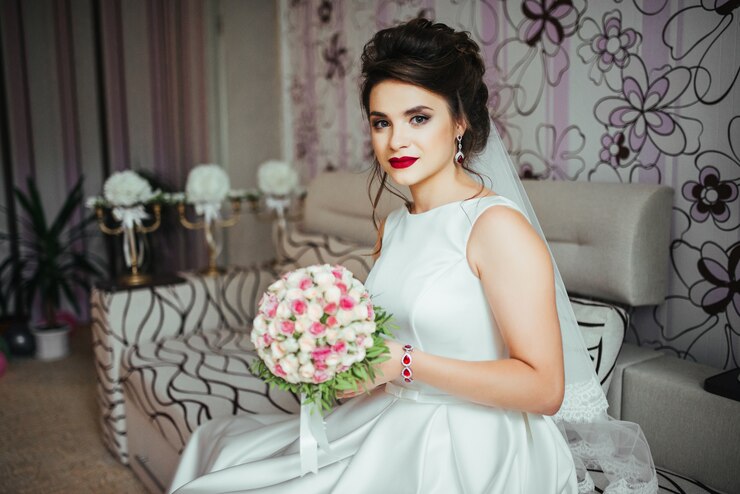
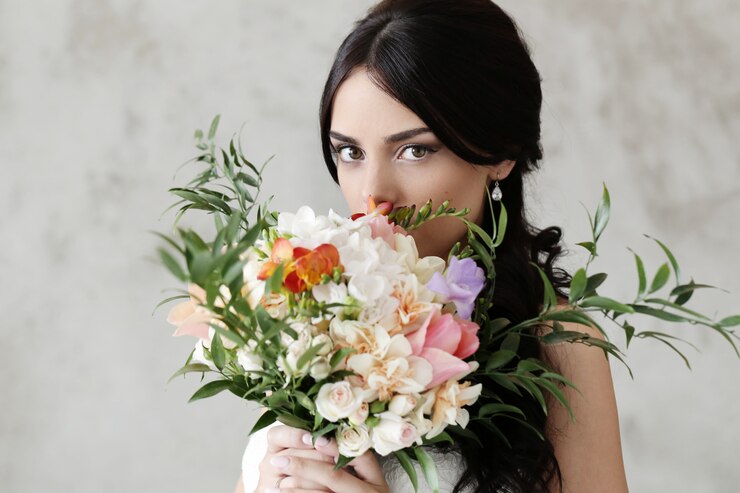
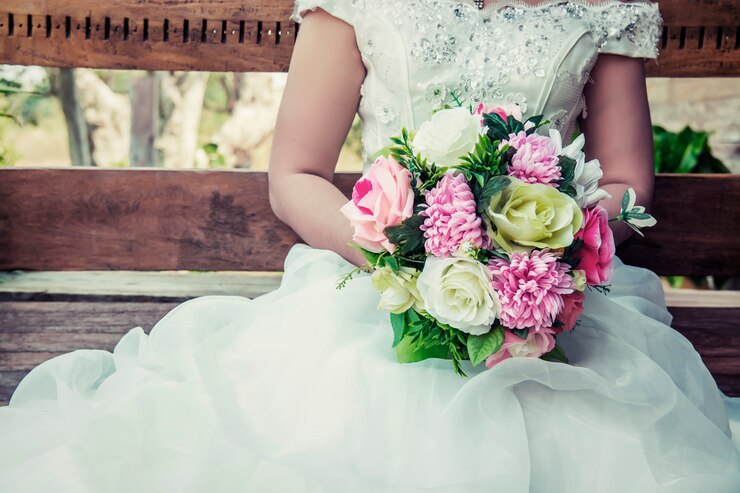
The bride’s bouquet must have the best design that enlivenes the overall theme of the wedding. It ties together the design, decor, and style of the outfits.
The variety of flowers and the design of the bouquet can be very different. They are just as there is no single wedding style.
So, we asked the florists of FiftyFlowers store, which sells bridal bouquets online, to tell us about wedding bouquets. What wedding styles are best to combine them with, and what flowers to choose for the composition.
Bridal Bouquet Styles
Wedding bouquets can take a variety of forms: some brides prefer not to overload their hands with a huge bouquet. Again some care about shape and color, and others want to look original and memorable.
Florists distinguish the following styles of bridal bouquet design:
Posy bouquet. This bouquet is one of the most common and classic. For its arrangement, round-shaped flowers with the use of stems of the same length. Tightly tied together and practically without additional foliage or filler flowers, the posy bouquet looks understated yet romantic and glamorous.
Round bouquet is another classic style of bridal bouquet. It consists of flowers with stiff stems. Notable examples include roses or ranunculus, which the florist gathers tightly in a dome shape.
Cascading bouquet, formed from orchids and vines or foliage tendrils, looks very elegant and spectacular. In this bouquet, the main flowers in the centre are surrounded by a waterfall of climbing flowers. They flow smoothly to the floor.
Pageant bouquet. Long-stemmed flowers, such as calla lilies or delphiniums, create this bouquet. Since the bouquet is thin and long, the bride keeps it in the crook of one arm. The second one remains free. A pageant bouquet is great for a vintage-inspired wedding. And if it uses a lot of greenery, then it has a boho style.
Nosegay bouquet suits brides who do not want to overload their delicate look with large floral ensembles. It consists of only a few stems of flowers of the same species. They serve as just a simple accent without drawing attention to itself.
The asymmetric bouquet is quite unusual. It can be a composition of flowers of different lengths or with an accent on one side. Such bouquets usually use flowers of several shapes, types, and colors, which are accompanied by foliage or greenery.
For outdoor ceremonies, a crescent-shaped bouquet is ideal. The curve is achieved with falling foliage or cascading flowers on both sides and complements the bride's romantic, natural look.
Often, roses, peonies, or tulips are used for wedding bouquets, but there are no restrictions on the color or type of flowers. It all depends on what tone you want to set along with the bride, the color scheme of the wedding, and the time of year. The bouquet should look proportionate in the hands of the bride, without overshadowing her or looking too petite.
If you decide to assemble a bouquet yourself, try not to make it clumsy. Try to match the flowers in it. To do this, you can use the bridal bouquet online ordering function on the FiftyFlowers website, where you can conveniently sort flowers by color.
Some flowers look very beautiful in the bride's bouquet, but because of the strong scent, it is better not to use them. Even if you love lilies, lilacs, or jasmine, imagine that you and your guests will have to inhale their aroma throughout the day. This can cause headaches or allergies.
If you are not afraid to deviate from tradition, you can pick up one large flower, a floral wreath, or hook a boutonniere on your hand.
Arnab is a professional blogger, having an enormous interest in writing blogs and other jones of calligraphies. In terms of his professional commitments, He carries out sharing sentient blogs.
Valentine's week is here. Starting from rose day to the 14th of February, lovers and pursuers of love remain the busiest bees.
However, we know that celebrating this week is not the only worry people in love might face during this time. The most horrendous task that occupies every inch of your mind is the pressure to be unique with gifts.
You want to be perfect. You want your gifts to amaze your partner and make deep connections with them at the same time.
From diaries with poetries to a scrapbook filled with memories, you’ve probably gone through everything by now.
But here we shall talk about the flower part. Let's begin!
Significance Of Gifting Flowers On Valentine’s Day
Flowers are an important part of valentine’s day. You might even imagine the second week of February has a smell. The smell of fresh roses.
Exchanging roses is not limited to a rose day or Valentine’s day alone. Anything you gift your partner during this whole week, adding one or a bunch of roses (s) along with that just adds a special romantic touch.
Rose, the symbol of love, conveys the idea of love in the best way.
Its delicate petals, sensual fragrance, and contradicting thorns embody love perfectly. Therefore, you cannot eliminate this amazing touch from your valentine’s day gift.
For a pleasant surprise, you can get help from a flower delivery Montreal to deliver some beautiful roses to your lover’s doorstep.
Making The Rose A More Personal Affair
Now that we know why a rose represents love, it might just seem too cliched to simply gift your partner the definition of your emotions through a flower.
However, adding a personal touch and making the flower more suitable for your love alone might seem like an idea.
So here we present the idea of ditching the sensuous red rose and presenting your love with a rose that matches their personality better.
And when it comes to personalities, what guide can help you better than the zodiac signs?
Here are the different combinations of colors and zodiacs that can help you pick the perfect rose for your lover this valentine’s week—
1. Aries
Aries people are driven, passionate, and self-assured leaders who foster a sense of community through their upbeat demeanor and unwavering resolve.
If your partner is an Aries, send them red flowers to show them how much you care. Red roses are symbolic of power, strength, and passion. The warmth of red roses may say more than words, and the hue of love will be deeper.
2. Taurus
Hard-headed, practical, persistent, dependable, loyal, and sensual are some characteristics of the Taurus sign. Giving your zodiac sign partner a pink rose can let them feel the aroma of your love even more.
A pink rose's beauty represents adoration, thanks, and appreciation. Giving her a dress or a piece of cosmetics in addition to roses is a kind act of love.
3. Gemini
Geminis are the social butterfly sign of the zodiac and place a high value on knowledge and creativity. Give them a bunch of white flowers and a book of love tales to let them know how much you value their interests.
Furthermore, Gemini individuals are drawn to knowledge and creativity, so don't be shy about showcasing your wit or sharing a poignant work of art.
4. Cancer
Cancers can be deeply devoted and nurturing individuals, and they also guard their loved ones. While reticent, they have a strong foundation and aren't hesitant to take action when they believe it is required. The pure affection and sincerity of the white rose are highly appealing to Cancerians.
They have a close, meaningful relationship with the people they care about, and they’d love to see the same affection from partners with sweet gestures like a straightforward bunch of white roses.
5. Leo
Self-assured and ambitious Leos are comfortable in the limelight, even if it’s in the form of some drama. They are ambitious, committed, fiercely protective of their loved ones, generous, opulent-loving, sunny, and big-hearted are just a few of the traits of the Sun in Leo.
Giving orange or blue flowers to Leo lovers on Valentine's Day would be quite successful. Orange roses stand for intense love, while blue roses are mysterious and signify accomplishing the impossible, both of which are ideal for a Leo.
6. Virgo
Virgos are renowned for being loyal, pragmatic, and realistic. Sky blue roses are the perfect present for someone born under the Virgo zodiac sign since they promote insight and clarity.
Give your beloved the red rose and the blue rose if they can be found. Virgos are analytical and quick-witted, and they can find a solution to any issue.
7. Libra
It is commonly known that Libras are pleasant, attractive, and balanced. They are effective at offering recommendations because they are fair and take into account all relevant factors. They are the ideal fit for them because they both enjoy pink flowers.
Libras can be both luxurious and giving, and they enjoy creating order and aesthetic beauty. They also desire balance. They are effective at offering recommendations because they are fair and take into account all relevant factors. They also value aesthetics. Thus, pink roses are the ideal gift for them.
8. Scorpio
the intensity and propensity for the harshness of the Scorpio personality make them frequently misinterpreted. However, Scorpios are intensely sentimental and yearn for closeness.
Their gears are always turning, but Scorpios may appear to be holding back. They have a mysterious exterior and a very perceptive inside. a Scorpio would do well to choose an intense black rose.
9. Sagittarius
Sagittarians are upbeat, lovers of liberty, funny, impartial, truthful, and smart. The ideal Valentine's Day gift for those born under this fire element sign is an orange or yellow rose.
Although they like romance, they do not want to brag. Give them yellow flowers if you want to declare your love to them for the first time. However, if you’re trying to really impress them and make a clear statement like the type they like, get them a bouquet with stunning purple roses!
10. Capricorn
Overachievers, tenacious, realistic, and sensitive, Capricorns are. Red roses are a traditional way to show your love to Capricorn natives because Saturn is the sign's ruler.
You may consider your Valentine’s Day a success if you see the happiness in their expressions when you offer them blue flowers, antique artifacts, or memories connected to them together with roses.
11. Aquarius
Aquarius
Progressive, autonomous, bright, original, and idealistic describe Aquarians. Purple roses are unique flowers that are hard to find and distinct from other roses. Astrologically speaking, the purple rose is highly popular among Aquarius individuals since it is seen as a representation of love at first sight.
In addition, those born under these signs appreciate white flowers. Purple roses are not just a favorite among Aquarians, but many also regard them as a symbol of calm, innocence, and purity.
12. Pisces
People with Pisces signs are renowned for their intuitiveness, graciousness, emotional awareness, and empathy toward most people they come across. They are also innovative and creative, frequently expressing their emotions via writing, music, and art.
A touch of turquoise or pale green complements the dreamy atmosphere of this water sign.
Arrange Your Bouquet
With this guide in your mind, start collecting the flowers. Some of the colors mentioned here are rare and you may have to really look through stores, online and offline, to get them.
However, if you want your Valentine’s day to be perfect, this can be the right amount of effort you put in to show how much you love them!
Read Also:
Top 3 Gift Ideas For Men – Cool Gifts That Will Impress Any Guy
How To Find A Perfect Birthday Gift For Someone Special?
A Fashion Gift Guide for Special Occasions
A complete set of teeth is essential for one to look more attractive and confident. It isn't easy to smile, speak, and eat in public when you have missing teeth. One of the easiest and affordable ways to bring back those smiles is through dentures.
Read on to find out more about dentures, how they can help you, and how to take care of them:
What Are Dentures?
Dentures are dental appliances customized to replace missing teeth. It can also help to restore the oral functions of a person. Dentures can be complete or partial. So, you would need a full denture if you lost most of your teeth. Meanwhile, you will need partial dentures if only a few teeth require replacement.
How Do Dentures Work?
A complete denture is a flesh-colored acrylic that usually fits over the gums. The base of the upper denture covers the roof of the mouth or the palate. When it comes to lower dentures, it has a shape like a horseshoe to accommodate the tongue.
Dentures are tailor-made in a dental laboratory. The dentist will get impressions first of your mouth. Then, they will determine the kind of denture applicable to you. Perfectly created dentures will look like natural gums and teeth.
Price Of Dentures
The cost of dentures varies depending on the type of materials and the process. The average price is approximately $1.800 for a complete set of dentures. But, it can still vary according to the dentist, the maker, and of course, its price in the market.
Additional factors for dental cost are the following:
Teeth extraction, if needed.
Immediate dentures until the permanent dentures are ready.
Follow-up checkups for adjustments.
How Long Before You Will Get Used To Dentures?
Wearing dentures for the first time can be uncomfortable and awkward. It may take weeks or even months before you can get used to it. Speaking and eating with dentures can be challenging, so you need to practice. You may feel a bit bulky or loose since there’s an apparatus inside your mouth.
Excessive saliva is also one of the discomforts as your tongue is still getting used to it. But, if you notice some soreness, irritation, or other issues, it is best to consult your dentist as soon as possible.
How Long Do Dentures Last?
Over time, dentures need to be relined, rebased, or remade due to wear and tear. As you age, your mouth will naturally change. As a result, your denture may come loose, or you may have some chewing or gum irritating issues.
You’ll need to clean your dentures regularly. This is to prevent food particles from sticking and to prevent the growth of bacteria.
As a rule of thumb, it is essential to visit your dentist every six months or annually if you have dentures.
How To Take Care For Your Dentures?
Dentures materials and your taking care routine two are going to determine how long your dentures are going to last. But every denture is delicate and not unbreakable. It can break while you are dropping it from your hand. So during the cleaning process, you always have to take precautions and keep your dentures wrapped in a towel.
Dentures are delicate and could break if dropped. When handing it, you should put it in a basin of water or a folded towel.
It is best to brush your dentures every day to remove plaque and food particles. This is also the right way to keep them clean and unstained.
If you will remove your dentures, be sure to put them in a soaking solution for dentures or in plain water. Do not let your dentures dry out. Putting them in warm water can cause them to warp.
If your denture cracks, chips, or breaks, do not attempt to fix it on your own. It is always best to see your dentist right away when this happens.
Conclusion
Dentures are the best option if you are looking for an affordable solution to bring back your confidence. Proper care is crucial if you want your dentures to last for several years. Regular visits to your dentist are also a must.
Read Also:
Essential Things to Consider Before Getting Dental Implants
What do you need to know about Dental Implant Surgery?
Dr. Maria Luong Discusses Ways to Avoid Dental Problems by Keeping Dental Plaque and Tartar Away
As teenagers navigate the complex world of friendships, they often encounter various challenges that can impact their emotional well-being and social development. As a parent or guardian, you play a crucial role in guiding your teenager through this stage of their life. By offering support, understanding, and valuable advice, you can help your teen build and maintain healthy friendships. In this article, we will explore some valuable tips to assist your teenager in navigating their friendships with confidence and resilience.
Encourage Open Communication
Establishing open lines of communication is essential when it comes to supporting your teenager's friendships. Encourage them to express their thoughts and feelings about their social interactions. Be a patient and attentive listener, and avoid being judgmental or dismissive. By creating a safe space for your teen to share their experiences, you enable them to develop a deeper understanding of their friendships and gain valuable insights into their own emotions.
Foster Empathy And Understanding
Teens often struggle with understanding and empathizing with others. Encourage your teenager to put themselves in their friends' shoes and consider different perspectives. Help them recognize that everyone has their own struggles and insecurities. Teach them the importance of active listening and validating their friends' feelings. By fostering empathy, your teen will build stronger and more meaningful connections.
Teach Conflict Resolution Skills
Friendship conflicts are inevitable, and it's essential to equip your teenager with the necessary skills to navigate them effectively. Teach them the importance of addressing conflicts directly, respectfully, and without aggression. Encourage them to express their feelings assertively and actively listen to their friends' perspectives. By teaching your teen how to find common ground and seek solutions, you empower them to maintain healthier and more resilient friendships.
Promote Self-Confidence And Self-Worth
Teenagers often face insecurities and peer pressure, which can negatively impact their friendships. Help your teenager develop a strong sense of self-confidence and self-worth. Encourage them to engage in activities they enjoy and excel in. Celebrate their strengths and achievements, and remind them that they are valued for who they are. A confident teen is more likely to attract positive and supportive friendships.
Teach Them To Navigate Their Friendships Online
In today's digital age, friendships extend beyond face-to-face interactions and often occur online or through social media platforms. It is crucial to help your teenager understand the unique dynamics and challenges of navigating friendships in the virtual world. Social media comes with comparison, curated highlights, and peer pressure to participate in risky online activities.
Online interactions can sometimes lack the nuances of face-to-face communication, leading to misunderstandings and conflicts. Encourage your teen to practice empathy and kindness in their online interactions. Remind them to think before they post or comment, and to consider how their words may impact others. Encouraging positivity and support online will help them cultivate healthier and more meaningful friendships.
Discuss Healthy Boundaries
Friendships require boundaries to thrive, and it's crucial for your teenager to understand this concept. Talk to them about setting limits, respecting personal space, and recognizing when a friendship becomes toxic or unhealthy. Encourage them to prioritize their well-being and understand that it's okay to distance themselves from negative influences. By promoting healthy boundaries, you empower your teenager to maintain healthier and more balanced relationships.
Encourage Diverse Friendships
Encourage your teenager to embrace diversity and build friendships with individuals from various backgrounds, cultures, and interests. Help them understand the value of expanding their social circle and learning from different perspectives. Encouraging diversity in friendships can broaden your teen's horizons, enhance their social skills, and foster a more inclusive worldview.
Lead By Example
As a parent or guardian, you are your teenager's primary role model. Show them how to maintain healthy friendships by exemplifying positive relationship behaviors in your own life. Demonstrate good communication skills, empathy, and respect when interacting with your own friends and acquaintances. Your actions speak louder than words, and your teenager is likely to emulate the behaviors they observe from you.
Navigating friendships during adolescence can be challenging, but with your guidance and support, your teenager can develop the skills necessary for building meaningful and supportive connections. Encourage open communication, empathy, and conflict resolution skills. Foster your teen's self-confidence and help them establish healthy boundaries. Promote diversity in their friendships and lead by example. By implementing these tips, you can equip your teenager with the tools they need to navigate their friendships successfully and build lasting relationships that contribute to their overall well-being.
Additionals:
What is Neuroticism?
Panic Attacks: What You Can Do
Ways to Emotionally Deal with Chronic Illness