



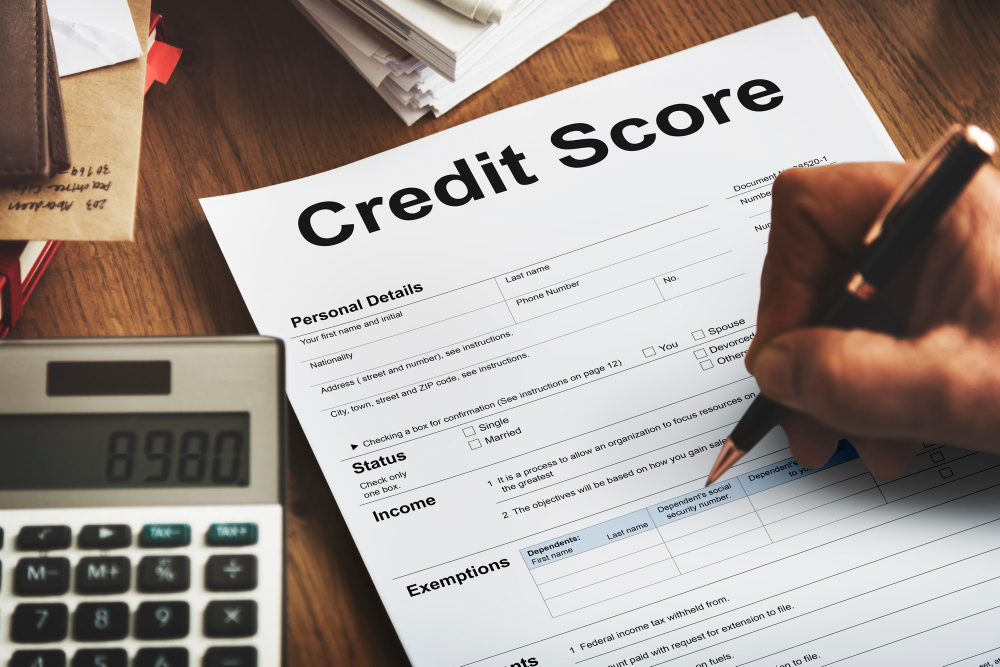
Ways To Improve Your Credit Score Before Applying For A Loan

by

18 March 2026

Blog

How to improve your credit score

The credit score plays the role of a crucial factor when you apply for a loan. Lenders generally consider your credit score to assess your ability to repay.

Hence, it is important to ensure that your credit score is correct. However, we often get penalized for mistakes we have not made.

When businesses and services that you have used in the past fail to maintain accurate credit reports, it can be a problem. This often affects your credit score in the most unfair way possible.

However, regulations such as the Fair Credit Reporting Act (FCRA) have been established to protect individuals' rights.

Thus, you should be aware of the violations and how you can proceed to restore your credit score. Preparing for a loan application involves more than gathering documents. 

A strong credit score can influence approval chances and interest rates, so taking time to strengthen your financial profile can be worthwhile.

In this article, we will try to find the answer to the question, “How to improve your credit score?”

How To Improve Your Credit Score? Step-By-Step Guide

While people keep asking “How to improve your credit score?”, here are a number of things that they should do to elevate the standards of their credit score. 

1. Review And Understand Your Credit Report

Check for all the outdated and incorrect information on the credit report. Find out the data reloaded to the incorrect account balance and the payments that were missed. 

Moreover, this wrong data can bring down the credit score of a person in an unfair way. 

Furthermore, you should communicate about the inaccuracies with the reporting agency to ensure your record is accurate.

2. Pay Bills Consistently And On Time

Payment history often has a major impact on the credit score. Moreover, the late or missed payments can cause significant drops. 

Hence, setting reminders or using automatic payments can help maintain a consistent record, showing lenders you manage obligations responsibly.

3. Reduce Credit Utilization

High credit card balances compared to limits signal increased risk. Always try to bring down your credit usage below 30% of the total credit that is available.

You should also try to improve the ratio while paying down balances. Furthermore, you can also request higher limits.  

However, you should maintain a low spending. This will gradually improve the credit score.

4. Avoid Opening Too Many Accounts

Several credit enquiries within a short period can easily reduce your credit score. This happens when several of them occur within a very short span of time.

You should apply for new credit cards only when it is necessary. Furthermore, you should also avoid unnecessary retail credit card offers. 

Hence, do not go for financing options before the approval of the loan. 

5. Maintain Older Accounts

Length of credit history contributes positively to scoring models. Keeping older accounts open, even if rarely used, demonstrates long-term financial stability. 

Closing old cards can shorten your average account age and reduce available credit.

6. Use Professional Guidance When Needed

Individuals who struggle to manage debt or correct errors may benefit from professional credit repair assistance. 

Specialists can help identify factors affecting your score and develop strategies for improvement within your financial circumstances.

What Are The Regional Considerations For Responsible Borrowing?

Local financial conditions, regulations, and lending standards can influence how credit scores are evaluated. 

Seeking tailored advice for credit repair Fort Worth can help align your credit-building efforts with local expectations and lender requirements.

The regulations, conventions, and standard operating procedures of each and every place are very different from one another. 

In the United  States, the federal law largely governs the regional credit regulations. Moreover, the regulations ensure just lending through (Regulation B.

In addition to this, the law also ensures accurate reporting with the help of (FCRA/Regulation V). Furthermore, the Regulation BB ensures community reinvestment.

Hence, all borrowers should be aware of these regulations, as they are meant to protect their credit scores.

What Is The Fair Credit Reporting Act (FCRA)? 

The Fair Credit Reporting Act was enacted in 1970. The Fair Credit Reporting Act aims to regulate the CRAs (Credit Reporting Agencies).

These agencies play a major role in collecting financial information from diverse sources and creating a borrower's credit report.

The investigating entities, banks, financial lenders, and others consider these reports to conclude the financial capabilities of a person to pay back after taking a debt. 

The lenders use these reports to ensure proper mortgage screening, loan sanctions, background checks, and several other tasks. 

The 108th Congress made certain amendments to the act in 2003. Hence, they made these amendments under the Fair and Accurate Credit Transaction Act (FACTA).

The amendments aim to protect the consumer’s rights and prevent issues like identity theft that heavily affect the victims.

Building Long-Term Financial Health

Improving a credit score is not a quick fix but a process of consistent management. Monitoring progress, managing debt wisely, and maintaining healthy financial habits all contribute to lasting credit strength and better loan opportunities.

While people ask “How to improve your credit score?”, it is important not to forget that fixing the credit score requires a lot of patience.

Credit score improvements generally happen gradually. Moreover, people often find it difficult to complete the tasks necessary to improve their credit scores after managing their day-to-day work.

Thus, involving professionals in these situations can easily help. The professionals help you navigate through all the procedural nuances in the process of improving credit scores.

The credit repair agencies or credit repair companies work as third-party agencies. Moreover, these professionals or a group of professionals help individuals identify the fraudulent information.

These agencies also help to remove outdated information from the credit records. Hence, this helps in increasing the credit score of a person.

These professionals work with various credit bureaus to identify all the unidentifiable negative items from the credit report of an individual.

Frequently Asked Questions (FAQs)

Here are the answers to some of the most commonly asked questions that people ask, along with “how to improve your credit score?”

1. How Do I Raise My Credit Score Quickly?

You can immediately raise your credit card limits by paying the credit card balances below 10-30% of the limit.
On the other hand, you should also check for the misreportings that may have caused unfair penalties.

2. How Can I Raise My Credit Score In 30 Days?

The process of raising a credit score generally requires time. Thus, people should not be impatient while navigating through the processes.

3. What Is The Biggest Killer Of Credit Scores?

Missing payments causes the most problematic damage to your credit score. Moreover, payment history makes up to 35 % of your credit score.


Nabamita Sinha loves to write about lifestyle and pop-culture. In her free time she loves to watch movies and TV series and experiment with food. Her favourite niche topics are fashion, lifestyle, travel and gossip content. Her style of writing is creative and quirky.

View all posts

Leave a Reply

Your email address will not be published. Required fields are marked *

Related

T-Bone Accidents

Why Hire A Lawyer After A T-Bone Crash & How To Hire A Good One?

There is absolutely no denying the fact that a T-bone crash can be one of the most devastating car accidents.  Often occurring at intersections, when one car strikes the side of another, thus forming a T shape, I suppose you can clearly understand right away just how dangerous these crashes can be.  And especially because the sides of the vehicles often offer less structural protection than the rear or the front, which means that the injuries can be rather serious. Anyway, if you have been involved in an accident like this in Schaumburg, Illinois, then you may have some questions on your mind.  For one thing, you may be wondering whether you need to hire a Schaumburg T-Bone Crash Lawyer to represent you in the case, or if you may be able to handle it all alone.  And you want to get an answer to this question before you actually start getting contact information of lawyers in this area, and thus getting in touch with them to discuss your case. Contact Details For Your Help:Vito & Dollenmaier Law3701 Algonquin Road, Suite 330, Rolling Meadows, Illinois 60008224-524-1539https://www.vanddlaw.com/ But then, there is another thing that you are wondering about here.  To put it simply, in addition to understanding whether you need to hire these pros, you also want to understand how to find and hire a good one, should you decide to do so.  And, well, that is precisely what we are going to discuss below, aiming to answer both of those important questions for you right away.  The point? To help you make up your mind about what to do, as well as learn how to do it the right way. Why Hire A Lawyer After A T-Bone Crash? Unsurprisingly, we are going to begin with the question of why hiring a lawyer after a T-bone crash is such a good idea in the first place.  So, the short answer to the question of whether you should hire these professionals is an absolute yes.  But you are looking for a more detailed answer.  Moreover, you want to know why this is such a good move to begin with, which is what we are going to be discussing below.  Keep on reading, therefore, to find out what you need to know. 1. You Can’t Win Without Experience On Your Side: First things first, when it comes to T-bone crashes, establishing fault is definitely not always simple.  An experienced lawyer will be able to gather all the critical evidence. This includes police reports, witness statements, traffic camera footage, event data recorder information, and similar.  Furthermore, they may also rely on accident reconstruction analysis to build an even stronger case for you. This, in turn, will ensure that you are avoiding unfair blame. Also, it guarantees that your right to get compensated is properly protected. 2. You Need Help To Fight Stringent Insurance Companies: Moving on, you should definitely expect insurance companies to try to minimize your claim. Also, look for ways to reduce the payouts or delay them.  So, they may argue that you contributed to the accident, that your injuries are not as severe as claimed. Or, that they were pre-existing, the impact was “low speed” even if it wasn’t, and similar things.  As a result, without proper legal representation, you could feel pressured to accept a settlement that is definitely unfair.  On the other hand, a great lawyer will understand all the negotiation tactics. Also, they will know how to push back against those unfair offers. 3. You Can Avoid Making Errors While Calculating Your Compensation: When calculating your compensation all on your own, you may definitely miss a few things. Moreover, you will fail to take them into account.  This is especially because some injuries caused by T-bone crashes may not appear immediately. This includes concussions or some internal damage.  But when you have a great lawyer on your side, they will ensure that all the immediate and long-term medical needs are considered when calculating your compensation. Also, this includes things like lost wages, reduced earning capacity, property damage, emotional distress, and similar stuff. That way, these attorneys can help you reach a fairer settlement for you. 4. You Need Proper Guidance To Sail Through: It is not unusual for people to make certain mistakes after the accident that can harm their claim. Those include things like: A) Missing legal deadlines. B) Accepting quick settlement offers. C) Posting on social media about the accident. D) Giving recorded statements without legal advice.  With a great T-bone crash lawyer representing you, though, you can rest assured that you will get proper guidance through the process. Plus, they will help you avoid those costly mistakes.  How To Hire A Good One? Okay, now that you have understood some of the reasons why hiring a T-bone crash lawyer is the right thing to do after having been involved in an accident like this, what you want to do next is, of course, figure out how to do it right.  First and foremost, you want to hire a lawyer who focuses primarily on personal injury and car accident cases.  After all, T-bone accidents require professionals to have experience with things like accident reconstruction and insurance negotiations. Also, the same professionals should come with medical documentation and trial preparation when necessary.  So, you want to choose an expert who specializes in this area and has experience with T-bone crashes specifically, as that will be a kind of guarantee that they will know how to successfully handle your case. Moving on, you should also remember to inspect the reputation of the potential candidates. Moreover, you can do that by reading some online reviews and testimonials. Also, you could visit those legal rating platforms and check the state bar records.  Of course, once you have narrowed your list down using the criteria we have mentioned, you should schedule a consultation with the potential lawyers in Schaumburg that you might still be considering. Also, use that as an opportunity to ask any questions you may have, to assess the quality of communication, and to discuss the case strategy and the fees.  Then, compare everything and make your final hiring choice. All the best!

READ MOREDetails
Debt Collection System

From Obscure Algorithms To Reliable Trust: Just And Clear AI For Credit Evaluations

AI now speeds up the underwriting process from days to just seconds. This advantage grows when decisions are fair, clear, and easy to explain—so customers trust the outcomes and supervisors maintain control.   So, I have written a revised version below. I have tried to explain how lenders can use responsible AI, such as Loxon end-to-end credit management.  Additionally, I will also tell you how you can still grow your business.  Before I go on, I just want to add that the modern scoring systems analyze credit reports.  Additionally, it also examines the account activity. In fact, it also provides alternative signals to speed up approvals.  Also, all of these equally improve risk assessment.   However, these debt collection systems can also reinforce past inequalities if there are biases in the data, features, or feedback loops.   It is no longer acceptable for banks, fintechs, or regulators to treat AI as a “black box.”   They need systems that are transparent, traceable, and accountable.  Where Ai Credit Assessment And Debt Collection System Fails And How To Fix It?  These are the most common issues that arise in an AI credit assessment structure for a debt collection system. Let’s check these out:  1. Hidden Bias In Data And Features    Old datasets may lead to unfair approval. Also, you might face pricing outcomes with these.   So, the strong programs should conduct fairness tests. Additionally, this needs to be done both before and during use.   These tests measure differing impacts across groups. In addition, it also reviews which features are important.  Also, it balances the data. In fact, it also ensures performance remains stable over time.   If changes occur, teams should adjust features or thresholds before harm occurs.  2. Opaque Model Logic    Applicants and auditors should know why decisions were made. Even if complex models are necessary, lenders can provide clear reason codes.  Additionally, they can highlight key factors. They can also offer advice on improving eligibility.  And the best part? They will be able to do all these without revealing any trade secrets.   Explanations should be consistent across all channels. Additionally, it should be available when decisions are made.  3. Weak Human Oversight    Automation still requires human judgment. You will come across cases that involve:   Hardship  Affordability Concerns  Disputes  Now, you need to send all of these trained reviewers with clear guidelines for escalation.   Including human oversight in AI processes protects vulnerable customers and gives institutions a way to adapt to changing conditions.  What Is An Efficient Operating Model For Ethical, Scalable AI?  These are the factors that an efficient AI model must always have. Let’s know about them in depth:   1. Explainability By Design:   Use models that are easy to interpret when possible; add explanations where necessary.   Link every approval, decline, or pricing change to understandable factors for customers, and keep this logic consistent throughout.  2. Bias Governance Beyond Training Time:   Monitor outcomes by group, use alternative models to catch any regressions, and set rules for when to intervene and acceptable limits.   Additionally, you need to review these measures regularly and after significant changes in portfolios.  3. Clear Accountability:   Assign owners to models and document their purpose, inputs, tests, key performance indicators (KPIs), fallback logic, and retirement criteria.   Keep everything versioned and maintain a record of data and parameter histories for easy auditing.  4. Transparent Customer Communications:  Replace vague messages like "does not meet criteria" with clear, respectful explanations and next steps.   This approach reduces complaints, shortens appeals, and improves reapplications because customers know what they need to address.  5. Regulatory Alignment As Architecture:   Align controls with current regulations (including Singapore’s AI governance rules) and keep logs to prove compliance.   Enterprise platforms like Loxon solutions debt collection include these safeguards throughout the process.  The explainability, monitoring, and reporting are integrated into underwriting, account management, and debt collection, instead of being added later.  What “Good” Looks Like In Production?   These are the factors that actually make the debt collection system manageable and feasible. Let’s check these out:  1. Model Cards And Policy Packs   Each model should include its owner, purpose, key features, fairness tests, KPIs, fallback logic, and criteria for phasing out.    2. Outcome Dashboards  Break down approval, pricing, arrears, and cure rates by segment to detect unwanted patterns early.    3. Reasoned Decisions  Every negative action (and significant pricing choice) should come with clear reasons and contacts for inquiries.    4. Change Control   Any adjustments to features or thresholds should trigger validation, approval, and an updated audit trail.    5. Resilience To Drift   Automated monitors should identify shifts in data; alternative models should assess impacts before a full rollout and after.  A Concise Singapore Snapshot    Supervisors want financial AI to be explainable, fair, and accountable. For lenders in Singapore, this means providing clear explanations to customers, monitoring ongoing outcomes by group, and ensuring humans can override automation when needed.   These should be core design elements that shape model selection, documentation, and customer communication from the start.  Why Downstream Operations Benefit Too    Credit assessment continues after onboarding. The same principles—explainability, fairness checks, and human oversight—can enhance debt collection strategies.   With a modern collection platform, lenders can align their outreach with customers' ability to pay, create respectful communication journeys, and record every decision for audits.   By using a unified data-driven system for underwriting, account management, and servicing, institutions gain significant advantages.  What Is The Practical Playbook For Debt Relief Programs?  Now, let’s check out all the practical solutions.   1. Inventory What Exists  Make a list of all models, datasets, explanations, and monitoring systems. Identify gaps and quick wins.  2. Insert Explainability   For models that are less transparent, add features that explain decisions in real-time. Store these explanations for audits, disputes, and communication.  3. Run Fairness Checks   Review the outcomes by different groups. Set up rules and alerts, and repeat these checks regularly or after significant changes.  4. Tighten Human Oversight   Establish review guidelines and supportive procedures for vulnerable customers. Ensure that escalation paths are clear and can be tracked.  5. Rewrite Communications Make letters and in-app messages clear, respectful, and actionable. Use consistent language across all channels.  6. Prove It Internally   Keep records for audits, including datasets, tests, approvals, overrides, and reports on monitoring after launch.  Turning Control Into Advantage.   Fair and clear AI can drive growth. Good explanations build trust, reduce customer churn, and minimize disputes.   Awareness of bias in pricing helps avoid issues and protects reputation. When teams can show their control measures, it becomes easier to work with partners and regulators.   In competitive markets for digital lending, trust sets you apart.  The AI Evaluation System For Debt Collection System Explained  AI can make credit decisions faster and more accurately if institutions focus on fairness, transparency, and oversight.   By ensuring explainability, ongoing checks for bias, and human involvement, lenders can protect customers, meet regulations, and grow responsibly.   This leads to compliant AI and a credit system that is more inclusive and customer-focused, supporting sustainable growth. 

READ MOREDetails
Self-Driving Cars

Self-Driving Cars And Pedestrian Safety: Who’s Responsible When Tech Fails?

As the technology surrounding autonomous vehicles improves, it has become more common for self-driving Cars to make their way onto roads in cities across the country. We first saw them in movies, then on our social media feeds, and now they pull up to us at stop lights. At the same time, as instances of autonomous vehicle crashes increase in number, it is reasonable to question who is ultimately responsible for these accidents. Being injured in an autonomous vehicle accident, either as a passenger of the vehicle or as a driver/passenger in another vehicle, can be disconcerting. It can feel like you are left out in no-man’s land when you are trying to pursue a claim or lawsuit for injuries suffered due to an autonomous vehicle being driven negligently. Do the traditional notions of fault apply when there is no “other” driver? Imagine the confusion when you step out and find there is no other human standing on the side of the road with you. How Prevalent Are Autonomous Vehicles On The Roads? It seems like only yesterday that autonomous vehicles were only in an experimental phase. Autonomous vehicle manufacturers would introduce a vehicle or two to a mainly urban setting to determine what issues needed to be worked on.  At first, the autonomous vehicles were somewhat less autonomous than one would assume. The reality is that these vehicles would have a human in the backseat of the autonomous vehicle, literally acting as a backseat driver. The person would ensure that the vehicle was functioning properly and could control the vehicle’s functions when it became necessary.  As the technology improved in these vehicles, it became apparent that it was only a matter of time until truly driverless vehicles became more common. We are now at the point in the development of these vehicles that you would not be surprised when driving around to see a vehicle next to you moving in traffic without a person in the driver’s seat or controlling the vehicle at all. The use of ghost drivers is particularly popular in food delivery rides in larger cities. Understanding Autonomous Vehicle Liability When an autonomous vehicle hits another vehicle or a pedestrian, it is still not a clear-cut issue as far as fault is concerned. Liability can fall onto different parties. The owner of the vehicle, any human who is operating the functions of the vehicle, or a party who provided parts or other services for the vehicle. All of these parties (and potentially more) could be responsible for injuries suffered due to the operation of an autonomous vehicle.  In a traditional motor vehicle accident, a party attempting to prove liability must show that the other driver failed to exercise reasonable care. In other words, the other driver drove negligently.  When we consider autonomous vehicles and the subject of liability, there is far less legal precedent for courts to consider. Most traffic laws are not designed with autonomous vehicles in mind. However, it may be some years before there are clear-cut precedents and expectations for establishing fault in car accidents involving driverless vehicles.  What Analysis Is Performed In Determining Fault In A Case Involving An Autonomous Vehicle? Self-driving vehicle crashes require a thorough analysis of many factors. How well the self-driving vehicle’s system is working is part of that analysis. Whether there were any defects in the software for the vehicle must be examined closely. These two factors are unique to self-driving vehicle accidents in many ways.  Once the unique issues relevant to self-driving vehicles are examined, the attention of an injured party must turn to more common issues, such as the actions of all parties involved, the conditions of the road, and the weather on the day of the accident. For example, snow, rain, dangerous curves in the road, and highway construction can be contributing factors to an accident with a self-driving vehicle. Ultimately, what this means is that self-driving vehicle accidents may involve fault being placed onto multiple parties. This is as opposed to traditional motor vehicle crashes, where typically there is only one party who is considered to be “at fault” for having caused the accident.  What Can Be Done When An Emergency Arises Regarding A Self-Driving Vehicle? Self-driving vehicles are designed to operate in “normal” traffic and other circumstances. A question that we need to ask ourselves is how equipped a self-driving vehicle is to manage traffic and other considerations after an accident has taken place. Does the vehicle know that an accident has occurred? Where we are today is that most vehicles that are self-driving would likely struggle in the event of an accident. The autonomous systems in question are not necessarily designed to operate in adverse circumstances, either during or after an accident has taken place. Determining whether a self-driving vehicle acted reasonably is a difficult subject.  There is also a consideration of how involved a human may be in operating some part of the vehicle. As we just discussed, some self-driving vehicles are just that- self-driving. There is no human in the vehicle at any point while it is in motion. On the other hand, there are autonomous vehicles that are not 100% self-driving.  The degree to which the autonomous vehicle is truly self-driving may determine, in large part, how an insurance company or court considers the issue of liability.  Sharing The Road With Self-Driving Vehicles Self-driving vehicles share the road with traditional, human-driven vehicles and pedestrians. As anyone who drives even the slightest bit can attest, road conditions are ever-changing. A driver must be able to anticipate and then adapt their driving to the circumstances.  As car accidents involving self-driving vehicles and pedestrians increase in frequency, it is critical to have an advocate on your side who understands these issues surrounding self-driving vehicles and liability. You have rights as a motorist, and it’s important to remember that and advocate for yourself, even in (especially in) a vehicle crash with an artificial intelligence vehicle. Read Also: Spring’s Favourite Car: The Ford Mustang The Most Common Causes of Truck Accidents Evolution of Braking Systems in Vehicles: Prevent Rear-End Collisions

READ MOREDetails