











How to Perform Workout Splits? – A Comprehensive Guide for Beginners

Published on: 28 November 2024 Last Updated on: 28 January 2026
workout splits

With the help of workout splits, you can divide your workout routine throughout the week. Here, the division is such that it focuses on specific muscle groups. In fact, it is a great option to choose if you want to add variety and structure to your training regime. This way, you can train different regions of the body.

In this article, you will learn about workout splits and their importance for all-round training regimes. Apart from that, this article will also explain different types of workout splits and how to choose the one that suits you the best. Moreover, you will also learn tips to effectively perform workout splits. Hence, to learn more, read on to the end of the article.

What Are Workout Splits?

What Are Workout Splits_

Workout splits are really helpful if you are looking for ways to structure your exercise regimen. For instance, it is not possible to do a full-body workout daily. Also, it is not a way if you want to maximize your results. In such cases, workout splits help a lot.

Basically, with a workout split, you can work on different parts of your body on different days of the week. This way, you also give enough time to your muscles to recover after wear and tear that happens during a workout.

Hence, with this divide-and-conquer approach, you can focus your efforts accordingly to train each part of your body daily. This is a really good way if you want to optimize your training results.

Here, you are not working out without a goal by just joining a gym. In fact, you have a goal that you are breaking down with a plan. In this case, workout splits help you to work as per your plan. Hence, you can work not only harder but smarter, too. As a result, you will end up with faster and better results.

Major Types of Workout Splits

Major Types of Workout Splits

The type of workout splits can vary as per the goal of the person. For instance, if your goal is to improve athleticism, your splits will be different from ones that focus more on aesthetics or someone whose plan is to gain strength. Hence, it is important to learn about different types of workout splits:

1. Body Part Workout Split

In this workout split, you have to train one/two body parts per training session twice every week. Actually, this workout split is a popular option among bodybuilders. This is because such a split lets them train their muscles more often. For example, you train back with biceps one day and chest and triceps the next.

2. Upper-Lower Workout Split

With this workout split, you can train the upper body one day and train the lower body on the other. In fact, this is a good option for beginners and people who are on a tight schedule. If your focus is to get stronger when you are starting to train your muscles, this is a good option to consider.

3. Push-Pull-Legs Workout Split

This works similarly to the upper-lower workout split. However, you actually divide the workout into three days: pushing, pulling, and lower-body training. This type of workout split is a great option if you focus on powerlifting. For example, you can build your program like this: pushing, pulling, and squats.

The Benefits of Workout Splits in Training
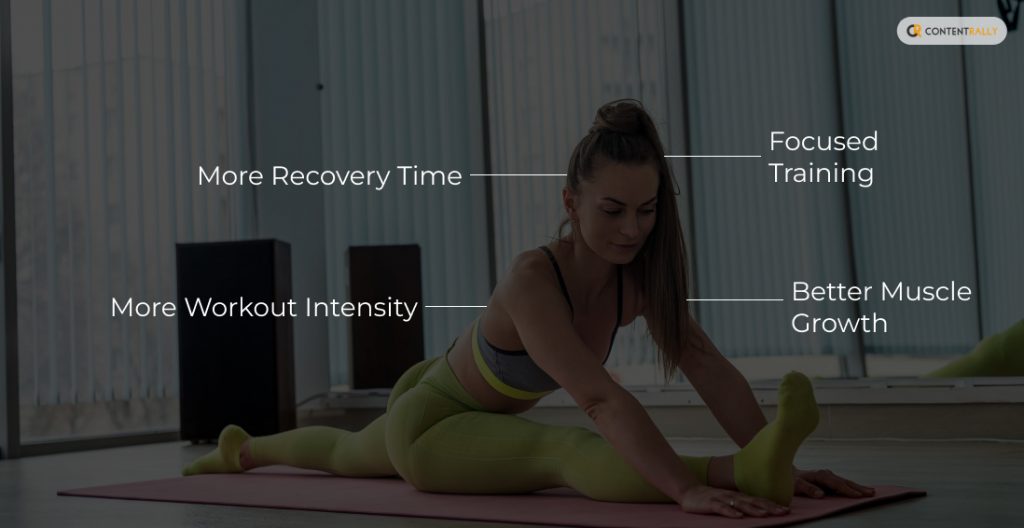
The Benefits of Workout Splits in Training

The following are the major advantages of workout splits that you will benefit from:

1. Focused Training

Focused training is one of the major benefits of workout splits where you train specific muscle groups. Also, you will get better muscle recovery between workouts since you are dedicating separate days to different muscle areas in your body. Apart from that, workout splits also ensure better workout intensity since you are targeting each area of your body.

On the other hand, with a workout split, you can also get shorter workout sessions. Moreover, you have the ability to address different imbalances in your muscles since you get chances to train weaker areas of your body. Hence, there shall be all-round muscle growth and fitness.

2. Better Muscle Growth

As you dedicate a full workout session to different muscle groups, you get the chance to target these muscle groups with more exercises. Hence, you will have high volume and muscle growth. However, this is something that you will not get with a full-body workout.

3. More Recovery Time

As you follow a workout split routine, you are giving your muscles adequate rest days between training sessions. Thereby, you do not end up overtraining your muscles. Hence, your muscle recovery is better. Also, if you have a busy schedule, using splits helps you create shorter workout sessions. Hence, exercise fits easily into your schedule.

4. More Workout Intensity

By using workout splits, you are only working on a few muscle groups per workout. As a result, you can push your muscles with heavy workouts. Hence, you can stimulate your muscles more. Moreover, you can also train your weak muscle groups that are weaker than other muscles.

Choosing the Right Workout Split: How to Create One?

Choosing the Right Workout Split_ How to Create One_

The right workout split depends on factors like training, goals, experience, recovery needs, weaknesses, and more. Depending on your bodybuilding needs, you can choose your type of workout split. However, if you are a beginner who is starting out bodybuilding, a full-body workout is more helpful.

The following are the factors you must consider when you are selecting your workout split:

  • Training Experience: If you are a beginner, you should start with simple splits and must mostly stick to full-body workouts. However, if you are an advanced individual, you can try complex workout splits.
  • Training Goals: With different goals, workout splits change. For instance, if you want muscle training, you can choose body part workout split. On the other hand, if you want to save time, you must choose the upper-lower workout split. Moreover, the push-pull-leg workout split works more for powerlifters.
  • Frequency of training: If you train two to three days per week, you need a full-body workout. However, if you train 5-6 days per week, you must start with workout splits.

Tips for Effective Workout Splits

Tips for Effective Workout Splits

Before you create your workout split, you must always consider your fitness level, goals, schedule, and recovery time. This will help you create a workout split that tailors to your needs and demands. The following are a few tips you must consider if you want to create effective workout splits:

  1. Your fitness levels matter. For instance, if you are a beginner, you must go with a full-body workout. On the other hand, as an advanced individual, you can try a workout split like push-pull-legs.
  2. Be consistent and sure about your workout schedule. Hence, you can design a split that fits your needs and demands.
  3. When you have sufficient days for rest, you can ensure muscle repair. Also, you can prevent muscle strain due to overtraining.
  4. If you want to have optimal strength gains, you must focus more on compound movements. Here, you work in different muscle groups simultaneously.

Common Mistakes to Avoid and Precautionary Steps

Common Mistakes to Avoid and Precautionary Steps

Here are a few precautionary steps you must take if you do not want to end up with no results:

1. Do not start with workout splits if you are a beginner. As a beginner, you need a full-body workout with a resting day between two workout days.

2. After you train a muscle area after a workout, make sure there are adequate rest days in between. This allows for better muscle recovery.

3. When you are working out, make sure to gradually increase its intensity, repetition, or weight. This will help you with growth as you progress.

4. Once you include different workouts for the same muscle groups, you end up targeting different muscle fibers. This helps in all-around muscle growth.

5. To get the best results, make sure to have the right form while you lift weights.

Start Workout Splits Now

Now you know the importance of workout splits and how they work to produce better results. However, if you are preparing for a split training program, make sure to prepare beforehand. Moreover, keep track of your exercises and make sure to have rest days for recovery.

Do you have more suggestions on how to create workout splits? Please share your ideas and opinions in the comments section below.

Read Also:

A passionate writer and an avid reader, Soumava is academically inclined and loves writing on topics requiring deep research. Having 3+ years of experience, Soumava also loves writing blogs in other domains, including digital marketing, business, technology, travel, and sports.

View all posts

Leave a Reply

Your email address will not be published. Required fields are marked *

Related

slider-img

We’re What We Eat: How Eating Habits Affect Our Well-Being

Eating is not just about dumping fuel into the tank so we can drive another twenty blocks. Multiple psychological and sociocultural factors also dictate how, why, when, and what we eat. Varying eating habits around the world can have a significant effect on our well-being. This post aims to shine a light on some of these habits to examine them more closely. Habit One: Is Breakfast The Most Important Meal Of The Day? Cereal manufacturers are keen on the idea that breakfast is the most important meal of the day. Is it true? According to researchers Tanya Zilberter and Eugene Yuri Zilberter, recommendations for breakfast eating behavior remain categorical but at the same time scientifically unsound health guidelines. If we look at the science and ignore cereal marketing, there are many benefits to eating at the start of your day. The following scientific information is extracted from the materials provided by the National Library of Medicine: Breakfast eaters tend to get more nutrients over the course of the day. They are also more likely to intake a wider range of nutrients. Breakfast has been associated with improved weight control and health indicators of cardiometabolic risk. This applies to adults and children. Studies have related breakfast eating to improvements in attention and better cognitive function, regardless of age. Remember that breakfast means different things around the world. Eating a pain au raisin in Paris is not the same as eating bratwurst in Berlin. The nutritional value of a full English breakfast is not the same as a continental. Attempting to run the first few hours on an empty tank is generally not as healthy as providing your body with some fuel. What’s important, however, is to start the day with food and supplement your nutritional intake during the day. According to the researchers whose statement has opened this section, skipping breakfast is not necessarily a big deal. People need to consider the below points: how long they’ve been without food (if two people eat at midnight and one eats breakfast at 5 am and the other at 10 am, the different fast lengths will impact their bodies differently), and whether they make up the “lost” nutrients with their eating habits during the day. However you do breakfast, take a holistic approach to diet. Consider what you eat over 24 hours. Habit Two: What Are The Consequences Of Eating Before Bed? Just as skipping breakfast is seriously frowned upon, eating late at night is typically considered a bad habit. Science suggests that eating late at night correlates with higher incidences of medical claims. While Tanya Zilberter and Eugene Yuri Zilberter found that research on skipping breakfast and studies on eating late often fail to consider how long the participants fasted, they did find solid evidence regarding the potential risks of eating late, including the following eating behavior pathologies: Elevated insulin and glucose levels, characteristic of metabolic syndrome; Distortions of body image and mood disorders; Implications on circadian rhythm. Harvard agrees. Late-night eating is bad for health. A recent Harvard study found evidence that eating late may increase hunger, which can increase the risk of obesity. If you suspect you’re about to see yourself in a statistic, you might be right. About forty percent of the US adult population is obese. More study is required on the role late eating plays in calorie intake, calories burned, and molecular changes in fat tissue. Until that verdict comes in, it looks like avoiding late-night meals may reduce incidents of cancer, diabetes, and other conditions. Habit Three: Is It Okay To Let Kids Eat In Front Of The TV? Eating in front of the television can lead to a lack of attention, which in turn can lead to missing cues regarding fullness. This habitual overeating could then cause obesity. And there’s another interesting angle to consider regarding television, what we eat, and how we feed our children. A fact-filled study into television viewing and unhealthy eating made the research-backed observation that television and food advertising influence children’s food preferences. Studies have demonstrated that child TV watchers are more likely to prefer unhealthy food in early adulthood than kids that didn’t watch television. To help kids stay healthy and become adults who make healthy choices, monitor kids’ TV intake and defend them from unhealthy, unsolicited dietary influences on screen. These tips may help you form your kid’s eating habits: Kids’ food preferences develop by age three and tend to remain stable throughout childhood. Repeated exposure increases the chance that your kids will start liking a new food. Information that a new food tastes good will increase their willingness to try it. Kids are less interested in hearing how nutritious things are. The availability of food in the home will affect food consumption. Your food access controls will influence consumption and food preferences. If your diet is healthy, your kids will be more likely to eat healthily. As kids reach middle school age and adolescence, external influences – including peers and the media – are likely to have a detrimental effect on their food choices. Conclusion We are what we eat. You knew that. Still, it’s worth delving into research to back it up. It’s easy to forget. Many of us have busy lives and take eating for granted, treating our bodies as if they weren’t some of the most sophisticated machinery on the planet. While this post provides helpful information that may confirm your healthy eating habits or inspire you to eat differently, a health professional can help you put the best into your body to get the best out of your life. Put your health in safe hands by visiting The American Academy of Nutrition and Dietetics or Leadar websites to find a professional nutritionist who can help you, your loved one, or your team improve your health and performance. Your eating habits have a massive effect on your well-being. Change how you eat to change your energy levels, your mood, your potential for health risks, and your life. Read Also: How Can A Cardiologist Save Your Life? Easy Breakfast Ideas For Type 2 Diabetes 5 Types Of Cancer Prominent In Women

READ MOREDetails
How to Use Practice Analytics to Improve Your Dental Practice

How to Use Practice Analytics to Improve Your Dental Practice

As a dental practice owner, you undoubtedly know how important having a solid, reliable data analytics system is. After all, there's no denying that having access to the right data can make a world of difference in terms of the overall success of your business. But with so many metrics to track and so much data to sort through, it can take a lot of work to know where to start. In this blog post, we'll take a closer look at some key ways you can use practice analytics to improve your dental practice. From creating actionable insights to tracking important metrics like patient satisfaction and retention rates, we'll cover everything you need to know to get the most out of your data analytics platform. Analyze Patient Demographics The first step to using practice analytics is understanding your patient demographics. Your dental billing software and practice management system can help curate this information. You can develop a more personalized approach to patient interactions, marketing, and care plans. For instance, if most of your patients come from a particular age group or area, you can tailor your communication and services accordingly. With this information, you can identify gaps in your care plans, such as a lack of services that would benefit a specific age group, and implement measures to address them. Determine Your Key Performance Indicators (KPIs) The first step in using practice analytics is determining which metrics to track. These metrics, also known as key performance indicators (KPIs), can help you measure the success of your practice and identify areas where you may need to make changes. KPIs can vary from practice to practice, but some common ones include new patient acquisition, patient retention rate, and revenue per patient. Once you've identified your KPIs, you must track them regularly and use the data to make informed decisions. Use Data To Identify Opportunities For Improvement Once you can access your KPIs, it's time to analyze the data. Look for trends and patterns that may indicate areas where you can improve. For example, if your new patient acquisition rate is low, you may need to invest more in marketing and advertising. If your revenue per patient is declining, consider offering additional services or adjusting your pricing. By using data to identify opportunities for improvement, you can make strategic decisions that will benefit your practice and your patients. Enhance Marketing Efforts Practice analytics can provide valuable data on demographics, referral sources, and social media interactions, which can help you refine your marketing strategies. By analyzing this data, you can determine which marketing campaigns are most effective, which referral sources generate the most business, and which social media platforms garner the most engagement. This will allow you to create targeted marketing campaigns that deliver better results. Improve Patient Outcomes Analyzing patient data can help you improve patient outcomes and experience. You can identify patterns or issues by tracking patient satisfaction rates, procedure success rates, and treatment outcomes and take corrective action as necessary. Investing in patient-reported outcome measures (PROMs) can provide valuable insights into how your patients perceive their health and treatment outcomes. By analyzing this information, you can identify strengths and weaknesses in your practice and create data-driven strategies for improvement. Evaluate Your Administrative Processes One way to utilize practice analytics is to evaluate administrative processes, such as appointment scheduling and staff communication. For example, data provided by practice analytics software can reveal patterns such as last-minute cancellations and no-shows, which negatively impact your practice's bottom line. Reviewing this information, you can alter scheduling practices, such as adopting a 'same-day cancellation' policy or implementing appointment reminders to increase appointment show rates. Similarly, analyzing your staff's effectiveness, such as how long they stay on call with patients and how effectively they answer patients' questions, can also help identify areas where training would benefit your practice. Collaborate With Support Teams Lastly, if you need more confidence in analyzing or making decisions based on practice analytics, consider outsourcing to third-party advisors with experience in your field and software expertise. For instance, there are dental analytics companies that can provide you with insight into industry performance treatment trends and offer benchmarking tools that you can use to compare your practice's success rate to others. Some companies can also provide customized recommendations based on your performance data and help you develop an improvement plan. Conclusion: In conclusion, practice analytics can help you make informed decisions about improving your dental practice. By tracking Key Performance Indicators, improving Patient Outcomes, analyzing Patient Demographics, monitoring financial metrics, and using practice management software, you can identify areas for improvement and make data-driven decisions that will take your business to the next level. Whether you're a new dental practice owner or have been in business for years, it's always possible to use practice analytics to improve your practice and provide the best possible patient care. Read Also: Best Paying Jobs In Medical/Dental Instruments Is Medical/Dental Instruments A Good Career Path How Many Jobs Are Available In Medical/Dental Instruments?

READ MOREDetails
Hospice Chaplains

Journeying With The Dying: How Hospice Chaplains Facilitate End-Of-Life Spiritual Transitions

When individuals approach the twilight of their lives, they often confront a whirlwind of emotions—fear, regret, hope, acceptance, and more. This intense period termed the end-of-life phase, sees many grappling with existential questions and seeking answers to life's most profound mysteries. This search for clarity and solace is where the spiritual dimension of human existence comes to the forefront. Many turn to spirituality as a source of comfort, a beacon of hope, and a framework for making sense of their experiences. It's within this complex tapestry of emotions and spiritual quests that hospice chaplains, representing the realm of hospice chaplaincy, emerge as pivotal figures. These professionals dedicate themselves to guiding individuals through this intricate journey, helping them find spiritual serenity amidst the tumultuous currents of approaching mortality. The subsequent sections delve deeper into understanding the multifaceted role of these spiritual caregivers. The Integral Role of a Hospice Chaplain Defining the Role in Greater Detail: Hospice chaplains stand at the crossroads of spirituality and caregiving. They aren't just religious figures; they are trained professionals skilled in offering spiritual support tailored to the unique needs of each individual. Their role goes beyond mere ritualistic practices. They act as confidants, counselors, and guides, providing a listening ear, heartfelt advice, and spiritual interventions tailored to the individual's beliefs and wishes. Whether helping patients find peace with their life's journey, facilitating forgiveness and reconciliation, or simply being present during moments of deep reflection, hospice chaplains are there to ensure that the spiritual dimension of end-of-life care is addressed with the utmost sensitivity and respect. The Spectrum of Interfaith Approaches: One of the most remarkable aspects of hospice chaplaincy is its inclusiveness. Recognizing the diverse tapestry of beliefs and spiritual outlooks in our globalized world, hospice chaplains are trained to cater to various religious and spiritual traditions. Whether a person identifies with a major world religion, a lesser-known spiritual path, or even if they consider themselves secular or agnostic, chaplains are there to provide support. This approach ensures that every individual, irrespective of their belief system, has access to spiritual care that resonates with them. By adopting such an inclusive approach, hospice chaplains affirm the idea that every end-of-life journey is unique and every individual's spiritual needs deserve to be met with understanding, respect, and personalized care. The end-of-life journey is a deeply personal and transformative phase. While medical professionals focus on alleviating physical pain and discomfort, hospice chaplains address the soul's yearnings, questions, and quest for peace. By offering tailored spiritual interventions and an inclusive approach that honors diverse beliefs, they ensure that individuals and their families find the spiritual solace they seek during these poignant moments. Delving Deeper: Spiritual Needs, Interventions, and Family Impact in the End-of-Life Journey Spiritual Needs at the End of Life Seeking Meaning and Purpose: The imminence of death often prompts deep introspection. Many individuals reflect upon their life's journey, trying to discern its purpose. These reflections might encompass personal achievements, missed opportunities, unfulfilled dreams, and significant life events. In such times, spiritual guidance assists individuals in navigating these contemplations, helping them find peace with their life narrative, celebrating accomplishments, and making peace with regrets. Reconciliation: Estrangements and unresolved conflicts become especially poignant during the end-of-life phase. Many individuals desire to reconnect, apologize, or seek forgiveness from loved ones. The urge to mend relationships, settle old disputes, or express unspoken feelings becomes vital. The spiritual guide aids in facilitating these reconciliations, offering counsel, and, if necessary, acting as a mediator. Fear and Hope: The mystery of what comes after death is a source of both trepidation and anticipation. The fear of the unknown contrasts starkly with hopes or beliefs of an afterlife, reincarnation, or spiritual continuation. By addressing these concerns, chaplains help balance these emotions, emphasizing the transformative nature of death in various spiritual traditions. Cultural and Traditional Rites: Every culture and religion has rituals that honor the dying and the deceased. Whether it's a specific prayer, a song, a way, or even silence, these rites are paramount for the person passing and their family. Respecting and facilitating these practices is crucial to providing a sense of closure, continuity, and respect for the individual's spiritual and cultural identity. Interventions by Hospice Chaplains Active Listening: One of the most profound gifts a chaplain can offer is the gift of presence—simply being there, offering a listening ear. By actively listening, they provide a safe and non-judgmental space for individuals to voice their deepest feelings, concerns, and reflections, guided.  Meditations and Prayers: Tailoring spiritual practices to individual needs, chaplains might guide patients through meditations or prayers that align with their beliefs. These sessions can instill a sense of calm, acceptance, and connection with the divine or the universe. Scripture Readings: For those who find solace in religious texts, chaplains can read passages that resonate with the patient's current emotions or questions. Scriptures, whether from the Bible, Quran, Torah, Bhagavad Gita, or other religious texts, can offer comfort, guidance, and a sense of continuity. Ritual Facilitation: Be it sacraments, candle lighting, or even non-religious rituals like listening to a specific song or watching a sunset, chaplains assist in organizing and facilitating these rites, ensuring the  Grief Support: The dying process isn't just about the individual; it encompasses the family and loved ones. Chaplains extend their support to these grieving souls, offering a shoulder to lean on, words of comfort, and guidance through their emotional journey. The Impact on Families Emotional Anchoring: In the tumultuous sea of emotions, chaplains act as an anchor for families. Their calm presence and experience in navigating such situations provide a stabilizing effect, helping families cope more effectively. Guidance through Rituals: Families often seek direction in performing end-of-life rituals correctly and meaningfully. Chaplains offer insights, respect cultural nuances, and sometimes even take the lead in ensuring these rites are conducted reverently. After-death Support: The journey doesn't end with the passing of a loved one. Grief, memories, and the void left behind are real and profound. Chaplains continue to support families, providing bereavement counseling, helping them process their loss, and guiding them toward healing and acceptance. The spiritual dimensions of the end-of-life journey are intricate, deeply personal, and encompass more than just the dying individual. Hospice chaplains, with their nuanced understanding, play an instrumental role in ensuring that this journey, for both the individual and their families, is navigated with dignity, respect, and profound compassion. Continuous Education and Self-care Training: The importance of ongoing training for chaplains to stay updated on best practices and religious rites. Self-care Rituals: Chaplains must cultivate personal rituals or practices to manage their well-being. Peer Support: Engaging with fellow chaplains or professionals to discuss challenges and share experiences. Conclusion The journey towards the end of life is deeply personal, and the spiritual terrain can be complex. Hospice chaplains, with their expertise and compassion, play an indispensable role in facilitating spiritual transitions during this phase. Their ability to address the deep-seated spiritual needs of the dying and their families ensures that the end-of-life journey is one of meaning, reconciliation, and peace. Read Also: Navigating Healthcare: Exploring The Harvest Tech Achievers ETF Seven Stages To Creating A Patient-Friendly Healthcare App The Future Of Healthcare: Adapting To An Aging Society

READ MOREDetails