











If you have spent any time on TikTok or YouTube over the past couple of years, you have undoubtedly run into them.
It may be Frank Sinatra singing a heavy metal track or SpongeBob delivering a pitch-perfect rendition of a rap song. It can also be a deceased pop icon magically performing a modern indie hit.
Behind a massive percentage of these viral internet moments is a single and highly accessible platform.
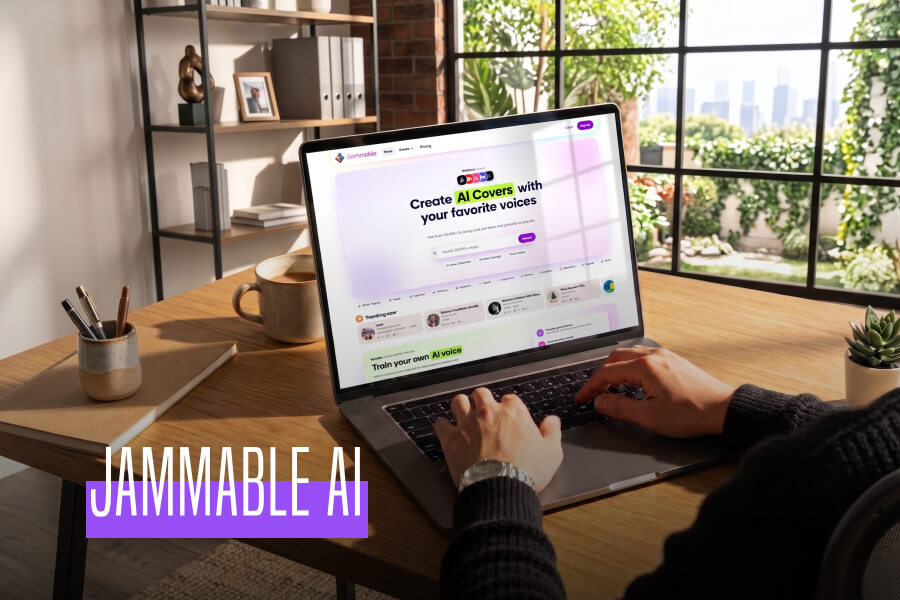
Originally launched under the name Voicify AI before undergoing a major brand pivot, Jammable AI has made significant progress.
The tool has grown into one of the most prominent web-based generative voice platforms in the creator economy.
But what exactly is this platform, and how does it fit into a musician’s or content creator’s toolkit? Moreover, what are the realities of using it?
This deep dive breaks down everything you need to be aware of about the software, its core mechanics, pricing models and the broader implications of synthetic vocal production.
Defining Jammable AI: What The Platform Actually Is

At its core, Jammable AI is a cloud-based software-as-a-service (SaaS) platform that allows its users to generate high-fidelity vocal covers and train custom models. Moreover, it lets its users experiment with text-to-speech technologies.
Traditional voice cloning is incredibly complicated. It usually requires Python scripts and expensive cloud GPUs. Users often have to navigate complex frameworks like Retrieval-based Voice Conversion (RVC).
Contrarily, Jammable AI skips all of that, bundling these deep-learning technologies into a streamlined, browser-native dashboard.
The platform relies on a vast community-driven system, where users can upload their own clean vocal recordings to train specific voice profiles. You can share this publicly or keep it completely private.
To date, the platform hosts an extensive library of over 100,000 distinct voice models. These range from mainstream musical artists and internet personalities to completely fictional animated characters.
Core Features And Creative Workflows
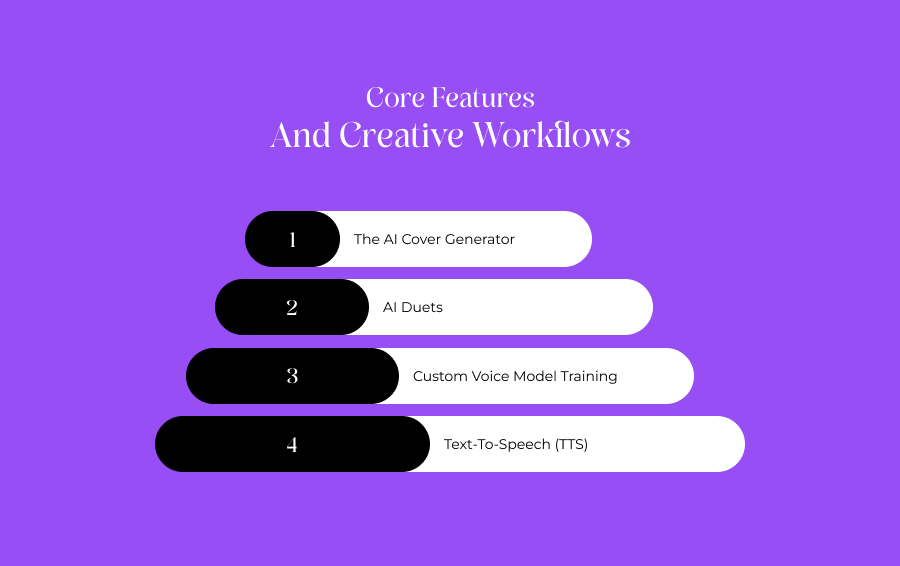
The platform is designed around a handful of primary modules, each catering to a different stage of content creation as well as audio experimentation.
The AI Cover Generator
The song cover generator drives the platform as its fundamental engine, offering a frictionless workflow.
Some of them are as below:
- Input Submission: Users paste a direct link to a YouTube video or upload a standard audio file (such as an MP3 or WAV).
- Vocal Demixing: The platform automatically splits the track, separating the primary vocal line from the instrumental backing tracks.
- Vocal Swapping: The AI isolates the original performer's pitch, vibrato, and timing, and overlays the selected AI voice model onto that blueprint.
- Re-mixing: The software automatically stitches the new vocal track back together with the original instrumental elements, producing a completed, downloadable remix.
AI Duets
For creators who want to build more complex arrangements, the Duets feature allows users to layer multiple voice models within a single track.
Instead of a single voice talking over an entire song, you can assign different models to specific verses. Besides that, you are also able to create harmonies or engineer collaborative tracks that would be impossible to coordinate in the physical world.
Custom Voice Model Training
For artists, producers and brands, the true utility of Jammable AI lies in its custom training module.
Users first start by uploading a high-quality, completely dry acappeilla file spanning 5 to 30 minutes. This needs to be free of echo, reverb, or backing instruments, letting users train a digital vocal clone.
The cloud infrastructure processes the unique timbre, accent, and frequency characteristics of the voice. Then, they make a private model that can sing any song from any text prompt.
Text-To-Speech (TTS)
Beyond musical generation, the platform includes a traditional text-to-speech layout.
This tool is highly utilized by video editors and social media creators who need rapid voiceovers for short-form video content. As a result, this allows them to use distinct, recognizable character voices to read scripts.
Detailed Feature Matrix
To understand how the platform scales its capabilities across different use cases, consider the following breakdown of its technical and functional distribution:
| Feature Component | Entry-Level Usage | Advanced Creator Usage |
|---|---|---|
| Model Library Access | Full access to community-uploaded voices | Full access to community-uploaded voices |
| Vocal Isolation Engine | Cloud-automated stem splitting | Cloud-automated stem splitting |
| Duet Architecture | Sequential model layering supported | Multi-model harmonic layering supported |
| Custom Training Slots | Requires individual credit purchases | Unlimited dedicated model training slots |
| Output Deliverables | Standard audio file downloads | Audio formats plus direct video synthesis export |
Pricing Structures And Tier Breakdown
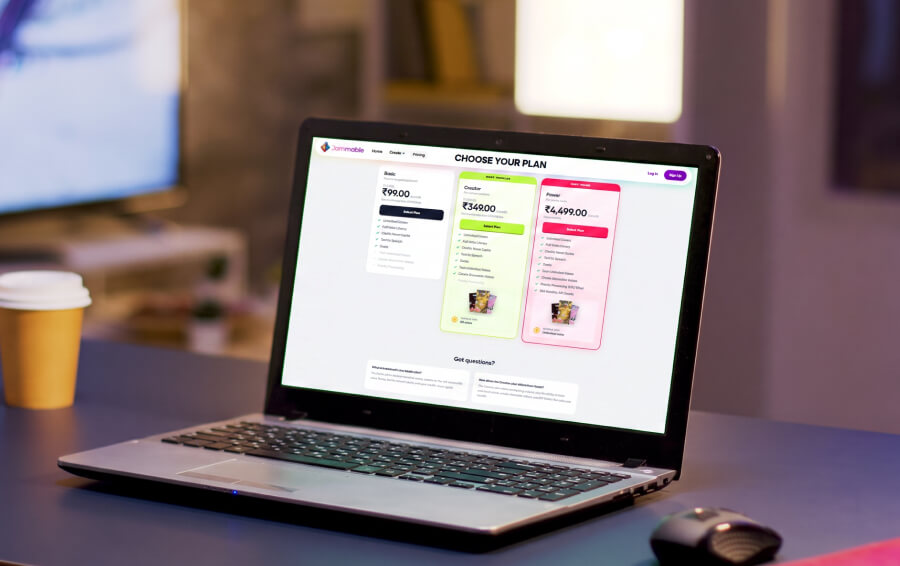
While the platform allows users to browse its massive library and test out preview snippets for free, full generation and model training require active currency or a recurring subscription.
The platform operates on a multi-tiered pricing model to accommodate casual experimenters alongside high-volume multimedia studios.
The Trial Or Credit System
For those who do not want a monthly commitment, the platform allows the purchase of standalone credits.
Additionally, these credits can be spent on single song conversions or individual custom voice training runs.
The Basic Plan: $8.99 Per Month
This entry tier is designed for hobbyists. In this plan, a promotional entry point of $1.99 is regularly featured for the first month.
Additionally, it gives users unlimited access to generate standard covers, create duets, and utilize text-to-speech
The Creator Plan: $24.99 Per Month
Positioned for serious content creators, digital artists, and power users, this tier unlocks completely unlimited custom voice training models.
It also includes advanced video creation toolkits that automatically pair generated audio tracks with custom visuals for rapid social media deployment.
The Pros, Cons And Technical Realities
No creative tool is perfect. Additionally, synthetic vocal processing comes with its own unique set of technical hurdles and distinct advantages.
Where The Platform Excels
The primary advantage of Jammable AI is its sheer speed and accessibility. In the past, training an RVC model required a powerful local graphics card, basic coding knowledge and hours of setup time.
On the other hand, this platform democratizes the process, delivering a completed track in a matter of minutes through a web browser.
Furthermore, the automated stem-splitting tool is remarkably proficient at separating vocals from complex instrumentals. As a result, this saves creators from needing external audio editing software.
The Technical Limitations
However, users should maintain realistic expectations regarding output quality. The ultimate fidelity of an AI cover is highly dependent on the quality of the source material.
If an uploaded song features heavy vocal effects, overlapping harmonies, or a muddy mix, the resulting AI voice can sound glitched, metallic, or robotic.
Additionally, AI models struggle with complex emotional nuances.
While the software can match pitch perfectly, it can occasionally lose the subtle gasps, emotional cracks, and stylistic imperfections that give human vocal performances their true emotional weight.
Navigation Of The Legal And Ethical Landscape
The rise of generative audio platforms has sparked massive conversations surrounding copyright, fair use, and intellectual property. It is crucial for creators using Jammable AI to understand the legal guardrails.
Using an unauthorized AI clone of a mainstream, charting artist to distribute commercial music is a direct violation of terms of service.
Platforms such as Spotify or Apple Music ensure immediate takedowns or legal action regarding right-of-publicity laws.
The safest, most effective ways to utilize the platform include:
- Rapid Prototyping: Songwriters can train a model on their own voice, then hear how a song sounds in different pitches or keys without re-recording it.
- Parody and Social Content: Creating transformative, non-commercial parody content for platforms like YouTube and TikTok.
- Personal Archiving: Cloning your own voice to preserve your vocal range, or to use as an asset for future music production workflows where you hold 100% of the rights.
Alternative Platforms For Digital Musicians
Depending on your precise creative goals, other tools in the market might supplement your production pipeline.
| Platform | Primary Focus | Best Used For |
|---|---|---|
| ElevenLabs | Hyper-realistic text-to-speech and emotional voice design. | Audiobooks, narrative voice acting, and video game dialogue. |
| Suno AI / Udio | Full-scale text-to-music generation from scratch. | Creating complete songs with backing tracks, lyrics, and instruments. |
| Musicfy AI | Voice-swapping and converting basic audio inputs. | Turning humming or whistling into polished instrumental melodies. |
The Future Of Synthetic Vocals: A Detailed Assessment
The way we now make music is facing rapid changes, as studio gatekeepers are losing ground to decentralized and online tools.
Jammable AI is considered a perfect example of this shift, taking incredibly complicated tech and putting it into a simple web dashboard.
Suddenly, bedroom producers and social media creators have significant access to tools that needed a massive studio budget along with a team of audio engineers.
However, you still have to learn how you can balance speed with actual quality. While the platform is fantastic for quick idealism viral parodies pr testing out a new vocal layout, it cannot ever replace the real thing.
At the end of the day, this tech isn’t going to replace artists. Instead, you need to think of it as a massive upgrade to your creative toolkit.
Whether you use it to back up your own voice, build custom duets, or quickly test a melody, it gives us a clear look at where music is going.