Published on: 11 December 2020
Last Updated on: 06 September 2021
Have you been given the responsibility of planning the next corporate conference or event for your company?
Do you know how you can choose the best catering service that will win over your co-workers, bosses, and industry colleagues?
Are you looking for some tips and tricks, which can help you zero down on the best caterers for your next event?
Corporate Conferences and events can be important milestones for a company’s future. It can be your Annual General Meeting or a Shareholders Meeting, or even something like a Retirement Party for a dear colleague.
However, the important thing to note is that the food should be top-notch at all times. Everyone who attends the conference or the event should leave satisfied after tasting the food being served.
This is why it is so important that you hire the right catering services for your next corporate event. Hire the best one and you are looking at creating a memorable experience for everyone to remember. Hire the wrong one, and your office colleagues will make sure to keep discussing the ‘what went wrongs’ for a very long time!
List of 5 Easy Steps to help you select the best Catering Service for Corporate Conferences
1. Start with In-depth Research and Planning-
When it comes to any corporate event planning, catering is right up there in the first or second positions. It is important to understand the budget, get a sense of what the higher management feels, and then start with finding the right caterers.
During the shortlisting stage, look for small details like the promptness of the catering company when responding to your requests of quotations, sample requests, and references. This will give you a better idea about their professionalism and help in the selection process.
2. Be Sure about the Food from the Start-
Everything that the prospective caterer offers you in terms of food is going to increase the confusion in your head. This is why it is important that you have a set idea of the food, which you can then take to the catering service.
You also need to understand that caterers will suggest food options, which are cost-effective for them, but not for you. It is also important to see whether the caterer is taking interest in knowing about your company, its culture, and then making suggestions.
3. Food, Beverage Options, and Service-
We often have this misconception about catering being all about the food. What we tend to forget is that it also involves beverages and the overall service experience. This means that the choice of beverages, how good they are or not also matters when choosing the right caterer.
Corporate event catering should always take into account the level of service, which is being offered. Smartly dressed catering professionals, polite behavior, and a calm demeanor are what you should look at. Trust us, these things make a lot of difference.
4. The Experience of the Catering Company-
When it comes to corporate catering, the experience matters a lot. This is because the inherent nature of the catering experience in a corporate setting is radically different from the one at a wedding, or a birthday party.
It is important that you see the number of years of experience the catering service has. You can also ask them specifically for the kind of corporate events they have serviced to. This will help you get a better idea about whether they will be the right fit or not for your conference.
5. Look for Flexibility in the Catering Service-
There might be times when things do not go according to plan. For example, an announced client walks in with his entourage of five people as the event is going on. If you are seriously sticking to headcounts, this can cause some problems.
This is where a good caterer will be able to help you out. This is what is meant by flexibility in the catering service. These kinds of situations will arise from time to time and you need to be prepared for them. Asking the catering service about such issues in advance will help them and you prepare better for such contingencies.
The Final Word
It is important that you start planning in advance for your next corporate event. The success of the same will depend in a major way on whether or not you have been able to hire the right catering services for the same. By paying attention to the points in the article, you can ensure that you at least have all the boxes checked to help you narrow down your selections for the best catering services.
Read Also:
Content Rally wrapped around an online publication where you can publish your own intellectuals. It is a publishing platform designed to make great stories by content creators. This is your era, your place to be online. So come forward share your views, thoughts and ideas via Content Rally.
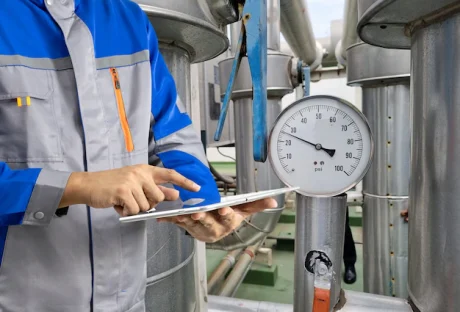
Plant control instruments play an extremely important function in the constantly shifting environment of industrial operations. These devices monitor and control a variety of processes within the plant, which has a substantial impact on overall productivity.
This article digs into the quality plant control instruments available to study how they can work as catalysts for higher output.
Navigating the Industrial Landscape
Precision and control are of the utmost importance in the complicated ecology of the industrial sector. Instruments used for plant control are essential in preserving the delicate balance that must be kept for activities to go without interruption.
These devices are the unsung heroes behind the scenes, and their responsibilities range from temperature regulation to pressure management.
Sensors
Sensors are the "eyes and ears" of every control system, serving in this capacity as the system's "central nervous system." These devices monitor the environment for any shifts in conditions and relay that information to the control system in real-time.
Temperature sensors, for instance, can be installed in a factory to ensure the working environment is conducive to efficient output. This process minimizes damage to the equipment and guarantees that the end product will be of high quality.
Actuators and Control Valves
Actuators and control valves are the components that step into the spotlight when implementing changes based on sensor data. The actuators translate the signals from the control system into action.
Imagine a situation where exact fluid flow management is necessary; in this case, the control valves would take center stage. These instruments accurately control the flow, minimizing waste and making the most available resources.
PLCs and SCADA Systems
The efficiency of industrial processes is not solely dependent on the performance of its separate parts; rather, it is contingent on how well those parts are orchestrated. Conductors of this symphony are served by Supervisory Control and Data Acquisition (SCADA) systems and Programmable Logic Controllers (PLCs).
While programmable logic controllers (PLCs) ensure that the various parts collaborate well, supervisory control and data acquisition (SCADA) systems offer an overview of the entire process. Together, they make it possible to make decisions and troubleshoot issues quickly, which helps to reduce downtime.
Human-machine interface (HMI)
In today's increasingly automated world, human-machine interfaces, or HMIs, make it easier for humans and machines to communicate and collaborate. These interfaces offer operators a straightforward method for monitoring and controlling the user-friendly system.
HMIs enable operators to make quick, educated decisions because of their user-friendly displays and controls, which contribute to the system's overall efficiency.
Improving Efficiency Using Plant Control Instruments
Instrumentation and control systems have the potential to become the "brains" of your company when they are properly programmed. This study area is changing due to the introduction of new, more affordable technology. If implemented as planned, these adjustments may result in considerable benefits, such as greater productivity and decreased expenditure.
Collaborating to Calibrate Success
Cooperation between individuals is essential to developing efficient instrumentation and control systems that can produce comparable cost reductions. Engineers, technicians, and programmers must work together from concept design to 100% completion and startup to produce high-quality outcomes.
This process is especially true on design-build projects. Project teams want to begin functioning as a single integrated entity as soon as practicable. If they understand the costs and benefits of each option, the team can construct the right instrumentation and control architecture for the task and intelligently build to meet specifications.
Instrumentation and control engineers can also respond swiftly to design and scope changes as they occur and alter systems accordingly, thanks to continuous interface and communication. This results in improved ease of operability and reduced the number of wasted resource hours.
Making Real-Time Improvements
In recent years, advancements in software and hardware for instrumentation and control have made them more dependable, adaptable, and user-friendly. As a result, the connectivity between process equipment and instrumentation has also improved.
These technological improvements enable to supply operators of facilities with the appropriate information at the appropriate time. Operators are provided real-time control over several aspects of their manufacturing process, such as the workers, machinery, and support services.
Monitoring and Regulation
In a plant, it is the job of the instrumentation and control systems to monitor and maintain various characteristics such as temperature, pressure, flow, level, and quality. These systems deliver real-time data on the conditions of the process, allowing operators to make educated decisions and take preventative measures to keep operating conditions at their optimal level.
The evolution of instrumentation and control software and hardware over the past years has made it more flexible, dependable, and user-friendly. As a result, communication between the process equipment and the instrumentation that controls it has improved.
Because of this, operators can exercise control in real time on production-related components such as equipment, support services, and other associated components.
Redundancy and Fail-Safe Mechanisms
Reliability is something that cannot be compromised in the field of plant control instruments. Redundant and fail-safe mechanisms serve as safety nets, ensuring business operations continue without interruption, even in the face of unforeseen occurrences.
This process is of the utmost importance in fields such as manufacturing, where even a short downtime can result in large monetary losses.
Taking Control of Costs
For facilities that are managed by instrumentation and control, technological advancements have led to a range of cost-related benefits, including the following:
Enhanced operational efficacy that lowers the risk of making financially detrimental errors.
Because of increased automation, fewer people will be needed to run operations.
Potentially higher product output as a result of improved automation
A faster response time for addressing issues and warnings
Virtualization, which lowers the necessary amount of hardware while also increasing both dependability and flexibility
Guarantee of an excellent level of performance from both the controls and the end product
Elevate Operations Through Quality Instruments
It is impossible to overestimate how much influence high-quality plant control devices have on efficiency.
To maintain a competitive edge in the current business environment, investing in control instruments at the cutting edge of technology is not merely a recommendation but an absolute requirement. You can check out Pcipro to guarantee the quality of the instrumentation and controls you will use for your business.
Adopting these technological advances will unquestionably determine the performance of industries, opening the way for a brand-new era of highly efficient and productive operations.
Read Also:
Balancing Health And Ecology With Native Plants
Unlocking Plant-Based Protein Potential: Exploring A Leading Supplement
Enhancing Spaces With Greenery: The Art Of Plant Styling In Interior Design
White-label link-building services are a popular solution for businesses that need to improve their online presence. And also increase their search engine rankings. Hence these link-building techniques are the primary part of SEO campaigns. By using these techniques, agencies can build up multiple valued backlinks and offer the expected quality link building to their clients.
White-label link-building involves outsourcing the link-building process to a third-party provider that delivers high-quality backlinks to a client's website. In this article, we explore who should use white-label link-building services and why.
Let's see first what is the meaning of white-label link-building services.
What Is A White Link Building Service?
White-label link-building refers to the specific practice where digital marketing agencies can subcontract the link-building to specialist agencies. The customer agencies presented the links to their clients when they wanted to build them.
The white label link building is a common practice if any business wants to have link building. Hence these link-building services will provide them with link-building services along with SEO campaigns.
Who Are Whitelabel Link Building Services For?
These services are perfect for digital marketing agencies. Therefore who want to build up quality backlinks for their clients should avail of the services from white-label link-building service-providing companies.
Here are the names of the companies that can take the Whitelabel link-building services.
1. Digital Marketing Agencies
Digital marketing agencies are one of the primary users of white label link building services. These agencies typically offer a broad range of digital marketing services to their clients, including SEO, PPC, social media marketing, and content marketing. Link building is a crucial aspect of SEO that requires significant resources, expertise, and time. Hence outsourcing white-label link-building to a white-label provider enables digital marketing agencies to focus on their core competencies and deliver high-quality results to their clients.
2. Small Businesses
Small businesses often have limited resources and budgets to devote to digital marketing. Link building can be a time-consuming and expensive process that may not be feasible for small businesses to handle in-house. White-label link-building services offer an affordable and scalable solution that enables small businesses to improve their search engine rankings and online visibility. These services can help small businesses compete with larger companies in their industry and reach a broader audience.
3. E-Commerce Websites
E-commerce websites rely heavily on search engine rankings to drive traffic and generate sales. Link building is a crucial component of any e-commerce SEO strategy as it helps to build the website's authority and relevance. Hence white-label link-building services provide e-commerce websites with high-quality backlinks that improve their search engine rankings and drive more organic traffic to their site. These services are also scalable, allowing e-commerce websites to handle a large volume of link-building needs.
4. SEO Consultants
SEO consultants offer specialized services to businesses that need to improve their search engine rankings. These consultants often have limited resources and may not have the expertise to handle link-building in-house. Outsourcing link building to a white-label provider enables SEO consultants to offer a complete suite of services to their clients and improve their clients' search engine rankings. Therefore these services can also help SEO consultants to expand their offerings and take on more clients.
5. Startups
Startups need to establish an online presence quickly to gain traction and attract investors. Link building is a critical aspect of any startup's SEO strategy as it helps to build their online authority and credibility. White-label link-building services provide startups with a cost-effective solution to improve their search engine rankings and increase their online visibility. Therefore all of these services are scalable, enabling startups to handle their growing link-building needs as they expand.
6. Established Businesses
Established businesses that have been operating for several years may need to refresh their SEO strategy to keep up with changing trends and algorithms. Link building is a vital component of any SEO strategy, and white-label link-building services provide established businesses with scalable and effective solutions. Hence these services can help established businesses to improve their search engine rankings, increase their online visibility, and stay ahead of their competition.
These services offer a scalable and cost-effective solution that enables businesses to improve their search engine rankings, increase their online visibility, and stay ahead of their competition. When choosing a white label link building provider, therefore, it is crucial to select a provider that follows ethical and effective link building strategies and provides high-quality results.
Bottomline:
Therefore white-label link-building services are a versatile solution that can benefit a wide range of businesses and organizations. Digital marketing agencies, small businesses, e-commerce websites, SEO consultants, startups, and established businesses can all benefit from outsourcing their link-building needs to a reliable and reputable white-label provider.
Read Also:
Tips on Building Your Resume for a Website Design Company
5 Marketing Tips To Help Grow Your Business On Instagram
7 Startup Ideas For Young Entrepreneurs
While being a professional fisherman could be a fun and fulfilling job, it could also be quite a challenging one. This is mostly because the job of actually catching fish is difficult enough, add to that the logistical challenge of selling your wares in the market, then you have quite a dilemma in front of you. If you want to make the most out of your fishing boat, you will need a set strategy. Here are 7 ways to earn more from your fishing business.
1. Establish A Cannery
If you have the budget, it is a good idea to establish a cannery. One of the best things about having a cannery of your very own is the fact that you will stand to earn a lot more from the fish that you catch.
When you establish a cannery it is very important that you plan it out as efficiently as possible. It is important that you have a facility for canning. In this case, it is a good idea to build it as near to the docks as possible. It is also a good idea to invest in canning machines to ensure that your product is as sturdy as possible. Of all the canning machines you could purchase, the automatic can in the machine is by far the most important piece of equipment a cannery could have.
They not only speed up the canning process but also ensure that all your canned goods are properly sealed. If you are going to buy an automatic can seaming machine, you should try out Levapac. It is a company that builds incredibly efficient canning machines.
2. Sell Bait And Lures
If you have been a fisherman for decades, you would know how to create specialized lures and bait. A good number of people take up fishing as a hobby, and they usually trust the skills and opinions of veteran fishermen.
It is a good idea to gather as much bait as possible because a majority of fishermen could use up buckets of bait at a time. When you make your lures, you should match them to the area, type of rod, and what type of fish your clients will be looking for.
3. Organize Fishing Trips
If you have access to a fishing boat, your business does not have to be limited by just the amount of fish you catch every day. You could also get creative and organize fishing trips for your clientele. When you organize fishing trips, it is a good idea to upgrade key aspects of your boat. A new coat of paint and a few extra pieces of furniture could really improve your boat’s overall appearance. It is also a good idea to make sure that all aspects of your boat are extra safe. You don’t want a guest to get injured during a fishing trip. It could land you and your company in a lot of legal trouble.
4. Sell Salted And Dried fish
Aside from selling canned fish, you could also sell salted or dried fish. While they are not really a staple for more Western palettes, a good number of cultures still consider salted or dried fish as a delicacy. The process of salting or drying fish is straightforward yet time-consuming. After you catch your fish, you should get them and remove all their organs to prevent contamination. Afterward, you salt every part generously and lay them out of the sun to dry.
Salted fish and dried fish technically have the same process. The only difference is that salted fish has a lot more salt, whereas, dried fish predominantly uses the drying process to preserve the fish. When you make your product, it is a good idea to do it on your boat or better yet, a special facility. Remember that salted or dried fish usually has a very pungent smell, and if your neighbors are not used to the smell, they will most likely complain.
5. Hold Fishing Competitions
Having a fishing boat of your very own will allow you to hold fishing competitions for your clients. These events are usually like the usual fishing trips except it is a larger event, and there is a prize involved. When you hold fishing competitions, it is important that you set the rules, the time, and the prizes. Each participant should provide payment in order to join. You will be able to earn money by charging for bait, lures, and for use of the boat.
6. Establish A Fishing Youtube Channel
In this day and age practically anyone could be a Youtuber, and being a fisherman and sailing the open seas could prove very interesting as content for any video. YouTube channels might seem like a trivial matter at first, but you’ll be surprised at the amount of money established YouTubers get.
As a fisherman, your greatest asset will always be your experience and knowledge as a fisherman. Your fishing exploits and advice would also prove to be good content, especially for fellow fishermen.
7. Give Advanced Fishing Lessons
It is a great idea to offer advanced fishing lessons. As a veteran fisherman, you would know how to fish in the most effective and efficient way possible. Any newbie fisherman would pay good money to get fishing advice from a skilled fisherman like you.
You could also combine this business venture with your fish trips, selling bait and lures, and even your Youtube channel. Overall, there are many ways you could earn money as a fisherman. You just need to be a lot more creative.
Conclusion
If you’ve been a fishing boatman for a few years, you would know how difficult it is to make a profit.
If you want to make the most out of your fishing business, you will need a set strategy. You will also need to be a lot more creative. Here are 7 ways to earn more from your fishing business.
Read Also:
How Many Jobs Are Available In Real Estate Investment Trusts? 2021
How to Download Game Of Thrones Putlocker Online for Free?
How to Plant Grass Seed on Hard Dirt? – Latest Update 2021














 There might be times when things do not go according to plan. For example, an announced client walks in with his entourage of five people as the event is going on. If you are seriously sticking to headcounts, this can cause some problems.
This is where a good caterer will be able to help you out. This is what is meant by flexibility in the catering service. These kinds of situations will arise from time to time and you need to be prepared for them. Asking the catering service about such issues in advance will help them and you prepare better for such contingencies.
There might be times when things do not go according to plan. For example, an announced client walks in with his entourage of five people as the event is going on. If you are seriously sticking to headcounts, this can cause some problems.
This is where a good caterer will be able to help you out. This is what is meant by flexibility in the catering service. These kinds of situations will arise from time to time and you need to be prepared for them. Asking the catering service about such issues in advance will help them and you prepare better for such contingencies.