












What Is A Commercial Leasing Agent?
Published on: 05 May 2023
Last Updated on: 03 February 2026

A commercial leasing agent is a professional responsible for finding tenants for commercial properties and negotiating lease agreements on behalf of the property owner. The retail leasing agent may work for a property management company, a real estate company, or an independent contractor.
They are responsible for marketing the property to potential tenants, showing it to interested parties, and negotiating the lease terms. They may also be involved in the management of the property after the lease has been signed, including collecting rent and handling maintenance issues.
Commercial leasing agents play a vital role in the real estate industry by helping owners find suitable tenants for their commercial properties. These professionals are responsible for marketing the property to potential tenants, showing the property to interested parties, and negotiating the lease terms.
One of the primary duties of a commercial leasing agent is to market the property to potential tenants effectively. This may involve creating advertising materials, such as flyers or brochures, and placing ads in various media outlets. They may also use their contacts in the real estate industry to find potential tenants.
In addition to marketing the property, commercial leasing agents are also responsible for showing the property to interested parties. This may involve conducting property tours, answering questions about the property, and highlighting its features and benefits.
Once a potential tenant has expressed interest in leasing the property, the commercial leasing agent is responsible for negotiating the lease terms. This may involve discussing the length of the lease, the amount of rent that will be paid, and any other terms or conditions of the agreement. The commercial leasing agent must be skilled at negotiating and able to advocate for the interests of both the property owner and the tenant.
In some cases, commercial leasing agents may also be involved in the management of the property after the lease has been signed. This may include collecting rent payments, handling maintenance issues, and communicating with the tenant as needed.
Overall, commercial leasing agents are crucial in helping property owners find suitable tenants for their commercial properties. They are responsible for marketing the property, showing it to potential tenants, and negotiating the lease terms. Their expertise and skills help ensure the property owner and the tenant are satisfied with the leasing arrangement.


Popular

Technologies For Creating A Startup Idea
20 Feb 2023

How to Download Facebook Videos on Android?
07 Feb 2019

7 Rules of Effective Ecommerce Web Design
28 Jan 2021

Why Are Online Transactions Convenient?
07 Dec 2023

Recent
Related
Best Areas Where You Should Buy An Apartment In Qatar
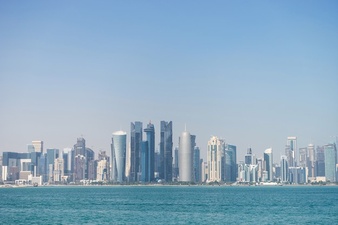
Over the past few decades, economic advancements and the fast-paced community have made Qatar an ideal place to live. The blend of traditional, cultural, and modern aspects is what Qatar is all about. This state is otherwise known as a peninsular island surrounded by waters on all sides. Expats from many countries move into this state to expand their businesses or for their jobs. Most residents prefer renting a property for the affordability factors. In contrast, many choose to pick apartments for sale in Qatar. There are many property options like flats, studio apartments, detached homes, villas available in different budget ranges. The best places to live in Qatar are: Lusail: Also known as the future city with many green neighborhoods, Lusail is a promising city to live in. The notable architecture and the geographical location lure more people into this region. There are several budget-friendly villas, modern flats, and studio apartments, making Lusail the go-to place for residents to lead a cost-effective life. Lusail is lined up with several restaurants, amusement parks, coffee shops, bars, etc., making it a desirable area for everyone. The increase in population gave birth to multiple business units across the city, opening many employment options for people. The Pearl: This region is the dream destination for anyone entering the premises of Qatar. The Pearl is an artificial island filled with a fresh breeze and a delightful aura across the place. This city is one of the most significant real-estate expansions in Middle East Asia. The Pearl is no short of entertainment and leisure spaces that keep people occupied apart from their work schedules. The most luxurious city of Qatar- The Pearl, is home to many deluxe households like beachside flats, studio apartments, Venice-themed villas, and more. The spectacular yachts are the perfect eye candy of the city. Al Sadd: Al Sadd is one such area that reflects a comfortable vibe and surrounded by all the necessary amenities to have a peaceful stay. The city and its roads have become even busier than before without losing their charm. The most popular Al Sadd Sports Club is based out of this city, best known for the football leagues. Many gorgeous households are affordable for the residents with all the vital facilities like hospitals, malls, cafes, schools, and more. Risking and travelling in the traffic would be more of a routine for the residents. Msheireb: The world's first and Qatar's completely sustainable downtown is Msheireb, located in the city of Musherib. The downtown region is known for preserving the celebrated values and cultural aspects of Qatar. Msheireb is divided into six phases with distinct architecture and building in each sector. This town is lined with plenty of schools, prayer ground, restaurants, cafes, museums, etc., making it a great place to live for families. The sustainability factor is the main reason for the high-end prices of the properties in Msheireb. Al Dafna: Al Dafna is situated along the sea-side of Qatar. This factor happens to be of great advantage for those on the lookout for homes with a splendid sea-view. Middle East's largest mall- City Center Mall is located in Dafna, where most people visit to spend their leisure time shopping, watching movies, and more. Al Dafna links most of the essential parts of Qatar, making it easier for commutation. Living in Dafna is economical and pleasant in all aspects. People residing here can travel to different business districts of Qatar in no time. Markhiya: Otherwise known as Al Markhiya is in the central part of Qatar and a popular neighborhood of Doha. Even though this region is listed under later developed places of Qatar, it became one of the fastest developed cities of Qatar. There are multiple low-rise households spread across Markhiya, which is considered a comfortable place to live in Qatar. The homes are economical and budget-friendly for the residents and located very close to West Bay, where most people can effortlessly travel for their business and job purposes on a daily basis. West Bay: West bay is known for the flooding businesses in the city and Qatar's luxurious areas. Living in tall skyscrapers and apartments gives more comfort to the residents while simultaneously exhibiting the city's best views. Most housing properties have a beautiful sea-facing settlement, which is the most in-demand option for the residents. Many prominent cities of Qatar are easily accessible through roads and rail networks from West Bay. Read Also: 5 Best Things To Know Before Renting A Property In Kings Cross What are the Best Real Estate Seller Leads? How Many Jobs Are Available In Real Estate Investment Trusts? May 2021
READ MOREDetails
Ideas to Design an Eco-friendly Home: Save This Planet
Stunning renovation can give a new life to your home while increasing its value. In selecting a home design and decorating material, you have to consider its impact on your environment. To avoid negative effects, you have to choose resources and materials responsibly. It means avoiding environmental toxins and focusing on energy efficiency. Sustainable home builders are not only giving you a nice renovative look. Along with the nice innovative look, the building strength is also making a huge difference. When you are planning to construct a sustainable home, the eco-friendly choices are also there, which makes your home a nice place to live without harming mother earth. 4 Ideas to Design An Eco-Friendly Home & Save This Planet In the current era, sustainable home building is a new standard. By building sustainable homes, you can save money in the future and save this planet. For your assistance, sustainable home builders in Australia are available. Here are some ideas that can help you to save this planet while building a new home. So often, you are thinking about the eco-friendly building materials you are considering the building will not be sustainable like the regular one. But if you are going to follow the ideas, you can simply develop a sustainable home. Here are six ideas to develop an eco-friendly home for sustainable home builders. 1. Location Plays A Critical Role In the first step, you have to select the best location. Try to build a home within walking distance of public transportation. It will help you to decrease your environmental impact. Moreover, the availability of infrastructure and utilities may vary. To decrease the harmful impact on the environment, eco-friendly materials will be great to use the current eco-friendly building construction. Make sure to avoid hazardous and sensitive sites, such as flood zones. Building in any hazardous location, and it is essential to build a durable house that can endure the hazard. It is not economical to build a house twice for any sustainable home builders. For this reason, try to avoid a hazardous site. 2. Measure The Size Of Houses Small houses can be more efficient than others. By building a small house, you can decrease energy and material needs. Undoubtedly, a large house requires more material and energy for cooling and heating. It is essential to think about your necessities before going overboard. Indeed, small dwellings are less wasteful and efficient. 3. Give Time For Orientation Of House For a solid, stable residence, sustainable home builders should not ignore orientation. If you have a house in the Northern Hemisphere, sunlight becomes necessary for you. You should have windows toward the south. It is possible to increase direct sunlight by building windows in the south. In this way, you can increase heat and natural light in your home. To avoid heat and excessive glare during summer, you can prevent west-facing windows. If you already have a window in the west, feel free to plant a huge tree to block uncomfortable heat and light. Remember, a deciduous tree is suitable for your windows in the south to save energy. 4. Create A Layout Model Of Your Home Indeed, the layout of your home plays an essential role in preserving energy. For instance, an igloo is an efficient house to build in cold areas because its shape can decrease surface area. Moreover, it is suitable to diminish interior heat loss. A wide house may lose more heat than a compact. Sustainable home builders always try to build a taller house instead of a wide building. Remember, a sphere or a cube can be suitable shapes. It does not mean to design a place similar to an igloo. For the best layout, you can consult a contractor. For your sustainable home, you can use local materials. It will decrease the cost of shipping and allow you to save money. Wrapping It Up: For Sustainable home builders, eco-friendly building constructions are like a challenge. More often, when you are planning to create an eco-friendly house, you have to be more conscious about choosing the building materials. The locations and the environments also play a significant role. Australia’s settings are pretty good for stable eco-friendly house choices. Read Also: The Key Benefits of Using SIPs to Build a Home Top 3 Home Renovation Considerations for this Spring
READ MOREDetails
Crucial Reasons To Choose Prefabricated Construction Methods
As companies continue to provide newer prefabricated construction methods for different budgets, the popularity of prefabrication has increased many folds in the past few years, and due to its numerous benefits, it is only expected to continue to grow in the future. If you have a construction project lined up, the following reasons are enough to convince you to choose prefabricated construction methods. Crucial Reasons To Choose Prefabricated Construction Methods: It's convenient You can check this company’s website to assess prefabricated construction materials built in controlled environments by skilled professionals, and that is why they are of a uniform quality, which makes the assembly of these materials less time-consuming. On the other hand, structures built on the construction site may vary according to the skills of the contractor. Also, since most of the structures are completed in the factory itself, fewer materials need to be transported to the construction site, which means there is less hassle, and since there is no heavy machinery involved, there are fewer disruptions for the neighbors. It's time-saving When compared to traditional construction, prefabricated construction takes less than half the time required than the latter one due to many reasons like upfront planning and contractor delays. Also, there is hardly any effect of the prevailing weather conditions, which even paces up the construction. Moreover, prefabrication allows the contractor to construct a number of structures simultaneously. Therefore, you can get your building ready in a very short time period. It's high-quality As mentioned above, prefabricated construction materials are manufactured in a controlled atmospheric environment using dry materials. This, along with the air-filtration, makes them resistant to any issues that might arise in the future due to moisture or weather. Also, there are few chances of any mistakes in the measurements as all these factory-made prefabricated materials are of standard size and high-quality. This kind of quality control is not possible in on-site construction. It's economical People generally believe custom made pieces to be more expensive than those used in traditional construction. However, this is not the case. The financial savings are, in fact, the most significant advantage of prefabrication. You can easily find a modular construction that is affordable and fits into your budget. Also, by saving the construction time, you can significantly cut the cost of the project. Cost also gets reduced as there is comparatively less amount of waste generated. Exposed construction-sites are also vulnerable to material thefts and losses. Prefabrication eliminates such possibilities. It's eco-friendly Modular construction is much more energy-efficient and sustainable as compared to the traditional one as in the latter one, the on-site mixing and building of materials generate enormous amounts of waste. This waste is a mix of materials that can't be separated and used for any other projects, and thus, rather than being recycled, it is sent to the landfills. On the other hand, the waste generated by prefabrication in the factories is recycled in-house. The standard quality and measurements make these materials more energy-efficient, thus sustainable. Read Also: What to Do if You're in an Accident with a Placarded Truck in Tampa The Key Benefits of Using SIPs to Build a Home
READ MOREDetails