











Is Cross Market AI The Biggest Trade Scamming Monster? Or Is It The Messiah It Claims To Be? Gain All The Important Info Here! 

by

21 January 2026

Marketing

Cross Market AI

I am sure you all have realised this by now: AI is restructuring the entire world as we speak. Forget the world, I am sure it’s on its way to reshape the goddamn Cosmos! 

I am still not sure whether placing AI on the pedestal and putting it out as a solution to EVERY single issue is a wise decision or not.  

When it comes to the financial industry, it’s important to be careful about what sounds too good to be true.  

This is where Cross Market AI comes in. The platform claims it can offer returns of about 1% every day. 

How? Well, as Aseem Jineja wrote in his blog, it uses automated strategies and AI for market trading.  

This promises a steady income. So, this can be appealing in an uncertain market.  

However, this raises important questions about safety and honesty. Investors need to think carefully.  

Can we trust these claims, or is it just hype? In this article, I will examine Cross Market AI and what it promises. 

I will also give you guys a fair idea of how it works and the risks involved. I have curated this blog in a certain way to help you make an informed decision. 

Is Cross Market AI Fake Or Real?
Now, I want to discuss whether you must consider Cross Market AI as real or not. 

So, now it’s worth noting that the platform has a limited social media presence.  

It does use influencers to promote the business. If you search Instagram for Cross Market AI, you might see many accounts. 

But I found it hard to identify the credible ones.  

One account claims to offer up to 72% profit per year, which is unrealistic and suggests it’s not genuine.  

While the platform has positive reviews on its Scamadvisor profile, it seems it has managed to avoid negative feedback by keeping a low social media presence.  

It can control comments on Instagram, helping to maintain a positive image.  

Good website health has also contributed to high traffic and favorable reviews.  

However, if you’re still unsure about its trustworthiness, there’s little user feedback since the company isn’t on the Play Store or App Store, where users usually share their complaints. 

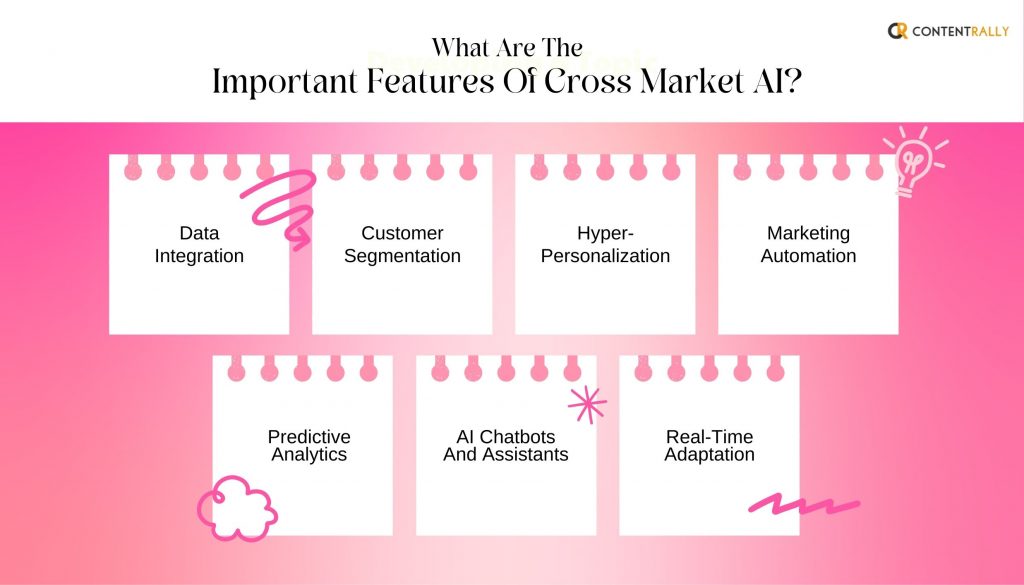
What Are The Important Features Of Cross Market AI?
There is a reason why I am mentioning this. Among all the speculations on the internet, this is the shiny jacket this platform wears.  

And guess what? These are the features that lure the audience in mysterious ways. Let’s take a look at them:  

1. Data Integration:  

This feature combines data from different sources, like:  

  • Social media 
  • CRM systems 

This gives a complete view of customers.  

The platform urges you to aggregate information. This way, your businesses can better understand customer behaviors and needs. 

Also, this will lead to more informed decisions. 

2. Customer Segmentation:  

This process sorts customers into specific groups. They form these based on their behaviors and preferences.  

It allows businesses to create targeted marketing campaigns that resonate with each segment. 

The thought’s nice because this can improve response rates. In fact, it can also boost customer satisfaction. 

3. Hyper-Personalization:  

This approach tailors content. Additionally, it offers individual customers access to integrated data.  

By providing personalized experiences, businesses can increase customer engagement. 

Also, they can foster greater loyalty over time. 

4. Marketing Automation:  

This feature automates various marketing tasks like:  

  • Email campaigns 
  • Advertising 

This aims to save you a lot of time. Also, it ensures that your campaigns run efficiently. 

Also, it allows marketers to focus on strategy rather than repetitive tasks. 

5. Predictive Analytics:  

This uses machine learning to anticipate future consumer actions. Also, this helps them to predict market trends.  

Basically, they make an effort to understand what is likely to happen. This way, your businesses can make proactive adjustments to strategies. 

In addition, they can stay competitive in changing markets. 

6. AI Chatbots And Assistants:  

These tools provide round-the-clock customer service through conversational AI.  

They can handle FAQs and assist customers efficiently. Also, this enhances the overall customer experience with immediate support. 

7. Real-Time Adaptation:  

This capability allows strategies to change dynamically based on current market data and customer feedback.  

By being adaptable, businesses can maintain the relevance of their campaigns. 

Additionally, they can ensure ongoing effectiveness in reaching their audience. 

Is Cross Market AI Safe?
Trading platforms that promise high returns quickly often operate like Ponzi schemes.  

If you want high returns, be cautious about certain warning signs: 

  1. The platform suggests that investors don’t need special skills to trade using AI.  
  1. If you believe this, you risk a lot by lacking knowledge of the trading industry.  
  1. A daily profit of 0.5% to 1% sounds too good to be true. Why would a platform offer such high returns, especially when the Indian stock market is struggling?  
  1. If the platform isn’t licensed to operate in India, should you trust them with your savings?  
  1. Additionally, do you have the expertise to judge if you should follow the AI-generated tips?  
  1. If you can’t tell what’s right and wrong, it’s risky to trust the platform outright.  

But you know what’s more concerning than all of these? The business background of Lavish Choudhary, the owner of Cross Market AI. 

Before this, he was previously linked to three companies called:  

  • Botbro 
  • QFX 
  • YFX 

In 2023, these companies were involved in scams. And I would like to mention that these scams were worth INR 500 crore. 

Then, Choudhary fled to Dubai afterward. 

What Is The Most Common Complaint Against Cross Market AI? 

Okay, so as I always say, all the platforms have some pros and cons. It is quite natural.  

But when it comes to Cross Market AI, there is one single issue that is constantly being reported by the users. 

The platform suddenly stops working! So what I suspect is that the people who have found the app in this situation are the unfortunate victims of the probable scam. 

I suppose by now you already understand why I mentioned its core features. This is because I wanted to weigh out the odds.  

When you read blogs where they mention the important features and the core benefits, you tend to swoon.  

But not from me. I will make you aware of everything and provide facts that will help you decide with clarity.  

I won’t be able to talk you out of the decision you want to invest in Cross Market AI.  

But I also wish to tell you that there are ways by which you can get out of any unfortunate situation.  

Let’s take a look at it. 

How Can You Report Cross Market AI? 

If you find yourself a victim of a scam, here are some important steps to take: 

  1. Firstly, you must contact your bank. You need to start by calling your bank to freeze your account. This will prevent any unauthorized transactions. 
  1. Secondly, I would suggest that you document everything. By this, I mean take screenshots and save recordings of all related:  
  • Information  
  • Images 
  • Communications 
  1. Thirdly, I will ask you to file a Police Report. So basically, you have to visit your nearest police station to lodge a First Information Report (FIR). 
  1. Additionally, you must file a complaint with the cybercrime department. 
  1. Also, you MUST reach out to SEBI. Submit a complaint in SCROES through the SEBI website. I strongly recommend this for quicker action. 
  1. In addition, you must use the Sachet portal to report the incident to the Reserve Bank of India. In fact, you have to provide all relevant details. 
  1. Finally, I would advise you to seek professional help. I think it’s best to consult with scam recovery services for legal assistance. 

Taking these steps can help you address the situation more effectively. 

Should You Trust Cross Market AI?  

That is all, my friend! I have shared all the relevant and necessary information you needed to make this decision. 

I want to end by saying that no matter how good the features look, it’s way more important to see how the platform actually works. 

Every platform claims to work the best. Additionally, they claim to have all the problem, solving and efficient features as well as the best benefits out there. 

But the real question is that even if all these are true, do the cons outweigh the pros? 

I suppose at this point, you must also question that: do these pros of Cross Market AI even exist?  

I would love to hear what you have to say about this. Remember, I am just a comment away!

Barsha Bhattacharya is a senior content writing executive. As a marketing enthusiast and professional for the past 4 years, writing is new to Barsha. And she is loving every bit of it. Her niches are marketing, lifestyle, wellness, travel and entertainment. Apart from writing, Barsha loves to travel, binge-watch, research conspiracy theories, Instagram and overthink.

View all posts

Leave a Reply

Your email address will not be published. Required fields are marked *

Related

Automation Tools

How Automation Tools Are Transforming Digital Marketing?

When it comes to digital marketing, automation tools are no longer just a futuristic concept; they have become a fundamental part of the marketer's toolkit. Automation not only enhances efficiency but also brings a level of sophistication and precision to marketing campaigns that were previously unattainable. To explore its applications further, here’s a look at how automation tools are transforming the field of digital marketing, backed by facts and recommendations that may not be commonly known. The Emergence of Automation in Digital Marketing The digital marketing world is inherently fast-paced and dynamic, with an ever-growing need for more efficient and effective strategies. This is where automation tools step in. They are designed to automate repetitive and time-consuming tasks such as email marketing, social media posting, and ad campaigns. But apart from streamlining repetitive and time-consuming tasks, there are several other ways in which automation tools have impacted the field of digital marketing. These are as follows: Enhanced Personalization and Targeting One of the most significant impacts of automation in digital marketing is the ability to personalize content at scale. With advanced data analysis capabilities, automation tools can segment audiences more precisely and tailor messages to meet the specific needs and interests of different groups. This granular approach to targeting not only increases the relevance of marketing messages but also boosts engagement rates. For instance, automated email marketing campaigns are known to result in a 70.5% higher open rate and a 152% higher click-through rate compared to standard emails, as per Campaign Monitor’s data. Streamlining Marketing Operations Automation tools streamline various aspects of marketing operations, from lead generation to customer retention strategies. They allow marketers to set up triggers based on user actions, ensuring timely and appropriate responses. For example, a user visiting a particular product page can automatically receive targeted emails or ads related to that product. This streamlined approach not only saves time but also ensures a cohesive and consistent marketing effort. Other Benefits and Recommendations Here are some other benefits of using Automation tools in the field of digital marketing: Predictive Analytics for Future Planning Beyond just automating tasks, some sophisticated automation tools now incorporate predictive analytics. This feature uses historical data to forecast future trends and consumer behaviors, allowing marketers to plan more proactive and strategic campaigns. Automated A/B Testing for Optimized Results While A/B testing is a known practice, automating this process can significantly enhance its effectiveness. Automated A/B testing can simultaneously test multiple variables, providing quicker and more accurate results to optimize marketing strategies. Integration with Customer Relationship Management (CRM) Integrating automation tools with CRM systems can create a more seamless customer journey. This integration ensures that all customer interactions, from initial contact to post-sale service, are tracked and managed effectively, leading to improved customer experiences and loyalty. Data-Driven Insights Marketing automation tools provide valuable data on user interactions, allowing marketers to make informed decisions. It helps identify audience preferences, optimize campaigns, and improve overall performance. Consistent Branding Automation tools maintain a consistent style across marketing channels, including visuals, content, and communications. This consistency enhances brand reputation in the competitive digital space. Social Media Integration Social media automation tools enable scheduled posts across platforms. Marketers can create content in advance, post at optimal times, and engage with audiences more efficiently. This results in better social media presence and increased engagement. Lead Nurturing and Generating Quality Leads Using automation tools allows marketers to nurture leads at every stage of the customer journey. For instance, when a user downloads a brochure from your website, marketing automation can automatically send personalized follow-up emails based on their interactions. This personalized approach increases the chances of conversion. Furthermore, 86% of marketers believe that marketing automation has improved lead quality. By analyzing user behavior and personalizing content, automation tools help attract and retain high-quality leads. The Challenges and Ethical Considerations While the benefits are substantial, there are challenges and ethical considerations in using automation tools. One major concern is the potential for a lack of personal touch. Marketers must balance automation with human interaction, especially in customer service and content creation. Additionally, data privacy and security are paramount. This is one of the most crucial considerations when it comes to using automation tools in digital marketing. Transparency and consent are absolutely essential. Hence, marketers must always inform users about data collection and usage beforehand. Moreover, with automation tools handling vast amounts of personal data, marketers must ensure compliance with regulations like GDPR and prioritize data security to maintain consumer trust. We have discussed some other challenges and ethical considerations of using Automation tools in digital marketing: Quality vs. Quantity Using automation tools can help to generate large volumes of leads but not all of them will be high quality. Focusing on the quantity of leads as opposed to quality can harm conversion rates. Hence, marketers should prioritize lead quality along with quantity to build meaningful relationships with customers. Customer Experience Overuse of automation tools can lead to impersonal interactions and can make brands seem robotic and detached. This spoils the consumer’s experience with the brand and results in a loss of authenticity. Hence, organizations should only use automation to enhance personalization not replace genuine human connection. The Future of Automation in Digital Marketing Looking ahead, the role of automation in digital marketing is set to become even more significant. Advances in AI and machine learning are expected to introduce even more sophisticated automation capabilities. As per Gartner’s prediction, by 2023, 40% of infrastructure and operations teams in large enterprises will use AI-augmented automation, resulting in higher IT productivity. We have explored some of the predictions and trends below: Automating High-Value Actions: Brands will move beyond automating repetitive tasks. They’ll focus on automating quality customer experiences, especially as consumers prioritize personalized interactions. Marketing, Sales, and Success Alignment: Teams (marketing, sales, and success) will collaborate more closely. Automation workflows will account for user behavior beyond marketing, ensuring a seamless customer journey. Automation as a Vital Part of CRMs: CRMs will integrate automation seamlessly. Sales professionals will leverage technology to close deals, enhancing efficiency and customer relationship management. Across a Company’s App Stack: Automation won’t be limited to marketing. It’ll extend across various business functions, optimizing processes and improving overall productivity. Business Chatbots as Full-Time Agents: Chatbots will evolve beyond simple responses. They’ll handle complex interactions, provide real-time assistance, and enhance customer support. AI for Automated Decision-Making: Artificial intelligence will drive data-driven decisions. Marketers will rely on AI algorithms for campaign optimization, targeting, and content recommendations. Automating Data Collection and Reporting: Automation tools will gather and analyze data efficiently. Real-time insights will inform marketing strategies and performance measurement. Robotic Process Automation (RPA) RPA will help businesses become more productive by automating repetitive tasks, reducing errors, and freeing up human resources. Improve Efficiency and Productivity With Marketing Automation Today, automation tools are not just transforming digital marketing; they are redefining it. By embracing these tools, marketers can unlock new levels of efficiency, personalization, and strategic insight. In this process, it’s crucial to approach automation with a balance, ensuring that the human element of marketing remains intact. As we continue to navigate the ever-changing digital landscape, the integration of automation in digital marketing strategies is not just a trend – it's a necessity for staying competitive and relevant in today’s digital marketplace. For further support, don’t hesitate to get in touch with an experienced digital marketing agency. Read Also: What Makes Automation Testing Essential For Retail? What Is YouTube Automation? Everything You Need To Know The Rapid Growth In The Global Industrial Automation Market

READ MOREDetails
SMS Marketing

Mistakes Entrepreneurs Should Avoid When Using SMS Marketing

SMS marketing has become increasingly popular for entrepreneurs to reach out to their target audience and boost sales. However, like with any form of marketing, there are mistakes that entrepreneurs should avoid when using SMS marketing if they want it to be successful. This blog post goes over the most common mistakes entrepreneurs make when using SMS marketing software and how they can fix them. So read on to learn more about SMS marketing! Not Having a Clear Objective One of the most common mistakes entrepreneurs make when using SMS marketing is needing a clear objective. Before sending out any message, you should have a goal that you would like your message to achieve. Are you trying to increase brand awareness? Are you looking for increased sales? By setting clear objectives before sending messages, you can craft messages tailored toward achieving those objectives. Not Having Clear Messaging Guidelines Another mistake entrepreneurs often make does not have clear messaging guidelines before launching an SMS campaign. Without these guidelines, it’s difficult for entrepreneurs to measure the success of their campaigns and ensure that all messages sent out are consistent with each other and the company’s overall branding and messaging strategy. It’s essential to establish a set of guidelines that outlines how often messages should be sent out, what type of content should be included in each letter, who should receive each piece of news, etc. so that all messages remain consistent and on-brand throughout the campaign. Not Getting Permission from Recipients The law requires companies to get permission from recipients before sending them promotional or transactional text messages. Please do so to avoid legal issues and a poor reputation among your customers. To ensure compliance with this law, companies need to provide customers with options on how they can opt in or opt out of receiving text messages from the company at any time during their relationship with the company. This ensures that customers always have control over whether or not they want to receive text messages from your company and helps protect both parties from potential legal issues or reputational damage in the future. Not Testing Messages Before Sending Them Out It’s also essential for companies to test their text messages before sending them out en masse so as not to send out incorrect or incomplete information, which could lead customers astray. Before sending out any message, companies should test it thoroughly by testing different versions of the same message until they find one that works best for their audience and goals. This will help ensure accuracy and consistency throughout all aspects of your SMS campaign while also helping you avoid potential pitfalls such as typos or incorrect information being sent out in your messages which can lead customers astray or give them a negative impression of your brand. Conclusion: SMS marketing effectively enables entrepreneurs to reach their target audience and boost sales. Still, there are several mistakes entrepreneurs need to avoid when implementing an SMS campaign if they want it to succeed. Companies must have a clear objective before launching a campaign and setting up clear messaging guidelines. Hence, as not keep track of its effectiveness over time while ensuring consistency across all aspects of its communication strategy with customers. Additionally, companies need to get permission from recipients before sending them promotional or transactional text messages to stay compliant with laws regarding texting campaigns and protect their reputation among customers. Finally, companies must test their text messages before sending them out en masse to avoid sending wrong information, which could lead customers astray. By avoiding these common pitfalls, businesses can maximize the success potential of their SMS campaigns. Additional: What Is SMS Gateway And How It Works Exploring The Different Types Of Digital Marketing Strategies Get More Installs: Which Extensions Can Help Drive Installs Of Your Mobile App? A How-To Guide For Every Entrepreneur – How To Use Unified Communications

READ MOREDetails
Cloth Diaper Brand

5 Steps On How To Have A Strong Online Presence For Your Cloth Diaper Brand

Parents who care about the environment are using cloth diapers more and more often as a way to reduce their environmental effects. Due to the expansion of social media, cloth diaper companies now have more opportunities than ever to engage with their target audience and build brand loyalty. However, given the range of social media platforms and strategies, it can be challenging for cloth diaper producers to know where to start. This article will provide you with a step-by-step strategy for developing a fruitful social media campaign for your cloth diaper business. It's important to remember that social media is just one part of a larger marketing strategy for your cloth diaper brand. Even though social media can be a potent tool for increasing brand recognition and connecting with your audience, it's also critical to take other marketing channels into account. This covers events, influencer marketing, and email marketing. You may be able to reach a larger audience and strengthen your brand's presence as a result. As you develop your approach, consider how social media fits into your overall marketing plan. Consider how you can build your cloth diaper company by using other channels to promote it. 1. Establishing Your Brand Voice And Visuals Establishing your brand voice and images is the first step in developing a thorough social media plan for your cloth diaper business. The brand voice of your company is the persona and voice that it conveys through messaging. It should be consistent across all media and reflect the messaging and values of your firm. Your brand's visuals are the images and graphics you use to represent your company. Here are some examples of how you can establish your brand voice and visuals for this specific brand: Determine Your Brand’s Personality And Tone The finest nappy for babies in the Philippines may aim to reflect the affectionate and protective traits of new parents in personality and tone. You may say it in a kind, compassionate way with messaging that prioritizes the health and welfare of infants and their families. Use Consistent Visual Elements A strong brand identity must be created through aesthetic consistency. This involves utilising uniform fonts, images, and color schemes across all platforms. For the cloth diaper company, it would be great to employ a soft color palette and sweet images that reflect the company's core principles. Use Graphics That Align With Your Brand The social media images should convey your company's values and messaging. The newborn diaper may have pictures of families and babies together with wording that emphasizes the brand's commitment to local traditions and customs. Personalize Your Messaging Use your brand voice to create a personal connection with your audience. By inviting them to share their personal experiences with your products, you may captivate your audience with compelling anecdotes and insights. This may emphasize how important it is to maintain an infant's happiness, health, and comfort. 2. Choosing The Right Platforms The next step is choosing the social media platforms best suited for your brand. Choosing the right social media platforms for your diaper brand is critical to developing a successful strategy. Your social media campaign's success may be impacted by each platform's unique qualities and user demographics. When choosing social media platforms for your cloth diaper business, keep the following in mind: Audience Demographics: To choose the best social media sites, you must first understand your target audience. Different platforms draw users from different age groups. For instance, Facebook often attracts an older demographic but Instagram attracts a younger one. Instagram might be the best medium for you if your target demographic is young parents. Content-Type: There are several platforms built for different types of content. For instance, Twitter excels at providing brief updates, whereas Instagram excels at providing visual information like photos and videos. If your diaper business creates a lot of visually appealing material, TikTok or Instagram may be the perfect platforms for you. Brand Personality: Every social media network has a distinct culture and tone all its own. It's crucial to select platforms that reflect the character and principles of your brand. TikTok might be a wonderful fit for your nappy brand, for instance, if it has a playful and entertaining nature. Competitors: Finally, it's critical to investigate the social media presence of your rivals. You must examine the platforms they employ and the methods of audience engagement. You can learn from this which platforms are most effective for your sector. You can use it to choose the platforms you want to use. 3. Creating A Content Calendar: Once your brand voice and imagery have been defined and the right platforms have been chosen, creating a content calendar takes work. A schedule for the types of content you'll produce and when is called a content calendar. User-generated content, informational materials, and product advertising are all permissible. It's critical to establish a consistent publishing schedule that matches the vocabulary and style of your brand. Here are some guidelines to assist you. Define your social media goals Research your audience Brainstorm content ideas Organize content by themes Create a content calendar 4. Engaging With Your Audience Engaging with your audience on social media is essential to developing a solid online presence for your cloth diaper brand. It can promote a sense of community and boost brand loyalty. These suggestions will help you interact with your audience: React to messages and comments. Pose inquiries that resemble feedback. Hold giveaways and contests. Share testimonials and pictures. Work together with influencers. Offer informative content, such as advice on caring for babies and cloth diapers. 5. Analyzing And Adjusting Your Strategy Monitoring metrics is essential to developing a successful social media strategy. Metric tracking makes it possible for you to determine what is working and what isn't so you can make the required adjustments. Monitoring engagement metrics like website traffic, likes, shares, comments, and follower growth is essential. Review Your Goals Are you succeeding in your brand's goals that you set forth? If not, it's time to review your objectives and modify your plan. Review Your Metrics Track your performance measures, like reach, engagement, and conversions, using social media analytics tools. Determine which sorts of materials are effective and which require your audience to connect with them. This information can be used to modify your content strategy. Review Your Audience Your audience may change as your brand develops. To make sure you're still focusing on the proper demographics and interests, review your target audience profile. Review Your Competition Keep an eye on your rivals and consider what they are doing right and where they need improvement. Utilize this data to find chances to distinguish your business and enhance your social media strategy. Adjust Your Content Strategy Adjust your content strategy in light of your analysis to suit your objectives, KPIs, target audience, and rivals. This can entail coming up with fresh content concepts. You can also change your content focus or alter the frequency and timing of your posts. Test And Iterate Once your plan has been modified, test your new strategy and keep an eye on your performance indicators. Repeat this process as necessary, testing and fine-tuning your plan of action until you get the desired outcomes. Conclusion Initially, creating a thorough social media plan for your cloth diaper company might be difficult and challenging. You may still develop a strategy that is suited to your brand's distinct voice and values by adhering to these essential stages. Establish your brand's voice and images, pick the appropriate platforms, plan your content, interact with your audience, then assess the results and modify your strategy as necessary. You'll be able to effectively engage with your target audience and establish a strong online presence for your cloth diaper brand by doing this. Read Also: How To Make Your Online Business More Humble By Managing Your Reputation The Online Reputation Management Mystery Revealed Online Marketing : Selling Your Product And Services

READ MOREDetails