











The Importance of Electrical Infrared Thermography Inspections

Published on: 21 December 2024 Last Updated on: 11 February 2026
The Importance of Electrical Infrared Thermography Inspections

The world runs on electrical systems, and many things would stop without them. When something goes wrong, people only notice how critical electrical systems are. They must be safe, reliable, and effective, and electrical infrared thermography inspections ensure they are.

Regular Infrared thermography inspections are very important preventive maintenance for electrical systems. Electrical thermal imaging is utilized for these inspections, which can further detect all the potential issues early on. Moreover, it helps to prevent them from escalating into serious problems. 

This very provocative approach is useful for the improvement of safety, reduction of energy costs and further extending equipment lifespan.

What is an  Electrical Infrared Thermography Inspection?

Technicians can uncover heat patterns and electrical systems through an infrared thermography inspection. This non-invasive technology detects temperature variations and possible problems behind walls, under floors, and in ceilings. 

The problem may be a loose connection, an overloaded circuit, or a faulty component that could lead to significant issues. The inspection allows these problems to be caught early before they become expensive repairs or cause accidents or injuries.

This technology is accurate and safe because the individual completing the inspection never comes into contact with the electrical system. By finding inconsistencies and heat distribution, they can uncover potential problems before they escalate. The technology is used in structural systems, mechanical systems, medicine, and environmental science.

So how does it work?

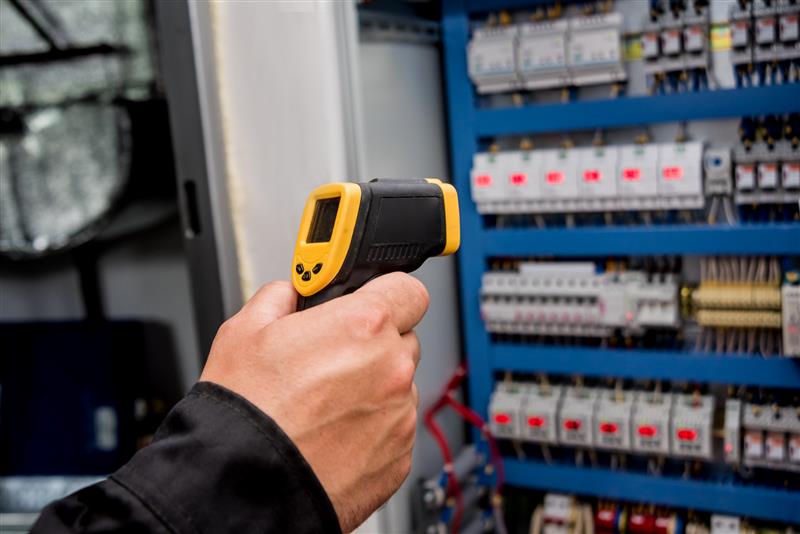
The trained technicians use these electrical infrared thermography cameras to capture all the images. This is also called a thermogram that shows surface heat variations.

Infrared thermography can detect all issues, such as faulty electrical connections, overloaded circuits as well as bearing failures. Electrical problems can cause costly shutdowns, severe property damage, and, lastly, business interruption.

Infrared thermography can help prevent all these issues by identifying problems before they even become serious.

How Does Infrared Find Electrical Problems?

Infrared cameras, or thermal imagers, can be called special eyes that "see" heat. Everything around emits some heat, and this camera detects the heat and pictures it according to the difference in temperature.

So, how do these help in diagnosing electrical issues?

Component Temperatures At Greater than Normal Operating Levels: As the electrical components are overstressed, faulty, or defect-prone, they usually produce temperatures above those obtained at normal operating temperatures. 

An infrared camera would catch this type of abnormal temperature that can indicate some issues before there is a fire breakout or equipment failure.

Loose Connections: Wires or terminals not properly connected are a source of resistance that leads to heating. Infrared cameras can spot these loose connections, thereby preventing arcing, sparking, and fire.

Overloaded Circuits: If a circuit draws more current than its rating, the wires and elements in the circuit get so hot. Infrared cameras will spot such overloaded circuits that might create dangerous conditions.

There are a few advantages that you can achieve, such as:

Early Detection: Early Detection-Infrared cameras are used for the diagnosis of problems at an initial stage, and hence do not require huge repair services.

Safety: Upon the identification of possible fire hazards through infrared cameras, safety features in domestic, commercial as well as industrial environments improve.

Reduced Downtime: Infrared cameras quickly identify problems, reducing equipment downtime and keeping businesses running smoothly.

(In the next section, I will be discussing the major benefits of Electrical Infrared Thermography)

In summary? The infrared camera is an indispensable instrument in the inspection and fault-finding of electrical systems. The cameras produce the necessary effects which are useful in detecting a fault without necessarily damaging the equipment.

The Benefits of Electrical Infrared Thermography Inspections

As previously mentioned, electrical infrared thermography inspections are highly beneficial because they catch problems early before they become significant issues.

Electrical systems are exposed to continuous wear and tear, which can lead to degradation. Improper installation and environmental conditions can also cause problems within these systems.

The technology captures thermal images to uncover abnormalities. The technician can conduct this inspection without halting the system.

This inspection is often part of a more extensive preventative maintenance program, helping reduce unexpected downtime while extending the lifespan of costly electrical parts. Problems are fixed before they escalate.

System performance improves when regular inspections are conducted. These inspections ensure the electrical system is performing at optimal levels. The business owner saves money by not paying for costly repairs or early replacements. Furthermore, efficient systems use less energy.

These thermal inspections ensure the safety of electrical systems. Electrical fires can quickly cause significant damage to a property. The inspections ensure that all components work as intended. The technician also identifies hazardous hot spots to be corrected before catastrophe strikes.

Business owners must comply with safety and operational standards, and thermography inspections help them achieve this goal. Conducting these inspections reduces the risk of the company being fined or encountering a legal or liability issue.

It also shows that the company remains committed to safety and operational excellence, which can help its reputation. Furthermore, these inspections may lower insurance premiums because they show that the business complies with these standards.

Common Uses 

Industrial plants often use thermography inspections to monitor machinery and panels and ensure they aren't overheating. Commercial buildings benefit from these inspections because they confirm all electrical systems are performing optimally. 

On top of that, homeowners may request a thermography inspection to ensure no electrical shorts could harm their families or properties. Utility companies also use this technology to monitor their power lines and transformers.

Contact a licensed electrician today to schedule a tomography inspection. The technician reviews the system's layout to determine which parts need to be inspected. Then, when the system is operating, they use a specialized camera to scan the electrical panel circuits and other equipment.

The thermal images captured by this camera are analyzed to identify hot spots and heat distribution issues. Upon completion of this review, the technician alerts the owner to any potential problems so they can be rectified and the electrical system can be safe again.

Read More:

Ankita Tripathy loves to write about food and the Hallyu Wave in particular. During her free time, she enjoys looking at the sky or reading books while sipping a cup of hot coffee. Her favourite niches are food, music, lifestyle, travel, and Korean Pop music and drama.

View all posts

Leave a Reply

Your email address will not be published. Required fields are marked *

Related

The Imperative to Transcribe Portuguese Audio

Unlocking The Power Of Words: The Imperative To Transcribe Portuguese Audio

byIn the contemporary landscape of language processing, the role of transcription services has emerged as a linchpin for unlocking the potential of spoken content. Particularly, when we delve into the intricate realm of Portuguese, the act of transcribing Portuguese audio to text stands as a pivotal endeavor with far-reaching implications. However, this exploration unveils the significance, applications, and transformative impact of transcribing Portuguese audio. The exploration also transcends the mere conversion of sound waves into written words. Transcribe Portuguese Audio To Text At the heart of this discussion lies the transformative process of transcribing spoken Portuguese into written form. Also, it is a feat that materializes through transcription services. This involves employing cutting-edge technology, including speech recognition algorithms and linguistic models. Moreover, they help transmute the Portuguese language's richness into precise and accessible textual content. The Multifaceted Significance Of Portuguese Transcription 1. Preservation Of Information Transcribing Portuguese audio serves as a custodian of information. Besides, it ensures that spoken words are not lost in the ephemeral realm of sound. However, by converting spoken content into written text, a tangible and lasting record is created. This is particularly vital in various domains such as academia, legal proceedings, and business communications. There, the accuracy and preservation of information are paramount. 2. Enhanced Accessibility The act of transcribing Portuguese audio enhances accessibility on multiple fronts. Individuals with hearing impairments can access information through written text, fostering inclusivity. Moreover, transcriptions serve as a valuable resource for those who prefer reading over listening, providing an alternative mode of engagement with content. 3. Language Learning And Proficiency For language learners, transcribing Portuguese audio becomes an invaluable tool. In addition, the written representation of spoken words aids in comprehension, vocabulary acquisition, and understanding of colloquial expressions. Language educators leverage transcriptions to create tailored learning materials, fostering a more immersive and effective learning experience. 4. SEO Optimization For Content In the digital realm, where content is king, transcribing Portuguese audio plays a strategic role in Search Engine Optimization (SEO). Transcriptions provide a textual representation of audio or video content, enriching it with relevant keywords. This not only enhances the discoverability of content but also contributes to a broader reach in the digital landscape. Applications Across Diverse Domains 1. Legal And Business Documentation In the legal and business spheres, where accuracy is non-negotiable, transcribing Portuguese audio ensures meticulous documentation. One can accurately negotiate and archive legal proceedings, client meetings, and business negotiations. This serves as a reference for future actions and contributes to transparency and compliance. 2. Journalism And Media Production Transcribing Portuguese interviews, podcasts, or video content is a cornerstone of efficient content creation for journalists and media producers. Transcriptions facilitate the process of drafting articles, editing video scripts, and creating subtitles. This saves time and ensures precision in conveying the intended message to the audience. 3. Academic Research And Interviews In academia, the importance of transcribing Portuguese audio is paramount. Researchers transcribe interviews, focus group discussions, and oral history narratives to analyze and extract meaningful insights. This meticulous process contributes to the credibility and rigor of academic research. 4. Healthcare And Medical Transcriptions Within the healthcare sector, transcribing Portuguese audio aids in the creation of medical records, dictations, and patient notes. This ensures that critical information is accurately documented, contributing to comprehensive patient care and maintaining a trail of medical histories. Navigating Challenges And Considerations 1. Accurate Representation Of Dialects Portuguese, like any language, encompasses diverse dialects and regional variations. Transcribing Portuguese audio accurately requires an understanding of these nuances to ensure that the written text captures the intended meaning. This challenge underscores the importance of linguistic expertise in the transcription process. 2. Data Privacy And Security As with any transcription endeavor, the privacy and security of transcribed content are paramount. In sectors like healthcare or legal, where sensitive information is often transcribed, robust measures must be in place to safeguard data against unauthorized access or breaches. Future Trajectories And Technological Advancements The trajectory of transcribing Portuguese audio is intertwined with ongoing technological advancements. The future holds the promise of enhanced accuracy through advanced speech recognition algorithms. Moreover, the integration of Artificial Intelligence (AI) may introduce features like contextual understanding, further refining the quality of transcriptions. Conclusion In conclusion, the act of transcribing Portuguese audio to text emerges not merely as a technical task but as a powerful conduit for weaving spoken words into impactful narratives. The multifaceted significance of transcription spans accessibility, education, business efficiency, and cultural preservation. As we navigate the complexities of language technology, the imperative to transcribe Portuguese audio stands as a testament to the enduring power of words and the transformative possibilities that arise when spoken language converges with written text. Read  Also : 5 Tips For Getting A Cheap Essay Writing Service Online The Importance Of SEO Based Digital Marketing Services Lawn Care Maintenance Services And Tips

READ MOREDetails
Scan

How To Scan From Printer To Computer?

Even been assigned the task to edit a file and scan it back? You might have wondered how exactly you would do that. The question of how to scan from a printer to PC can be tricky and you might need a little assistance in this aspect. Scanning a file from a printer to your PC can be an easy task for you if you follow the instructions given below. The following are the steps you need to follow to easily scan a document from your printer to your PC or laptop. Multifunction Color Laser Printers are the best when it comes to printing colorful images. Connect your computer to the scanner: First of all, you need to make sure that your PC or laptop is connected to the scanner. If it is not connected, then connect the scanner to your computer. Both the machines should be connected to a cord, as well as both of them, should be connected to your WiFi. Place the file on the scanner: Now you have to place the document, which you wish to scan, face-down on the scanner. Once you have properly placed the intended document, close the lid of the scanner. Open ‘Fax and Scan’ on your computer: Now, using your PC or laptop, select ‘Start’. You can find the ‘Select’ option on the lower-left corner of your screen. Now navigate to desktop apps and open ‘Fax and Scan.’ You can also open ‘Fax and Scan’ by typing this name on the search bar. Checking if the printer is correct or not: Once you have opened the ‘Fax and Scan,’ navigate to the ‘New Scan’ tab and click it. You can find the ‘New Scan’ tab on the upper left corner of the screen of your PC or laptop. A new window will be opened when you will click on the ‘New Scan’ tab. Now you need to make sure that the printer is correct. Navigate to the upper left corner of the newly opened window and check whether the printer is correct or not. If the printer is not correct, click on the ‘Change’ option, and choose the correct printer you want to use. Picking the right settings: Now, you need to pick up the right settings before scanning your file. Firstly, select the right type of file. You can choose the file type in the ‘Profile’ section. Now choose whether you want to print a ‘black and white’ document or a ‘colored’ one. Now choose the type of file you want your file to be saved as such as the PDF or JPEG format. Now, you can adjust other settings such as brightness, resolution, and contrast etcetera, if you want to. Scan the document: After you have picked the right settings, make sure that you preview the file before scanning it. If something does not look right, you can adjust it now. If you want to make any changes right now, you need to repeat the process to ensure that the document is completely right before you scan it. Finally, click on the ‘Scan’ option and your document will be scanned. If you want to find the scanned document, open file explorer, and navigate to the Documents folder. You will find the Scanned Documents folder in the Documents folder. Read also: Paper Authority: Basic Tips in Purchasing a Printer 7 Ways To Stop Spending So Much On Printing In Your Business Advance Copier: Printing Quality Business Cards On Your Own Computer

READ MOREDetails
Paper Shredding

Paper Shredding is Nothing Like in Hollywood Movies

How many times in Hollywood movies have you seen somebody frantically feeding papers into a shredder before the authorities arrive on the scene? It may be a common trope, but this doesn’t resemble how people use professional shredders today. Everybody has sensitive documents which could cause a devastating data breach if they got into the wrong hands. Having such information is an inevitable part of being a citizen — it doesn’t mean you have something to hide. Please keep reading to learn more about how professional shredding works in the real world. Home Shredding: Every day people are targeted by scammers who try to piece together whatever personal information about strangers they can get their hands on. People hire a paper shredding company every day to ensure that their home is free of data liabilities that could come back to bite them later. Here are a few of the items professional shredders commonly need to destroy: Tax documents Banking information Contracts Pages with passwords and usernames Especially with more people than ever working remotely, having sensitive information at home is more common than ever. If you have these or other such documents at home, the safest thing to do is get them professionally shredded. Commercial Shredding: It’s impossible to do business for any length of time without generating paperwork. From the smallest business to the largest corporation, there’ll be an endless procession of things like receipts, HR documents, contracts and agreements, and other paper documents which corporate saboteurs or identity thieves would love to possess. Just as with home shredding, professional shredders can destroy your sensitive documents on-site or remotely. For example, if you are located in California, you can look for shredding services in San Francisco to dispose of your documents securely. Even if they aren’t connected to the internet, electronics are a common source of data leaks, and these devices need to be eliminated with the same thoroughness as paper documents. Professional shredders will destroy the microchips on the device, so it’s impossible for a data thief to retrieve information. Do you have old phones, computers, or other electronics that you used for work? Obsolete technology might not be useful in your day-to-day life, but a corporate saboteur would love to find it! Call a professional shredder to get rid of electronics that are no longer useful safely. While some such devices like computers and phones are an obvious vector for identity theft, other devices that you may not think of also contain very sensitive information. If your office or home office contains an old photocopier or printer memory card, calling a professional shredder to eliminate it is the safest course of action you can take. People in all walks of life need to be careful that their personal and professional information doesn’t fall into the wrong hands. While the most prominent victims of identity theft get the bulk of the news coverage, it’s an issue that can affect anyone. Call professionals to help you steer clear of all risks associated with data theft. Read Also: High Technology Devices for Better Life Get The Best Assistive Technology: A Telecare Equipment

READ MOREDetails