











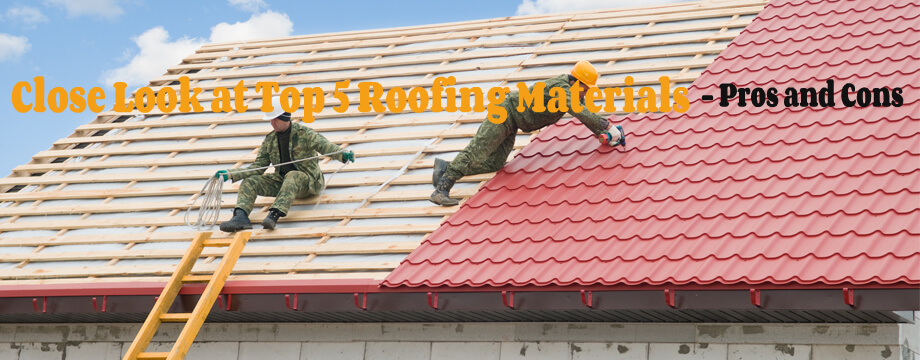
Close Look at Top 5 Roofing Materials – Pros and Cons

Published on: 12 December 2016 Last Updated on: 19 August 2019
Roofing- Pros and Cons

There’s no dearth of options for those mulling a new roof installation. Choosing the correct roof for your home is imperative to ensure that you get full functionality and lifespan. The final decision should be taken after considering different factors such as the owner’s location, the roof’s weight, and the cost, warranty, and lifetime of the product. This blog post discusses, five popular roofing options for homeowners taking time to look at their advantages and shortcomings:

1. Asphalt shingles

Asphalt shingles are unarguably the most common roofing option for homeowners in US, all thanks to their affordable nature and ease of installation. Moreover, many roofers also follow the practice of reinforcing shingles with organic materials or fiberglass, which has a positive impact on their durability and moisture resistance.

Pros

Asphalt shingles come in different sizes, shapes, and colors. They are easily available and the most economical roofing option available on the market.

Cons

Asphalt has a short lifespan when compared to other materials, and also incapable of providing proper insulation.

Best suited house styles: Traditional sub-urban houses

Cost: The cost of installing asphalt shingles can be anywhere between $70 to $120/sq.ft. and they can last for 20-25 years with proper maintenance.

2. Clay and concrete tiles

The use of clay adds to the roof’s texture and elegance, enhancing its aesthetic appeal. Clay and concrete tiles are heavy roofing materials and should be installed by professionals to avoid accidents and damage to property.

Pros

Clay and concrete tiles are highly durable and fire-resistant. They are also known for their energy efficiency. Installing a concrete roof can, therefore, help you lower energy costs.

Cons

Both clay and concrete are heavier than other roofing materials and usually require additional framing to function smoothly. The materials are also expensive and you may have to shell out a considerable amount of money to install clay/concrete tiles.

 Best suited house styles: Mediterranean, Southwestern, and Spanish-style homes.

Cost: Prices fluctuate in the range of $300-$500/sq.ft. Concrete tiles have a lifespan of 40-50 years provided you follow maintenance schedules without fail.

3. Metal roof

Metal roofs are available in two types, panels, and shingles. Some of the common metals used by roofers who specialize in metal roofing are aluminum, copper, stainless steel, and zinc. If you’re considering a metal roof, it is advisable that you first consult your provider on the type of metal you should use after considering all the important factors.

Read also: Avoid these 4 Mistakes during Multi Family Housing Renovation

Pros

Metal roofs are highly resistant to temperature fluctuations and also offer better protection against solar radiation. They are also long-lasting and recyclable.

Cons

Installing a metal roof can be a costly decision and you may have to shell out anywhere between $100-$800/sq.ft. to install a metal roof.

Best suited house styles: bungalows, cabins, and contemporary and cottage-style homes.

Effective life: With proper maintenance, metal roofs can last anywhere between 40-75 years.

4. Slate

Opting for a slate roof is a prudent decision if you need to avail a variety of designing options. Slate roofing comes in different colors like black, green, grey, red, and purple. It lends a touch of style and elegance to your roofing.

Pros

Slate roofs are durable and equipped with fire-resistance properties. You can also recycle slate to reduce costs and save the environment.

Cons

Apart from being expensive, slate is also heavy, making any plans for a DIY approach strongly inadvisable. Moreover, the quality of the materials can vary if you plan to use imported slate.

Cost: $600/sq.ft. And above. The effective life of slate roofs can extend up to 100 years and more.

5. Wood shingles and shake

Wood shingles are handmade and available in attractive shades of gray. When opting for wood roofing make sure the material is class a certified and includes shingles with a fire-resistant coating.

Pros

The use of wood shingles lends a rough yet artistic look to your roof. The shingles are made from natural materials like cedar, and redwood and are environment-friendly.

Cons

There are high chances of the roof sustaining significant damage when exposed to moisture, high temperatures, and rainfall. Moreover, fire codes in some states may prohibit the use of these materials.

Best suited house styles: Cape Cod, cottage, Craftsman and Tudor-style homes.

Cost: $100-$150/ sq.ft. You can expect the roofing to last around 25-30 years.

The blog discusses five popular roofing choices available to homeowners. You should, however, not limit yourself to these choices. Consider exploring other options before making a final decision. Consult your contractor and ask them to share their thoughts on your choice. You must also factor-in the maintenance costs and schedules associated with each option before you.

Content Rally wrapped around an online publication where you can publish your own intellectuals. It is a publishing platform designed to make great stories by content creators. This is your era, your place to be online. So come forward share your views, thoughts and ideas via Content Rally.

View all posts

Leave a Reply

Your email address will not be published. Required fields are marked *

Related

house painting

5 Interior House Painting Tips

Owning a house which you can modify according to your personal desire, is always something permanent and something incredibly profound. A home with well-painted walls and beams should tell the story of who you are and what you love. New paint with vibrant colors can change your mood, and make your home your favorite place to live in. Interior house painting can be a very intimidating and challenging task if you decide to take it upon yourself. You have two options, to either do it by yourself or hire a professional painting company to look over the project. If you opt with the first choice, these tips and techniques will help you to paint your own home, according to your likings, within a very friendly budget. When you want to paint your Boynton Beach home, be sure to give Gustafson Painting a call. The following steps are a guide on how to paint a house to meet your expectations: 1. Self Choosing Colors: The critical step, to begin with, is to choose a color which you like. Or at least you should have a good idea of what color combination suits your home, i.e. which colors you would like to paint to your rooms and which colors to paint washrooms, kitchen, etc. Select the color palettes and plan out which color combination gives your rooms the vibrant energy. Every color has its functions, e.g. Blue, green and purple are all relaxing colors. Moreover, other deep and shocking colors such as red, pink and yellow can be used in rooms which are mostly in use during the day, giving your rooms a lively, gaudy look. 2. Gathering Tools and Equipment: After this, you have to pick all the tools and equipment which are needed for painting the house; which includes sanding and scraping tools, wire brush, respirator, paint rollers, plastic sheets to cover the carpets and your valuable stuff, work gloves, drop cloth, ladder and scotch tape. This will ensure you are ready and won't have to leave your task in between, to search for something. 3. Repairing Damaged Parts: Once you have organized everything, the next step is to remove any dirt and dust buildups from the walls by using a pressure washer. After this, you can apply epoxy filler to cracks and fractures by using a putty knife. Allow it to let it dry. Once this is done, fill the gap around windows, doors, and ceilings to ensure a better coat of paint. When this is dried up, then feel the wall with your hand to ensure if there are any uneven spots left behind. Then, apply the primer to prepare the walls for paint when all damaged parts are repaired. 4. Brush the Walls: Before painting the walls with a roller, you should brush the walls. To brush the walls, mean to paint the corner of walls, ceilings, and trims. You can choose from paintbrushes which come in many shapes and sizes. The traditional method to paint the walls through brush is by the use of metal cans, which can be very difficult for you to carry along with the brush and can result in poor results. But nowadays, there are proper paint pails which will make the whole task a lot easier for you. 5. Ready to Paint Ahead! Finally, you are ready to paint with the rollers. But wait, before this you should mix a primer with paint to give a fresh and everlasting look. If you paint without using a primer, then the paint would peel off. For this, you have to scrap all the paint away, clean the surface before applying the first coat and after that, apply the second coat of your own choice. This is one way when you do not use a primer. But if you are using a primer with paint, then it will not cause any problem even if the first coat is not applied. And the most important order of painting as suggested by the experts of house painters in San Diego is that you should paint the trim first, then ceilings, and then walls. It will provide better adhesion throughout and will enhance the ability of the topcoat. Another pro tip is that don’t forget to open the windows and doors of your house during painting, as it provides better ventilation and the paint dries off quickly and efficiently. At the end of the painting, do the cleanup. Wash all the brushes and other stuff which you have used in the process. At last, give your house a final touch by placing all of the favorite furniture in place, to give your dream house a new look! With these interior house painting tips from the most experienced of the San Diego painting company, you will get pro results for your residence! Read Also: Find The Right Painters For Your Ann Arbor Home This Painting Season 5 Factors To Consider In Choosing The Right Floor Colors Roofing Painting Contractor Leads: Four Questions To Ask Before Hiring One

READ MOREDetails
Best Heat Pump

How to Choose the Best Heat Pump for Your Home?

Heat pumps serve dual purposes. They heat the home when it is cold outside and cool it when the temperature rises. These units are energy efficient and good for the environment because they don't burn fuel. However, the homeowner needs to ensure they get the correct unit for the home.  The Concept Of A Heat Pump  The heat pumps are becoming more and more popular these days. If you still don’t know about them and are trying to look for more information before buying a heat pump for your house, then you have landed yourself on the right page.  An electric air source heat pump is an outdoor unit. You can use this unit to keep your home both heat as well as cool your home. This totally depends on the weather.  The heat pumps are a great alternative to your central air conditioner or your furnace systems. This technology is specifically used in a refrigerator or an air conditioner. The unit extracts heat from a specific source.  It can be from the surrounding air, nearby sources of water, or eleven geothermal energy. Once it is done collecting the heat, it further amplifies it and then transfers it to the space where it is necessary.     How Do Heat Pumps Work?  Most heat pumps pull heat from the air and move it to the desired location. When heating the home, the unit takes the hot air from outside and brings it indoors. When cooling the house, the unit removes hot air from the home and transfers it outside.  They use less carbon than other heating options and work best when set at a consistent temperature. To see the optimal results, homeowners must ensure their houses are properly insulated and sealed. What else should they know before requesting a heat pump installation?  Heat Pump Options Air-to-air heat pumps are the most common air-source heat pumps used in America today. They come in two forms.  Ducted air-source heat pumps function like central AC units. Treated air is distributed throughout the home with the help of ductwork.  Ductless or mini-split air-source heat pumps are the second option, increasing in popularity. No ductwork is needed when a homeowner selects this option. However, other options exist.  Geothermal heat pumps pull heat from the ground to warm a home and release heat into the ground to cool the house.  These systems are highly efficient, but they often cost more to install. Water-source heat pumps are similar to ground-source units but are installed at the bottom of a pond. Air-to-water heat pumps use a hot-water radiator system to distribute heat throughout the home.  The Benefits of Heat Pumps Heat pumps are easy to install and work in most homes. The mini-split system is ideal for those without ductwork because the house won't have to be modified during installation.  Moving to a heat pump will significantly reduce the owner's carbon footprint, and many areas offer subsidies for those who choose to upgrade to this type of unit.  Let’s learn about the benefits of the best heat pump:  Energy Efficiency  Many users have agreed that heat pumps show more efficiency than all traditional furnaces. These heat pumps help to move the heat from the outside air or ground into your home.  As a result, you can easily save a lot of money on the overall energy bills.  Improved Air Quality  The heat pumps can both filter and then deodorize the air. This helps you to reduce allergies as well as asthma.  Quiet Operation  The heat pumps are an excellent choice for your home and businesses as they generate less noise and are typically quieter than the other systems.   Easy Maintenance Process   The heat pumps do not require much attention and are very simple to manage. It does not need regular servicing.  P.S. Heat pumps can be expensive, and you may face difficulties installing the system. Otherwise, the system and its benefits make it a perfect long-term investment.  When Not to Install Heat Pump? A poorly insulated home or a leaky one will not benefit from a heat pump because drafts and cold spots are often an issue.  Homeowners must research their electrical service to ensure it can handle the heat pump load, as upgrading the electrical system to install this unit will add to the cost.  Finally, individuals in cold climates may find their heat pumps cannot keep up. The Department of Energy has established eight climate zones for the United States. In zones 7 and 8, homeowners need to consider other options.  Choosing a Heat Pump Homeowners must consider several factors when choosing a heat pump. You must consider the size and capacity of your space. If you fail to choose the best heat pump of the proper size, it will cost more to run. Moreover, it won't keep the home at the desired temperature.  The determination of the right size heat pump involves two kinds of measurements:  1. Manual J Load calculation  HVAC technicians widely use this specific kind of calculation. They consider certain factors that help them to understand how much heating and cooling your home needs before choosing the best heat pump. These factors are as follows:  The square footage measurement of your home Ceiling height  Insulation of your house  The climate type and the number of days you might need the heating or cooling  How often the space is being used?  The number of people who use the space The total number of heat-producing appliances that you have in your room  Number of windows and doors.  The technicians consider these values and further enter them into a formula to get the precise result.  2. Square Footage Calculation The calculator might seem a bit simpler, but it is not precise enough to calculate the required heat pump capacity.  For instance, if your total house space is around 1500 square feet, then you would need a 3-ton unit. BTUs, or British Thermal units further measure these ton units.  An experienced technician can help the homeowner determine the BTUs needed for the house.   Home size (sq. ft.)Size of the heat pump (in tons)Size of the heat pump (in BTUs)500 sq. ft.1-ton 12000 BTUs. 1500 sq. ft.3-ton36,000 BTUs2500 sq. ft.5-ton 60,000 BTUs Apart from these calculations, compressor type is important when choosing the best heat pump. Most homeowners choose a variable-speed compressor, which automatically adjusts to maintain the selected temperature.  Efficiency is also a consideration when choosing the best heat pump. Look for a high SEER rating to save on energy bills.  Learn about each unit's climate performance and research the noise level. Finally, the reliability of each unit must be considered to ensure the heat pump will work when needed.  Once a heat pump has been selected, choose a contractor. Ensure they are trained to handle this task and have been in business for a while.  Doing so ensures best heat pump will be installed correctly, and help will be available if problems arise. When homeowners take these steps, they will have peace of mind knowing their unit will work when needed. Additional Reading: Removing Air Conditioner Filters: A Guide Advantages Of Using A Water Heater At Home What Can An Air Conditioning Installation Expert Assist You With?

READ MOREDetails
Keep Your Home Warm

Additional Ways to Keep Your Home Warm

Having a good furnace is the most important thing you need if you want to keep warm in the winter. Hopefully, you have performed an important annual service before you started using your furnace regularly. If you haven’t, you should consider doing so now, because you can never be too sure that your furnace won’t fail you. If, however, it does, you will need help from professionals like hughesairco.com. Keep in mind that having a good furnace is not the only thing that helps your home feel warm. While a furnace will heat up your home, it is the insulation that will help it stay warm. Here are some useful tips about insulation. Windows Your windows are probably the biggest source of heat loss at your house. The large glass surfaces aren’t good at keeping the warmth in by themselves, so they may need some help from you. There are several improvements you can make to your windows which will make them a source of savings rather than a black hole when it comes to conserving energy and heat. Read More: Essential Things To Consider Before Hiring A Window Tinting Expert Double Pane Windows The simplest way to preserve some heat inside your home is to have double pane windows. There is not much to explain about the appearance of these windows. There are two panes of glass with air in between them. The reason why they work well to preserve heat is the way heat is transferred. Solid objects are much better at heat transfer than gases are. That’s why you can put your hand inside the hot oven but really shouldn’t touch anything. Similarly, the glass heats up far quicker than the air but is also much quicker to lose the heat. So, the inside pane of glass heats up from the contact with the inside air. If there was nothing between that pane of glass and the outside air, the heat transfer would be just as quick. However, with double pane windows, the glass needs to transfer the heat to the air in the middle, which is slow to take the heat and slower to transfer it to the outside pane, and subsequently to the outside air. Read More: Before You Forget : Things You Need To Consider Before Windows Replacement Window Insulation Windows need to have some sort of stripping on them. However, not all stripping is the same. There are different materials which are more or less suited to insulate the window. Make sure to research thoroughly which kind suits your needs and the climate of your home. Be sure to check the weather stripping around all of your windows. If it is old and cracked, it is time to change it. In most cases, you should be able to do it alone, but if you feel like you aren’t the person for the job, contact a contractor. When it comes to insulation, you have another option. Clear plastic films which attach to the inside of your windows and insulate it from within. Most hardware stores carry these items and, like the weather stripping, they are inexpensive and really easy to install on your windows. The same effect can be achieved with plastic kitchen wrap or bubble wrap, but the end result will not be as appealing as with professional items designed specifically for that purpose. Repair the Gaps In some cases, the insulation of your house itself might be lacking, especially near the windows. If you bought the house and don’t really know the state of the insulation, make sure to check that with an expert. Once you have identified the weak spots, it is an easy task to fix the problem. Keeping your house well insulated will prevent you from pushing your furnace to work overtime and potentially damage it, especially during the peak heating season. To contact Hughes Air Heating & Cooling 220 W 6th Ave, Mesa, AZ 85210, USA 480-247-6927 Read More:  How To Salvage Your Furniture After A Flood 5 Essential Tips To Designing A Beautiful Front Yard Garden Best 5 Designer Secrets To Make The Most Of Small Spaces

READ MOREDetails