













How Long Does Pre Workout Last? – Best Ways to Maximize It 

Published on: 29 November 2024 Last Updated on: 28 January 2026
how long does pre workout last

How long does pre workout last? – Once you consume pre-workout, its effects last for 3 to 6 hours in your body. Basically, the job of a pre-workout is to improve your physical and mental performance during exercise. If you want to consume pre-workout, you have to consume it as energy shots or as a powder that you mix with water.

In this article, you will learn about how long a pre-workout lasts. Apart from that, you will also learn about the key factors that influence a pre-workout’s duration. Moreover, this article will also explain how to maximize the duration of pre-workouts. Hence, to learn more, read on to the end of the article.

How Long Does Pre-Workout Last?

Generally, a pre-workout has a noticeable effect for 1 to 2 hours when you are working out. However, the ingredients remain in your body for around 4 to 6 hours. In fact, the ingredients of a pre-workout supplement remain in your system. Basically, it depends on the amount of caffeine it contains.

Here are a few points you must consider about pre-workout duration:

  • Peak Effect: For a pre-workout, after you consume it, you will feel the most intense effects within the first 30-60 minutes.
  • Caffeine Half-Life: Caffeine is the primary contributor to the duration of a pre-workout. In fact, the duration of caffeine is around 5-6 hours. Hence, it takes longer for the body to eliminate half of what you consume that has caffeine in it.
  • Individual Variations: The amount of time up to which a pre-workout lasts also depends on your individual bodily factors. For example, how good your metabolism is or how sensitive your body is to caffeine matters a lot.

Key Factors That Influence the Duration of Pre-Workout
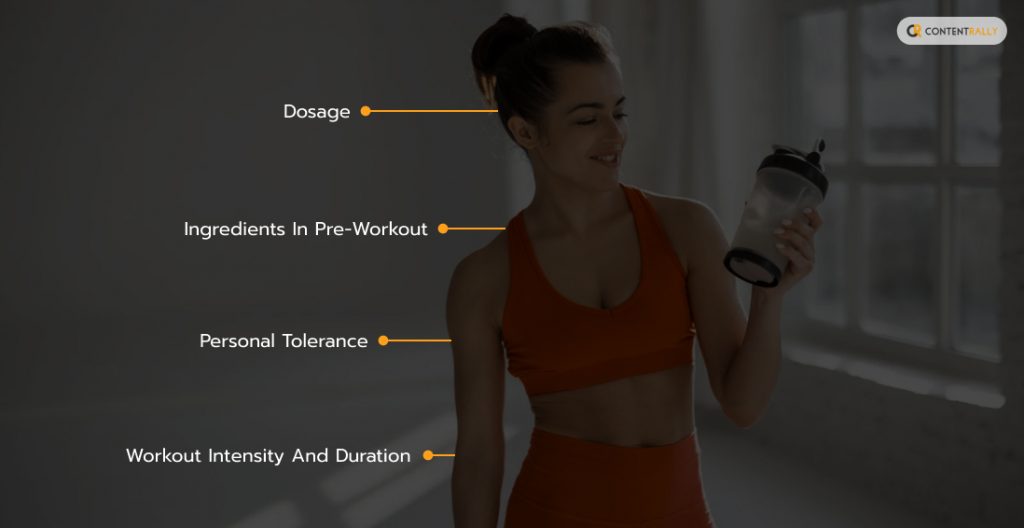
Key Factors That Influence the Duration of Pre-Workout

Depending on the amount of pre-workout you consume, you will experience a rise in physical and mental energy for 30 minutes to 2.5 hours. Moreover, the pre-workout stays in your body for a much longer time due to caffeine content.

The following are some of the major factors that influence the amount of time a pre-workout will last:

1. Dosage

The pre-workout dosage affects the amount of time up to which you will experience its benefits. In fact, the more pre-workout you consume, the longer it will have an effect on you.

Moreover, if you take higher doses, your energy levels will remain high between these periods. Also, there shall be lower feelings of exertion. Generally, this is the effect of individual ingredients.

However, always remember to take a dosage that your nutritionist recommends.

2. Ingredients in Pre-Workout

The common ingredients of pre-workouts include caffeine, beta-alanine, creatine, etc. Basically, these ingredients determine the amount of time the pre-workout affects you. In fact, each ingredient offers you something different. Hence, a pre-workout with more than one thing will affect you in different ways.

a. Caffeine

Caffeine is present in multiple beverages, energy drinks, and tea. Generally, you will experience the effects of caffeine for 2.5 to 4.5 hours. However, depending on your personality and your body type, this will vary a bit.

b. Nitrates

Most pre-workout supplements contain nitrates and amino acids. This helps in producing nitrate oxide, which helps to produce a higher amount of oxygen than the body needs during exercise. However, once you consume it, nitrate will remain for 1-3 hours.

c. Beta-alanine

This is a type of amino acid that comes with multiple benefits. However, you must consume it before you start exercising. Such a pre-workout will offer you higher aerobic and anaerobic endurance.

Apart from that, you will benefit from higher muscle mass, better capacity to exercise, and a reduction in lactic acid buildup.

3. Personal Tolerance

If you use pre-workout consistently or for a long period of time, your body will start tolerating it and its effects. Hence, most experts recommend that you use pre-workout in a cycle. For example, you take a pre-workout for six weeks and then take a break of six weeks from using this supplement.

Hence, after you retake a pre-workout later, it will have an effect on your body. This is a useful way to make the most of pre-workouts.

4. Workout Intensity and Duration

The workout length and effort level influence how long the pre-workout lasts. For instance, your body might use up individual ingredients faster when you are in a high-intensity workout.

However, if you resort to lower-intensity training, you will not fully utilize your pre-workout to the fullest. Hence, you will not experience all the benefits it offers. Actually, pre-workout is useful for high-intensity exercises. Apart from that, some studies suggest that if you consume pre-workout before cardio, it will be beneficial for you.

How Long Do Specific Ingredients Last?

How Long Do Specific Ingredients Last_

Generally, it depends on the individual when it comes to the duration of specific ingredients like beta-alanine and caffeine can vary a bit. However, in most cases, you can notice the effect of caffeine within 30 minutes to an hour. Also, the effect of caffeine can last for 2-3 hours. This is because caffeine has a half-life of 3-5 hours.

On the other hand, the half-life of beta-alanine is about 25 minutes. Hence, you will experience the effects of beta-alanine for a shorter period of time.

1. Caffeine 

Caffeine is the primary stimulant in most pre-workouts. Generally, you will notice its effect for 1-2 hours. Moreover, its half-life can be extended by 3-5 hours. Also, its effect depends on your metabolism and workout intensity.

2. Beta-Alanine

Beta-alanine causes a tingling sensation in your body since your body absorbs it faster. Here, the effect of beta-alanine peaks within 30 minutes. Also, it will last for about 2-3 hours.

3. Creatine

Creatine is actually a muscle-building ingredient. In fact, you need to consistently use it for a few weeks if you want to fully saturate it to muscle stores. Also, its effects last much longer than immediate pre-workouts.

4. Nitric Oxide Boosters 

Nitric oxide ingredient in pre-workouts has an effect on blood flow and pump duration. This actually helps you with better endurance levels. Nitric oxide provides more oxygen in your body when your body needs it. In fact, once you consume it, it will peak after 1-3 hours.

How to Maximize the Duration of Pre-Workout?

How to Maximize the Duration of Pre-Workout_

If you want to maximize the duration of your pre-workout, consider taking it around 30 minutes before you start working out. This way, you give your body enough time to absorb all the ingredients inside your pre-workout. Also, you must avoid taking it too early since the effects might diminish before you start your workout.

However, make sure you stick to a dose that is recommended for your case. Apart from that, it is important to hydrate your body. Drink plenty of water during and after the workout. This will maximize the absorption of supplements. Moreover, make sure to choose a pre-workout that has a long-lasting effect (for example, creatine).

On the other hand, try to be mindful of caffeine. Too much caffeine is not good for anyone. Additionally, if you are sensitive to it, adjust your dosage accordingly. However, if you want more energy to sustain in your body, consider consuming a pre-workout with creatine in it.

Potential Side Effects and How They Relate to Duration

Potential Side Effects and How They Relate to Duration

The following are some of the potential side effects of pre-workouts:

  • headaches
  • stomach upset
  • nausea
  • anxiety
  • jitters
  • dehydration
  • an increase in heart rate
  • sleep disturbances

Generally, these side effects vary in terms of intensity depending on the time and duration of use. If you use pre-workouts for the short term, you can see only mild side effects like mild stomach upset, jitters, a little increase in heart rate, etc. These problems go away once the effect of the pre-workout is gone.

On the other hand, if you use pre-workout consistently, there is a greater risk of severe side effects. For instance, you might face caffeine dependence, dehydration, higher blood pressure, heart issues, sleep disruption, etc.

Apart from that, it also depends on the sensitivity of the individual to the ingredients. Moreover, make sure not to take pre-workouts close to your sleep time as it can impact your sleep quality.

What Happens After Pre-Workout Effects Wear Off? 

What Happens After Pre-Workout Effects Wear Off_

Here are a few things that might happen after your pre-workout wears off:

  • You will feel a drop in your energy levels. This may result in a reduction in performance.
  • Slight irritability and agitation are common.

Moreover, your individual caffeine sensitivity also determines your loss of energy and performance.

Summing Up

How long does pre workout last? – Now you know the answer to this question. Generally, the effect of pre-workout lasts for 30 minutes to 1 hour. However, it still stays in your body for 3-5 hours. However, these numbers might vary depending on your individual physicality, sensitivity, and metabolism.

Do you have more information to provide regarding the timing and duration of pre-workouts? Please share them in the comments section below.

Read Also:

A passionate writer and an avid reader, Soumava is academically inclined and loves writing on topics requiring deep research. Having 3+ years of experience, Soumava also loves writing blogs in other domains, including digital marketing, business, technology, travel, and sports.

View all posts

Leave a Reply

Your email address will not be published. Required fields are marked *

Related

Best Moments To Combat Mosquitoes And Ticks

Timing Is Key: Unveiling The Best Moments To Combat Mosquitoes And Ticks

In the quest for a peaceful, healthy living and working environment, one often overlooked aspect is the timing of pest control measures. This statement is particularly true in the battle against common irritants like mosquitoes and ticks, which are not just sources of discomfort but can also be carriers of serious diseases. Mosquito and tick control's effectiveness is significantly enhanced when implemented at the right time. This guide provides valuable insights into the best moments for controlling these pests, ensuring your homes and offices remain safe havens. Understanding The Enemy: Behaviors Mosquitoes and ticks exhibit distinct behaviors and preferences. Mosquitoes are typically most active during dawn and dusk and prefer humid environments. They breed in stagnant water and can become a significant problem if not controlled. Ticks, conversely, lurk in tall grass and wooded areas and show heightened activity in warmer months. Targeting mosquitoes in the early morning or late evening, when they are most active, can lead to more impactful results. For ticks, focusing on prevention in spring and summer, when they are breeding and most active, is vital to controlling their population. The Best Time For Spraying Spraying in the late afternoon or early evening, just before mosquitoes become most active, ensures that the maximum number of pests are exposed to the treatment. This timing allows the spray to settle and take effect at the right moment. In the case of ticks, the best time for treatment is during late spring and early summer. Applying treatments during this period targets nymph ticks, which are particularly active and pose a significant risk. Weather Considerations The success of pest control efforts is closely tied to weather conditions. Mosquito control sprays, for instance, are less effective in windy or rainy conditions as these elements can dilute or disperse the treatment, reducing its potency. Ideal tick control is achieved in dry weather, as humidity and rain can affect the application and longevity of products. Therefore, it's advisable to choose a clear, dry day for the application of tick treatments. Frequency Of Treatment Maintaining a consistent treatment schedule is crucial. For mosquitoes, regular treatments every 4-6 weeks during their active season can significantly curb their presence. For ticks, a bi-monthly treatment during their peak season is recommended. Regular treatments disrupt the life cycle of ticks, preventing their proliferation and reducing the likelihood of infestations. Natural vs. Chemical Treatments Choosing between natural and chemical treatments depends on several factors, including the severity of the infestation and personal preferences. Natural remedies, like essential oils and plant-based products, can be effective against mosquitoes and ticks. However, these may require more frequent application and are generally less potent than chemical options. Here are three oils that can be used as natural pest repellents: · Lemon Eucalyptus Oil: Derived from the leaves of the lemon eucalyptus tree, this oil is known for its effectiveness in repelling mosquitoes and ticks. · Lavender Oil: Besides its calming fragrance, lavender oil is also recognized for repelling mosquitoes and ticks. · Tea Tree Oil: This oil, extracted from the leaves of the tea tree, is praised for its antiseptic properties and also acts as a natural repellent against these pests. Chemical treatments offer longer-lasting protection and are often more effective in controlling larger infestations. They should, however, be used judiciously and responsibly, considering the safety of all inhabitants, including pets and children. Here are three chemical substances that can be used as pest repellents: · DEET (N, N-Diethyl-meta-toluamide): Probably the most well-known chemical repellent, DEET is widely used for its effectiveness against a wide range of pests. · Picaridin: Known for being less irritating than DEET, picaridin is another effective chemical repellent against mosquitoes and ticks. · Permethrin: Although not typically used on the skin, permethrin can be applied to clothing, footwear, and gear to protect against mosquito and tick bites. It's important to note that the effectiveness and safety of these oils and chemicals can vary based on concentration and method of application. Always follow manufacturer guidelines and consider any personal or environmental health concerns when choosing a repellent. DIY vs. Professional Services DIY pest control can be tempting, but it requires a good understanding of the products and their proper application. Incorrect usage can not only reduce effectiveness but also pose health risks. Professional pest control services provide expertise and more potent solutions. They offer a comprehensive approach, often including an infestation assessment, treatment application, and follow-up services. While costly, professionals can save time and ensure a thorough approach. Safety Precautions Safety should be a primary concern, whether opting for DIY methods or professional services. When applying treatments, wearing appropriate protective gear and adhering strictly to the product's instructions are crucial. Particularly with chemical treatments, it's essential to keep children and pets away from the treated areas until they're safe. Always ensure that treated areas are well-ventilated and avoid contact with the skin and eyes. Integrating Pest Control Into Your Routine Integrating pest control into your regular home maintenance routine can significantly reduce the presence of mosquitoes and ticks. This process not only includes the application of treatments but also preventive measures. Regularly clearing standing water, maintaining your yard, and keeping grass trimmed can discourage these pests from breeding and residing in your space. Additionally, regular checks and maintenance of your environment can minimize the need for frequent treatments, making your pest control efforts more efficient and sustainable. The Role Of Technology In Pest Control Advances in technology have introduced innovative and more environmentally friendly pest control solutions. These include ultrasonic devices, which repel pests using high-frequency sound waves, and biological treatments that use natural predators or pathogens to target specific pests. Staying informed about the latest developments in pest control technology can provide more effective, sustainable, and eco-friendly options for managing pests. Preparing For The Off-Season Even during off-peak seasons, when pest activity is low, preparing for their return is important. Start by winterizing your outdoor spaces and end by strategizing your pest control approach for the upcoming season. Conducting an off-season audit of potential breeding sites and preparing a proactive pest control plan can significantly reduce severe infestations in warmer months. Conclusion Effective mosquito and tick control transcends the mere use of products; it hinges on understanding and capitalizing on the right timing. Aligning your pest control strategies with the behavioral patterns of these pests and considering factors such as weather, treatment frequency, and safety can create a more comfortable, healthy, and pest-free environment in your homes and offices. In the realm of pest control, remember that timing is, indeed, key to success. Read Also: Top 4 Must-Have Appliances In Every Kitchen Top 10 Effective Tips To Keep Your Home Safe 5 Tips To Safeguard Your Home From Intruders

READ MOREDetails
Health

Things No One Warns You About When Working Home Health Care Assistance

Caregivers make up a critically important part of the healthcare system, around 9.5 million people are involved - either family members, or trained professionals. Taking up such a spot requires a great deal of heartfelt desire to help, support, and sacrifice. Whatever the noble cause to start, the reality can be quite harsh, everything that involves human-human contact becomes a challenge, sooner or later. The caregiving position encompasses two sides: Visible or physical -  bathing, dressing, grooming, toileting, transferring, feeding, etc. Invisible or psychological - empathy, support, listening, sympathy, care, compassion, patience - and all these qualities are doubled or tripled depending on the case. This is just a short list of theoretically crucial requirements. However, in practice, everything is even more demanding. Those who are willing to apply for the home care assistant jobs, need to be aware of all the aspects of such an occupation, including the flip side. 1. Emotional breakouts People who are full of compassion are emphatic, they feel what others feel and co-live the pain. Apart from making you a great listener, it can also devastate you from the inside. Obviously, the majority of the clients have a sad story when reaching you, and they share their pain, as it’s just natural. That’s the moment when you need to learn to build walls to defend your world from crushing. It doesn’t mean being ignorant about someone’s feelings, but not letting them go through you. Even if it sounds cruel, it’s a vital step to save your psychological health. Think about the doctors, they see a lot, but they never cross the border of empathy, as it will lead to a breakout. Listen, analyze, and sympathize, but never let it inside. Emotionally-proofed people will work more efficiently, as their emotional state will not get the lead. 2. Physical challenge The lightest cases of caregiving will get by with shopping, cleaning, and cooking, which don’t require a high level of physical strength. It is quite a pleasant experience, as the person you are looking after can make a great friend, talker, and listener - just one more person to learn from. However, the prevailing number of care receivers have more severe issues and will require bathing, toilet assistance, washing, etc. In this case, you will make the main force. If you don’t have enough muscle endurance and strength, you both will suffer - your client and you, as the probability of injuries gets too high. In order to prevent such situations from happening, you need to be physically prepared - going to the gym is the best variant. Remember, your health is the foundation of your life and daily performance, your most precious resource. Don’t let it deteriorate, otherwise, your career will end up quite soon. Related: Is Medical Assistant A Good Career Path In 2021? 3. Mood swings We all know about kids experiencing mood swings due to hormonal changes, and they find it hard to control their emotions. However, they are not alone in this problem. The elderly can undergo even more severe mood changes. There are various reasons for that - reaction to pain, health problems, terminal illnesses, inability to accept the changes in body and lifestyle due to aging, etc. While young people mock at grumpiness of the seniors, it’s worth digging more, to see the reason for such negativism. The majority of the clients used to be cheerful and easy-going a few decades before, however, the life lessons could be too hard for many. It is important not to flinch and be understanding, just change the topic, tell a joke to ease the tension, etc. It will help greatly if you deepen your knowledge of the psychology and behavioral changes of seniors. 4. Awkward moments Dressing/undressing, washing/bathing, toilet assistance - these are the most painful moment for people you help. Nobody is used to being suddenly limited in such easy activities and motions, this is the hardest truth to accept. It may cause excessive shyness or an overwhelmingly protective reaction. After it becomes a regular routine, things will get simpler, yet it takes time to adjust. 5. Personal care A good caregiver is a healthy caregiver - psychologically and physically, as only the balance of both will work. Physical exercises, proper nutrition, and sound sleep - the three most important cornerstones for efficient functioning during the day: Some people dismiss the necessity of physical exercise, saying that they have enough at work. However, that’s pretty faulty thinking. Planned and scheduled physical training creates the resources (strength and endurance) you use while working. Proper nutrition consists of healthy proteins, fats, and carbohydrates. Just snacking around will not provide your body with the necessary energy, thus, you will quickly get exhausted. Sound sleep takes about 7-9 hours; if you reduce the time frames to 5-7, your body will not recover after a physically exhausting say. The state of tiredness will accumulate and will lead to health problems and chronic fatigue. Taking care of others is honorable, yet taking care of yourself must be a high-priority task. 6. Financial reward The profitability of caregiving depends on many factors. The average salary of caregivers is around $26, however, it varies according to the state, the services provided, the license, and your skills. While some people think that caregiving is an underqualified position, that is nothing but a common misconception. The more knowledge you have, the better your profile will be. Use every chance to grow within your professional world, and go as far as having a caregiver certification. Attend supplemental training related to medicine, psychology, and physiology. Surely, it’s not possible to be a jack-of-all-trades, however, knowing the basics will definitely increase your chances for better pay, and it will help to grow and instill your confidence, which is a sound ground for your work. Caregiving is sometimes called paid-for care, sometimes as a sacrifice, and sometimes as a work out of despair; however, none of the variants is right. Being a caregiver is a choice and a personal decision. When taking on such a position, you become a co-engine for another person, their help, friend, assistant, and consolation. Yet it’s always important to remember the ‘you’ part, and not to work at the expense of your resources. Read Also: Parasitic Infections Of The Intestinal System, Skin, And Eyes What is the World Trade Center Health Program? How Much Does 24/7 In-Home Care Cost?

READ MOREDetails
slider-img

Early Signs Of Oral Cancer: What You Need To Know?

Early signs of oral cancer are persistent mouth sores, unexplained bleeding, difficulty swallowing, and changes in voice. In such cases, you must visit an oncologist, an expert who deals with cancer diagnosis and treatment. Oral cancer is one of the most common cancers worldwide. It can affect the mouth, tongue, gums, and throat. In fact, there are several factors that contribute to its development. These include tobacco use, excessive alcohol consumption, prolonged sun exposure, and infections like HPV. However, early detection plays a crucial role in increasing the chances of successful treatment. Also, it helps in improving outcomes. In this article, you will get details about the early signs of oral cancer and what you should be mindful of. Hence, to learn more, read on to the end of the article. What Is Oral Cancer? Oral cancer is one of the most common forms of neck/head cancer. Generally, it affects people above 60 years of age. In fact, oral cancer first affects your lips, tongue, mouth roof, and mouth floor. Apart from that, it also affects your oropharynx, which is the last part of your tongue. Also, it might affect the roof of your mouth, the sides and the back of your throat, and your tonsils. At first, oral cancer can look like a common problem in your mouth and your lips. For instance, you can see white patches or bleeding sores. Basically, the difference between a common problem and a potential cancer is that the problems do not go away. Here, if you leave the problems without any treatment for a long time, it can spread through your mouth and your throat. Moreover, it will also spread to other areas of your head and neck. 8 Common Warning Signs of Oral Cancer You Shouldn't Ignore Recognizing the early signs of oral cancer can significantly improve treatment outcomes. Here are eight common symptoms you must watch for and discuss with a cancer specialist promptly. 1. Presence of White/Red Patches in the Mouth A classic sign of potential oral cancer is the presence of white or red patches in the mouth without any reason. Patches can occur on the tongue, roof of the mouth, inner cheeks, or gums. Patches can be painful sometimes but are usually asymptomatic.  However, you must not ignore them. If you see any of these patches extending more than a few weeks, visit an oncologist for a checkup at Apollo Hospital Belapur. Here, you will get a thorough examination. 2. Persistent Mouth Sores Oral cancer can be indicated by mouth sores that do not heal within two weeks. The sores may be on the tongue, inside the cheeks, or gums, or on the roof of the mouth. However, getting sores in the mouth is quite common.  Still, you must let an oncologist evaluate sores that don’t improve. Don’t ignore the sores if they are painless or persistent. It could mean something more serious. 3. Difficulty Swallowing or Chewing Pain or discomfort when swallowing or chewing food may be a sign of oral cancer. When there is a tumor blocking the throat or esophagus, difficulty swallowing or dysphagia often occurs. In some cases, this symptom may be accompanied by a feeling that food gets stuck in the throat or chest.  However, if this continues, it is important to see a specialist to help diagnose any underlying health issue early on. 4. Unexplained Bleeding Unexplained bleeding on the inside of the mouth is a cause for concern. It could be blood in your saliva or while you brush your teeth. However, if there is any unexplained bleeding from the gums, tongue, or mouth, you must immediately visit a healthcare professional.  Apart from that, bleeding from your gums can be a sign of a minor gum problem. However, if it’s consistent or unusual, it could mean something more serious, such as oral cancer. If you are bleeding, don’t hesitate to visit the best oncologist in Mumbai to get it evaluated. 5. Numbness or Pain in the Mouth or Jaw If you have numbness or persistent pain in the mouth or jaw that doesn’t go away with over-the-counter pain relief, don’t ignore it. This may mean that cancer is affecting the nerves in your mouth or jaw area. This pain can get worse over time and often comes with other symptoms, such as difficulty moving the jaw or feeling fullness in the mouth.  Hence, you must consult a medical expert. Basically, the expert can help in figuring out the reason behind it and suggesting reasonable treatment alternatives. 6. Unexplained Weight Loss Sudden weight loss, especially if it is unintentional, can be a sign of a number of health conditions, including oral cancer. Cancer cells can interfere with your body’s metabolism, leading to weight loss.  Moreover, if you get sudden weight loss along with other symptoms such as mouth sores, pain, or difficulty swallowing, see a medical expert as soon as possible. Early diagnosis can enhance the prognosis and treatment options for oral cancer. 7. Changes in Voice or Hoarseness If you find that your voice or hoarseness doesn’t go away, it could be because oral cancer is affecting your vocal cords or the area around them. If the hoarseness lasts more than a couple of weeks, it’s a good idea to consult an oncologist. Any change in voice should be evaluated to rule out any serious condition, including oral cancer. 8. Lumps or Swelling in the Neck Signs that the cancer may have spread to nearby lymph nodes include swelling or lumps in the neck. At first, these lumps may be painless, but they can become tender as the disease progresses. If you see any lumps or swelling in your neck, you should see a doctor right away.  An oncologist will evaluate these lumps. Also, the expert will ensure an accurate diagnosis to find whether these lumps are cancerous. Activities that Increase Oral Cancer The following are some of the major activities that increase oral cancer: Smoking (cigarettes, pipes, and cigars) Other tobacco products include chewing tobacco, snuff, water pipes, dip, etc. Drinking excessive amounts of Alcohol daily. Spending a lot of time under the sun without protecting the lips. Having the Human Papillomavirus (HPV). Having a history of oral cancer in the family. Detecting Oral Cancer: The Way Forward Recognizing the early signs of oral cancer is critical for effective treatment and improving your overall prognosis. If you notice any of these symptoms, it’s essential to seek professional medical advice promptly.  For instance, the Apollo Hospital Belapur, located in Navi Mumbai, is equipped with state-of-the-art facilities. It has expert oncologists who specialize in diagnosing and treating oral cancer. You can consult the best oncologist at Apollo Hospital for a thorough evaluation and a personalized treatment plan. Basically, you must stay vigilant and consult an expert as soon as you notice unusual symptoms. This way, you can increase your chances of early detection, ensuring that your oral health remains in the best condition possible. Do you have more suggestions to add on how to detect oral cancer? Please share your ideas and opinions in the comments section below. Read Also: 5 Skin Cancer Warning Symptoms & Early Signs to Know How Talcum Powder & Ovarian Cancer Is Related?

READ MOREDetails