













How Many Exercises Per Workout You Must Do? – Let’s Find Out

inner-img

It is important to exercise and stay in shape if you are on a fitness journey. However, if you are on a busy schedule, you might think about how many exercises per workout you must do to be efficient. This is a question that is important to both an amateur and an advanced individual who is looking for a good workout schedule.

In this article, you will learn about how to make a workout schedule based on your needs and demands. Hence, this article will primarily answer the question, “How many exercises per workout must you do?” Apart from that, you will also learn about various factors that influence the number of exercises.

How Many Exercises Per Workout You Must Do?

How Many Exercises Per Workout You Must Do_

When you ask, “How many exercises per workout must you do?” – the direct answer is three to five exercises for a group of muscles. For instance, if you are working out your leg muscles, you must not do more than three to five exercises in a day.

Although it is the general guidance for most people, it is important to learn why this is the case. This is because the number of exercises in your case depends on your needs and demands. When you target a muscle group, you can be effective with your exercises. Also, you will not end up overwhelming or overtraining yourself.

Basically, when you have a better idea of how many workouts you must do while you exercise, you can plan your fitness goals easily. Also, a low but effective number of exercises in a workout will help you track your results better.

However, if you are a beginner, you can start with two exercises for each muscle group. For example, to hit your chest muscles, you can start with bench presses and push-ups. On the other hand, you can start training your triceps with diamond push-ups and tricep push-downs.

Factors Influencing the Number of Exercises
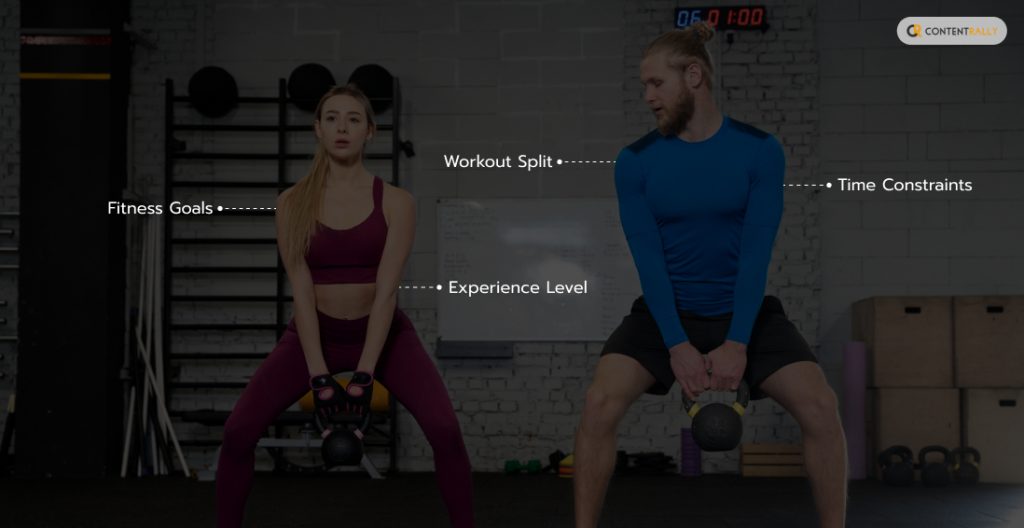
Factors Influencing the Number of Exercises

There are many factors that influence the number of exercises you need to do in a workout. Generally, these include a combination of personal preferences and how you design your training program:

1. Fitness Goals

As a beginner, you can start with simpler and fewer exercises. However, for advanced individuals, fitness goals fall into one of these categories: Strength vs. endurance vs. hypertrophy (muscle growth).

a. Strength Training (Rep range: 2-6)

Here, your focus is on lifting heavy weights, and your repetitions are low. This helps you to activate your muscle growth and helps to force production. Basically, this technique is common among powerlifters.

b. Endurance Training (Rep range: 6-12)

Endurance is your muscle’s ability to perform activities for long periods of time. To increase your muscle endurance, you must do lighter weights with high repetitions. This is a good idea for someone who wants to be more athletic.

c. Hypertrophy Training (Rep range: 15+)

Here, your goal is to increase the size of your muscles. Hence, you train with moderate weights with moderate repetitions. Generally, this is common among bodybuilders.

2. Experience Level

In fact, when you have a good experience with weights, you can perform a higher number of exercises per session. This is because individuals with more experience have the ability to handle higher-intensity workouts.

Also, they can handle higher volume because their muscles are developed. Apart from that, they have enough knowledge about technique, and they have higher endurance. Hence, they can incorporate more exercises into their workout routine.

As you gain more experience, your muscles become strong and resilient. Hence, it can handle a higher repetition count with each set. On the other hand, if you do regular exercises, you have better aerobic capacity, which is a higher level of fitness. Hence, you can perform more exercises with less fatigue.

3. Time Constraints

With more time constraints, you can significantly decrease the number of exercises you do in a session. This is because when you have a time limit, it will restrict the amount of time you dedicate to exercise. Hence, many individuals choose to dedicate less time to workouts when they have busy schedules.

Basically, time constraints are a major barrier for many when it comes to regular exercise. This prevents you from engaging in physical activities that you might like. Moreover, this also influences the type of exercise that you choose to perform. Hence, you select those activities that you can do in shorter timeframes. For example, high-intensity interval training.

4. Workout Split

With workout splits, you can focus on fewer muscle groups in a single day. This enables you to perform higher-volume exercises to target specific muscles of your body. In fact, with a split routine, you can do a higher number of exercises for each muscle group in one week. Apart from that, a workout split will also help you in faster recovery.

Moreover, with a split outline, you can also perform a higher number of sets and reps for every muscle group that you target. This is because you are using more exercises to target a muscle group.

Also, workout splits allow for more number of rest days between your training sessions. Hence, there is a better chance for recovery, and you can also prevent overtraining.

Guidelines for Number of Exercises Based on Goals

Guidelines for Number of Exercises Based on Goals

No matter what exercise you choose to do, it is important to focus on proper form. Apart from that, you must also ensure adequate recovery time. The following are a few guidelines you can consider if you want to consider how many exercises per workout you must follow:

1. For Strength Training

If you want to gain strength with your workouts, you must focus on compound lifts (e.g., squats, deadlifts, bench presses). Basically, you have to lift heavy weights with low repetitions. This will increase your maximal strength.

Here, the rep range is 2-6 reps per set. Also, you must stick to 3–5 exercises per workout. Additionally, you must ensure longer rest periods between your sets. This will help you to recover faster.

2. For Hypertrophy (Muscle Growth)

In hypertrophy, the focus is to lift moderate weights with higher repetitions. This will help you to maximize muscle growth. Here, the rep range is 8-12 reps per set. Also, you must stick to 5–7 exercises per workout.

Some examples of hypertrophy include bicep curls, shoulder lateral raises, leg extensions, chest flies, etc.

3. For Endurance and Conditioning

Here, the emphasis is on functional movements and higher repetitions. Basically, you have to perform exercises for longer time periods and also at a moderate intensity. This will increase your cardiovascular health and stamina.

Here, the rep range is high, and there are fewer rest periods between sets. Also, you have to perform 4–6 exercises per workout. In fact, the rest periods are fewer to ensure your heart rate stays at a higher level.

Some examples of endurance and conditioning training include running, cycling, swimming, jumping jacks, burpees, etc.

Factors to Consider While Structuring a Workout

Factors to Consider While Structuring a Workout

Here are a few factors you must consider while you structure your workout routine:

  • Your workout routine depends on your lifestyle, schedule, and physical activities. Apart from that, it also depends on your current strength and size.
  • Without specific goals, you cannot structure your workout routine. Basically, you have to find the best ways to chalk out your goals.
  • Make sure that there are enough rest and recovery periods between two training sessions. This will help in muscle growth, and will not overstrain your muscles.

Structure Your Workout Now

How many exercises per workout? – Now you know that it is better to have 3 to 5 workouts in a single training session. Apart from that, you also need enough rest and recovery time between two consecutive training sessions. However, if you are performing endurance and conditioning, the recovery periods will be fewer.

Do you have more suggestions on how to structure your workout routine? Please share your ideas and opinions in the comments section below.

Read Also:

A passionate writer and an avid reader, Soumava is academically inclined and loves writing on topics requiring deep research. Having 3+ years of experience, Soumava also loves writing blogs in other domains, including digital marketing, business, technology, travel, and sports.

View all posts

Leave a Reply

Your email address will not be published. Required fields are marked *

Related

Dangers Of DIY Pest Control

10 Hidden Dangers Of DIY Pest Control

In the never-ending battle against household pests, many homeowners are tempted by the allure of do-it-yourself (DIY) pest control methods. At first glance, these DIY solutions seem to offer a quick, easy, and economical way to manage pest problems. However, this surface-level appeal masks a variety of hidden dangers. Beyond the immediate risks associated with mishandling chemicals or traps, there are significant long-term implications to consider. Ineffective pest management can lead to recurring infestations, structural damages, and even health hazards. Professional preventive pest control is a crucial strategy for keeping our homes safe and pest-free, so if you’re considering taking matters into your own hands instead of trusting in the professionals, you must understand the risks and limitations of DIY approaches. This article will explore the ten hidden dangers of DIY pest control, highlighting why professional intervention is often safer and more practical. Misidentification Of Pests One of the most common and critical errors in DIY pest control is the misidentification of pest species. This mistake can lead to the application of ineffective treatments, wasting time and resources. For example, what eliminates an ant infestation might have no impact on termites. Misidentification also means missing out on crucial knowledge about the pest's lifecycle, behavior, and habitat, which is essential for adequate control. Moreover, using the wrong treatment can exacerbate the problem by allowing the pest population to grow unchecked, leading to a more severe infestation than was initially present. Improper Use Of Chemicals The dangers of improper chemical use in DIY pest control cannot be overstated. These chemicals can pose severe health risks, including respiratory problems, skin irritation, and potentially long-term health consequences if not handled correctly. Over-application or incorrect usage can lead to environmental contamination, affecting non-target wildlife and potentially polluting water sources. The lack of professional training in handling these substances can lead to accidents that could have been avoided with expert help. Risk Of Incomplete Eradication DIY pest control methods often result in incomplete eradication of the pest population. Without thorough elimination, surviving pests continue to breed, resulting in the infestation's resurgence. Incomplete treatment fails to address the root cause of the problem, whether it be entry points, food sources, or breeding grounds, resulting in a recurring cycle of infestation and treatment. This prolongs the problem and can lead to increased pest resistance over time, making future eradication efforts more challenging. Potential Structural Damage Certain pests, such as termites and carpenter ants, pose a significant threat to the structural integrity of homes. DIY methods may fail to fully eradicate these pests, leading to unseen damage that can compromise the stability and safety of a building. This oversight can result in costly repairs and long-term structural issues, far exceeding the costs of professional pest control services. The hidden nature of this damage often means it goes unnoticed until it becomes a major, costly problem. Safety Hazards The safety risks associated with DIY pest control are diverse and significant. Handling pesticides and other chemicals without proper knowledge or protective gear can lead to accidental exposure, posing severe health risks. Additionally, specific pest control methods, such as foggers or heat treatments, carry risks of fire or explosions if not handled correctly. These hazards include the individual performing the treatment, other residents, and neighboring properties. Legal And Regulatory Issues Pesticide use is regulated by laws that DIY practitioners might unknowingly violate. Non-compliance with these regulations can lead to legal troubles, including fines and penalties. Additionally, DIY pest control efforts can inadvertently affect neighboring properties, potentially leading to disputes or legal complications, significantly if harmful chemicals are misused or applied in a manner that violates local regulations. Ignorance Of Integrated Pest Management Integrated Pest Management (IPM) is a comprehensive approach to professional use that focuses on long-term prevention and minimal chemical usage. DIY methods often overlook this holistic approach, favoring immediate but short-term solutions. IPM considers the bigger ecological picture and long-term pest prevention, which DIY efforts often miss. This ignorance can lead to repeated infestations and an overreliance on chemical treatments rather than addressing underlying causes and sustainable solutions. Overreliance On Single Methods DIY pest control often relies on a single method or product, which may not be effective for all types of pests or infestations. Professional pest control, however, typically involves a combination of methods tailored to the specific pest and situation. This multifaceted approach ensures a higher success rate and more comprehensive control of the pest problem. DIY solutions, by contrast, might offer a temporary fix but fail to address the infestation in its entirety. The Stress And Time Factor Dealing with pests can be a stressful and time-consuming endeavor, especially when DIY methods fail to resolve the problem effectively. The emotional toll of facing a persistent pest problem and the effort and time required to apply DIY treatments can be overwhelming for homeowners. This stress is compounded by the uncertainty of the effectiveness of these treatments and the constant vigilance required to monitor their success. Potential For Worsening The Problem Incorrect or inadequate DIY pest control treatments can cause pests to scatter and spread, potentially worsening the infestation. In addition, pests can develop resistance to chemicals, particularly when misused or in sub-lethal doses. This resistance can make future control efforts more complex and less effective, leading to an ongoing battle against an increasingly resilient pest population. Conclusion While appealing for its perceived immediacy and cost savings, DIY pest control carries significant and multifaceted hidden dangers. From health risks to potential structural damage, legal issues, and the psychological burden of dealing with persistent pests, the complications associated with DIY methods can far outweigh their initial appeal. When considering pest control options, weigh these risks against professional pest control services' expertise, safety, and long-term effectiveness. In the realm of pest management, informed, cautious, and professional intervention is often the key to ensuring a safe, effective, and lasting solution. Read Also :  What You Should Expect From A Pest Control Visit 5 Summer Garden Maintenance Tips And Tactics You Have To Know

READ MOREDetails
Native Plants

Balancing Health And Ecology With Native Plants

We live in a time when our health and the environment are subjects of intense focus. In a world grappling with the complexities of climate change and wellness, how do we strike the balance between taking care of ourselves and the Earth? One surprisingly simple but effective way is by choosing the right plants for our gardens. Could the secret to a balanced life be right in our own backyards? In this comprehensive guide, we'll explore why native plants are not just a trendy gardening choice but an essential element for fostering personal and ecological well-being. The Symbiotic Relationship between Native Plants and Local Ecosystems Native plants have evolved over thousands of years in specific areas, forming complex relationships with local wildlife and insects. Unlike non-native species that are often cultivated for their aesthetic appeal alone, native plants play a crucial role in local ecosystems. Ecological Benefits of Native Plants Water Conservation: Native plants are naturally adapted to local rainfall patterns and soil types, requiring less irrigation. Soil Health: These plants often have deep root systems that hold the soil together, reducing erosion and improving soil structure. Supporting Local Biodiversity: Native plants provide essential habitats and food sources for local wildlife, including pollinators like bees and butterflies, birds, and other small mammals. By introducing native plants into your garden, you're actively participating in ecological conservation from the comfort of your home. The Psychological and Physical Health Benefits of Native Plants Gardening is therapeutic, but its benefits can be further amplified when incorporating native plants. Aesthetically Pleasing Environments Native plants, with their varied forms, colors, and textures, can create a pleasing visual tapestry throughout the year, enhancing psychological well-being. Encouragement for Outdoor Activity The appeal and ease of maintenance of a native garden often entices people to spend more time outdoors, encouraging physical activities such as walking and gardening, which are known to improve mental and physical health. Why Many People Overlook Native Plants Despite their myriad benefits, native plants are often overlooked for more ornamental, non-native species. Common Misconceptions Limited Variety: Many people think native plants offer less variety, which is not true. Aesthetic Limitations: The misconception that native plants are less attractive than exotic species also discourages people from incorporating them into their gardens. A Paradigm Shift: How Organizations Are Making a Difference There are several organizations dedicated to the cause of promoting native plants. One such organization is Garden for Wildlife, which provides extensive resources for homeowners looking to make a difference through informed gardening choices. From articles to plant databases, Garden for Wildlife helps you make knowledgeable decisions on incorporating native plants into your personal spaces. How to Get Started with Native Plants Creating a garden of native plants isn't difficult; it just requires some planning and know-how. Identify Native Plants for Your Area: Research which plants are native to your location. Garden for Wildlife has some great resources for this, including their ZIP code native plant finder. Planning: Map out your garden, considering the sun and shade patterns. Planting: Get the plants and plant them according to the specific needs of each species. Maintenance: Follow appropriate watering, pruning, and care guidelines. Challenges and How to Overcome Them Switching to a native plant garden comes with its own challenges, but these can be managed with the right approach. Knowledge Gap: It can be daunting to start from scratch. Overcome this by researching through credible sources. Adapting to New Maintenance Practices: Native plants may require different care practices compared to the plants you're accustomed to. Why Native Plants Are a Game-Changer As we navigate the complex terrains of health and ecology, it's heartening to know something as simple as choosing the right plants for our gardens can make a difference. By opting for native plants, we are not just making a conscious choice for our well-being but are also contributing to a larger ecological balance. Garden for Wildlife is here to guide you through this rewarding journey. Let's take a step toward a more sustainable and healthier lifestyle today. Ready to embark on a transformative gardening journey that benefits you and the environment? By following the insights and guidelines in this article, you're not just planting a garden; you're sowing the seeds for a healthier, more sustainable future. Read Also: 3 Best Indoor Plants For The Dining Room Unlocking Plant-Based Protein Potential: Exploring A Leading Supplement Enhancing Spaces With Greenery: The Art Of Plant Styling In Interior Design

READ MOREDetails
Healthy Cake

Try Out These Healthy Cake Options

Often cake lovers are asking about whether angel food cake is healthy or is carrot cake healthy.  This is the self-evident thing which should come to every person’s mind who loves the sweet taste of cakes and also continuous about their fitness. So healthy cake exist or not? Be it weddings, anniversaries, baby showers, or farewells/graduations. Many of the brands are declaring the cake mix healthy, but is that really healthy? The list is endless. We have customized the flavor, which is perfect for Indian taste buds, and we also make fusion cakes. When it comes to healthy cakes, you can make them by using whole wheat or other grain flour.  You can also consume palm sugar, jaggery, stevia, and fruit sugar to sweeten your cake. Avoid using sugar syrup. Try to use organic ingredients along with the Flourless cakes, which is also another option.  Checkout Four Best Healthy Cake Options Here are some of the best healthy cake options you can send to your loved ones. Read on!  1. Healthy Multigrain Fiber Dry Cake Keeping yourself healthy doesn't always mean cutting things out of your diet; It also means including all the essential nutrients in your diet plan. So, the intake of multigrain fiber will be like a boost to your diet. This healthy multigrain fiber-rich healthy cake provides you with both health and taste.  What more could a health lover ask for? Do you know that these multigrain fibers help in maintaining your weight, consequently reducing the risk of obesity? The cake also aids in digestion and lowers cholesterol levels. There is no doubt that brown moms will be most happy to see their kids serving this healthy dish. Why not send it as a birthday cake to your beloved?  2. Tea Cake  Teacake is basically a no-frills, loaf-shaped cake with multiple possible flavors, which you can have with tea/coffee. They ideally have no icing or topping and are also served as warm slices.  These healthy cakes are made from regular ingredients like butter, sweetener and flour, eggs, leavening agents, and flavorings of choice. But, traditionally, tea cake is from England and is a yeast-leavened sweet bread.   3. Sticky Cakes  You must be searching for many healthy cake recipes but making a cake is not an easy task. While it can be baked using a variety of ingredients, some of our loved ones may be allergic to some of these food items, such as gluten and grains.  Baking a cake without your favorite ingredients can seem a bit odd, but with others in mind and a few adjustments, you can make a delicious cake everyone will love equally. You can mix in sticky ingredients and chocolate. This is a great-looking and tasting cake!  4. Genoise Cake "Nothing expresses love for cake than a slice of Genoise cake. Beat some eggs, sugar, and flour, and let it rest, so it blooms with love and flavor.  If you're not the kitchen type of person or the Genoise cake doesn't turn out the way you expected, then you can always find a wide range of genoise cakes in Chandigarh, Delhi, Bangalore, and all the major cities.   Which cakes are healthy? So, we've cleared the air for you. Unlike any buttercream or fondant cakes, dry cakes are known as good for your body and health. Let's read about some health benefits of eating healthy cakes:  A. Energy Source  Sugar and flour are the two main ingredients of dry healthy cake recipes. These two ingredients are excellent sources of carbohydrates:  Carbohydrates fuel the muscles, nervous system, and the entire body with energy. The fat present in the cake is also a good source of vitality. B. Strength Sweet confections like cakes supply proteins to the body. Cakes are baked with milk and eggs; Both are powerhouses of protein. Milk is rich in calcium which enhances the functioning of bones.  Also, the dry cake is garnished with almonds and cashews, which strengthen the immune system, as nuts contain vitamins.  C. Full Of Good Things Cakes are full of good things that provide enough vitamins to your body. For example, chocolate cake contains chocolate antioxidants. Vitamin-A carrot is found in carrot cake.  Wherein Coffee and Walnut healthy Cake contain omega-3 oily walnuts. Some cake ingredients include what could have been more healthy ingredients found in diet foods.  Related Resource: 8 Awesome Health Benefits Of Dark Chocolate D. Healthy Gut "Healthy Gut, Healthy You." Dry fruit cakes filled with fresh and ripe berries, cherries, apples, and pineapples are a storehouse of fiber.  Foods with great fiber help keep the digestive system healthy. Dry, healthy carrot cakes also help in boosting digestion. Wrapping It Up: So, whenever your tastebuds crave cake, and your body warns you not to fall into the trap, you know how to silence the silence and order dry cake online. If you need more clarification about the market-available commercial-made cake ingredients, you can bake it at your home and enjoy the delicious taste of the healthy cake. Read Also: Which Edible is Right for You? 6 Delicious Cakes That You Must Try This Winter The Best Ways Cake Makers Can Pack Their Cakes

READ MOREDetails