












Ultimate Guide to Interview Prep Mastering the Essentials

Published on: 19 August 2024 Last Updated on: 11 February 2026
inner-img

We have either been in the same spot a few times, or this is your first interview prep. No matter how often you straighten your tie, prepare yourself with your best answers, and finest smiles, chronic nervousness is common.

But why do we get nervous before an interview?

Even after understanding all the questions, why do our tongues get tied, and we can be at a loss for words?

Or do we?

Is there a possibility of this ever happening, or are we overthinking it?

The biggest reason behind pre-interview anxiety can originate from the myths and mysteries of a job interview. So, that is precisely what we are going to do today. Debunk these myths and give you the reality of a job interview.

Plus, this blog post will also focus on giving you curated advice for interviews to ace any, and most importantly, how to get rid of the anxiety psychologically.

Interview #Myths (...and the Truth)

Interview #Myths (...and the Truth)

As you prepare for your interview, here is some good news.

You do not have to perfect.

Do not worry; no recruiter is looking for a robot. We must already combat enough AI to take our jobs!

Authenticity will always trump any robotic response.

So, let's give you a few more good news!

Myth #1 – You Should Have All the Answers

Undoubtedly one of the biggest myths of job interviews is having all the answers. There is a misconception that your incapability to answer a particular question directly indicates your incompetency.

Reality

That is simply not the case. In fact, sometimes interviewers ask you bizarre questions to test your practicality or even your creativity. 

Basically, there might not be a correct answer! They are just trying to understand how imaginative you are.

However, you might not have an answer to the question, which is all right. It is even okay to politely decline to respond politely. This shows integrity, as you do not wish to waste their time or your own. Plus, it shows your acceptance of your shortcomings and enthusiasm for learning more.

Myth #2 – Interviewer Holds All the Power

Myth #2 – Interviewer Holds All the Power

Since you are the one wanting the job, it is common to misconstrue a power dynamic. Many get nervous because they believe the interviewer holds all the power. 

You might also place the interviewer on a pedestal, thinking they might know a lot and are probably judging all the questions.

Reality

Interview prep is always a two-way street. While the recruiter judges your capabilities, you are also assessing whether the job is right for you.

Plus, their thought of hierarchy can make you more nervous. 

If you have confidence in your capability and know you will be suitable for the job, then treat your recruiter as your equal. The conversation can go much smoother from that point on.

Additionally, you are also allowed to have unique interview questions to ask your employer. It is not a one-way communication.

Myth #3 – You Have to Wear a Suit

Myth #3 – You Have to Wear a Suit

This is an age-old belief that what you wear will heavily influence your first impression on your interviewers. 

However, the myth is about wearing a suit and always having a tie around your neck.

Reality

Not that it will hurt if you wear one, it is not a necessity. Dressing yourself up in formals and looking presentable doesn’t always end with a suit. 

You can look presentable with a simple button-up & trousers.

For ease of understanding, we will pinpoint the ones who are not dressed up. 

  • Un-ironed cloths
  • Denim
  • Clothes that do not fit you
  • Hats
  • Ripped or distressed pants
  • Pants with too many revealing pockets
  • Revealing clothes
  • Too many accessories
  • A face full of bright makeup &
  • Open-toed shoes (unless they are strappy heels but prefer closed-toed pumps) or sports shoes.

If you have a pressed shirt and trousers that fit with closed-toed shoes, you should be ready.

Myth #4 – Your Resume Is the Only Game Changer

Myth #4 – Your Resume Is the Only Game Changer

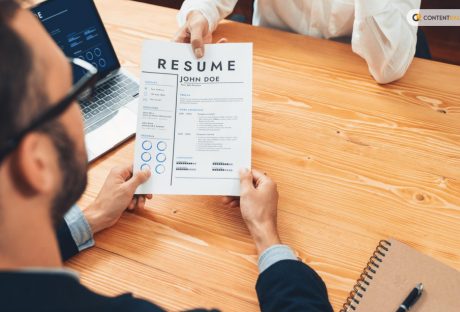
You will find many prints and place their resume in a new folder for their interview prep. They might even present their resume to the interviewer before allowing themselves to sit (...and without even being asked).

Reality

They rang up for an interview upon perusing your resume. Therefore, they want to avoid sitting and reading through your resume.

So, presenting your resume before presenting yourself is not a game.

More than your academic or professional achievements, they are here to assess your personal skills. Believe it or not, other candidates might have the same resume.

This is not to demotivate your professional capabilities but to understand that it has already created the impression it could. 

The rest now depends on how you present yourself. Plus, this is an opportunity for you to make yourself stand out.

Myth #5 – You Should Have a Firm Handshake

Myth #5 – You Should Have a Firm Handshake

The things people overthink before an interview prep can charge anyone’s curiosity meter. One of them is having a firm handshake.

Many believe that a firm handshake can telepathically transfer one's strong will and professional excellence to one's interviewer.

Reality

Again, a good handshake is a sign of a confident personality. However, correlation is not causation.

That is, someone with a slightly weaker one isn't automatically wrong for the job. Shaking hands with the person who escorted you to your interview and your interviewers is a sign of respect.

Your interviewers will consider you as a polite being (...irrespective of the firmness of your hand). Plus, there are other factors to assess you, so rest assured they are not overthinking your handshake.

Also Read: Red flags of a job interview: 8 reasons to turn down an offer

Things To Remember While You Interview Prep – Advice for Interview

Things To Remember While You Interview Prep – Advice for Interview

While preparing to be your best self in your interviewer’s eyes, do not forget this last-minute advice for an interview.

Check The Job Description: Before you sit before answering the questions, remember to go through the job descriptions a few times. 

It doesn’t matter if you can’t answer one question, but you should know what job you are interviewed from. Plus, offering you a different job role other than the one in the description is also a major red flag you should look out for.

Research The Company: Do not give your interviewers the impression that this is just another interview. Show them that you want the job and start having personal communication about the company. 

Knowing that you know about the company creates a steady impression.

Non-Verbal Communication: 70% of communication in your job interview is non-verbal. When you start your job interview prep, do so in front of a mirror. 

Finding your best presentation posture, a pleasant smile, and firm eye contact. The entirety of you should be communicating with your recruiters. Especially if you are in a video interview, your non-verbal communication skills will be scrutinized more.

Keep In Mind the Timing: You should always be early enough for your interview. This was the interviewer’s understanding of the candidate’s conceptual skills. nature, heavily influencing your acceptance rate. 

Make it a habit to be 10 minutes before the assigned time for your corporate interviews.

Interview Doesn’t End After You Leave: Always send a thank you mail expressing your gratitude. 

You can also give a better reply to a question asked during the interview. This will show your enthusiasm towards the job, and the fact that you are carrying your research forward even after the interview.

Bizarre Interview Questions (...and Their Answers)

Bizarre Interview Questions (...and Their Answers)

Interview prep is indeed a serious matter. However, sometimes, interviewees can even ask bizarre questions to cut the tension and add some witty humor.

The wittier your answers to these bizarre interview questions are your recruiters will be impressed.

Here are some of the common questions whose answers you should prepare.

1. “What’s The Color of Money?”

A company once asked their financial candidates this question. This can either be a trick question or a question to test someone’s creativity & knowledge.

While the obvious answer would be green, one candidate answered “it depends on the country. While US dollar is green, Japanese Yen could come in blue, green, and purple based on the currency amount.”

Can you guess who was hired?

Yes, the one with a worldly knowledge about currencies from all over the world. Now, that is someone with a keen interest in finance.

2. “If you were shipwrecked on an island with no food, water, or internet connection, what is that one thing you would like to have.”

Now, this is a question that has no right or wrong answer. The recruiter is just trying to assess your problem-solving and critical-thinking skills.

One candidate answered “a kindle” which seemed like a dreamy answer. While another candidate said “a boat” which was quite logical.

The candidate who got the job said a hammer & a knife. Truly, you will need two important tools to fashion any tool out of whatever’s left.

This was the interviewer’s understanding of the candidate's’ conceptual skills.

3. “If you could fly or be invisible, what superpower would you choose?”

This is another interview question that recruiters use to break the ice. Through this superpower question, they are just trying to determine whether you are a spotlight person, or someone more willing to work behind the scenes.

Oddly, many choose flying over being invincible. However, for candidates who choose invincibility, recruiters can get an idea about their introversion or extroversion nature.

Therefore, when preparing for an interview, remember to choose these items wisely.

The End of Every Interview Prep

No matter how your interview was, always end it with a good note. Remember to shake their hands and express your gratitude for their time.

Do not rush the recruiters for a reply. Try waiting for 48 hours, and then send them an email asking for the result.

Your interview prep doesn’t end after the interview. A follow-up can always be a game-changer!

Hopefully, this blog post was able to calm you down. If you have more words of wisdom for our audience, please add them in the comment section below.

Read Also:

Content Rally wrapped around an online publication where you can publish your own intellectuals. It is a publishing platform designed to make great stories by content creators. This is your era, your place to be online. So come forward share your views, thoughts and ideas via Content Rally.

View all posts

Leave a Reply

Your email address will not be published. Required fields are marked *

Related

how many jobs are available in precious metals

How Many Jobs Are Available In Precious Metals?  

“How many jobs are available in precious metals?” Is this something that you are searching for? If yes, then you have reached the right place! Whenever people try to look for new jobs, they try to do a background check on what type of industry it is. That is the reason why many people ask about the companies that are there in the industry they are interested in. Or about how many jobs are available in that particular field. If you want to work in the precious metals industry and want to know what the companies in this line of work are, you have found the place. Keep reading this article till the end to learn more about the same… First Things First, What Is Precious Metals Industry?   Image Source: images.wsj.net Before answering the question “How many jobs are available in precious metals,” it is important that you learn a little about what the field is in the first place. So, here I go! Natural metallic components known as precious metals are prized for their scarcity, aesthetic appeal, and intrinsic properties. Gold, silver, and platinum are the three precious metals that are most frequently recognized, however, other metals like palladium and rhodium also fall into this group. The usage of precious metals in jewelry, coins, and decorative things is just one of the many reasons why they are significant. In addition, they have industrial use in automobile catalytic converters, medical equipment, and electronics. Because they are scarce, challenging to extract, and have a long shelf life, precious metals are valued. The term "precious metals industry" refers to the sector of the economy that is associated with or connected to this particular line of labor. Consider a job in the precious metals sector if you're interested in precious metals and how they are mined, refined, or processed into various materials. Now that you are aware of what this industry is, it is time for me to finally talk and explain what you were searching for. So, how many jobs are available in the precious metals industry? Let’s take a look! Answering The Most Asked, “How Many Jobs Are Available In Precious Metals?”   Image Source: gazettengr.com So, exactly how many jobs are available at this moment in the field? Let me tell you the answer! In the US, precious metal mining is a significant industry. Mines come in a variety of forms, such as open-pit mines and subterranean mines. Mining corporations employ a variety of techniques, such as rock-crushing and blasting, to remove metals from the earth. The metals are refined into purer forms after being removed. Heat is used throughout the lengthy and intricate process of refining to eliminate impurities from metals. In addition to the 24,350 Americans who work directly as jewelers or precious stone and metal workers, there are thousands of positions available in the country related to precious metals. But there are numerous more jobs connected to the creation and marketing of jewelry. Keep scrolling down to learn about the best paying jobs in the industry… What Are The Best Paying Jobs In Precious Metals Industry?   Now that you are aware of the number of jobs available in the precious metals industry, you might be wondering about the most-paid or highest-paid jobs in the field. Hey! There is no need for you to worry as I have the answer to this question as well! Here are the best paying jobs in the precious metals industry that you need to take a look at: Job TitleJob OpeningsNumber Of Jobs AvailableJewelry Associate228,000+124,000+Appraiser1,000+36,000+Jeweler1,000+7,000+Jewelry Consultant146,000+6,000+Caster Operator52,000+4,000+Goldsmith500+2,000+Refinery Operator25,000+2,000+Gemologist500+1,000+Jewelry Maker11,000+1,000+ Is Precious Metals A Good Career Path?   Every person must choose their career route at some point in their lives. It is a difficult option since it implies that the decisions we make now will affect our future. Whether precious metals are a decent job choice is one of the most contentious issues for prospective investors and aspiring professionals. The response is simple to understand. A career in precious metals is rewarding, indeed. Business professionals and entry-level employees can explore a variety of employment options in the precious metals sector. This covers services like investment consulting, currency trading, mining for virtual coins, bullion sales, distribution, refinement, and metal smelting. The universe of precious metals is enormous; it encompasses trading, mining, refining, manufacturing, and everything else. For those looking to enter this field without prior experience or knowledge foundation, it can be challenging because each sector differentiates itself with specific specialized requirements and skill sets. Despite the wide range of prospects in this industry, job seekers may encounter difficulties including competition, unstable economic conditions, or environmental pressures. Additionally, it may be challenging to work at smaller companies without prior experience or the necessary certificates or licenses. Despite these difficulties, people interested in a career in precious metals will probably profit from a rising market need for eco-friendly materials and alternate forms of payment. Investing time in education is incredibly helpful while navigating different career pathways because the sector has an expanding requirement for competent people with sophisticated technological expertise. Wrapping It Up!  In case you were searching for the answer to “how many jobs are available in precious metals,” I hope that this article has been of help to you. If there are any other queries related to the same, please feel free to let me know. All that you need to do is scroll down till you reach the bottom of the page. Then leave your queries and comments in the box below. And I will be there to answer them all for you. More Resources: Best Paying Jobs In Energy Is Metal Fabrications A Good Career Path?

READ MOREDetails
How to Choose a Career

The Secret To Finding A Career That You’ll Actually Love

If you’re still in the phase of life where you’re figuring out the best job for you, there’s probably a lot on your mind. It takes a lot of “soul searching” and research to decide on a career that you’ll love. Contrary to some people’s beliefs, loving your career can be important. So here are some tips on how to choose a career. Explore Your Interests As you’re thinking about what to do for a career, think about the kinds of things that pique your interest. For example, you might be really into dentistry and want to find out what a career would be like. Explore what kind of jobs are available in that field. Whether you decide to become a dentist or study a dental assistant program. Knowing that you’re interested in a specific industry can help you narrow down your options.  Ponder On Your Passions When it comes to your passions, there could be clues in there. You could find that there are career choices that align with your passions and that could actually be ideal for your future. Perhaps you love a good debate, and you’re always found debating some topic or another.  In this type of scenario, you could always consider getting into law or something similar. The kind that puts you in touch with the kind of experiences that you already enjoy having. It doesn’t hurt to be passionate about what you do to make money.  Think About Your Skills Your passions and interests are clues to the type of career that could interest you. If you’re looking to narrow it down even more, you may want to think about your talents.  If you know you have a knack for words, something that aligns with that skill could be an ideal fit. Maybe you’re a musical person? Getting into a career where your skills allow you to be naturally good. It is also something that makes your future career a lot easier.  It helps to use your talent in your work because even if you have to study for a degree to succeed at it. Therefore, you’ll have an easier time at it than someone who may not have the natural skills that you do.  Talk To Experienced Mentors As you try to decide what work would be best for you, talk to experienced mentors. They can help you know which way to go by providing a road map of what has worked best for them.  This could be someone you know who has had a long career in the field you like. Or it could be a mentor from your school’s mentorship program.  Either way, speaking to a person who has experience in a career you’re considering can be beneficial to you and your decision-making.  Try Interning Before understanding how to choose a career, you can always dip your toes into different career options. Internships are one of them! While most people will do an internship as they are close to graduating from school, you could always try for an internship just to try out certain jobs. As long as you already have some natural skill or know-how in it.  You may not receive a lot of pay, but at least you gain the insight to know whether or not it's the job that you want in your future. It doesn’t hurt to explore options before deciding on the ultimate career path for you. It’s a big decision, don’t be afraid of not taking it lightly.  From internships to mentors, exploring your passions, skills, and interests, and making a decision on your career.  However, it can be simplified by pondering the concepts mentioned above.  Life is long, and so is a career, so take your time making a decision like this one. How Professional Career Counseling Can Help Deciding what you want to do with your life can be tough, even in the best of circumstances.  Fortunately, there are experts who are ready to help you make sense of it all. If you’re wondering how to figure out what career is right for you, a career counselor can steer you in the right direction. Here’s why. Understanding Your Aptitude Career counselors know how to help people tap into their own wants and needs when it comes to understanding what kind of work will spark joy. They’ll ask questions designed to uncover the activities that energize and excite you most in life. Then, show you how those things connect with potential careers that could be incredibly fulfilling. It Will Be Personal To Your Needs Another good thing about career counseling is that it’s individualized. Career counselors won’t give you a general answer to a generalized problem.  They’ll focus on your specific character, strengths and weaknesses, desires, and problems. From there, they can assist you in figuring out what careers would work best for someone with your qualities and abilities.  Regardless of whether you need to pick a vocation interestingly or are pondering about an alternate one. This is when customized guidance can represent the critical moment in your prosperity. Direct Assistance (Whenever You Are Lost) Career advisors are additionally incredible for offering direct assistance.  They also help you improve your resume, act in interviews, and even fruitful organizing aptitudes, all of which can be significant when hoping to get a new position or to find employment elsewhere. Plus, if you’re not even sure what kind of qualifications you need, or education, for that matter, career counseling can help with that, too. They will basically map out exactly what you need to do, from checking out different degree options to see what is best for you at the time to figuring out where the market is headed. It’s all in their master plan for you! Ultimately, career counseling exists because people need help making educated decisions about their careers.  If this looks like it’s impossible to navigate your way without some sort of guidance (let’s face it, some of us really don’t have a clue), then a career counselor could be your key. Why try to figure it out on your own and get overwhelmed when there are professionals who can make that twisted path straight? Read Also: Building Your Conceptual Skills A Guide for Career Growth What Does A Career In Anesthesiology Look Like? Click To Know

READ MOREDetails
5 Benefits Of A Specialized MBA

5 Benefits Of A Specialized MBA

Anyone hoping to progress in their profession in the business sector might benefit greatly from earning a Master's in Business Administration (MBA). MBAs with a specialty, sometimes referred to as specialization or focus area MBAs, provide a more in-depth and customized education in a particular field of business. These courses offer a special combination of benefits that can improve both your professional and personal growth. In this article, we will look at five advantages of getting a specialized MBA. Expertise In A Specific Field Developing specialized knowledge is one of the many benefits of earning a specialized MBA, and it's one of the more notable ones. Although a conventional MBA program gives students a broad overview of different business disciplines, a specialized MBA program delves further into a specific field, such as technology, healthcare management, marketing, finance, etc. Students gain in-depth knowledge, abilities, and insights that are immediately and directly applicable to their chosen sector or professional path through this concentrated study. The breadth of knowledge gained via a specialized MBA program is priceless. It enables students to investigate the finer points of their chosen subject, analyze the issues encountered in the real world, and come up with workable answers. Because specialized MBA holders can offer a unique perspective to the workplace, employers frequently seek them out, making them competitive in the employment market. Specialized MBAs are also increasingly available online, providing flexibility for working professionals to gain in-depth knowledge in their chosen fields. Higher education programs online from all niches are available that can be completed at the student’s own pace, offering more control over their schedule. Here are some examples; Master of Arts in History Ed. - Career and Technical Education (CTE) Ed. – Career and Technical Education with Administrator Certificate Ed. – English Language Learners (ELL) Ed. – Health and Physical Education Ed. – Library Media Ed. – TESOL Ed. – Adult Education Ed. – Curriculum & Instruction Ed. – Early Childhood Education Ed. – Educational Leadership Ed. – Educational Leadership, Principal Certificate Ed. – Literacy Ed. – Special Education Master of Music – Music Education Improved Career Prospects Specialized MBA programs are designed to meet the needs of particular organizations and industries. Graduates of these programs have a clear edge in the employment market. Employers are actively looking for employees with in-depth knowledge and polished abilities that flawlessly correspond with the needs of their sector. It also enables students to delve deeper into the complexities and difficulties of their chosen sector because of their practical and industry-focused approach. They have an instant and distinct advantage in the job since they know about the most recent developments in the industry, emerging technology, and best practices. Making strategic decisions, managing projects, and solving industry-specific problems can all benefit from this specialist expertise. Enhanced Earning Potential Pursuing a specialized MBA degree provides a clear route to increased earning potential. This financial benefit is especially noticeable because of the particular skill set and expertise that these programs impart. With a specialized MBA, you can acquire deep knowledge and polished abilities that are particular to your field's needs. This skill sets you up for a big edge when applying for jobs. For example, obtaining a specialized MBA in healthcare management gives you a thorough understanding of the complexities, laws, and management techniques of the healthcare sector. Moreover, your readiness for leadership positions in healthcare organizations, where there is a constant need for qualified personnel, is enhanced by this knowledge. Because of the crucial duties involved in overseeing medical institutions, guaranteeing patient care, and negotiating intricate legal frameworks, these positions frequently have high salary packages. Furthermore, industry-specific internships and connections are sometimes included in specialized MBA programs. These not only improve your skills but also give you direct access to high-paying career prospects. These programs ensure financial success since they provide both the education and the real-world experience needed to enter high-paying employment in your chosen industry. Personal And Professional Development A specialized MBA program is not solely about acquiring technical knowledge; it also places a strong emphasis on personal and professional development. This holistic approach to education ensures that graduates are not only experts in their field but also well-rounded, effective leaders. Specialized MBA programs equip you with the specific knowledge and skills required to navigate the intricacies of entrepreneurship in your field. Whether you aspire to launch a healthcare startup, venture into the ever-evolving tech industry, or drive innovation in sustainable energy ventures, it provides a deep dive into industry-specific trends, market dynamics, and regulatory landscapes. Moreover, students learn about ethical decision-making, problem-solving techniques, leadership concepts, and effective communication whether they are studying healthcare management, finance, marketing, or any other specialization. Because specialized MBA programs have a strong emphasis on both professional and personal growth, its graduates are more confident and can take on tough tasks and make significant contributions to their enterprises. Greater Relevance And Current Knowledge Technological advancements and rapid change characterize our society, and the business scene is no exception. Professionals need to keep ahead of the curve because industries are undergoing significant disruptions and changes these days. Specialized MBA programs are designed to address this dynamic reality, making sure that students stay up to date on the most recent advancements and trends in the subject of study. The faculty of specialized MBA programs is an important differentiator. Teachers and professors can offer priceless insights into the newest techniques and tactics because they frequently have practical industrial expertise. Students receive useful and applicable knowledge from their firsthand experience with current industry opportunities and challenges that they can use immediately in their jobs. Additionally, these programs are flexible and quick to adjust, changing their syllabuses frequently to include new developments in best practices, technology, and trends. As a result, graduates in their chosen fields possess a solid theoretical background and profound comprehension of contemporary issues. Conclusion A specialized MBA provides a broad advantage in today's competitive corporate world. It offers in-depth knowledge, gives people industry-relevant skills, and promotes professional and personal growth. Furthermore, these programs are flexible, keeping up with the quick changes in the sector and utilizing knowledgeable instructors to provide practical knowledge. Read Also: Corporate Hackathon: Benefits To The Employees Master’s In Business Analytics: Is It Worth The Effort? Your Business Needs Marketing To Survive – Here’s Why

READ MOREDetails