


How To Tailor Your Resume To Get That Dream Job?

by

23 September 2024

Job & Career

Resume Tips

Looking for resume tips is far from a waste of time. Even if you are a seasoned professional at job hunting!

Your resume is your first impression in the professional world, and let’s face it, it could make or break your candidacy.

Before you even sit for that interview, the resume will catch their eyes first!

Whether you’re just starting in your career or looking to make a shift, an impressive résumé opens doors.

So, here is how you can turn your resume from good to the absolute best!

Resume Tips 101

So, without further ado, let’s edit that piece of paper together.

1. Nail Your Header

Nail Your Header

Name, professional title, and contact information.

Link to LinkedIn profile or personal website.

These are the two must-haves of your CV heading. No, you do not have to make it fancy but straightforward. So that everyone knows what you do professionally.

This will automatically help your recruiters link it to their current job position.

Not only does this allow employees to find and connect with you, but it also adds a modern edge to your resume.

2. Write A Powerful Career Summary

This is a short introduction paragraph like a modified objective statement describing your skills and qualifications.

Therefore, make it short but impactful!

Your summary should be about 3-5 sentences, packed with keywords from the job description. But do not make it too long so that it bores your audience.

3. Keep It formatted

Stick to one that will make your resume easy to read: chronological, functional, or hybrid.

Unless you have a unique situation, such as a career change, most recruiters would prefer the chronological format.

It makes it easier to understand!

4. Make It ATS Friendly

This is new, but this is the new corporate, and our resume tips must cater to the same.

Many companies use an Applicant Tracking System (ATS) to scan your resume.

If the ATS can’t read your resume, it won’t make it to human eyes. Could you Keep it clean and straightforward?

5. Tailor Your Resume For Each Job

Tailor Your Resume For Each Job

Tailor your resume to each job you apply for by highlighting the responsibilities and qualifications listed in the job posting.

Try to incorporate the exact words and phrases in the job posting to ensure it’s a close match.

Yes, it could be tedious, but it is important at the end of the day!

Remember, a general resume won’t impress anyone. A tailored resume shows effort, which will make you stand out.

6. Highlight Your Achievements, Not Just Duties

Employers want to know your winning game! Not just what you were responsible for.

Therefore, use bullet points with quantifiable results like, “Increased sales by 20% in six months.”

This is where you show the impact of your work, not just what you did.

7. Use Action Verbs

Begin each bullet point with a strong action verb such as “managed,” “designed,” “created,” or “led.”  

One of the best resume tips we would provide is, to stop being like the others. Even when you are using certain verbs.

Therefore, beware of using overused words like:

“Responsible for” or “Assisted with.”

Use strong action verbs on your resume to set them apart and add a more professional, put-together look.

 8. Include Your Soft Skills As Well

During your employment with another company, you acquire other hard skills. This is outside that specific role that could be pertinent to the work.

Yes, you should include them as well!

Don’t forget about your soft skills, such as communication, conceptual skills, teamwork, etc.

However, try to avoid bringing them in as achievements.

Show the employer that you have the skills to do the job you are applying for. Plus, it will achieve your new goals with knowledge, but knowing itself is no achievement.

9. Keep It Short

One page is standard for most resumes, especially for students.

If you have ten or more years of work experience– you can consider a two-page resume.

Please Do not overdo it when you do not have much experience to show.

Especially when recruiters are looking for reasons to eliminate candidates, and they will scan them.

10. Add A Professional Title

Add a Professional Title

It works essentially the same as a headline on a newspaper or article – it draws the reader in and makes her want to read more.

Your headline is your tagline. It’s your one shot to make an impression and entice the recruiter to spend more time reading your resume.

This simple step helps clarify your resume’s intent.   

11. Present A Robust Work Experience Section

Start with your most recent job.

Use 3-5 bullet points to list your achievements for each role.

But don’t just list your responsibilities. Show how you made a difference as well.

12. Use Numbers Whenever You Can

Numbers can make your resume much more credible than ever. They grab attention and prove your results.

For example, instead of saying, “Improved customer service,” you can say, “Reduced customer complaints by 15%.” Instead of “Grew revenues,” say “Increased revenue by 30%.

Quantify your work whenever possible. It leaves no room for doubt about the value you bring to the table.

13. Education Matters, But Don’t Overdo It

If you’ve worked for over five years, place your education at the bottom of your resume.

Include your degree, school, and graduation year if you’re still in college or have recently graduated.

Your education section can stay at the top of your resume for new grads. However, if you have some experience, move them to the end.

14. Relevant Certifications

If there are any certifications related to your industry, add them to your resume. Getting certified helps, but do not add the irrelevant ones from the years gone by.

Plus, try to get these certifications from credible sources to add weight to your resume.

List them after your education. Or, if you are out of school for a few years, you can list them in a separate section.

If you took a more relevant course to the job, you’re applying for include it as well!

15. Don’t Get Too Fancy
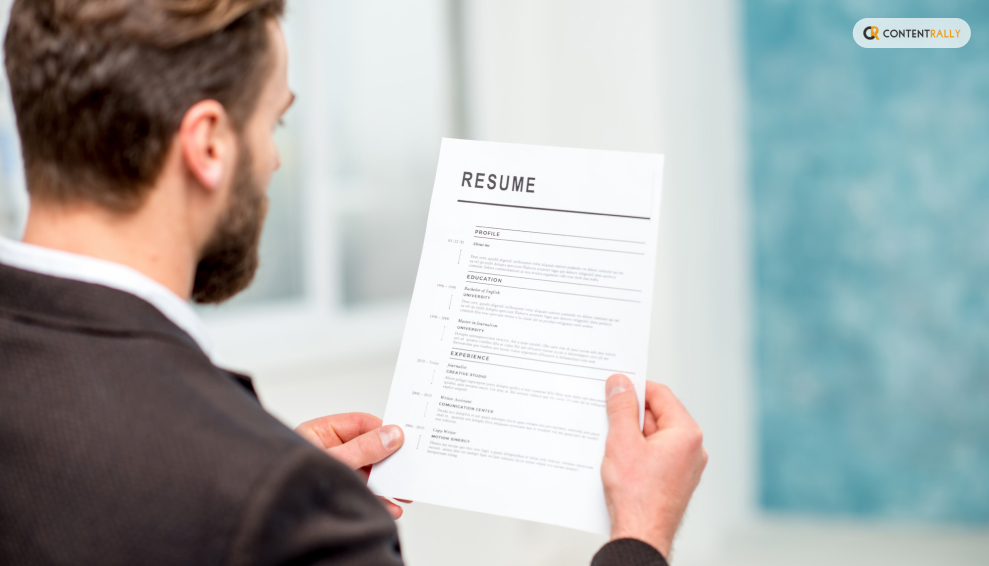
Don’t Get Too Fancy

You do have to make it a graphic design project!

However, keeping a strong format that is visually calming and easy to read is also important.

Use font styles that are easy to read, such as Arial, Times New Roman, or Calibri.

Make sure each section has bold headings so a recruiter can easily navigate your document.

Good design isn’t about flashiness. It’s about making your information easy to read and look professional.

16. No Clichés

Don’t use phrases like “Hard Worker” or “Team Player”! They are boring and cliche, and almost everyone writes the same. So, provide examples that demonstrate those things instead.

Demonstrate these skills with specific real-life examples rather than using stock phrases that lack the power to convey your true worth.

Just like a cliché doesn’t make an impression, the same applies to your resume. It’s all about demonstrating how you are different than others.

17. Tailor Your Resume For The Industry

Let’s be honest: if you’re applying for a design position in a creative company like Wieden Kennedy, your resume shows that better!

Stick to more traditional formats for industries like finance or law.

However, in modern-day digital marketing jobs, ensure that your resume holds that promise.

Know who you are presenting to and design your presentation accordingly.

18. Be Honest About Your Experience

Don’t lie or over-embellish your skills and experience.

Recruiters will quickly pick up on it when they meet you in person for an interview or check your references.

Suppose you have been less than honest; that deletes your credibility.  Yes, integrity is everything, and employers need to trust you.

19. Don’t Be Shy About Going Into Detail With Your Career Gaps

One of the common questions we often hear is “How to write s resume when I have a gap year?”

If you have gaps in your employment history, you can say, “I was caring for a sick family member,” or “I took three years off to raise my children.”  

However, it was always better to be honest than to embellish your gap years to make yourself sound fancy.

For example, “I was backpacking through Western Europe.” Unless you were actually. You never know when your recruiter might ask you a question.

It’s also productive to include freelance work or volunteer activities during gaps rather than using the gap as a reason for being unproductive.

Employers appreciate honesty. It is not a good idea to over-explain gaps.

Link to an Online Portfolio

If you have a portfolio of your work, consider linking to it in your resume. Especially for creative people, writers, or designers.

The portfolio is an example of the skills you can show.

21. Use White Space Effectively

Don’t overdo it with dense blocks of text.  Recruiters looking to skim through your resume for the basics will appreciate white space and easy-to-read headings.

Keep margins and line spacing consistent!

White space helps, too!

Literally, it looks ‘cleaner’ and is easier for recruiters to read and process information (according to the eye-tracking model of how people read resumes).

22. Leave Out Irrelevant Job Experience

Any part-time work or job that doesn’t relate to your career should be left out.

You don’t have to include all the jobs you have ever worked at!

Focus on roles that highlight transferable skills or experiences.

23. Work Experience Only (Unless You’re A Recent Grad)

On a resume, you should do so much more than just internships and volunteer work.

Internships and volunteer experience are the best things to have on your resume if you haven’t had real job experience. However, if you’ve been in the workforce for at least one month, stick to work experience.

Highlight what you achieved and your responsibilities in the position, just as you would for a job.

24. Proofread To Perfection

Because even the most qualified candidate can lose out if they make a spelling or grammatical error in their CV. Henceforth, one of our best resume review tips would be to proofread until you are 90% satisfied (because you will never be at 100%, and that is okay).

Use Grammarly or ask someone to read your resume.

No matter what you do, you must have learned that the devil is in the details. Well, it starts with a resume.

25. Skip The Photos, Graphics, Or Fancy Fonts.
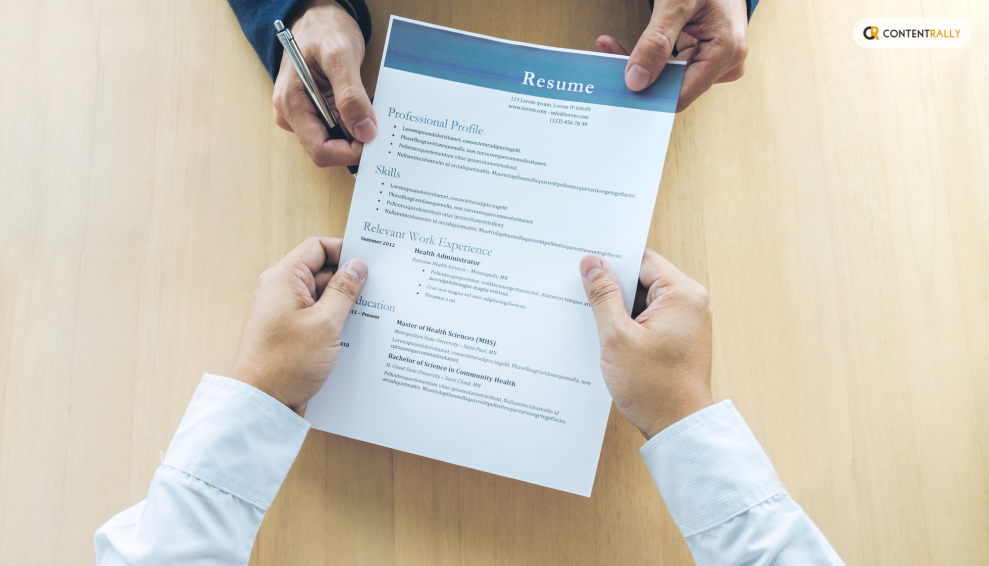
Skip the Photos, Graphics, or Fancy Fonts.

These elements can distract or confuse ATS systems. Making it difficult for it to scan for digital recording.

A clean, professional layout is the first step to being considered for the job.

One simple photo is enough. You can look into these interview attire for men and women to help you take a professional CV photo.

26. If You Can Send A Resume, You Can Write A Cover Letter

There is no reason not to send a cover letter with your resume.

In fact, a cover letter can help you make a better impression. Especially if the cover letter is curated to match the job description you are applying for.

It’s your chance to demonstrate enthusiasm and explain why you’re a good fit for the role.

27. Be Careful With The Grammar

Use present tense for current roles and past tense for previous ones

Make sure that the format of your resume remains consistent.

A professional resume should look diligent. Here is how you can do so:

Promote focus while you are learning.

Did you get promoted? Lead bigger teams? Manage larger budgets?

Your resume should be read as a progression of development.

Omit pronouns such as I, me, or my in your resume.

Keep it formal and professional.

This keeps everything sounding clean and polished.

28. Don’t Overdo The Personal Statements

If you put a photo on your CV, it’s likely to be the first thing an employer sees. So, it’s worth spending time perfecting it.

As much as you want to look professional, there’s no point in looking stiff. In fact, you should amend the tone of your photo slightly to match how you present yourself throughout the CV.

Now, coming to your hobbies.

Do not add random hobbies like “taking my dog for a walk.” Yes, even your hobbies should give a subtle hint of your job profile.

Try to add stuff that shows your potential employer how interesting of a person you are outside of this one little job.

29. Don’t Wait Till You’re job Hunting To Update Your Resume

This is one of the biggest mistakes we all make. Only updating the CV before we are about to get

Among all the resume tips, this one is for everyone who is now quite secure in their job.

Go home and update your resume immediately! This should include your new accomplishments, jobs, or talents.

A current resume means you’re always ready for new opportunities!

30. Have References Ready

 Have References Ready

You don’t need to put references on your resume, but it’s a good idea to have them ready if a potential employer asks.

Ensure you know your references, and they are willing to put in a good word for you.

References are the one thing that can make or break your chances of getting the job. So, choose wisely.

Do Not Get Overwhelmed!

It can be not very safe to face the task of writing your resume, but it’s an essential part of applying for a job. Your resume is your opportunity to make a great first impression on potential employers.

Regardless of how strong the candidate pool might be, this is your chance to let your skills and experience shine through. To win that interview opportunity, you must integrate your skills effectively.

Your resume will evolve over time, but when you’re writing one for each application you submit, use our resume tips to represent yourself best!

Read Also:
Content Rally wrapped around an online publication where you can publish your own intellectuals. It is a publishing platform designed to make great stories by content creators. This is your era, your place to be online. So come forward share your views, thoughts and ideas via Content Rally.

View all posts

Leave a Reply

Your email address will not be published. Required fields are marked *

Related

Is Basic Industries A Good Career Path

Is Basic Industries A Good Career Path In 2024?

Is Basic Industries A Good Career Path in 2024? Many people claim that basic industries are dead but it is the primary source of employment for millions of people. Basic industries supply a great wage irrespective of the educational qualification. The basic industry is responsible for many things at the same time that you will get to know later in this article. They consume large amounts of nutrients and thus, require a high capital investment. The number of jobs is also high in this sector and you can enjoy the same. Basic Industries - All You Need To Know A basic industry is an industry that is accountable for creating and transforming raw materials from their most important phase and creating semi-finished goods that other enterprises will utilize in the creation of the final goods intended for consumption. There is a job available for everyone ranging from small to big sectors in this career path. The demand in this industry is always high so this job is going to attract you for sure. You can take the example of planting and cultivation. These are the jobs that people need to do, and it is available in almost every country. But, at the same time, if you enjoy change, believe me, this job is best suited for you, especially if you are looking for improvement and further growth. Read about the various sectors that are categorized into basic industries! Let me describe some of them because it integrates several aspects of the process, supply and development. Agriculture Did you know that agriculture is an integral part of basic industries? It is under the super sector of natural resources and mining so, it is related to jobs in animal raising, fish and animal harvesting, crop growing and timber harvesting! All these jobs are related to a farm or a ranch which is basically the habitat of animals or plants. You can never replace this industry because it is at the beginning of all processes and systems. The food supply chain receives support from Agriculture as it also provides raw materials along with distributing various food products!  Steel and Metals It is in the 18th century that the metal and the steelwork sector rose as part of the Industrial Revolution. The mechanical ecosystem of the world has developed significantly, especially with technological advancement.  It is a thriving industry with the evolution of modern technology thus continuing across the country leading to steel and metal work jobs.  Mining, Quarrying, Oil and Gas Extraction Another significant sector which generates several job positions and opportunities. There are natural resources in different countries, hence, to work in the mining sector, you must understand quarrying, beneficiating, well operations and others!  Chemicals It is interrelated to the manufacturing sector as it requires organic and inorganic materials mostly in raw form. These raw materials are then transformed into products after they go through a chemical process!  The higher education degree that you will need to become a chemical technician or a diploma from high school or a GED! Furthermore, if you are interested in this sector then you need to have the following degrees:  Fundamentals of Engineering (FE) certification  Professional Engineering (PE)  Bachelor’s degree  Paper A part of the manufacturing sector because the purpose is to transform and convert products namely paper and pulp. There are materials such as grasses, minerals, artificial fibers, straws, bark and rags.  The conversion process is related to the industry along with having practical experiences.  Utilities If you are planning to go into the transportation and trade sector, you also have an option of going into utilities! This sector develops services along with establishments that contribute to the way various systems work.  There are several potential occupational opportunities which leads to perform effectively in the basic industries.  Textile Mills Another subsector of the manufacturing sector, Textile mills help in transforming a product out of the raw materials, be it a natural or synthetic basic fiber.  The products are manufactured for individual and industrial purposes. Products such as sheets, textile bags, apparel and towels from different types of mills.  Basic Industry Characteristics There are some specific characteristics that basic industry consists of. Read below to know in detail. Environmental Impact The amount of waste they produce either goes into the river or into the air; it creates a great impact on the environment. This is directly dangerous to our planet Earth. Highly Qualified Staff Another basic characteristic is the highly qualified staff. The most significant part is that workers must be highly trained to work efficiently.  Significant Investments, Less Competition These sectors are determined to produce heavy machinery, and the initial investment is high. However, only some firms are excited about entering these firms, so the competition is limited.  Semi-Finished Goods The basic industry is responsible for producing semi-finished goods as other firms will use the same to produce the final products.  Raw Materials A wide range of these industries is categorized by working from many raw materials in their starting phase. Is Basic Industries A Good Career Path In 2024? The answer to this question is an absolute Yes. Basic industries are a great career path that you can consider for yourself and take your career forward. There are lots of jobs available in the same, and you can choose any. It does not matter whether you have a certificate of Diploma or not. You can always get a job in basic industries, and once you get experience in the same, you can utilize your skills for other purposes. On the other hand, there are many industries that are flexible enough to work for a long time. For example, energy utilities, public utilities, electric utilities, packaged foods, business services, and much more. The essential enterprises are likewise an extremely vital piece of building the economy of a country. The best benefit of finding a new line of work in essential businesses is that the capability that is important for entering this profession is extremely low. This implies you can likewise bring in a great deal of cash without putting a lot into your schooling. The likelihood of this sector expanding will continue to rise in light of the constant emergence of new positions. This means that there will continuously be a great deal of chances for development. How Many Jobs Are Available In Basic Industries? There are unlimited jobs available in basic industries, and this could be an advantage for you in the long run. As already mentioned above, no professional skills are required to qualify for this job, and you can consider the same for yourself. Senior Process Engineer The overall objective of Senior Process Engineer is to drive performance improvements in Cost, Revenue, Quality, Safety, Health, and Environmental. Here in this position, you need to identify and conduct improvements in engineering studies and projects. Service Representative Service Representatives in basic industries process and record highly difficult orders received by mail or via personal customer contact. Here the main role is Order Management and, at the same time, building relationships with customers. Senior Analyst Senior Analyst is also one of the top job positions in the basic industry. The job exists to make sure that an effective and smooth warehouse and distribution center operations across all business portfolios. Chief Scientist Chief Analysts lead research and development projects supporting the development of proprietary solutions, resulting in capabilities, processes, and new products. Customer Service Representative Customer Service Representative or consumer services satisfies the needs of the customers. They maintain and build friendly relationships with customers by assisting with complaints, questions, etc. Staff Scientist Staff Scientist is a great role in basic industries. Here, you need to initiate, execute, and plan on a large scale. You require strong leadership skills and have the capability to arbitrate technical merits. How is Manufacturing Related with Basic Industries? If you do not know how Basic industries are related to manufacturing, let us share it with you! Basically, the industries provide raw materials so that in manufacturing, we get the finished goods. Later, the finished product from manufacturing contributes to a better service being provided to consumers! Of course, there are several options which combine practicality, passion and talent in job employment. Operator The operator is responsible for the safe operation of equipment, environmental compliance, associated auxiliaries, control systems, etc. Moreover, a degree in a technical field is required for this job role. What Are The Benefits Of Working In Basic Industries? You might want to work in the basic industry for a variety of reasons. The following is a list of the advantages of working in the fundamental industries: High paying jobs Training  Added facilities Job security is high What Are The Best-Paying Jobs In Basic Industries? Now that you have read the majority of what you need to know about basic industries and how they can help you build your career, let me list the best-paying jobs in basic industries: Animal Scientist Food scientist Chemist Metal fabricator Agronomist Equipment technician Machinist Geological engineer Geoscientist Inspector The Final Thoughts Is Basic Industries A Good Career Path? Now, you know the answer to this question and why it is regarded as a good career path. The above-listed information will help you to know the same. Besides, if you come across any doubts regarding the same, you can mention them below in the comment section. Keep Reading: Is Hotels/Resorts A Good Career Path Is Finance Consumer Services A Good Career Path Is Real Estate Investment Trusts A Good Career Path

READ MOREDetails
Cover Letter For Resume

What Makes A Cover Letter For Resume Stand Out?

When job hunting, a standout resume is the first step in the door with a potential employer. But another component that should never be overlooked is the cover letter for the resume.   It’s your chance to show some personality in addition to your resume and tell a story. Whether it is how and why you’ve made it to this point or why you are right for the candidacy. Let’s run through some other resume tips and how they all fit together. Especially when you’re writing that ever-important cover letter for your next big opportunity. Why A Cover Letter? Before discussing structure and style, it’s worth considering why a cover letter is still essential to any job application.   While a resume or CV offers the facts about your experience and skills to date, the cover letter sets you apart. It sets the scene for who you are and why you’ll be perfect for the role. 1. A Strong Opening At any given time, on average, there may be anywhere between 50 to 200 applications sent in for one advertised position.   So, how do you make your application shine while ensuring accuracy?   The best way to grab the reader at hello (or, indeed, their first sight of your application). How about a quick taste hinting at what they will soon discover?   Show them an enthusiastic interviewee brimming with excitement over the prospect of working with them. 2. Personalize & Make It Stand Out One of the most important resume tips is never to be generic when writing a cover letter. You want your cover letter for your resume to stand out! Not sound like it was written by someone who submitted their application for every company advertised on the job boards. Make sure you speak specifically about why you are interested in that job with that company.   Also, do some research before you apply for the job to get a feel for the type of company it is. Then, try incorporating similar values or beliefs about the industry into your cover letter. For Example,  If the company you’re applying to is big on innovation and you’ve previously worked on a creative project, put it at the very start. It’ll make your cover letter more memorable. “I am interested in applying for the Marketing Manager position at [Company Name]. I’m passionate about being able to tell creative stories and have developed and delivered some innovative campaigns. Which I feel would be a great fit for your team!” 3. Show, Don’t Just Tell  One of the most important resume tips when writing a cover letter is to support your claims with evidence. Instead of saying, “I have strong conceptual skills,” give an example showing your leadership in action. For Example,  “I oversaw leading a team of 10 to create a social media strategy that boosted engagement by 30% in 6 months. My direction helped the team to work together effectively." By giving specific examples, you don’t just make the hiring manager understand what you can do, but you also talk about your achievements. 4. Connect Daily Work To Job Title  Another great resume tip is to read the job posting closely and consider connections between your day-to-day experiences and what the company seeks. Now, highlight the same for your cover letter for your resume. If the job description mentions that you need experience with customer relationship management (CRM) systems, you have it; mention it! Don’t leave it up to the hiring manager to determine your qualifications. For Example: “I have worked with Salesforce for five years and know I can oversee and enhance CRM systems to facilitate customer engagement and business development.” 5. Don’t Just Paste Your CV  Your cover letter shouldn’t be a rehash of your CV! Plus, recruiters get frustrated when they must read the same thing after reading your resume. To take advantage of the ‘cover’ part of the cover letter. Yes, you need to use it as an opportunity to explain how you would benefit from an employer.   The best way to do this is not with complex and lengthy sentences but with clear and confident writing. Let your cover letter show enthusiasm (a love, even) for the job. For Example, "I’ve always been impressed with [Company Name]'s reputation for sustainability, and amazingly. Your team is truly committed to innovation and the future." You can end it well with this! "Thank you for considering my application. I look forward to discussing how my experience and skills could contribute to your organizational goals. Please contact me at your convenience so that we can schedule a time to speak or meet.” 6. End It Well!  End your cover letter for your resume on a high note! Politely let the employer know that you’ll be in contact to schedule an interview. Plus, don’t forget to mention how excited you are to apply for the position. For Example: “I would welcome the chance to speak with you further about how I could benefit [Company Name]. Thank you for your consideration. I hope to have the opportunity to contribute to your team.” 7. Proofread For Perfection  This is probably the most important part of writing a cover letter! Keep it free from grammatical errors! Typos and grammatical errors can make even the best-written cover letter appear sloppy and unprofessional! One of the most basic yet frequently overlooked resume tips is double-checking your cover letter for typos. You want to show that you’re careful, and typos don't give that impression! Before you submit it, take the time to re-read your cover letter. Especially if it is a fresher cover letter. Get a friend or mentor to read it and provide feedback. A peer removal can always be useful in catching something that you missed. 7. Keep The Format Simple And Professional  Also, remember to pay attention to the formatting of your cover letter. Keep the contents on a single page and use spacing effectively.   In addition, maintain a professional tone while providing insight into your personality so that your letter leaves an employer wanting to learn more about you. They shouldn't lose track while reading huge paragraphs! That is a major buzz kill, and they might not even finish reading it! At the top of the letter, include your name and address (alternatively, you can include your phone number/ email but not both), followed by the date and the recipient’s name and address. If you can’t find this information easily, you can put yourself ahead of other applicants by addressing it properly: “To the Hiring Manager” or “To Whom It May Concern.” Yes, (Before You Ask Again), It Is Important! Never ignore the power of a cover letter for a resume. A resume is just data, but a cover letter is your chance to tell why you became the person you are today and why the position you’re applying for is the perfect next chapter in your career. Many job seekers may think the cover letter is less important than the resume. However, writing a strong introduction makes it easier for the employer to connect with you and put your resume on top of the stack. Employers won't even look at your resume if they aren’t impressed with your cover letter. So, consider it an opportunity to bridge your resume to an interview.   To show personality and excitement about the position and get them to want to know more about you! It’s a process, so be patient. Work on personalizing each one before sending it out, and spell-check everything! & If our tips got you at that job interview, don’t forget to check out the interview questions to prepare yourself better! Read Also: Top 10 Best Job-Boards In The US In 2023: A Comprehensive Guide How Many Jobs Are Available In Precious Metals? Is Hotels/Resorts A Good Career Path In 2021

READ MOREDetails
best paying jobs in electric utilities central

Best Paying Jobs In Electric Utilities Central

Are you looking for the best paying jobs in electric utilities central? I might be able to help you in that case. The electric utility industry is a vast field for many of us looking for employment. There are more than 3300 electric utility centers in the US alone. Two hundred centers offer electricity to many users in the states. Job opportunities in this sector are in high demand with promised professional growth. In addition, many job titles in this sector include travel opportunities across the country, offer compensation based on educational qualification, and excellent job security. If you are looking for employment in this sector, you will find plenty of opportunities in the electric utility center. In this article, I have discussed some best job opportunities in this sector. Read More: “No Career Interests Me” – What To Do? What Are Electric Utilities Central? Electric utility Centrals are electric corporations responsible for generating, transmitting, and distributing electricity to individual users or to a whole country. Also, the electric utilities are public utilities. Although a very labor-intensive industry, the electric utility industry offers rewards to people seeking jobs in this industry. How Does Electric Utility Sector Work? The chain of electric utility central is a complicated one. The whole process revolves around electricity generation at power plants and transmitting them via electricity grids. The grid involves electricity substations, power lines, and transformers. The whole chain links the producers and the consumers in a systematic manner and keeps the service optimized and maintained. How Much Can A Person Earn At Electric Utility Central? According to several benefits available in the electric utility central, job seekers can expect a good pay scale. On average, a working professional would earn around $77k in this industry. However, there are better positions according to qualifications and experience, and those positions will help you earn as much as $145k in the electric utility central. Best Paying Jobs In Electric Utilities Central: 10 Jobs To Consider Here are the ten jobs available in the electric utility central that pay well. 1. Gas Controller Job Description: Indeed there are other jobs in the sector. But this is one of the high-paying ones. As a gas controller, you will have to work with oil and gas companies and make sure that the customers’ needs are met. Some other responsibilities of gas controllers include maintaining pipelines, fixing identified problems, do conduct checks, doing emergency readings, etc. Qualification You need a minimum experience of 2 to 4 years of oil industry techniques. Passionate and energetic enthusiasm.Efficient communication skills. Be better at solving problems.Salary (per annum)$78k to 130K. 2. Power Plant Engineer Job Description: Power plant engineer is one of the best paying jobs in electric utilities central. As a power plant engineer, you have to monitor and manage the day-by-day preparation of the energy plant. They have to conduct tests to check if any maintenance is necessary. Qualification You need a bachelor’s degree in engineering. Mechanical skills.Thinking critically. Communication skills.Salary (Per annum)$100500 to $143500. 3. Nuclear Criticality Safety Engineer Job Description: While looking for the highest paying jobs in the electric utility center, you cannot overlook the post of Nuclear criticality safety engineer. Their occupational task includes dealing with radioactive materials. They monitor to prevent any problematic events from happening in the plants. Qualification Spotting possible dangers. Coming up with new storage and transportation techniques. Working with review boards to send reports and ideas.Salary (Per annum)$89000 to $124000. 4. Nuclear Licensing Engineer Job Description: Nuclear licensing engineers offer technical assistance to nuclear power plants. They ensure the technical efficiency and smooth operations of nuclear power plants. You will also need to work with the nuclear regulatory commission and plan new systems.  Qualification Efficient knowledge of technology. Knowledge of mathematics and physics. Critical thinking, Analytical skills.Salary (Per annum)$77k to $150k. 5. Pipeline Controller Job Description: Another best paying job in the utility central is pipeline controller. Pipeline controllers need to check for leaks in the pipeline and ensure the constant flow of liquid in the pipes. They are also good at optimizing power usage. QualificationTechnical problem-solving. Efficient communication skills. Technical certification is necessary. Salary (Per annum)$70K to $116K. 6. Substation Engineer Job Description: Substation engineers are working professionals who maintain efficient operation of energy. They also need to design substations of high or medium voltages to generate, distribute and transmit energy. Qualification Degree in electrical engineering. Technical problem-solving. Organizational skills. Good communication skills.Salary (Per annum)$89k to $129k. 7. Power System Dispatcher Job Description: Another good job role in the electric utility central is power system dispatcher. Their responsibility is to transmit electricity to the customers via transmitting lines. They also have to communicate with engineers and provide customers with information about clearances. Qualification You need a bachelor’s degree. Good communication skills. Good organizational skill and technical skills.Salary (Per annum)$50k to 120k. 8. Utility Manager Job Description: One of the best paying and hassle-free jobs in the electric utility center is utility manager. Your job role is to look after facilities like - treatment facilities and electrical plants. Qualification You need a bachelor’s degree.Skills of thinking critically. Good communication skills.Salary (Per annum)$64k to 90k. 9. Radiation Engineer Job Description: Another well-paying job in the electric utility sector is the job of radiation engineer. The main work here is to examine and understand the impact of radiation based on the diversity of what surrounds them. They also make powerful devices to utilize radioactivity without any harm. Qualification Masters degree Knowledge of physics. You should be technologically advanced.Salary (Per annum)$89k to $119K. 10. Power System Dispatcher Job Description: Among many jobs in the electric utilities, central Power system dispatcher is a good option that pays well. You have to be efficient at managing the distribution of electricity among suppliers and customers. Qualification You need to monitor generators and ensure efficiency. Determining the daily requirement of electricity. You need good communication skills. Critical thinking and decision-making are other necessary skills.Salary (Per annum)$47,500 to $11,500. Frequently Asked Questions (FAQs): Although I have answered all of your queries, you may still have some questions. In that case, you can take help from the following questions and answers. 1. What Is The Best Utility Company To Work For? Some good utility companies you can work for our.1. ConocoPhillips.2. Baker Hughes. 3. ExxonMobil.4. Duke Energy. 5. PPL. 2. What Are Some Careers In The Field Of Energy? There are many career opportunities in the field of energy. Here are some options worth checking out.1. Welder.2. Transmission system operator.3. Electrician.4. Wind turbine technician.5. Solar panel installer. 3. Does The Energy Industry Pay Well? The energy industry requires many hard-working professionals who are skilled in their work. Indeed the work is hard, but the salary in this industry is also good. You can have 34% more median income in this sector compared to the other industries in this sector. Final Words! This article contains a list of the best paying jobs in electric utilities central. If that is your query, the list provided in this article should help you. I have listed all the qualifications needed for different jobs and their salary. I hope you got your answer from reading this article. In case there are any more queries, you can reach out to us in the comment. Read Also: Are Second Career Programs Worth It?Are Commercial Banks A Good Career Path?How To Move Your Career In Social Media Marketing Up A Gear?

READ MOREDetails