Published on: 24 April 2021
Last Updated on: 31 December 2024
Are you searching the web for a teacher to help you understand difficult concepts? It can be a daunting task to find the perfect individual who can help you with web-based learning. With so many resources on the internet, where do you start?
Fortunately for you, we have compiled a guide on finding teachers to help you from the comfort of your own home. If you need some extra help after school or before sports practice to brush up on your grammar or literary analysis skills, using a web-based learning service can help you stay up to date with your current schoolwork.
Read now to know what you should look for in an English tutor.
Important Qualities For An Effective Tutor
Patience - if you find your teacher is losing patience in the first few sessions of working together, it is time to call it quits. Patience is one of the most important qualities for a teacher since they will have to remain calm while teaching you difficult concepts that may be initially tough to understand.
Flexibility- when browsing the list of online English tutors, the chosen teacher should be flexible to work with your schedule and learning style. You need to have open discussions with your chosen tutor about times tables to fit both schedules and teaching style to fully grasp concepts and performance measurement to see how you are progressing.
Emotional IQ - Your teacher needs to emotionally support you during hard learning times. Find a list of online English tutors to see which person will suit your learning style and personality.
Communication - when browsing the list of online English tutors, you need to find an individual who can use examples while teaching, speaks clearly and audibly, uses gestures to demonstrate concepts, and is meticulous about using the correct pronunciation.
Self-discipline - a good tutor can’t take it easy one day because you don’t feel like learning. A proficient English tutor needs to stick with their detailed lesson plan to ensure you stay current with your work.
List Of Online English Tutors
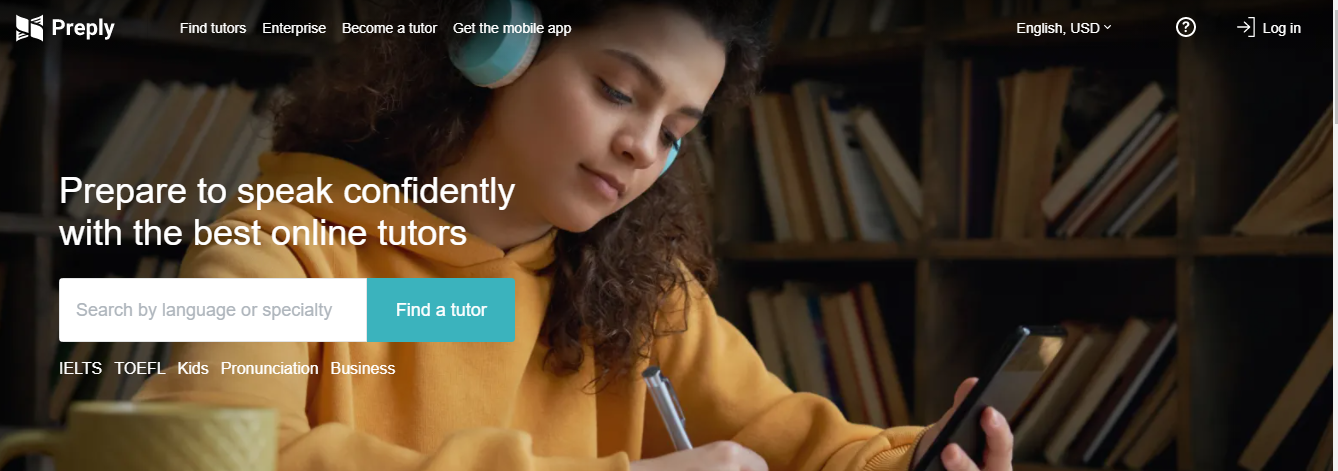
1. Preply
With over 18,000 tutors available to help you at any time of the day, finding a list of online English tutors on Preply is extremely easy. Classes take place over Skype, featuring a clear rating system with reviews to make it easy for students to see what was liked or disliked about certain teachers.
2. Skooli
Skooli specializes in hiring fluent English-speaking teachers with a Bachelor’s in English, offers lessons to students at various levels throughout school, and works with people worldwide.
3.Verbling
Verbling matches tutors with students, ensuring all teachers are native speakers with years of experience teaching in the classroom or online settings.
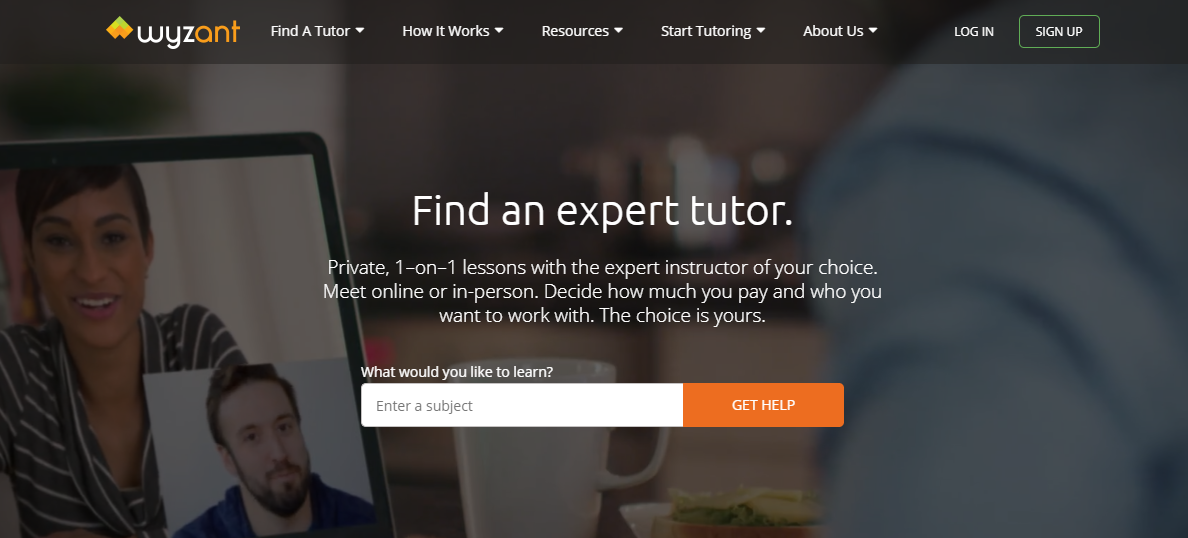
4. WyzAnt
If you are looking for a list of online English tutors, WyzAnt helps you find local tutors in your area. Most of the tutors are professional teachers with years of experience and certifications to inspire confidence in the student.
Conclusion
When looking for a list of online English tutors, students need to make sure they browse the top websites to find a teacher who suits their learning style and schedule. Choosing a patient, knowledgeable, flexible, and communicative tutor is key in creating a favorable teacher-student relationship.Read Also:
Mashum Mollah is the feature writer of Search Engine Magazine and an SEO Analyst at Real Wealth Business. Over the last 3 years, He has successfully developed and implemented online marketing, SEO, and conversion campaigns for 50+ businesses of all sizes. He is the co-founder of Social Media Magazine.
Using the three straight lines, the geometric figure that can be created is a 'triangle,' and it has three sides and three vertices. In a triangle, the sum of all three interior angles is equal to 180 degrees.
Based on the relative size of the sides and the angle they make with adjacent sides, different triangles are categorized, and each type of triangle follows the same fundamentals to calculate the area of a triangle through the area of triangle formula and perimeter of the triangle but the formula for each triangle differs because of their properties.
What are the Different Types of Triangles?
If all the sides of a triangle are equal, which implies that all the triangle angles are equal, then such a triangle is called an equilateral triangle.
Since in an equilateral triangle, all the angles and all the sides are equal, it is a very symmetrical triangle. It is worth knowing that the angles of a triangle are proportional to the length of the sides of the triangles.
Against the biggest angle present in the triangle is the side that has the longest length, and the side opposite to the smallest angle in the triangle is the side with the smallest length.
How can you Calculate the Area of a Triangle?
To know how large a triangle is to know how long the boundary of a triangle is or how large its surface is. The measures used are the area of a triangle and the perimeter of a triangle. When calculating the area of any triangle.
The formula is one by two (1/2) multiplied by the length of the triangle, multiplied by the base of the triangle. The length of the triangle is the length of the perpendicular drawn from the opposite vertex of the triangle to the triangle's base.
In the case of triangles like an equilateral triangle. Since all the lengths of the sides are equal. Hence, the formula can be compressed to a square root of three, upon four multiplied by the square of the triangle's side that is ¾ a2.
In the case of a right-angled triangle, which means that one angle of the triangle is 90 degrees, one by two multiplied by perpendicular into the base. It is important to know the area and perimeter of a triangle to do things in day-to-day life.
The Shape of a Triangle can be used to create many things:
As the triangle shape is used in many things that we use, like, triangular paper cuttings, triangular pieces of land, triangular tiles, etc. Often to know how much material would be required to create X number of triangular things we would need to know how to calculate the area and the perimeter of the triangle.
It is also worth knowing that the Pythagoras theorem can often be used in more than one way like to learn more about triangle properties also, to derive the formula to determine the area and the perimeter of a triangle.
The perimeter of a Triangle: How you can measure it?
The perimeter of a triangle is the sum of the length of its three sides, which is easy to determine in an equilateral triangle. As all the sides are equal in length, the perimeter of a triangle with the length of a side as value, x, the perimeter would be 3x.
In the case of a right-angled triangle. We know that the square of base, plus the square of perpendicular, is equal to the hypotenuse square; thus, we can simplify the formula by replacing the value of the hypotenuse.
And thus, we will have the perimeter of a right-angled triangle be defined in terms of two variables. In the isosceles triangle, which means that the length of the two sides is equal.
If the length of the equal side is x and the third side's length is y, then the perimeter of the triangle would be 2x plus y.
Read Also:
7 Reasons Why Online Education is Very Popular
Effective Contribution of Educational Apps
In today's fast-paced digital era, students have a wealth of resources at their fingertips, transforming the way they approach learning.
Online study materials have become indispensable tools for academic success, offering a diverse range of content to enhance understanding and retention. Statista notes that a sizable portion of faculties globally have also demonstrated a desire to promote digital and non-traditional learning programs. The usage of open educational resources is supported by about 65% of faculty members.
In this article, we will navigate students through the art of harnessing these resources effectively, ensuring a seamless integration into their study routines.
The Digital Landscape of Learning
In this digital age, students can transcend traditional learning boundaries by exploring the vast online landscape. Beyond textbooks, students can access a multitude of resources ranging from interactive videos to podcasts and e-books.
YouTube channels dedicated to educational content open up new dimensions of understanding. The key is to embrace this diversity, incorporating multimedia elements into your study routine to cater to various learning preferences.
Strategies for Discovering Quality Materials
The internet is flooded with information, and sifting through it can be overwhelming. Develop effective strategies to identify reliable and relevant study materials. Leverage academic databases, scholarly articles, and reputable educational websites.
Pay attention to user reviews, ratings, and recommendations to gauge the quality of content. By refining your search skills and discerning between credible and unreliable sources, you can ensure that the materials you choose are actually useful.
Organizing Your Virtual Library
As your digital repository grows, organization becomes paramount. Implement a systematic approach to categorize and store online study materials. Create folders based on subjects, topics, or courses, making it easy to locate specific resources when needed.
Utilize cloud storage or dedicated apps to ensure accessibility from any device. A well-organized virtual library enhances productivity, streamlining your study sessions and reducing the time spent searching for materials.
Harnessing Online Study Platforms
Proprep notes that online study platforms have revolutionized education, offering courses from leading institutions and experts worldwide. Explore these platforms to access high-quality lectures, quizzes, and interactive assignments. Take advantage of features like discussion forums and peer assessments to deepen your understanding and engage with a global community of learners.
Let's explore how a student studying biology can benefit from these platforms. Online study platforms provide a wealth of resources for biology enthusiasts. Imagine delving into a virtual world where comprehensive modules on anatomy, physiology, and ecology are at your fingertips.
As you explore cardiovascular anatomy, you may come across questions like, "Which valves are anchored by chordae tendineae?" For this intricate query, online study platforms offer a multifaceted approach to learning. A student can access diverse content formats such as detailed video lectures, interactive 3D models, and virtual dissections.
These platforms often curate content from experts in the field, providing insights and explanations that go beyond traditional textbooks. Virtual dissections of the heart allow the complexities of the chordae tendineae and their role in anchoring specific valves to become vividly apparent. Visual aids like these, coupled with expert commentary, allow for a better understanding of complex biological concepts.
Leveraging Effective Note-Taking Strategies
Effectively capturing information is essential when using online study materials. Experiment with various note-taking techniques such as the Cornell Method, mind mapping, or digital annotation tools.
According to Goodnotes, the Cornell Method is a methodical approach that involves splitting your notes into two categories. It has a broader right column for in-depth information and a narrower left column for hints or keywords. This approach encourages participation and hence makes effective review easier.
Tailor your approach to suit the content type – visual notes for videos and concise summaries for articles. This not only reinforces your understanding but also creates a personalized study resource for quick review during exams.
Collaborative Learning in the Virtual Space
Tap into the power of collaboration through virtual study groups. Join forums related to your field of study, participate in group discussions, and use collaborative tools like Google Docs or Zoom for shared projects.
EarthWeb notes that Alphabet Inc.'s in-house word processing program, Google Docs, is used by more than 1 billion individuals globally. The fact that it is cloud-based allows it to save all changes in real-time. This makes it vastly superior to most other word processors.
Engaging with peers offers diverse perspectives while fostering a sense of community in the online learning environment, combating the isolation associated with independent study.
Adapting to the Dynamic Nature of Online Resources
The digital realm is ever-changing, with new resources and updates constantly emerging. Stay adaptable by regularly evaluating and updating your virtual toolkit.
Explore emerging technologies, subscribe to relevant newsletters, and be open to incorporating innovative tools into your study routine. By staying abreast of the dynamic nature of online resources, you ensure that your learning approach remains current and effective throughout your academic journey.
In summary, the world of digital education calls for a strategic approach to harnessing diverse online resources, organizing effectively, and engaging in collaborative platforms. The continuous evolution of technology necessitates adaptability, prompting students to stay abreast of emerging tools.
This digital era presents a unique opportunity for personalized, interactive, and global learning experiences. Through the judicious utilization of online study materials, students excel academically while cultivating resilience and preparing themselves for the challenges of an ever-evolving future.
Adopting a proactive and adaptable stance ensures that the transformative power of online education becomes a lasting catalyst for academic success and lifelong learning.
Read Also:
How To Foster A Growth Mindset For Continuous Learning And Improvement
4 Lessons Content Marketers Can Learn from E-learning Courses
5 Advantages of Online Learning in Germany
Imagine a classroom where students can access any information they need with the click of a button, and teachers can use cutting-edge technology to create engaging and interactive learning experiences. This is the vision of the National Broadband Network (NBN) in education.
The NBN is Australia's high-speed internet network, and it is transforming the way students learn. With fast NBN, students can access online resources, collaborate with classmates, and participate in virtual learning experiences from anywhere in the country. This opens up new opportunities for students, regardless of their location or background.
Benefits of the NBN for education
The Australian government tries its utmost to create a policy so that the publicly owned companies, in partnership with the private owners, lay their high-speed internet connection. According to the analysts, the government-sponsored project of laying the ambitious fiber-to-the-premises network is completed within the dedicated line. The religious endeavor of the government toward the high-speed internet network resulted in a huge change in the education sector. However, the NBN offers a number of benefits for education:
Higher Productivity
Low-speed internet is unable to provide the information at a lower speed. As a result, the students find it difficult to extract the information on that they need. Ultimately, it affects their projects. But with the high-speed internet network, things are a lot easier. High-speed internet has brought about a sea change entirely.
Greater Bandwidth
Another advantage that you have with the high-speed internet is greater bandwidth. High-speed internet connections come with much greater bandwidth. It means multiple users can access the internet connection and complete their education and learning within the stipulated time period. The national broadband network has been highly successful in mitigating this very need.
Greater Collaboration
The dissatisfaction and resentment of the students with the network issue were quite common because as extracting information turns out to be far more difficult than previously. But with the advent of high-speed brandwidth, the collaborative projects are way ahead of the timeline. It is the benefits associated with a high-speed internet network.
Increased Access To Educational Resources:
The NBN gives students various online educational resources, including interactive textbooks, educational games, and simulations. This can help students learn more engagingly and interactively and provide them with access to resources that may not be available in their local school.
Improved Collaboration Opportunities:
The NBN makes it easy for students to collaborate with classmates and teachers on projects and assignments. This can help students develop their teamwork and communication skills, and it can also help them to learn from each other.
Enhanced Virtual Learning Experiences:
The NBN enables students to participate in virtual learning experiences, such as online courses and field trips. This can help students learn about different cultures and perspectives, and it can also give them access to experts in a variety of fields.
Reduced Digital Divide:
The NBN is helping to reduce the digital divide between students in urban and rural areas. By providing all Australians with high-speed internet access, the NBN ensures that all students have the same learning opportunities and success.
Online Security
Security is a major issue when it comes to internet usage. Malicious elements are always ready to steal and hold information from an individual for ransom. This is where the efficacy of a high-speed Internet network is. It has indeed been an effort to safeguard.
Examples of how the NBN is being used in education
There are many examples of how the NBN is being used to improve education in Australia. For example:
Virtual field trips: The NBN is being used to take students on virtual field trips to places worldwide. For example, students can visit the Great Barrier Reef, the Louvre Museum, or the International Space Station without ever leaving their classroom.
Online collaboration: The NBN is being used to enable students to collaborate with classmates and teachers on projects and assignments. For example, students can use video conferencing to work on a presentation with classmates who are not in the same room or online collaboration tools to submit their work to their teacher.
Personalized learning: The NBN provides students with personalized learning experiences. For example, students can use online learning platforms to learn at their own pace and focus on the most relevant topics.
Professional development for teachers: The NBN provides teachers with professional development opportunities. For example, teachers can take online courses to learn about new teaching methods and technologies.
Conclusion
The NBN is a powerful tool that can transform learning in Australia. By providing students with access to high-speed internet, the NBN is enabling new and innovative ways of learning.
The NBN is also helping to reduce the digital divide and improve student outcomes. However, some challenges still need to be addressed, such as funding for schools and teacher training.
Overall, the NBN is a positive development for education in Australia. It can make learning more personalized, engaging, and accessible for all students.
Read Also:
What Is STEM Education
The Benefits Of Modular Classrooms In Education
The Future Of Higher Education In Singapore: Trends And Innovations In Degree Programs