


Sam Altman, CEO Of OpenAI Joins Microsoft Amid Controversy

Published on: 21 November 2023 Last Updated on: 29 December 2025
The CEO Of OpenAI Joins Microsoft Adding Further To The Controversy

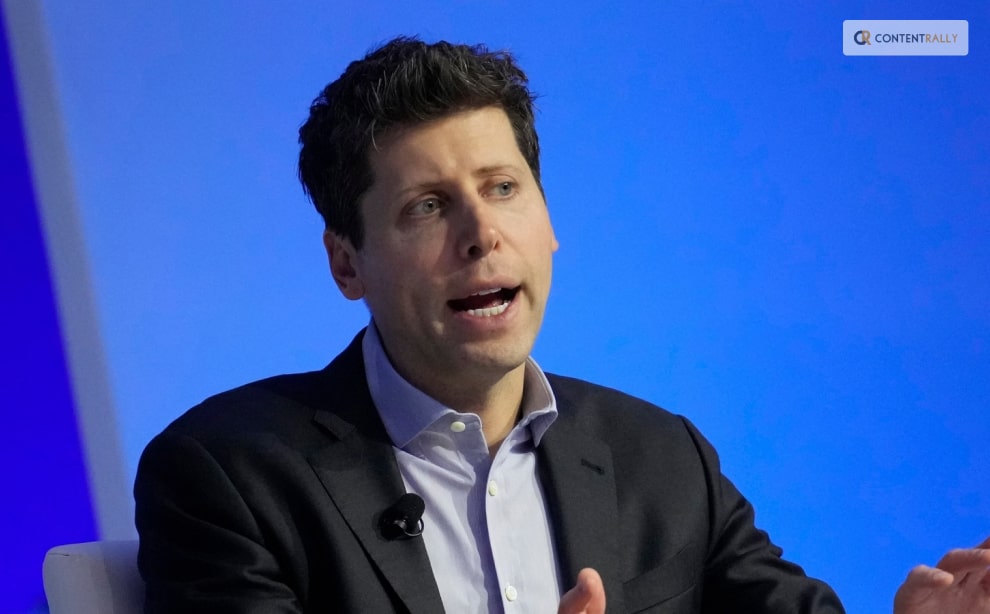
In a chaotic boardroom coup at the OpenAI on Friday, Sam Altman, the company's CEO, was overthrown. He was also the company's co-founder; however, news came in of him joining Microsoft after he was fired.

Microsoft is one of the biggest stakeholders of OpenAI, with an investment of $13 billion. The balance of power is a significant move in the age of Artificial Intelligence, especially with the integration of new technology over the decades.

https://twitter.com/ericzhu105/status/1726668924652335188?s=20

After Altman was fired, another co-founder of OpenAI, Greg Brockman, joined the company Microsoft. Brockman was the president of the OpenAI company, thus influencing how OpenAI will function in the future.

After Altman was fired, Mira Murati took the position of interim CEO of OpenAI but will return to her original role of chief technology officer at OpenAI. The ChatGPT company will hire Emmett Shear as the interim CEO, leaving her position as the former CEO at Amazon's streaming service Twitch.

Satya Nadella, the Microsoft CEO, posted on the social media platform X about their hiring of Sam Altman at Microsoft. The two ex-colleagues and co-founders of OpenAI, Sam Altman and Greg Brockman, will lead an advanced AI research team at Microsoft.

The ChatGPT organization, OpenAI, significantly changed the industry, especially with the introduction of artificial intelligence. The balance of power changed, and with the acquisition of Altman and Brockman, Microsoft had the upper hand.

https://twitter.com/Forbes/status/1726518259896201296?s=20

Altman visited OpenAI's headquarters and wrote, "First and last time I ever wear one of these." along with posting a photo on social media platform X, previously known as Twitter, where he is holding a green guest badge which was connected to a labeled lanyard "OpenAI"!

As per the rumors in the industry and certain reports by the New York Times and Wall Street Journal, the board that fired Altman is worried. They are trying to reconsider the decision and have second thoughts. They wanted to re-engage and discuss with Brockman and Altman to return, but the ball is out of their court now!

Read More About:

Content Rally wrapped around an online publication where you can publish your own intellectuals. It is a publishing platform designed to make great stories by content creators. This is your era, your place to be online. So come forward share your views, thoughts and ideas via Content Rally.

View all posts

Leave a Reply

Your email address will not be published. Required fields are marked *

Related

Pinterest's Exciting Partnership With Amazon

Pinterest’s Exciting Partnership With Amazon: Game-Changer for Investors!

April 27 marked a significant day in the world of e-commerce and social media as Pinterest (PINS 1.70%) unveiled a groundbreaking partnership with Amazon (AMZN 1.83%). While initial reactions saw Pinterest's shares dip by 3%, it's time to delve deeper into this collaboration, revealing why it's a game-changer for Pinterest's shareholders. Pinterest's platform is a treasure trove of "pins" – images that users upload or save for inspiration. Amidst these pins, users encounter image-based advertisements, the lifeblood of Pinterest's revenue stream. What's truly fascinating is Pinterest's ambition to make these ads "shoppable." Businesses can utilize Pinterest's tools to seamlessly convert ad views into sales, seamlessly blending with the browsing experience. Previously, Pinterest worked directly with businesses for ad creation. However, in April, a turning point arrived as Pinterest partnered with Amazon to introduce third-party ads for the first time. This means that the advertisers on Pinterest are Amazon's clients, not Pinterest's directly. Amazon's advertising segment is soaring, generating nearly $10.7 billion in Q2 2023, up 22% year over year, and boasting a staggering $41.3 billion in trailing-12-month advertising revenue. In comparison, Pinterest's trailing-12-month revenue stands at $2.9 billion. With businesses having their product listings promoted on either Amazon or Pinterest without extra effort, this partnership can yield substantial benefits. https://twitter.com/mumbaischool/status/1708465193519546744?s=20 While the effects of this partnership won't be instantaneous, it's poised to boost Pinterest's revenues significantly for two compelling reasons: 1. Ample Ad Inventory: Amazon's ad business is already 14 times larger than Pinterest's, and it's growing faster. The influx of Amazon ads on Pinterest's platform can potentially increase ad rates, benefiting Pinterest's bottom line. 2. Enhanced Relevance: A broader ad inventory enhances Pinterest's ability to deliver more relevant ads to users, driving their effectiveness. Successful ads generate higher demand from advertisers. Moreover, the partnership reduces Pinterest's expenses, as it no longer needs to convince Amazon merchants to advertise on its platform. This streamlined process can lead to improved profit margins. In the words of The Motley Fool, “Since these ads are from Amazon's customers, Pinterest's profit margins can go up because it's spending less on sales and marketing.” Beyond the financial aspects, the partnership's strategic significance cannot be underestimated. As the first third-party ad partner, Amazon may pave the way for more such collaborations, further fueling Pinterest's growth and profitability. Pinterest's partnership with Amazon is more than a business deal; it's a catalyst for future success. Investors should take note of the transformative potential this collaboration holds for Pinterest's stock. While Amazon is the first major partner, there's potential for more to come, making Pinterest's future even more promising. Keep Learning: Here’s How To Post On Pinterest! How To Delete Pinterest Account Easily?

READ MOREDetails
AI Coaching Comes To LinkedIn Learning

AI Coaching Comes To LinkedIn Learning: AI-Powered Innovations To Revolutionize Recruitment And Training  

In a bid to adapt to the ever-evolving demands of the workforce and the expanding strategic role of HR departments, LinkedIn has recently unveiled a range of AI-powered products. This strategic move is in response to a survey that revealed a staggering 90% of HR professionals now perceive their roles as increasingly strategic over the past year. While the job hunting platform has many features that can make life easy for the users, like the open-to-work feature or the QR code, this one is a great boost for the platform combining the technology and AI innovations. LinkedIn's revolutionary Recruiter 2024 tool harnesses the power of AI, drawing from a vast repository of internal data encompassing more than 950 million professionals. The aim? To swiftly identify qualified job candidates that extend beyond the usual suspects. One of the standout features of Recruiter 2024 is its ability to decipher your candidate requirements in plain, natural language. No longer will HR teams need to invest precious hours in laborious manual searches. Instead, the AI effortlessly generates suitable candidates. https://twitter.com/lazi_tech/status/1709463363431116899?s=20 But that's not all. The AI-driven wizardry goes further by suggesting alternative locations, relevant skills, and remote work options, effectively broadening your talent pool. This bold move is a departure from the traditional reliance on well-known brand-name companies. Instead, it's all about tapping into candidate insights, gauging their willingness to work, and matching them with companies that align with their values. As per, Search Engine Journal, LinkedIn is also breaking new ground with the introduction of CRM Connect. This innovative integration bridges the gap between Recruiter and existing candidate relationship management systems, further streamlining the hiring process. LinkedIn Learning is also undergoing a transformation with the infusion of AI-powered coaching. Delivered through an intuitive chatbot interface, this feature offers tailored advice, finely tuned to individual job titles, career aspirations, and skill sets. Initially, the focus of this AI-powered coaching tool is on leadership and management skills. However, LinkedIn has ambitious plans to expand its scope, encompassing a broader spectrum of areas, thereby providing comprehensive support for professional development. Currently, Recruiter 2024 and AI coaching on LinkedIn Learning are in the pilot phase, accessible to a select group of customers. The roadmap, however, is clear: LinkedIn intends to roll out these innovations to all Recruiter and Learning Hub customers throughout the year.LinkedIn's latest endeavors signal a bold step into the world of AI-driven solutions, aimed at bolstering HR and learning and development professionals. With these groundbreaking tools at their disposal, the future of recruitment and training is looking brighter than ever. Stay tuned as LinkedIn continues to push the boundaries of what's possible in the professional landscape. Learn More About: How To Keep Up On The Latest News? Facebook Blueprint: Building A Strong Foundation For Social Media Advertising

READ MOREDetails
Fake Health News

7 Shocking Causes of Fake Health News & Their Consequences 

The term “Fake News” has existed since the 1800s but has resurged in the last decade.   Often, one political side uses it as a defense mechanism against negative articles. The result is societal confusion over what’s true and what’s not.  When health news becomes unreliable, the consequences are more severe. This trend, fueled by political partisanship, has become increasingly dangerous.   Generally, mainstream media like television and print journalism maintain enough integrity to avoid spreading fake health news. However, in the social media landscape, fake stories spread rapidly with a simple click. The Causes The primary cause of fake health news is profit. More shares and likes equal more advertising opportunities. The healthcare industry, especially pharma, spends heavily on advertising.   With every click generating potential revenue, it’s no surprise that some lesser “news” services embellish or even lie to grow their following.  For example, a fake article on “Natural News” claimed the cancer industry was a scam for profit. It received 5.4 million hits, and the site’s Facebook page gained over 3 million followers.   Popularity pays!  In social media monetization, influencers can earn about $10 per 1,000 followers for sponsored content.   Once they hit 1 million followers, they can make up to $1,000 per post solely through advertising.  The Consequences As social media continues to expand, the potential for spreading fake news also grows. The issue needs attention because the consequences can be real and even fatal.   Some stories don’t cause direct harm, such as one claiming ginger is a better cancer treatment than chemotherapy. Still, they mislead people away from proper care.  For patients with terminal illnesses, hope is everything. False stories, like one about a diabetes cure in Mexico, can give false hope to those desperate for solutions. The most harmful fake news encourages the use of FDA-unapproved products.   Although these stories often remain on social media, even the U.S. president once promoted a chemical as a COVID-19 cure.   Clinical trials showed that the chemical increased heart attack risks and was not safe for such use. The Cure Given social media’s global reach, the best way to combat fake news is through education.  Teaching about its dangers can prevent this from becoming a generational issue, unlike other falsehoods rooted in fear.   Currently, many prominent social media platforms flag posts containing false or misleading information.  People believe in fake news because it aligns with their existing beliefs. This makes government regulation challenging, especially as new social media platforms arise, vowing not to flag any content. Again, this approach is money-driven. How to Check Whether a Health News Over Social Media is Fake  With the deluge of health news filling up your Facebook feed, it’s important to know how to spot real from fake.   Sure, fake news can be damn convincing these days — but there are a few good tricks of the trade to protect yourself.  Check the Source First and foremost, always check the source. Is the article coming from a reputable organization or a well-known health authority?   Credible sources include government health agencies, recognized research institutions and trusted news outlets.   If the source is obscure or lacks a professional presence, be cautious. A questionable source can be a red flag even if the information seems convincing.  Reference Studies Legitimate health news should reference studies, expert opinions, or credible data. If the article cites scientific research, look for links to peer-reviewed journals or established medical websites.   Beware of articles that make sensational claims without backing them up with evidence. Even when there’s a study mentioned, ensure it’s recent, relevant, and conducted by recognized experts in the field.  Watch for Emotional Triggers Fake health news often relies on emotional triggers to generate clicks.   If a post uses language like “miracle cure” or “secret the government doesn’t want you to know,” it appeals to your emotions rather than your intellect.   Real health information is rational, calm, and devoid of sensationalism.  Compare against other Reliable Sources If you’re not sure if a piece of information is accurate, see if other reliable sources report similar news.   In fact, if the news article is true, it will likely be reported by more legitimate organizations or outlets as well.   If you only find that news on questionable sites or personal blogs, it’s better to ignore them.  Check the Writer’s Background Who wrote the article? Is it a doctor, a journalist with a strong history of health reporting, or an expert in the field?   If you can’t tell, don’t know what the writer has for credentials, or don’t tie closely to health, their information may be iffy.  Watch out for Biased (and sponsored) Content Sometimes, content is created to sell something, whether it’s a product or an idea. Sponsored articles, particularly those highlighting supplements or treatments, are usually biased.   Check for disclaimers and consider whether the article is more about making money than offering accurate health information.  Publication Date Health guidelines and research are constantly evolving. An article that’s a few years old may not be accurate or relevant anymore.   Be sure to check when it was published to get the most current information.  Use Fact-Checking Websites Lastly, consult fact-checking websites like Snopes, FactCheck.org, or Health Feedback to fact-check a suspicious claim.   These platforms research and investigate viral stories and can usually verify whether something is true or not. Read Also: How to Keep up on the Latest News How Cutting Edge Technology is Helping Dubai Improve its Healthcare Services Health Tips For Managing High Cholesterol

READ MOREDetails