












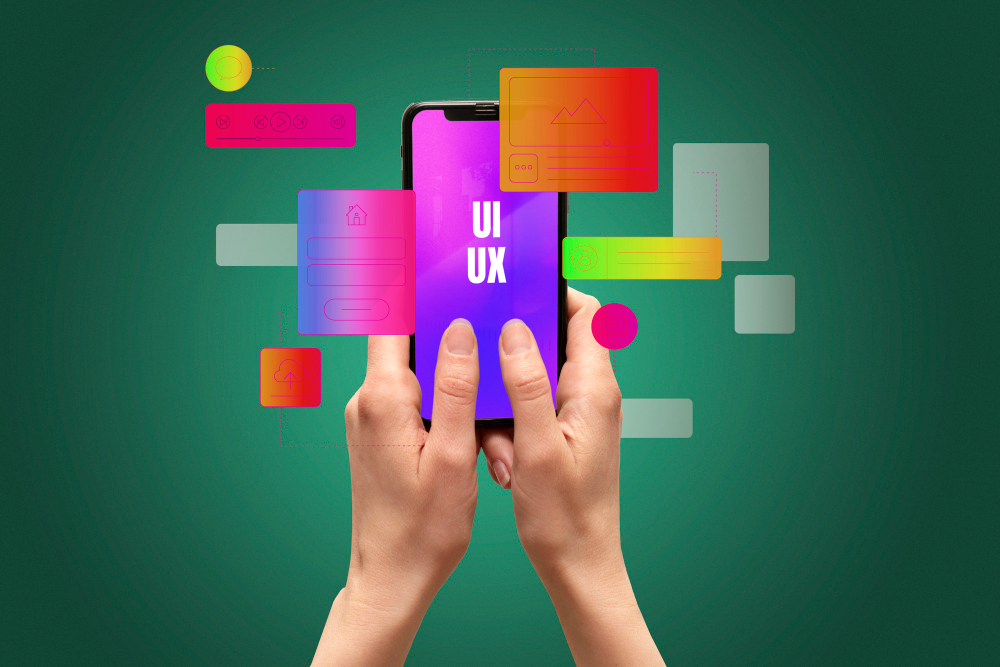
Top UI/UX Design Trends Shaping Career Opportunities

by

20 April 2026

Blog

Top UI/UX Design Trends

Every business functioning digitally or willing to build a digital presence has to emphasize the user experience aspect. 

So, naturally, the global UI/UX business is growing at a rapid pace, and according to the Fortune Business Insights report, the global UX service market is going to grow from “USD 8.80 billion in 2026 to USD 77.18 billion in 2034.” 

This rapid growth and future have further created an ever-expanding demand for proficient designers. 

Also, the field is very dynamic, and there are always fresh prospects to explore. 

Moreover, if you are willing to begin your journey in this field, you can get enrolled in a UI UX Course to acquire the necessary knowledge. 

However, before you decide to make a career in this field, you must know the top UI/UX design trends. 

Immersive experience with 3D and AR, and hyper-personalization are the top UI/UX design trends in 2026. 

Furthermore, users today want the designs to be simple, accessible, and sustainable. 

Overall, with each passing day, the UI/UX design trends are going to be more sensory-driven. 

Here are more details. 

1. Trend 1: Human-Centered Design

Modern UI/UX design is no longer just about aesthetics. It is about creating experiences that feel intuitive and empathetic.

Even if you consider a mundane HR management platform such as Zimyo, you will notice that it has features such as mood updates. 

Once again, suppose you are designing a banking app that performs all the tasks with simple clicks. 

Now, not everyone is an expert. So, the design of the app needs a friendly or intuitive design, making it easy even for a person who has zero knowledge of banking apps. 

Career Impact

Depending on the role, one of the biggest reasons for designing empathy to different user types is complete o accessibility. 

And we all know that, from this point on, kind of emphasis placement is one of the biggest reasons for designers.

You have to not only empathize but also deeply understand accessibility.

Trend 2: Voice And Conversational Interfaces

Today, you will notice smart speakers and voice assistants everywhere. Thus, a UI/UX designer has to create a product that is beyond something screen-based. 

For example, you are developing or designing a food delivery application. Now, if your app remembers the previous orders of a specific customer and responds when they give a voice command like, “Order my usual pizza.”

Now, having skills in integrating voice interaction design is a great thing, as every app these days is being more dependent on voice-based demands. 

Little details can make a big difference in how the end-users experience your product. 

Now, what are micro-interactions? These are the small responses or animations that guide the end-user. 

These small elements add a sense of life to the product. 

For example, every time we add a product to our online store cart, the simple animation shows that the shopping app is happy. 

4. Trend 4: Inclusive And Accessible Design

You cannot compromise on accessibility these days. 

Furthermore, as a business, you need to understand the importance of an inclusive design. When you design inclusively, you have a bigger audience base. 

Moreover, an inclusive design shows that you are socially responsible, and thus, your brand value goes up. 

For example, you run a streaming platform. Now, if that streaming platform allows users to customize the language of the subtitles, you show better inclusivity. 

5. Trend 5: AI-Driven Personalization

Artificial intelligence, or AI, has changed how we interact with digital platforms. 

As a UI/UX designer, you need to collaborate with the data teams to ensure a personalized experience for your users. 

Furthermore, AI can adjust the layout of your design, content, and hierarchies on a real-time basis based on the requirements of the target customers. 

For example, you are designing a fitness app. Now, this fitness app will be more engaging and supportive if it offers workout recommendations based on the user's progress. 

Beyond an app, that fitness application will then start working as your digital fitness guide. 

So, if you want to learn the top UI/UX design trends and stay one step ahead in your career, you must enroll in courses that cover AI integration. 

While creating a UI/UX design, you have to ensure that it offers a seamless experience across devices. You can use a mobile, a laptop, or a smartwatch! 

The design should be equally good and interactive across all devices. Furthermore, the design should be consistent. 

For example, let’s think of a productivity app. Now, when the app syncs tasks across all devices and offers similar performance, a user never loses track of their work. 

Moreover, if you are a designer who is skilled in cross-platform designs, you will always be in demand. It is so because businesses today need to create a unified digital ecosystem. 

How we perceive a UI UX design course is changing fast, and at the same time, the availability of jobs in the design field is deepening in creative ways. 

Starting from designing with humans in mind to getting into AI-personalization, every step would lead to more paths ahead for those who are ready to learn and change. 

As the UI/UX design industry is very dynamic, it is why upgraded UI/UX courses or training programs become mandatory. 

These courses ensure that the designer is not only skilled in the specific field, but also is updated with the recent trends. 

So, are you considering a career in UI/UX? Here is the takeaway. 

Always stay updated with the top UI/UX trends and spend your time learning. 

Also, remember that people these days prefer human-centric experiences. So, your job does not end with designing interfaces. 

You have to create something that establishes a strong and meaningful human-digital interaction.

Nabamita Sinha loves to write about lifestyle and pop-culture. In her free time she loves to watch movies and TV series and experiment with food. Her favourite niche topics are fashion, lifestyle, travel and gossip content. Her style of writing is creative and quirky.

View all posts

Leave a Reply

Your email address will not be published. Required fields are marked *

Related

T-Bone Accidents

Why Hire A Lawyer After A T-Bone Crash & How To Hire A Good One?

There is absolutely no denying the fact that a T-bone crash can be one of the most devastating car accidents.  Often occurring at intersections, when one car strikes the side of another, thus forming a T shape, I suppose you can clearly understand right away just how dangerous these crashes can be.  And especially because the sides of the vehicles often offer less structural protection than the rear or the front, which means that the injuries can be rather serious. Anyway, if you have been involved in an accident like this in Schaumburg, Illinois, then you may have some questions on your mind.  For one thing, you may be wondering whether you need to hire a Schaumburg T-Bone Crash Lawyer to represent you in the case, or if you may be able to handle it all alone.  And you want to get an answer to this question before you actually start getting contact information of lawyers in this area, and thus getting in touch with them to discuss your case. Contact Details For Your Help:Vito & Dollenmaier Law3701 Algonquin Road, Suite 330, Rolling Meadows, Illinois 60008224-524-1539https://www.vanddlaw.com/ But then, there is another thing that you are wondering about here.  To put it simply, in addition to understanding whether you need to hire these pros, you also want to understand how to find and hire a good one, should you decide to do so.  And, well, that is precisely what we are going to discuss below, aiming to answer both of those important questions for you right away.  The point? To help you make up your mind about what to do, as well as learn how to do it the right way. Why Hire A Lawyer After A T-Bone Crash? Unsurprisingly, we are going to begin with the question of why hiring a lawyer after a T-bone crash is such a good idea in the first place.  So, the short answer to the question of whether you should hire these professionals is an absolute yes.  But you are looking for a more detailed answer.  Moreover, you want to know why this is such a good move to begin with, which is what we are going to be discussing below.  Keep on reading, therefore, to find out what you need to know. 1. You Can’t Win Without Experience On Your Side: First things first, when it comes to T-bone crashes, establishing fault is definitely not always simple.  An experienced lawyer will be able to gather all the critical evidence. This includes police reports, witness statements, traffic camera footage, event data recorder information, and similar.  Furthermore, they may also rely on accident reconstruction analysis to build an even stronger case for you. This, in turn, will ensure that you are avoiding unfair blame. Also, it guarantees that your right to get compensated is properly protected. 2. You Need Help To Fight Stringent Insurance Companies: Moving on, you should definitely expect insurance companies to try to minimize your claim. Also, look for ways to reduce the payouts or delay them.  So, they may argue that you contributed to the accident, that your injuries are not as severe as claimed. Or, that they were pre-existing, the impact was “low speed” even if it wasn’t, and similar things.  As a result, without proper legal representation, you could feel pressured to accept a settlement that is definitely unfair.  On the other hand, a great lawyer will understand all the negotiation tactics. Also, they will know how to push back against those unfair offers. 3. You Can Avoid Making Errors While Calculating Your Compensation: When calculating your compensation all on your own, you may definitely miss a few things. Moreover, you will fail to take them into account.  This is especially because some injuries caused by T-bone crashes may not appear immediately. This includes concussions or some internal damage.  But when you have a great lawyer on your side, they will ensure that all the immediate and long-term medical needs are considered when calculating your compensation. Also, this includes things like lost wages, reduced earning capacity, property damage, emotional distress, and similar stuff. That way, these attorneys can help you reach a fairer settlement for you. 4. You Need Proper Guidance To Sail Through: It is not unusual for people to make certain mistakes after the accident that can harm their claim. Those include things like: A) Missing legal deadlines. B) Accepting quick settlement offers. C) Posting on social media about the accident. D) Giving recorded statements without legal advice.  With a great T-bone crash lawyer representing you, though, you can rest assured that you will get proper guidance through the process. Plus, they will help you avoid those costly mistakes.  How To Hire A Good One? Okay, now that you have understood some of the reasons why hiring a T-bone crash lawyer is the right thing to do after having been involved in an accident like this, what you want to do next is, of course, figure out how to do it right.  First and foremost, you want to hire a lawyer who focuses primarily on personal injury and car accident cases.  After all, T-bone accidents require professionals to have experience with things like accident reconstruction and insurance negotiations. Also, the same professionals should come with medical documentation and trial preparation when necessary.  So, you want to choose an expert who specializes in this area and has experience with T-bone crashes specifically, as that will be a kind of guarantee that they will know how to successfully handle your case. Moving on, you should also remember to inspect the reputation of the potential candidates. Moreover, you can do that by reading some online reviews and testimonials. Also, you could visit those legal rating platforms and check the state bar records.  Of course, once you have narrowed your list down using the criteria we have mentioned, you should schedule a consultation with the potential lawyers in Schaumburg that you might still be considering. Also, use that as an opportunity to ask any questions you may have, to assess the quality of communication, and to discuss the case strategy and the fees.  Then, compare everything and make your final hiring choice. All the best!

READ MOREDetails
Banking Mobile App Development

Best Practices In Banking Mobile App Development

In this mobile-first financial economy, a strong, secure, and easy-to-use mobile banking app is no longer an indulgence—it's essential.   With millions of people spending money on mobile, banks and fintech companies are facing unprecedented demand to provide frictionless mobile experiences.   But it's not all about bright looks to create a top-performing banking app—strategic planning with a thoughtful approach, security-driven development, and ongoing user-focused innovation are necessary.  Best Practices For Mobile Banking App In Development This article addresses best practices in mobile banking app design to ensure the app is reliable, compliant, customer-centric, and sustainable in the long run.  1. User-Centric Design (UX/UI):  Why It Matters? Ease and trust are most essential in banking. An intuitive interface allows customers to quickly dive into the app to look over accounts, send funds, pay bills, etc.—without stalling or being held up.  Best Practices:  Keep navigation simple with minimal steps for the most essential actions.  Employ common and well-known UI patterns such as bottom nav bars or hamburger menus.  Provide visual feedback (e.g., loading icons) during a transaction.  Dark mode and accessibility features improve usability across age groups.  Micro interactions (e.g., small animations) raise engagement and satisfaction.  2. Secure Security Architecture: Why It Matters? Security violations can result in a disastrous loss of reputation and customer trust. Banks need to meet strict compliance requirements (e.g., PCI DSS, GDPR) while keeping user data secure.  Best Practices:  End-to-end encryption (AES-256 or above)  Multi-factor authentication (MFA) using biometrics (Face ID, fingerprint)  Real-time fraud detection systems using AI  Auto logout & session timeouts on inactivity  Obfuscation and secure API practices to safeguard backend services  Penetration testing & vulnerability scanning at the time of development and release  3. API-First Development:  Why It Matters?  Modern banking applications must communicate with various internal and third-party systems, such as core banking systems, payment gateways, credit bureaus, and financial planning software.  Best Practices:  Utilize RESTful or GraphQL APIs with properly documented endpoints  Uniform responses and error handling  API throttling and rate limiting for reliability  API security using OAuth 2.0, JWT tokens, and API gateways  Enable modular architecture to scale in the future  4. Personalization And AI Integration:  Why It Matters?  Customers prefer their banking app to be tailored to their very own. AI-powered personalization increases engagement and loyalty.  Best Practices:  AI-powered chatbots to deliver 24/7 customer support  Behavioral analytics to suggest the right products (e.g., loans, savings schemes)  Spending insights and smart budgeting tools  Customized push notification based on personal transaction behavior or goal  Natural Language Processing (NLP) for conversational banking  5. Mobile Onboarding And Compliant With KYC:  Why It Matters?  Long-term sign-ups are among the primary drivers of user abandonment. Optimized onboarding that is compliant with regulations is the big differentiator in acquiring customers quickly.  Best Practices:  Mobile-optimized eKYC with OCR and facial recognition  Guided onboarding flows with progress bars  Instant account opening for verified customers  Document camera upload with real-time verification  Cloud-based secure KYC storage with proper consent flows  6. Cross-Platform Optimization:  Why It Matters?  Users access banking apps through various devices. An equitable experience guarantees satisfaction across platforms.  Best Practices:  Native frameworks (Swift for iOS, Kotlin for Android) are utilized for performance-critical functionality  Cross-platform frameworks (Flutter, React Native) balance for quicker time-to-market  Test UI responsiveness for different screen sizes and OS versions  Use platform-specific features (e.g., Apple Pay, Google Pay)  7. Regulatory Compliance And Legal Readiness: Why It Matters?  Banking applications have to comply with regional and international regulations to prevent fines and ensure trust.  Best Practices:  Compliance with GDPR, PSD2, CCPA, and PCI-DSS  Regular compliance reviews and audits  Explicit user permissions and privacy statements  Audit logs for transaction history and access to sensitive data  Integrated consent mechanisms for sharing and personalization  8. Real-Time Functionality And Performance Optimization: Why It Matters? Banking is real-time in its nature—delays or downtime will cause user frustration and operational risks.  Best Practices:  Use real-time data streaming for updates and notifications on balances  Edge caching and content delivery networks (CDNs) enable faster access  Offline modes for important functionality when offline  Bottleneck detection tools for monitoring performance  Test pipelines for speed and reliability  9. Scalable Backend Infrastructure: Why It Matters? A scalable backend allows the app to scale with the user base and handle peak loads (e.g., salary days or bill cycles).   Best Practices: Microservices architecture for scalability in a modular form  Cloud-native infrastructure (AWS, Azure, GCP)  Database replication and sharding for high availability  Auto-scaling groups and load balancers  Data redundancy and disaster recovery mechanisms  10. Constant Updates And Agile Technique:  Why It Matters? User preferences shift rapidly. Regular updates based on feedback and new threats are imperative.  Best Practices:  Use Agile and DevOps principles for rapid iteration  A/B testing of fresh features  In-app feedback loops to measure user opinion  CI/CD pipelines for automated testing and deployment  Track KPIs such as retention rate, DAU/MAU, and crash-free sessions  Key Features For A Competitive Edge: To meet user expectations, banking apps should include features that blend functionality with innovation. Here are the essential components:  Real-Time Transaction Alerts: Instant notifications keep users informed.  AI-Powered Chatbots: These provide 24/7 customer support for common queries.  Cross-Platform Compatibility: Apps should work seamlessly on iOS, Android, and web platforms.  Accessibility Features: Voice guidance and high-contrast modes cater to users with disabilities.  Partnering With Experts For Success: Creating a banking app that excels in user experience, security, and performance requires specialized expertise.   At WislaCode, we develop multifunctional mobile and web applications that fast-track businesses and redefine user experiences.   Our comprehensive full-stack capabilities cover data storage, backend, middleware, frontend architecture, design, and development, ensuring end-to-end digital solutions tailored to your needs.   By partnering with us, financial institutions can deliver apps that not only meet industry standards but also build lasting customer trust.  The Need For A Better Mobile App!  Mobile app development for banks is a challenging but rewarding process that involves balancing security, customer experience, scalability, and compliance.   Banks can build applications that not only comply with regulatory requirements but also surpass user expectations—driving engagement, loyalty, and long-term digital growth by following these best practices. In a mobile banking world where day-by-day adoption is increasing, providing a safe, stable, and smart app experience is not just good practice—it's a competitive necessity. READ MORE: Dominant Mobile App Trends To Keep An Eye On How to Use Your Mobile App to Improve Your Trading Get More Installs: Which Extensions Can Help Drive Installs Of Your Mobile App?

READ MOREDetails
Smart Study Platforms

The Rise of Smart Study Platforms: Inside Lecturio’s COMLEX Level 2 Ecosystem

The medical library, once a hallowed hall of hushed whispers and towering stacks of textbooks, is changing. Today’s aspiring physicians are just as likely to be found with earbuds in, watching a complex physiological process unfold on a tablet. This generation seeks integrated, efficient solutions to conquer the most daunting exams of their lives. For osteopathic students, this means finding a smart partner for COMLEX Level 2 preparation, and platforms like Lecturio are building comprehensive ecosystems designed for exactly that. The modern approach is about consolidation. This resonates perfectly with the Gen-Z med student, a digital native who values efficiency and integrated ecosystems. These platforms are appealing for the right reasons: they replace overwhelming clutter with a streamlined, on-demand experience that fits a hectic clinical schedule. The ability to switch seamlessly from a high-yield video to targeted questions on a single platform isn’t just convenient; it’s a smarter, more sustainable way to learn, aligning with a generation that demands both technological sophistication and proven results from their tools. Lecturio’s ecosystem functions as an all-in-one digital medical school, transforming how students approach their studies. A Foundation of Expert-Led Video Lectures Its foundation is a vast library of high-yield video lectures by expert physicians. These are engaging, visual explanations that break down intricate topics like OMM techniques into digestible segments, allowing students to learn at their own pace and revisit complex concepts with ease. Mastering Application With A COMLEX-Style Qbank But knowledge is only half the battle. Application is key for an exam like COMLEX Level 2 with its emphasis on clinical skills. Lecturio’s bank of thousands of COMLEX-style practice questions, complete with detailed explanations for every answer choice, allows students to test their understanding in a low-stakes environment. The integrated Qbank mimics the actual exam format, building critical stamina and familiarity. The Smart Study Advantage: Spaced Repetition Perhaps the most powerful feature is Lecturio’s “Spaced-Repetition” functionality. The platform intelligently tracks performance and identifies weaknesses. It then surfaces challenging concepts at optimal intervals, ensuring information moves from short-term to long-term memory. This is studying backed by cognitive science, not just guesswork. Targeted Prep For The Osteopathic Distinction For an exam that specifically tests Osteopathic Manipulative Treatment (OMT), Lecturio provides targeted content that other generic platforms miss. Dedicated video lessons and questions ensure students are thoroughly prepared for the distinct philosophy and practical applications that define osteopathic medicine. Assessing Readiness With Precision Furthermore, comprehensive self-assessments provide a realistic prediction of readiness, helping students pinpoint exactly where to focus their final review efforts before exam day. Conclusion: In essence, the journey has been digitally remastered. Preparing for the COMLEX Level 2 preparation no longer has to be an overwhelming grind. Through a smart ecosystem of videos, Qbanks, and spaced-repetition technology, platforms like Lecturio make the process more efficient and manageable. It’s about working smarter, not just harder, making the monumental task of board prep feel a little less daunting and a lot more achievable. More Resources: A Student’s Guide For Effectively Utilizing Online Study Materials Study Abroad Programs That Offer Strong Academic and Industry Exposure Common Study Problems And How To Deal With Them

READ MOREDetails