











A Guide To Jeans – Eight Types Of Jeans And How They Fit

Published on: 23 December 2023 Last Updated on: 10 February 2024
Jeans

A fresh season brings a wave of new trends, and once again, denim takes the spotlight with the return of the classic low-rise jeans. Alongside seven other trends, the resurgence of '90s fashion continues to influence our closets. People are curious to know about the popular types of jeans. 

Whether you're aiming for a style makeover or seeking new denim, there's an abundance of fantastic options to explore. And the best thing is that you can find all of the following options on the official website of Krazy Larry Pants. So, be sure to check them out as well.

1: Skinny Jeans

If you are into that fitted, sleek look, we're sure that the skinny jeans will be your best bet as they tend to hug your legs snuggly from your waist to the ankle. It, in turn, makes your body shape and curves look much more accentuated and create a rather streamlined silhouette.

Skinny jeans look perfect with a flowy top or an oversized top. However, you can also use the same with a casual shirt to go for a chic and modernist style.

2: Straight Leg Jeans

The straight-leg jeans are quite classic and timeless types of jeans, especially if we're considering how long they've been in the trend. They usually feature a consistent width from hip to hem. 

Because of that, you can wear them with almost every type of clothing in your wardrobe. We can also assure you that they look perfect with any body shape or contour.

3: Bootcut Jeans

Bootcut jeans feature a gentle widening at the bottom, designed to accommodate boots or other footwear. This subtle flare starts from the knee and extends to the ankle, allowing these jeans to fit comfortably over boots. 

While they gained popularity in the '70s and '80s, their enduring appeal in fashion is thanks to their flattering shape. Unlike bell bottoms, bootcut jeans offer a balanced silhouette that suits different body shapes by providing a moderate flare without excessive wideness.

4: Bell-Bottom Jeans

Bell-bottom jeans, an iconic fashion craze prevalent in the 1960s and 1970s, are characterized by their snug fit in the thigh area and a significant flare starting from the knee downwards. 

This dramatic flare, resembling a bell shape, gives them a distinctive silhouette associated with retro, bohemian, or disco fashion. Bell bottoms hug the thighs and knees tightly before widening dramatically, making these types of jeans a symbol of specific cultural movements and times. 

Loved for their unique style and statement-making design, they remain a hallmark of those eras. And, yes, if you want to showcase them in a classy manner, pair them with a tight tee.
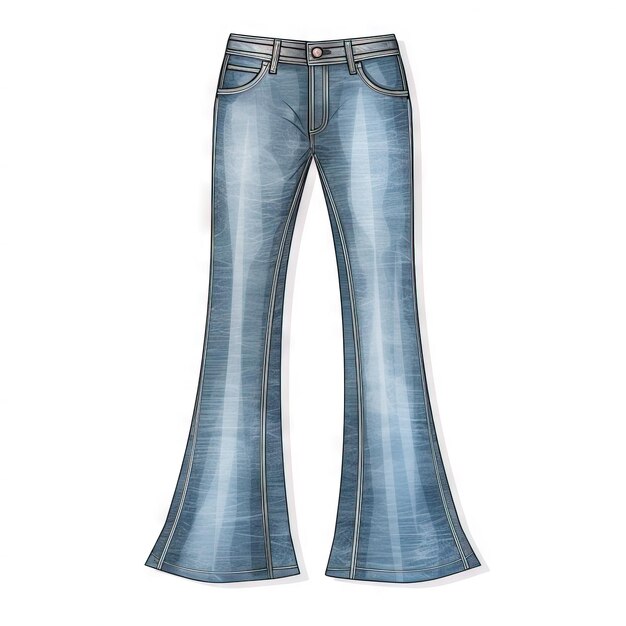
Bell-Bottom Jeans

5: Wide-Leg Jeans

These jeans are known for their spacious fit along the leg, widening gradually from the hip or thigh area to create a broad leg opening. Unlike bell-bottom jeans, the flare in wide-leg jeans is more understated, resulting in a smooth and flowing silhouette. 

They provide a comfortable and laid-back fit, offering greater flexibility compared to more tapered designs. Wide-leg jeans come in a range of styles, from slightly flared options to extremely oversized legs, catering to various fashion tastes. 

This style is often linked to a classic, enduring look, in contrast to the bolder statement made by bell bottoms. So, yeah, it might not be for everyone, but they do look damn good if you're able to flaunt them in the right manner.

6: High-Rise Jeans

High-rise jeans, characterized by their waistlines sitting at or above the natural waist, are praised for their flattering fit that emphasizes the waist and elongates the legs. 

In contrast to mid-rise or low-rise styles, these types of jeans have a longer rise, creating a resurgence in modern fashion despite their former association with past decades. 

Termed "mom jeans," this style has evolved beyond outdated perceptions and become a wardrobe essential appreciated for its polished, retro-inspired appearance. 

They're favored for their versatility, effortlessly pairing with various tops such as crop tops or tucked-in shirts, enhancing the waistline and offering a chic and balanced silhouette.

Related: Tips for Styling Straight Leg Jeans

7: Mid-Rise jeans

Mid-rise jeans strike a balance by sitting between the waistline and hips, approximately one inch below the navel. It usually caters to different body shapes, accentuating curves without feeling too high or low on the torso. 

This style offers both coverage and comfort, making it a popular choice. It allows freedom of movement while providing a secure fit, suitable for various activities. 

Whether someone likes a timeless straight cut or a fashionable skinny fit, mid-rise jeans serve as a versatile choice for expressing personal style.

8: Low-Rise Jeans

On the flip side, low-rise jeans sit a few inches below the belly button at the hips, a trend that soared in popularity during the 2000s for its bold and daring appeal, emphasizing the lower abdomen and hips. This style can visually elongate the legs and flatter individuals with shorter torsos. However, their lower position may offer less coverage compared to mid-rise jeans, potentially causing fitting challenges when sitting or bending. 

Despite their association with a daring fashion sense, pairing low-rise jeans with tops requires thoughtful consideration to achieve a harmonious and stylish outfit.

Which Types Of Jeans Would be Perfect for You?

It's completely your call! 

Feel free to rock any type of jeans you like—the key is finding the right fit for you. Whether it's about the rise, leg width, or length, it's all about what feels best for you personally. 

Certain styles we've mentioned here might complement your body type more. But ultimately, there are no restrictions. Just be yourself and choose what works for you.

In any case, if you are still looking for any additional suggestions, we would ask you to visit the Krazy Larry Pants website. They have an excellent collection of pants available in their shop and will probably have something that catches your eye.

Read Also:

Abdul Aziz Mondol is a professional blogger who is having a colossal interest in writing blogs and other jones of calligraphies. In terms of his professional commitments, he loves to share content related to business, finance, technology, and the gaming niche.

View all posts

Leave a Reply

Your email address will not be published. Required fields are marked *

Related

Rolex Watches

Care And Maintenance Of Men’s Vintage Rolex Watches

There's something timeless and captivating about owning a vintage Rolex watch. These exquisite timepieces tell the time and carry with them a piece of history, a sense of heritage that transcends generations. If you're fortunate enough to own one of these treasures, you're probably aware that its maintenance requires more than just a glance. Every vintage Rolex watch for men is more than gears and springs; it's a story in metal and glass. As you wear it, you're carrying the legacy of its previous owners, the places it has traveled, and the moments it has witnessed. Preserving this legacy demands dedication, understanding, and careful handling. Storage and Handling When you're not wearing your vintage Rolex, provide it with a haven. Store it away from direct sunlight, extreme temperatures, and humidity. A watch box with individual compartments is ideal, ensuring that your timepiece doesn't rub against others and risk scratches. Gently wind the watch once every two weeks if it's not an automatic model. The crown should be turned slowly and smoothly – no need to rush when dealing with a piece of history. Cleaning Your Vintage Rolex Just like anything precious, your vintage Rolex watch deserves a spa day now and then. However, this isn't the time for a bubbly soak. Instead, use a soft, damp cloth to wipe away dirt and grime. A cotton swab dipped in soapy water can work wonders for stubborn spots. Resist the urge to dip your watch into the water, as this could damage its delicate inner workings. When cleaning the bracelet, remove it from the case and clean it separately. A toothbrush with soft bristles can help you reach those tiny crevices. Regular Servicing Even though your vintage Rolex watch has weathered years, it still requires regular servicing to keep its heart beating smoothly. Find a trusted watchmaker who specializes in vintage timepieces. They understand the intricate mechanisms of these rolex watches and can provide the care and attention your Rolex deserves. During servicing, the watchmaker will disassemble, clean, lubricate, and reassemble the watch, ensuring it functions as perfectly as it did in its heyday. Regular servicing extends the watch's life and maintains its value. Protecting the Crystal The crystal is the window through which you gaze into history, so protecting it is paramount. Older Rolex models often feature acrylic crystals, which are prone to scratches. To maintain their clarity, keep your watch away from abrasive surfaces. If scratches appear, gently buff them with a polishing cloth or a specialized plastic polish. Choosing the Right Strap Picking the perfect strap for your vintage Rolex watch is like selecting the ideal suit tie–adding that final touch of elegance. The strap should match your watch's character, enhancing its charm while offering comfort and style. A leather strap conveys timeless sophistication. It’s like a well-fitted suit – it just works. Whether it's a rich brown or a classic black, leather straps complement the vintage aura of your Rolex watch. Imagine the smooth touch of leather against your skin, resonating with the aged metal and history of the watch. Stainless steel might be your go-to choice if your vintage Rolex has a sporty streak. The steel strap shows durability and sporty flair capturing the spirit of adventure. Its polished and brushed links add visual interest and blend seamlessly with the watch's robust design. The strap you choose should harmonize with your watch's age and style. The strap becomes an extension of your watch's personality. A leather strap might be the perfect partner if your Rolex exudes elegance. A stainless steel strap complements the watch's boldness for a more rugged look. Celebrating Aging Patina is the mark of a vintage watch's journey through time. Like the fine lines on a person's face, patina adds character and depth to your Rolex watch for men. It's a reminder that each scratch and discoloration has a story to tell. Patina isn't just fading – it's a unique narrative of the watch's history.The variations in hue showcase the watch's exposure to different environments, making it more than a timekeeping tool. While patina is cherished, striking a balance is essential. Too much patina can indicate excessive wear and affect the watch's performance. However, a moderate amount adds charm without compromising functionality. Caring for the Journey: Preserving the patina requires delicate care. Gently cleaning the dial with a mild solution maintains its charm. If needed, professionals specializing in vintage watch restoration can help preserve the patina, ensuring its beauty persists through time. Conclusion Caring for your men's vintage Rolex watch is a testament to your appreciation for the artistry of timekeeping. From storage to regular servicing, every step contributes to preserving its legacy. You're not just caring for a watch; you're nurturing a piece of history that deserves to shine for years. So, be responsible, celebrate the patina, and let a trusted company be your partner on this journey. Let’s ensure the stories woven into your vintage Rolex watch continue to tick eloquently through time. Read Also: The Best Tag Heuer Watches You Can Buy Right Now 8 Tips to match your watches with your outfit Best 5 Smartwatches for Youngsters

READ MOREDetails
Art Of Hair Regrowth

The Art Of Hair Regrowth: 3 Techniques For Restoring Your Crowning Glory

Thinning or balding hair can happen to anyone at any time. It can be triggered by genetics, stress, or a traumatic event. Regardless of its underlying cause, losing hair can be panicking. Whether your locks have thinned out all over or you have a noticeable receding hairline, you may feel compelled to action. Fortunately, there are a variety of hair regrowth options at your disposal. From taking medication to making lifestyle changes, here are three techniques for restoring your crowning glory. 1. Use Hair Growth Medication Hair loss has plagued humanity for many years, prompting researchers to come up with a solution. Unfortunately, there is still no instant cure for balding or thinning hair (beyond wearing a wig). However, there are medications that can help with hair regrowth over time. Two of the most popular are minoxidil and finasteride. Here’s what to know about these medications and how they can help you reach your hair restoration goals. Minoxidil Minoxidil is a vasodilator, which means it improves blood flow by relaxing the blood vessels. It is commonly used to treat high blood pressure, but it also shows great results for pattern hair loss. It works by stimulating the hair follicles and encouraging the regrowth of stronger, thicker strands. Topical 2% or 5% minoxidil solutions are FDA-approved for treating hair loss. Finasteride Like minoxidil, finasteride is approved by the FDA for treating hair loss. But it is only approved for use by males. Finasteride is not safe for females of child-bearing age because it can cause birth defects. Finasteride is a 5-alpha reductase inhibitor, meaning that it blocks dihydrotestosterone. DHT is one hormone responsible for male pattern baldness. By blocking it, finasteride may prevent further hair loss. 2. Try Hair Loss Surgery Hair loss medication may not provide satisfactory results for everyone who tries it. If you need another solution for your hair-thinning problem, surgery may be a viable option. There are several different hair restoration surgeries out there. It’s important to understand how they each work so you can select the right course of action for your situation. Here is a brief overview of the different hair surgeries available to you. Hair Transplantation If you want the most natural-looking results, consider getting a hair transplant. You can choose between follicular unit transplant and follicular unit extraction. FUT, also occasionally called strip surgery, involves taking a strip of hair-covered skin from a donor area (usually the back of the scalp). Then, the donor skin is separated into tiny units of several hair follicles each before being transplanted into the desired area. FUE is a similar procedure. But instead of taking a strip of skin from the donor area, a surgeon removes individual follicles. Then, the surgeon transplants those individual follicles to the desired treatment area. This technique results in less trauma and scarring to the donor area. When FUE is performed by a skilled surgeon, the end results can be exceptional. Scalp Reduction Scalp reduction is a surgical procedure for balding that involves removing areas of the scalp impacted by hair loss. Then, areas of the scalp with dense hair are stretched and sutured to replace the removed pieces of skin. Scalp reduction may provide good results for some people. However, the surgery can be intense and comes with a heightened risk of cosmetic complications. There is also an increased risk of blood flow disruption and hair regrowth in unnatural directions after this surgery. Flap Surgery Flap surgery for hair loss involves relocating a large flap of intact scalp from the side of the head to the front of the head. This surgery quickly covers up signs of balding and may be a viable solution for those with a receding hairline. However, it is a risky surgery that could result in unnatural hair regrowth, extensive scarring, and potential death of the flap tissue. Your surgeon may recommend safer procedures such as FUT or FUE over flap surgery. 3. Make Lifestyle Changes You may have more control over the health and thickness of your hair than you realize. Depending on the underlying cause of your thinning hair, certain lifestyle changes may aid your hair regrowth journey. Diet One of the most important lifestyle factors affecting hair health is diet. If your daily meals mostly consist of fried foods and takeout, consider making a switch. Eating a nutritious diet that’s rich in B vitamins, vitamin A, and zinc helps ensure your body has what it needs to produce hair. If you struggle with nutrient deficiencies, taking a multivitamin may also help boost hair growth. Stress Stress is another major factor contributing to hair loss. If you are dealing with chronic stress, finding ways to reduce it can benefit your hairline. Consider deep breathing exercises, trying a new hobby, or spending more time with loved ones. Hair Care Practices The way you treat your hair can also contribute to loss. Cutting back on hair colouring appointments and other harsh hair treatments can give your hair time to heal. Avoid tight hairstyles that pull at the follicles. Wearing tight ponytails, braids, or cornrows can lead to hair loss called traction alopecia. Wear your hair naturally every once in a while, if you can. Healing any part of your body takes time. Therefore, you shouldn’t expect any of the above changes to immediately reverse hair loss. But with patience and persistence, the above lifestyle choices may eventually help you get your gorgeous locks back. Get Your Hair Back Losing your hair can feel like a helpless and hopeless experience. But for many people, it doesn’t have to be permanent. Whether you’ve developed bald or thinning areas due to genetics or some type of traumatic event, prompt action can make all the difference. Try one or more of the techniques to stop hair loss in its tracks and restore your hair. Read Also: How To Spot Hair Loss Early How Can You Let Your Hair Regrow Naturally? 6 Proven Ways to Deal with Hair Loss for Women  

READ MOREDetails
Bespoke Tailoring

Factors About Bespoke Tailoring

Bespoke tailoring is one of the best ways to ensure that you look good in anything you wear. It's important to understand exactly what bespoke tailoring entails, however, in order to ensure that you're getting the best quality suit for your money. What Is Bespoke Tailoring?  Bespoke tailoring is a traditional way of making clothes by hand on the basis of an individual pattern. A pattern is the construction plan for the different parts of a garment created with body measurements, which take into consideration the unsymmetrical shape of the human form. Bespoke garments are completely unique and created without the use of a pre-existing pattern, while made to measure uses a standard-sized pattern altered to fit the customer. Bespoke tailoring is the pinnacle of men's attire in terms of customization, time commitment, and cost. It can enhance the confidence and elegance of the wearer. To order a bespoke garment, the customer does a consultation with a tailor, who takes over 40 measurements and drafts a pattern from scratch. The tailor then cuts and sews the fabric by hand, and adjusts the fit during one or more fittings. The final product is a bespoke suit that fits the customer perfectly. What Are The Three Types Of Tailoring? There are three types of tailoring that every man should be aware of. Made-to-measure, bespoke, and ready-to-wear suits are all available at different price points, but each type of tailoring comes with its own advantages and disadvantages. 1. Ready to Wear Ready-to-wear suits are usually sold at the lowest price point of the three options. These are suits that are pre-made in a variety of pre-determined sizes. Some slight alterations can be made to these suits. 2. Made to Measure or Custom Made to measure are usually offered in a variety of styles, colors, and fabric options. Typically, a customer will choose the basic style that they want, go in for a fitting, then choose details and accessories to compliment the look. Made-to-measure suits are an ideal choice for men who want a suit that looks good, but they don't need to choose every detail. 3. Bespoke Tailoring Bespoke tailoring is a process in which a suit is built from the ground up. Customers can choose every detail in a bespoke suit; it is possible to customize every single seem. These are typically at the highest price point, but they are an ideal choice for anyone who wants to have intense attention to detail. What's The Difference Between Bespoke And Custom? Bespoke and custom tailoring can appear similar at first, but there are some distinct differences. 1. More details While made-to-order suits allow customers to choose some of the details, they're often based on a pattern. Essentially, the tailor is able to make several different styles of suits, and the customer has to pick out which style they would like. It's possible to change small details in many cases, but there will be a list of those details and the options that a customer has. With bespoke tailoring, the options are endless. A customer can choose anything from the length of the hem stitch at the cuff of the pants to the amount of padding in the shoulders. There is virtually no detail that cannot be modified when it comes to bespoke tailoring. 2. Extra Measurements Because so many details are considered with bespoke tailoring, there are a lot more measurements that need to be taken. Most clients should expect to come in for at least three measurement sessions, as opposed to the single session typically required for custom tailoring. 3. Cost and Timing Because there are so many more details to consider, bespoke tailored suits will typically cost more and take more time to create than custom-tailored suits. The exact cost will be highly dependent on the type of fabric that is chosen, the style, and the number and type of details will all factor into the cost. Customers should also expect a wait time of several weeks to several months. How Do You Become A Perfect Tailor? The tailors who create bespoke suits have years of training and experience. While anyone can learn to sew simple garments within a few weeks, bespoke tailors have gone through a rigorous training program. After completing training, they spend years working under a master tailor learning and honing the craft of bespoke tailoring. While many of the best tailors in San Francisco can create custom or made-to-order suits, only a select few will even offer bespoke tailoring. In fact, many tailors will spend years creating custom suits before they are even ready to start offering bespoke tailoring. It's not uncommon for a tailor's shop to offer both custom and bespoke tailoring, but usually, only the most experienced tailor in the shop will work on bespoke suits. How Much Should I Pay For A Bespoke Suit? The exact amount that a person can expect to pay for a bespoke suit can vary a lot based on a number of different factors. These factors can vary the cost of a bespoke suit by hundreds or even thousands of dollars. Fabric - Imported fabrics from Italy and France will tend to cost a lot more than similar fabrics made locally. Carefully consider the quality difference; many tailors will encourage their clients to invest in good fabric over decoration. Labor - The extra experience of a bespoke tailor means that these suits are going to have a higher labor price tag. Your tailor is a highly trained professional who likely has a steady supply of work; expect to pay accordingly. Details - Everything from longer cuffs to extra buttons will affect the price of a bespoke suit. While it's impossible to list out the cost of every detail, your tailor will know exactly how much each detail will cost. Be sure to listen to him or her when they offer recommendations; often, they can make suggestions that will improve the overall look and fit of the suit. A bespoke suit is a set of clothing that will last a lifetime. It's an investment into your wardrobe that will last for decades. Note: It's always possible to update or alter a bespoke suit, and many people pass these suits on to their family members. While there is a high upfront cost, in the long run, a single bespoke suit will last for decades longer than a dozen or more ready-to-wear suits. Additionals: Why Are Bogg Bags Sold Out So Quickly? Trendy Shoes For The Summer. 5 Suggestions How to Save Money on Your Maternity Wardrobe Top 10 Different Types Of Scarves Names And Its Benefits

READ MOREDetails