Published on: 17 May 2021
Last Updated on: 18 May 2021
Social change is the transformation of cultures and institutions through human interactions and relationships. It is an ever-evolving process and has an overwhelming long-term impact on society.
Unfortunately, many people and influential forces try to resist change in the status quo. But, change is constant.
Three things trigger change:
Conflict:
Conflict is a constructive force as it prompts required adjustments by indicating the presence of an issue.
Inequalities, racism, failure to provide justice, religious intolerance, and status quo give rise to anger and anarchy. People come forward to address the issues raised due to conflicts. Governments get overthrown or restructured because of these conflicts.
Demographic Change:
Demographic change refers to the transition from high to low birth and death rates. When society’s demographic composition shifts, change becomes inevitable. A larger population affects the quality and quantity of resources. The demographic change occurs either by the variations in birth and death rates or migration and immigration.
Cultural Change:
Cultural change takes place by adding new elements to the existing culture. It opens up new ways, inventions, discoveries, and ideas of living. Innovation and interaction with other societies also contribute to cultural change. It is essential because it helps in modernization and acceptance of new and better ways of life.
Ways to bring Social Change:
To bring social change, one must have adequate knowledge and understanding to address societal issues that create differences.
It is also fitting to understand the role of social work and workers in the larger scheme of things. If you are interested in contributing, consider enrolling in accredited masters in social work programs to gain skills and create positive change for better well-being.
These programs enable students and professionals to learn ways to help in adult mental health, child protective care services, and formulating social policies.
With that said, the following are some commonly raised issues to be sorted out to help the ones in need.
1. Increase literacy:
Access to primary education is the right of every human. The role of education is significant in healthy and democratic societies.
The Social Change model combines learning and community development by teaching literacy skills, cultural expressions, and analytical thinking to the individuals and collective group. Many changes happen in the social sector, but they are unsuccessful in practice because of a lack of education.
Thus, education is required to bridge this gap. It is supposed to change people’s attitudes and beliefs and instill a desire for success in them.
Education helps in awareness, problem-solving, and decision-making. Increasing access to primary education in poverty-stricken areas has proven beneficial in raising living standards and growing employment opportunities.
Thus, social work efforts must focus on expanding opportunities to meet the needs of those who have limited access to quality education with minimal barriers. As an educated individual, consider taking out time to teach others and spread your knowledge. And this brings us to the next point.
2. Volunteer in your community:
Volunteering is an act of virtue, per se. Volunteering in your community expands equitability in society. It helps a person learn new skills, enhance connectivity in the community, and advance their career.
It provides a sense of achievement and allows one to have self-confidence. We often think volunteering requires a lot of time and energy. But that is not the case. You can dedicate as much or as little of your time as you wish. No matter the differences, volunteerism in your community is always beneficial and gratifying.
You can support NGOs and other charitable organizations by volunteering your time. By serving meals, planting trees, tutoring children, or caring for aged and terminally ill patients – you can volunteer in numerous ways. These simple acts can make a profound impact on society.
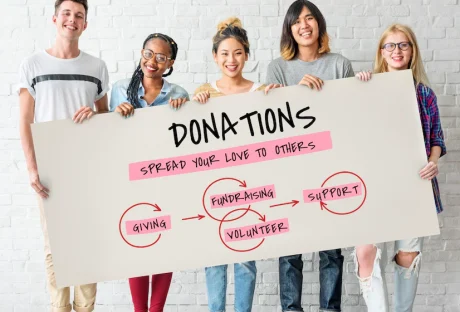
3. Donate for a cause:
People usually look for charitable causes and then give money. It seldom happens that people become desensitized towards such initiatives.
However, donations do not necessarily have to come in monetary form. Clothes, shelter, food, books, and even organs are all forms of contribution.
Donations allow the donor to have an increased sense of self-worth. Philanthropists worldwide help promote social change by providing funds or advocating reforms.
It significantly helps in the efficiency of non-profit organizations. By maximizing the resources available, philanthropy helps in strengthening the economy and encourages social innovation. It helps boost employee morale and customers’ brand loyalty in the long run.
4. Encourage kindness:
Acts of kindness and altruism will help you feel good. Small random acts of kindness have a substantial impact on social change.
Smiling and greeting people, picking stones from the way, a caring attitude, spreading positivity and hope, and complementing are examples of kind gestures that require little to no effort. One can practice kindness by performing small selfless acts. Consider how you can construct explicit mappings in the world to improve the actions of people around you.
People are more likely to support strangers if they previously have been observed acting kindly. It has positive psychological effects on well-being. Helping others not only feels good, but it also has health benefits. Even helping others via donations is an act of kindness. Kindness begins with the ability to empathize with others, to put yourself in their shoes, and understand the challenges they face.
Conclusion:
COVID-19 has brought disastrous changes to the world. Under the haze of anxiety, fear, we are inundated with tales of compassion, voluntary action, and daily heroism. By helping others, we build a strong society. The pointers mentioned earlier will help you decide how to help others and bring radical changes to the community.
Content Rally wrapped around an online publication where you can publish your own intellectuals. It is a publishing platform designed to make great stories by content creators. This is your era, your place to be online. So come forward share your views, thoughts and ideas via Content Rally.
Making donations to charities is a great way to give back to the community and support causes that are important to us. But as a donor, it can be hard to know whether your donation will truly make an impact.
With charity credit card processing, you can now donate with confidence and transparency, knowing that every penny of your contribution will reach the intended cause.
The essential part of this process involves tracking donations with precision so that you can be sure your contribution makes its mark. Here’s what you need to know about how this technology works and why it matters for donors everywhere:
Benefits Of Tracking Donations With Precision
Tracking donations with precision can have numerous benefits for both donors and organizations.
By accurately monitoring donations, organizations are able to ensure that the funds are being allocated towards their intended purpose. This can help build trust and transparency with donors, who want to know that their contributions are being used effectively.
Additionally, precise tracking can provide organizations with important data about donation patterns, which can inform future fundraising strategies and help identify areas where donors may be more willing to contribute.
With the help of precise tracking, organizations can maximize the impact of donations and ultimately improve their ability to make a positive difference in the world.
Security Features For Accurate Donation Recording
Ensuring accurate donation recording is crucial for any nonprofit organization's success. Implementing security features can help prevent human error and fraudulent activity.
Using encryption and access controls can restrict access to sensitive information, while digital signatures can authenticate transactions.
Another helpful feature is the ability to track donations in real time, allowing organizations to quickly identify and address any discrepancies.
With these security measures in place, donors can rest assured that their contributions are being accurately recorded and used for their intended purpose.
Streamlining Data Management For Donors
In today's digital age, keeping track of data can feel like an overwhelming task for donors. However, with the emergence of new technologies, streamlining data management has become easier than ever before.
By leveraging powerful online tools, donors can keep track of their contributions, monitor updates on their favourite causes, and stay informed about the overall impact they are making.
Moreover, streamlined data management ensures that organizations can more effectively allocate resources where they are needed most, ultimately leading to a bigger and more positive impact on the world.
Through efficient data management, donors can feel confident that their contributions are being put to the best possible use, making it easier than ever to give back and make a difference.
Analyzing Data For Better Decision-Making
Data is everywhere we look. Business decisions, public policy, and even personal choices are often made based on data. However, without proper interpretation and analysis, data can do more harm than good.
Analyzing data for better decision-making involves using various tools and techniques to turn raw numbers into actionable insights. This process allows decision-makers to make evidence-based choices with confidence, knowing that they have considered all available information.
With proper data analysis, businesses can identify trends and forecast future performance, governments can make informed policy decisions, and individuals can make better choices in their daily lives. By embracing the power of data analysis, we can all be more informed and effective decision-makers.
Technology Solutions For Improved Donation Records And Reporting
In today's world, technology is advancing at a remarkable pace, transforming various industries in the process. One area that could significantly benefit from technological advancements is the management of donation records and reporting.
Without the proper systems in place, keeping track of donations and reporting on them can be a tedious and time-consuming task.
However, with the implementation of technology solutions such as centralized databases, mobile donation tracking, and automated reporting tools, organizations can streamline their processes, making it easier to keep accurate records and generate comprehensive reports.
These solutions not only help save time but also provide transparency and accountability, which are crucial in the world of donations. With technology on our side, we can pave the way for a more efficient and effective donation system.
With the advent of innovative technology and modern payment systems, transparency in charity credit card processing has become easier and more secure than ever before.
This new level of trustworthy donation registration provides invaluable information that can be used to make informed decisions about how to focus resources most effectively.
Furthermore, tracking donations with precision creates an optimal experience for donors, clarifying any confusion on their part regarding what happened to their hard-earned money.
By leveraging modern solutions, organizations can ensure data accuracy while streamlining processes like donor management, thereby saving time and effort.
All in all, introducing cutting-edge technology offers a variety of benefits when it comes to charity credit card processing, from increased transparency, precision, and security to improved data analysis and reporting.
Tracking Accountability And Transparency Using The Blockchain
Blockchain technology can easily bypass the central system and connect to each and every individual in the circle. As per the technology, the records are made in the decentralized ledger. It means the records, once made, become immutable and are updated across a network of computers. Hence, transparency is already achieved.
Previously, the donors needed a mechanism or technology to understand whether or not their contribution had reached the right channel for which it was intended. But with the Blockchain, the entire system has become much clearer.
The Cryptocurrency donation may be easily cashed to the fiat currency. It enables the donors to understand how much money is used to create the blockchain-based fundraising box. Now that transparency and due accountability are present within the system, it provides the required confidence to the stakeholders to offer more and more charity.
Bringing The Discussion To A Close
The need for the use of technology is felt as the donors are not sure that their investment is reaching the right channels. Previously, the systems of computers were all centralized, creating room for manipulations with the numbers.
But later on, with the use of technology like blockchain, accountability and transparency is achieved easily, paving the way towards more charity.
Read Also:
Top 5 Businesses Hiring Skip Bins For Their Use
Importance Of Environmental Protection
Dangers Of Chemical Spills On Humans, Buildings, And Environment
We live in what is perhaps the most unpredictable time of the century. There is a pandemic out on the streets and we have been forced to abandon our ways of interaction. Businesses have been forced to adapt almost overnight, bringing about a radical shift in operations. Nonprofits have also been forced to do the same. In just the last year the importance of fundraising platforms has risen exponentially.
Fundraising has been the key to the operations of any and every nonprofit. Lately, the more commonly relied-on fundraising methods have been made redundant. A lot of nonprofits have been forced to go back to the drawing board and reevaluate ways to gather funds. Luckily the existence of text messaging platforms for nonprofit can easily get into the middle of it and utilize the same channels to make their ends meet.
Why does online fundraising work?
The reason is simple; we live in times where people are willing to lend out a helping hand, anywhere, anytime. Nonprofits simply need to host events online and let their donors know that they are very much active and are trying to make a difference in their communities irrespective of the condition. Sending your message across and showing them the work you are doing can appeal to all kinds of donors.
Nonprofits can quickly adapt using fundraising platforms to reach out to donors and volunteers using the same methods that businesses rely upon. These channels have now become the normal way to work through and nonprofits have realized that they also need to be malleable. The pandemic has changed our understanding of what normal is and donors will be understanding. This is why hosting events, and especially fundraisers online has shown a lot of promise.
Let us look at five great ideas you can use to supercharge your online fundraising campaign.
Five great online fundraising ideas
1. Peer-to-peer fundraising
The most innovative and proven way to raise funds online is through peer-to-peer fundraising. P2P fundraising accounts for nearly a third of every online donation. The idea is to use the credibility of your donors and their contacts to gather funds for your nonprofit.
A great statistic is that ¼ emails sent by P2P fundraisers to their peers result in a donation. It might seem meager, but it is staggering when you compare it to the fact that 1/1250 emails from nonprofits result in a donation.
Nonprofits can encourage donors to raise funds and run campaigns on their behalf. They can enlist the help of fundraising platforms to build their campaigns and send emails to their peers. Nonprofits can set up these directly on their websites. They can even use a personal appeal and a social sharing button on their website for direct encouragement.
2. Email flash fundraiser
Another third of every donation made online comes through Emails. Yes, even in this day and age when instant messaging is the norm, E-mails more than do their part to raise funds. It is one of the older ways to gather funds and chances are your nonprofit has already finished its email fundraising campaign for the year. No worries, there are no limits to how many times you can leverage email fundraisers.
A great idea would be to select a day and conduct an email fundraising blitz. You should not choose a popular day such as Tuesdays. Enough organizations are running Giving Tuesdays. Instead, choose a day that has symbolic importance to your organization or its cause. Your emails should build up a narrative that highlights your cause, the day, and a call to action. Urgency is the key and the better you express the need of the hour, the more likely you are to receive donations.
You may go through: 8 High-Need Animal Shelter Donations
3. A drive for donation matching
The idea behind donation matching is to encourage people to contribute, knowing that in the grand scheme of things the total donated amount will be big. Use the frenzy created by your flash email fundraising campaign to launch a drive for donation matching. You can secure a match from a company and advertise it in your email campaign.
Donation matching is a good way to keep the interest afloat and to attract the younger crowd. Studies show that millennials are more likely to donate if they know companies are going to be matching their donation.
Donation matching can also be used to boost a fundraiser. If there is a noticeable decline in the donations, launch a donation matching drive amid another campaign to acquire more funding.
4. Crowdfunding
There is this misconception amongst nonprofits that crowdfunding is meant only for individuals. This fact could not be further from the truth. Nonprofits can use crowdfunding to amass a wealth of funds in a very short period. They can also use crowdfunding to appeal to a whole new group of donors.
Through crowdfunding, nonprofits can gather funds for specific causes and projects. Nonprofits can easily set up a page on crowdfunding sites. They also have social sharing options to further promote your cause.
PRO TIP: Before you choose a crowdfunding site, check if they have an easy-to-use UI, integration with compatible software, a mobile-friendly page, and space to tell your story.
5. Prospect research
While this may not qualify as an idea as such, prospect research can help you land big philanthropists for your donation pool. Nonprofits can conduct thorough research to identify prospective donors. Doing so can help them focus on donors that can make a difference.
Prospect research is especially important when it comes to online donors. The reason for that is online donations come in small amounts and it is hard to identify which donors can contribute in a big way. Research can help you land bigger donations.
Final Thoughts
These are just some of the ways you can maximize your donation pool through online fundraisers. By using the right tools and strategies your nonprofit will be back on its feet and perhaps, even run better than it did before.
Read Also:
Turn The Tables For Helpless Children With Car Donation In New Jersey
As senior citizens age, their energy, mobility, and cognitive abilities decline gradually. This increases the risk of the seniors tripping and falling or developing physical and mental health challenges.
The health and safety risks are higher if they are not in a safe environment or have nobody to care for them.
So, safety and peace of mind are priorities for seniors due to their vulnerability. This explains why many seniors move to retirement communities to enjoy freedom, comfort, and safety with their peers.
But how do senior living communities improve physical security and safety? Do they prioritize seniors’ emotional support and mental well-being? This article will discuss how senior living communities are a safe haven for seniors.
Safety Guidelines to Prevent Accidents
Families with elderly parents wonder if they should entrust the safety of their loved ones to senior living communities.
Moving to a senior living facility means transitioning to a new environment with new residents and caregivers. It also means changing the routine, which could increase safety risks.
However, the management of senior living homes and caregivers develop and follow comprehensive safety guidelines. Since preventing falls is a top priority in the facility, seniors do not have to worry about trip and fall or slip and fall accidents due to unsafe conditions.
The facility has nonslip floors, well-lit walkways, handrails to provide support, and mobility aids to prevent accidents.
Social Environment
Isolation is a common challenge for seniors in their homes, especially living alone at home. However, retirement homes provide social settings, such as standard rooms and dining halls.
This is a place where the residents meet and interact as they eat and watch television. Also, residents can engage in their favorite hobbies or adventure, which fosters social engagement.
Safety and Security Systems and Protocols
The leading senior living communities have security cameras and alarm systems to reduce the chances of something wrong happening to seniors.
The cameras are strategically installed to prevent intruders from accessing the facility and identify residents who might need help around the facility.
The entrances have access control systems that ensure only people with codes or keycards can enter the premises.
The caregivers and security guards undergo rigorous training to understand safety protocols and respond to emergencies appropriately. These measures reduce the risk of security and safety issues that could put seniors at risk.
Medical Management Services
Seniors with health problems might need medication at specific times daily. Since some have memory problems, they might struggle to take the appropriate medicine in the correct dosage. So, they might skip medication or take more than the prescribed dose.
Senior living communities understand the health risks associated with medical prescription issues; they have medical management systems in place.
For instance, they have reminders to help energetic seniors to take medication at the correct times. They also hire trained caregivers to help some take medication, thus ensuring consistency and reducing the risk of health complications.
Support Staff for Every Complicated Task
Some seniors need help with food preparation and cleaning tasks. They can avoid these tasks and allow caregivers and support staff to do everything for them.
Some senior communities also provide transport services to different places so the residents do not have to drive cars or struggle to use public transport.
Senior living facilities create a safe haven for seniors with diverse health and emotional needs. They observe safety protocols and create a social environment with trained staff to address the unique needs of the residents.
With these benefits in mind, seniors reluctant to move to a senior living community can now boldly welcome this hassle-free lifestyle.
Proper At-Home Safety Measurements For Seniors
The senior living community designs are specifically tailored for seniors. They consider things like single-floor living, wide doorways, and hallways, and they take a few steps to navigate to get in and out of the home.
Each of the communities has their own designs. You can find the home safety features such as:
Providing grip bars inside and outside of showers, bathtubs, and even toilets.
Ensuring there are no trip hazards or any objects where the seniors might get bumped into.
Raised toilets.
Keeping the paths illuminated with bright lights and windows.
Better flooring with advanced slip-resistant technology.
Proper safety lock facilities in pools and spas.
Unique electric controls with better access for wheelchairs.
Apart from these, there are some senior living communities that come with features like intercom access or emergency call systems. There are frequent wellness checks as well, which are mainly conducted by the staff.
Moreover, the communities also provide advanced care needs. They offer better assistance for bathing and moving, helping them to prevent any injuries or falls.
Ensuring Fewer Risks And More Convenience
Another way to help seniors stay safe is to provide a convenient and hassle-free lifestyle. You can find some communities, including dining room meals.
As we know, even basic tasks such as cooking can be dangerous at times. Thus, the seniors, along with their loved ones, seek out communities where they can get a proper home-cooked meal.
There are several other communities that provide services like housekeeping or transportation as well. Not being involved in cosmetic chores can help to decrease the chances of tripping or falling.
There are also some senior living communities that can provide on-site wellness clinics that help the seniors stay healthy. Senior communities with more advanced care need professionals 24/7. In such cases, wellness centers play a huge role.
Ensure better safety of your loved ones!
If you have a senior parent or parents staying in your home and you are concerned about their safety while they are living on their own, then it is time to consider the facilities of the senior living communities.
Start looking for it online, as there are many senior living communities that can provide a healthy lifestyle for seniors while ensuring their safety and keeping them away from harm.
Read More...
Senior-Friendly Exercise Routines: Enhancing Quality Of Life Guide
Senior Staircase Safety: What You Need to Know
5 Best Ways For Seniors To Pass The Time















 Access to primary education is the right of every human. The role of education is significant in healthy and democratic societies.
The Social Change model combines learning and community development by teaching literacy skills, cultural expressions, and analytical thinking to the individuals and collective group. Many changes happen in the social sector, but they are unsuccessful in practice because of a lack of education.
Thus, education is required to bridge this gap. It is supposed to change people’s attitudes and beliefs and instill a desire for success in them.
Education helps in awareness, problem-solving, and decision-making. Increasing access to primary education in poverty-stricken areas has proven beneficial in raising living standards and growing employment opportunities.
Thus, social work efforts must focus on expanding opportunities to meet the needs of those who have limited access to quality education with minimal barriers. As an educated individual, consider taking out time to teach others and spread your knowledge. And this brings us to the next point.
Access to primary education is the right of every human. The role of education is significant in healthy and democratic societies.
The Social Change model combines learning and community development by teaching literacy skills, cultural expressions, and analytical thinking to the individuals and collective group. Many changes happen in the social sector, but they are unsuccessful in practice because of a lack of education.
Thus, education is required to bridge this gap. It is supposed to change people’s attitudes and beliefs and instill a desire for success in them.
Education helps in awareness, problem-solving, and decision-making. Increasing access to primary education in poverty-stricken areas has proven beneficial in raising living standards and growing employment opportunities.
Thus, social work efforts must focus on expanding opportunities to meet the needs of those who have limited access to quality education with minimal barriers. As an educated individual, consider taking out time to teach others and spread your knowledge. And this brings us to the next point.
 People usually look for charitable causes and then give money. It seldom happens that people become desensitized towards such initiatives.
However, donations do not necessarily have to come in monetary form. Clothes, shelter, food, books, and even organs are all forms of contribution.
Donations allow the donor to have an increased sense of self-worth. Philanthropists worldwide help promote social change by providing funds or advocating reforms.
It significantly helps in the efficiency of non-profit organizations. By maximizing the resources available, philanthropy helps in strengthening the economy and encourages social innovation. It helps boost employee morale and customers’ brand loyalty in the long run.
People usually look for charitable causes and then give money. It seldom happens that people become desensitized towards such initiatives.
However, donations do not necessarily have to come in monetary form. Clothes, shelter, food, books, and even organs are all forms of contribution.
Donations allow the donor to have an increased sense of self-worth. Philanthropists worldwide help promote social change by providing funds or advocating reforms.
It significantly helps in the efficiency of non-profit organizations. By maximizing the resources available, philanthropy helps in strengthening the economy and encourages social innovation. It helps boost employee morale and customers’ brand loyalty in the long run.