Institutional Accounting Fraud, Third-Party Escrow Vacuums, And The Structural Collapse Of Wirecard AG

by

18 August 2026

Finance

Wirecard Scandal

On 25 June 2020, Wirecard AG, the shining jewel of Germany's fintech landscape, valued at €24 billion at its peak, filed for corporate insolvency.

Founded as a payment processor, the company rapidly rose to inclusion in Germany's elite DAX 30 stock index.

It positioned itself as a global challenger to legacy digital transaction networks.

However, the enterprise’s underlying operational framework was structurally compromised by a massive, multi-year balance sheet manufacturing operation.

This case study analyzes how a strategic asset-inflation trap and unverified third-party processing loops systematically distorted the company's financial health.

The structural breakdown occurred over a chaotic two-week window when auditors demanded proof of €1.9 billion in cash balances supposedly held in Asian escrow accounts.

When the trust banks confirmed those funds did not exist, the ghost balance sheet collapsed instantly.

This operational disaster led to immediate criminal indictments for its core executive leadership team, triggered a complete overhaul of German financial regulatory laws, and remains a definitive case study in corporate oversight failure.

Problem Statement: The Tech Alchemy Of Third-Party Acquiring (Tpa) Loops

The collapse of Wirecard was not a standard case of business stagnation or a drop in market volume.

Instead, it was an intentional, systemic corporate fraud built around a network of phantom transactions and unaudited offshore escrow accounts.

The fraud's core mechanism relied on Third-Party Acquirers (TPAs).

In high-risk sectors or global territories where Wirecard lacked local operating licenses, it paid outside payment processors to handle client credit card transactions.

Wirecard then logged its share of these high-margin transactions as massive corporate revenue.

To mislead investors and regulators, Wirecard claimed that the cash generated by these international third-party processors was routed into highly secure trust escrow accounts managed by local banks in the Philippines and Singapore.

However, investigative audits revealed that these high-volume merchant portfolios were almost entirely fabricated.

The company used a network of fake digital entities and fabricated transaction sheets to inflate its reported processing volumes.

So, this relied on self-printed documentation to trick external auditors while concealing its burning core operating losses.

Granular Timeline Of The Strategic Meltdown

The operational collapse scaled with unprecedented velocity, stripping a major European fintech giant of its entire market cap in less than a week:

Strategic Phase TimelineFinancial EventUnderlying Systemic Impact
Jan 2019 – Oct 2019The Financial Times publishes investigative exposes detailing faked asset records and manufactured revenues across Asian operations.Wirecard management flatly denies the claims and files criminal complaints against journalists.
March 2020KPMG conducts a highly anticipated independent forensic audit and states it cannot verify the authenticity of major TPA revenue lines.Public shareholder trust drops, and short-selling restrictions fail to stabilize the asset value.
18 June 2020EY auditors announce they cannot trace €1.9 billion in missing cash balances supposedly stored in Philippines banks.The stock drops 60% in a single day as the company's financial records are exposed as fraudulent.
22 June 2020Wirecard's executive management officially admits that the missing €1.9 billion "likely does not exist."CEO Markus Braun is arrested, and COO Jan Marsalek flees the country to avoid arrest.
25 June 2020Wirecard files official corporate insolvency filings with the Munich court.The company becomes the first active component in DAX 30 history to go bankrupt.

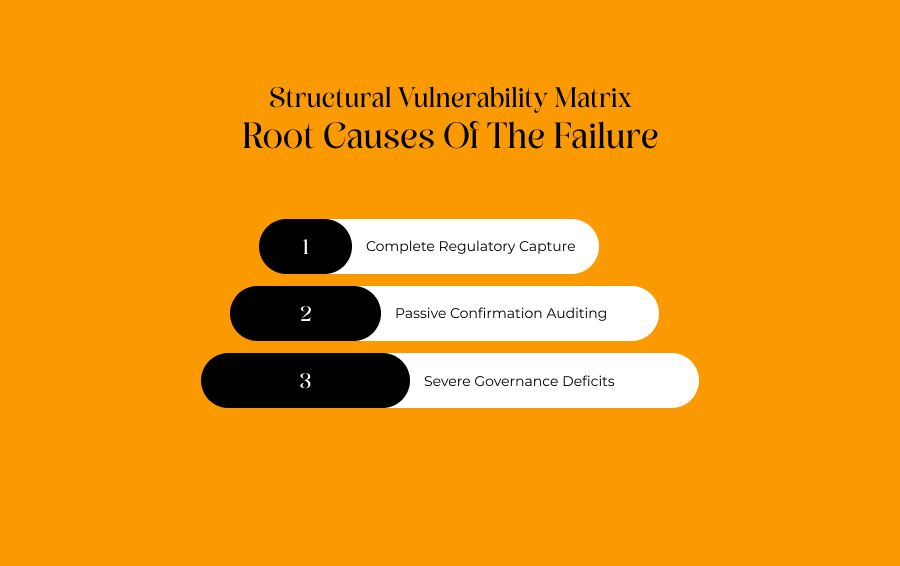
Structural Vulnerability Matrix: Root Causes Of The Failure
Structural Vulnerability Matrix

An institutional post-mortem of Wirecard AG highlights three distinct, compounding risk management flaws that left the enterprise completely defenseless against a forensic check:

· Complete Regulatory Capture

Germany’s financial regulator, BaFin, suffered from severe systemic blindness.

Also, it didn’t waste time investigating Wirecard's suspicious books.

Rather, BaFin launched criminal market-manipulation investigations against the journalists.

It also did the same to short-sellers who exposed the fraud, effectively shielding the corrupt executives.

· Passive Confirmation Auditing

For over a decade, external auditing teams accepted simple, third-party balance screenshots.

Additionally, it kept unverified email letters from local Asian trustees as absolute proof of the €1.9 billion cash holdings.

However, they failed to contact the primary banks directly to verify the ledger positions.

Also, they allowed a basic paper trail to survive multiple audit runs.

· Severe Governance Deficits

The corporate board operated without any baseline transparency.

Chief Operating Officer Jan Marsalek held absolute control over the platform's international shadow transactions, managing complex shell companies and moving massive corporate assets without any internal accounting oversight or secondary board approvals.

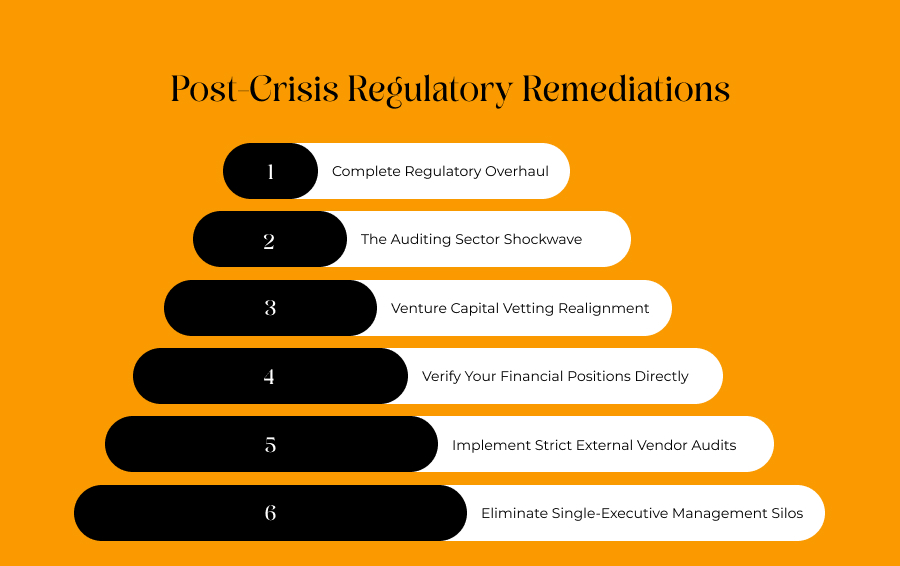
Post-Crisis Regulatory Remediations
Post-Crisis Regulatory Remediations

The fallout from the Wirecard scandal shattered the reputation of European financial markets and forced international authorities to implement sweeping structural reforms:

· Complete Regulatory Overhaul

The German government passed the FISG Act (Financial Market Integrity Strengthening Act).

This sweeping legislation completely restructured BaFin, granting the agency direct powers to audit major corporate accounts independently, while introducing a strict 10-year rotation cap for external auditing firms.

· The Auditing Sector Shockwave

The multi-year failure to catch the phantom assets permanently damaged the credibility of top global auditing houses, triggering massive legal liability suits from institutional investors and driving structural changes across corporate vetting networks worldwide.

· Venture Capital Vetting Realignment

Modern tech investors shifted away from tracking simple top-line processing volumes.

Due-diligence protocols now demand independent, automated tracking of underlying payment streams, matching reported numbers against hard transaction files to eliminate faked books.

Comprehensive Lessons for Corporate Treasury and Capital Allocation

Analyzing the structural failure of Wirecard highlights several essential risk management rules for modern corporate treasuries and venture capital investors:

· Verify Your Financial Positions Directly

Never trust a third-party image, an unverified PDF screenshot, or an isolated email letter from a regional middleman bank as proof of your cash holdings.

Ensure your internal treasury teams run independent, automated bank integrations to track your cash reserves on a 1:1 basis.

· Implement Strict External Vendor Audits

If your company relies heavily on Third-Party Acquirers or independent outsourcing networks to generate revenue, enforce continuous compliance checks.

Track actual, granular transaction logs to verify that your business growth is driven by real consumer demand rather than faked digital logs.

· Eliminate Single-Executive Management Silos

Establish tight internal controls that prevent a single executive or operations officer from managing international shell networks or bank routing pipelines without oversight.

Furthermore, you must ensure all cross-border cash transfers require multi-signature approvals from independent board members.

This is an important step to prevent unaudited cash vacuums.

The Dynamics Of The Wirecard Scandal Explained

The failure of Silicon Valley Bank was a classic asset-liability mismatch.

But Wirecard's collapse was a case of institutional accounting fraud and broken regulatory oversight.

Moreover, Wirecard did not fail because the digital payment market slowed down.

Rather, the Wirecard scandal happened because its leadership manufactured billions in fake processing revenue to hide a failing business core.

Therefore, to understand it better, it is important that you study this structural breakdown.

Then, modern financial officers can learn to look past flashy tech valuations and prioritize direct transaction checks. Also, you will be able to manage corporate capital with absolute, data-driven certainty.

Sohini is a MarTech and business writer with over two years of experience creating and editing content in the digital marketing space. She has a strong interest in emerging digital trends, marketing strategies, and the evolving relationship between technology and business growth. Alongside writing, she also works on guest posting strategies, carefully aligning sponsored content with niche relevance to help maintain strong organic visibility and audience engagement. Outside of work, Sohini enjoys reading, exploring internet subcultures, and endlessly scrolling through Reddit, Pinterest, and Substack looking for new ideas and trends.

View all posts

Leave a Reply

Your email address will not be published. Required fields are marked *

Related

Good And Bad Things To Consider Before Investing In Bitcoins

5 Good And Bad Things To Consider Before Investing In Bitcoins

Have you developed a liking towards Bitcoin investments? Are you thinking of investing in Bitcoins? Do you know the goods and bad of Bitcoin investment? Before putting your money into something, you should get the proper knowledge and understanding about it. The same also goes for Bitcoin investment as well. So, before you start your investment procedure, here are some good and bad things you should consider before investing in Bitcoins. This will help you to sort things out accordingly. 5 Good Things To Consider Before Investing In Bitcoins Let’s start the discussions with the good things that you will be able to utilize when you invest a considerable amount of money in Bitcoin. 1. Massive Potential Returns You might have heard several crazy stories about people making money with Bitcoin. Well. All of them are not scams, and some of them are actually true. Bitcoin investment has the potential to reward you with massive returns only if you plan properly. 2. Liquidity Bitcoin’s liquidity is another good thing you should consider while thinking of investing in Bitcoin. You can buy Bitcoins whenever you want with your traditional cash money. You also can transfer your Bitcoins into traditional fiat money. 3. Transparency Blockchain is the foundation stone of Bitcoin or almost any other Cryptocurrencies. Blockchain is an open-source ledger, which is famous for its transparency. The same also goes for Bitcoin as well. All of the bitcoin traders are in love with the transparency of Bitcoin. 4. Decentralized Bitcoin is totally decentralized. It means no centralized system or government has authority over it. It is free from all centralized rules and regulations. The legal changes that the government imposes on the traditional currencies are not applicable for Bitcoins. 5. Limited Numbers The number of Bitcoins is limited to 21 million. That means only 21 million Bitcoins can be mined, among them more than 18 million, i.e., 83% of the Bitcoins are already mined. This ensures there will never be inflation in the Bitcoin Market. 5 Bad Things To Consider Before Investing In Bitcoins After considering the good things about Bitcoin, it is time to look at the bad side of investing in Bitcoins. Apart from knowing the advantages and starting your investment planning, it is crucial to get a proper idea about the dark side of Bitcoin investments. Only then will you be able to strategize your investments. 1. Inexperienced Teams In order to invest and trade with Bitcoins, you will need the assistance of several online and offline tools, like Bitcoin wallets, exchanges. As the concept of Bitcoin is not so old, the teams of all these solutions are also in the newer age with less experience. 2. Technical Difficulties As the whole thing of Bitcoin and investing in Bitcoin is digital, it becomes hard to handle everything smoothly for many investors. Apart from that, you need to get your Bitcoins only from the right Bitcoin exchange and keep them safe in your Bitcoin wallets. All these technical things are not that easy to handle. 3. Security Issues When we talk about the online world, it will bring possible risks as well. Though it was being claimed that the Bitcoin system can not be hacked, we have already found out that It can be hacked. So, just like other online things, Bitcoin is also exposed to cyber crimes and hacking. 4. Volatility Volatility is one of the major characteristics of Bitcoin. We all know how the value price of Bitcoin fluctuates in the market. It can reach its peak right now, and in the next hour, it can fall down. So, you have to plan accordingly to cope up with it. 5. Costlier Mining However, Bitcoin mining is quite accessible, but at the same time, it requires a high-end computer with the best and heavy-duty hardware and software. All these are for solving the complex computational calculations for mining Bitcoin. Final Thoughts Before you are putting your money in Bitcoin, ensure that you are totally aware of the pluses and minuses of Bitcoin investments. Along with focusing on the benefits, you also have to consider the drawbacks of developing your investment strategies. Read Also:  Top 5 Investment Decisions You Need To Make In Your Thirties Investing and Trading 101: Investment Ideas for Newbies Why Off-Plan Investment Is Beneficial For Expats

READ MOREDetails
American Eagle Gold Coin

5 Fun Facts About The American Eagle Gold Coin

As the official bullion coin of the U.S., the gold American eagle coin is sought-after by investors and numismatics. These consumers are intrigued by the coin's all-American precious metals, the reputation of the coin, and the intricate, detailed design. The interest in collectors for this coin is also due to being one of the top-selling billions in the country. Serious investors also want to know that they are putting their money into an investment they can count on. Security of investment is a given with American gold eagle coins, as they are the only coins officially backed by the U.S. government. The guarantee eradicates concerns over the coin's validity in value, which tells investors they are truly getting what they pay for. With guaranteed quality control, investors and numismatics never need to worry about their investment's content, purity, weight, or quality of metal. With these facts secured, the investment is set to be used as legal tender or secured as an asset. While the legitimacy of the coin is the most crucial fact about the American Eagle gold coin, here are five additional fun facts to note. 1. The American eagle gold coin is more scratch-resistant than gold buffalos. The polished surfaces and keen attention to detail are showcased on American eagle gold bullions; their beauty adds to the investor and numismatic interest. Since the American Eagle gold bullion contain 10% copper and silver alloys, it is notably more scratch-resistant than its counterparts, 24-karat Gold Buffalos. Additionally, the U.S. Mint tailors coin production to meet the aesthetic appeal of collectors. 2. There are more opportunities for creative collection display. Collectors interested in placing their coins into a portfolio may wish to display their collectors' coins in a unique and creative way. For instance, some collectors may arrange coins based on historical significance, others by type or style. With the American eagle gold coin, you can also organize your portfolio by coin similarity. For example, the Gold Eagle is similar in design to the Double eagle gold coin. On both coins, Lady Liberty and an American eagle are displayed. Additionally, both indicate the currency value and mintage dates. 3. The gold is sourced by the U.S. All Gold Eagle coins are produced with gold sourced only from the U.S. The coins may not include metal from unknown or foreign sources during the minting process. As a legal requirement, these specifications are not to be altered for any reason. For collectors looking to invoke patriotism and American pride into their collection, the American Eagle gold coin is a wise investment choice. American-derived gold is of significant historical influence as well for collectors or investors interested in obtaining a piece of American history. 4. The coin value will always remain what it is.  No matter if the price of gold decreases, the American Eagle gold coin retains the value that is minted onto them. Each coin has a face value from five to fifty dollars of legal currency. Regardless of changes in currency, the coin value is maintained, making Gold Eagles a wise investment for those looking to add tangible assets to their portfolios. Likewise, collectors looking to compile assets to pass on can achieve peace of mind knowing that the American Eagle gold coin will not depreciate in value, no matter how much time goes by or how American currency changes over time. 5. These coins offer the historical significance of legal tender. Some collectors and investors want to purchase coins that offer historical significance. Interest or appreciation for rich American history can be acknowledged by purchasing a Gold Eagle coin. The first Gold Eagle was introduced in 1986 in response to the Gold Bullion Coin Act Of 1985. The act recognized the value of gold coins with legal currency and precious metals. The American eagle gold coin is the established, official U.S. gold bullion. Invest in coins with permanent value and lasting significance. The American eagle gold coin offers numismatics and investors the opportunity to establish a balanced investment portfolio or collectors' portfolio. As a protected coin, devaluing currencies are not influential, allowing collectors to preserve their coins and maintain their value for future investment opportunities and generations to come. Read Also: Can I Convert My 401k To A Gold IRA? Starting Your Rare Coin Collections: A Beginners Guide to the 1794 Flowing Hair Half Dime Bitcoin’s 10th Birthday: Does Satoshi Nakamoto’s White Paper Still Hold Relevance?

READ MOREDetails
Life Insurance Policy

How To Easily Sell Your Life Insurance Policy

Signing up for life insurance is usually a great idea. It financially shields your spouse and children in the event of your untimely demise. Also, it’s a win-win situation, at least on most occasions. Your loved ones are financially secure, and you can rest easy knowing they’ll be fine even if you’re not there. That said, as time progresses and you inevitably age, priorities might shift. You may feel like you don’t want to keep paying for a life insurance policy. For instance, your kids may have finished their education, secured good jobs, and are living pretty stable lives. Or you may find yourself in the middle of an emergency and are simply strapped for cash. Whatever the case, selling your policy is usually better than resigning yourself. It denotes the value the insurer wants to compensate you. With a life settlement, the term used for selling life insurance – you can secure a much bigger payment. But how do you go about it? Here are the general steps to selling a life insurance policy. Tips To Sell Your  Life Insurance Policy Easily  As always, selling a life insurance policy has always been a challenge. But with some of the core strategies, you can get the best deal by selling your life insurance. So let us discuss some of the most important tips through which you can manage it here.  1. Find A Good Life Settlement Company The first step to setting the ball rolling is selecting your buyer. Now, usually, there are three ways to sell your life insurance. The first is to an individual such as yourself. However, this isn’t only difficult to navigate but also makes you vulnerable to all kinds of bottlenecks. So, you only want to consider the other two. That is an asset management company or life settlement broker. An asset management company, or institutional investor, is a large company that specializes in life settlement investment. So, you essentially sell your policy to them. A broker, as the name suggests, helps you find an investor, usually an institutional investor, to buy your policy. And they act as an intermediary, negotiating the deal. That said, if you are looking for a good buyer, visit this site. 2. The Life Settlement Company Must Be licensed The company that buys your life insurance policies is called the life settlement.  It must be licensed with the different state departments of Insurance. It will help you avoid any kind of scams. Talk to them and verify their licenses. It must be one of the important steps to sell your insurance coverage. 3. Submit All the Necessary Documents & Information Once you have found your buyer, either directly or through a broker, the next step is to submit all the required documentation. These include your policy documents and medical records. Now, in the majority of cases, you don’t need to submit your policy-related documents yourself. Rather, you provide authorization to the company you are selling to so that they can get them from your insurance provider. With everything in order, the underwriting process begins. It is at this stage that your life expectancy, as well as the value of your policy, are estimated. 4. Choose The Best Offer The next step is the offer negotiation. Basically, the interested buyer, or buyers, submit their offer to you, and you decide whether it is good enough for you. In many cases, the broker will present the best offers only. Depending on what you are looking for, you can go with the offer presented, or you can forfeit it. That said, life settlements are typically more than the surrender value, which means you will get more money selling your policy to a third party than resigning to what your insurance is ready to pay. 4. Price Based On Policy Value  In general, life settlement companies are mainly interested in high-value policies rather than older ones. Ensure that you have at least a $100,000 life insurance policy. Also, the settlement companies pay you more if you have some health condition leading to a low life expectancy. This kind of policy status earns more if you are selling it to them. 5. Receive Your Lump Sum Payment Finally, you sign over your policy to the buyer and, in exchange, get the agreed amount as payment. This payment is paid in full, in one lump sum. Once this step is done, you are no longer responsible for premium payments. And when you die, the buyer collects the death benefits. 6. Finding The Reputable Brokers When trying to find the right broker, you must look out for the most reputable brokers. The best process is to talk with not one but multiple brokers.  Not only this, but you must also look for multiple brokers with multiple offers.  Looking for the best quote can only help you get the best offers on sales of your insurance.  Reputable Brokers offer you what they have to offer, and nothing is mesmerizing. Hence, play safe and do not run after the offers. How Much Will I Get from Selling My Life Insurance Policy? The lump sum cash you get from selling your life insurance policy in a life settlement will be a lot higher than its face value, often four or more times the cash surrender value of your policy. Even so, the precise among typically depends on several factors, including: Your insurance policy’s premiums Death benefits Life expectancy Therefore, the life settlement company will consider all these to determine your specific payout. Want To Sell A Life Insurance Policy? Seek Advice From A Reputable Life Settlements Company The last thing you want is to sell a life insurance policy you have been paying premiums for over a long time for an unfair price in the market. For this reason, you need to find a good life settlement buyer for your policy. Besides advising on your settlement, a life settlement company will help you sell it for a competitive price. Read Also:  How to Get Low-Cost Life Insurance for Seniors Some Kinds of Death are Not Covered by Term Life Insurance How Private Hire Insurance Takes You Out from Problems?

READ MOREDetails