












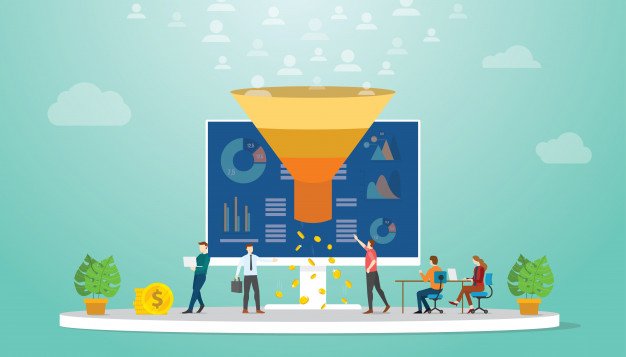
5 Creative Ways to Improve Lead Quality with Multi-Step forms

Published on: 06 June 2020 Last Updated on: 31 October 2024
Multi-Step forms

A majority of companies who execute lead generation often complain about the quality of leads that they get from lead generation forms. Problems range from not getting enough people to type in the leads to people getting confused about the leads.

While Landing Page forms that help in lead generation are still one of the best ways to improve sales and queries, optimization of the same remains a major concern. In this article, we help companies devise the best lead generation form.

We also look at why digital marketing experts prefer certain key steps when creating multi-step forms. Therefore, if you are a company, or a digital marketing expert looking to maximize the potential for lead generation, you should pay attention to this article.

Lead Generation through Multi-Level Forms: Why is it important?
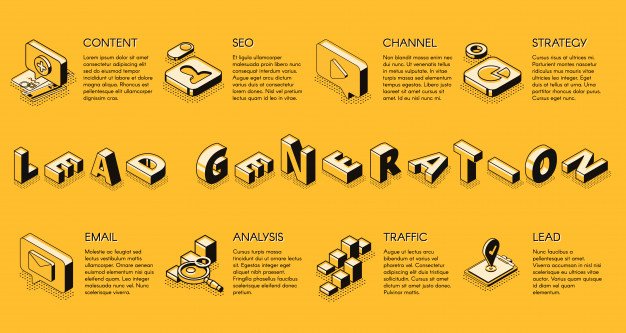
Lead Generation

Every digital business has to complete a cycle, which eventually culminates in the last goal- generating sales and revenues. Brands try to use SEO, Social Media Marketing, Google AdWords and other marketing strategies to reach their target audience.

A brand wants people to be directed by using the above-mentioned strategies to their website or landing page. The multi-level form is the final step of getting the information and reaching out to the customer to satisfy his query. You can have multi-step forms on social media platforms, but getting the customer to a brand’s website or landing page is still the desired goal.

This not only helps in keeping, increasing, and maintaining a database, it also adds to the health of the website. Even though there are many other strategies and ways, which are being tried out by brands, yet the multi-step forms for lead generation continues to be a digital marketing favorite.

5 creative ways to improve lead quality with multi-step forms: The List

1. Always place Multi-Level forms above the Fold-

Statistics show that forms or CTAs placed above the fold generate over 200% more results than the ones, which are placed somewhere else on the page. In other words, above the fold section on a page is considered a prime real estate in digital marketing terms. The aim should always be to capture the attention of the viewer or user as soon as possible.

2. The Call-To-Action should always be simple and direct-

Brands and agencies tend to cramp too many CTAs in one simple form. The aim is to make it as clear as possible to the target audiences. By leaving, no stone unturned when it comes to removing confusion, brands can encourage more people to sign up for the forms. Have one clear and direct CTA is a landing page best practice.

3. Be honest and disclose the Privacy Concerns-

Every user who is visiting a digital platform wants all their privacy concerns should be respected at all times. Nobody wants to be bombarded with promotional material all the time. Your multi-step form should always be honest in disclosing what the user is getting into. Factors like unsubscribe at any time, or a link to how their data is going to be used should have a link.

4. Keep the messaging short and sweet on the multi-level forms-

Have you ever come across forms, which have ten tabs and long text boxes? Do you know what their success rate is? The answer is very poor! Do not make your target audience work extra. Give them the offer, and ask them to fill as few tabs and sections as possible. This is just digital behavior. If some information is not required for, do not place it on the form.

5. Focus on the Design, Colours and Image elements-

Capturing attention is something, which most landing pages and multi-level aim for. This means that in addition to the messaging, it is important to focus on the design elements of the multi-level form. Colors, images, text box size, and the entire user experience needs to be factored in when creating the form. The better the design, the better will be the lead generation.

Conclusion

If you are following the five points mentioned above when creating the landing page, you can rest assured that you will improve your digital marketing performance. Can you think of some other ways to help and improve the health of your multi-level form? Let us know your suggestions in the comments section below.

Read Also:
Abdul Aziz Mondol is a professional blogger who is having a colossal interest in writing blogs and other jones of calligraphies. In terms of his professional commitments, he loves to share content related to business, finance, technology, and the gaming niche.

View all posts

Leave a Reply

Your email address will not be published. Required fields are marked *

Related

DOOH Advertising

Why DOOH Advertising Should Be A Part Of Your Multi-Channel Marketing Strategy

In today's hyper-connected world, consumers are constantly bombarded with advertisements across multiple channels. To effectively engage your target audience, it's essential to adopt a multi-channel marketing strategy that integrates various touchpoints. One channel that should not be overlooked in this approach is digital out-of-home (DOOH) advertising. With its unique ability to captivate consumers in public spaces, DOOH offers several compelling reasons why it should be an integral part of your multi-channel marketing strategy. Extended Reach and Increased Visibility: DOOH advertising provides an opportunity to expand your brand's reach beyond the confines of online and traditional media. By leveraging strategically placed digital displays in high-traffic areas such as shopping malls, airports, and transit stations, you can expose your brand to a larger audience. Unlike other advertising channels that are limited to specific devices or platforms, DOOH has the advantage of reaching consumers when they are outside their homes, making it an effective way to generate brand awareness and increase visibility. According to a study conducted by Nielsen, DOOH advertising has the potential to reach 90% of the population in some markets (1). By including DOOH in your multi-channel marketing strategy, you can tap into this vast audience and ensure that your brand message reaches a diverse range of consumers. Targeted and Contextual Messaging: DOOH advertising allows for highly targeted and contextual messaging, enabling you to deliver relevant content to specific audiences. DOOH networks often provide advanced targeting capabilities based on factors such as location, time of day, and audience demographics. This level of granularity allows you to tailor your messaging to resonate with the specific audience present at a given location, enhancing the relevance and effectiveness of your campaigns. For example, a sports apparel brand can display ads promoting its latest collection near gyms or sports facilities, targeting fitness enthusiasts. Similarly, a cosmetics brand can showcase its products in high-end shopping districts to attract its desired demographic. By leveraging the targeting capabilities of DOOH, you can ensure that your message reaches the right people at the right time and place. Seamless Integration with Digital Channels: DOOH advertising seamlessly complements your digital marketing efforts by bridging the gap between offline and online channels. With the rise of technologies like near-field communication (NFC), QR codes, and mobile integrations, DOOH campaigns can drive engagement by encouraging consumers to interact with your brand through their smartphones. For instance, a DOOH ad can display a QR code that leads consumers to a landing page or a mobile app where they can learn more about the product, make a purchase, or participate in a contest. By integrating DOOH with digital channels, you create a cohesive brand experience and increase the chances of converting offline interactions into online actions, ultimately driving customer engagement and conversions. Enhanced Creativity and Engagement: DOOH advertising offers unparalleled opportunities for creativity and audience engagement. With dynamic digital displays, you can deliver captivating and visually appealing content that captures attention and leaves a lasting impression. The ability to incorporate motion, animation, and high-resolution visuals enables you to tell compelling stories and convey your brand's message effectively. Moreover, DOOH campaigns can incorporate interactive elements such as touchscreens, motion sensors, and augmented reality (AR), enabling consumers to actively engage with your brand. These interactive experiences foster deeper connections, increase brand recall, and encourage social sharing, amplifying the impact of your marketing efforts. For example, an automotive brand can create an interactive DOOH display where passersby can virtually customize the features of a car and visualize it in real time. This hands-on experience not only generates excitement but also allows potential customers to interact with the brand in a memorable and engaging way. Measurable and Data-Driven Insights: Like other digital channels, DOOH advertising provides valuable data and insights that can inform your marketing strategies. Metrics such as impressions, dwell time, and interactions can be tracked and analyzed to gauge the effectiveness of your campaigns. By leveraging these insights, you can optimize your DOOH messaging, make data-driven decisions, and allocate resources more effectively. In addition to these basic metrics, DOOH can leverage advanced technologies for even more granular data. For instance, facial recognition technology can provide demographic information about the audience, allowing you to gauge the composition and characteristics of the viewers. This data-driven approach helps you understand your audience better, refine your targeting, and tailor your messaging to maximize engagement and conversions. Unique Brand Experiences: DOOH allows you to create unique and memorable brand experiences that are difficult to replicate through other channels. Whether it's a large-scale projection, a digital billboard takeover, or a stunning interactive display, DOOH enables you to captivate audiences and differentiate your brand from competitors. By providing immersive and innovative experiences, you can create a strong emotional connection with consumers, ultimately driving brand loyalty and advocacy. For example, a fashion brand can collaborate with an artist to create a mesmerizing digital art installation that showcases their latest collection. This visually striking display not only attracts attention but also associates the brand with creativity and innovation, leaving a lasting impression on viewers. In conclusion, digital out-of-home advertising should be an integral component of your multi-channel marketing strategy. By incorporating DOOH into your overall marketing mix, you can expand your brand's reach, deliver targeted messaging, seamlessly integrate with digital channels, foster engagement, gather valuable data, and create unique brand experiences. By leveraging the power of DOOH alongside other marketing channels, you can maximize the impact of your campaigns and effectively engage with your target audience in both offline and online environments. Read Also: What is a Digital Marketing Agency and What Can It Do For You? This Is Why Social Media Is Essential in the B2B Sales Process 5 Benefits of Digitalization in Marketing

READ MOREDetails
E-Commerce Platforms

Never Launch An E-commerce Platform Without Testing – Here Is Why

In simple words, without sounding too nerdy, let us try to look at what performance testing is. Performance Testing is the process of rigorously testing all the tech and digital components of an E-commerce business. This includes the desktop version of the platform and mobile app testing. The key is to look at and analyze how the entire tech and digital ecosystem operates. Especially when exposed to real-world use. Imagine hundreds of people using the E-commerce platform app at the same time. The questions that then arise are- Is the server able to handle the heavy load of all the traffic using the mobile app at the same time? Is there a lag or breakdown that any of the users are experiencing or is there a UI and UX compromise under stress? What are some of the benchmarks and standards that one should use to judge speed and whether the platform is exposing some bottlenecks? Performance Testing is more than just looking at loading page speeds. It seeks to test each aspect of the E-commerce platform and suggest the perfect optimization for the same. Important Things To Consider During Performance Testing For E-commerce: In this section, we request experts at QA Madness to help us. Specifically, to list some important things that should be considered during performance testing. 1. Testing Financial Transactions One area where things can go wrong is in financial transactions. With so many people using the same platform at the same time, testing becomes necessary. You need to test to ensure that every transaction is going through. Integrations with Payment Gateways, the ERP, and Inventory Management Software are all areas that should be covered under this software testing services. 2. Checking The Mobile App Exhaustively Mobile app testing perhaps constitutes one of the most important verticals for Performance Testing. How does the app perform? Is it SEO friendly? Is there a compromise in the graphics? These are the common issues that mobile app testing will help resolve. In addition to the app, the mobile version of the E-commerce platform’s website also needs to be tested rigorously. 3. Region-Based Testing For Different Geographies- If you are starting an e-commerce business, you are looking at a truly global audience. This is why you need to make sure that the internet protocols of the different countries are not interfering with how the customers in those countries are engaging with your platform. Changed domain URLs, IP addresses, and other rules and regulations need to be considered. 4. Data Management Testing Any successful E-commerce ecosystem is incomplete without integrated data management. For an E-commerce platform, data is the lifeblood that helps all its verticals- marketing, sales, and CRM. Performance Testing needs to ensure that the data collection, cloud storage solutions, and the final outputs are ready for systematic generation. The Three KPIs Of Performance Testing As Stated By QA Madness- While there can be multiple KPIs that software testing services can help E-commerce brands with, QA Madness states that the following are the three major ones. They refer to the same as the three ‘S’s of their Performance Testing goals. A. Speed When it comes to speed, we are referring to the speed of the website, the mobile version of the web, and the mobile application. It also includes the speed with which users are progressing from one page to another on the app and the website. The higher the speed, the better will be the user experience. This combines to deliver the best sales and revenues for an E-commerce platform. B. Scalability You do not want your website and app infrastructure to be so weak that it crashes only after a hundred visitors. You're E-commerce website and the app must go under a test for scalability to handle massive loads all at the same time. This will help you provide a fluid experience to millions of users and potential customers all at the same time without compromises. C. Stability A lot can go wrong on an E-commerce website when it is put under stress. Graphics can fall out of place and payment gateways can collapse. You never want the users to experience these problems on your platform. An E-commerce platform needs to be stable all the time, with or without load. Performance Testing seeks to build the stability of an E-commerce platform. What Do Experts Have To Say? There is no set rule as to when an E-commerce platform should go for Performance Testing. Some believe that it should be done at the early stages of development. Others believe that it should be done once the development of the platform is complete to identify the loopholes and then plug them in accordingly. No matter when you get them done, Performance Testing is essential for your E-commerce platform. If you want to create a highly optimized and result-oriented business, this is a great investment to make. If you have any other questions on software testing services or mobile app testing, feel free to ask them. Use the comments section to drop your queries. We will once again request or reach out to our friends at QA Madness to help you out. What Happens With A Lack Of Thorough Test? Not performing performance testing for an E-commerce platform can get you in a lot of trouble. Your site is live; suddenly, hundreds or thousands of people have started using it! What could possibly go wrong?- Well, without performance testing, things will go downhill really quickly. So, let’s see what could happen when not to perform performance testing. Crashes And Slowdowns If your E-commerce platform hasn’t been tested for scalability, it could easily crash when too many users try to access it. A slow website or app not only frustrates users but also drives them away. No one likes waiting for pages to load, especially when they’re trying to make a purchase. The result? A major drop in sales and a tarnished reputation. Failed Transactions Think of users wanting to purchase an item and their transactions fail. Users will not be ready to trust your platform anymore. This is why performance testing is important as it ensures that all financial transactions are smooth on your site even when there is heavy traffic. Poor User Experience Have you ever been on an app or website that lags, has images that don’t fit, or feels unresponsive? It’s not fun. The UI/UX of your platform can feel the same way without performance testing. This gives a very unprofessional impression and will make people leave your site out of frustration (high bounce rate). Increased Costs Skipping testing might appear to be a good way to keep some money in your pocket, however it will actually cost you more in the end. If your site crashes during a big sale or promotion, the time and expense of getting those issues fixed after the fact will likely be substantial. Plus, if your site is down for any longer period of time, you’ll be losing out on all that potential income. Safety Not Guaranteed! No matter what app you’re building, you’re likely going to be handling some sort of user data. Whether it’s a login and password or more sensitive financial or health information, users need to know they can trust you with that data. What About The User's Interest Finally, one of the most significant risks is losing users’ trust. If your platform crashes, slows down, or declines a transaction, for instance, and that happens to some users, they will probably never come back. Even if you fix everything afterward! When people’s trust is broken, it’s very hard to be rebuilt! Read also: The Right B2B E-Commerce Platforms to Sell Your Used Machinery Approaches for Increasing E-commerce Sales Through Inventory Reports 5 Reasons to Use Magento for Your Next Ecommerce Website

READ MOREDetails
Enterprise Content Management

Enterprise Content Management Solutions – How They Help You Optimize Your Business Efficiency

Enterprise content management is a great way to organize unstructured data and information of an organization. Many factors impact the functioning of ECM systems and determine their effectiveness. When managing your enterprise content solutions, you should define their processes accurately. Several service providers offer enterprise content management consulting services. These service providers understand the needs and requirements of companies in terms of managing data. Thus, can advise business owners with the right solutions. Proper ECM helps organizations to create, enrich, manage as well as deliver data and information. Business owners should identify their requirements and determine the solutions of the right enterprise management systems that will cater to those requirements. There are several solutions that such systems may include, such as management of documents, managing website content, document imaging, management of records, and management of digital assets as well as managing your business data and providing support for collaboration and management of business processes. Managing content is one of the most important tasks that organizations need to take care of. It is important to preserve data so that it can be reused for other purposes later. Preservation of data in a systematic order also ensures that it can be searched and found easily whenever required. There are a number of factors that affect the choice of a proper enterprise content management system. Some of the factors which affect the choice include, the number of people and the processes involved in the organization, technology involved, budget and so on. Keeping in mind all the required elements and choosing the right content management system will help an organization to share and edit content efficiently and in an orderly manner. Top features of enterprise content management (ECM) systems: Central Repository Document Scanning Secure Email Files Client Portal Document Retrieval Mobile Accessibility Easy Integration Automated Workflow Manager Advanced Analytics Cloud-based Accessibility Top benefits of enterprise content management (ECM) systems: Keep Track of All Your Information Reduce Operating Costs Save time Improve Customer Service Minimize Risk Document Version Control Picture an executive rushing from one client office to the next, updating the minutes of the feedback he received at the previous office on the official sheet using his iPhone or Android phone. The entries made by the executive are further accessed by employees sitting in the head office who use the details to generate reports for further information processing. This is possible with the advanced enterprise content management solutions provided by consultants who help businesses optimize their internal documents, datasheet, and content sharing capabilities. Are you aware of the latest techniques and tools being used to perfect enterprise content management? To begin with, the most important advantage of using professionally generated enterprise content management solutions is that you can be assured that the system will work at its optimum for long. What are the common types of solutions that these enterprise content management consultants use to give you highly advanced data access? Here is the list of the commonly used content sharing systems that are being used in enterprise content management these days. Content Sharing Systems that are used in ECM: 1. Drupal: The ideal content sharing system that is known for its robust page building capacities can be used to develop both internal and external websites. Professionals using this CMS for enterprise content sharing and management excel with the in-built options provided by Drupal. The best part of using this CMS is that it is an open-source system that allows the ideas of thousands of users and developers to flow into the building of your enterprise content management systems. 2. Ektron: This leading provider of content management products allows businesses to use the solutions to manage multi-websites. The framework can also be extended to allow customs control during component development by the professionals. Ektron has been used to design websites of many leading companies like Pfizer, Intel, Dove, Kellog's, Adidas, and many more. You could use the customizable features of this CMS provider to enrich the user experience of your enterprise content sharing portals. 3. MS Share Point: The software that helps streamline business processing amidst dynamic environments; MS Share Point is definitely the answer for low-cost enterprise content development services using the latest tools and features. The main advantage of using MS Share Point is that you get to leverage content to improve web traffic flow to your website and increase collaboration amongst users. Thus, in order to stay ahead of market competition, one needs to use the most recent tools and techniques through professionally generated enterprise content management solutions that will help you optimize enterprise performance. Read Also: A Guide to Choosing an Enterprise Document Management Solution Start-up Business Management: How to Reduce Risk and Guarantee Success

READ MOREDetails