Published on: 11 May 2021
Last Updated on: 02 January 2025
Data is an important pillar of modern society. This is why many people use third-party software to encrypt data and restrict any unauthorized access. Although this might offer high-level security to the data, at the same time, it adds difficulty at the time of data recovery.
Being a digital marketer, I ensure that nobody accesses my data. To do that, I use BitLocker to encrypt all my data. One morning when I was trying to access my photos, I found that the SD card was somehow damaged, and now I cannot access my photos.
This really startled me, as it was only a couple of days away or my clients' photos were delivered. I Tried data recovery software to recover the inaccessible photos, but the efforts were in vain, as the BitLocker was resisting to do.
Fortunately, after several tries and integrating a couple of tricks, I was able to get back my photos. It was a great feat for me, and I thought that many individuals like me face the same problem. So, I took this opportunity to share my experience and how I was able to recover data from BitLocker encrypted drives.
How to Recover BitLocker Encrypted Files?
Data recovery is a complicated and time-consuming process. There is data that can be restored or recovered from simple recycle bin recovery. The data recovery process is complex. I have come up with this solution to recover BitLocker encrypted data.
1. Recover Data from BitLocker Encrypted C: Drive:
As we know, C: Drive is the operating system drive.l the moment you start your system, new data keeps on adding to the system drive. So, the recovery of encrypted data depends on whether the lost un accessed files have been overwritten or not. In case of overwritten activity, you will not be able to get back your data. Instead, the data will stand corrupted.
However, if the data is not overwritten and is encrypted by the BitLocker, you can recover data by following the steps given below.
Once such a scenario occurs, stop using the drives to ensure data is not overwritten.
Download a data recovery software.
You will see the main interface with all the active drives in the system.
Select the targeted drive.
Initiate a scan.
Select the data you're meant to recover and click “Recover”.
2. Recover Data from Encrypted Data Drive:
Data drives are the drives where you store data. The D: Drive and F: drive you to see are the data drive. If you cannot access these drives, you can follow the same process. The only difference will be that you will select the drive storage instead of selecting the system storage.
Download and install the data recovery software.
Select the BitLocker encrypted drive.
Run a scan.
Select the targeted data.
Click recover.
3. Recover Data from BitLocker Encrypted SSDs:
Today, instead of HDD, most systems have SSDs. While we use an SSD, we have no idea that it deletes data without our permission. I know this can surprise you. But that is the truth. Windows 7 or the other later ver5sion initiates an automatic TRIM on SSDs.
The only way to ensure your data is safe is to keep track of whether TRIM is enabled or not. Once you know that TRIM is Disabled, you can use the same steps to recover or access BitLocker encrypted data.
Download and install the data recovery software.
Select the BitLocker encrypted drive.
Run a scan.
Select the data you want to recover.
Click recover.
Conclusion:
To sum it up, yes, there are easy ways in which you can recover encrypted data. In this article, I have shared the methods I used to retrieve my data. I hope that these methods work in the same way as they worked out for me.
Content Rally wrapped around an online publication where you can publish your own intellectuals. It is a publishing platform designed to make great stories by content creators. This is your era, your place to be online. So come forward share your views, thoughts and ideas via Content Rally.
The implementation of a startup has specific needs, one of which is the need for the earliest possible entry of the product into the market. This is usually facilitated by a limited budget and the desire of startup owners to present their product to the target audience as soon as possible to take a leading market position. Below we will tell you what technologies and tools will help you with this.
Top 6 Technologies For Building Startups
We have compiled a list of the most worthy technological solutions that will help make the process of working on a startup as efficient as possible.
React
React is a JavaScript framework for creating interfaces in websites, web services, and mobile applications that provide fast development speed. Actually, thanks to this, your startup partners can love it. React is typically used in conjunction with Next.js, a lightweight development environment for static and server-side applications, Node, a server-side framework, and Express.js, a concise web framework for Node.js applications. React has a minimum input threshold and at the same time ensures top-end performance for projects, which means it is ideal for scaling.
Swift And Kotlin
Swift and Kotlin are modern languages for developing mobile applications for iOS and Android platforms, respectively. Both of them can be used with native SDKs, which provide developers with ample opportunities to quickly create application components. Both of these languages evolve constantly and have strong communities, which makes them a great choice for startups that plan to grow and get enriched with new features in the future.
Vue.js
Vue is another modern UI framework that will benefit your startup partnerships. Every part of an app or web page that was built with Vue.js acts as a separate component. This way, developers can reuse components if there is a need. This creates an excellent foundation for projects with a long life cycle, which must constantly change and improve.
MEAN stack
MEAN stack implies a bundle from the MongoDB database, the Express.js backend framework, the Angular.js front-end development environment, and the Node.js backend runtime. All of these tools pair perfectly with one of the trendiest programming languages, JavaScript. Thus, your startup partnership team will be able to use one language to write code for all parts of the project.
RoR stack
Being one of the most used frameworks, Ruby on Rails will be the Holy Grail for those who want to get the most out of startup benefits and build a scalable MVP quickly and on budget. It is an intuitive, flexible stack with a minimal entry threshold that allows developers to focus their main efforts on creating a project rather than learning how to use it. It is also ideal for creating modular applications, parts of which can be reused in the future.
.NET Stack
This stack for C#, F#, and other visual programming languages allows developers to create advanced application solutions using advanced tools such as LINQ, generics, and asynchronous programming. As a result, products get to market faster than many other technology stacks.
Final Thoughts
We hope that now you have an idea of what technologies will be most appropriate when creating a program startup. If you are looking for startup partners who will bring your business idea to life, you can stop your searches for a startup directory – you are already in the right place.
Read Also:
How To Become An Entrepreneur?
A Checklist Of Tools For A Successful Advertising Agency
Social Entrepreneurship – Entrepreneurship Strategies And Many More!
It always feels like a headache when you start looking for reliable info on an online platform!
One minute you are trying to fix a tech glitch! And the next moment, you are lost in a sea of confusing websites.
It is hard to know who to trust!
That is why infoohub org is such a lifesaver. You can count it as your friendly digital library. Here, everything is kept in one easy spot.
This platform can give you clear, simple answers you can actually use, instead of fancy tech talk no one understands.
Now, whether you want to learn new software, maybe grow your small business or find cool lifestyle tips, they have got you covered.
It is all about making your online life way less stressful.
So, if you want to stay ahead of the game, infoohub org is the perfect place to start.
What Is Infoohub Org?
Think of it like a smart and helpful companion with whom you can
Always bounce ideas
Get the best answers.
You can visit infoohub org if you still want to experience this.
The site provides a range of your typical needs in one accessible place, so you do not need to wander through different websites.
This place is a digital library, not just for tech-savvy people but for everyone. So, if you want to learn a new program or get career advice, infoohub.org will take care of your needs comfortably!
Moreover, they can even explain the complicated technical terms in simple, understandable steps so you can learn your stuff efficiently and go about your day.
Since the information is well-structured, you can easily use it without stress or inconvenience.
In fact, it can be your go-to resource for keeping you learning and accomplishing your tasks, online or off, without any hassle.
What Are The Pillars Of Infoohub Org?
One of the amazing aspects of infoohub org is how wide its coverage is. It is not just running a single theme.
Plus, it is loaded with really good stuff that is relevant to anybody in today's digital world.
1. Tech And Software Tutorials
This is the core of the site. Infoohub org has simple step-by-step instructions to rescue you.
Especially if you have gotten yourself in a tangle while using a new app, or your computer is giving you grief.
It is just right for those who want to learn something new without getting a headache.
2. Digital Marketing Insights
If you are one of the people working to grow a business, they have excellent advice on social media and on making yourself seen online.
Moreover, you will receive genuine methods to help you discover more followers or customers without added pressure.
3. Lifestyle And Educational Guides
Their work becomes more than just about one subject. You may stumble upon career tips, study techniques for students, and other things.
Thus, these will help you become more productive.
At their heart, they are focused on helping you live a nicer, more intelligent lifestyle each day.
Infoohub Org: What Are The Users Talking About?
If you take a look at the site, you will notice everything looks so nice and clean. It is built to be simple! Thus, you do not have to hunt through messy menus!
So, you can find what you need! Moreover, it lets you jump straight to the fun stuff.
Another great thing is how well it actually works on your phone! Infoohub org always stays smooth and easy to find.
So it does not matter whether you are at your desk learning code or scrolling through lifestyle tips on the bus.
Now, you will not have to squint at tiny text or deal with weird layouts.
Moreover, the site is really fast! There is nothing worse than waiting forever for a page to load.
However, here things pop up instantly. This means you can get your answers and further go on with your day.
It is all about making your experience easy, quick, and totally stress-free.
Is Infoohub Org Legit?
Every time a new site starts getting a lot of attention, people start to think if it is actually legit.
Luckily, infoohub.org really hits the mark as a safe and reliable place to hang out online.
First off, they use all the right security tech to make sure your browsing is totally private, together with better protection.
Moreover, the team at infoohub org clearly puts in the work to keep their articles accurate and fresh.
They do not just post something and forget about it! They keep thighs updated with the latest trends. This way, you are not stuck with old info.
Of course, it is always a smart move to double-check things. However, this platform has built a really solid reputation for being honest and clear.
Thus, it is basically a trustworthy corner of the internet where you can learn without worrying.
How To Take Full Advantage Of Infoohub Org?
If you want to get the most out of infoohub org, it helps to have a little game plan. You can find exactly what you need by using a few simple tricks.
This way, you do not have to click around randomly.
First, you need to try the bar first. If you have a specific tech problem that needs fixing right now, this is the fastest way to find a helpful tutorial.
You can explore the categories. Yes, do not just stay on the front page! Instead, you can dive into sections like “Marketing” or “Tech”. This can help you discover cool articles you might have missed otherwise.
Lastly, you need to make it a habit. Since infoohub org is always adding fresh stuff, popping in once a week is a great way to stay smart.
Once you start following these steps, it will be easier to stay ahead of the curve without extra stress. It is all about making your digital life run a whole lot smoother.
Comparison: Infoohub Org Vs The Alternatives
There are many informative websites online! However, Infoohub Org has its own area where it focuses solely on a casual expert tone.
Features General new sites Traditional tech blogs Infoohub org Actionable steps Rarely Sometimes Yes User focus General public Expert-heavy Beginners & Pros Various topics Broad (mostly, about news and politics) Narrow (only about tech) High (They talk about tech, life and business) Language Professional and formal Highly technical Easy and very natural
What Are The Advantages And Disadvantages Of Infoohub Org?
When you use a site like infoohub org, you get a friendly starting point for almost any topic. It is built to make learning feel less like a chore and more like a quick chat with a friend.
Why It’s GreatA Few Things To Keep In Mind Everything is in one place, so you don't have to jump between dozens of tabs. It sometimes skips the deep technical stuff that experts might need. The explanations are super easy to follow, which is perfect if you’re a beginner. It isn't a replacement for official peer-reviewed papers or textbooks. It covers a wide range of topics, giving you a broad view of the world. The quality can vary, so it’s a good habit to double-check the facts elsewhere.
Who Can Benefit From Infoohub Org?
Everybody loves it when they are trying to learn something new! That is exactly where a site like infoohub org comes in handy!
Moreover, it is designed to be a one-stop shop for anyone who wants to skip the confusing jargon and get straight to the point.
Whether you are curious about a new hobby or just need a quick fact, it’s a great place to start your journey.
Who Is It For?
This platform is a lifesaver for all kinds of people. For instance:
Students can quickly grab the basics for a school project.
Bloggers often use it to find cool background facts for their stories.
Casual learners find it perfect for exploring random, fun subjects.
Everyone else just wants a simple explanation without the headache.
Why It Works
Actually, the real magic is in how the info is organised. You will not feel overwhelmed, as it is so structured and easy to follow,
Moreover, it is all about making sure you walk away feeling a little bit smarter than before!
The Smart Way To Organize Content: Content Structure Of Infoohub Org
When you are building a website, how you organize things matters just as much as what you write.
For a site like infoohub.org, the secret sauce isn't about stuffing keywords; it’s about making sure people can actually find and enjoy the content.
The site stays friendly for both search engines and real people like you by focusing on a clean structure.
Smart SEO Tricks
Instead of being pushy, high-quality hubs use smart, natural habits to stay visible. For example:
Firstly, they use clear headings to break up big walls of text.
Secondly, the writing uses natural language that sounds like a real conversation.
Thirdly, short paragraphs keep things breezy so you don't get bored.
Lastly, internal links help you hop from one related topic to the next.
Why It Matters?
Ultimately, this "human-first" approach is exactly what Google loves right now.
The information feels more trustworthy. This is because the focus is on being genuinely helpful rather than gaming the system.
Moreover, it is all about creating a smooth experience where the answers you need are just a click away!
In the present digital era, data exchange has a lot to do in turning a business triumphant and self-sufficient. The faster this process is, the better the outcome will be.
The data exchange model underpins your company’s success. It encompasses a framework that enables business users to exchange information across multiple business ecosystems. For example, a manufacturing enterprise exchanges large volumes of data between distributors as well as supply chain ecosystems.
In order to drive data exchange, enterprises must securely share data at the speed of business. In doing so, they must rely on electronic data exchange (EDI) technology. Not only it empowers business users to amplify data usage but also streamlines and accelerates communication.
Nevertheless, a lot of companies still rely on legacy systems to kickstart B2B transactions that involve an exchange of important documents such as sales orders, purchase orders (PO), functional acknowledgment, or invoices. These systems, owing to their manual nature, can put a lot of burden on the IT teams.
Further, they can slow down the processes, turning them error-prone and costly. In the end, companies become difficult to do business with. Next-gen EDI tools can be of great value here. Not only these solutions help drive data residing in the system but also those that are remotely positioned.
EDI for Faster Data Exchange:
Electronic data exchange platforms can help companies exchange data across the trading partner ecosystem in an automated manner. They maximize operational efficiency and enable business users to make successful business decisions.
The importance of these platforms has grown in the current digital transformation age wherein, secure data exchange is deemed essential. Companies must have access to robust remote data exchange platforms to drive the exchange of data from remote collection points.
By enabling secure remote exchange across their trading partner network, companies can maintain the security of data without much operational overhead.
Value of EDI Integration:
A lot of enterprises are choosing EDI to simplify their B2B transactions and exchange processes without sacrificing speed or complexity. But, to do so, one must have a deeper sense of understanding about the technology. Let’s explore how EDI integration works to dive deeper.
EDI enables business users to take an integrated approach to deliver operational visibility, faster workflows, and improved customer service. Here are steps that play a crucial role.
Step 1:
The sender transfers the document such as the purchase order. The transfer happens from an in-house system or application.
Step 2:
The purchase order is then converted into the required EDI format with aid of techniques like mapping, data transformation, and more.
Step 3:
The EDI document is then allowed to run via a processor for structural accuracy.
Step 4:
The data is transmitted to a VAN with the help of protocols like SFTP, HTTPS, or AS2.
Step 5:
Ultimately, EDI is directed over AS2 and this allows companies to establish a connection with their trading partner ecosystem.
As the file reaches the receiver finally, it undergoes verification and authentication followed by data ingestion. In the end, the receiver transmits information and acknowledges the delivery.
How Does it Help Business Drive Forward?
EDI integration empowers business users drive remote data exchange and B2B transactions without complexity. It has a lot to offer, from ensuring faster business data exchange to facilitating information accuracy. Here are some of the benefits.
Better Efficiency through Automation:
It simplifies operations and allows secure exchange of documents residing in the system and remote data collection points using automation. Not only it increases the speed of operations but also decreases errors with ease.
Better Speed:
It helps in cutting down the processing time, increasing the company’s time-to-value. Order-to-shipment cycles turn faster by 60%, and hence data exchange accelerates.
Better Accuracy:
Errors in data trigger disturbances in data flow and management. EDI integration automates B2B processes, making organizations easier to do business with. When companies rely on manual methods to do so, mistakes are bound to occur. Modern solutions turn these processes more accurate, eliminating risks of errors through manual intervention.
Better Security:
EDI is way faster and safer than legacy systems. It only authorizes selected personnel to access data, making processes secure than ever.
Simply put, Companies can rapidly exchange data across various business ecosystems using a next-gen EDI integration solution.
Read Also:
Is A Time Card App Really Necessary? Data Points To Yes!
Tips to Keep Your Photos and Data Save on Your Mobile Phone
Is Big Data Capable Of Predicting The Next Best-Selling Book And Author: An Analysis













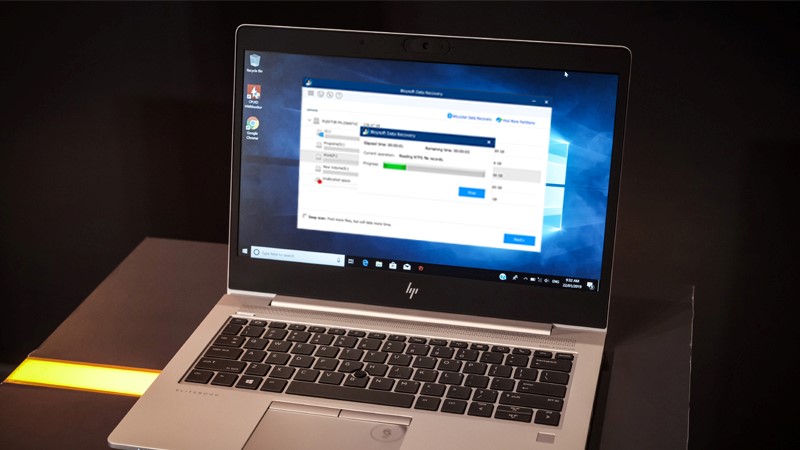
 Data recovery is a complicated and time-consuming process. There is data that can be restored or recovered from simple recycle bin recovery. The data recovery process is complex. I have come up with this solution to recover BitLocker encrypted data.