








Want to Know Who Isn’t Following You On Facebook? Here Is How

Published on: 30 December 2023 Last Updated on: 04 September 2024
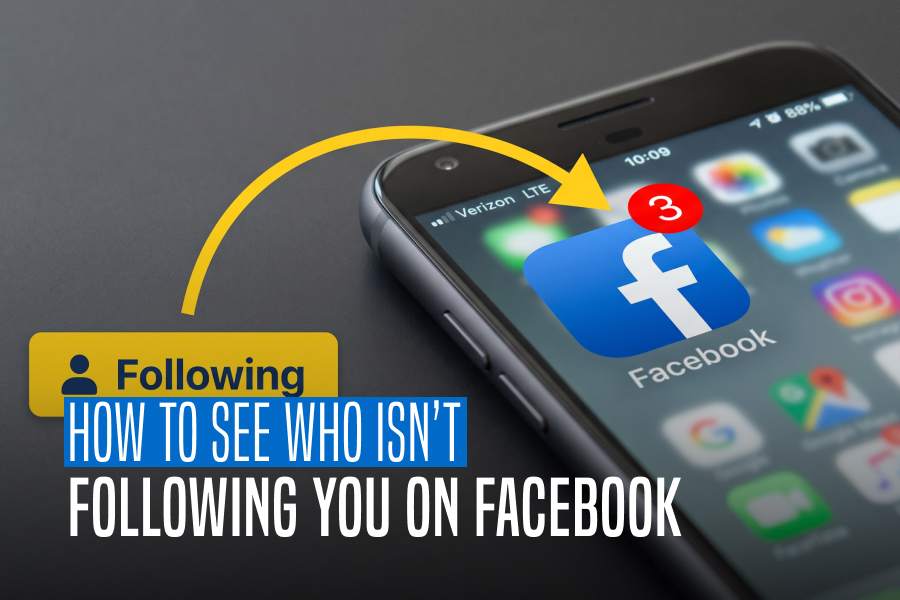
how can you see if someone is not following you on facebook

When you become friends on Facebook, the person in question follows you automatically. This holds true for you as well. On Facebook, if you receive a friend request and decide not to accept, reject, or unfriend the sender, the request will turn into follow automatically.

You can block them on Facebook if you don’t want them to follow you. People who aren’t your friends or potential friends can also follow you. Let’s learn about how to change your settings so that you can get followed by the general public and view who is following you at the moment.

This article will answer your question on how can you see if someone is not following you on Facebook. Keeping an eye on your Facebook fans is crucial, especially if you use the social media site to market your company or brand. You can improve your company’s online visibility by encouraging your followers to see interesting Facebook posts about your brand.

For example, how can I see who exactly I follow on Facebook? These are the most common questions asked by the vast majority of Facebook users worldwide. Facebook has made it simple to see who follows you. However, because of the confusing site’s interface, most users have trouble finding the “Following” feature.

However, we are here to respond to your following woes and offer you our utmost tech support.

Here is everything you need to know about finding out who is following you on Facebook, both on the web and on mobile devices. By following this step-by-step guide, you can successfully modify your settings and look over the specifics to make the most of Facebook. Are you ready to learn all about it?

What Is Following On Facebook?

Before we learn about how can you see if someone is not following you on Facebook, let’s address the question, what is following on Facebook. It’s not necessary to be friends with someone in order to view their posts in your Facebook News Feed.

This is why when you follow someone who isn’t a friend, you’ll also see their public updates appear in your Feed as though they are.

Furthermore, your public posts will show up in the News Feeds of people who follow you on Facebook, even if you are not friends with them on the social media network. It consists of the comments you leave on other people’s open posts as well as the pictures and posts you upload on your own. You might not even be aware of it if you don’t learn how to view your Facebook followers.

How Can You See If Someone Is Not Following You On Facebook, Or Not

It is possible to see who follows you as well as who has “liked” your Facebook pages. Remember that Facebook users have the option to follow your page without liking it when it comes to Facebook marketing. Facebook users have two options: they can follow you without liking your page, or they can like it without following you.

  • After logging in to Facebook, navigate to “Pages.”
  • Launch the new Facebook page you created.
  • Scroll down to see the section where you can see your reach, likes, and statistics.
  • To find out who is following your page, go to the top-right corner and click on “Settings”.
  • From the left menu, select “People and Other Pages.”
  • That concludes our discussion. A list of Facebook users who have liked or followed your page may now be displayed to you.

Why Can’t You See Who Unfollowed You?

It’s possible that your app version is outdated if, despite following the steps, you are still unable to see who is following you on Facebook mobile apps. To update it, go to the App Store or Google Play.

Another reason you don’t know how to see who follows you on Facebook is that you have no followers. The actions mentioned above will not allow you to check your following because you do not have any followers. Remember that if you haven’t added any friends to your Facebook account yet, you may not have any followers at all.

It’s also possible that Facebook has not enabled followers on your account. As a result, you won’t be able to see who is following you on Facebook. The section that follows provides instructions on how to change this setting.

How To Allow People To Follow You?

If you have restricted who can follow you on Facebook, you won’t be able to see who does. This setting may restrict your ability to grow your Facebook following because individuals who are not on your friend list will not be able to follow your pages or profile.

You can set your privacy setting to “Public” to allow people other than your friends to follow you.Facebook users will be able to view the public posts on your account if you enable this option. Furthermore, anyone’s newsfeed, even if they are not your Facebook friends, can see your public posts.

To limit who can access their account information to just family members or close friends, some users may wish to disable this feature. Because of this, the decision to enable or disable it based on your privacy concerns is entirely yours.

However, this “follow” feature is helpful for public figures and business owners. You should know that you need more than just Facebook friends if you want to grow your business or brand.

How To Get Notified When Someone Unfollows Automatically?

Manually going through your “Friends” and “Followers” lists can be very time-consuming. You have no way of knowing when someone clicks the “Unfriend” button unless you keep a close eye on the number of friends listed on your profile. Fortunately, there’s a much simpler way to figure out who unfollowed you on Facebook.

Presenting Who Deleted Me, an extension for Google Chrome and Firefox that performs profile checks for you. The application saves your current friends list when you log in with your Facebook credentials.

It then periodically rechecks the list whenever you click on the app and notifies you of any changes, such as when someone unfriends you.  It also distinguishes between friends and other individuals who have recently deactivated their accounts, which is an extra bonus.

How Do I Follow Someone Without Adding Them As A Friend?

To do this, go to their Timeline page and click the “Follow” button. If there isn’t a “Follow” button, a user’s privacy settings prevent people who aren’t friends from following them. It follows that you have to friend them first. If they grant your request, you will have the ability to follow them.

Wrapping Up

Warm leads on Facebook are more likely to visit your page or make a purchase. By assisting you in reaching more people, they also help you grow your audience on the website. Your following on Facebook is a crucial sign of how successful your company page is on the social media network. How can I check who is following my desktop and mobile Facebook pages and profile? is a query that, ideally, this guide will assist you in answering.

Now that you know how to make your Facebook profile public, you should also be able to follow more people and grow your social media following. If you want to stop people from following you, you can also go in the opposite direction. However, ensure that the configuration best meets your needs and privacy preferences. You are welcome to change the setting if you are not satisfied with it as it is.

Additional Reading:

Content Rally wrapped around an online publication where you can publish your own intellectuals. It is a publishing platform designed to make great stories by content creators. This is your era, your place to be online. So come forward share your views, thoughts and ideas via Content Rally.

View all posts

Leave a Reply

Your email address will not be published. Required fields are marked *

Related

facebook settlement

Facebook Settlement: What Went Down And What Was The Final Result?

The Hill reports that in recent weeks, half a million claimants to the previously ongoing $725M Facebook settlement have received rejection letters. Angeion, the settlement administrator continues to review the record 28 million claims, 500,00 of them have faced rejections. The only obstacles standing in the way of the Facebook settlement payout are a meticulous review and any claimant appeals of the final judgment. The Hill on October 10 publicized U.S. District Judge Vince Chhabria's final approval status of the Facebook settlement. Facebook users who had been active on the platform between 2007 and 2022 were eligible to submit claims. That was until August 25 of this year. The 28 million applications, according to plaintiffs' co-counsel Lesley Weaver, are "the largest number of claims ever filed in a class action in the United States." Chhabria stated he was "blown away" by the enormous volume of claims, according to Law360. Who Is Eligible For The Facebook Settlement Payout? Anyone who used Facebook in the United States between May 24, 2007, and December 22, 2022, according to the settlement page, is qualified. Claimants need not provide evidence that a third party obtained their data. According to a 2021 Pew Research Center study, 69% of Americans have used Facebook at some point. Furthermore, Statista projects that by 2023, there will be 243 million Facebook users in the United States. Thus, the 28 million (and growing) claimants represent approximately 9% of all Facebook users in the United States. Can I Still Claim? The period for submitting claims has ended. By August 25, people submitted all legitimate claims electronically through the Facebook settlement claim submission webpage. For submission validity, postal mail submissions with postmarking had a deadline of August 25. Why Did Facebook Have To Pay A Settlement? The lawsuit, according to the Associated Press (AP), is a result of the discovery of Facebook's Cambridge Analytica scandal. Data firm Cambridge Analytica revealed the personal data of 87 million Facebook users through payment to a Facebook app developer. In an April 2018 joint story, the New York Times, the Observer of London, and The Guardian unveiled the news. The data helped create and distribute comprehensive voter profiles to support Donald Trump's 2016 presidential campaign to garner American voters. Mark Zuckerberg made an effort to contain the fallout during his testimony before chilly congressional panels following the disclosures. Numerous people removed their Facebook identities. Facebook's reputation as a reliable guardian of users' private information and communications took significant hits. According to CNN, on March 21, 2018, a Facebook user from Maryland filed a then proposed class action lawsuit on behalf of other impacted Facebook users. Eventually, seven similar cases to the original plaintiff's case became a single class action. On August 27, 2022, the parties reached a provisional settlement agreement. Meta CEO Mark Zuckerberg and COO Sheryl Sandberg were a few weeks away before appearing for the legal depositions. This occurred following several years of litigation, as reported by the Associated Press. On December 23, 2022, Facebook formally consented to a $725 million payout. Late in March 2023, a federal judge granted preliminary approval. A growing number of class members formally opposed the tentative deal. Reuters reported on July 20 that this happened before a final hearing before Chhabria on September 7. The court received numerous legal objection submissions. There was also one from two Facebook users saying the compensation stipulation for class members was too low. The plaintiffs' attorneys' legal fees, which could reach $181 million, were also too high. The plaintiffs' attorneys retorted that the objections represented a "tiny percentage." There were an estimated 250 million Facebook users in the United States in a court filing dated July 11. How Much Would You Receive? The amount of the Facebook biometric settlement payout will depend on a number of factors: The payment is largely dependent on how many users remember to submit their claims, like most class action lawsuits. 1 million more claims need to be checked for fraud or duplication before the final count is made. Initial Facebook claims were reduced from over 28 million to just over 17 million valid claims. For what duration have you been using Facebook? Facebook's inadequate privacy controls misused the majority of long-term users' data for a longer period of time. Therefore, they would receive the largest payouts.   Settlement administrators as well as the plaintiffs' attorneys will take fees. This can amount to 25% of the Facebook settlement check before any users receive their money. According to Fortune, Facebook's plaintiffs' lawyers have asked for an astounding $180 million in legal fees. Relating this fee request to "Nick Bosa money," Chhabria made a reference to the high-paying defensive player in the NFL's new contract during the September 7 court hearing. According to The Hill, plaintiffs' attorneys projected that class members would receive $30 on average. Wrapping Up There is a lot of competition when you apply for your portion of the $725 million Facebook privacy settlement. This will probably reduce the amount of money you receive. The Facebook class action lawsuit settlement involved approximately 17.7 million valid claims from users of the social media giant. According to attorneys involved in the case, it might be the most claims ever filed in a U.S. class action lawsuit. Two million of the 10 million claims were duplicates, and eight million were deemed fraudulent. Claims had to be submitted by August 25th. Additional Reading: How To Remove Pname Com Facebook Orca? Facebook Blueprint: Building A Strong Foundation For Social Media Advertising How To Fix “Facebook Message Sent But Not Delivered” Error?: A Complete Guide

READ MOREDetails
how to disconnect facebook from instagram

The Whys And Hows Of Unlinking Facebook And Instagram In 2024!

Have you had enough of sharing your content on Facebook and Instagram in tandem? Would you prefer to maintain distinct accounts? Are you looking for ways "how to disconnect Facebook from Instagram?" You can easily delink your Instagram and Facebook accounts from one another on desktop and mobile platforms, but how do you do that? We'll walk you through the process of separating your Instagram and Facebook accounts in this post. You can start by de-syncing your desktop and mobile accounts for Facebook and Instagram. If you decide you no longer want to cross-post content, then you can easily unlink your accounts. If you have more than one linked account, you can also delete an account from either platform. Remember that you will need to change one of the passwords if the login for both accounts is the same. It is also possible to delete your Instagram account from other social media platforms. You can unlink your Instagram account from your Facebook account by going to the Accounts Center if you want to stop posting your Instagram photos to other social media platforms. We'll guide you through the process of removing the connection between your accounts as well as ceasing to share your Instagram posts on other platforms. How Is Facebook And Instagram  Connected Your Instagram posts will automatically be shared on your Facebook timeline if your Facebook and Instagram accounts are linked. For individuals who would like to share their Instagram photos with their Facebook friends without having to post them twice, this feature is useful. You can unlink your Facebook and Instagram accounts if you'd rather keep your accounts separate or are done sharing content between them. When you link them, you are essentially giving Instagram access to your Facebook account when you link your two accounts. This implies that Instagram has access to personal data from your Facebook account, including your email address, name, as well as a profile picture. Furthermore, Instagram can post on Facebook on your behalf. So, you might want to unlink your Instagram and Facebook accounts for many reasons. Why Unlink Facebook From Instagram? Do you want your Instagram and Facebook accounts to be kept apart? Does cross-posting content across the two platforms sound too monotonous? Do you want Instagram to no longer be able to access your Facebook account? Take these steps to unlink your Instagram and Facebook accounts: Log in to your Instagram profile by opening it. Choose "Settings" by tapping the three lines in the upper right corner. After swiping down, choose "Account." Click on "Sharing to Other Apps." After selecting "Facebook," tap "Unlink Account." Remember that removing the connection between Instagram and Facebook accounts won't remove any of your content from either site. All it does is cut off the communication between the two accounts. Why Would You Unlink Facebook From Instagram? You might want to keep Facebook and Instagram separate in case you use them for personal connections on Facebook and business or creative endeavors on Instagram. You can avoid confusion as well as overlap by keeping your identities separate by unlinking the accounts. It's possible that you unintentionally share your Instagram reels, stories, or posts on Facebook when you link your accounts. In case your target audiences on both platforms are different, this might be awkward or inappropriate. You'll have more discretion over what you share and where by unlinking the accounts. When you automatically share your Instagram posts on Facebook, or vice versa, this is known as cross-posting. Although it may seem practical, your followers may find this bothersome or spammy. By removing the links between the accounts, you can customize your content for every platform and avoid cross-posting. Unlinking your Facebook and Instagram accounts can be a wise move if you're worried about privacy on social media. It will lessen the chance of any security lapses or hacks and stop any data or information from being shared between the two platforms. How To Disconnect Facebook From Instagram On Mobile? You can unlink your Instagram and Facebook accounts if you no longer want them to be connected. Here is how you can do it using your smartphone. Launch the Instagram app on your smartphone. Tap the lower right corner of your profile picture. In the upper right corner, tap the three horizontal lines. At the bottom of the menu, tap Settings. Press the "Account" button. On Linked Accounts, tap. Press the Facebook icon. Select "Unlink Account" by tapping. Your Instagram and Facebook accounts will be disconnected after you've finished these steps. How To Disconnect Facebook From Instagram On Desktop? The procedures listed below can also be used to unlink your Facebook account from Instagram if you're using a desktop or laptop web browser: Open your web browser and navigate to instagram.com. If you are not already logged in, log into your account. In the upper right corner of your profile picture, click on it. Select Settings by clicking. Select "Account" by clicking. On Linked Accounts, click. Select Facebook. Select "Unlink Account" by clicking. How To Disconnect Facebook From Instagram On iOS Or Android? If you want those posts removed from Facebook, you will have to remove them manually. It's easy to unlink your Facebook and Instagram accounts on your mobile device if you decide you no longer want to share content between them. Here are the steps that apply to both iOS as well as Android devices.  iOS  Tap the icon for your profile in the lower right corner of the Instagram mobile app after opening it. In the upper right corner, tap the hamburger menu icon, then choose "Settings" from the menu. After swiping down, tap "Account Center" (or, depending on where you are, "Accounts Center"). To unlink an Instagram account, tap "Accounts & Profiles" and choose the desired account. Again, tap the account name and profile picture. Select "Remove Account" and tap "Yes" when prompted to confirm.  Android  Tap the hamburger menu icon located in the lower right corner of the Facebook mobile app after opening it. After swiping down, tap "Settings & Privacy" and then "Settings." Click "Accounts Center" and choose "Manage Connected Experiences" from the menu. To unlink an Instagram account, tap on it. Select "Remove" and then "Remove Account" from the prompt to confirm. It's crucial to remember that you cannot unlink your Facebook and Instagram accounts if you use the same password for both. You must change one of the passwords. Furthermore, you might need to go to the app settings or preferences of that social network to unlink your previous account in case you wish to relink your Instagram account to it. Why You Can't Unlink  Facebook From Instagram? Try these suggestions in case you are having trouble unlinking your accounts: Verify that you are running the most recent versions of the Instagram and Facebook apps. To confirm that you have granted Instagram access to your account, check your Facebook settings. Verify that you are logged into the correct Facebook account if you have multiple accounts. If you're still having issues, then get in touch with Facebook or Instagram support for additional help. Wrapping Up Removing the connection between your Instagram and Facebook accounts can help you maintain privacy as well as segregate your data. Additionally, it can stop unwanted content sharing between the two platforms. You must go to the "Linked Accounts" section of your account settings to unlink your Instagram and Facebook accounts. You can then choose which Facebook account to deactivate and take it out of your Accounts Center. If you have thoughts to share or questions to ask about how to disconnect Facebook from Instagram please leave a comment below. We would love to hear from you. Learn More About: 5 Content Ideas to Use with Instagram Influencers 6 Best Practices When Buying Instagram Followers Incognito Mode: How To Post Anonymously On Facebook?

READ MOREDetails
Is Facebook Going To Start Charging Future Of Whatsapp Charging

Fee Or Free: The Truth About Facebook And Charging Users

Devices with internet connectivity, including computers, tablets, and smartphones, can access Facebook. Before the development of smartphones, websites were typically only available in desktop versions. However, in order to have a fully functional experience, we can now have access to these websites on our mobile phones.  But does that mean Facebook could ask for a fee soon? Is Facebook going to start charging? Here is all that we know so far.   Is Facebook Going To Start Charging: Future Of Whatsapp Charging? Facebook is a huge platform for advertisements, so many companies want to display their content there. As a result, placing ads on Facebook has become more expensive. This trend will likely persist in 2023. Facebook is always changing its ad format, which may result in increased costs. But fear not—there are solutions for handling this. Companies can increase the effectiveness of their advertisements. They can do it by making sure that more viewers take the desired action, such as making a purchase. They can also target particular demographics with their ads and use their advertising budget wisely. Therefore, even though Facebook charges for advertisements, there are ways to use it to your company's advantage. History And Evolution Of Facebook Charging Facebook's fee structure has changed over time. It started off charging nothing and has since grown to be a sizable source of income for the business. Early Years (2004–2007): Facebook didn't charge for advertising at first because its main goal was to help friends connect. Introduction of Ads (2007): Facebook launched advertisements in 2007, but since the platform was still in its infancy, Facebook advertising costs were comparatively low. Targeted Advertising (2012): Facebook started to improve its advertising system in 2012, enabling companies to target particular demographics while progressively raising the cost of their ads. Facebook Mobile Advertising (2012 to 2015): the significance of mobile ads increased along with the growth of mobile usage. Advertising fees increased because businesses realized the potential of reaching consumers on their phones. Fast Growth (2015–2018): During this time, Facebook's advertising platform grew quickly, which raised competition and raised Facebook's fees. Regulation and Privacy (2018-Present): Facebook's advertising model has recently been impacted by worries about user privacy and governmental regulations. Facebook advertising is still very popular, but companies have to follow new guidelines that affect Facebook ad prices. The Truth About Facebook Charging When asked, "Is Facebook going to start charging?" a representative for the company clarified to VERIFY. They insisted that Facebook's parent company, Meta, did not intend to charge users $4.99 a month for Facebook use. According to Facebook's Help Center, advertisers are charged to display ads on Facebook and Meta's other social media platforms rather than charging users to use Facebook. For years, chain messages suggesting that Facebook would soon charge users a fee to access the platform have been present on the social media site. Since 2009, at least one of these messages has existed. Since Facebook was first made available to the public in 2006, it has stayed free. For Facebook and Instagram users, Meta does provide a few optional subscription services and programs. Facebook and Instagram currently offer two different kinds of paid subscriptions. The first is verification. It entails paying a monthly charge in exchange for access to special account features and a verification badge on your profile. Subscribing to Facebook Verified or Instagram Verified on the mobile app costs $14.99 per month. Getting Facebook Verified on the web costs $11.99. According to the Instagram Help Center, public accounts—like those of famous people or prominent organizations—may still obtain verification by applying rather than having to pay for the service. Subscriptions that are account-specific come in second. Users can purchase access to exclusive content from other accounts. Except in cases where you subscribe via a mobile app, where Apple or Google receive a 30% cut, the revenue from these subscriptions goes to the account you're paying. What Does Facebook Have To Say? Meta's Facebook has amassed popularity that is hard to rival as well as hard to tap. It goes without saying that it has had one too many of the questions: "is Facebook going start charging"? On their website, they have clearly explained what in-app expenses or any kind of charges mean from their perspective. Here is an excerpt: "No, we don't charge you to use Facebook. Instead, we charge advertisers to show ads on Meta company Products. This helps us make Facebook available to everyone without charging people for access to it. When using Facebook, keep in mind: You need Internet access to use Facebook from your computer, mobile phone or tablet, and your Internet provider may charge you for this access. Learn more about data charges and connecting to Facebook on your mobile phone or tablet. Using some Facebook features, such as text message notifications, may also lead to charges from your mobile provider. If you add your payment information to Facebook, you can do things such as make purchases from businesses, send money to friends, support creators on Facebook, and purchase ads on Facebook. If you purchase something on Facebook, we may earn a commission or transaction fee from that activity. You can also make purchases through Facebook for games, apps, and other items. Note: Facebook doesn't sell your information, and we don't share information that personally identifies you (information such as your name or email address that by itself can be used to contact you or identify who you are) unless you give us permission." Wrapping Up Is Facebook going to start charging? Honestly, as we navigate the evolving world of digital advertising, it is critical to comprehend the truth about Facebook charging fees. In actuality, a variety of factors, including audience targeting and ad quality, can affect Facebook ad costs. Facebook is still a powerful platform for advertising, even though the prices might change. This is a dynamic environment where the effects of growing Facebook advertising costs can be lessened through innovation and data-driven decision-making. Businesses can continue to take advantage of the wide reach and growth potential of this platform. They can do so by remaining informed, optimizing campaigns, and fully embracing it.If you have thoughts to share or questions to ask, please leave a comment below. We would love to hear from you! Read More About: Here Is How To Delete A Facebook Page Easily? How To Stop Scammers On Facebook Marketplace? Facebook Settlement: What Went Down And What Was The Final Result?

READ MOREDetails