
Mark Stiffler Gives You 7 Ways To Automate Your Business For Success

Published on: 03 January 2023 Last Updated on: 05 January 2023
Automate Your Business

Would your business be more successful if it had more efficient systems in place? The good news is that there are many ways to automate your business processes and save time, energy, and money. Automation makes your business run smoothly and helps you stay organized.

Mark Stiffler wants to explore seven ways to automate your business for success and plans to do so in this post.

Top 7 Ways To Automate Your Business For Success

1. Streamline Your Customer Service Processes

Automate customer service tasks such as sending emails and responding to customer inquiries. This will help you save time and energy by quickly responding to customers without manually entering data into a system or email program. You can also use automation tools such as chatbots to respond to common questions or provide customer service 24/7. This will help you create a more personalized customer experience and improve customer satisfaction.

2. Create Automated Payment Systems
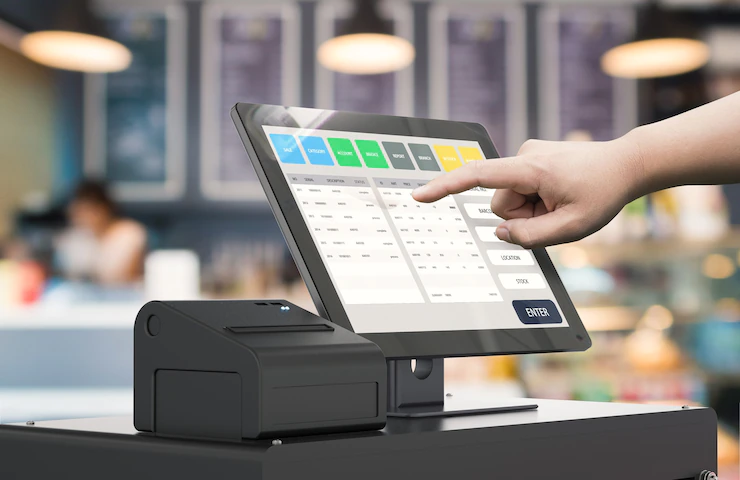
Payment Systems

Setting up automated payment systems for online products or services makes it easier for customers to purchase from you without manually entering their payment information each time they purchase. This simplifies the buying process and reduces the chances of errors or fraud, which can be costly for businesses. Without this automation,  you would be responsible for manually processing each transaction. Manually processing payments can be time-consuming and tedious, not to mention a waste of billing hours.

3. Utilize Scheduling Tools

Scheduling Tools

Scheduling tools allow you to set up automated reminders for yourself or others on your team so that important tasks don’t fall through the cracks and deadlines are met on time. Mark Stiffler says these tools can also help you better manage your time by providing an overview of upcoming events, meetings, or tasks that need to be completed promptly. Popular tools to consider include Google Calendar, Toodledo, and Asana.

Google Calendar

This free calendar application allows you to create and share events with others easily. Most companies use this as it is included in the Google Suite.

Toodledo

This powerful task management and productivity tool allow you to create reminders for yourself or others.

Asana

This project management tool allows you to track tasks, assign due dates, and organize projects with multiple members.

4. Leverage Social Media Automation Tools

social Media Automation

Social media automation tools enable you to schedule posts ahead, so you don’t have to worry about manually updating your social media accounts daily. This can save time and effort while ensuring that your accounts stay active and engaged with followers regularly. Social Media Automation Tools such as Hootsuite, Buffer, and Sprout Social are great options. Which one you choose depends on what features you need and your budget.

5. Manage Email Lists with Autoresponders

Email Lists

Autoresponders are great for managing large email lists because they allow you to send personalized messages based on user interactions with your site or emails from other sources (such as webinars).

Autoresponders can also be used for promotional purposes, such as sending out discounts or special offers at predetermined intervals throughout the year. When looking for an autoresponder, make sure to choose one that is easy to use and has the features you need, such as segmentation and personalization.

6. Analyze Data with AI Tools

Analyze Data with AI Tools

AI-based analytics tools can help provide insights into how customers interact with your website or product so that you can optimize the user experience accordingly to maximize conversions and sales over time. Additionally, these tools help identify areas where further optimization may be necessary to improve user engagement further down the road.

Popular AI tools Mark Stiffler says to consider include Google Analytics, Mixpanel, and KISSmetrics. Google Analytics is the most popular analytics tool on the market, providing detailed insights into how visitors interact with your site.

Mixpanel and KISSmetrics are other popular AI tools that provide a more in-depth look into customer behavior. They both focus on delivering real-time data and insights that can help you make better decisions about optimizing your website.

7. Implement Automated Invoicing and Billing Solutions

Automated Invoicing

By automating invoices and billing solutions, businesses can save time while reducing manual errors associated with manual entry creation processes (which often lead to false charges).

In addition, automated invoicing solutions make it easier for customers by streamlining the payment process from end to end, so they don’t have to worry about entering their payment information each time they purchase from your site or app. Favorite automated invoicing and billing solutions include FreshBooks, Harvest, and Wave. Each of these tools has features that are tailored to different types of businesses.

Conclusion

Automation is a powerful tool to help businesses succeed and save time, energy, and money. The seven ways outlined in this article are all great options for automating your business processes to stay organized while maximizing efficiency. From streamlining customer service tasks to leveraging AI-based analytics tools, automation provides many benefits for businesses looking to increase their success rate. With automated solutions like these in place, your business will be able to operate more efficiently than ever before!

Additional:

Content Rally wrapped around an online publication where you can publish your own intellectuals. It is a publishing platform designed to make great stories by content creators. This is your era, your place to be online. So come forward share your views, thoughts and ideas via Content Rally.

View all posts

Leave a Reply

Your email address will not be published. Required fields are marked *

Related

Ship Packages

Ship Packages Often? Why You Need A Courier Broker!

If your business ships a lot of packages, whether in a B2B or B2C capacity, whether part of an eCommerce platform or a brick and mortar building, you understand the value of inexpensive shipping. Ship Packages to make things easier for you. However, how can you find the lowest rates on international shipping? How do you even go about finding the right courier service, one who will ship your packages reliably at a cheap rate? The answer is: you need a courier broker. This article will break down what a courier broker is, how to choose a courier service, and the benefits that couriers have over the standard post. Why You Need Courier Broker To Ship Packages What is a Courier Broker?  Take netParcel for example, a courier broker that negotiates discounted shipping rates with a number of top couriers – they are able to do so by leveraging the volume of their shipments, which they do by getting businesses to use their agglomerative service. It is, essentially, a “power in numbers” approach to shipping, which is pretty ingenious. But when using a courier broker for reliable international shipping services how will you know which courier to choose? What Should I Look For In A Quality Courier Service? Many companies use a courier service to make sure their clients get their products in a safe and timely manner. Separating the good from the great, therefore, is a matter of personal preference: what exactly does your business need from a courier service. Ship Packages that can work well for  your business. A quality driven courier service might include dedicated routing services, overnight delivery, fast distribution, possible warehousing, fast flights, expedited shipping, white glove shipping, discounted bulk shipping, stats on delivery process, and they will publish real-time shipping rates. Of those, you have to choose which are most important and work from there to find your perfect service. Standard Post Vs. Specialized Courier Services: Standard post is packages that are shipped through a public postal service and can have slower shipping times, with a greater risk of package damage. A courier service’s packages, on the other hand, are directed through a private company that cares about each individual package, shipping rates, convenience, and speed. Ship Packages that can work well for you. Sending your company’s product through a courier service will also allow your customers to feel more secure that their package is being handled with the utmost care and security precautions. To top it off, when you partner with a courier broker, you can get the lowest rates on international shipping through a courier service, so all this added care and security won’t cost an arm and a leg. Final Thoughts: In conclusion, finding a courier service that specializes in client satisfaction will help your business succeed by displaying professionalism and prioritizing customer needs. Ship Packages that can work for you better and in all aspects. Join with a courier broker service to see published, real-time shipping rates for a number of different couriers, and choose based on convenience and price, passing those savings on to the consumer. For any business that ships packages frequently, a courier broker is a real godsend – a service that allows you to reap the benefits of a courier service without paying the high prices. Read Also: Important Things To Consider When Packaging Your Product Simple Packaging: Your Guide To Branded Design

READ MOREDetails
serial entrepreneur

Top 10 Best Serial Entrepreneur Of All Time – 2024 Update

Most of us are accustomed to the term entrepreneur. But in case you do not know what is a serial entrepreneur is, let me define a serial entrepreneur for you. A serial entrepreneur is someone who has more than one business in their bucket. They start one business, and then if they fail, they start another one. Or, in some cases, they sell the existing business in a great deal and start another one.  What Are The Characteristics Of A Serial Entrepreneur Inc. Magazine says a strong sense of optimism and a high impact threshold characterizes successful entrepreneurs. These qualities are necessary due to the high risks that they take and the long hours of launching a small company when success seems to be a mirage in the desert. They also show strong self-reliance and a desire to stay innovative. They understand that money is not everything.  Entrepreneurs do not always have a guarantee of success when they open a chain of different businesses. Sometimes, just one business takes all of the focus of an entrepreneur. Top 10 Best Serial Entrepreneur Of All Time Here are the top 10 entrepreneurs of all time. Who never fails to amaze us with their new innovative business ideas. Here are the serial entrepreneur examples. 1. Anthony Mongeluzo At the age of 21, Anthony Mongeluzo started his first professional company from his parent’s house and took a step towards being a serial entrepreneur. And that is Pro Computer Services. He also had other companies when he was a teenager. He is also the CEO and President of an information technology firm in Marlton, N.J. After some time, PCS has gained regional as well as national recognition as one of the fastest-growing companies. With an annual revenue of $25 and 25 employees, PCS has offices in four states. Companies: PilotLight studios Pro Computer Services Dynamic Telecom Solutions 2. James Currier At the age of 6, James Currier started his entrepreneurial career as a worm seller, and now she is one of the best serial entrepreneurs. When he was in the 8th grade, he opened a store in his school cafeteria. By the time he graduated from Princeton University, he already had 18 little ventures in his bucket. Jiff Inc., which is well known for making HIPAA-compliant mobile software for the medical industry, is led by James Currier. He is not only the lead investor here but also the Executive Chairperson. He has also founded Palo Alto-based Ooga Labs. It helps to develop e-commerce and mobile startups along with medical software. Companies: Tickle Ooga Labs  Jiff Inc 3. Ellen Thompson Ellen Thompson has experience in starting and selling companies for more than 20 years. In 1993, Thompson founded a skill-testing firm named Know It All. In 2000, Kenexa Corp. had bought more than 300,000 shares. After she founded another company named 4 Walls, she is now the CEO of the company. This company is based near Philadelphia and helps apartment owners get customers via search engine marketing and social media. The list of serial entrepreneurs will be incomplete without this name. Companies: 4 Walls. Know It All. 4. Rod Drury This New Zealand serial entrepreneur has had a fascination with computer technology since his teenage years, and he has transformed this fascination into his career. He helped found the software company Glazier Systems. In 1999, it was sold for around $7 million. He was also the founder of AfterMail, which is an email intelligence concern. In 2006, the QSFT, or Quest Software, acquired AfterMail for $15 million. At present, Drury is the director of the New Zealand Stock Exchange, the director and founder of Pacific Fibre, and lastly, the Chief Executive Officer of an online accounting portal, Xero. Companies: Pacific Fibre. AfterMail. Glazier Systems. 5. Janet Kraus Janet Kraus is the senior lecturer at the Harvard Business School and has already started and sold 2 businesses. She is the co-founder of the concierge service company Circles. With her hard work, she developed the company with a revenue of $50 million. In 2007, she sold Circles to Sodexo. Just after that, she started leading Spire. This is a high-end social media business that is related to travel. In 2010, it was sold to Perfect Escapes. He is another serial entrepreneur who finds it fascinating to start new ventures. Companies: Spire. Circles. 6. Josh Kopelman The managing director of First Round Capital, Josh Kopelman, is very fond of forming and investing in Internet companies. It has already been around two decades since he is doing this. In 1992, the Infonautics Corporation came to the public in 1996. At that time, he was attending the Wharton School at the University of Pennsylvania. Three years later, in 1999, he started Half.com, which is an online store for used music and books. But just after one year, it was acquired by eBay. He has also invested in several startups, like mint.com and StumbleUpon. Companies: TurnTide. Half.com. Infonautics. 7. Harpal Sandhu Harpal Sandhu is the Chief Executive Officer and President of Integral Development Corporation. It is a  Sunnyvale, California-based company owned by this serial entrepreneur. It was 1993 when he was the co-founder of this company. This organization claims to be the only multi-sided trading network that works for foreign exchanges. Earlier, Sandhu was the president and founder of Infinity Financial Technology. In 1998, the software company SunGard Data Systems acquired Infinity Financial Technology. Companies: Integral Development Corporation Infinity Financial technology 8. Gerard Ferro It has already been more than two decades since Gerard Ferro has been setting up and running technology and health businesses. He is also the co-founder and CEO of a prescription discount business, Free For All, which is based in Marlton. Gerer Ferro also cofounded a pharmacy benefits management concern, SUNRx. He was also the chairperson and CEO of the organization. Under his leadership, this company was able to gather a revenue of $49 million in its first five years. During the late 1980s, he was also the co-founder and CEO of Simacre. Companies: SUNRx. Simcare. Free For All. 9. Oprah Winfrey Oprah Winfrey is another shining star in the sky of serial entrepreneurs. When she was in high school, he started his career in the broadcasting industry. The media empire and her group of businesses across magazine publishing, radio, and television have made her a billionaire. As per Forbes, her estimated net worth was $2.8 billion in 2018, and she is the wealthiest woman in show business. In 2011, she launched OWN or Oprah Winfrey Network. The official website of OWN claims that 70% of homes in the United States have OWN. Companies: Oprah Winfrey Network. Harpo Productions. 10. Richard Branson In 1970, when Sir Richard Branson was around 20 years old, he started a mail-order record business. After that, it was time for a record shop in London. Within a couple of years, he built a studio, where “Tubular Bells,” an instrumental by Mike Oldfield. His Virgin Group now has around 200 companies in more than 30 different countries. Branson is also famous for promoting various social causes using celebrity power and his wealth. Being a prolific blogger, he also has written a book, which is published with the name “Screw Business as Usual.”  Companies: Virgin group. 11. Elon Musk Any list of entrepreneurs is incomplete without Elon Musk. He is the billionaire mind behind Tesla CEO and the richest person alive as of 2023. Musk’s first try at business was a small start-up called Zip2. It was a searchable business directory, which is an online equivalent of Yellow Pages. Four years after the establishment of Zip2 in 1995, it was sold to Compaq Computers for $307 million.  Later, it was integrated into the AltaVista search engine. After the sale of Zip2, Musk moved on to build another company, x.com, which is an online payments app that was later known as PayPal. The company was sold to eBay for $1.5 billion. Highly by the success he invested in and founded SpaceX, Tesla Motors, and The Boring Company. In 2022, he bought the social media company Twitter and renamed it X. Companies: Virgin Group Conclusion They are those entrepreneurs who have never failed to come up with new ideas in case one fails or is acquired by others. They have a bucket full of new and innovative ideas to lead and build a successful career path. They are inspirations for this generation’s entrepreneurs who are willing to make their own identity. Learn More About: Mistakes Entrepreneurs Should Avoid When Using SMS Marketing Starting An Ecommerce Business: 9 Easy Tips For The New Entrepreneur 5 Ways College Prepares Young Adults To Become Successful Entrepreneurs

READ MOREDetails
https://imagecompressor.11zon.com/en/image-compressor/compress-jpeg-to-100kb.php

7 Ways To Improve Your Company Culture

As a business or company owner, you know a positive company culture is essential for your employee's motivation, productivity, and well-being. A good workplace culture can enhance morale, heighten job satisfaction, and inspire creativity. However, creating and maintaining a healthy and positive company culture can be challenging. In this blog post, we have gathered seven tips that will help you improve your company culture. So, dive in to learn all the details. Reasons Why Company Culture Is Important The success of a company organization depends on the internal discipline within the organization. They set disciplinary guidelines on different matters within the organization. It can help you attain the growth that you need. In this section, we understand some of the reasons to understand why the company culture is crucial for your organization. Increasing Employee Employment As we mentioned, the company culture is a set of rules that binds all the members. An organizational culture is driven by clear expectations. It, in a way, motivates and inspires the employees to be more engaged in their duties and responsibilities. It motivates the concerned people to deliver for the organization. Decreased Turnover  People who think that they do not have value are less likely to leave the organization. This is why the company must set the winning organizational culture to support the vision. Respecting the senior members within the organization, without question, is one of them. Their efforts and integration are crucial to chalk out the success of the company. Elevated Productivity Many business organizations fail due to a lack of productivity. According to the values of the company culture, the company must work consistently to increase the productivity of the organization. Organizational culture has an extremely strong impact on the organization. It binds the people working and motivates them to perform. At the same time, the organization must try its best to support its employees with the resources to increase its productivity.  Strengthening Identify Of The Brand  The company‘s organizational culture represents the public image and reputation. If a company lacks an organizational culture, it cannot stand strong in keeping its public image. Internal discipline in the organization is a must to strengthen the core values. Improved Recruitment  The success of an organization depends on getting talented people on board. One-third of the respondents in a survey opined that they would leave an organization if it did not have a good company culture. Not only this, the best candidates look to be associated with an organization with an extremely strong company culture. This is why the management of the different organizations works persistently to strengthen the company culture. Ways To Improve The Company Culture As discussed above, the company culture is one of the most important tools to eliminate the weakness and sail towards the pathway of development. This section discusses some of the top seven practices to improve your company culture. 1 - Encourage Collaboration Between Departments Team collaboration is an effective strategy for creating a healthy and positive company culture. Encouraging employees to work with colleagues from different departments can promote cross-functional learning and better knowledge sharing. It also shows that the company considers every employee as an essential asset. Online team building activities are interactive, fun, and easy to do. For instance, you can organize a virtual magic show, escape room, virtual trivia, or a company-wide game. There are many options to choose from that can help encourage collaboration between departments. 2 - Introduce A Rewards System To Recognize Employee Achievements When employees feel a sense of acknowledgment, esteem, and appreciation for their efforts, it propels them to excel even further. The implementation of a reward system can serve as a potent tool to elevate the spirit of the workforce and inspire them towards superior performance. These rewards could be monetary incentives, certificates, or non-monetary incentives like extra time off, free snacks, etc. 3 - Offer Flexible Working Hours To Allow For Better Work-Life Balance Offering a flexible schedule can improve your company's overall culture. Research shows that flexible working hours lead to higher job satisfaction and productivity. Employees can manage to work around their obligations and feel trusted and valued. In response, they feel more dedicated to their work and contribute more effectively to the organization. 4 - Establish A Mission Statement & Communicate It A mission statement is a declaration of your company's purpose and values. Establishing a mission statement can align employees with your company's vision and help develop a unique workplace culture. It can also unify your team and create a sense of belonging. Regularly sharing your company's mission statement aids employees in grasping the significance of their role in upholding the organization's vision and principles. 5 - Create An Open and Inviting Atmosphere Creating an open and inviting atmosphere can increase employee engagement and job satisfaction. This atmosphere can be achieved by providing a comfortable and ergonomic workspace, natural light, and good ventilation. A pleasant physical space can improve motivation and overall health. 6 - Establish Health & Wellness Initiatives Prioritizing your employees' physical and mental well-being can improve your company's culture. Some initiatives could include providing healthy snacks, installing standing desks, organizing office sports teams, or offering stress-management courses. Encouraging employees to prioritize their health can lead to better well-being overall. 7 - Provide Plenty Of Opportunities For Professional Development Lastly, professional development opportunities can enhance employee skills, knowledge, and motivation. It also shows that the company is invested in its employees' growth and development. These opportunities include professional skills training, leadership development courses, mentorship programs, or co-learning sessions. Unlock the Potential of Your Team: Discover the Benefits of a Thriving Company Culture Improving your company culture requires a holistic approach. By implementing these tips, you can create a more positive, vibrant, and engaging culture that promotes employee motivation, productivity, and well-being. Encouraging collaboration, recognizing achievements, establishing a mission statement, creating an open atmosphere, prioritizing well-being, and offering professional development opportunities can all help to build a healthy and positive company culture. Remember that culture is not created overnight; cultivating a healthy and inclusive workplace environment takes time and effort. Investing in your company culture means investing in your employees, ultimately leading to long-term business success. Read Also Strategies For Preventing Workplace Injuries Proactively What Are the Ways to Prepare a New Employee? How to Create an Effective Company Training Program

READ MOREDetails