Choosing Between Shopify and Crafting Your Website: A Guide for 2024

Published on: 29 February 2024 Last Updated on: 31 July 2024
Choosing Between Shopify and Crafting Your Website: A Guide for 2024
Starting an e-commerce journey or considering a platform transition requires essential choices. This guide looks into Shopify and custom websites, breaking down their pros and cons. Whether you're new to business or a seasoned entrepreneur, the aim is to give you valuable insights for making intelligent decisions.

Decoding Platforms: Shopify And Custom Websites In Focus

Shopify is an easy-to-use e-commerce platform with global reach. On the flip side, custom websites are tailored to specific business needs, giving more control and coding skills for setup and upkeep.

A Detailed Exploration: Shopify vs. Custom Websites

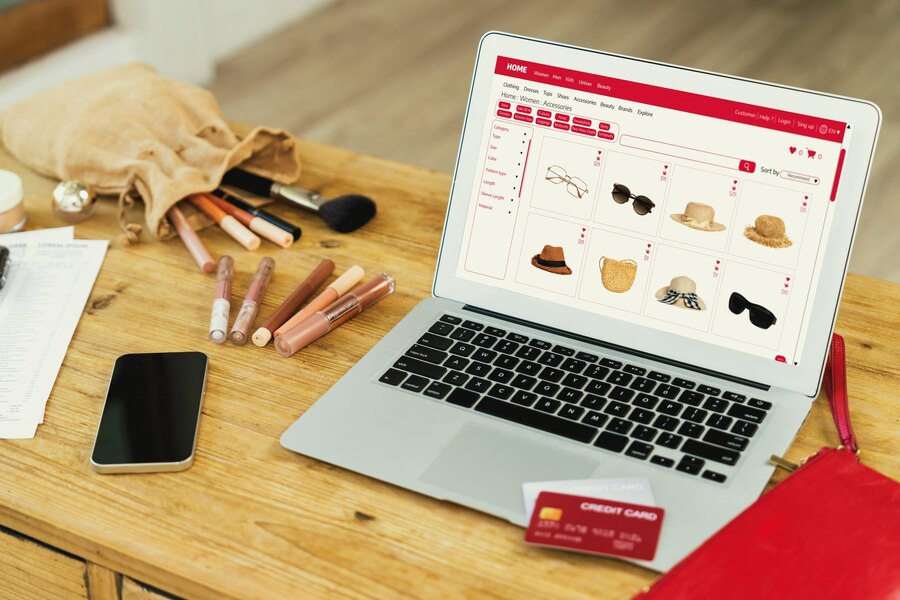
discount-shopping-season-with-sale_23-2150165932 User-Friendliness: Shopify excels with its e-commerce-centric design, offering an intuitive interface and swift customization options. Custom websites demand technical proficiency involving web development, coding skills, and meticulous management.

Domain And Hosting:

Shopify streamlines the process by eliminating the need for separate domain and hosting decisions. On the other hand, custom websites require careful consideration for goals, structure, and usability.

Content Management:

Shopify serves as a CMS, facilitating easy content editing and reorganization. Custom websites rely on CMS platforms like WordPress but need a more intuitive nature of Shopify's interface.

Website Construction Effort and Time:

Shopify allows rapid online store setup in just one day with guided instructions. Building a website from scratch is time-consuming and depends on factors such as size, complexity, and technical skills.

Pricing:

Shopify offers plans with additional costs for apps, themes, and domain subscriptions. Custom websites involve costs for hosting, domain, SSL certificate, development, extensions, and payment processors.

Design And Customization:

Shopify provides over 100 customizable templates and a user-friendly drag-and-drop builder. Custom websites offer complete control over design and functionality.

Maintenance And Updates:

Shopify integrates seamlessly with over 8,000 third-party applications. Custom websites require a more complex selection, investigation, and maintenance process.

Support:

Shopify ensures 24/7 customer support through various channels. Custom websites rely on the developer or agency, with support quality varying based on skills and responsiveness.

Unveiling Advantages Of Using Shopify

Unveiling Advantages Of Using Shopify Advantages include a user-friendly interface, easy configuration, comprehensive e-commerce features, and robust support. Let us try to understand the pros of using Shopify for the sake of better understanding.

Easy To Use E-commerce Platforms

This is one of the biggest advantages of using Shopify. Shopify is built mainly for the average people and not the skilled developers. It's quite simple to add the products and then create discounts. The web design of it is quite friendly. With the help of drag-and-drop editing tools, you can navigate the software for a pleasant experience. The platform itself provides software for hosting.

Supporting Wide Renge Of Busienss 

One of the benefits of using the software is supporting a wide range of products like outdoor gear, home goods, beauty supplies, clothing, and digital products. A study tells the fact that household storage containers, bike saddles, kitchen towels, and toy kitchens are considered the highest-trending.  Therefore, if your business involves one of these categories, you can bank on Shopify.

Low Startup Costs

Shopify’s relatively low monthly fees make the entire setup affordable. Shopify has a 14-day free trial period. Hereafter the users have to pay a monthly subscription fee. The basic plan starts at around $29 per month. The following level is $79 per month. Finally, the top package is $229 a month.

Customized Themes 

Once you sign up for the account in Shopify, you gain immediate access to around 70 themes that are free of cost. One can easily implement them. It may be easy to get carried away in the design elements. You can spend quite a lot on purchasing the theme from the Shopify store. Drawbacks involve limitations in customization options, potential content and visual optimization issues, and relatively high transaction fees.

Unveiling Advantages Of Using Custom Websites:

Unveiling Advantages Of Using Custom Websites: Advantages encompass heightened customization, freedom from platform constraints, extensive third-party integrations, and flexibility in coding and development. Drawbacks include the need for coding expertise, significant budget requirements, time and effort demands, high risk, manual setup, ongoing maintenance, and limited support. However, let us try to understand the advantages of using the customized software here in detail.

Unique Design

One of the advantages of using a custom web design is presenting uniqueness and individuality. This feature is exclusive only to the customized products where you decide with the designer regarding the website. It makes the brand stand out from the crowd.

Custom-Fit 

The custom website design cost is less, allowing you to create aesthetic aspects of the template. The design of the product serves. There are unique business needs and expectations. This is why businesses try to design their website to handle their overall personality regarding the product. Due considerations are also provided to the users’ experience, navigation, unique color schemes, and, in the end, the overall personality of the websites.

Seo Optimized 

Another benefit of personalized websites is their SEO optimization. The customized website design allows for the website to be designed according to the specific SEO technique. It surely facilitates better ranking on the search engine. The better the ranking, the better opportunity gets created for business development. This is one technical point where the customized versions are well ahead.

Growing Reputation 

The growth and development of business depend on reputation building. Brands try to make their best effort to ensure better connectivity. With the help of customized website design, you can establish a relationship, and through better networking, you can create a unique brand for your company. Ultimately, with the help of a customized reputation, you can grow your ownership and control over your website. Therefore, customized website designs have their gateway to achieving success in the long run. Businesses take the help of these websites to attain a competitive edge.

Strategic Conclusion

Align your choice with unique needs. Whether opting for Shopify or considering a different platform, trust the adept Shopify developers at VT Labs https://www.vtlabs.org/ for safe and precise site building designed to serve your requirements. Their commitment involves leveraging cutting-edge tools to facilitate a smooth digital transformation journey.

Read Also:

Ankita Tripathy loves to write about food and the Hallyu Wave in particular. During her free time, she enjoys looking at the sky or reading books while sipping a cup of hot coffee. Her favourite niches are food, music, lifestyle, travel, and Korean Pop music and drama.

View all posts

Leave a Reply

Your email address will not be published. Required fields are marked *

Related

ANSI Compliant

Make Sure Your Company Stays ANSI Compliant with these Hi-Vis Workwear Tips

Employee safety should be the top priority for any company or organization that works in potentially dangerous environments. Not just because it is the morally right thing to do, but also any violations or non-compliant practices on your part can make you subject to fines and lawsuits. Providing high visibility workwear to your employees is often step one for any company when creating safety guidelines. However, not all high visibility workwear is the same, and understanding the differences can help protect you and your employees. Continue reading the article below to learn tips and other information related to “Hi-Vis workwear” that can help your company stay ANSI compliant. What is ANSI? ANSI stands for the American National Standard Institute. They are a nonprofit organization that, as their name suggests, sets standards for equipment and other services in a multitude of industries. For construction workers or any employee who may work in a hazardous environment wearing high visibility gear is essential, so following the ANSI guide for high visibility workwear is crucial for employers. The ANSI 107 is the code for the standard requirements for high visibility workwear, so if your employer is buying safety gear for your employers, make sure it is rated at ANSI 107. Types of ANSI Hi-Vis Workwear ANSI workwear is broken down into three categories, each best suited for a different type of labor. Type O: Type O workwear provides the lowest visibility while still being ANSI 107 rated. It helps separate the wearer from their environment. Type o workwear is usually used for situations where the background environment is not complex, such as mines and other off-road sites. Type R: Has more visibility than the type of workwear used for workers in traffic areas. It helps separate the wearer from more complex environments. Type P: Offers the most visibility to the wearer. They are used for workers in complex environments with many moving pieces. Understanding Hi-Vis Performance Classes Classes are separated by how visible they make the wearer. Class 1: this is where type O High vis workwear would fit. It offers just enough visibility to meet the ANSI 107 standards. Still, it can’t be used in complex environments as it just doesn’t provide enough visibility for the wearer to separate them from their environment. Almost exclusively used in off-road sites. Class 2: class 2 high vis workwear offers Incredibly high levels of visibility and is used in worksites with incoming traffic nearby. Type R and Type P high vis workwear can fit into this class. Class 3: class 3 high vis workwear provides the highest level of visibility and is used for sites with a large amount of incoming traffic, such as busy highways or metropolitan areas. Any construction site prone to congested traffic usually requires class 3 workwear. Type p workwear is traditionally associated with class 3. However, type R can sometimes qualify. High-Vis Workwear Helps Everyone Involved Providing high vis workwear to your employees can protect you, your workers, and the general public from potentially fatal accidents. Hopefully, now you have a good understanding of selecting the best one for your organization. Read Also: How to Increase the Safety of Your Employees Things to Consider When Sourcing Employees for Manufacturing Plants 7 Best Employee Recognition Awards Ideas For 2021 What Are the Ways to Prepare a New Employee?

READ MOREDetails
Dynamic Pricing and Customer Loyalty

What Are The Various Strategies For Success In Auditors’ Aptitude Testing?

Auditors are the gatekeepers of financial integrity, who are entrusted with the critical task of ensuring that businesses' and organizations' financial records are accurate, transparent, and compliant with regulatory standards. Moreover, the role of an auditor demands not only a strong foundation of knowledge but also a keen aptitude for navigating complex financial data and making informed decisions. Aptitude testing is one areas that brings in the necessary transparency. To identify and nurture this aptitude, auditors aptitude testing is a pivotal step in the selection process for aspiring professionals in the field of auditing. In this article, we will explore the various strategies that candidates can employ to succeed in auditors aptitude testing. These strategies encompass a range of preparations, test-taking techniques, and the right mindset. Some Strategies Which Is Necessary To Know During  These Tests Lets try to look at some of the strategies that are necessary for your knowledge-building. Comprehensive Study Plan : A comprehensive study plan is the backbone of your preparation. Moreover, this self-assessment will help you determine which areas require the most attention and what your strengths are. Based on this assessment, create a study plan that outlines the topics to be covered, study materials, and a timeline for preparation. Topic Selection : Make a list of all the subjects or areas that will be assessed in the aptitude test, such as financial knowledge. Also consider the  analytical skills, critical thinking, mathematical proficiency, and communication skills. Study Materials : Identify the textbooks, online resources, and reference materials you will use for each topic. Keep in mind it is essential to select reputable and updated sources that align with the specific content of the test. Study Timeline : Allocate sufficient time for each topic based on its importance and your existing knowledge. Now, create a schedule that covers all the subjects adequately, with more time dedicated to areas where you need improvement. Mock Tests : Mock tests serve as a bridge between preparation and the actual test. These practice exams mimic the format, content, and time constraints of the real assessment. At the same time they provide a platform for candidates to familiarise themselves with the testing environment and evaluate their performance. Realistic Simulation : Seek out practice tests that closely resemble the actual exam in terms of content and structure. This will help you get a feel for what to expect on test day. Timed Practice: One of the critical aspects of mock tests is time management. By practising under timed conditions, you can refine your ability to allocate time appropriately to different sections and gauge whether you are keeping pace with the test. Performance Analysis : After completing each mock test, review your performance in detail. At the same time, identify areas where you excelled and, more importantly, areas where you struggled. This self-assessment is invaluable for refining your study plan. Time Management Effective time management is a skill that can significantly impact your performance in auditors' aptitude testing. Moreover, these tests are often time-sensitive, and poor time management can lead to incomplete sections or rushed, inaccurate responses. 1. Sectional Time Allocation :  Develop a strategy for how much time you will allocate to each section. Typically, this allocation should be based on the number of questions and the weight of each section in the overall score. 2. Time Tracking :  During your practice tests, continually monitor your progress to ensure you are sticking to your time allocation. Now, if you find yourself falling behind, consider adjusting your strategy. 3. Pacing :  Learn to pace yourself. If you encounter a challenging question that is consuming too much time, consider marking it for later and moving on to easier questions. You can return to the challenging questions after completing the rest of the section. 4. Managing Stress :  Test anxiety is common, but there are strategies to manage it. Techniques such as deep breathing, visualisation, and positive self-talk can help reduce stress on test day. Strengthen Your Financial Knowledge As financial knowledge is a significant component of the test, it's imperative to strengthen your understanding of the core financial concepts that underpin auditing. 1. Core Concepts:  ocus on core financial concepts, including accounting principles, financial reporting, and auditing standards. Ensure you have a solid grasp of these topics as they form the foundation of auditing. 2. Educational Resources:  Consider enrolling in courses or workshops that cover these foundational concepts. These resources can provide structured learning and expert guidance. 3. Practice Problems:  Solving practical financial problems and working through case studies can reinforce your financial knowledge. It allows you to apply theoretical concepts to real-world scenarios. 4. Self-Belief:  Believe in your abilities and the efforts you’ve put into preparation. Confidence can help you stay focused and perform to the best of your abilities. Improve Analytical Skills : Analytical skills are vital for auditors, as they are central to identifying discrepancies and irregularities in financial data. Real Data Analysis: Regularly work with financial data to hone your analytical skills. Analyse balance sheets, income statements, and cash flow statements from actual companies to develop your ability to identify patterns and anomalies. Case Studies: Engage in case studies that present complex financial scenarios. These exercises will challenge your analytical abilities and provide practical experience. To further enhance your skills, consider practicing with audit aptitude test questions. Guidance and Feedback: Seek guidance and feedback from mentors or experienced auditors to fine-tune your analytical skills. They can provide insights and tips to help you improve. Conclusion Preparing for auditors' aptitude testing is a significant step in one's journey to becoming a successful auditor. The multifaceted nature of these tests, which encompass financial knowledge, analytical skills, critical thinking, mathematical proficiency, communication skills, and time management, demands a well-rounded approach to preparation. This article has outlined a range of strategies to excel in auditors' aptitude testing, providing a comprehensive roadmap for success. The strategies, including comprehensive study plans, mock tests, time management, strengthening financial knowledge, and enhancing analytical skills are designed to equip candidates with the skills and knowledge required for these rigorous assessments. So apart from this if you want some more help from us, then visit Mercer | Mettl at least once.  Mercer | Mettl serves as an instrumental resource for candidates preparing for auditors' aptitude testing. It complements the strategies outlined earlier by offering customized assessments, realistic simulations, detailed performance analysis, and time management practice. With the assistance of Mercer | Mettl, candidates can enhance their preparation and increase their chances of success in auditors' aptitude testing. Additional Reading: 4 Tips To Maintain Your Fleet Deep Dive Into Project Management With Informative Podcasts The ROI Of Proactive Pest Control For Property Management

READ MOREDetails
Automate Your Business

Mark Stiffler Gives You 7 Ways To Automate Your Business For Success

Would your business be more successful if it had more efficient systems in place? The good news is that there are many ways to automate your business processes and save time, energy, and money. Automation makes your business run smoothly and helps you stay organized. Mark Stiffler wants to explore seven ways to automate your business for success and plans to do so in this post. Top 7 Ways To Automate Your Business For Success 1. Streamline Your Customer Service Processes Automate customer service tasks such as sending emails and responding to customer inquiries. This will help you save time and energy by quickly responding to customers without manually entering data into a system or email program. You can also use automation tools such as chatbots to respond to common questions or provide customer service 24/7. This will help you create a more personalized customer experience and improve customer satisfaction. 2. Create Automated Payment Systems Setting up automated payment systems for online products or services makes it easier for customers to purchase from you without manually entering their payment information each time they purchase. This simplifies the buying process and reduces the chances of errors or fraud, which can be costly for businesses. Without this automation,  you would be responsible for manually processing each transaction. Manually processing payments can be time-consuming and tedious, not to mention a waste of billing hours. 3. Utilize Scheduling Tools Scheduling tools allow you to set up automated reminders for yourself or others on your team so that important tasks don’t fall through the cracks and deadlines are met on time. Mark Stiffler says these tools can also help you better manage your time by providing an overview of upcoming events, meetings, or tasks that need to be completed promptly. Popular tools to consider include Google Calendar, Toodledo, and Asana. Google Calendar This free calendar application allows you to create and share events with others easily. Most companies use this as it is included in the Google Suite. Toodledo This powerful task management and productivity tool allow you to create reminders for yourself or others. Asana This project management tool allows you to track tasks, assign due dates, and organize projects with multiple members. 4. Leverage Social Media Automation Tools Social media automation tools enable you to schedule posts ahead, so you don’t have to worry about manually updating your social media accounts daily. This can save time and effort while ensuring that your accounts stay active and engaged with followers regularly. Social Media Automation Tools such as Hootsuite, Buffer, and Sprout Social are great options. Which one you choose depends on what features you need and your budget. 5. Manage Email Lists with Autoresponders Autoresponders are great for managing large email lists because they allow you to send personalized messages based on user interactions with your site or emails from other sources (such as webinars). Autoresponders can also be used for promotional purposes, such as sending out discounts or special offers at predetermined intervals throughout the year. When looking for an autoresponder, make sure to choose one that is easy to use and has the features you need, such as segmentation and personalization. 6. Analyze Data with AI Tools AI-based analytics tools can help provide insights into how customers interact with your website or product so that you can optimize the user experience accordingly to maximize conversions and sales over time. Additionally, these tools help identify areas where further optimization may be necessary to improve user engagement further down the road. Popular AI tools Mark Stiffler says to consider include Google Analytics, Mixpanel, and KISSmetrics. Google Analytics is the most popular analytics tool on the market, providing detailed insights into how visitors interact with your site. Mixpanel and KISSmetrics are other popular AI tools that provide a more in-depth look into customer behavior. They both focus on delivering real-time data and insights that can help you make better decisions about optimizing your website. 7. Implement Automated Invoicing and Billing Solutions By automating invoices and billing solutions, businesses can save time while reducing manual errors associated with manual entry creation processes (which often lead to false charges). In addition, automated invoicing solutions make it easier for customers by streamlining the payment process from end to end, so they don’t have to worry about entering their payment information each time they purchase from your site or app. Favorite automated invoicing and billing solutions include FreshBooks, Harvest, and Wave. Each of these tools has features that are tailored to different types of businesses. Conclusion Automation is a powerful tool to help businesses succeed and save time, energy, and money. The seven ways outlined in this article are all great options for automating your business processes to stay organized while maximizing efficiency. From streamlining customer service tasks to leveraging AI-based analytics tools, automation provides many benefits for businesses looking to increase their success rate. With automated solutions like these in place, your business will be able to operate more efficiently than ever before! Additional: Simple Ways To Automate Your Small Business Processes 5 Reasons Why Having Software for Your Business Matters 5 Strategic Ways To Automate Your Internal Business Workflows 7 Ways A Software Development Company Can Help Mitigate Technology Risks In Business

READ MOREDetails