











Scroll Without Interruption: Guide To Rid Your Facebook Of Annoying Ads

by

18 January 2024

Facebook

Are you annoyed with all the ads being bombarded while watching a video? If you want to know how to get rid of ads on Facebook, here is....

Facebook gets money from adverts, but it is irritating when they constantly appear in your sidebar. Naturally, Facebook opposes the removal of those advertisements, and no formal instructions or application exists to do so.

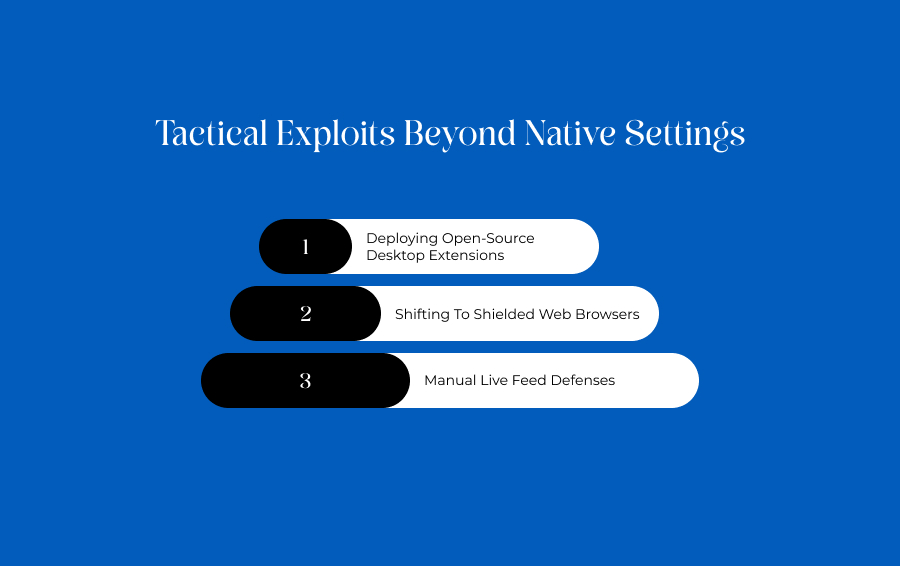
You can download ad-blocking software to tidy up your browser page and get rid of Facebook ads. You can also download the Adblock Plus extension if you use Firefox, Safari, or Chrome. Once installed, this popular extension prevents ads from specific ad sites.

Facebook may use your name, profile picture, and the information you provide when you click "like" on a product or page to show you personalized social media ads on the pages of your friends. Privacy concerns arise when you use personal data from your profile to target a certain audience.

Facebook allows third-party advertisers to post automatically generated ads to promote their products. This might be apparent to you when you search for a product on Google, and an advertisement for it shows up in your Facebook news feed.

If you want to know how to get rid of ads on Facebook, here is a detailed unpacking of the steps.

How To Get Rid Of Ads On Facebook?

Although you can't completely avoid Facebook ads, you can choose which ones to see depending on how you browse. Follow these steps if you want to know how to get rid of ads on Facebook:

  • Enter your Facebook credentials and select "Settings." To do this, click the three dots that are located beneath your cover photo. Select "Profile and Tagging Settings" to access the "Settings."
  • Navigate to the "Ads" section by scrolling down in "Settings." There are several ad choices that you can see.
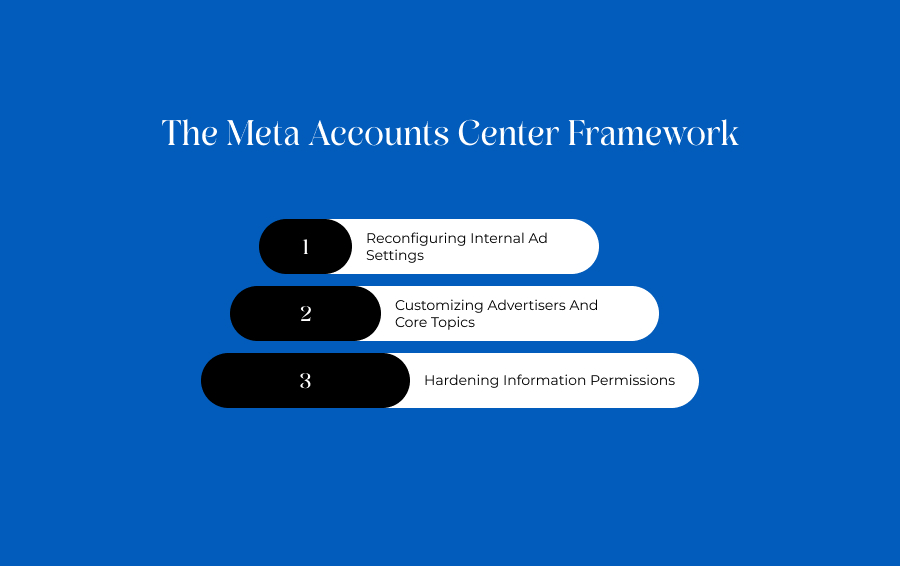
  • There are three categories under "Ad Preferences": "Advertisers," "Ad Topics," and "Ad Settings." Facebook's "Advertisers" list contains businesses that you are currently seeing advertisements from. You can choose to hide these advertisements by selecting "Hide Ads."
  • You can choose "Ad Topics" to see fewer ads in specific categories, like politics, parenting, and pets. Then select "Show Fewer" for each category.

You receive advertisements from "Ad Settings" based on your data (education, relationship status, etc.). You can change these settings to see fewer personalized ads overall but not fewer in terms of quantity.

Simply flip off each setting. Toggle off "Use Data from Partners" by moving the button from the blue to the gray setting after clicking on "Data about your activity from partners."

What Are Targeted Ads?

A targeted advertisement has a higher chance of making a sale since it displays ads according to your interests, preferences, and browsing/search history. Based on the kind of products you can view on Facebook, Facebook advertisers display advertisements for you.

It is possible to monitor the items you click on and the pages you visit. Your watched videos and duration are known to them. They can, therefore, modify their ads to make sure you only see those that have the best chance of closing a deal.

Moreover, Facebook's default setting permits them to display personalized advertisements to you based on activity data. Although it is turned on by default, this setting can be turned off.

How To Change Ad Preference?

If you would like to know how to get rid of ads on Facebook, you can now hide ads thanks to the fix we are about to explain below. Changing your ad preferences or settings is a simple process that we can walk you through in a few easy steps.

On the left side of your screen, there are a number of options that you can choose from on your Facebook page. Choose the left-hand ad column.

After selecting the ads column, you'll be able to click on different sections. Go to the section marked "Your Interests." After selecting this area, you can see every ad topic option available to Facebook users. You can choose how you want your advertising experience to look by looking through the pre-made categories.

In the Advertiser section, users can also see which advertisers get their information. You can decide how much of your information is available to the public if you choose the Your Information section. To select what information Facebook can obtain about you, flip the switch.

Lastly, you can view the Ad Settings section to find out which businesses are targeting ads based on the information in your Facebook profile.

The best course of action is to visit the section labeled "Hide Ad Topics." You can choose which subjects you wish to avoid seeing in adverts here.

Other Ways To Change Ad Preference

If you are asking how to get rid of ads on Facebook in other ways, using your browser is another way to prevent Facebook ads. Certain browsers come with built-in ad blockers that are remarkably successful in preventing adverts.

For watching videos without interruption, for instance, UC Browser is a great choice. You don't need to worry about downloading an ad blocker because there is another option: Brave Browser.

You can also turn off Facebook's page feature, which shows your friends and family advertisements based on your likes. This will restrict it to just your friends or completely disable it.

Are Facebook Ads Safe

Facebook advertisements and Facebook company goods are not intrinsically harmful. Nothing you see on Facebook while browsing advertisements will impact your physical health. Nevertheless, Facebook advertisements can be hazardous in other concrete ways.

Even though a few of the advertisements aren't remarkable, they still aim to sell you something. Consequently, every advertisement poses a risk to your financial performance.

Ads have the power to persuade people to buy products, even if you may believe you can ignore them all. The most effective way to prevent paying money for advertisements is to stay away from them completely.

Ad blockers are legal, yes. You're concerned about the legality of ad blockers. You may believe that using ad blockers on Facebook or any other website could land you in trouble. Thankfully, you don't need to worry about anything. You can use ad blockers for free and in a legal manner.

When you use an ad blocker, you don't have to be concerned about facing legal consequences. Any online ad blocker is available for use. But we advise you to stick with the best choices, such as the one we covered above. The best ones are those that are less likely to cause computer viruses.

Wrapping Up

In conclusion, Facebook advertisements can be intrusive, pointless, and dangerous in addition to being obtrusive. However, companies won't be doing away with ads anytime soon because they are essential to the operation of free platforms like Facebook.

Fortunately, there are simple solutions to this issue. To begin with, Facebook ads can be effortlessly blocked by a comprehensive ad-blocker such as Total Adblock. Other options include reporting ads, hiding ads, and changing Facebook's ad preferences.

If you have thoughts to share or questions to ask about how to get rid of ads on Facebook, please leave a comment below. We would love to hear from you!

Learn More Also:

Content Rally wrapped around an online publication where you can publish your own intellectuals. It is a publishing platform designed to make great stories by content creators. This is your era, your place to be online. So come forward share your views, thoughts and ideas via Content Rally.

View all posts

Leave a Reply

Your email address will not be published. Required fields are marked *

Related

slider-img

Guard Your Space: A Step-by-Step Guide to Locking Your Facebook Profile 

Are you looking for ways on how to lock Facebook profile to increase the privacy of your account? Those who are not on your Facebook friends list will only be able to view a restricted portion of your profile if it is locked. Only friends on the friend list will be able to see the images and posts on the timeline, cover photos, stories, and new posts on a locked profile. Additionally, only your friends will be able to see the "Public" posts you previously made. It should be noted that there is a workaround available for the desktop version of Facebook if you would like to lock your profile. You can lock a Facebook profile using the mobile app or your browser. Moreover, this functionality is exclusive to the Android app. Continue reading to learn how to lock your Facebook profile.  What Is Profile Lock  Users will notice a Lock sign on your profile after you add a profile lock. This will limit the amount of photos and posts on their profile, cover image, and other areas to just their friends. Upon locking their profile, users prevent others who aren't on their friends list from viewing the profile. They won't be able to download cover photos and profile photos either. They are also unable to view the Stories that a user has added to his profile. Previously shared posts are now marked as friends instead of public when using the Lock Profile feature. The timeline review and tag review are activated. This implies that you must grant others permission to tag you in their posts. Additionally, the About section of their profile will only be partially visible to the public. Now that you are aware of how Facebook's lock your profile feature operates, let's examine how to do it on various platforms.  How To Lock Facebook Profile Locking your profile has quite a few advantages. It has some drawbacks, too. If you have a security concern, you must lock your profile immediately from treats such as identity theft, data manipulation, and so on. Here are the different methods you can use to lock your profile on desktop, android, and iOS devices.  How To Lock My Facebook Profile On Desktop Although there isn't a direct method to lock your app from the browser, if you can't access the mobile app, you can use the following workaround: Open the Facebook website and click the icon for your profile. To make the URL read "m.facebook.com/yourprofilename," change "www" to "m" in the URL. This will open Facebook in a mobile format on your desktop computer. The Edit Profile option should have a three-dot menu next to it. Click the Lock Profile option that appears in the three-dot menu. The following screen, which has the option to Lock Your Profile at the bottom, will walk you through the locking process, just like the Android version does. This will lock your profile for enhanced safety. iOS users can either borrow an Android device and follow the previously mentioned instructions, or they can use the desktop method to lock their facebook profiles. The procedures to unlock your Facebook profile are the same for desktop and mobile apps. There will be an Unlock Profile option in place of the Lock Profile option. Tap on it and select Unlock on the resulting screen. A description of how to unlock your profile will appear, and when you click the Unlock Your Profile option at the bottom, your profile will be unlocked.  How To Lock Fb Profile on Android If you want to lock your profile using an Android device, here is what you have to do: On your Android device, open the Facebook app. Tap your profile picture on the main page. Click the Menu with three dots. From the options on the page, choose Lock Profile. On the Lock Profile Page, select the "Lock Your Profile" option located at the bottom of the page. After that, a pop-up notification stating, "You locked your profile," will show up on the screen. The posts and images on your timeline are only visible to your friends. To finish the procedure, tap OK.  How To Lock Facebook Profile In iPhone  Here are the steps to lock your profile for iPhone users: Navigate to Facebook and select your name from the three-line menu located in the lower right corner. Put three fingers on a dot for your name. Use the Lock Profile button to secure your profile. Press Lock Your Profile again just to be sure. You can simply exit that page to confirm that your profile has been locked. Next, sign in to your profile once more. The notification that your profile has been locked will appear there. You can manually change the Facebook privacy settings to enable lock profile mode if your page does not have profile locking. However, it is important to note that not all locations have access to this feature yet. Only a few countries allow you to lock your profile at this time.  Why Is It Important To Lock Your Profile  Facebook claims that hackers from Vietnam and Bangladesh compromised the company's entire privacy system in December 2020. Furthermore, they have taken Facebook users' personal information. These groups won't be able to misuse Facebook and harvest data from users' accounts all over the world thanks to this lock profile feature. To support Facebook's privacy system, users should refrain from accepting friend requests from unreliable sources and clicking on dubious links. Vanish mode was also introduced by Facebook to address privacy concerns. This model's unique feature is that once activated, it erases all chats and media files after a predetermined amount of time. It also has one more important safety feature. Facebook will instantly notify you if someone takes a screenshot of your profile. The steps to activate vanish mode are as follows. Visit the Play Store or App Store to download the most recent version of Facebook. Launch the particular chat. From the chat's bottom, swipe up. Vanish mode will be activated as a result. This causes the chat's background color to change to black, denoting that the mode is now active.  Wrapping Up  Facebook is a great social media platform for communication on a global scale. But now that data privacy is a global concern, it's imperative to secure your Facebook accounts permanently. Your data is protected from hackers and stalkers when you lock your profile. You will need to reenter your password on each device after locking. Facebook will add an indication to your profile once you have locked it. But keep in mind that you won't be able to publish to the public after you activate this feature. Rather, friends are limited to viewing and sharing the posts. Read Also: Here Is How To Delete A Facebook Page Easily? How To Stop Scammers On Facebook Marketplace? Facebook Settlement: What Went Down And What Was The Final Result?

READ MOREDetails
Is Facebook Going To Start Charging Future Of Whatsapp Charging

Fee Or Free: The Truth About Facebook And Charging Users

Devices with internet connectivity, including computers, tablets, and smartphones, can access Facebook. Before the development of smartphones, websites were typically only available in desktop versions. However, in order to have a fully functional experience, we can now have access to these websites on our mobile phones.  But does that mean Facebook could ask for a fee soon? Is Facebook going to start charging? Here is all that we know so far.   Is Facebook Going To Start Charging: Future Of Whatsapp Charging? Facebook is a huge platform for advertisements, so many companies want to display their content there. As a result, placing ads on Facebook has become more expensive. This trend will likely persist in 2023. Facebook is always changing its ad format, which may result in increased costs. But fear not—there are solutions for handling this. Companies can increase the effectiveness of their advertisements. They can do it by making sure that more viewers take the desired action, such as making a purchase. They can also target particular demographics with their ads and use their advertising budget wisely. Therefore, even though Facebook charges for advertisements, there are ways to use it to your company's advantage. History And Evolution Of Facebook Charging Facebook's fee structure has changed over time. It started off charging nothing and has since grown to be a sizable source of income for the business. Early Years (2004–2007): Facebook didn't charge for advertising at first because its main goal was to help friends connect. Introduction of Ads (2007): Facebook launched advertisements in 2007, but since the platform was still in its infancy, Facebook advertising costs were comparatively low. Targeted Advertising (2012): Facebook started to improve its advertising system in 2012, enabling companies to target particular demographics while progressively raising the cost of their ads. Facebook Mobile Advertising (2012 to 2015): the significance of mobile ads increased along with the growth of mobile usage. Advertising fees increased because businesses realized the potential of reaching consumers on their phones. Fast Growth (2015–2018): During this time, Facebook's advertising platform grew quickly, which raised competition and raised Facebook's fees. Regulation and Privacy (2018-Present): Facebook's advertising model has recently been impacted by worries about user privacy and governmental regulations. Facebook advertising is still very popular, but companies have to follow new guidelines that affect Facebook ad prices. The Truth About Facebook Charging When asked, "Is Facebook going to start charging?" a representative for the company clarified to VERIFY. They insisted that Facebook's parent company, Meta, did not intend to charge users $4.99 a month for Facebook use. According to Facebook's Help Center, advertisers are charged to display ads on Facebook and Meta's other social media platforms rather than charging users to use Facebook. For years, chain messages suggesting that Facebook would soon charge users a fee to access the platform have been present on the social media site. Since 2009, at least one of these messages has existed. Since Facebook was first made available to the public in 2006, it has stayed free. For Facebook and Instagram users, Meta does provide a few optional subscription services and programs. Facebook and Instagram currently offer two different kinds of paid subscriptions. The first is verification. It entails paying a monthly charge in exchange for access to special account features and a verification badge on your profile. Subscribing to Facebook Verified or Instagram Verified on the mobile app costs $14.99 per month. Getting Facebook Verified on the web costs $11.99. According to the Instagram Help Center, public accounts—like those of famous people or prominent organizations—may still obtain verification by applying rather than having to pay for the service. Subscriptions that are account-specific come in second. Users can purchase access to exclusive content from other accounts. Except in cases where you subscribe via a mobile app, where Apple or Google receive a 30% cut, the revenue from these subscriptions goes to the account you're paying. What Does Facebook Have To Say? Meta's Facebook has amassed popularity that is hard to rival as well as hard to tap. It goes without saying that it has had one too many of the questions: "is Facebook going start charging"? On their website, they have clearly explained what in-app expenses or any kind of charges mean from their perspective. Here is an excerpt: "No, we don't charge you to use Facebook. Instead, we charge advertisers to show ads on Meta company Products. This helps us make Facebook available to everyone without charging people for access to it. When using Facebook, keep in mind: You need Internet access to use Facebook from your computer, mobile phone or tablet, and your Internet provider may charge you for this access. Learn more about data charges and connecting to Facebook on your mobile phone or tablet. Using some Facebook features, such as text message notifications, may also lead to charges from your mobile provider. If you add your payment information to Facebook, you can do things such as make purchases from businesses, send money to friends, support creators on Facebook, and purchase ads on Facebook. If you purchase something on Facebook, we may earn a commission or transaction fee from that activity. You can also make purchases through Facebook for games, apps, and other items. Note: Facebook doesn't sell your information, and we don't share information that personally identifies you (information such as your name or email address that by itself can be used to contact you or identify who you are) unless you give us permission." Wrapping Up Is Facebook going to start charging? Honestly, as we navigate the evolving world of digital advertising, it is critical to comprehend the truth about Facebook charging fees. In actuality, a variety of factors, including audience targeting and ad quality, can affect Facebook ad costs. Facebook is still a powerful platform for advertising, even though the prices might change. This is a dynamic environment where the effects of growing Facebook advertising costs can be lessened through innovation and data-driven decision-making. Businesses can continue to take advantage of the wide reach and growth potential of this platform. They can do so by remaining informed, optimizing campaigns, and fully embracing it.If you have thoughts to share or questions to ask, please leave a comment below. We would love to hear from you! Read More About: Here Is How To Delete A Facebook Page Easily? How To Stop Scammers On Facebook Marketplace? Facebook Settlement: What Went Down And What Was The Final Result?

READ MOREDetails
how to disconnect facebook from instagram

The Whys And Hows Of Unlinking Facebook And Instagram In 2024!

Have you had enough of sharing your content on Facebook and Instagram in tandem? Would you prefer to maintain distinct accounts? Are you looking for ways "how to disconnect Facebook from Instagram?" You can easily delink your Instagram and Facebook accounts from one another on desktop and mobile platforms, but how do you do that? We'll walk you through the process of separating your Instagram and Facebook accounts in this post. You can start by de-syncing your desktop and mobile accounts for Facebook and Instagram. If you decide you no longer want to cross-post content, then you can easily unlink your accounts. If you have more than one linked account, you can also delete an account from either platform. Remember that you will need to change one of the passwords if the login for both accounts is the same. It is also possible to delete your Instagram account from other social media platforms. You can unlink your Instagram account from your Facebook account by going to the Accounts Center if you want to stop posting your Instagram photos to other social media platforms. We'll guide you through the process of removing the connection between your accounts as well as ceasing to share your Instagram posts on other platforms. How Is Facebook And Instagram  Connected Your Instagram posts will automatically be shared on your Facebook timeline if your Facebook and Instagram accounts are linked. For individuals who would like to share their Instagram photos with their Facebook friends without having to post them twice, this feature is useful. You can unlink your Facebook and Instagram accounts if you'd rather keep your accounts separate or are done sharing content between them. When you link them, you are essentially giving Instagram access to your Facebook account when you link your two accounts. This implies that Instagram has access to personal data from your Facebook account, including your email address, name, as well as a profile picture. Furthermore, Instagram can post on Facebook on your behalf. So, you might want to unlink your Instagram and Facebook accounts for many reasons. Why Unlink Facebook From Instagram? Do you want your Instagram and Facebook accounts to be kept apart? Does cross-posting content across the two platforms sound too monotonous? Do you want Instagram to no longer be able to access your Facebook account? Take these steps to unlink your Instagram and Facebook accounts: Log in to your Instagram profile by opening it. Choose "Settings" by tapping the three lines in the upper right corner. After swiping down, choose "Account." Click on "Sharing to Other Apps." After selecting "Facebook," tap "Unlink Account." Remember that removing the connection between Instagram and Facebook accounts won't remove any of your content from either site. All it does is cut off the communication between the two accounts. Why Would You Unlink Facebook From Instagram? You might want to keep Facebook and Instagram separate in case you use them for personal connections on Facebook and business or creative endeavors on Instagram. You can avoid confusion as well as overlap by keeping your identities separate by unlinking the accounts. It's possible that you unintentionally share your Instagram reels, stories, or posts on Facebook when you link your accounts. In case your target audiences on both platforms are different, this might be awkward or inappropriate. You'll have more discretion over what you share and where by unlinking the accounts. When you automatically share your Instagram posts on Facebook, or vice versa, this is known as cross-posting. Although it may seem practical, your followers may find this bothersome or spammy. By removing the links between the accounts, you can customize your content for every platform and avoid cross-posting. Unlinking your Facebook and Instagram accounts can be a wise move if you're worried about privacy on social media. It will lessen the chance of any security lapses or hacks and stop any data or information from being shared between the two platforms. How To Disconnect Facebook From Instagram On Mobile? You can unlink your Instagram and Facebook accounts if you no longer want them to be connected. Here is how you can do it using your smartphone. Launch the Instagram app on your smartphone. Tap the lower right corner of your profile picture. In the upper right corner, tap the three horizontal lines. At the bottom of the menu, tap Settings. Press the "Account" button. On Linked Accounts, tap. Press the Facebook icon. Select "Unlink Account" by tapping. Your Instagram and Facebook accounts will be disconnected after you've finished these steps. How To Disconnect Facebook From Instagram On Desktop? The procedures listed below can also be used to unlink your Facebook account from Instagram if you're using a desktop or laptop web browser: Open your web browser and navigate to instagram.com. If you are not already logged in, log into your account. In the upper right corner of your profile picture, click on it. Select Settings by clicking. Select "Account" by clicking. On Linked Accounts, click. Select Facebook. Select "Unlink Account" by clicking. How To Disconnect Facebook From Instagram On iOS Or Android? If you want those posts removed from Facebook, you will have to remove them manually. It's easy to unlink your Facebook and Instagram accounts on your mobile device if you decide you no longer want to share content between them. Here are the steps that apply to both iOS as well as Android devices.  iOS  Tap the icon for your profile in the lower right corner of the Instagram mobile app after opening it. In the upper right corner, tap the hamburger menu icon, then choose "Settings" from the menu. After swiping down, tap "Account Center" (or, depending on where you are, "Accounts Center"). To unlink an Instagram account, tap "Accounts & Profiles" and choose the desired account. Again, tap the account name and profile picture. Select "Remove Account" and tap "Yes" when prompted to confirm.  Android  Tap the hamburger menu icon located in the lower right corner of the Facebook mobile app after opening it. After swiping down, tap "Settings & Privacy" and then "Settings." Click "Accounts Center" and choose "Manage Connected Experiences" from the menu. To unlink an Instagram account, tap on it. Select "Remove" and then "Remove Account" from the prompt to confirm. It's crucial to remember that you cannot unlink your Facebook and Instagram accounts if you use the same password for both. You must change one of the passwords. Furthermore, you might need to go to the app settings or preferences of that social network to unlink your previous account in case you wish to relink your Instagram account to it. Why You Can't Unlink  Facebook From Instagram? Try these suggestions in case you are having trouble unlinking your accounts: Verify that you are running the most recent versions of the Instagram and Facebook apps. To confirm that you have granted Instagram access to your account, check your Facebook settings. Verify that you are logged into the correct Facebook account if you have multiple accounts. If you're still having issues, then get in touch with Facebook or Instagram support for additional help. Wrapping Up Removing the connection between your Instagram and Facebook accounts can help you maintain privacy as well as segregate your data. Additionally, it can stop unwanted content sharing between the two platforms. You must go to the "Linked Accounts" section of your account settings to unlink your Instagram and Facebook accounts. You can then choose which Facebook account to deactivate and take it out of your Accounts Center. If you have thoughts to share or questions to ask about how to disconnect Facebook from Instagram please leave a comment below. We would love to hear from you. Learn More About: 5 Content Ideas to Use with Instagram Influencers 6 Best Practices When Buying Instagram Followers Incognito Mode: How To Post Anonymously On Facebook?

READ MOREDetails